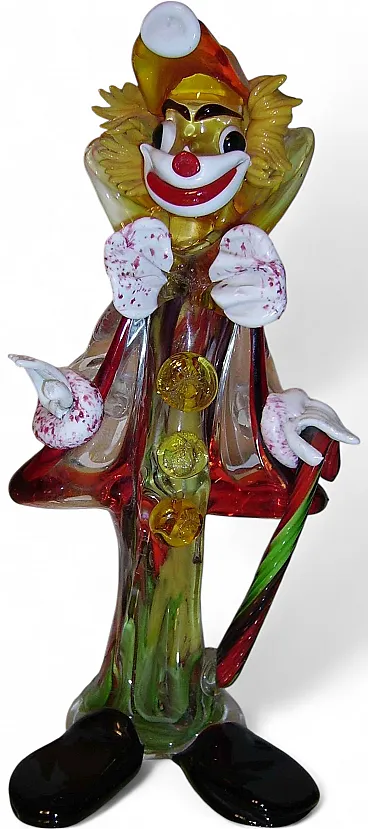
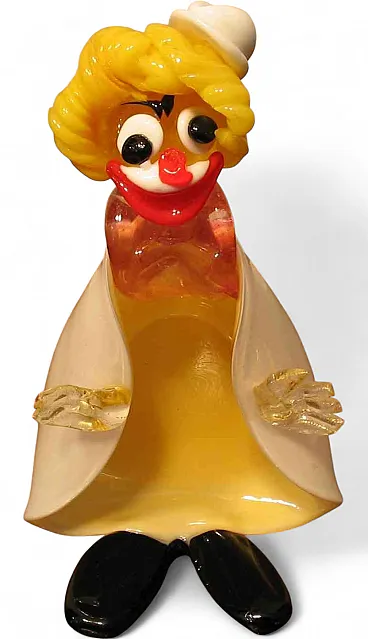
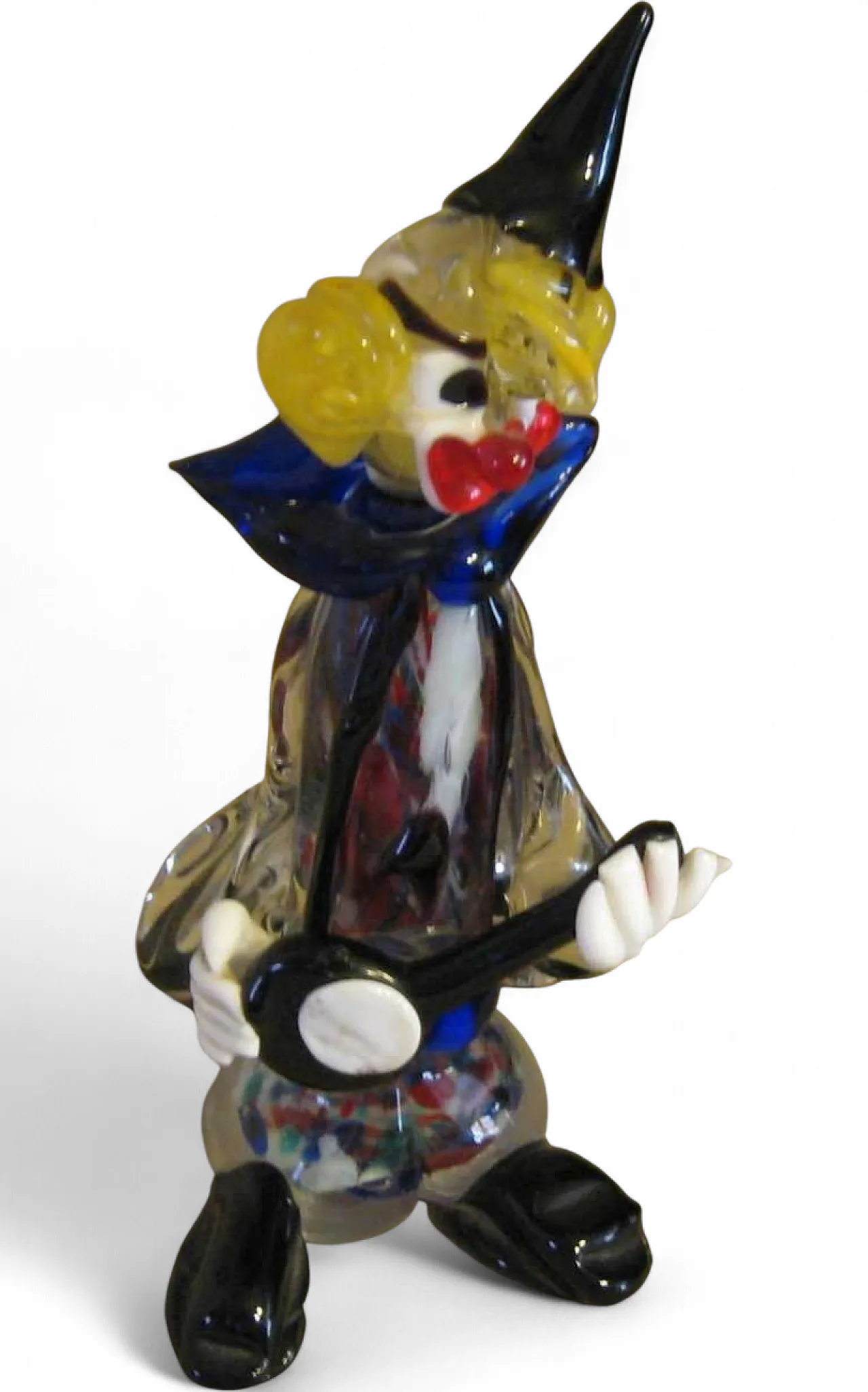
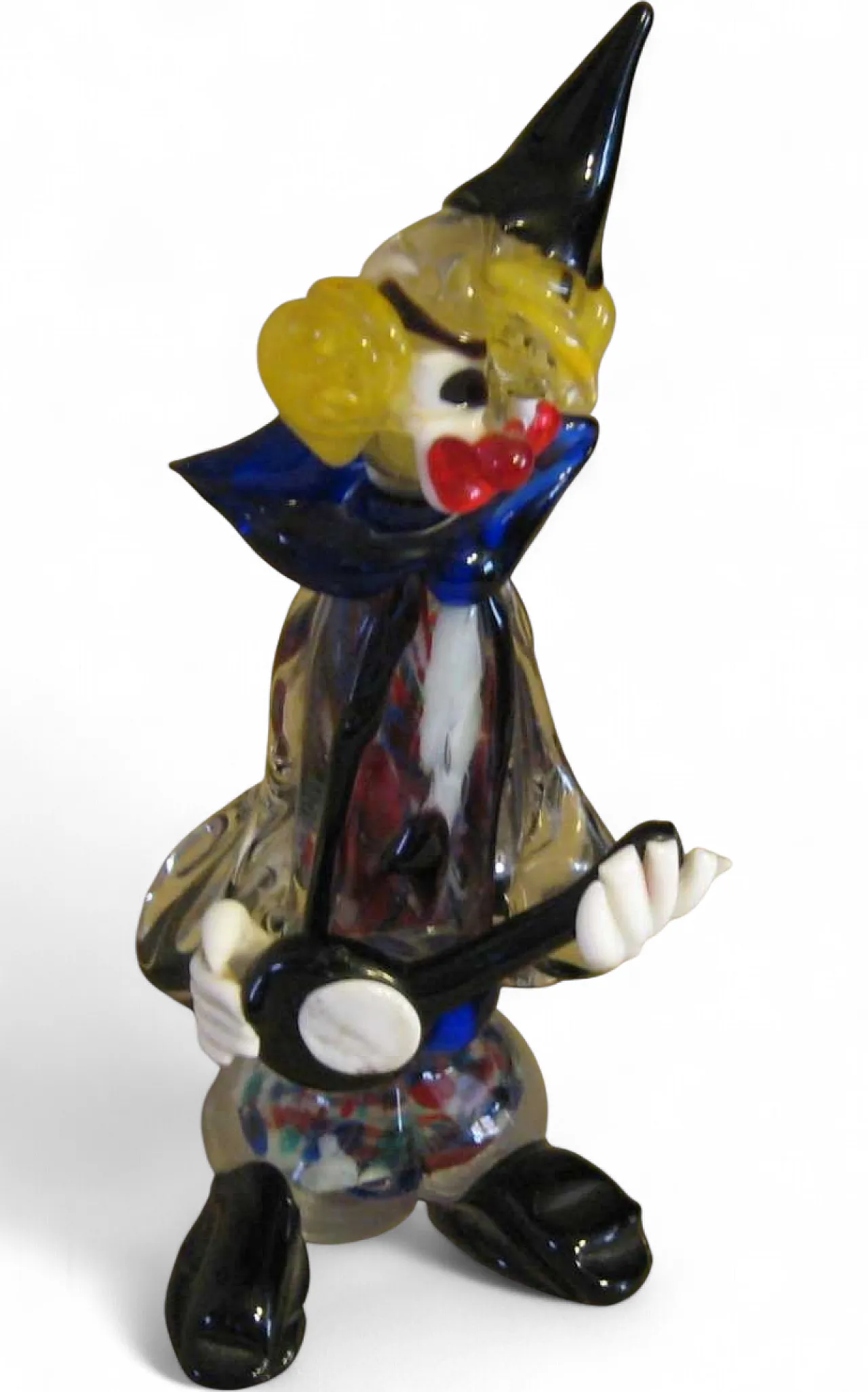
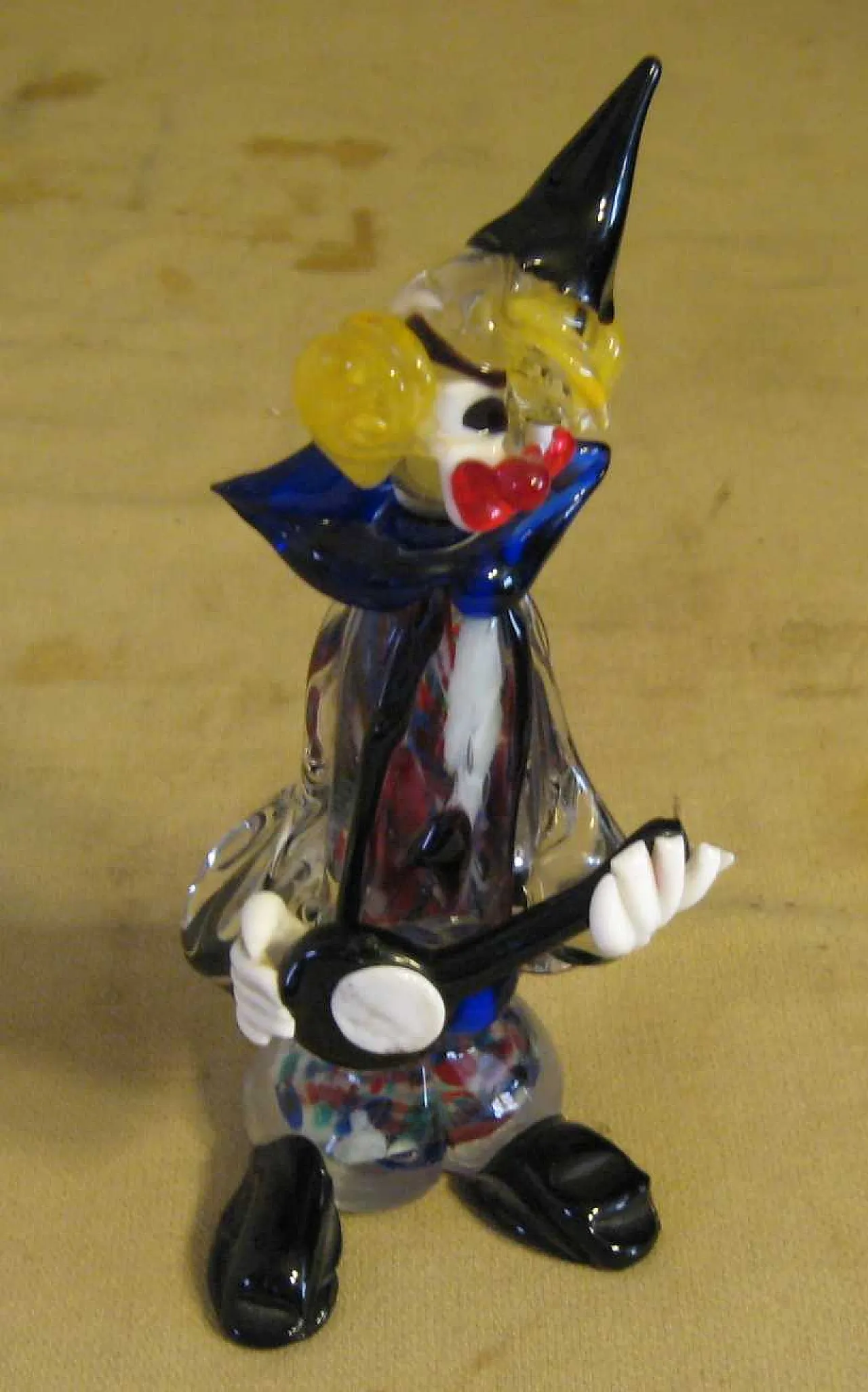
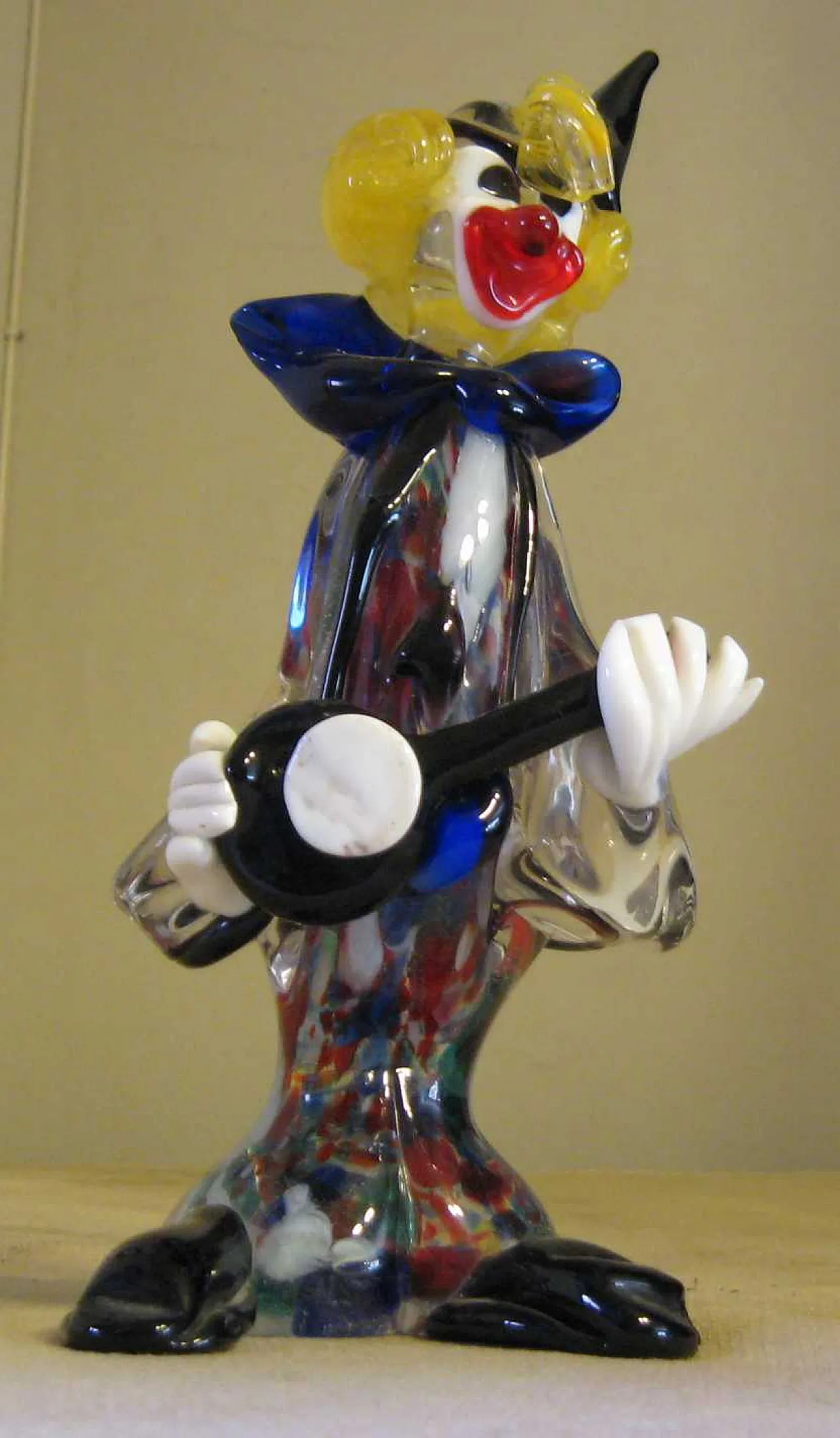
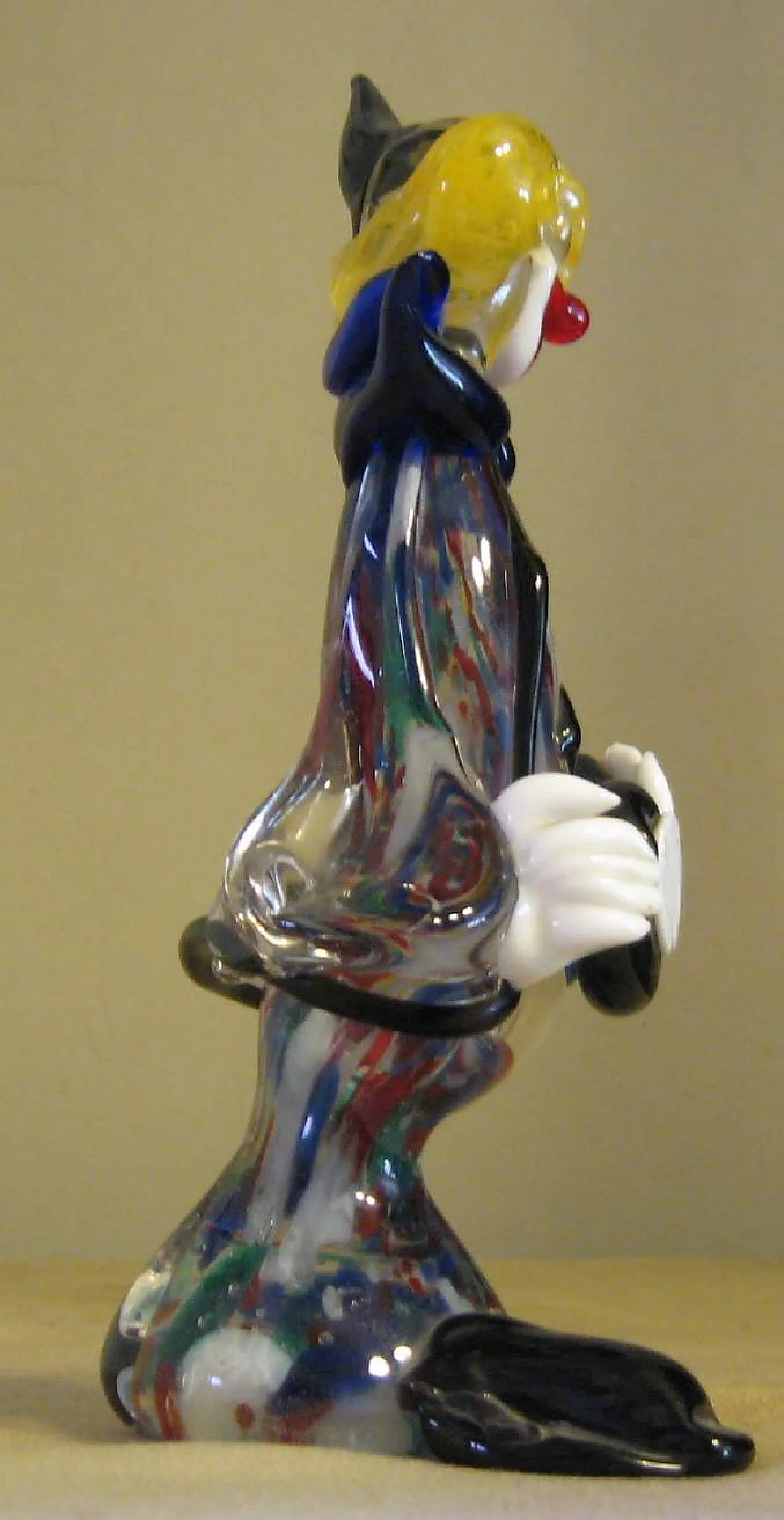
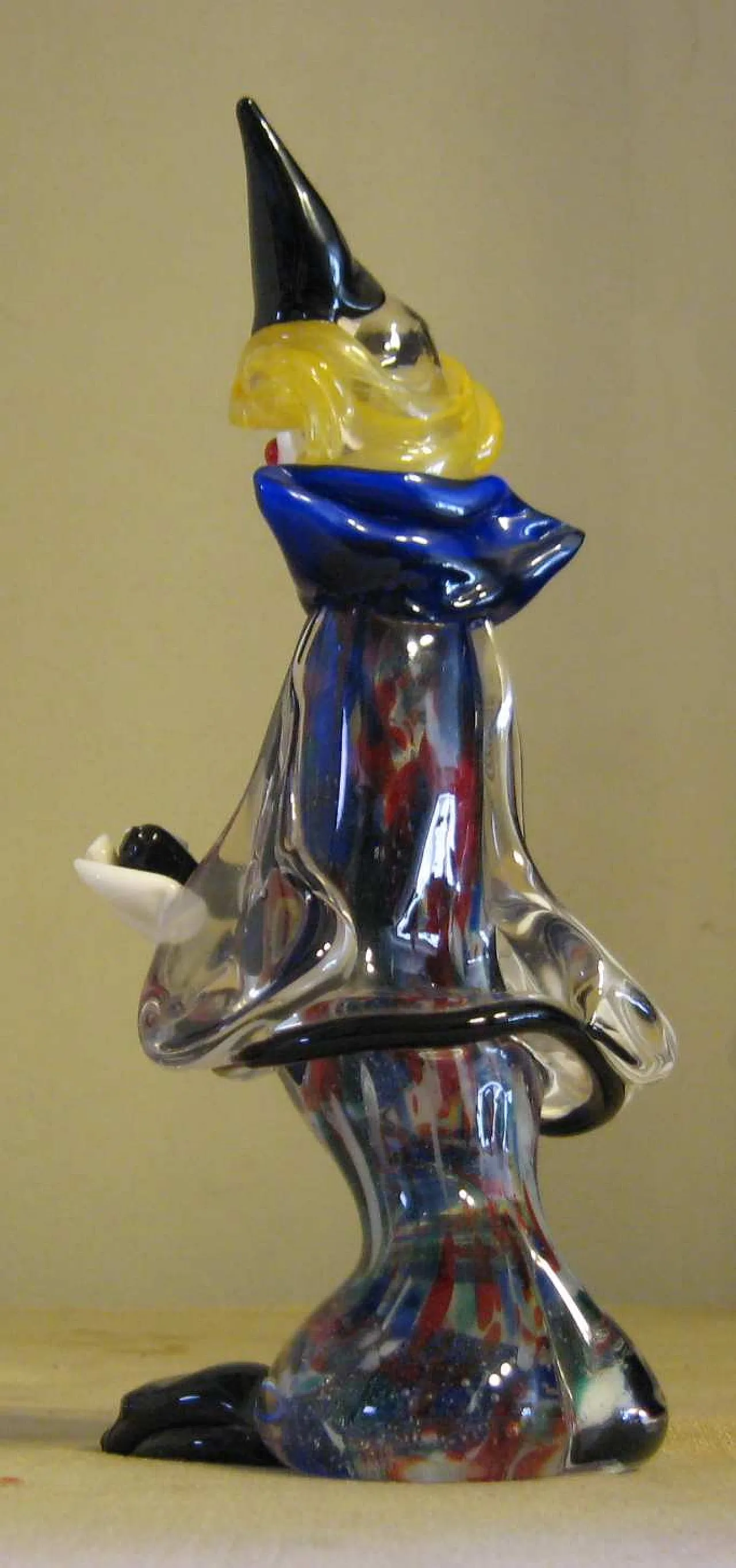
The work depicts an expressive clown standing with a guitar (or banjo), captured in a dynamic pose brimming with personality. The sculpture is visible in 360 degrees thanks to the three perspectives provided:
• Front and three-quarter view: These show the clown's joyful face, characterized by large, curly canary-yellow hair, a striking, shiny red nose, and a pointed black hat. Around the neck is a wide, semi-transparent cobalt blue glass butterfly collar. The hands, made of opaque, milky-white glass, clutch the black musical instrument, with a white circular detail on the body.
• Profile: This highlights the sculpture's sinuous, slender line, highlighting the musician's curved back and bent posture, typical of traditional Murano clown representations.
Workmanship and Special Features
The statuette is a classic example of Venetian glassmaking mastery, executed entirely freehand using lampworking and massello techniques:
• "Harlequin" Effect / Spots: The clown's body encloses a rich core of multicolored spots (red, green, blue, white), achieved by incorporating glass fragments and colored granules before shaping, then covered with a layer of transparent crystal glass.
• Hot Applications: All the external details—the yellow, twisted hair, the black shoes and hat, the white hands, and the tool—were hot-applied to the main glass mass and finished with pinpoint precision before cooling.
• Hand Detail (Technical Authenticity Note): The fingers have flat, square ends. This detail is not due to chipping or damage, but rather to the characteristic hot clipping with shears performed by the master glassmaker during modeling. The surface of the tips is in fact perfectly polished, reflective and free from the opacities typical of cold fractures, confirming the original integrity of the piece.





 SILVER Seller in Novara, Italia