


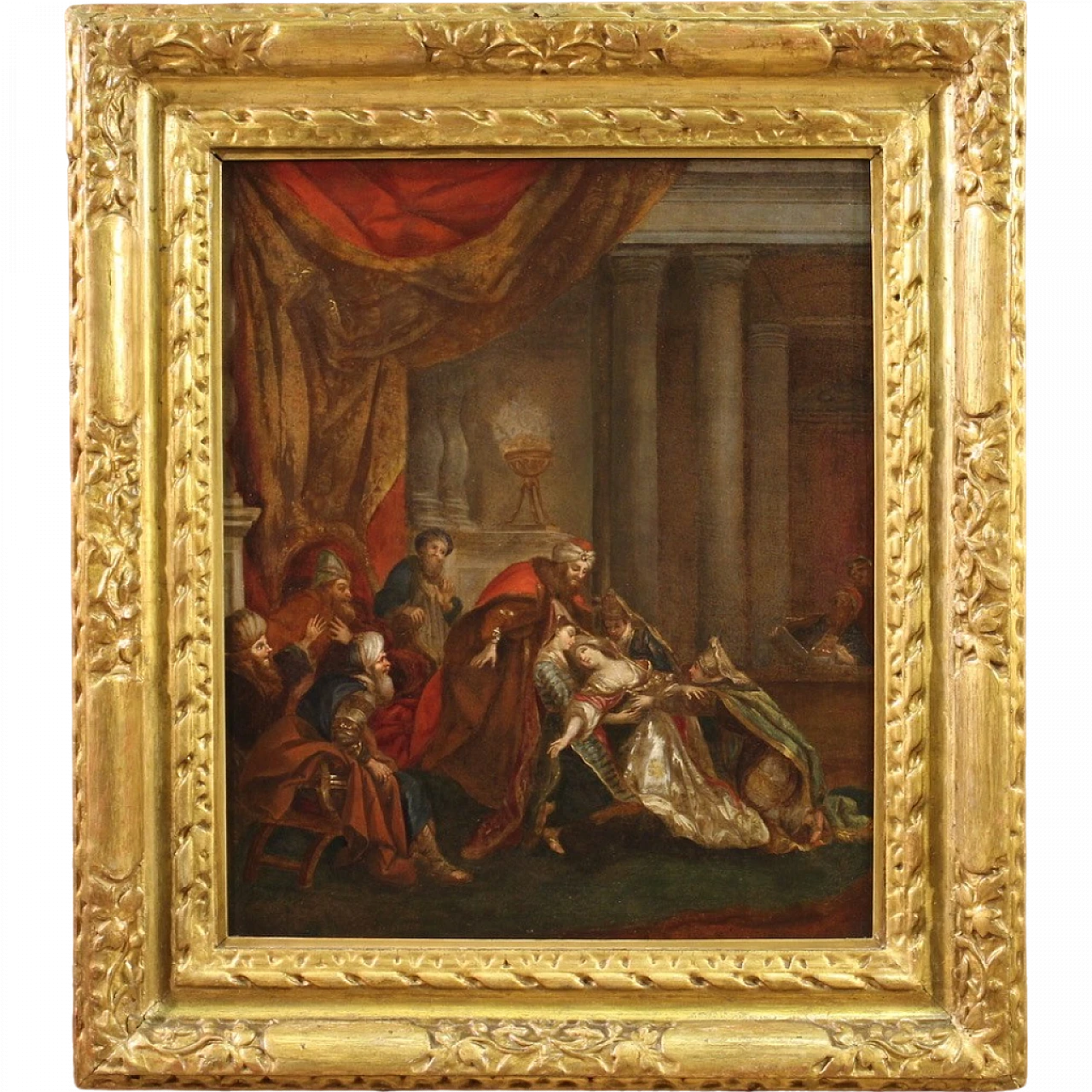
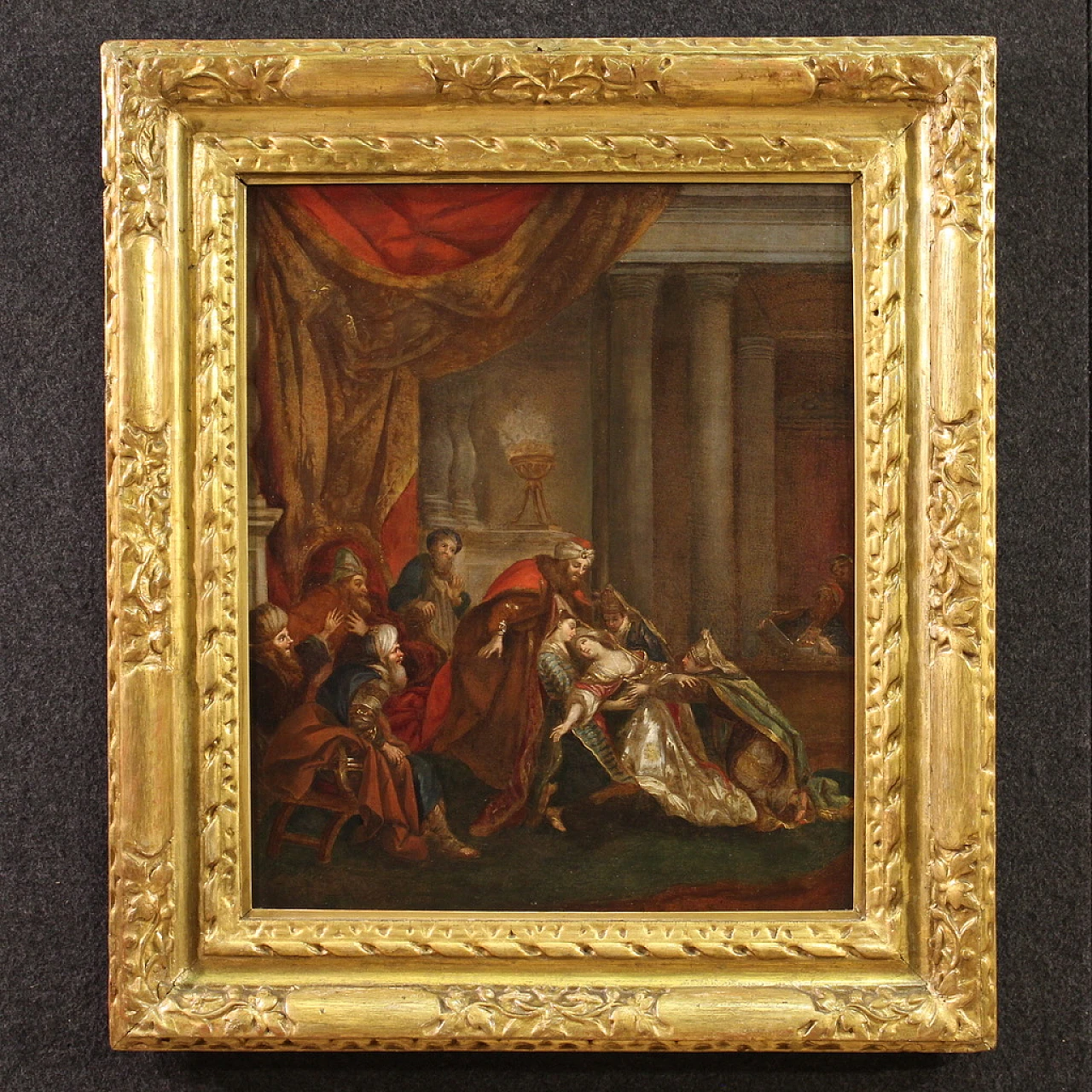
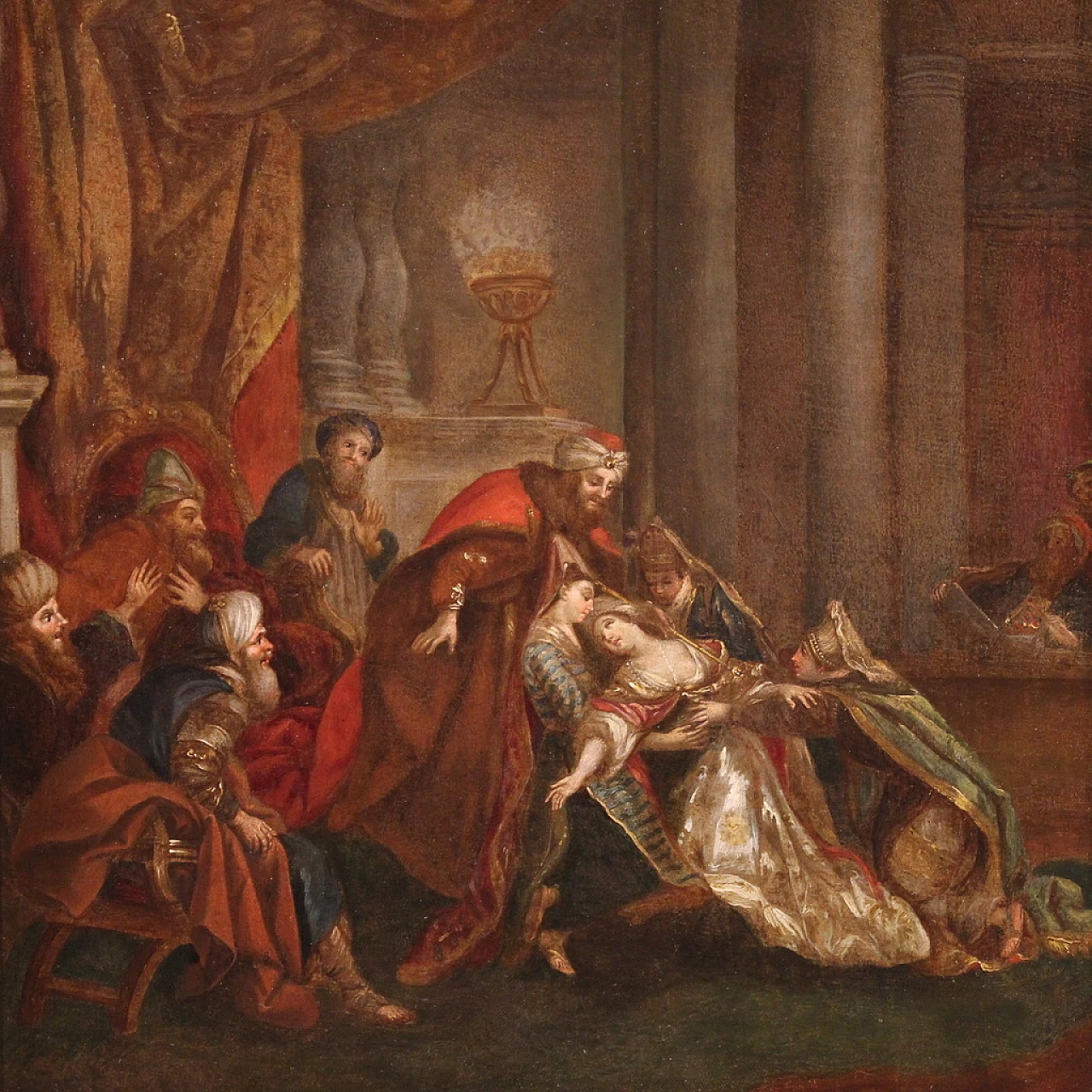
Esther fainting before Ahasuerus painting, 18th century
.png)
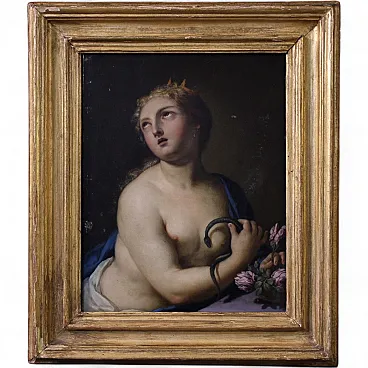
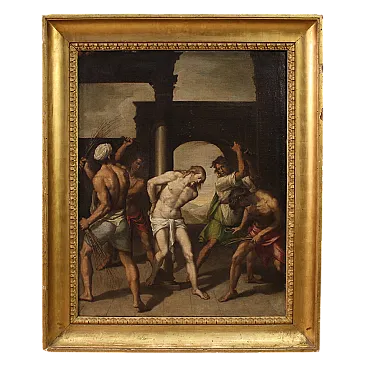
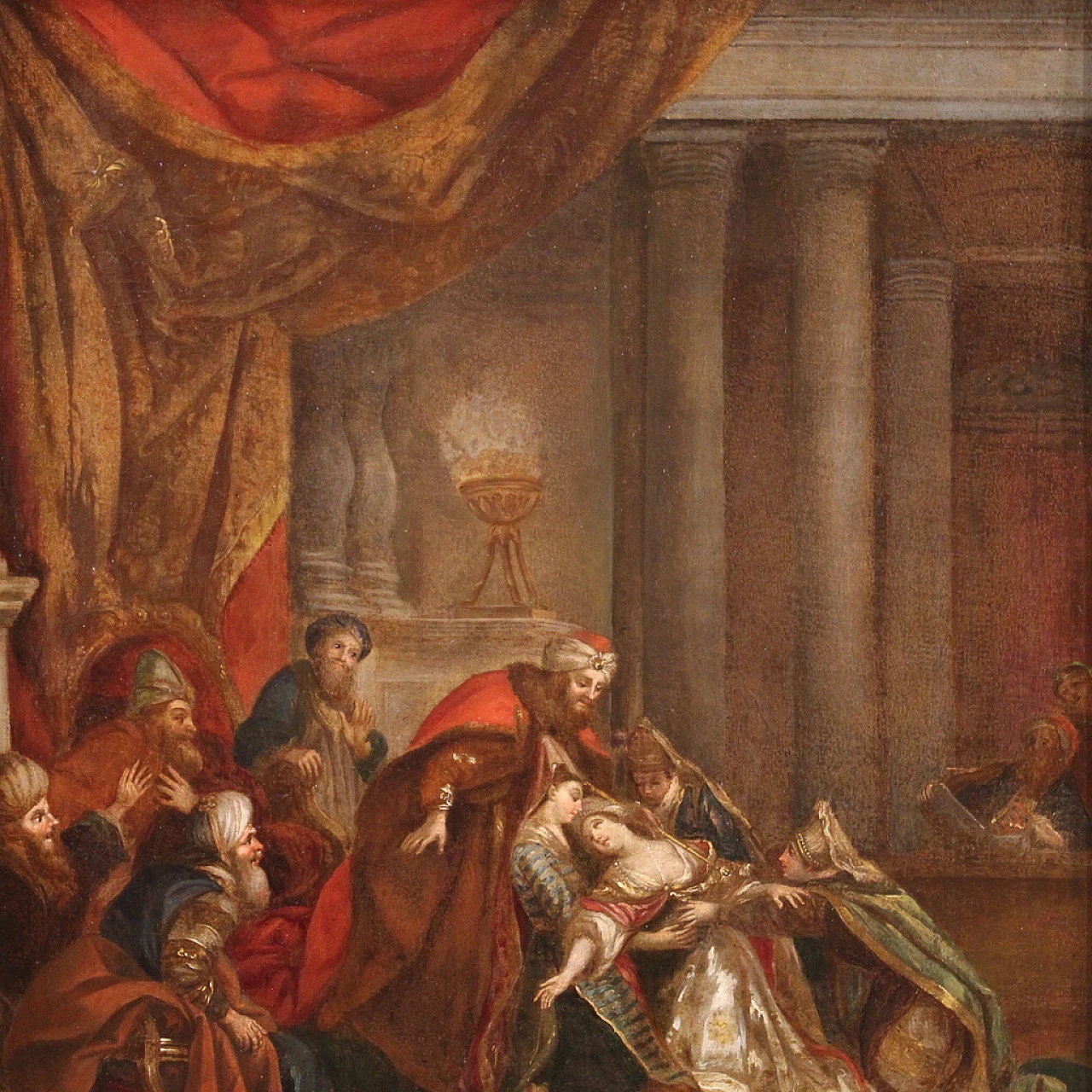
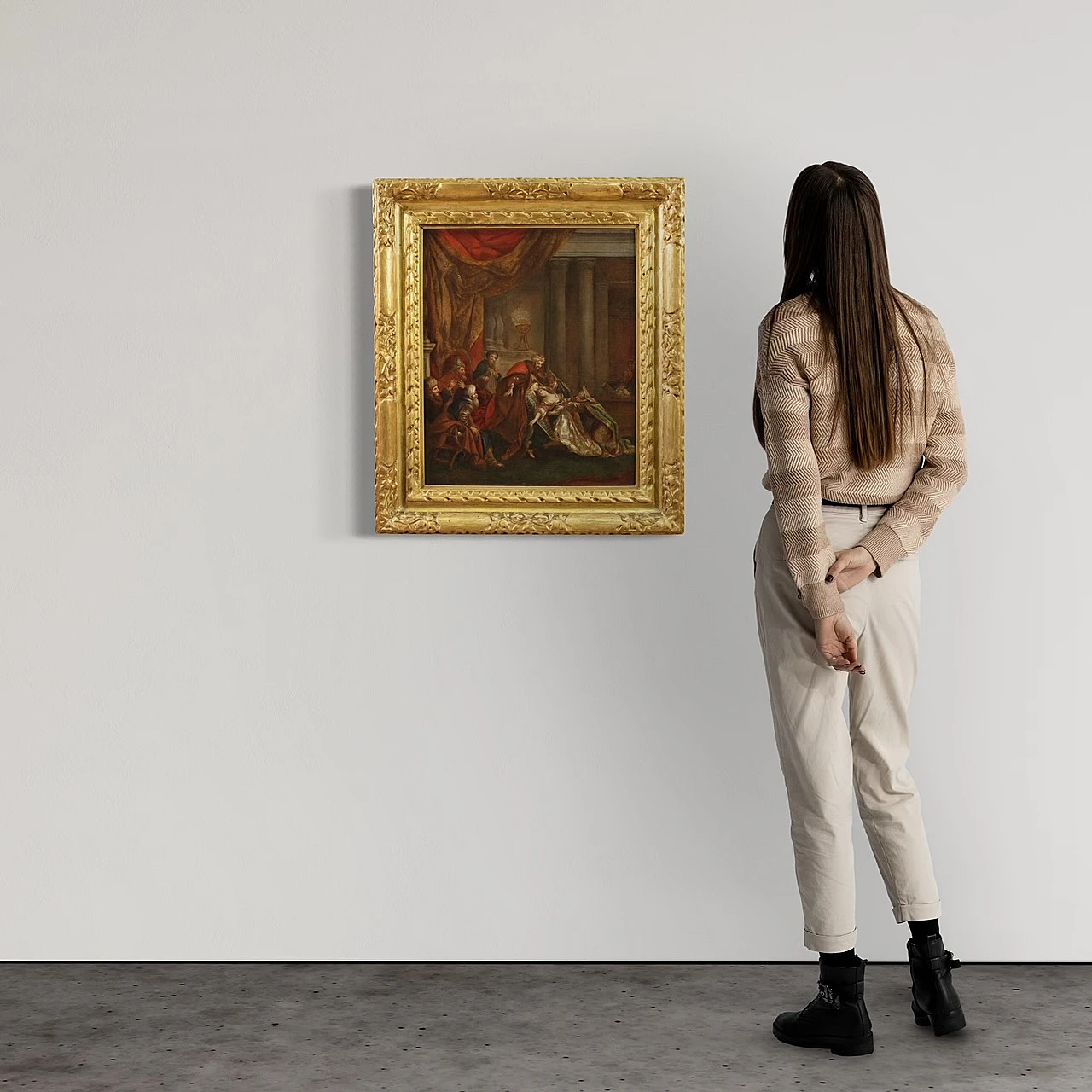
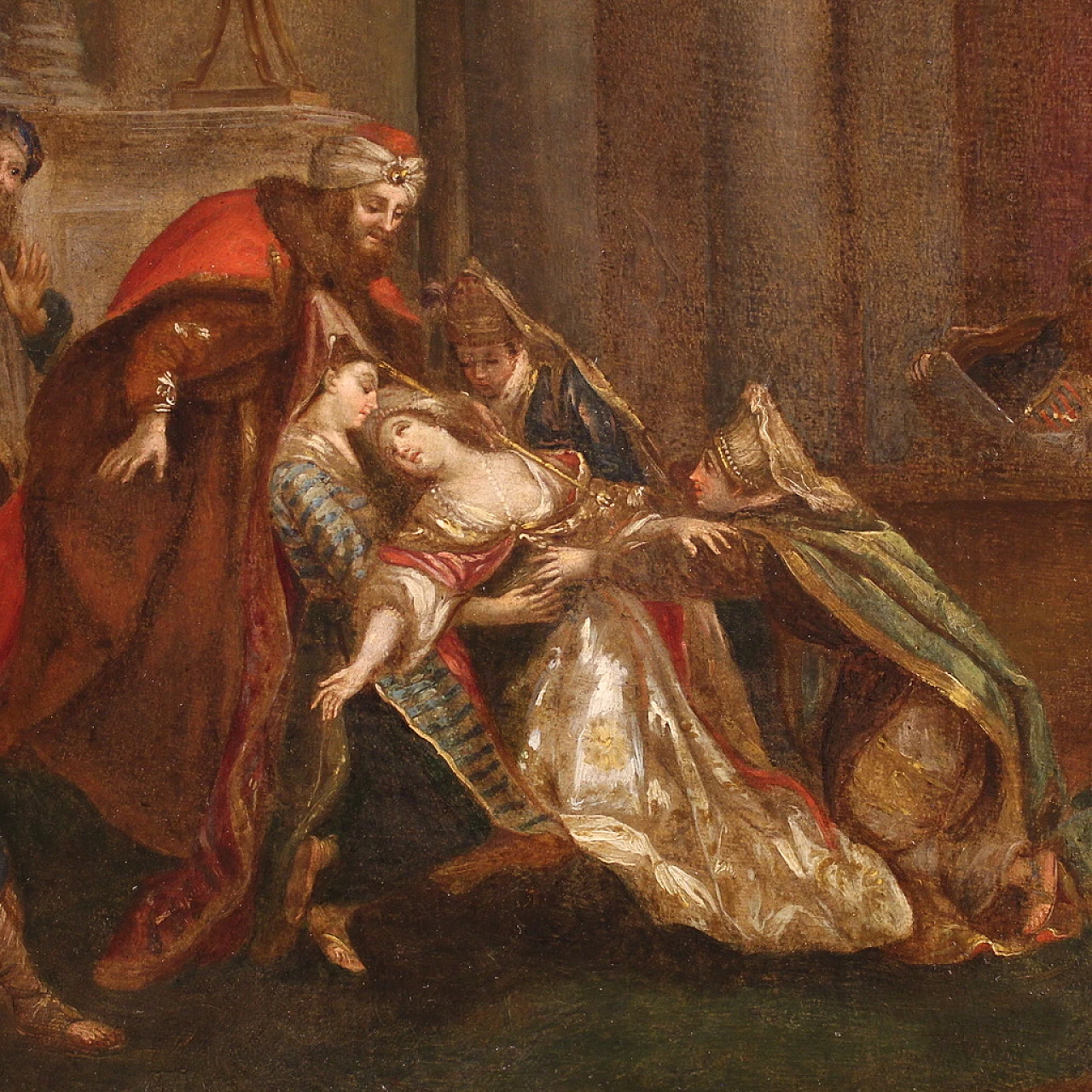
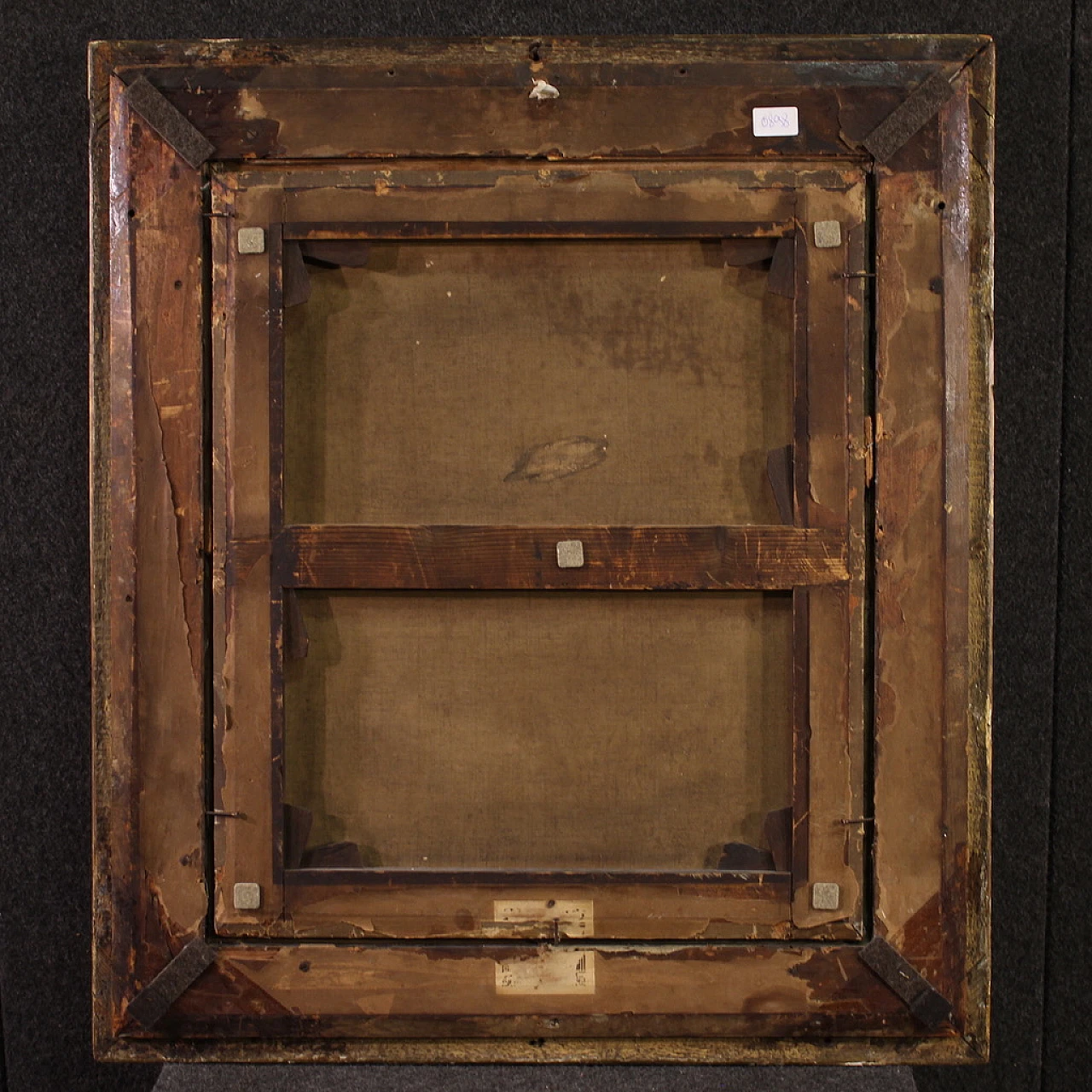
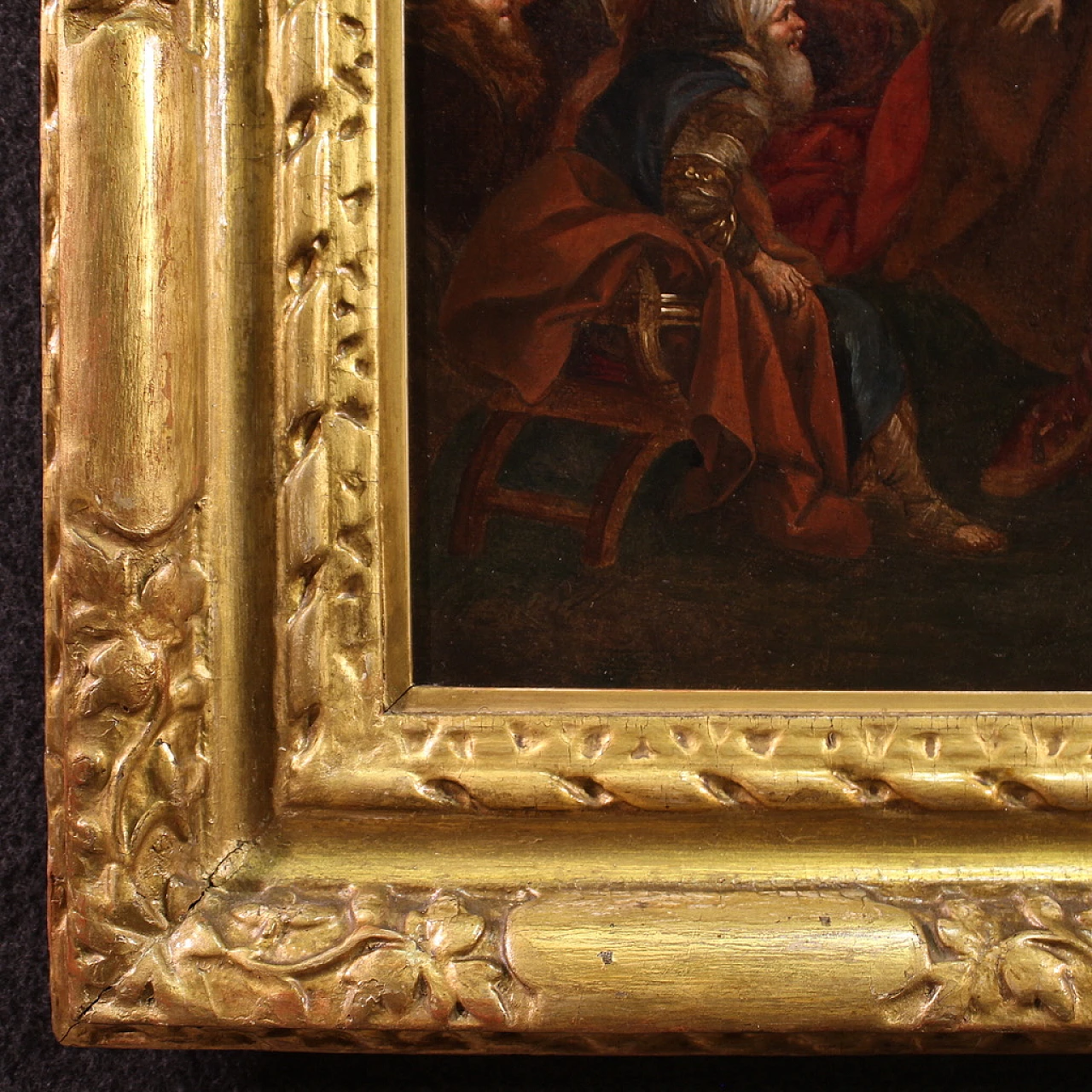
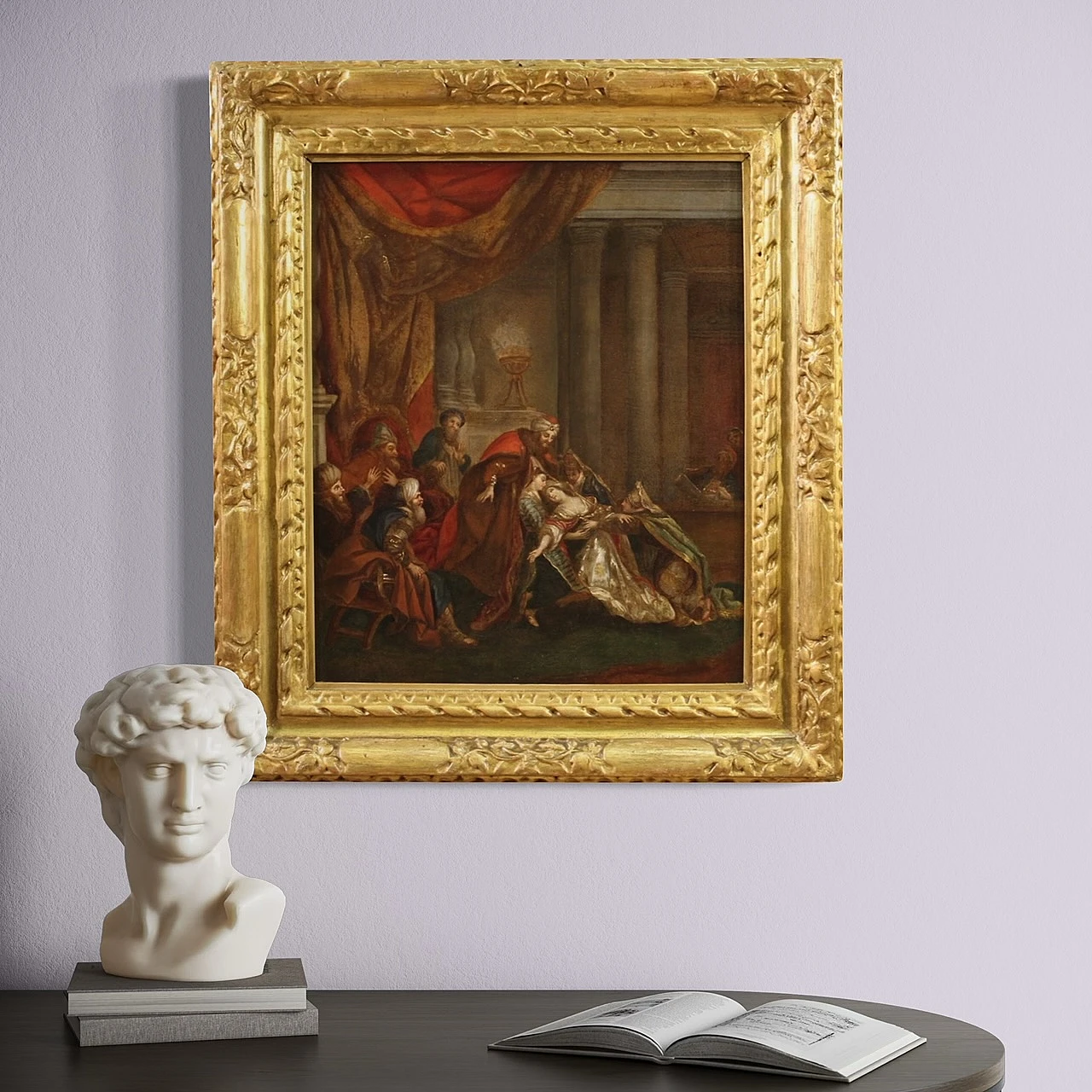
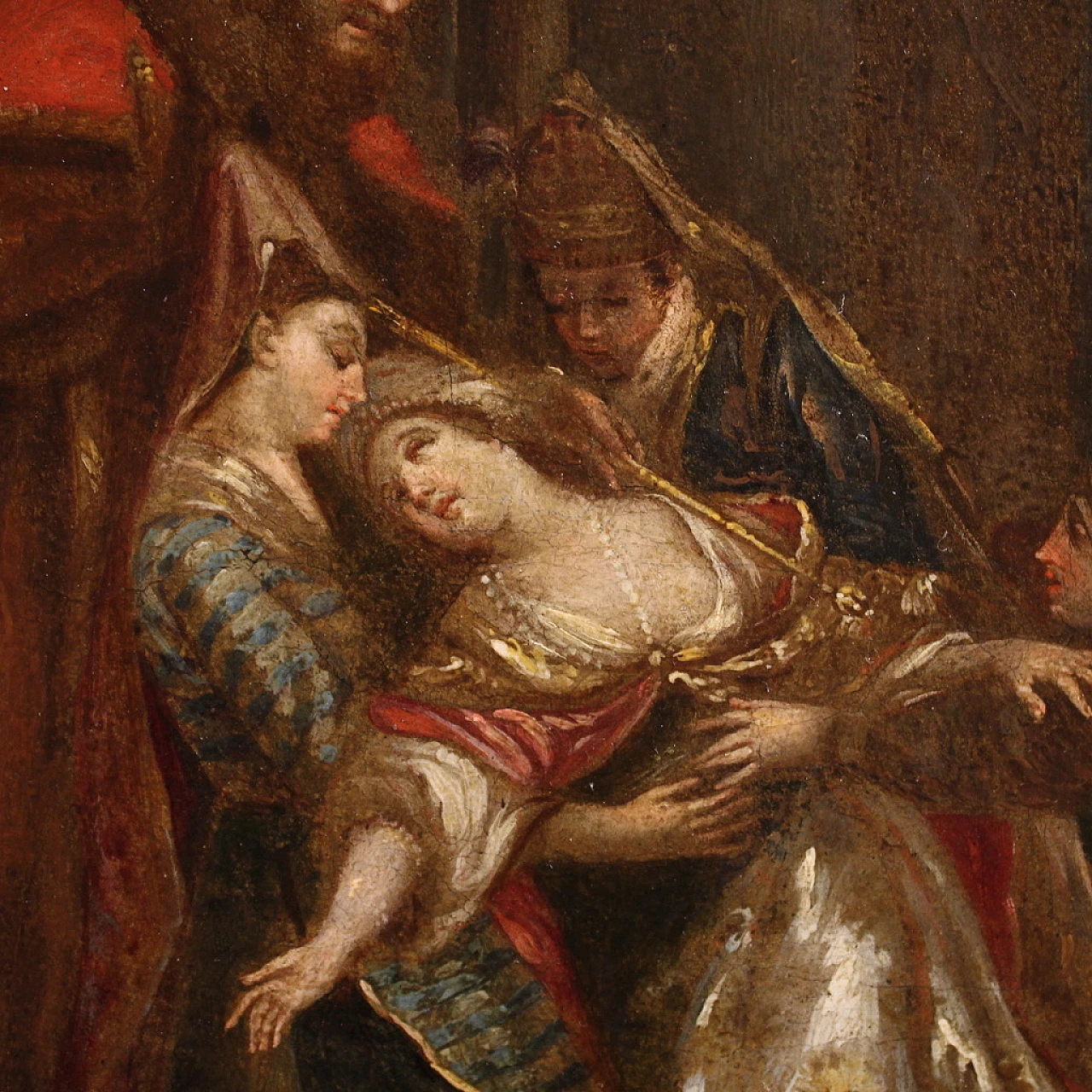
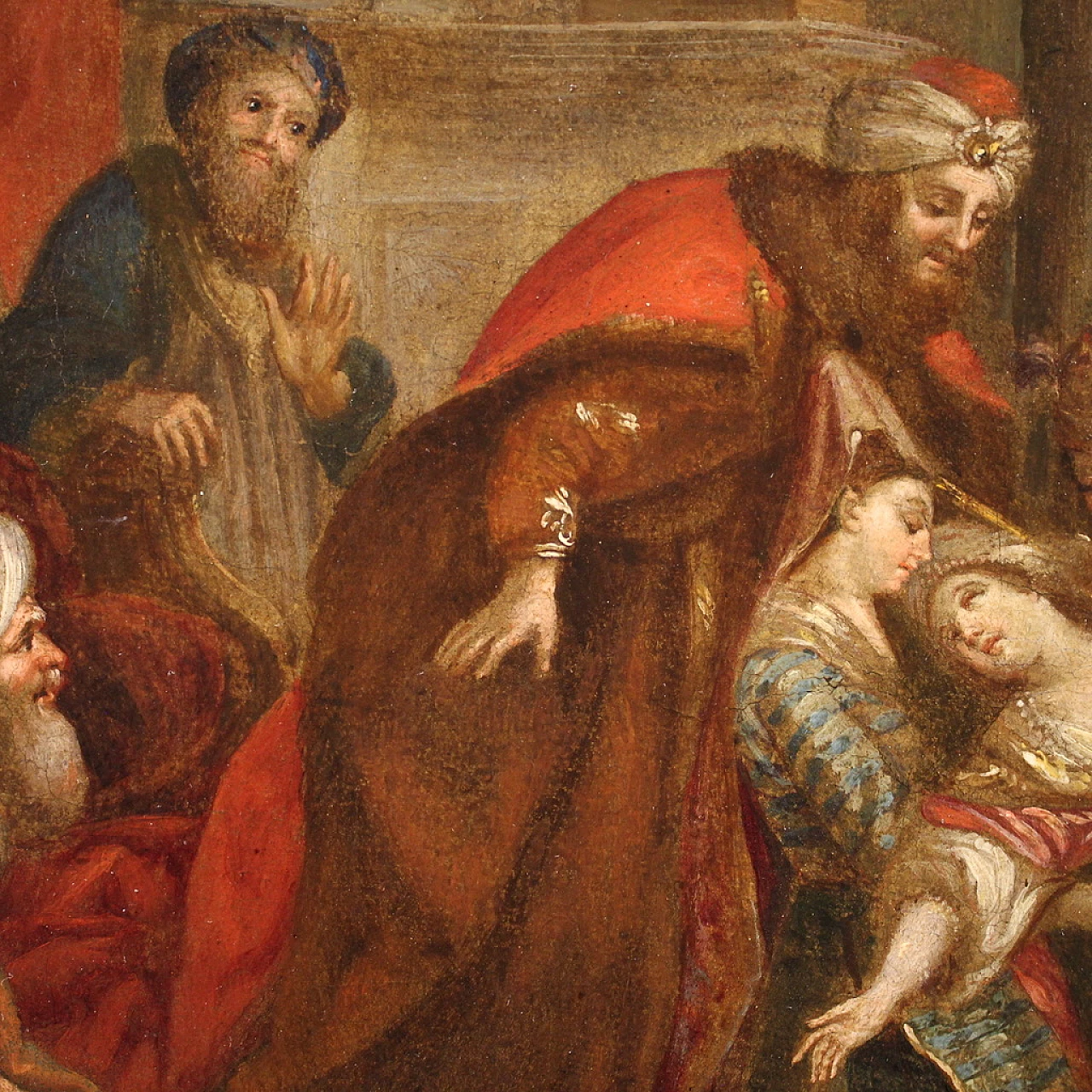
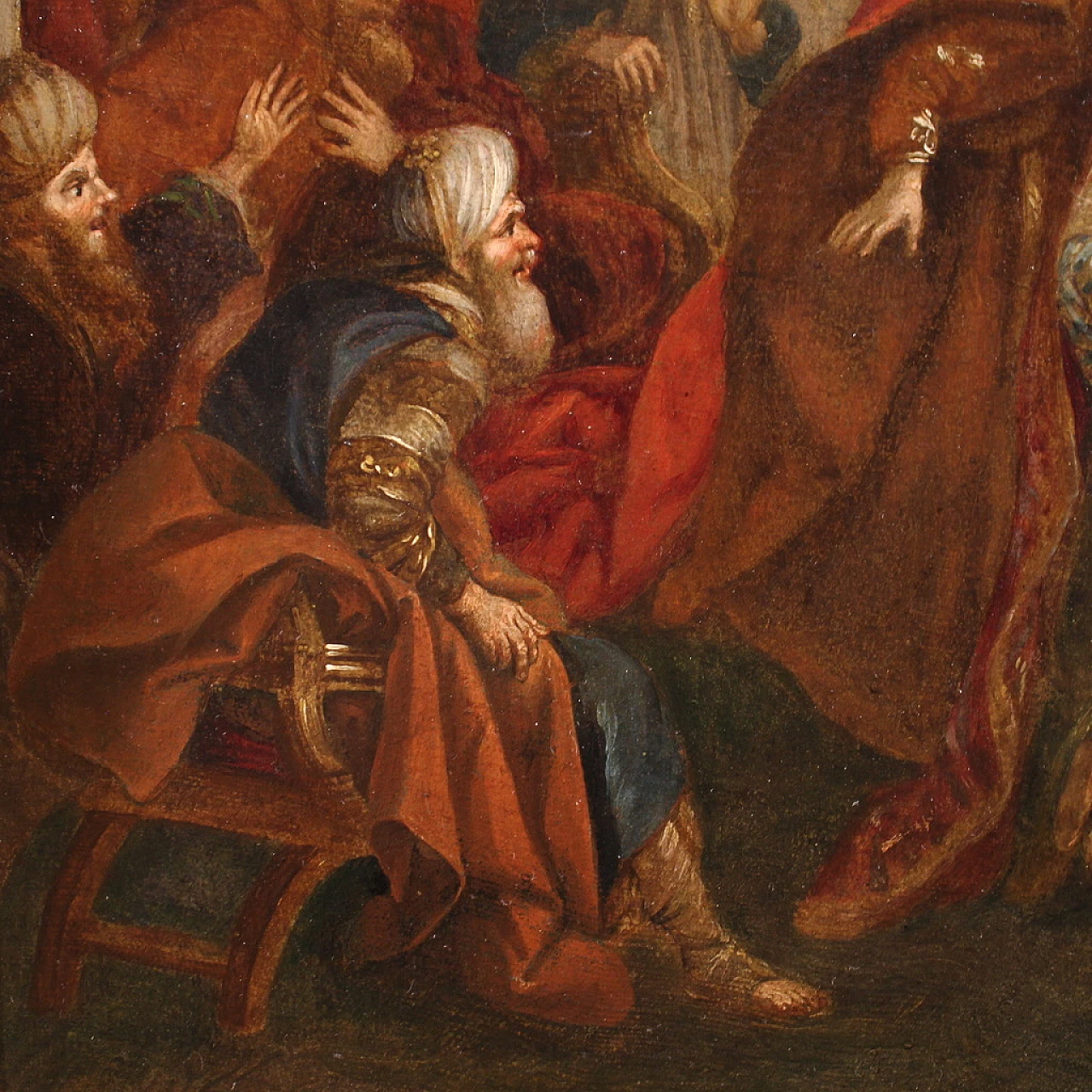
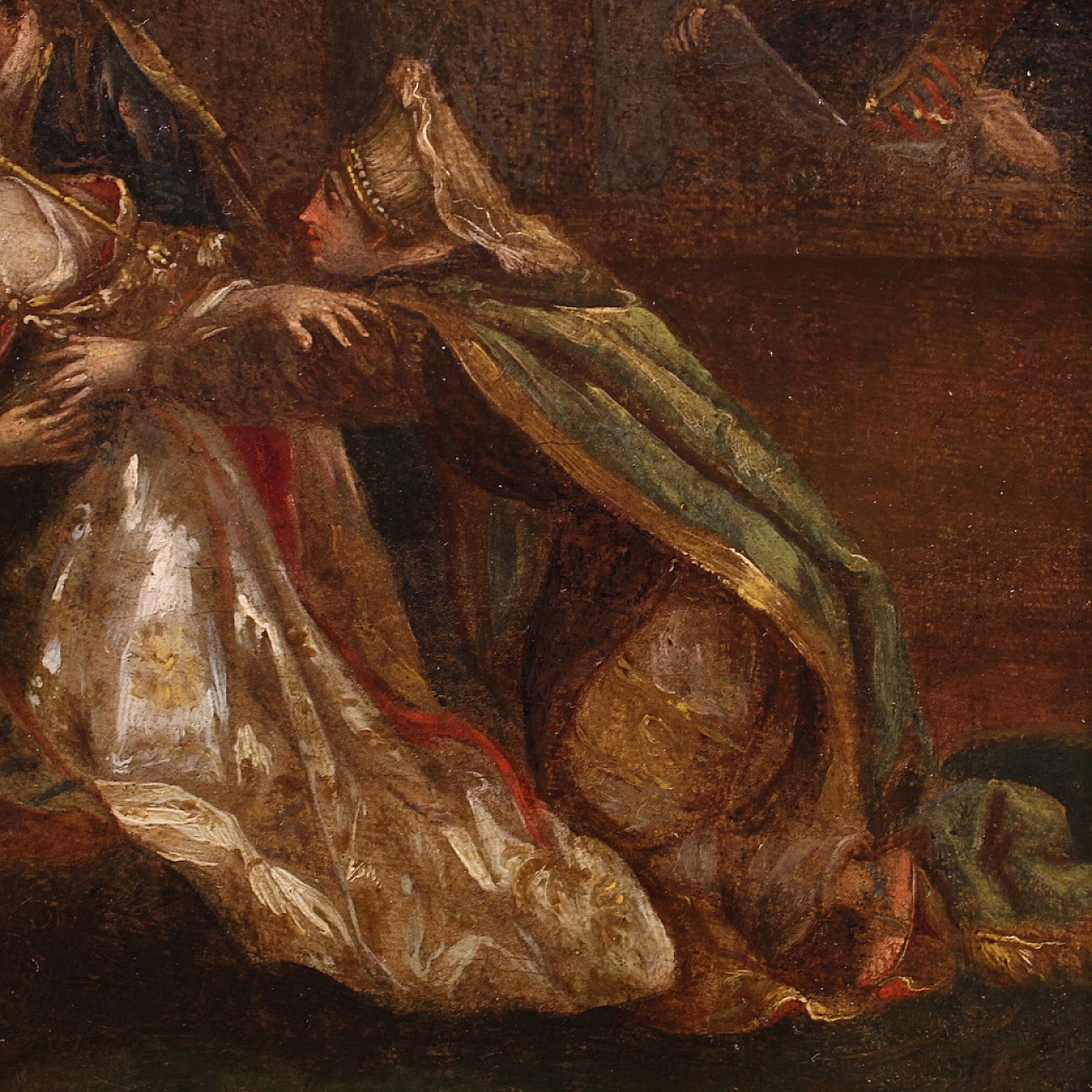
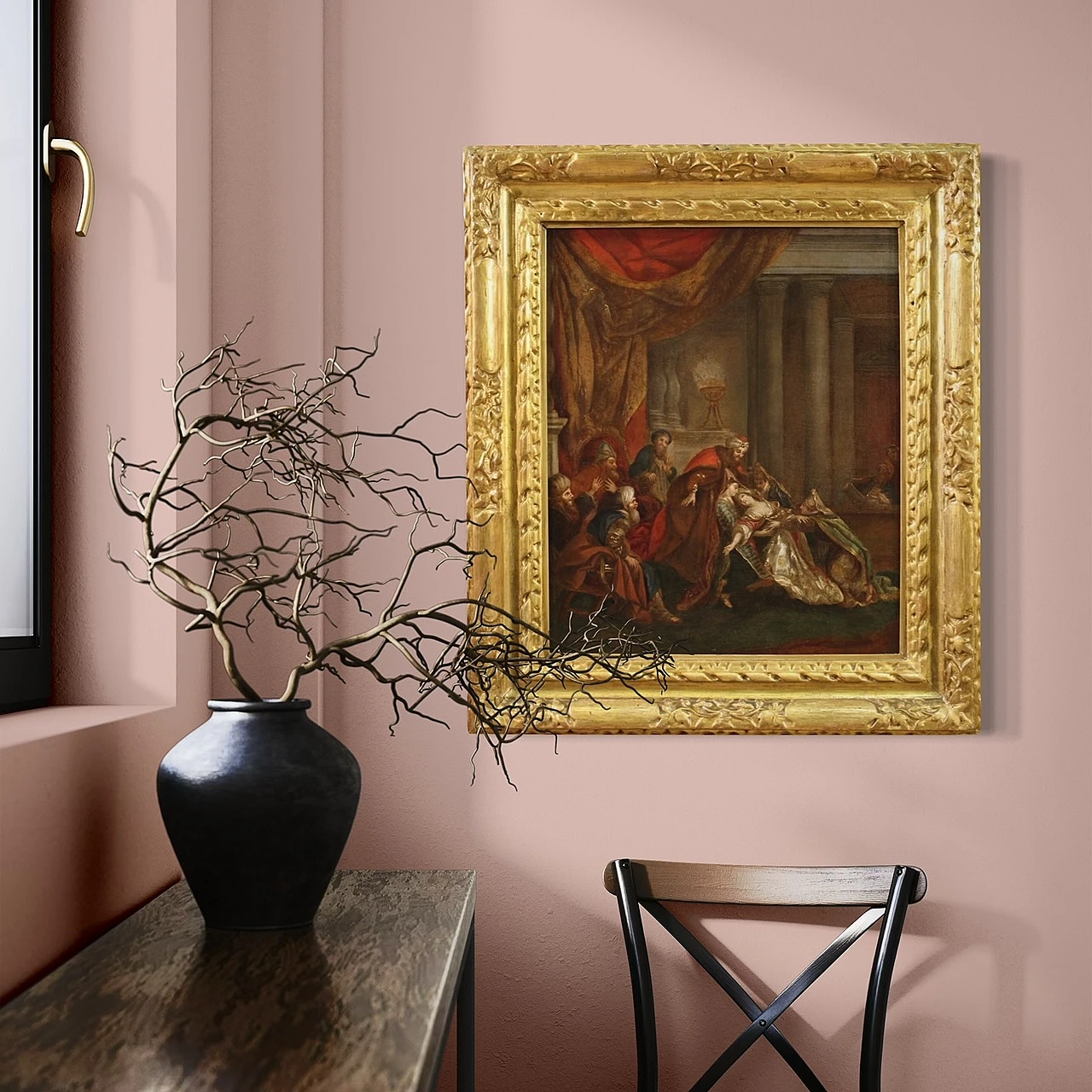
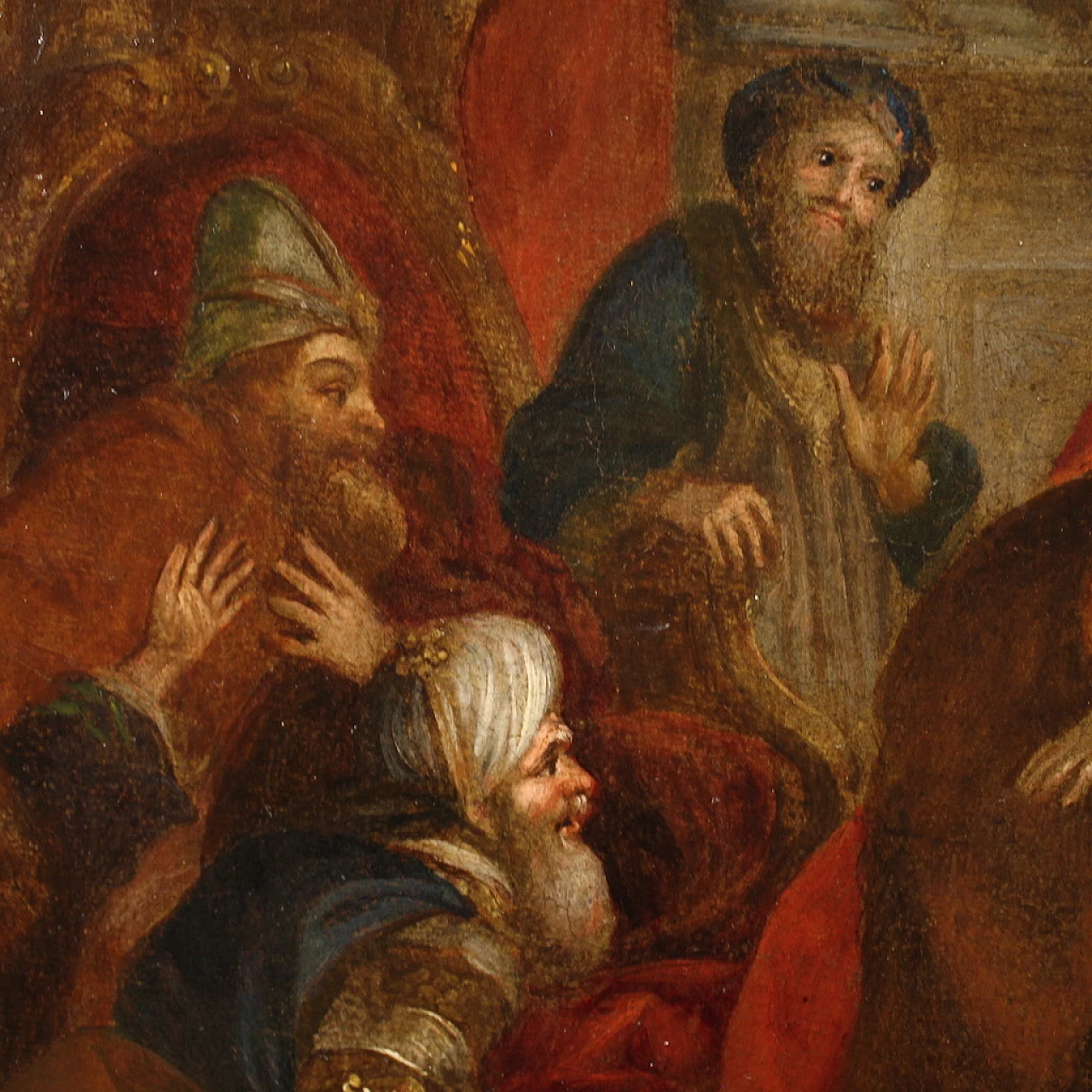
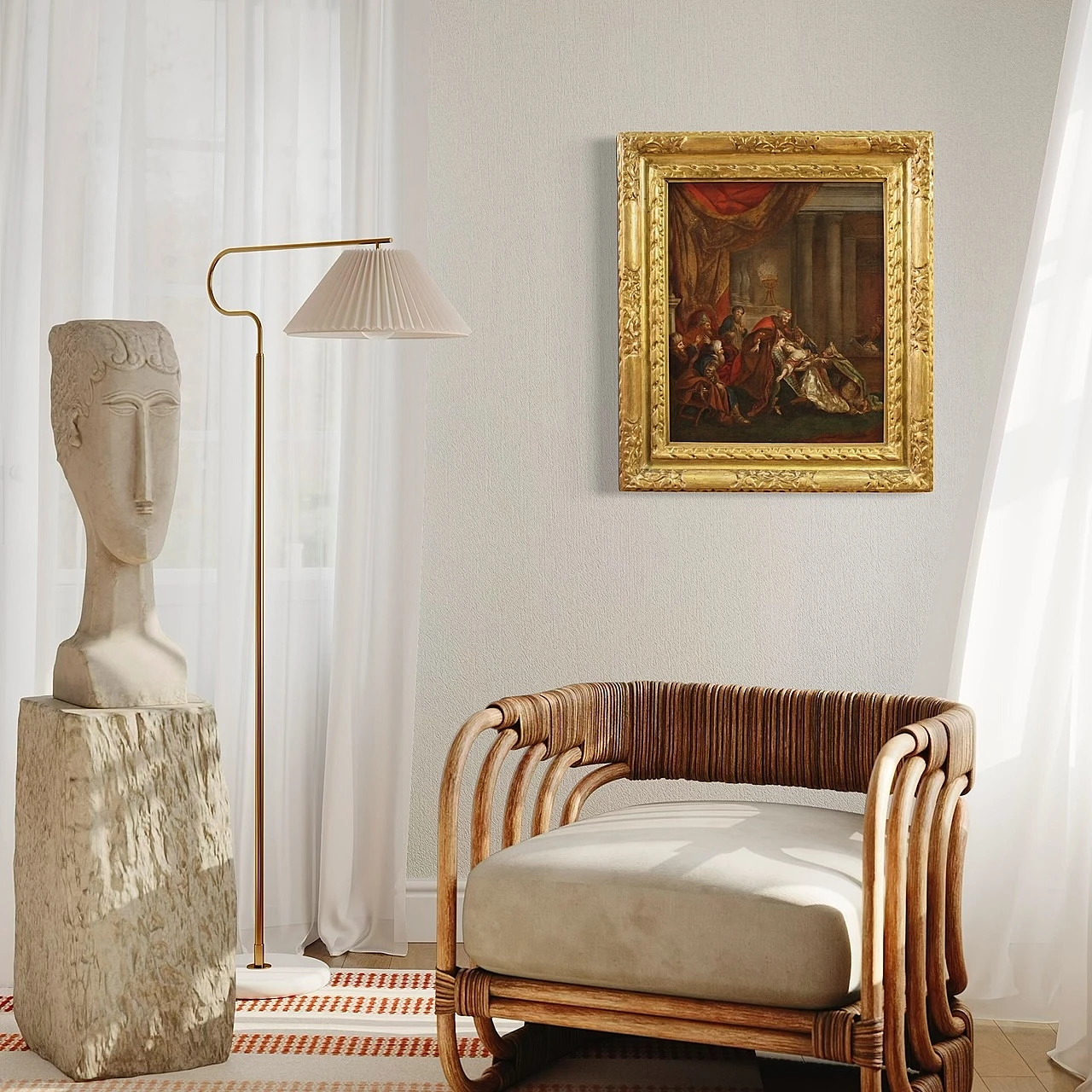
French painting from the second half of the 18th century. Oil on canvas depicting a scene from the Old Testament, the fainting of Esther before Ahasuerus. Esther is a young Jewish woman, a heroic figure, as, thanks to her courage, she saved her people subjected to persecution due to the hostility of Haman, minister of the king of Persia. Esther, upon the death of her parents, was adopted by her cousin Mordecai, a court dignitary. The king immediately fell in love with her and, despite ignoring her origins, chose her as his bride. When the prime minister Haman decided to exterminate all the Jews in her kingdom, Mordecai urged her to present herself to the king to intercede on behalf of her countrymen. The scene depicted here recalls the dramatic moment in which Esther, having gone before Ahasuerus, fainted in front of the sovereign who was angry at her audacity. In fact, anyone who dared to spontaneously appear before the king was punished with capital punishment. However, Ahasuerus, impressed by the audacity of his young and beautiful wife, allowed her to express her request. Thanks to Esther's intercession, therefore, the edict was cancelled. This painting is certainly inspired by a print of the engraving by Jacques Firmin Beauvarlet (Abbeville 1731 - 1797) taken from a painting by Jean-François de Troy (1679 - 1752). Between 1736 and 1742, Jean-François de Troy prepared seven cartoons with The Stories of Esther useful for the creation of Gobelin tapestries. The one depicting The Fainting of Esther, preserved in the Grand Palais of the Musée du Louvre, was made in 1737. Elegant 19th century frame in carved and gilded wood, with some signs of aging. Work already restored with relining, replacement of the frame and color recovery in small spots. Overall in excellent state of conservation. Light painting H 57 x W 48 cm.
ID: 2102-1726220558-103395
Time period

 SILVER Seller in Cuneo, Italy