






Art Deco walnut coffee table, 1930s




.png)
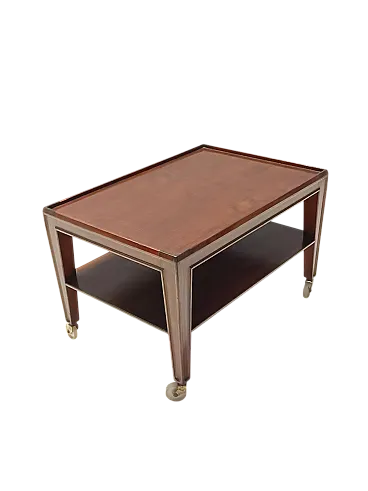
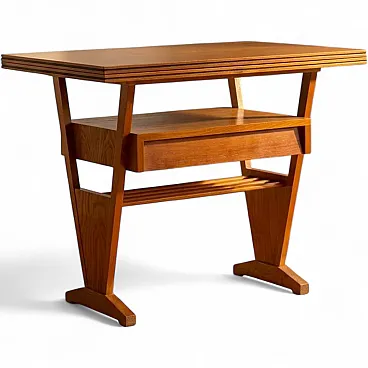
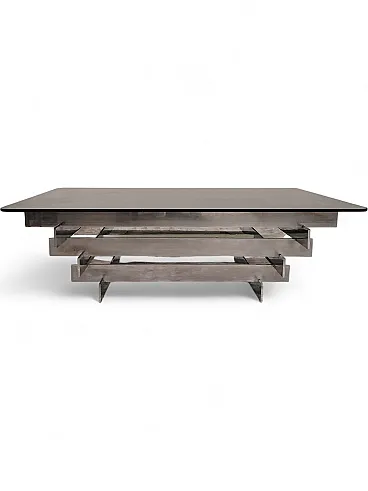
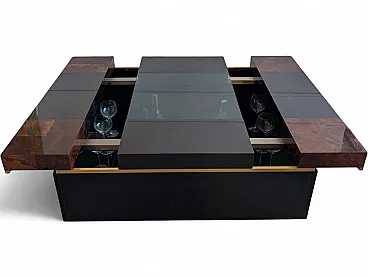
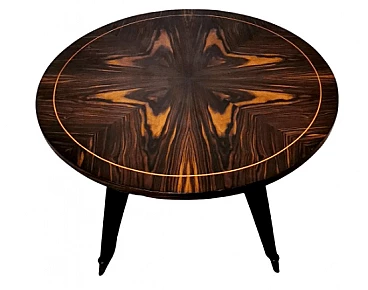
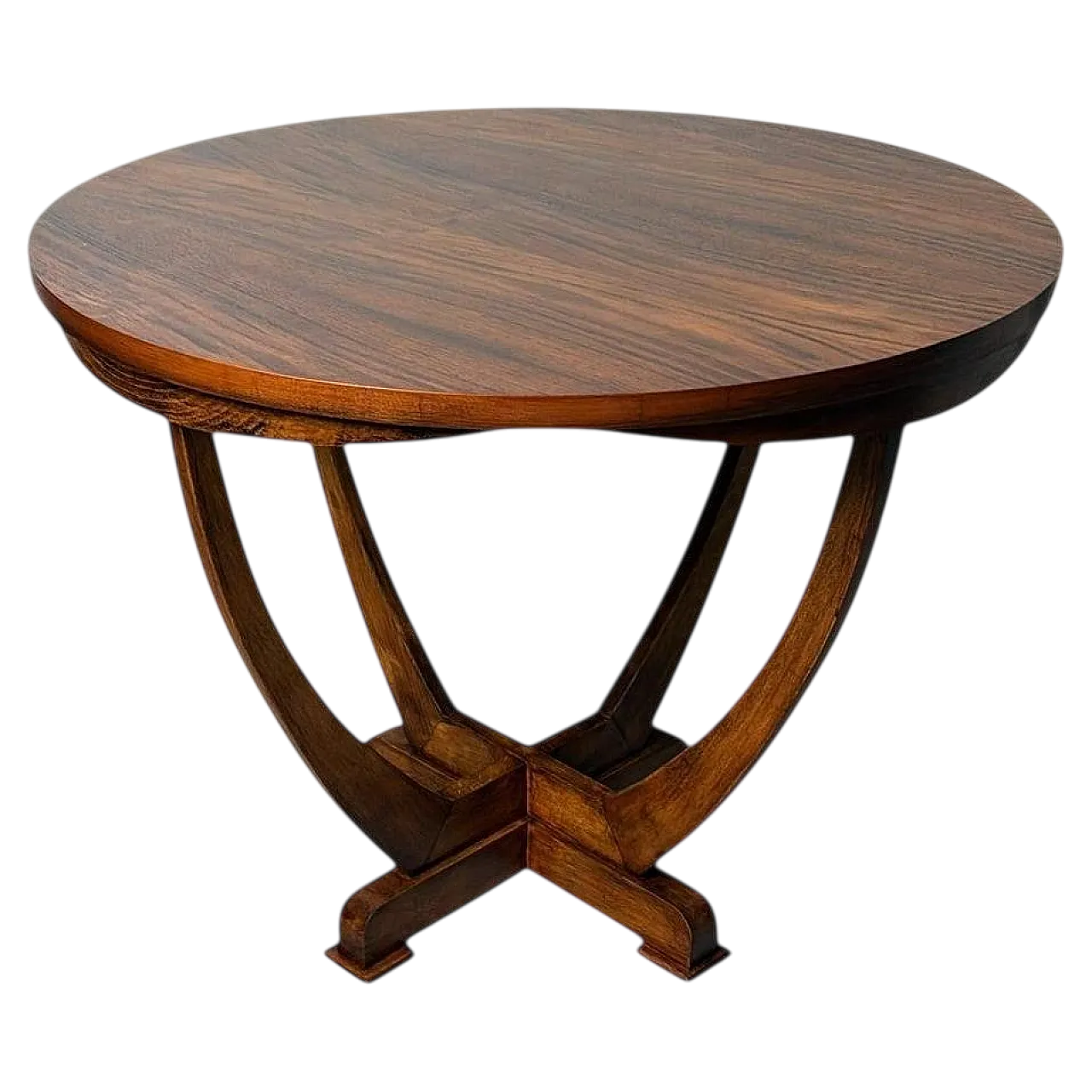
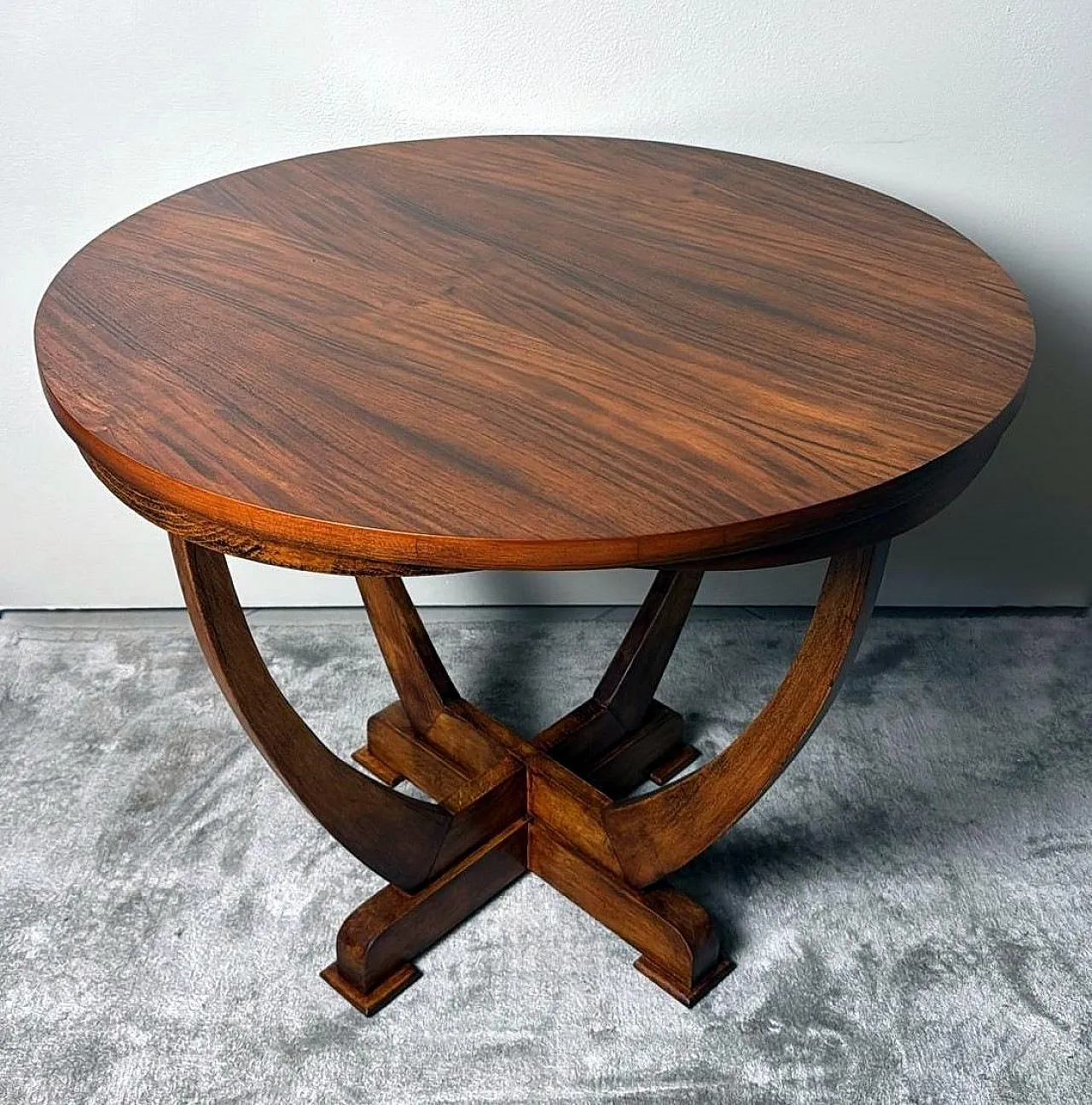
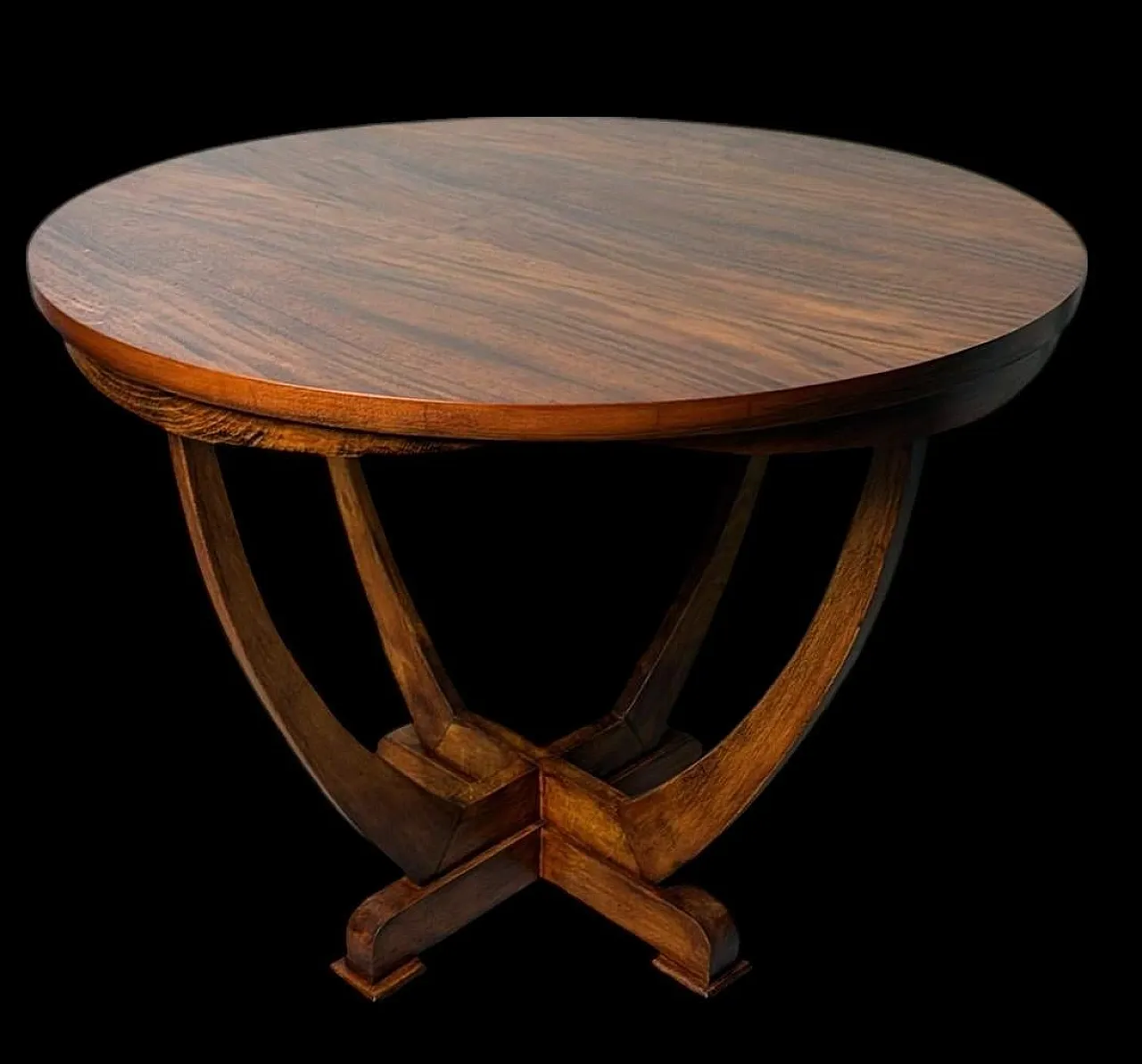
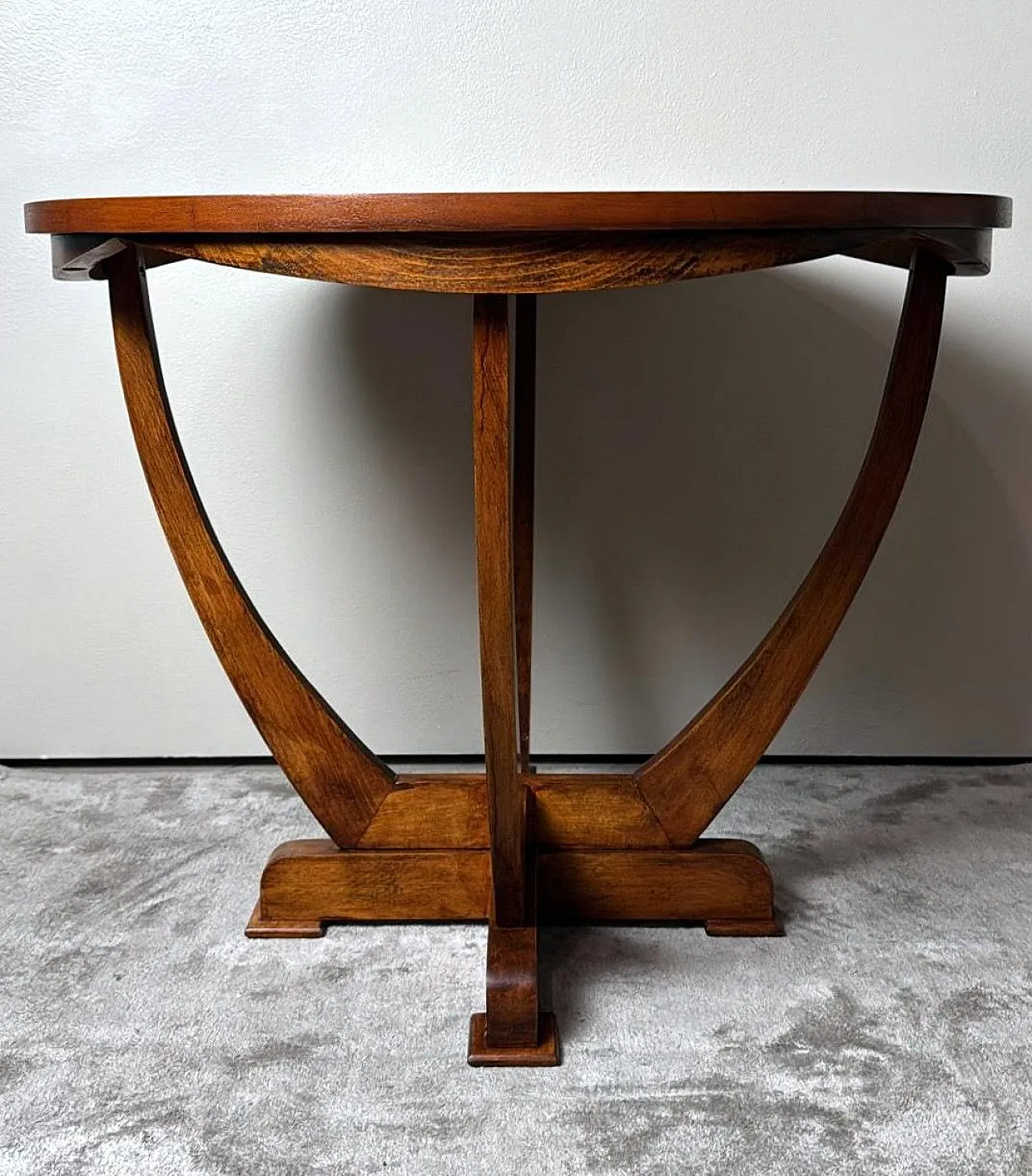
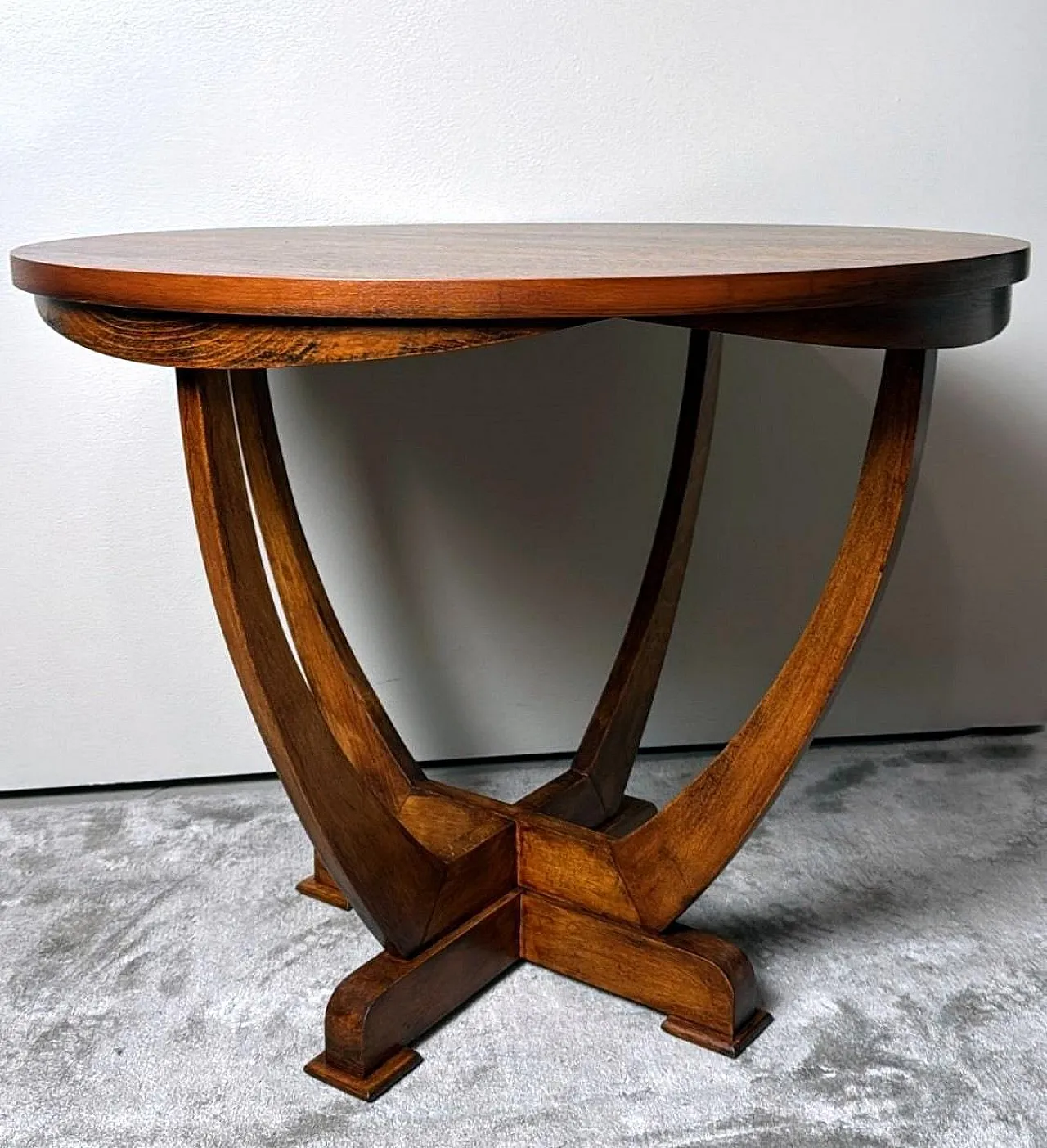
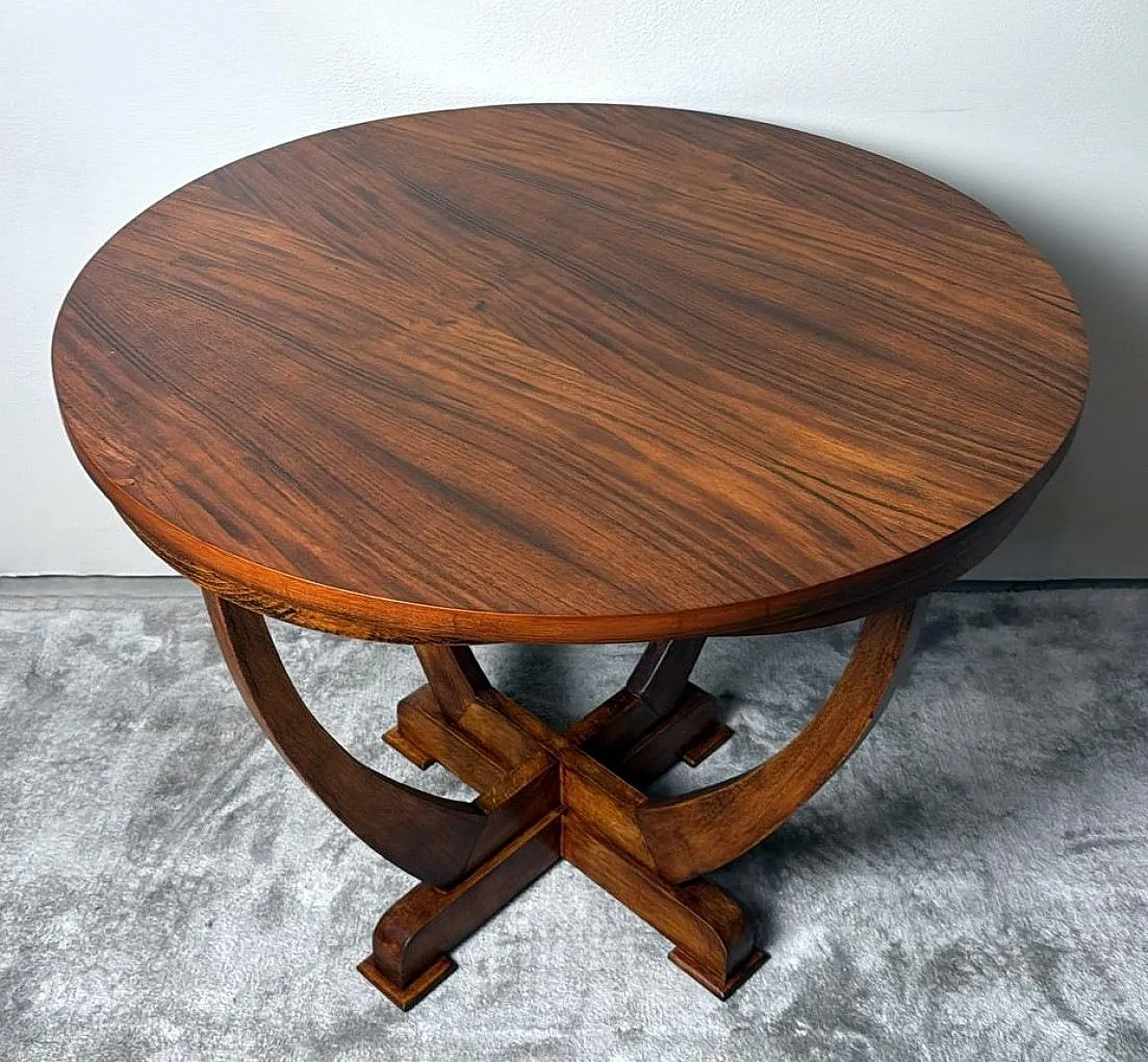
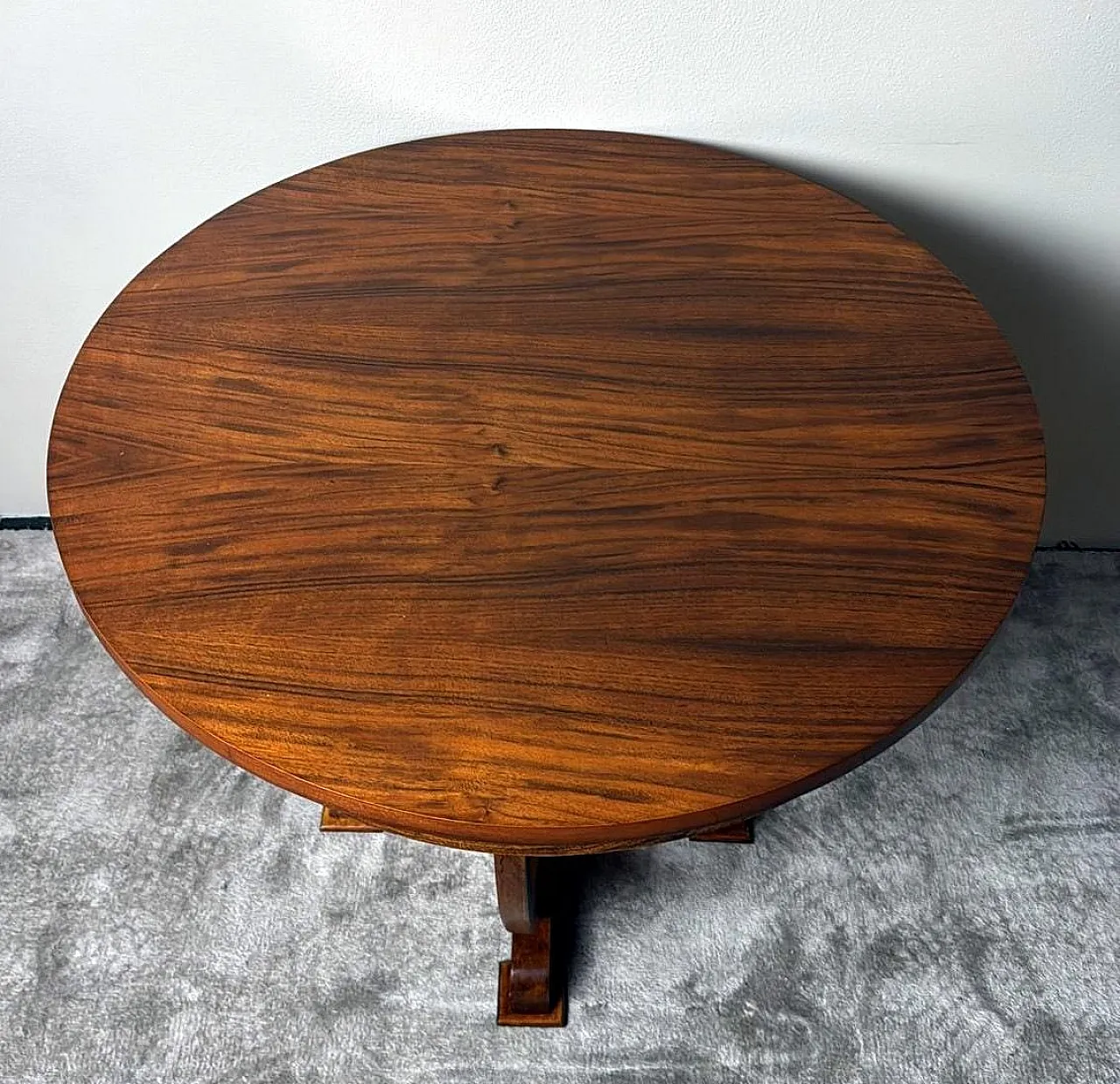
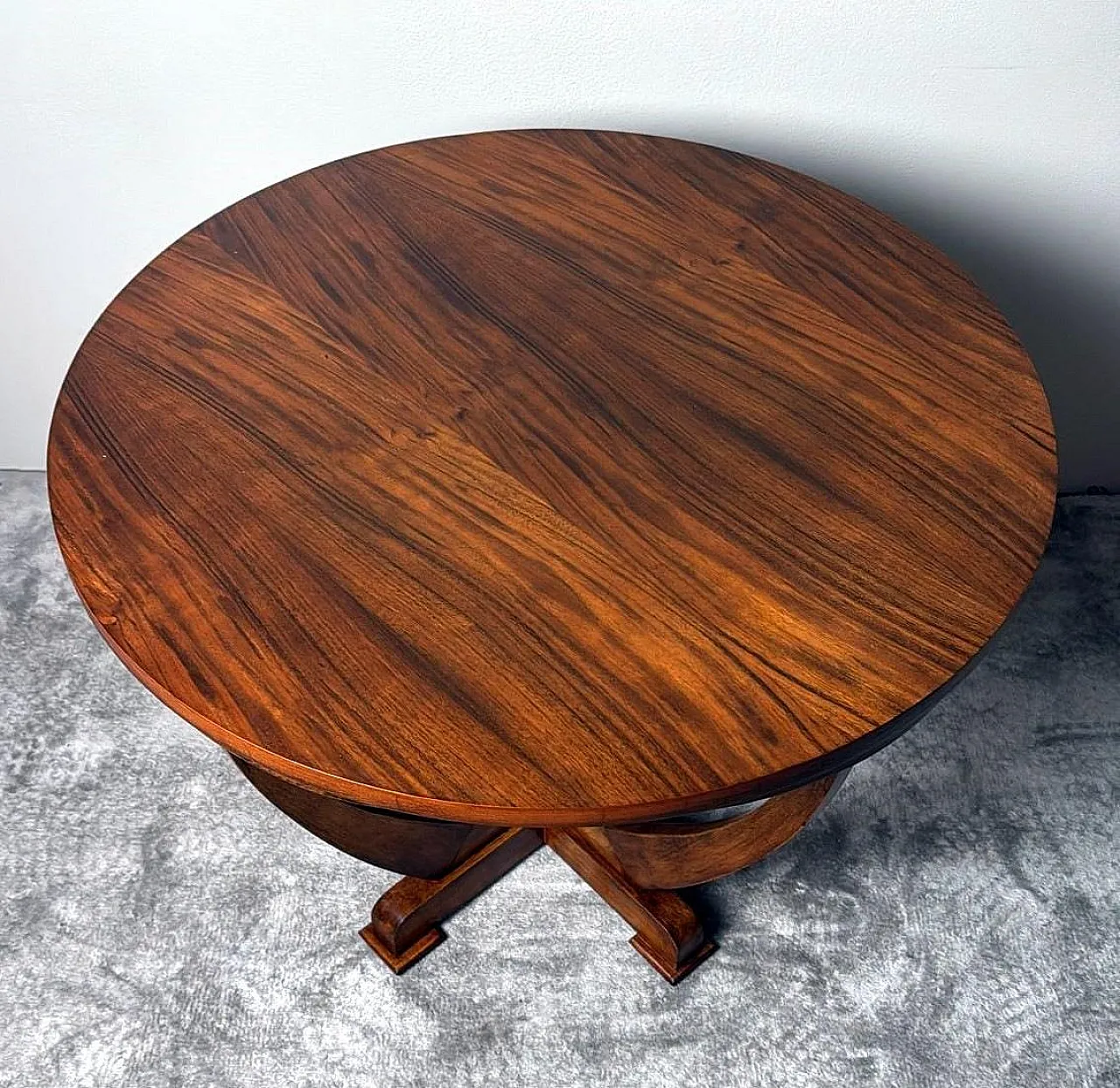
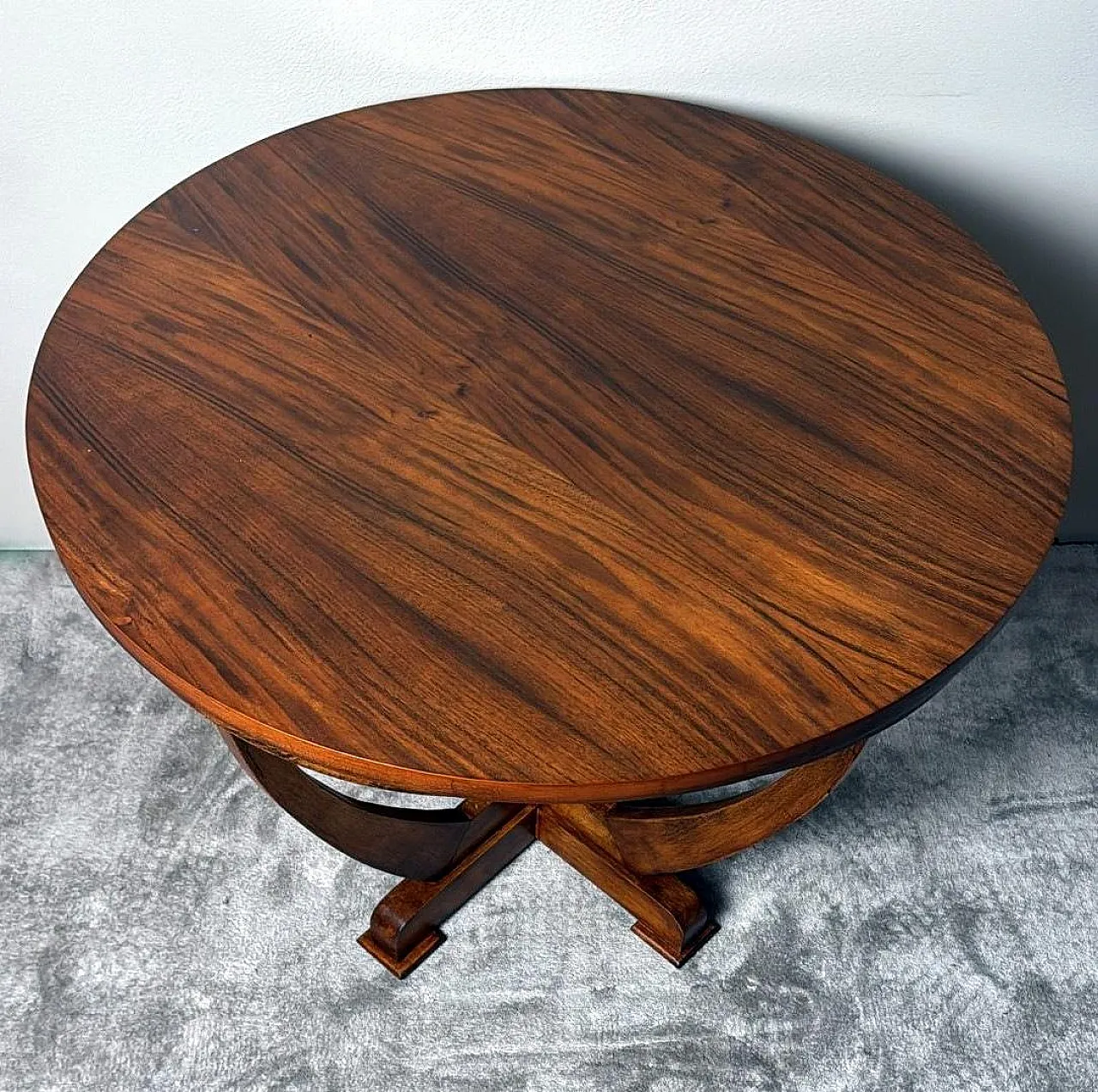
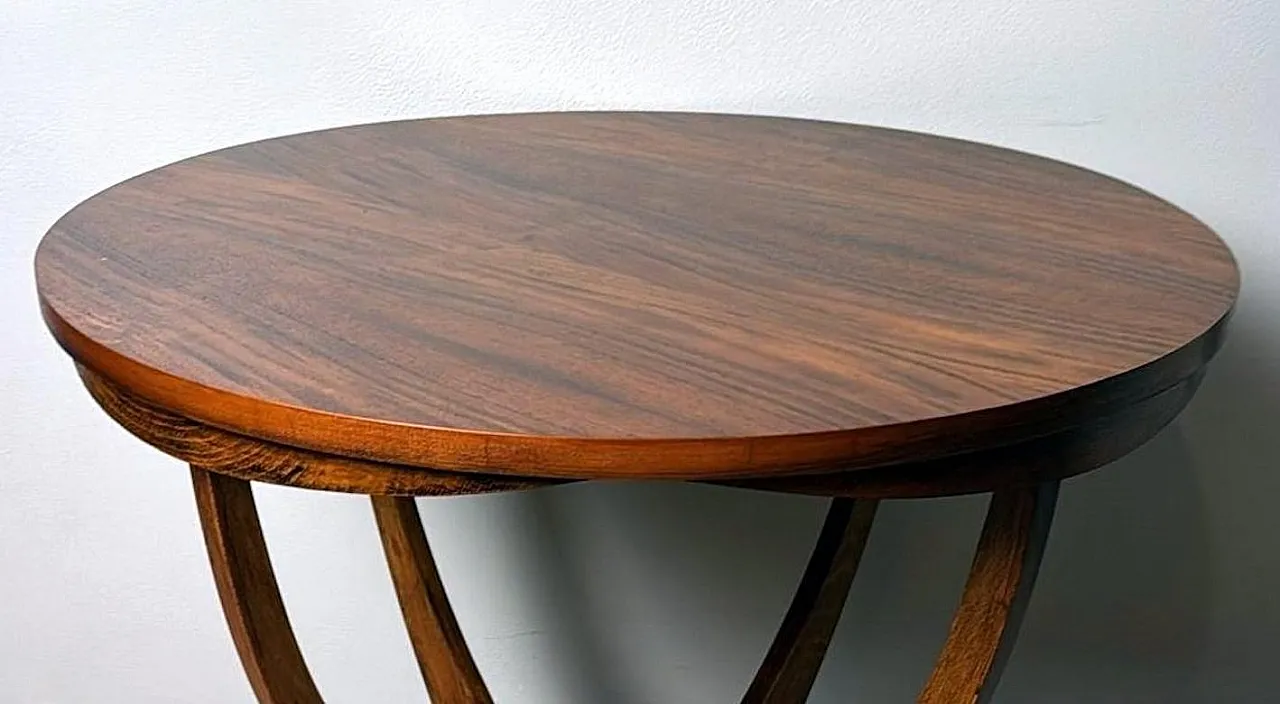
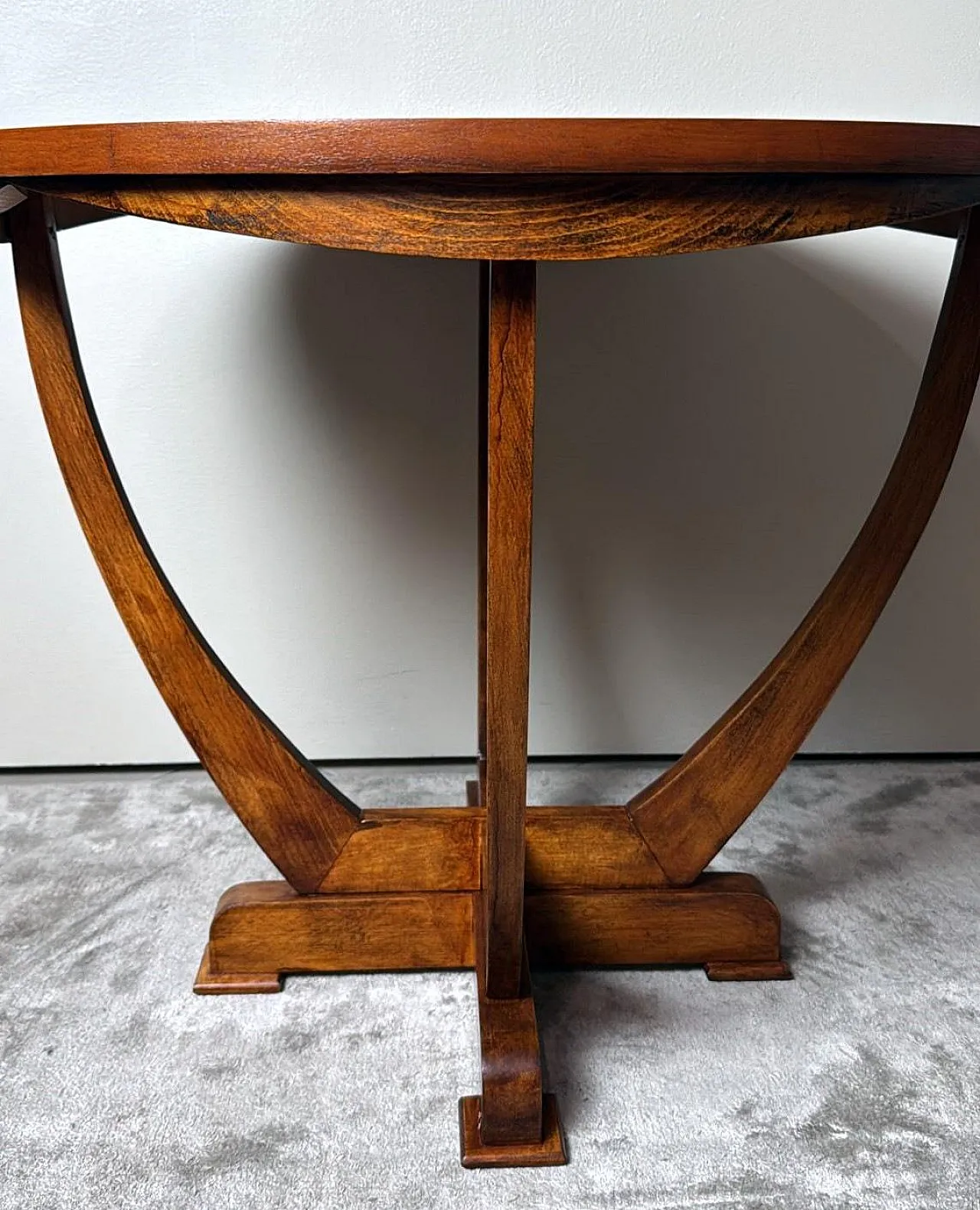
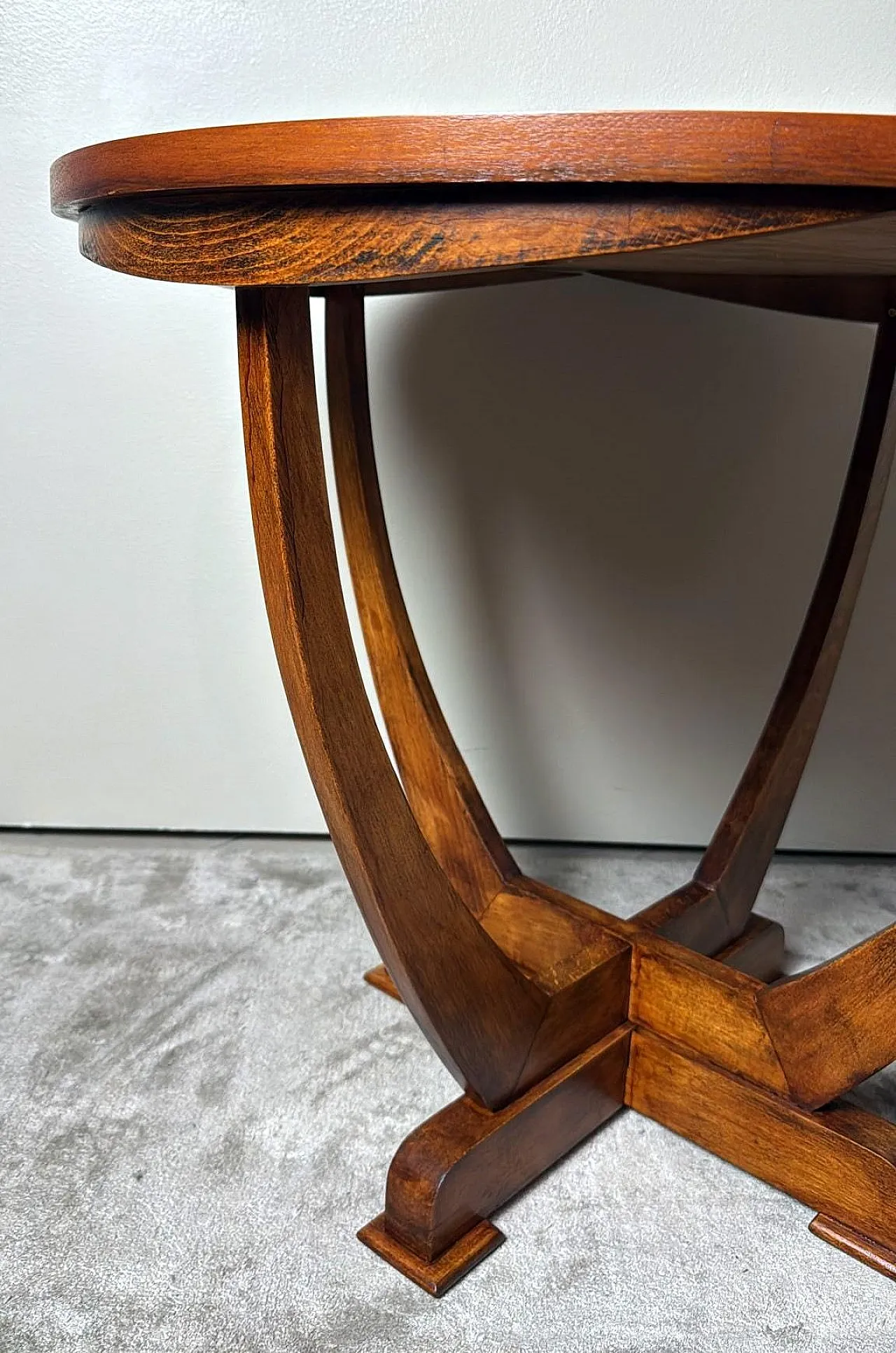
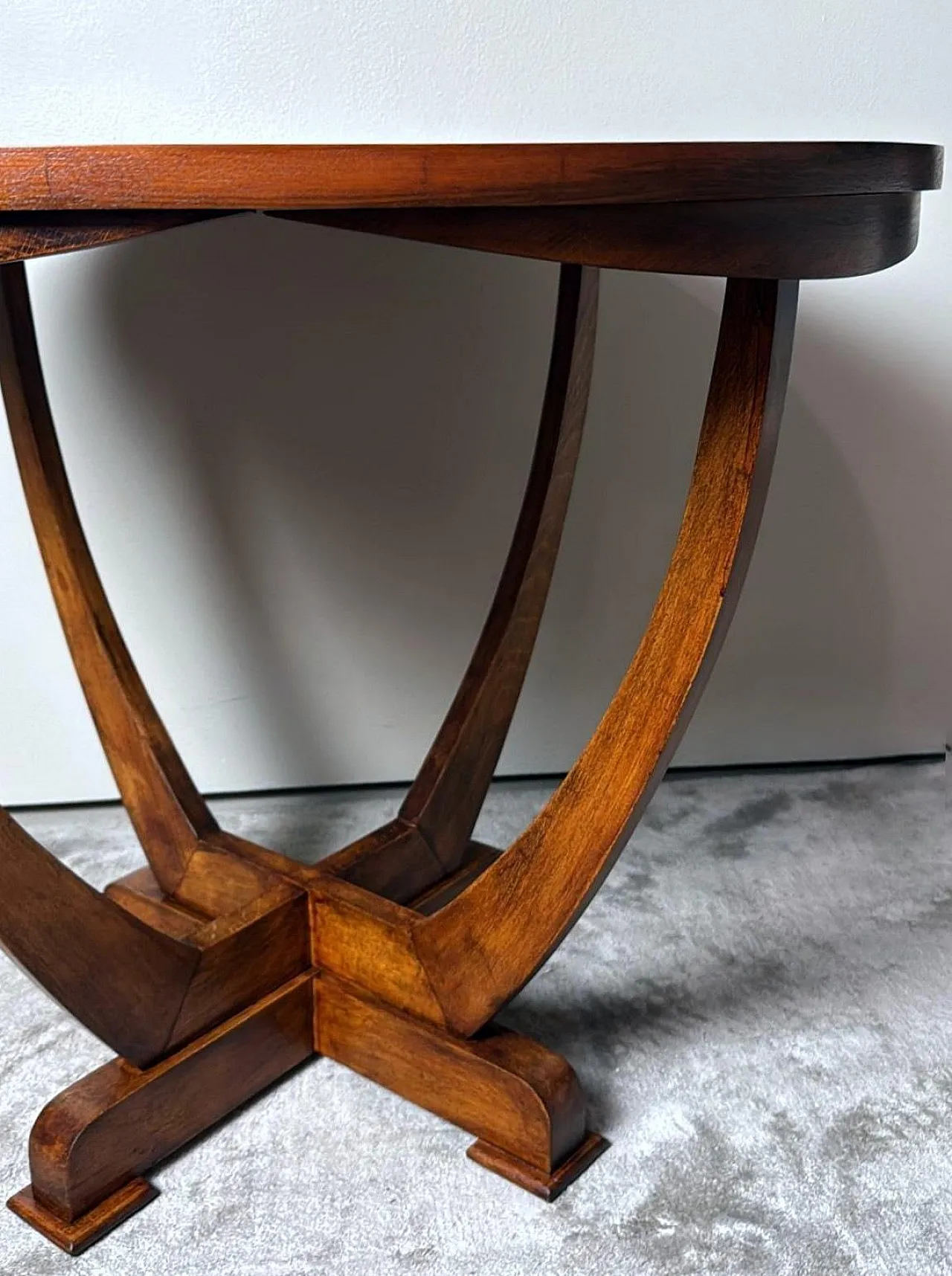
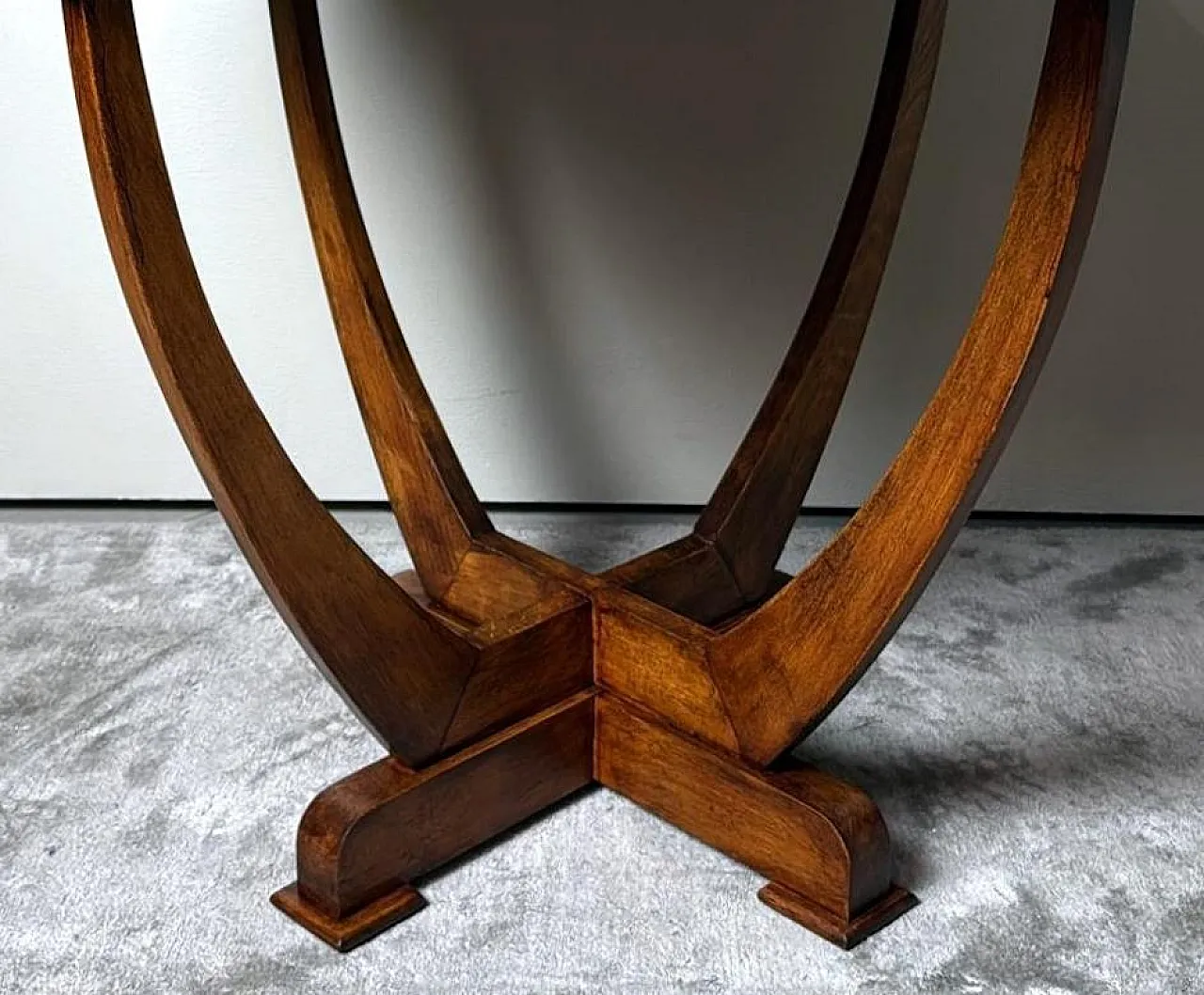
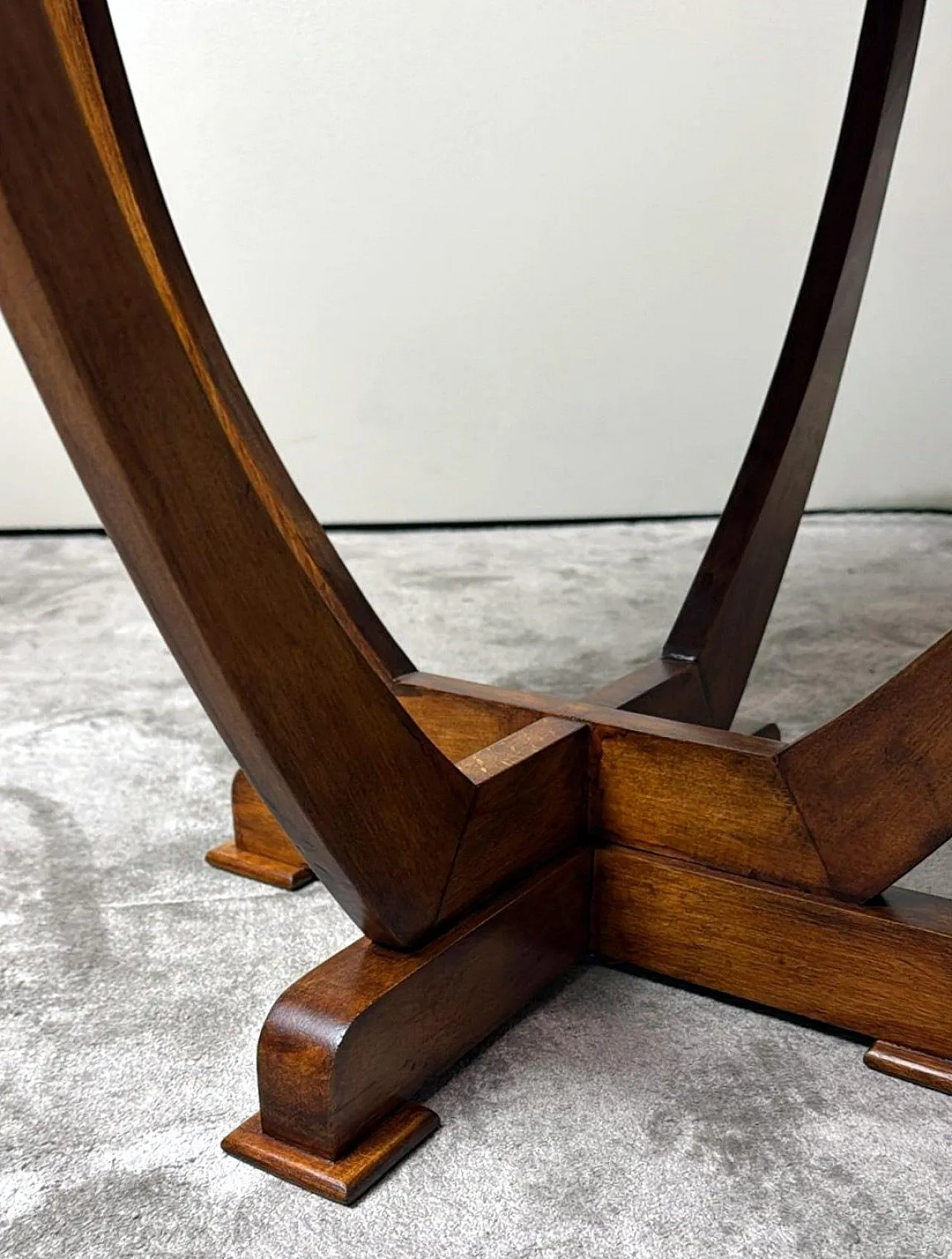
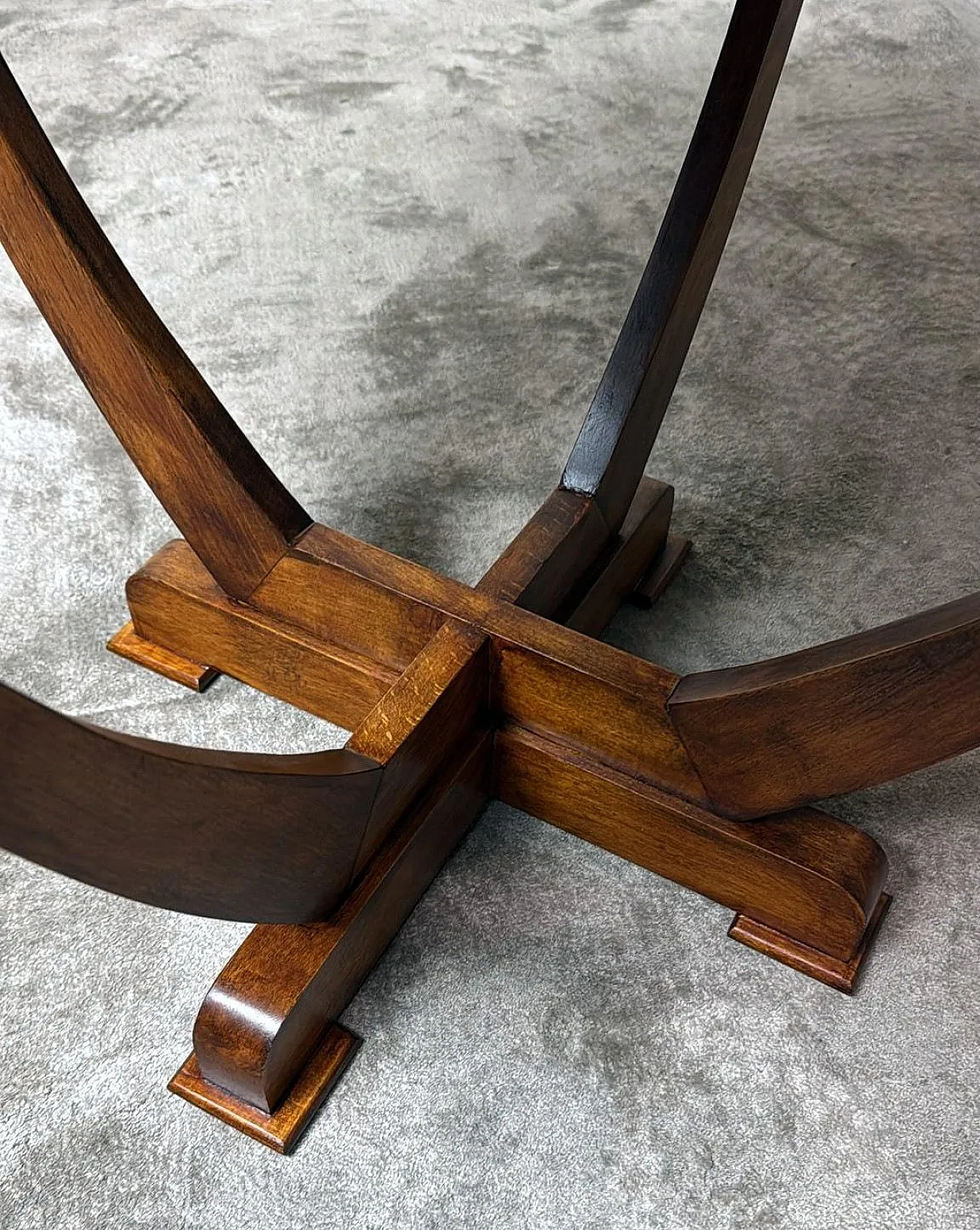
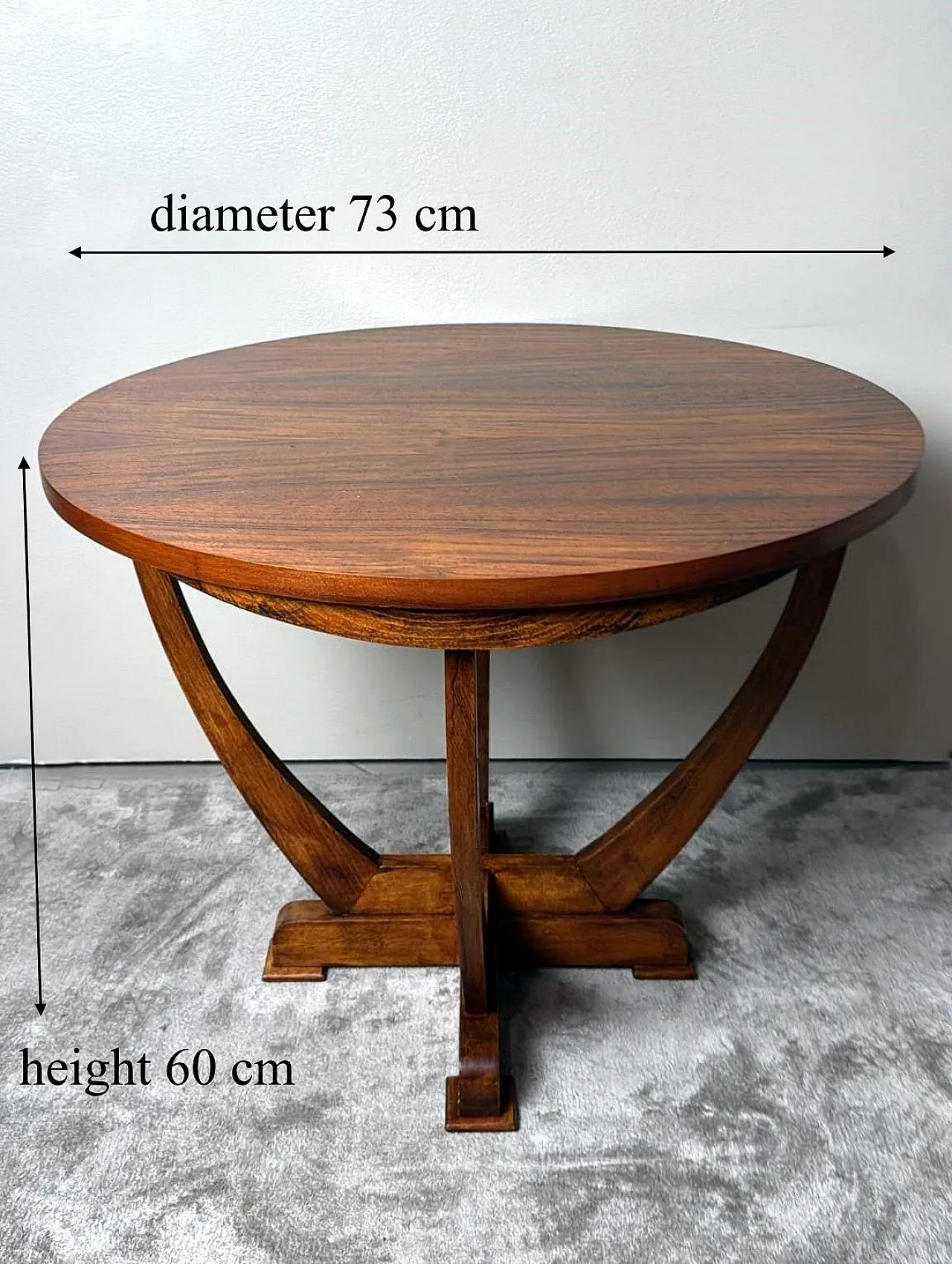
Refined and elegant Art Deco Italian coffee table in walnut. The design is clean and linear, with a simple yet sophisticated silhouette. From the edge of the circular top, four sturdy legs extend downward, converging in a unique and original way at the base to form a crossed structure that gives excellent overall stability. This table was crafted between 1930 and 1935 in an artisan workshop in Cantù, a city in the province of Como, Lombardy (Italy), historically renowned for its fine furniture production. Cantù has long been a center of excellence in Italian woodworking, with a reputation built over decades for producing high-quality pieces for an international clientele. These include private collectors as well as luxury interior design projects for hotels, restaurants, and prestigious residences around the world. Compact in size, yet striking in presence, the table features sharp, minimal lines that lend it a timeless elegance. The design balances austerity and precision, while its refined simplicity gives it a dynamic and noble character. What truly distinguishes this piece is the exceptional wood used for the veneer: Juglans regia, commonly known as European or Italian walnut. This is a prized, dense, and costly hardwood, long appreciated for its rich coloration, flamed grain, and vivid veining. Walnut has no equal in terms of natural beauty, but it is also rare — only a small portion of each tree yields usable lumber, making it highly sought-after and valuable. Veneering is an ancient woodworking technique involving the manual application of thin sheets of precious wood — usually 1 to 2 mm thick — onto a solid wood base. In this case, selected walnut veneer has been glued to a walnut core of standard quality using a specialized adhesive. The surface is then pressed and left to dry, ensuring perfect adhesion. Once dry, the piece is hand-finished with sanding, polishing, and protective coatings (such as oils or varnishes) to enhance both the beauty and durability of the wood. The history of veneering dates back to ancient Egypt and China. Over the centuries, the technique spread and evolved, becoming a cornerstone in the production of luxury furniture and decorative arts. Applied to this table, it has elevated the beauty of the flamed walnut, highlighting its rich tonal variations and distinctive grain. The entire wooden structure has been meticulously hand-restored by our team of craftsmen and is presented in excellent condition. Dimensions: Diameter 73 cm (28.7 in), Height 60 cm (23.6 in).
ID: 4672-1751277594-127501
Time period

 SILVER Seller in Prato, Italy