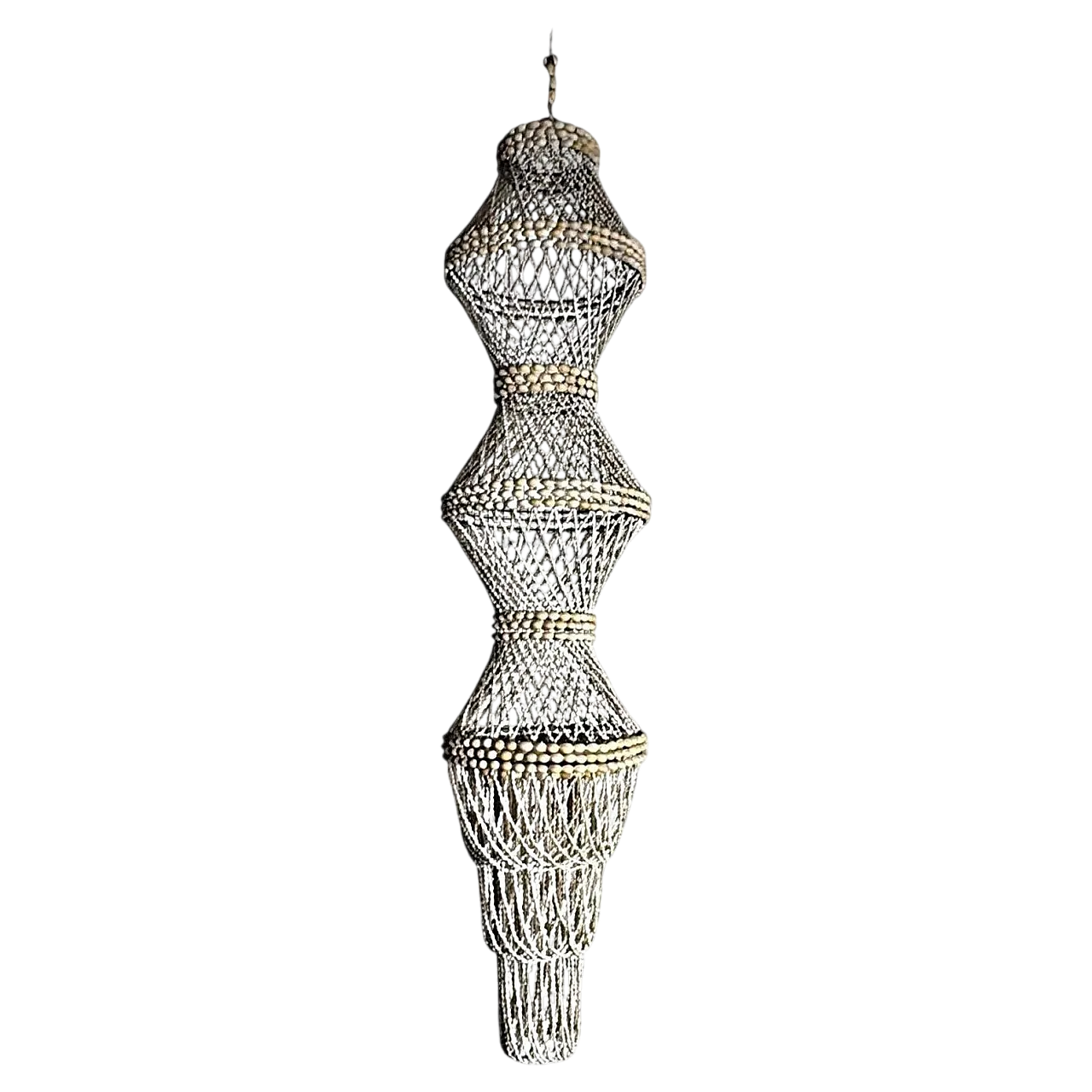
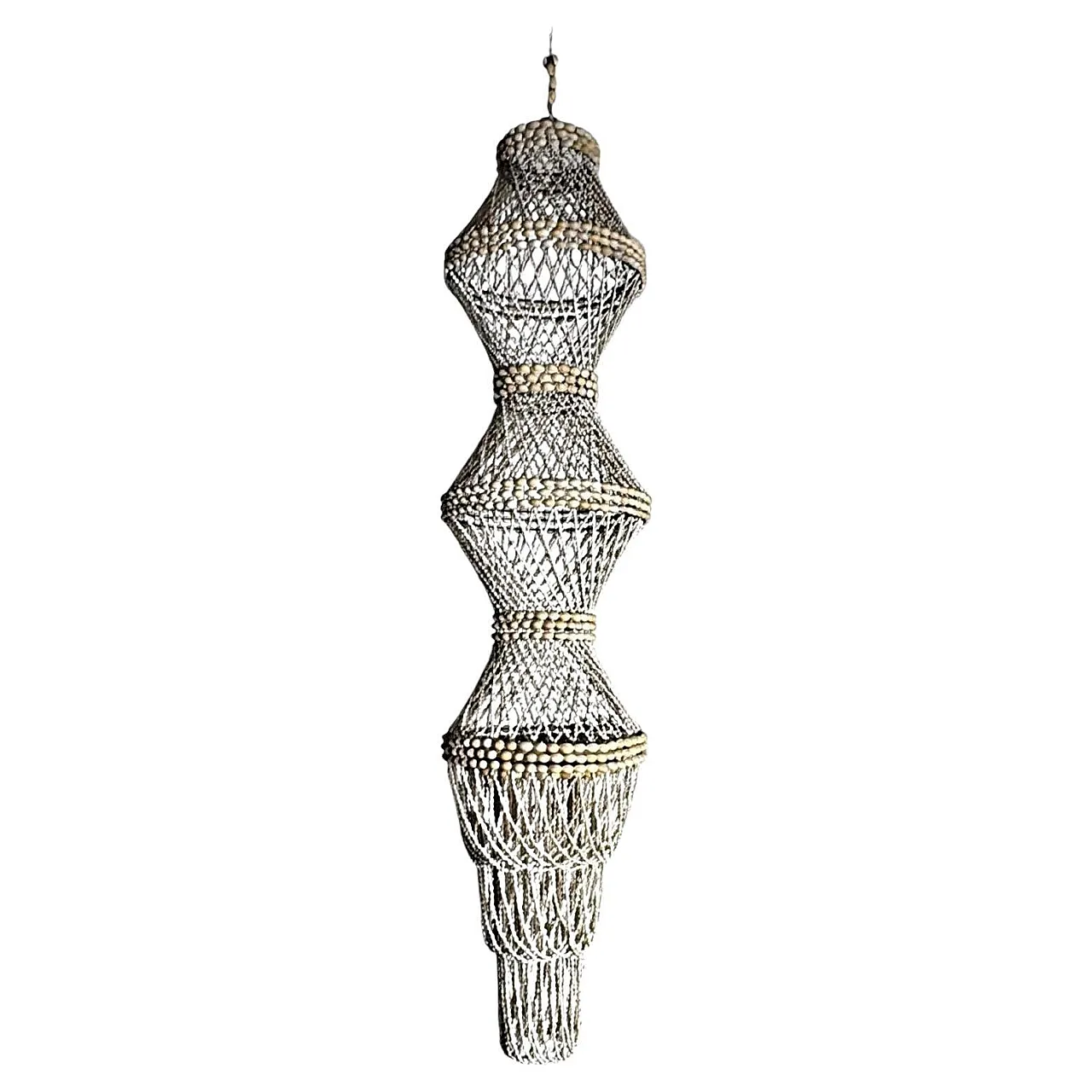
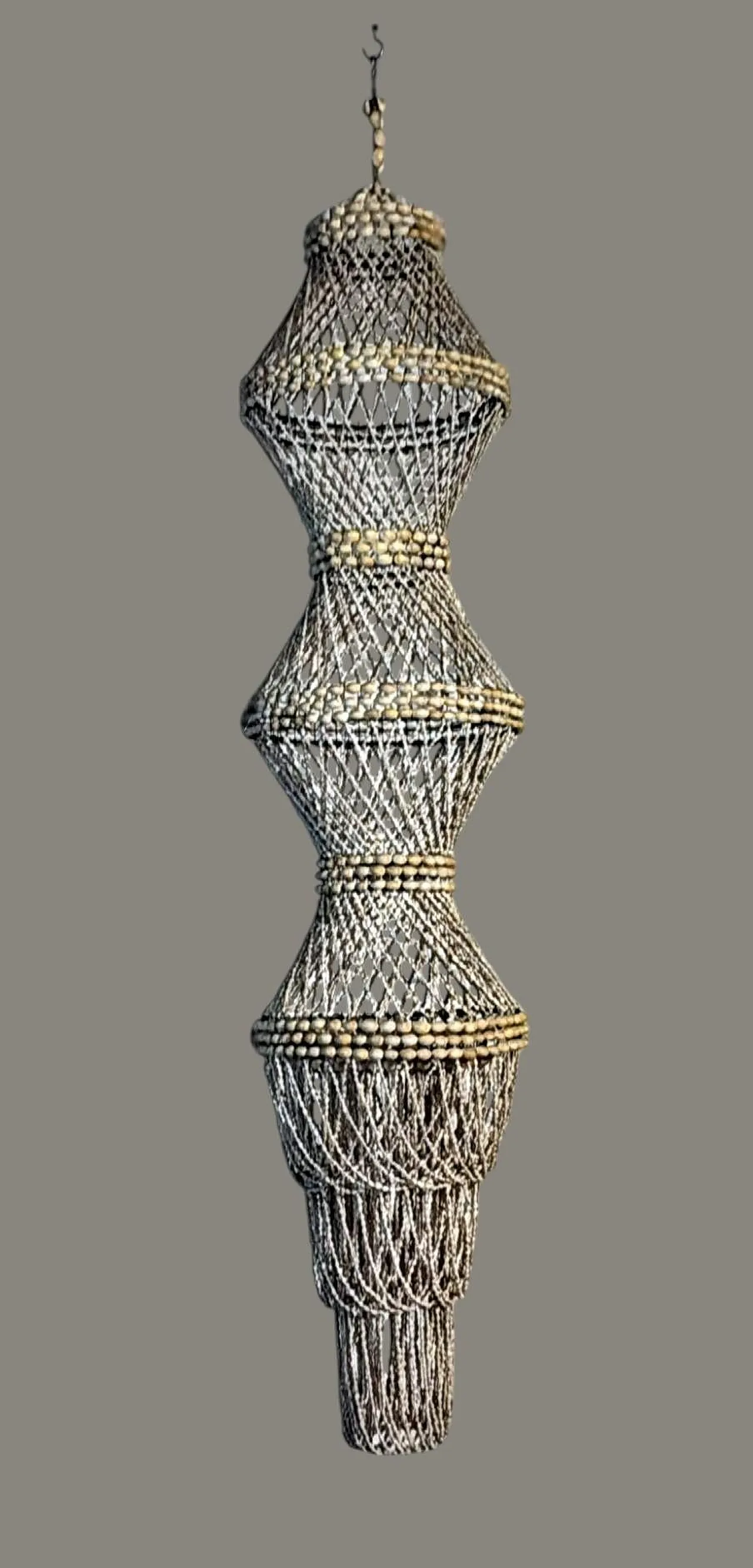
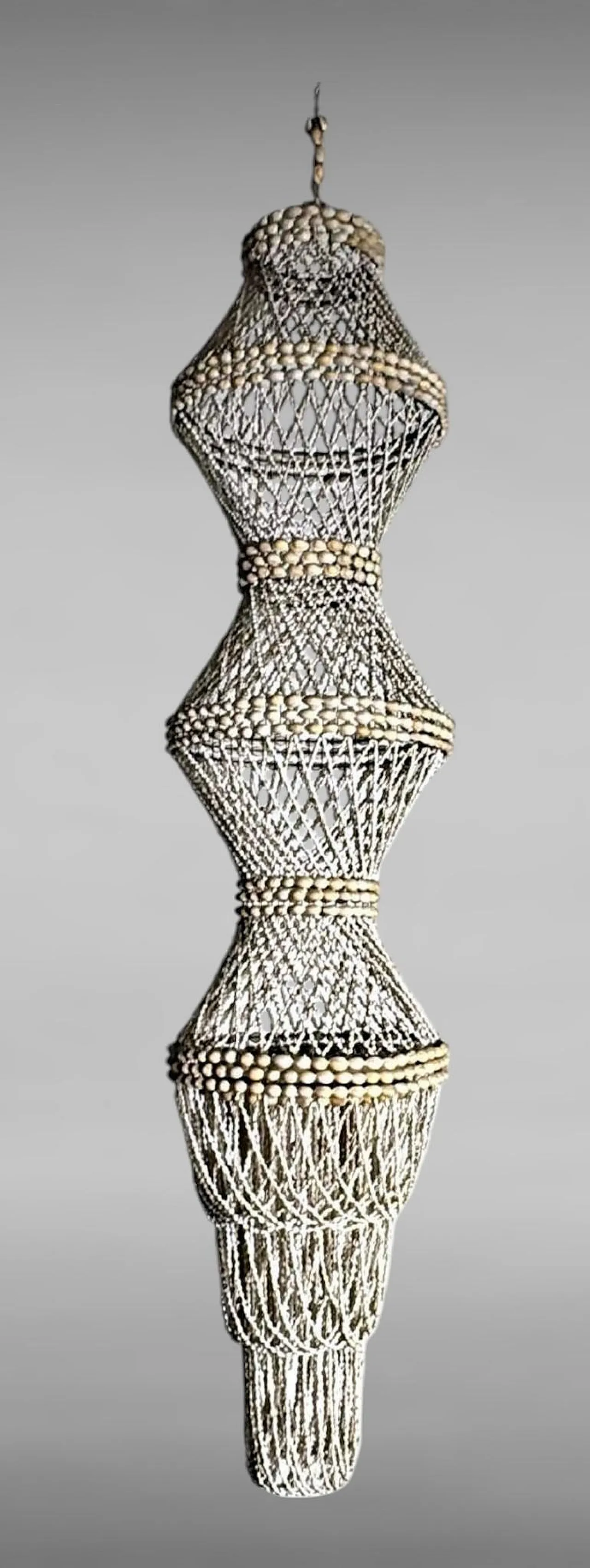
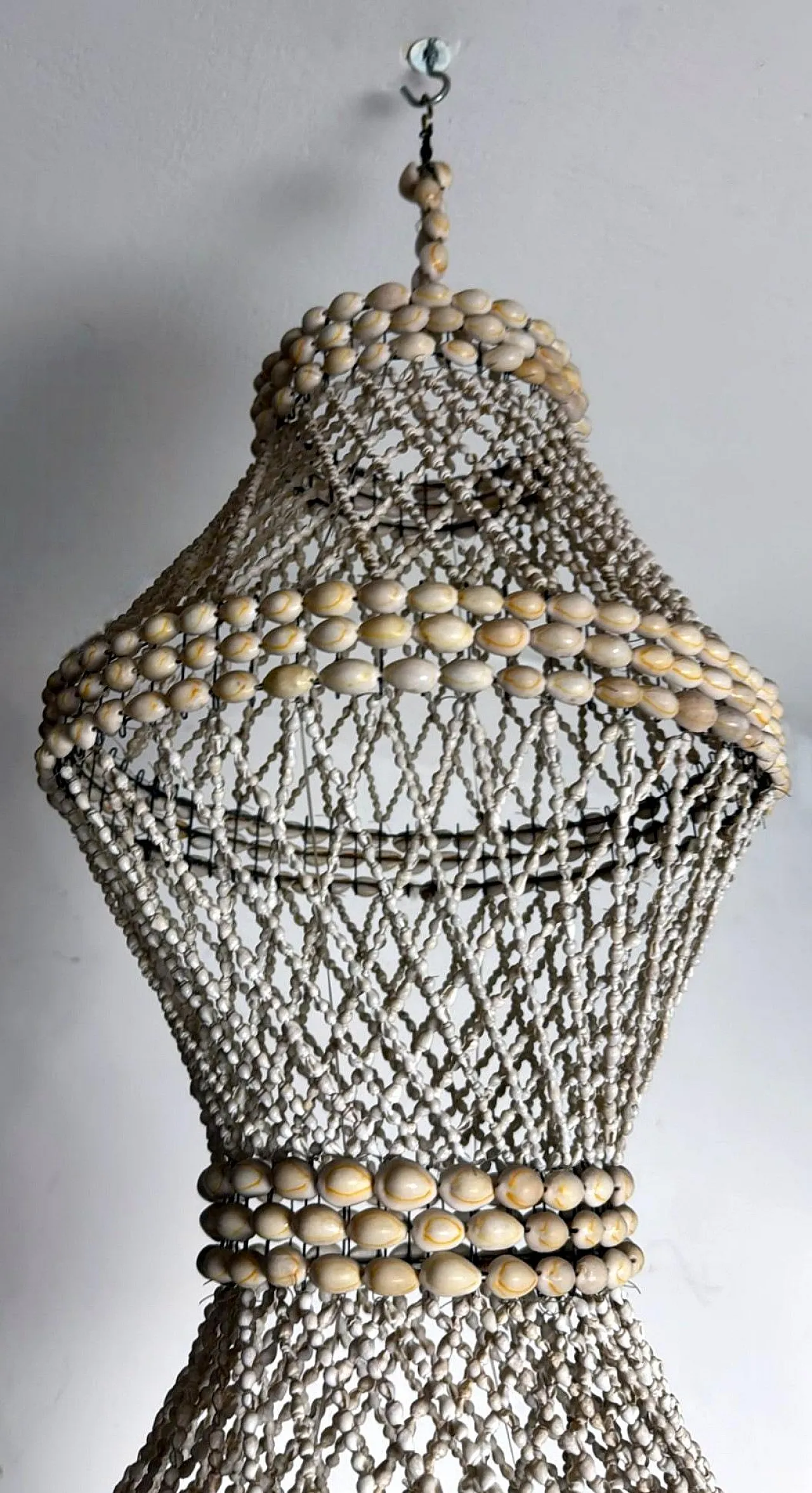
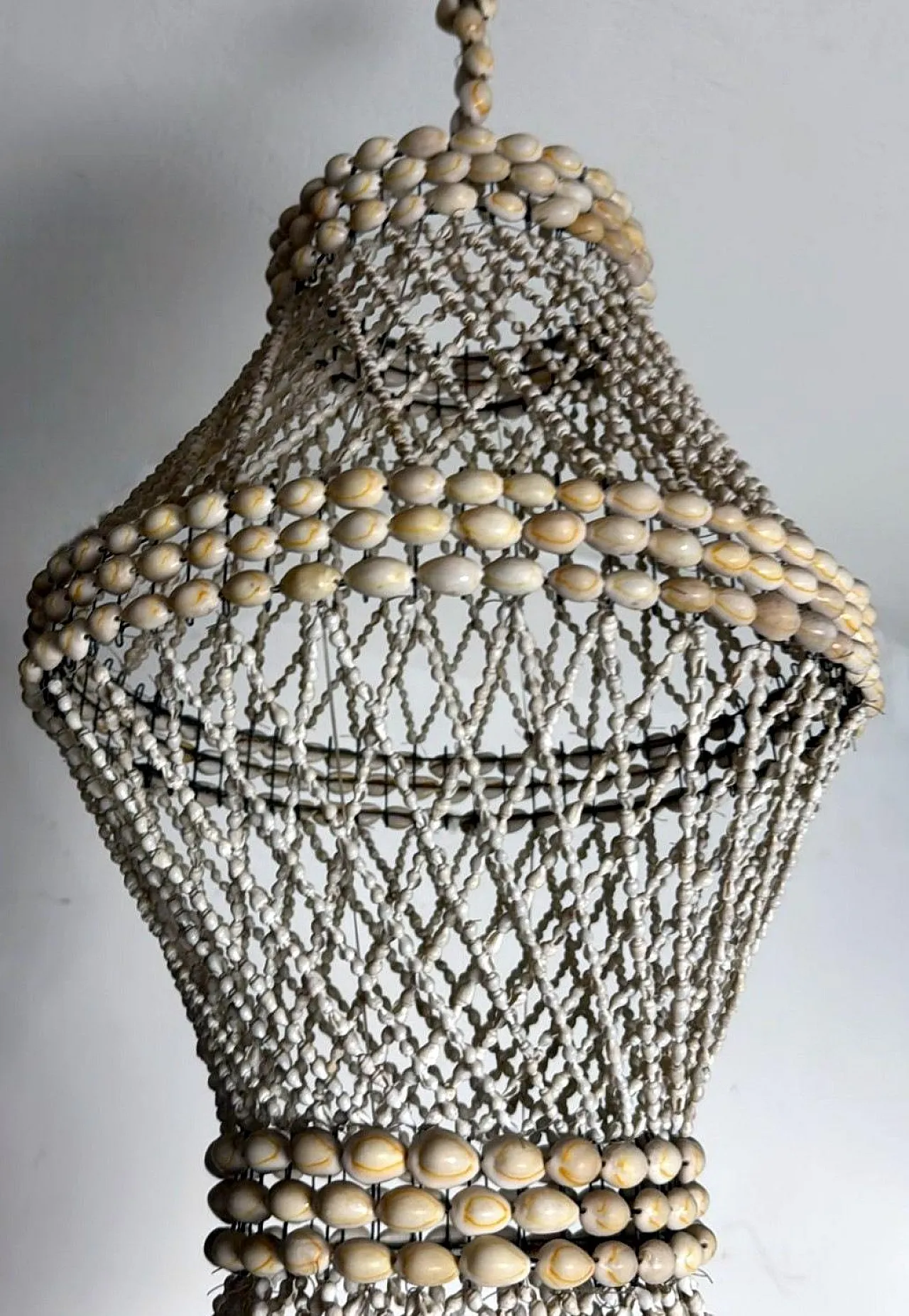
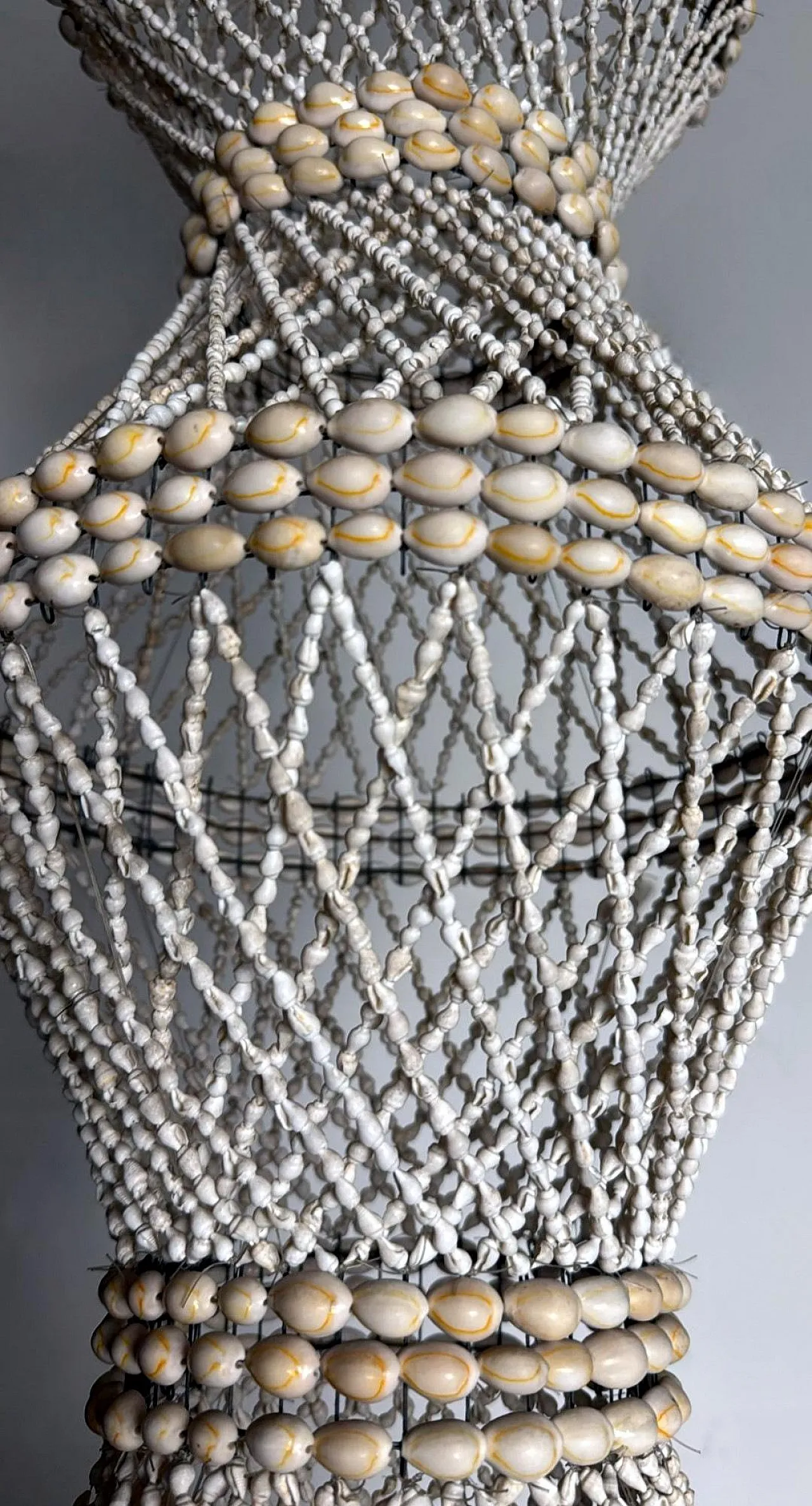
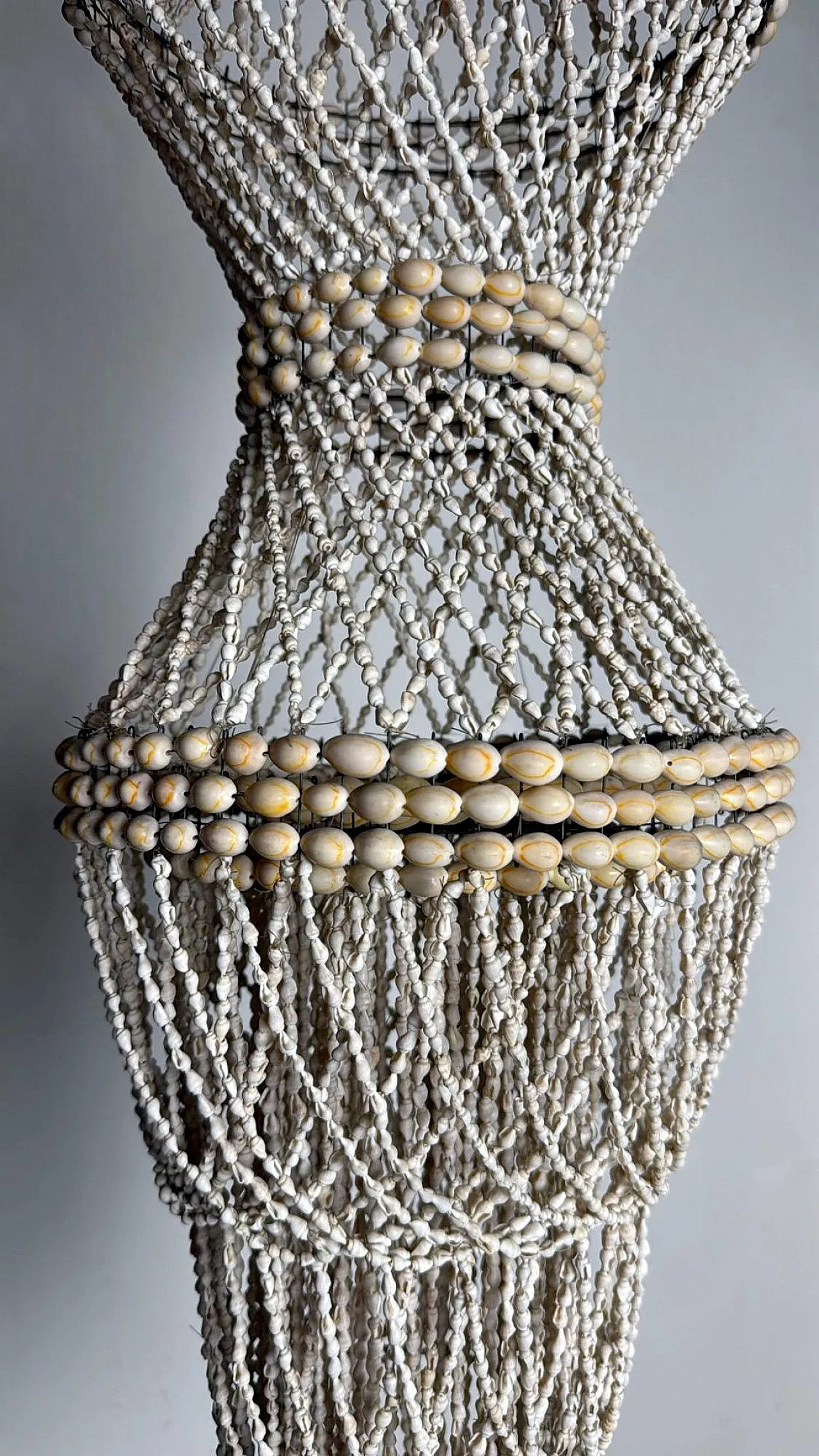
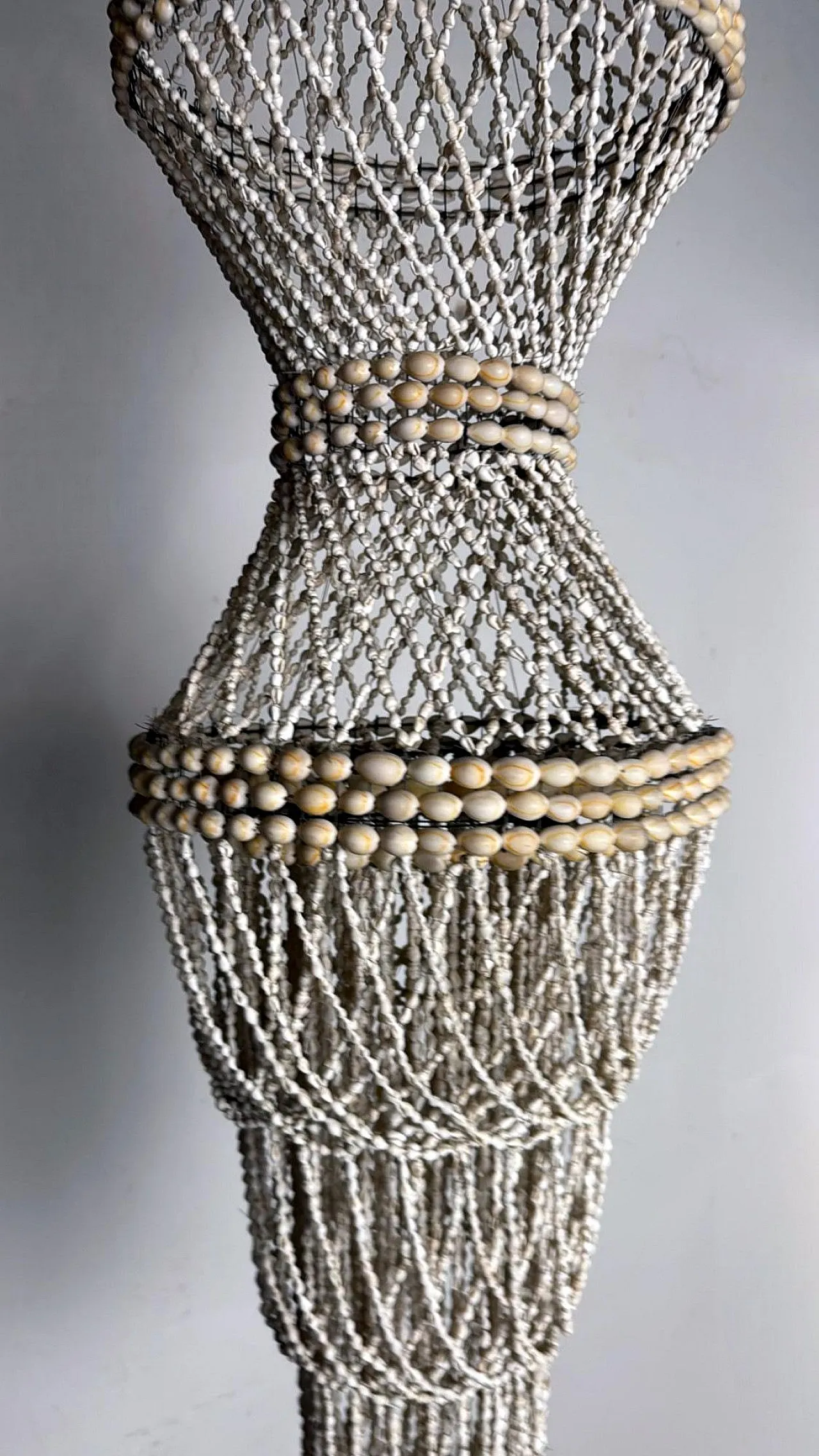
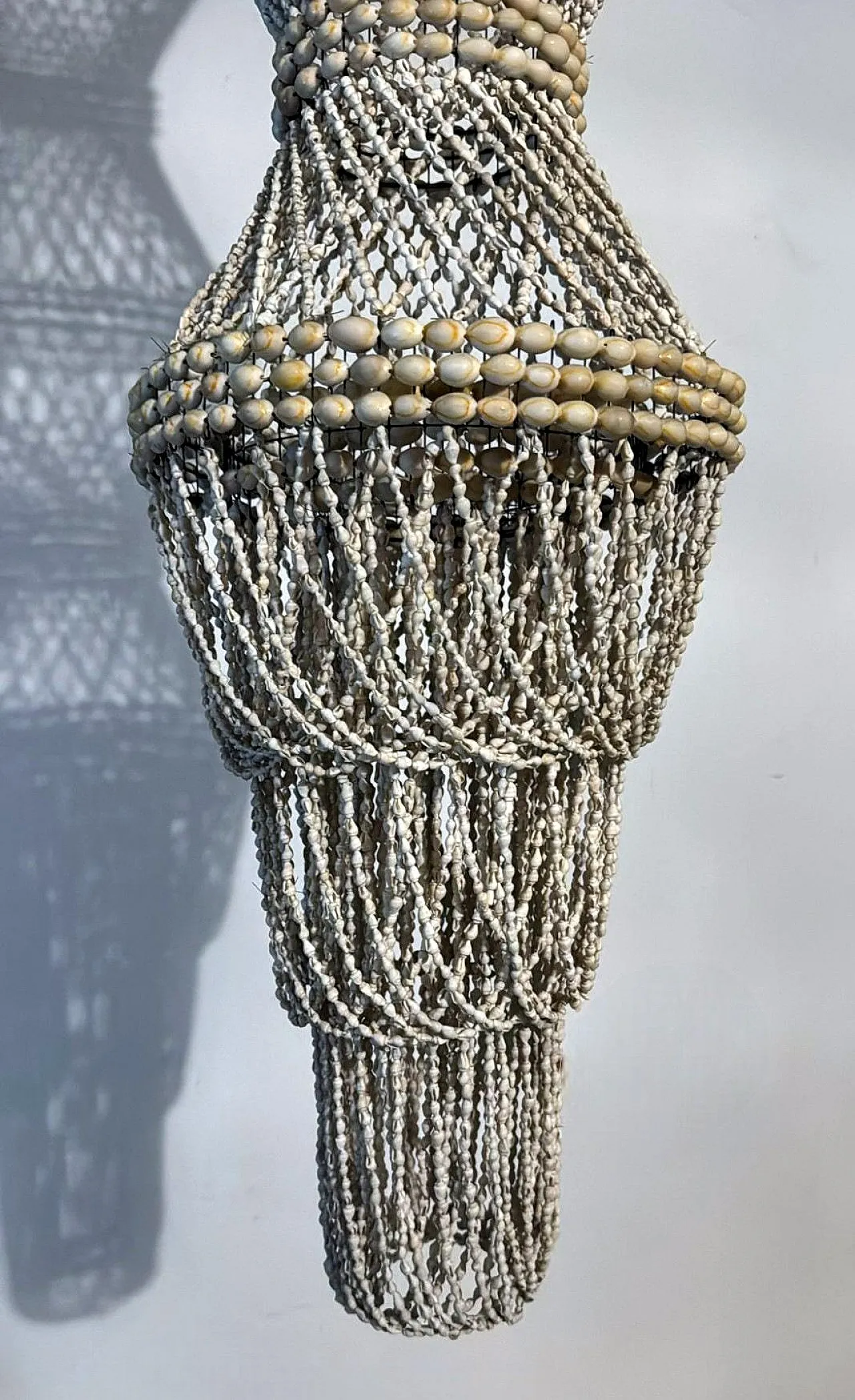
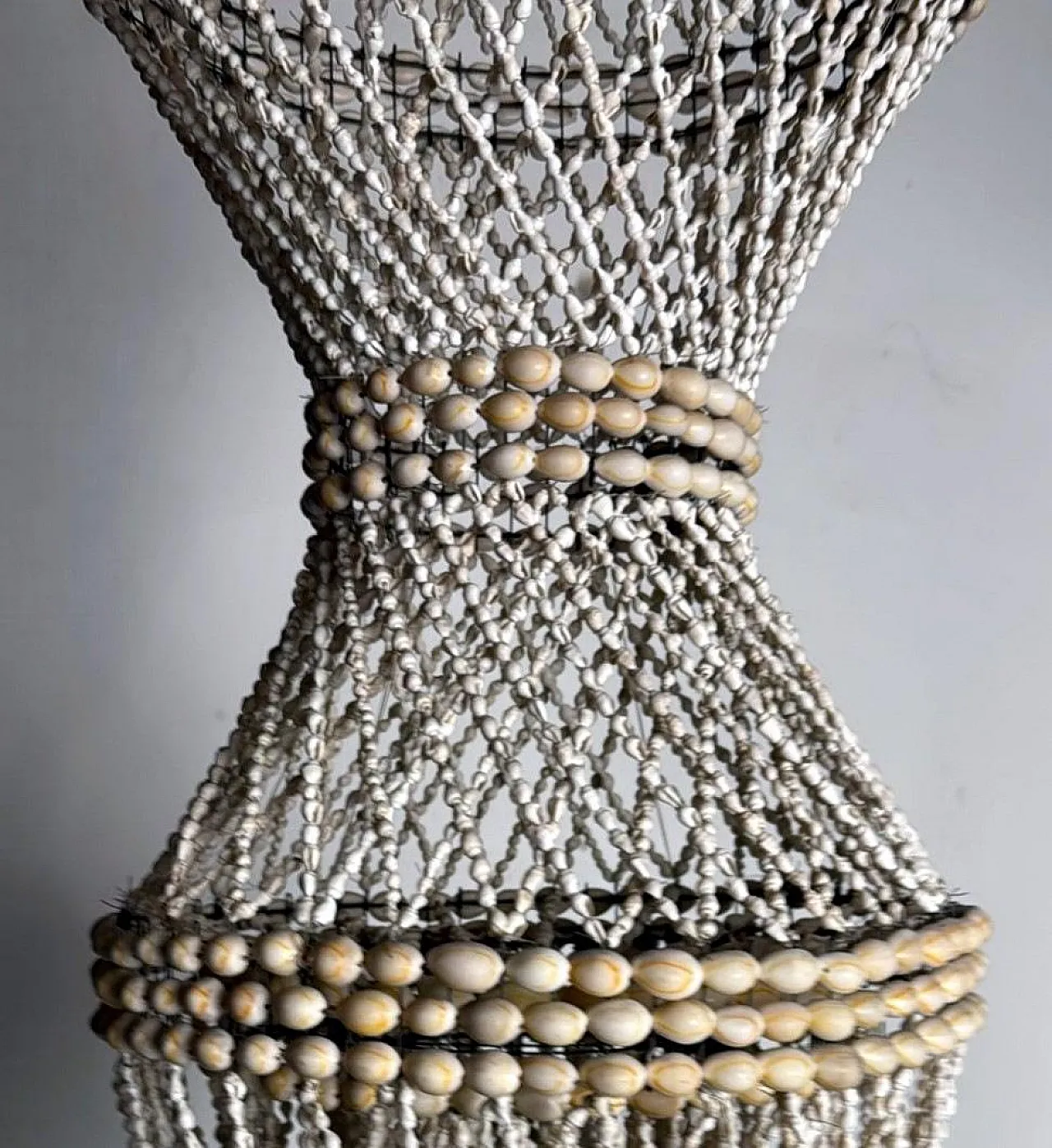
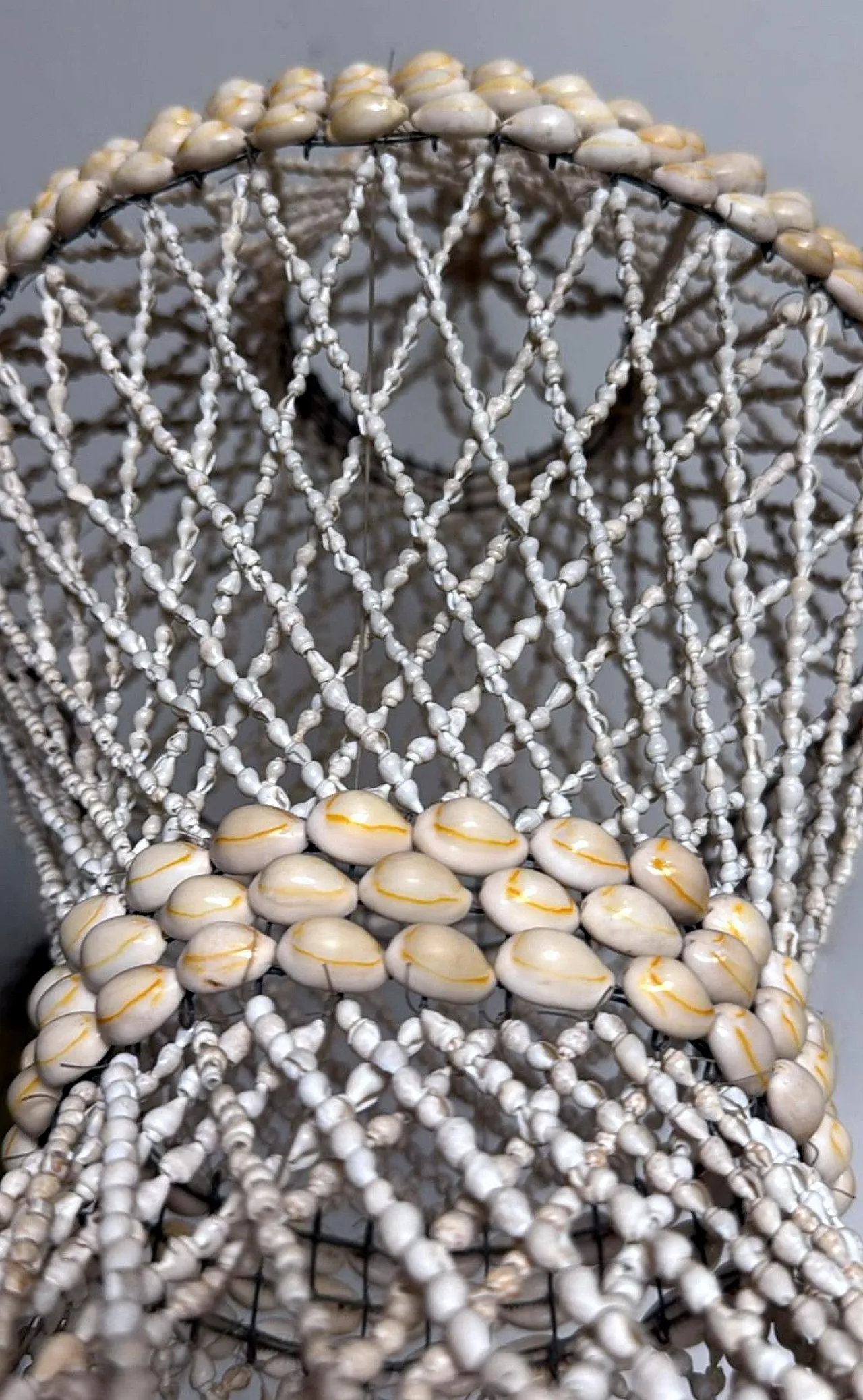
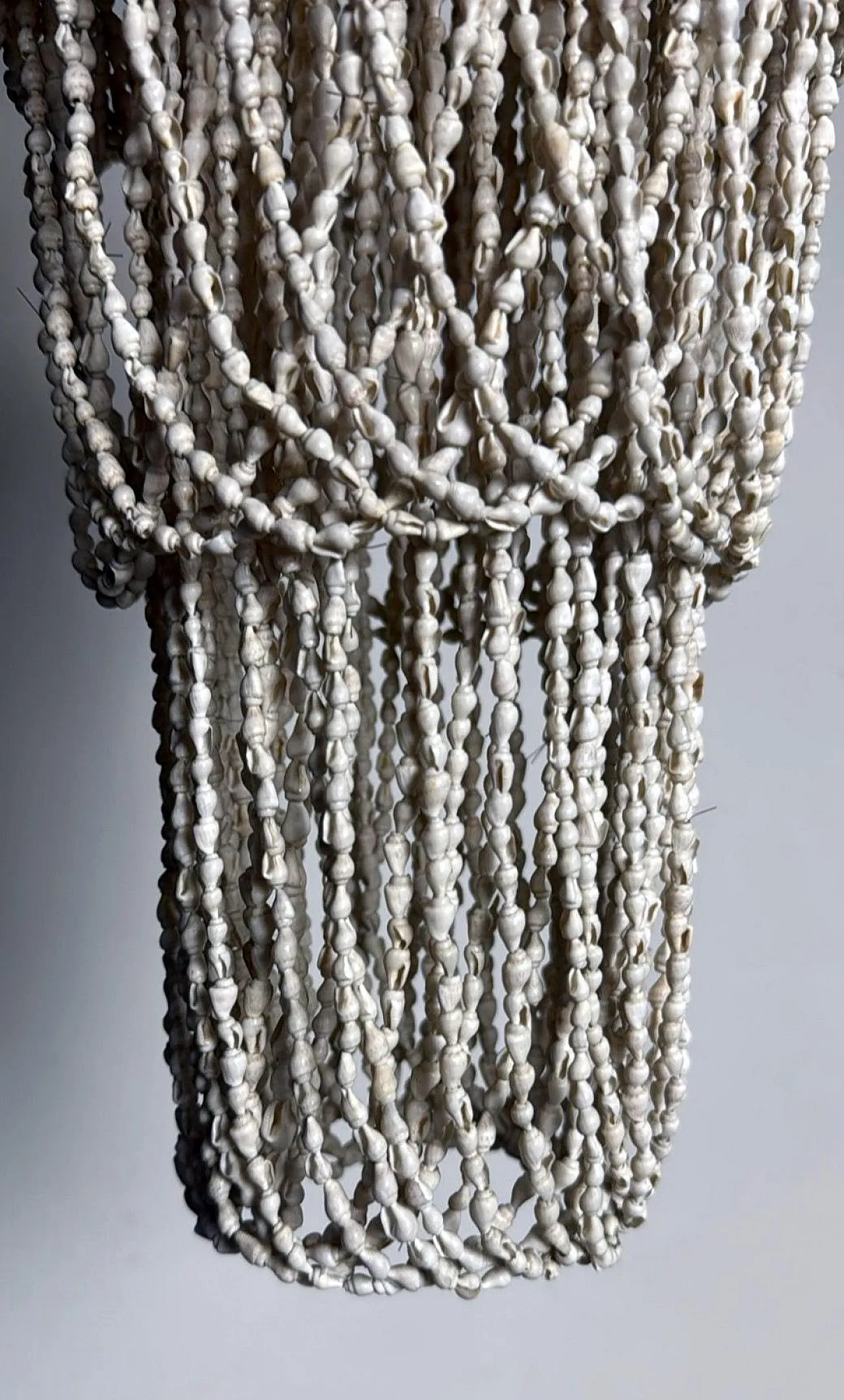
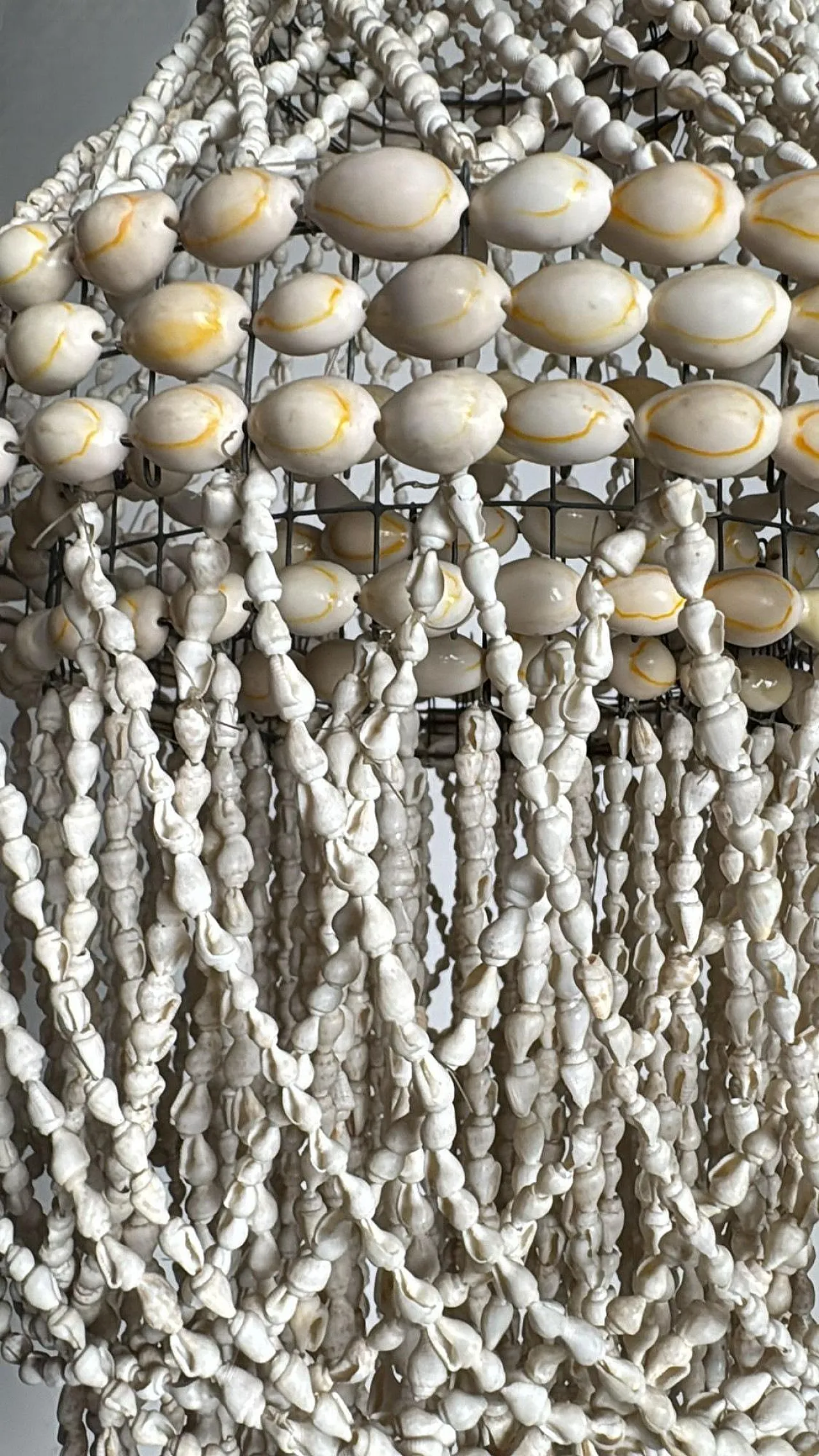
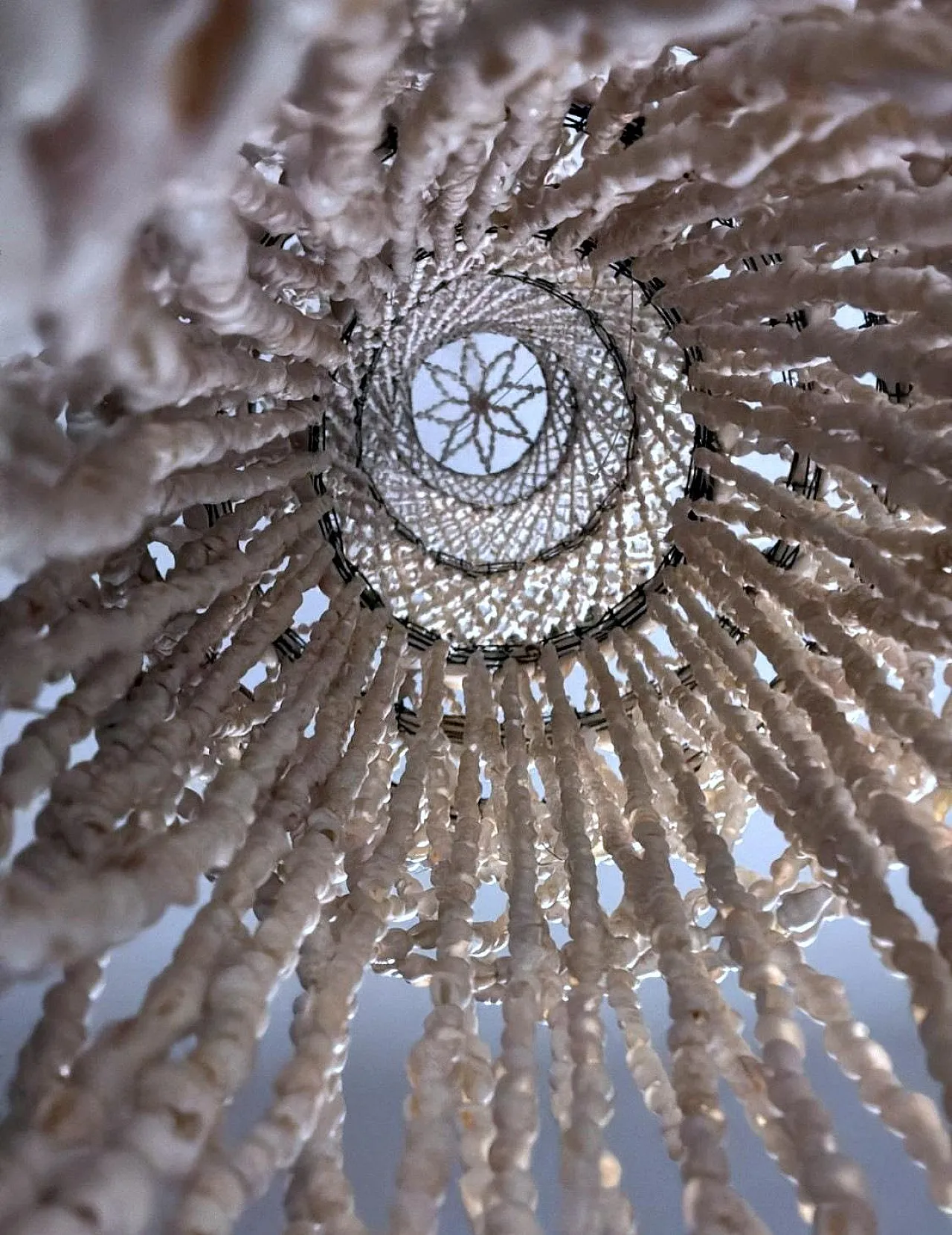
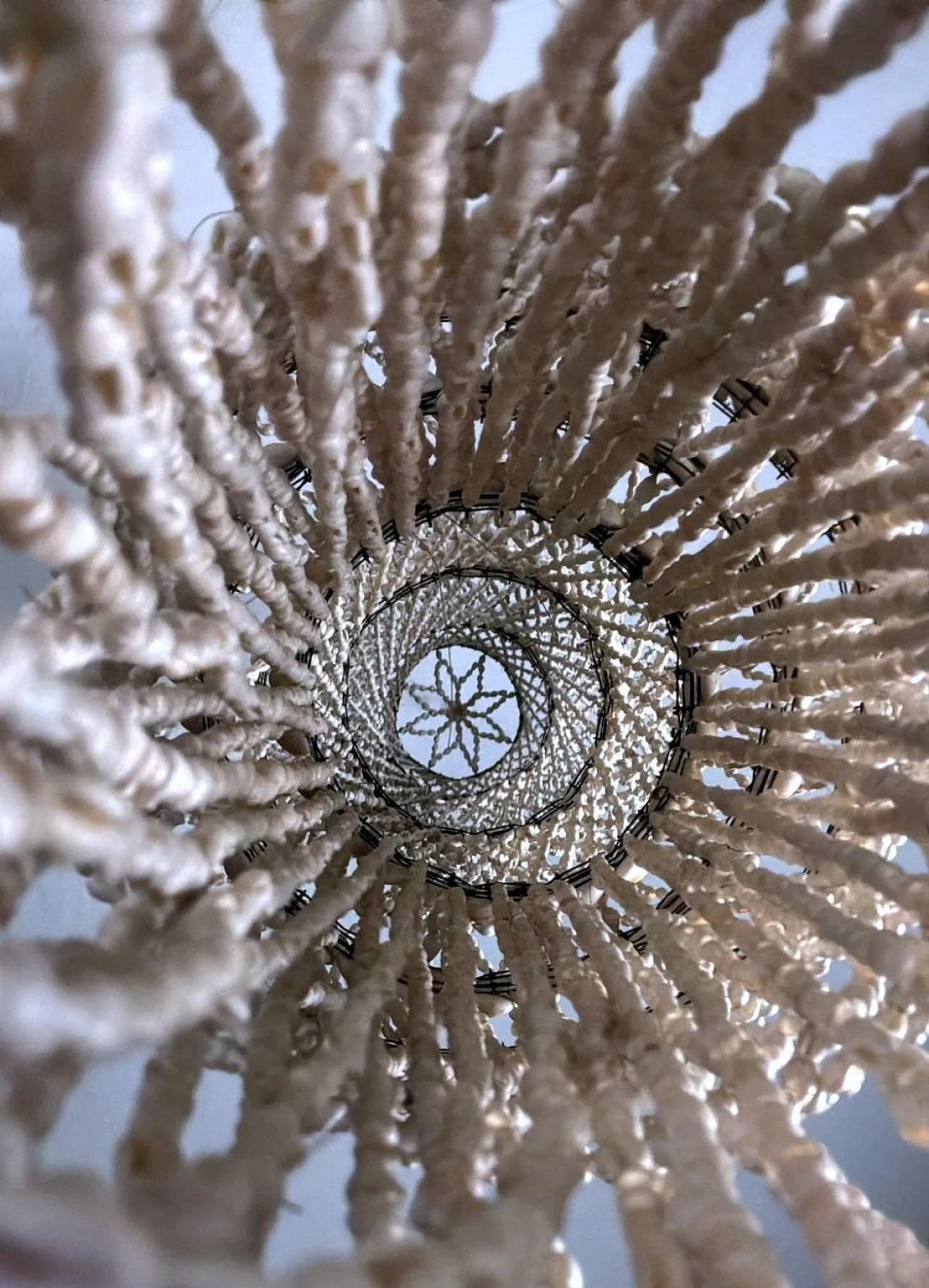
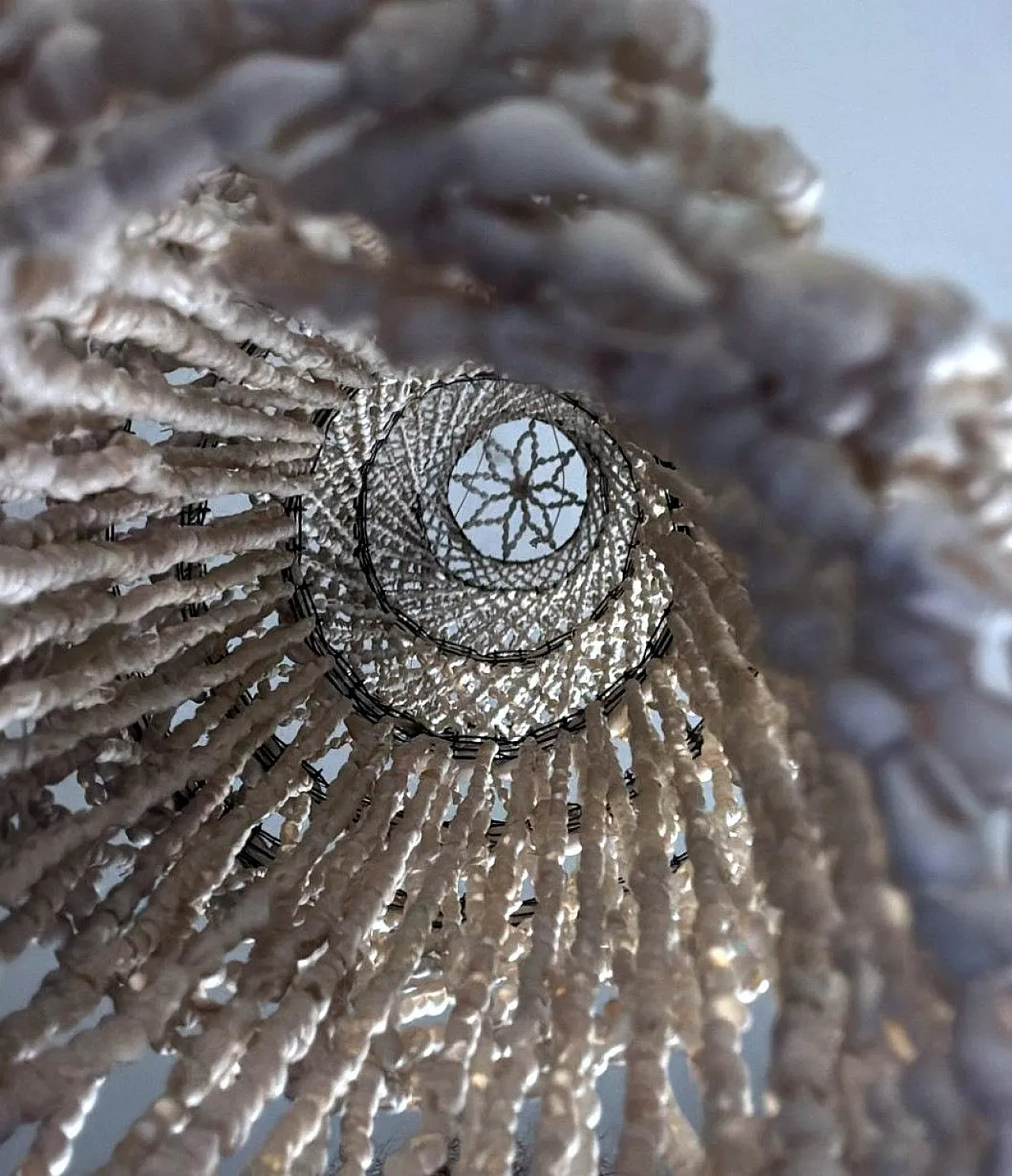
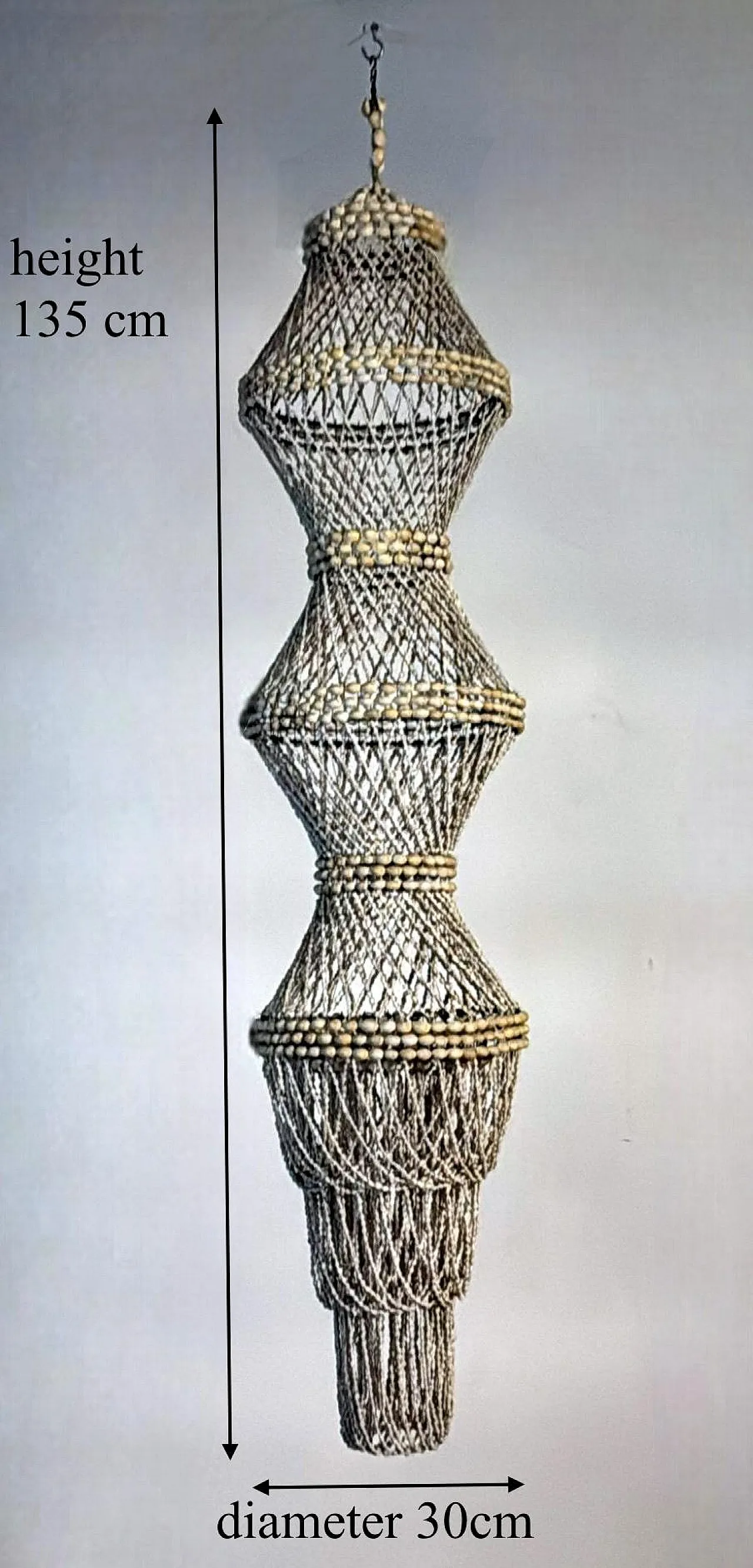
An original and evocative folk-style pendant from the Philippines, composed of over a thousand shells of various types, each meticulously hand-mounted onto a wire frame with a distinctly Eastern design. This remarkable piece is a testament to the skill, ingenuity, and patience of Filipino artisans. It was crafted between 1970 and 1975 in a small workshop on Cebu Island, in the Visayas region of the central Philippines. Objects of this kind can be used both indoors and outdoors—as amulets, talismans, dreamcatchers, or spirit chasers. When moved by the wind, they emit a gentle, harmonious sound that soothes the mind and body. Alternatively, they can be transformed into unique interior chandeliers by adding one or more light sources with a simple corded electrification. Throughout history, shells have played a vital role in human culture, used across various domains—from currency to decoration, from ritual to art. In the Stone Age, early humans used shells to embellish jewelry, homes, and boats. In many tropical cultures, tribal communities used them as currency. The Inca would bury shells with the dead as part of funerary rites. Architects and artists across the centuries have incorporated shell motifs into their work, often loaded with symbolic meaning. In the ruins of Pompeii, shells were found decorating statues of deities. In Greek and Roman mythology, the shell symbolized prosperity, rebirth, and fertility—being associated with the sea, the origin of all life. Humanity’s ancestral link to water made the shell a metaphor for the womb and the birth of the goddess Venus (or Aphrodite). For this reason, the shell came to represent the feminine divine in pagan cults and was associated with love, creation, and renewal. These ancient associations have embedded the shell deeply in our collective unconscious as a positive and powerful symbol. The piece is in good vintage condition. Dimensions: Diameter 30 cm (11.8 in), Height 135 cm (53.1 in).


.png)



 SILVER Seller in Prato, Italy