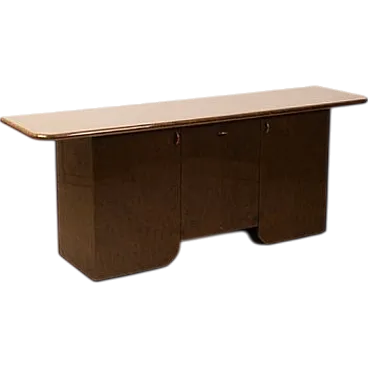
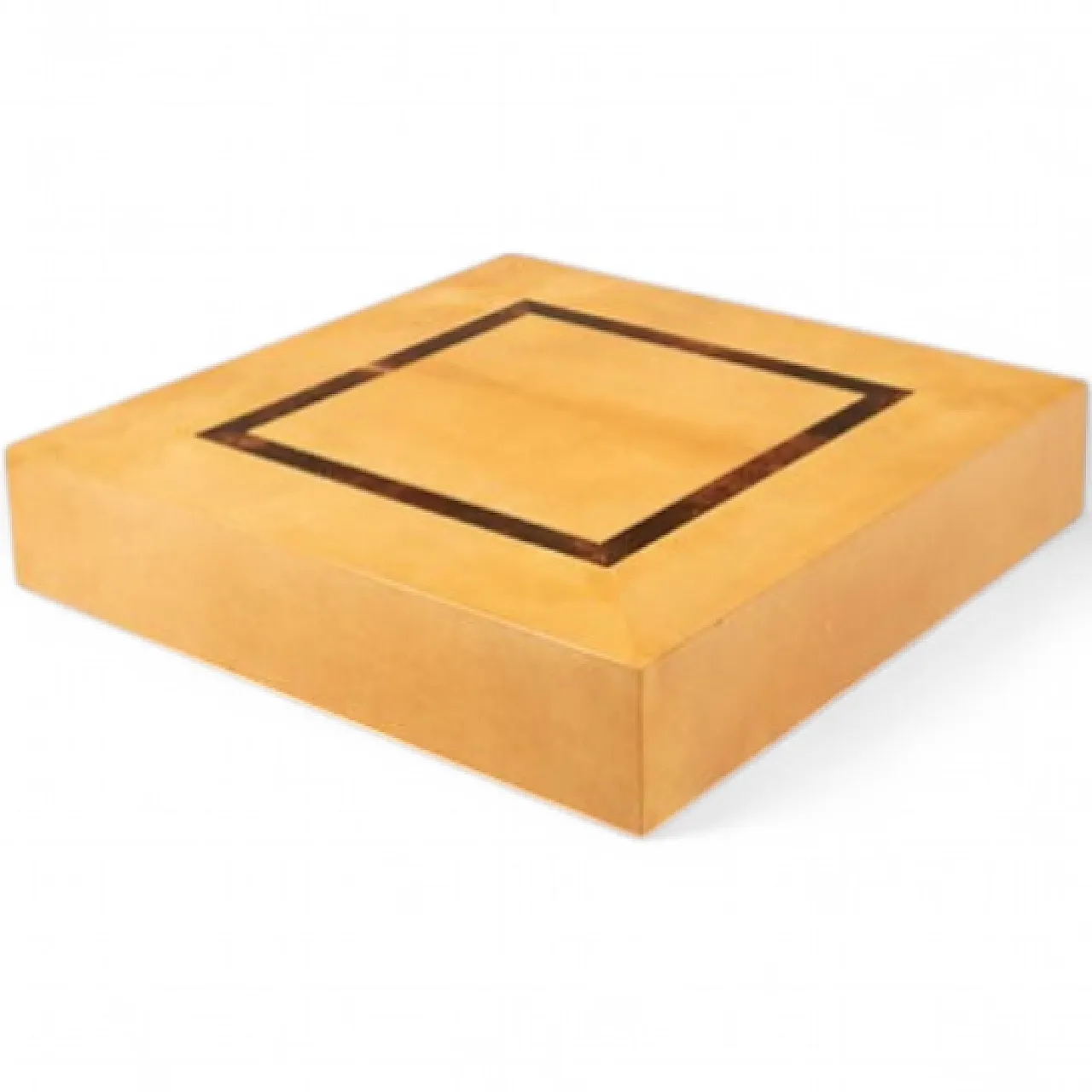
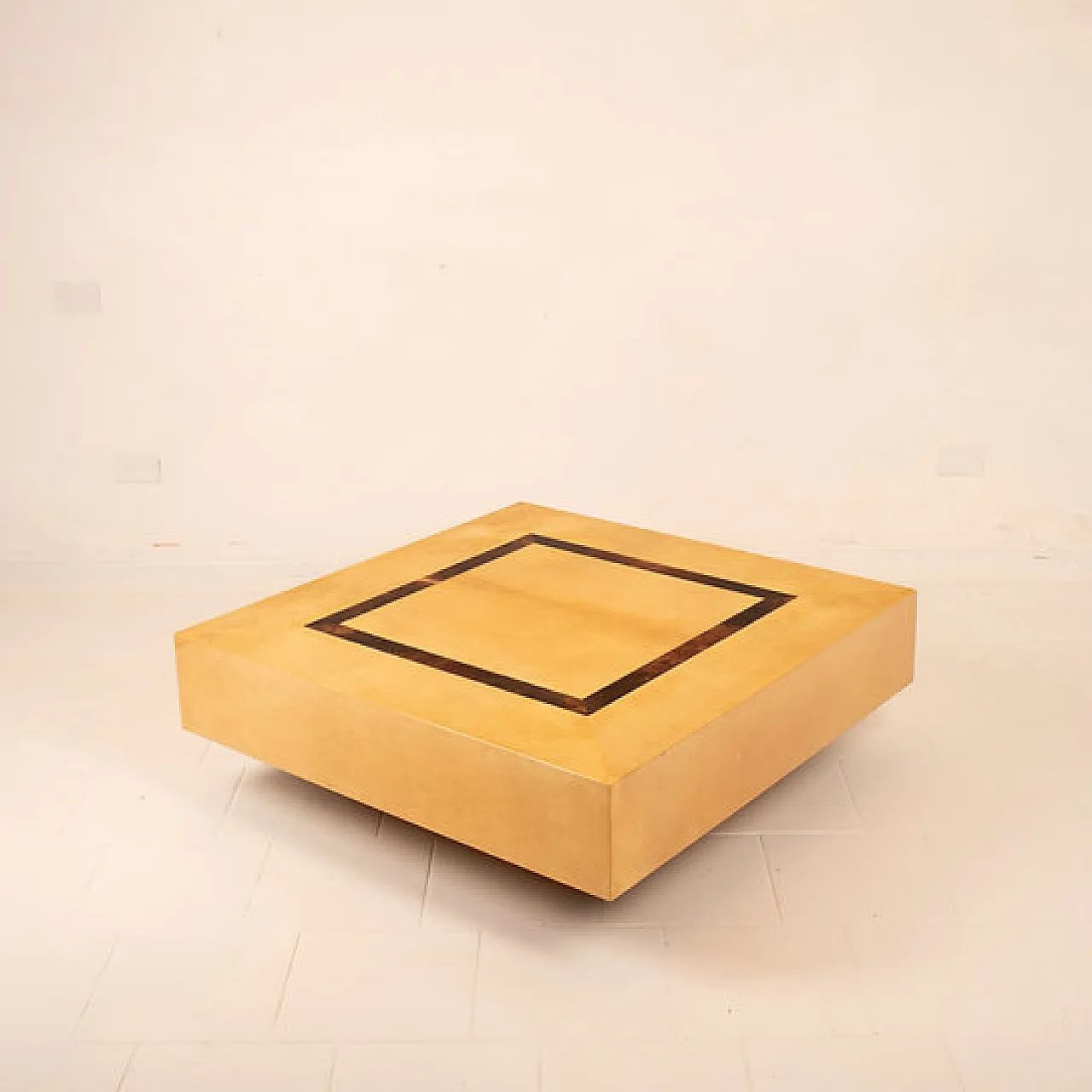
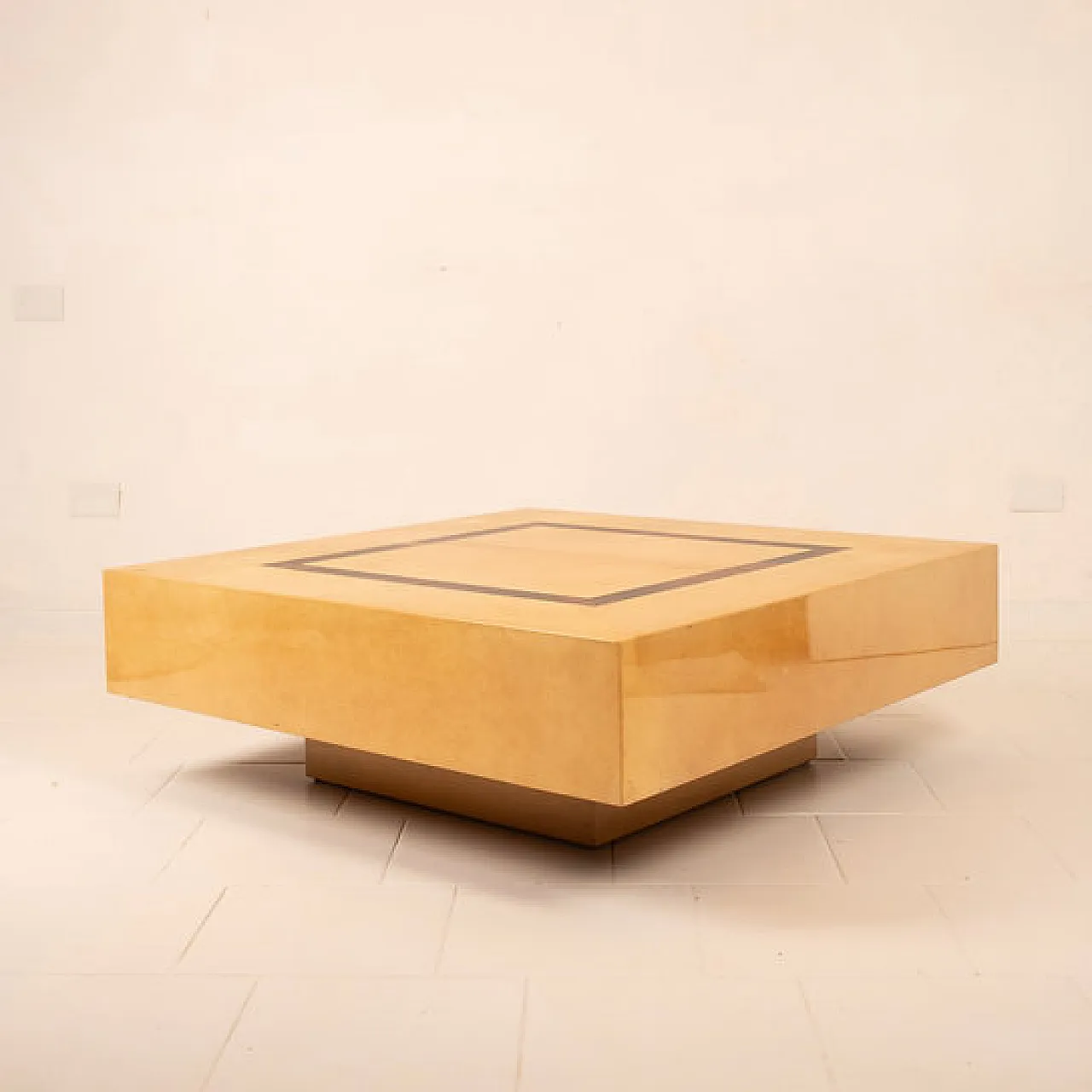
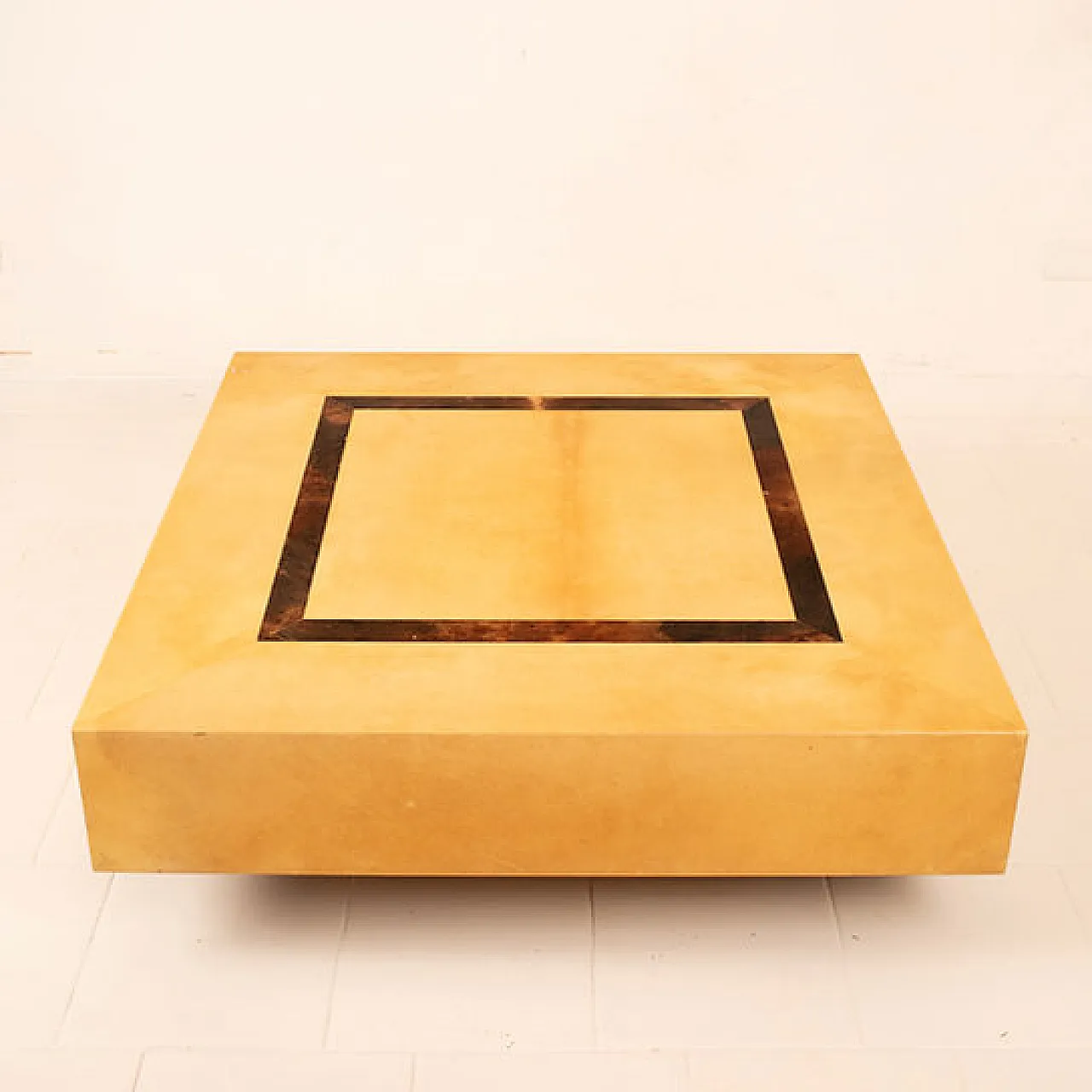
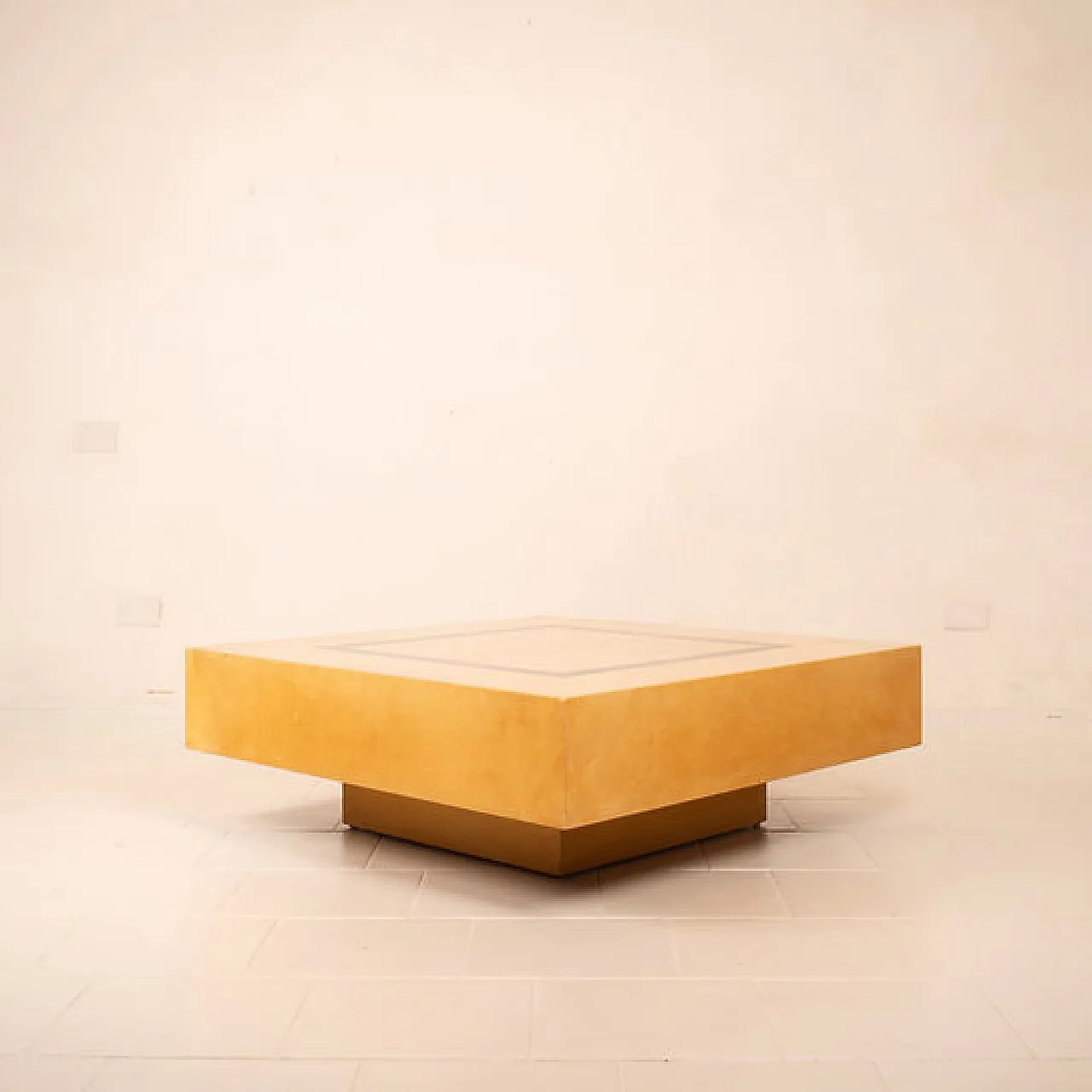
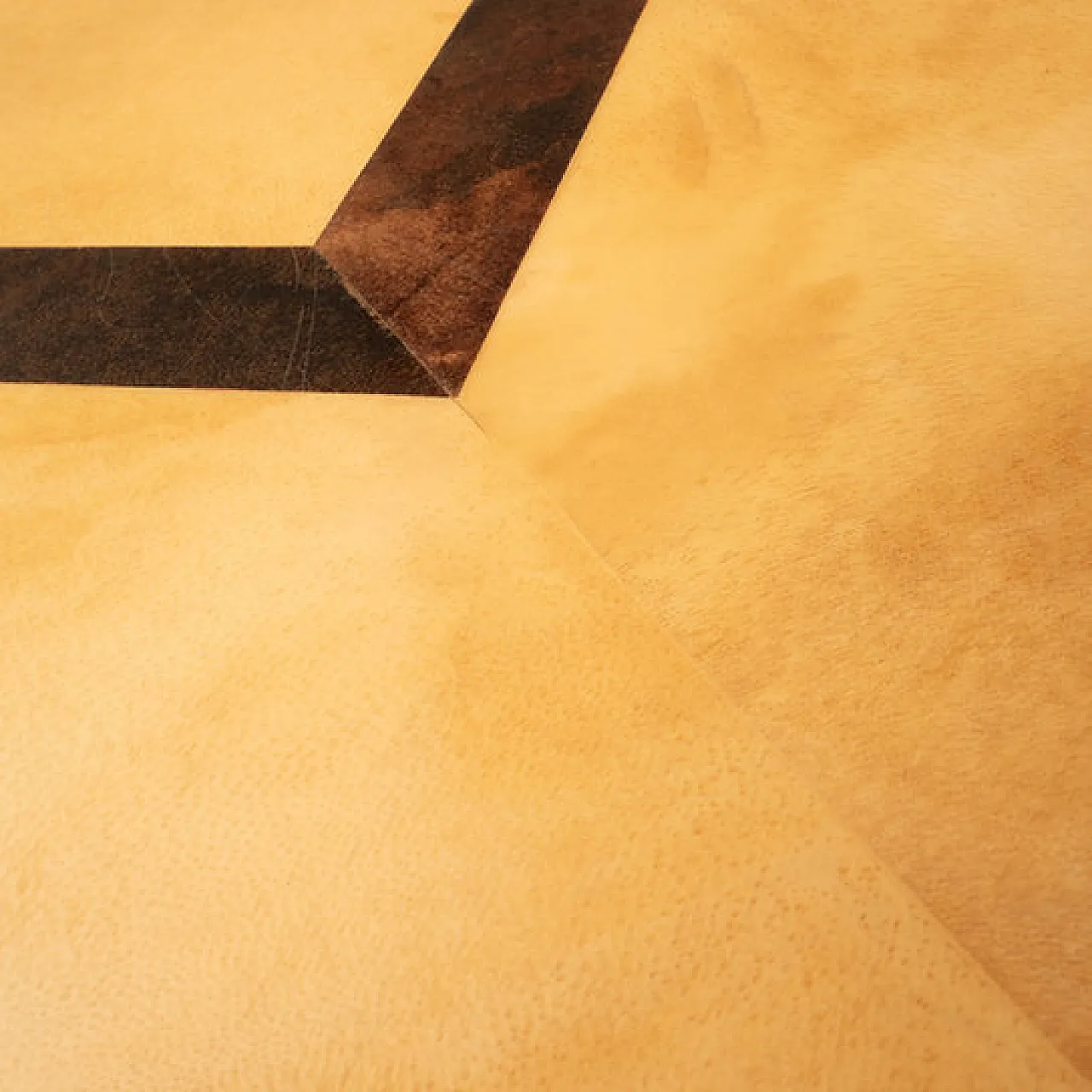
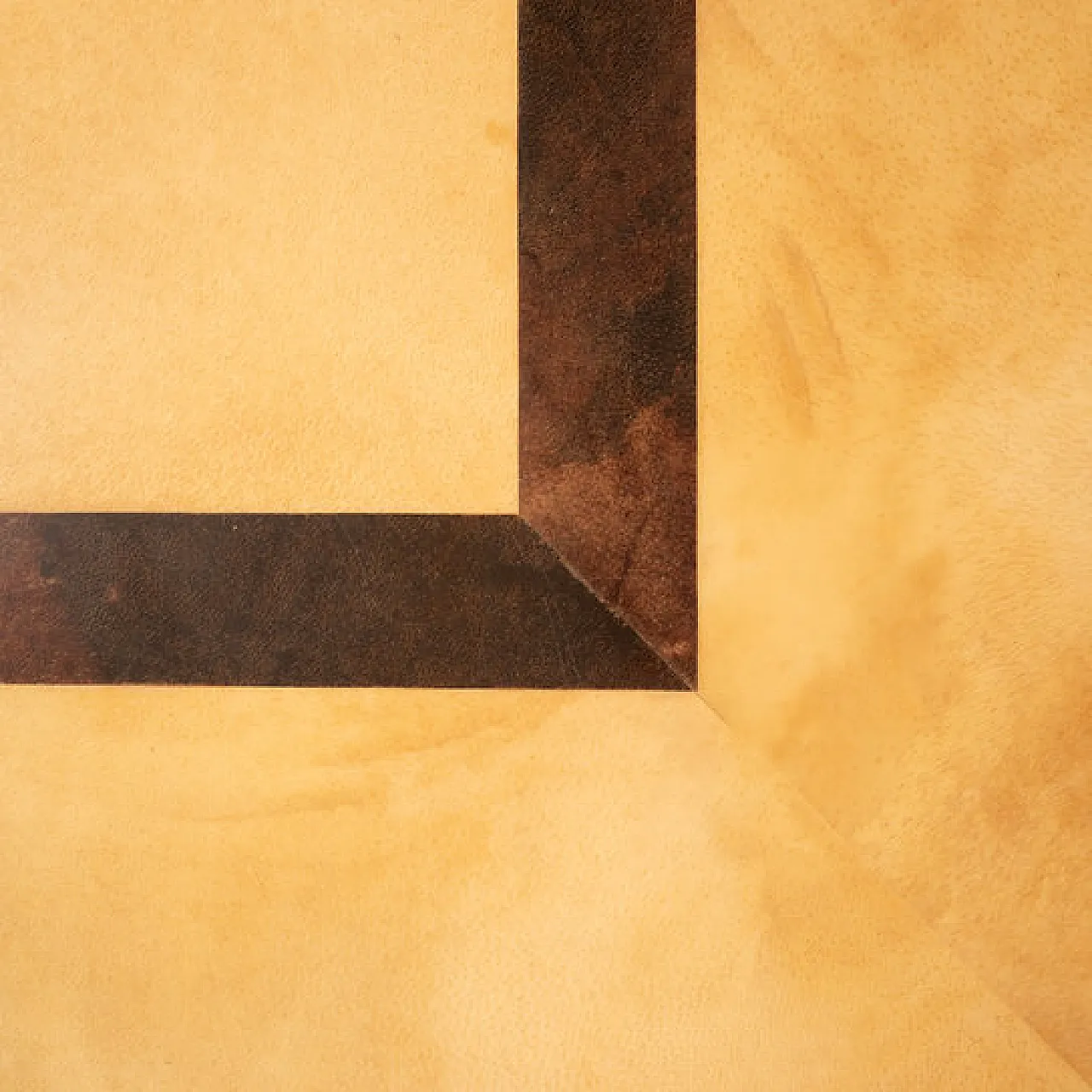
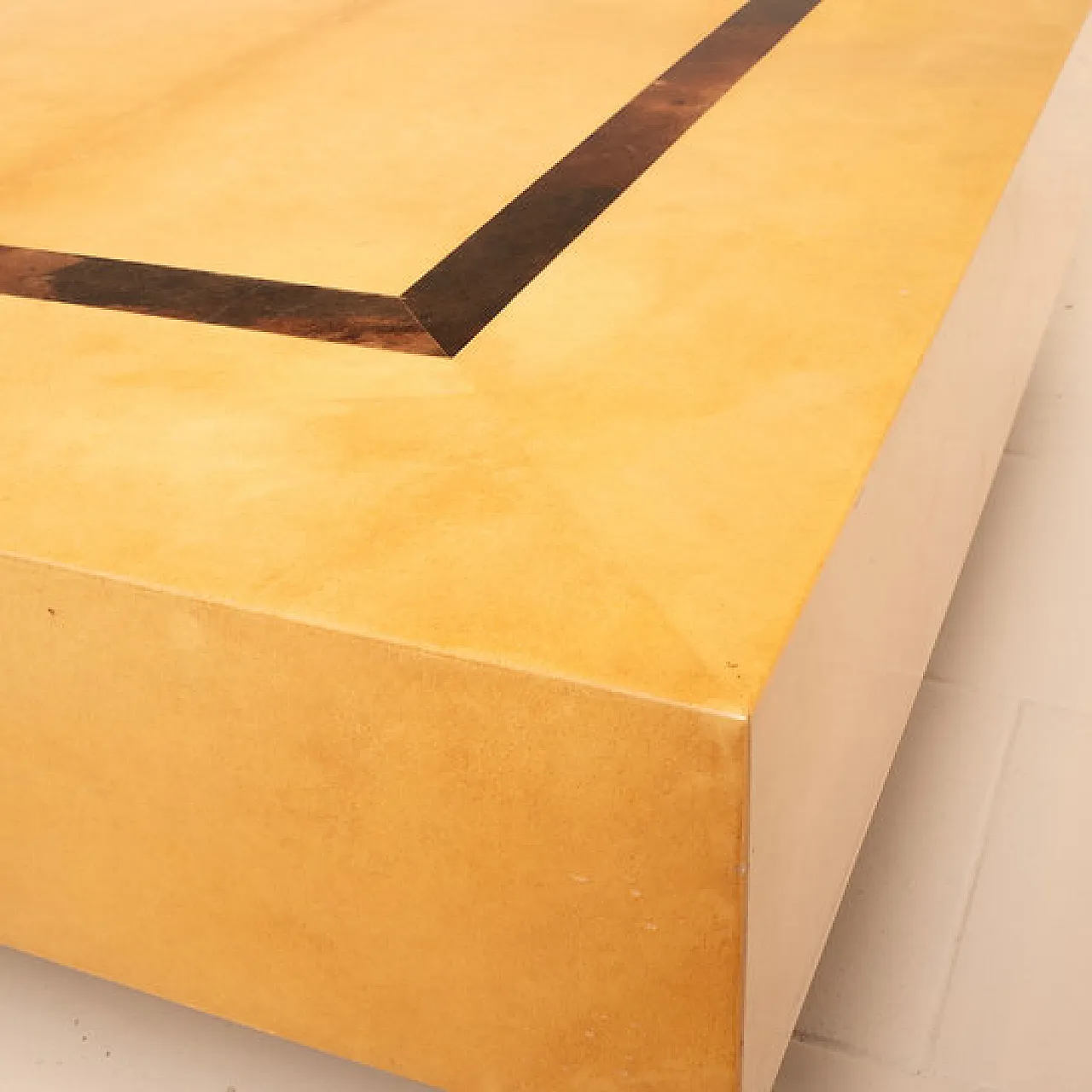
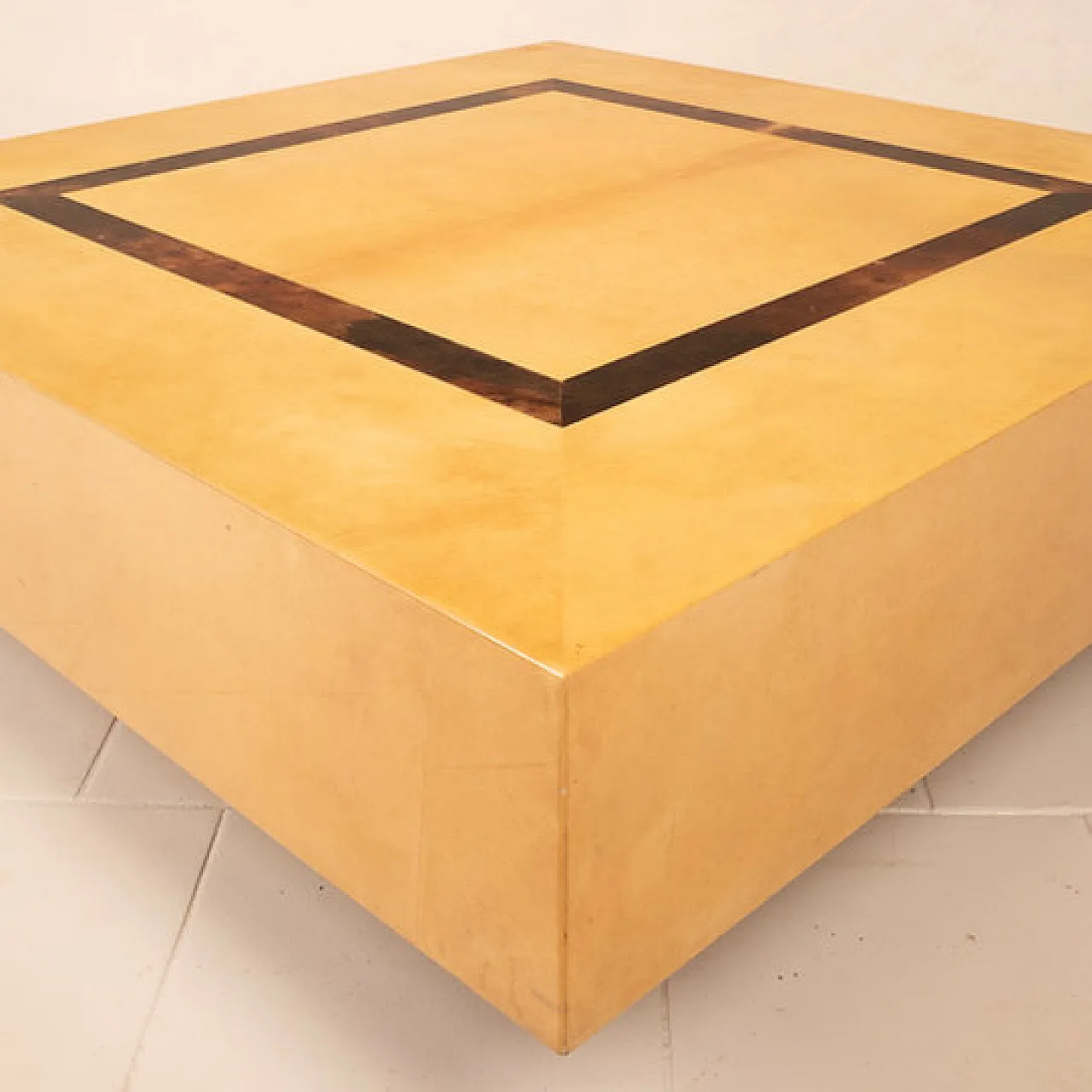
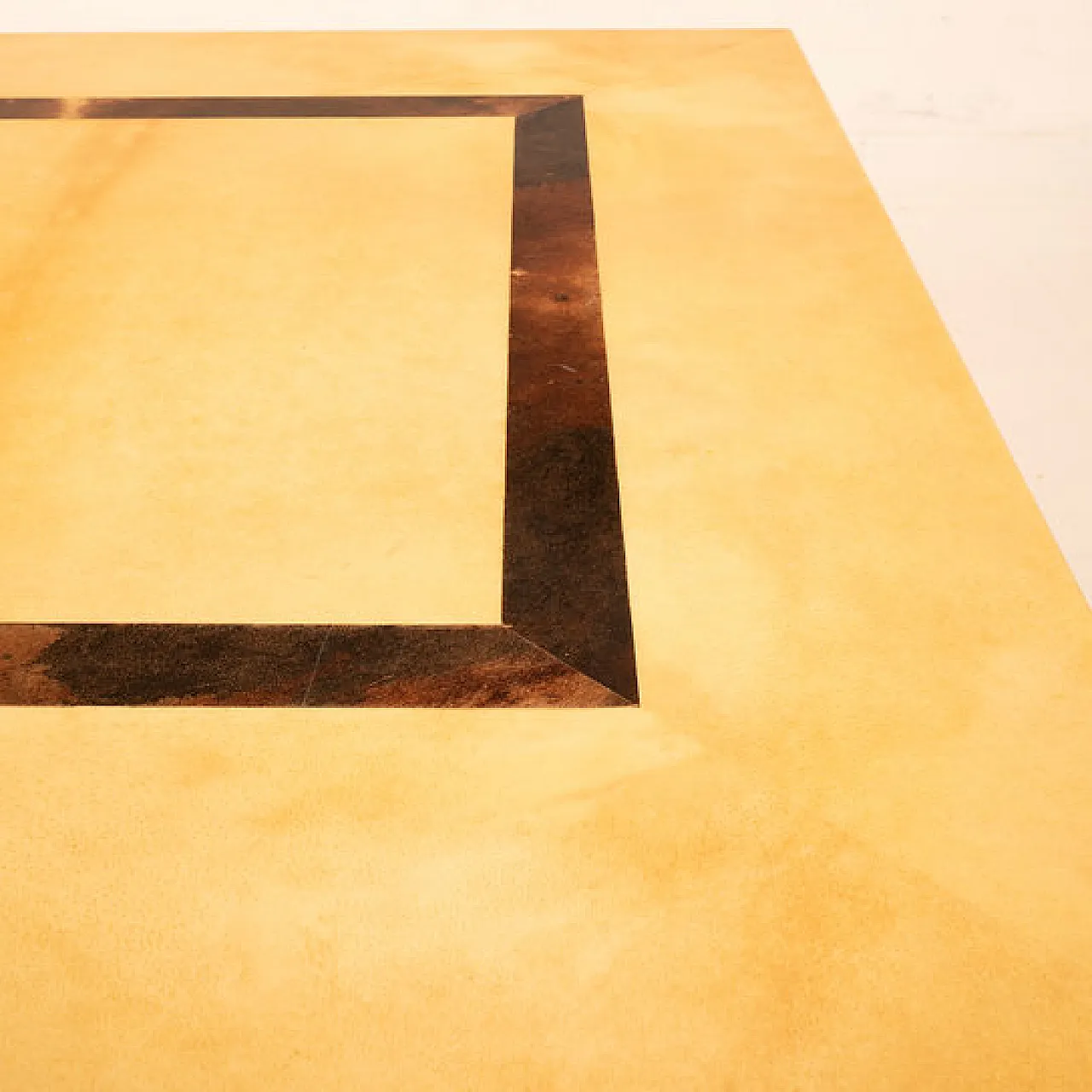
Low coffee table designed by Nucci Valsecchi for Aldo Tura in the 1970s, mod: 3000D of the Tura Archive, crafted in parchment, or goatskin, hand-dyed in two distinct tones: a light, warm, and luminous finish for the main surface, and a darker, almost burnt parchment for the recessed central geometric detail.
The visual effect is remarkable: the contrast between the two hues creates a restrained yet powerful graphic motif, revealing the designer’s refined compositional sensibility.
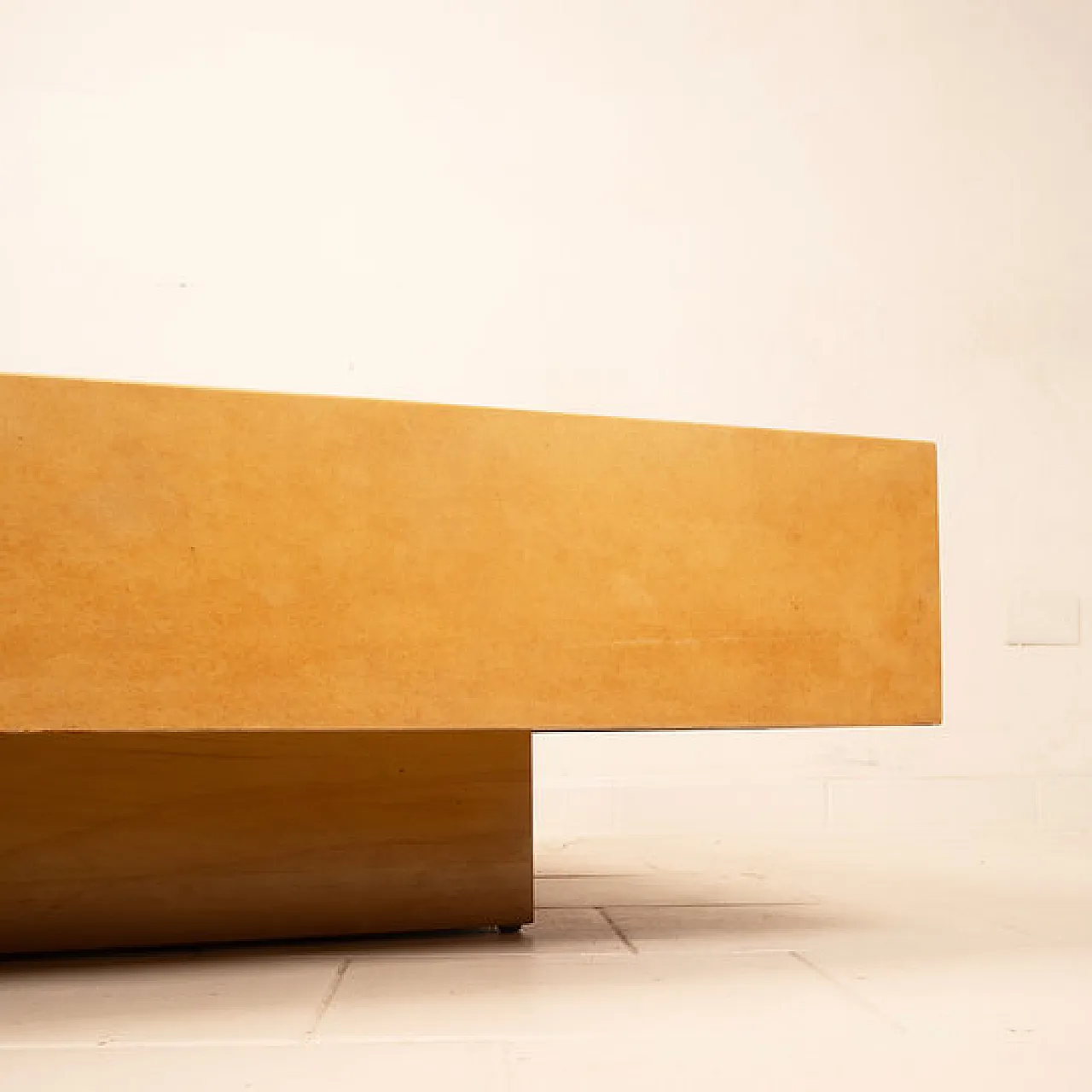
The entire volume rests on a recessed base that visually lifts the top, giving the piece an almost sculptural lightness despite its solid and compact presence.
The perfectly balanced proportions make this coffee table suitable for both classic interiors and contemporary spaces, where it can serve as a discreet yet sophisticated focal point.
Aldo Tura is a singular figure in the landscape of twentieth-century Italian design, renowned for his obsession with materials and his continuous experimentation with finishes and surfaces. His work sits at the intersection of auteur craftsmanship and high-end industrial production, with a particular inclination toward complex and highly refined techniques, including the masterful use of parchment, often applied and hand-dyed, as in this case.
Every piece signed by Tura is the result of a meticulous process that requires time, precision, and an exceptional aesthetic sensitivity.
This coffee table is an emblematic example: elegant and essential, yet at the same time material-rich and sensual.
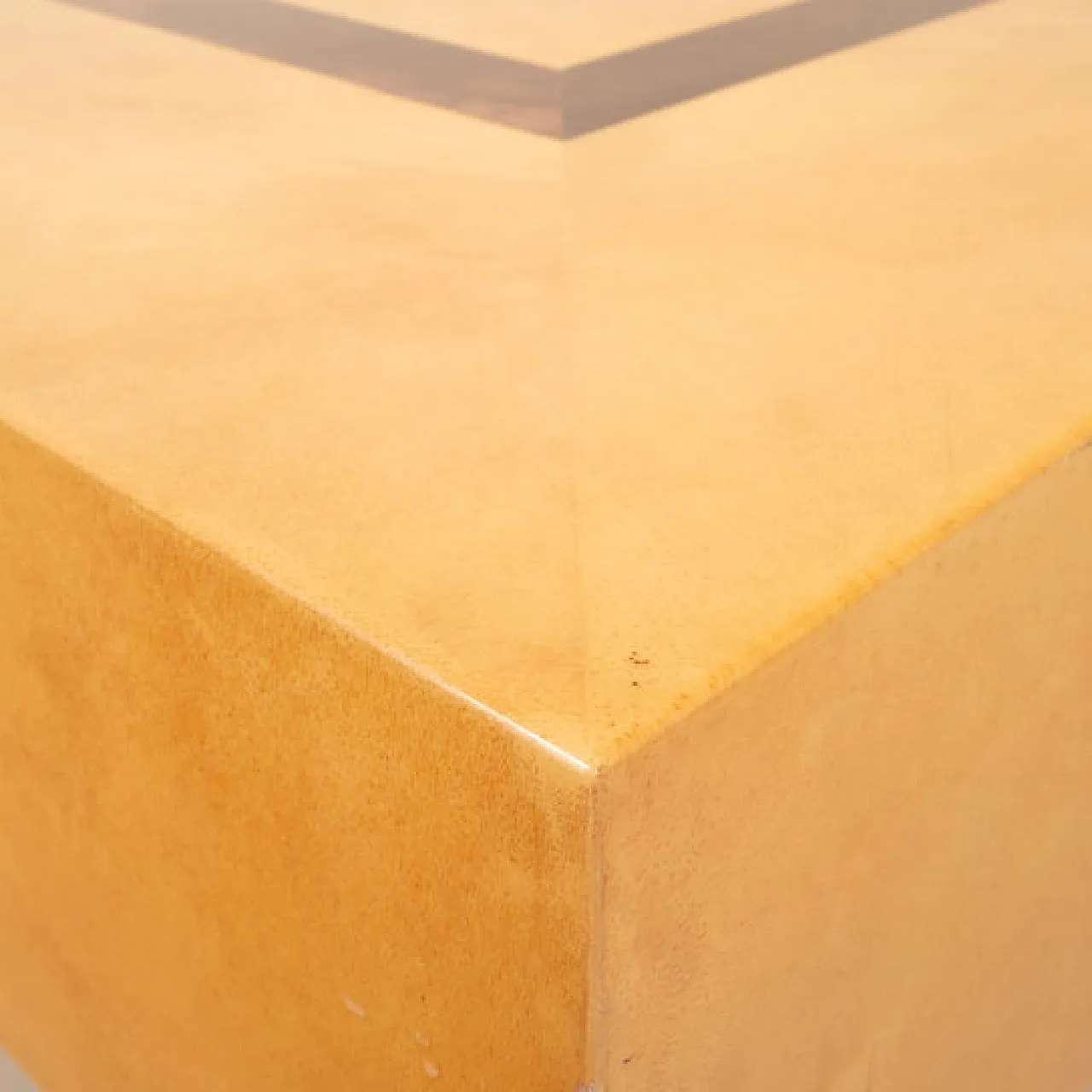
The surface retains the full richness of the original parchment and subtly conveys the passage of time. Tura’s design language here is expressed through formal simplicity and material refinement, achieving a perfect balance between rationalism and decorative expression.
Pieces like this, authentic and well preserved, are increasingly rare and sought after today, featured in the most discerning collections and in interiors where design engages in dialogue with the history of Italian author furniture.
A quiet yet eloquent work, speaking to those who know how to recognize beauty in details.
The table is in excellent original condition. The parchment surface is intact, with light and even signs of age consistent with its period, such as minor surface micro-scratches and a subtle natural patina that enhances its authenticity. There are no breaks, lifting, or visible signs of restoration.
The base is solid and stable. Overall, the piece fully retains its material charm and is ready to be placed in both historic and contemporary interiors.


.png)

 SILVER Seller in Bari, Italy