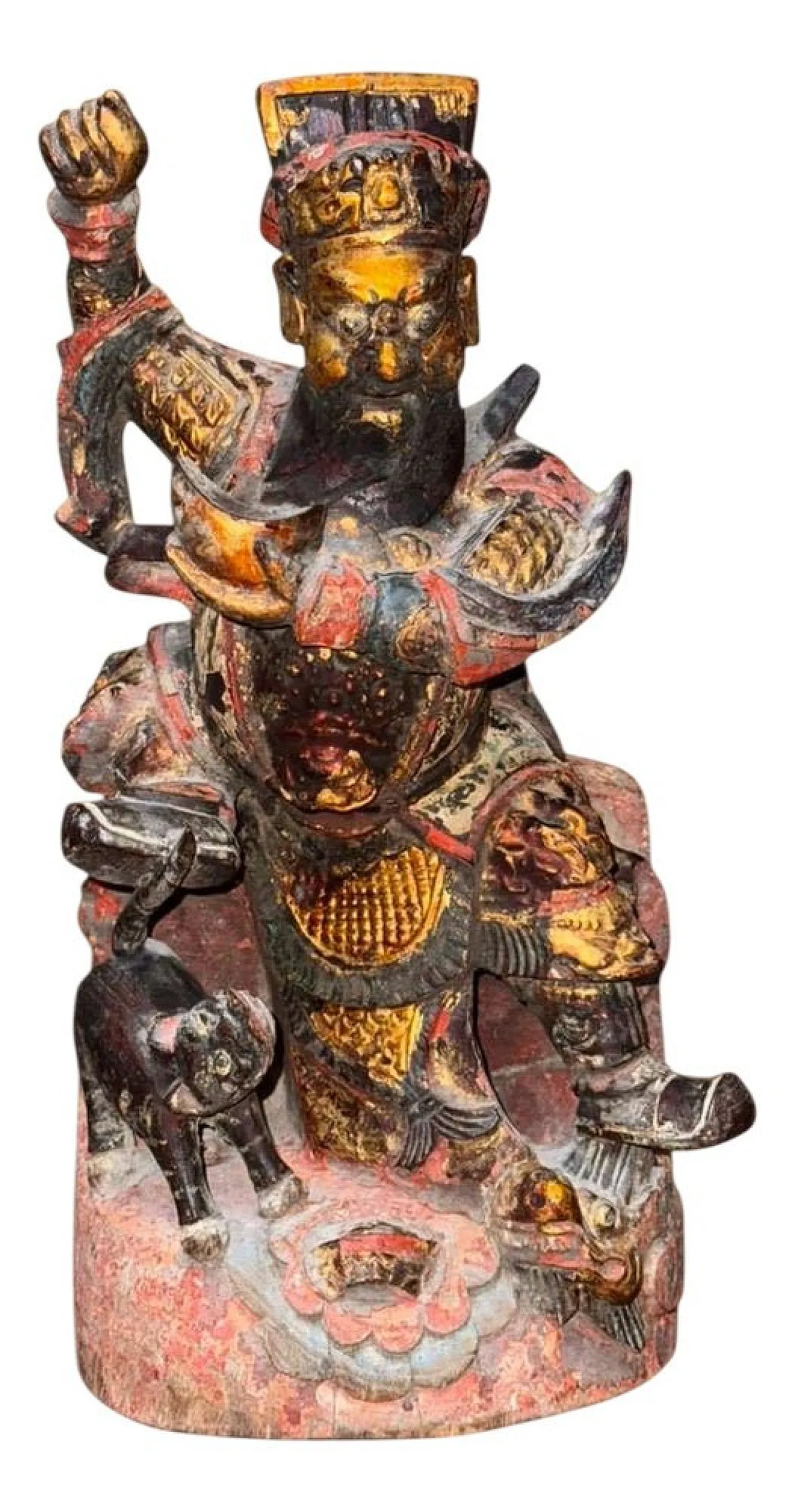
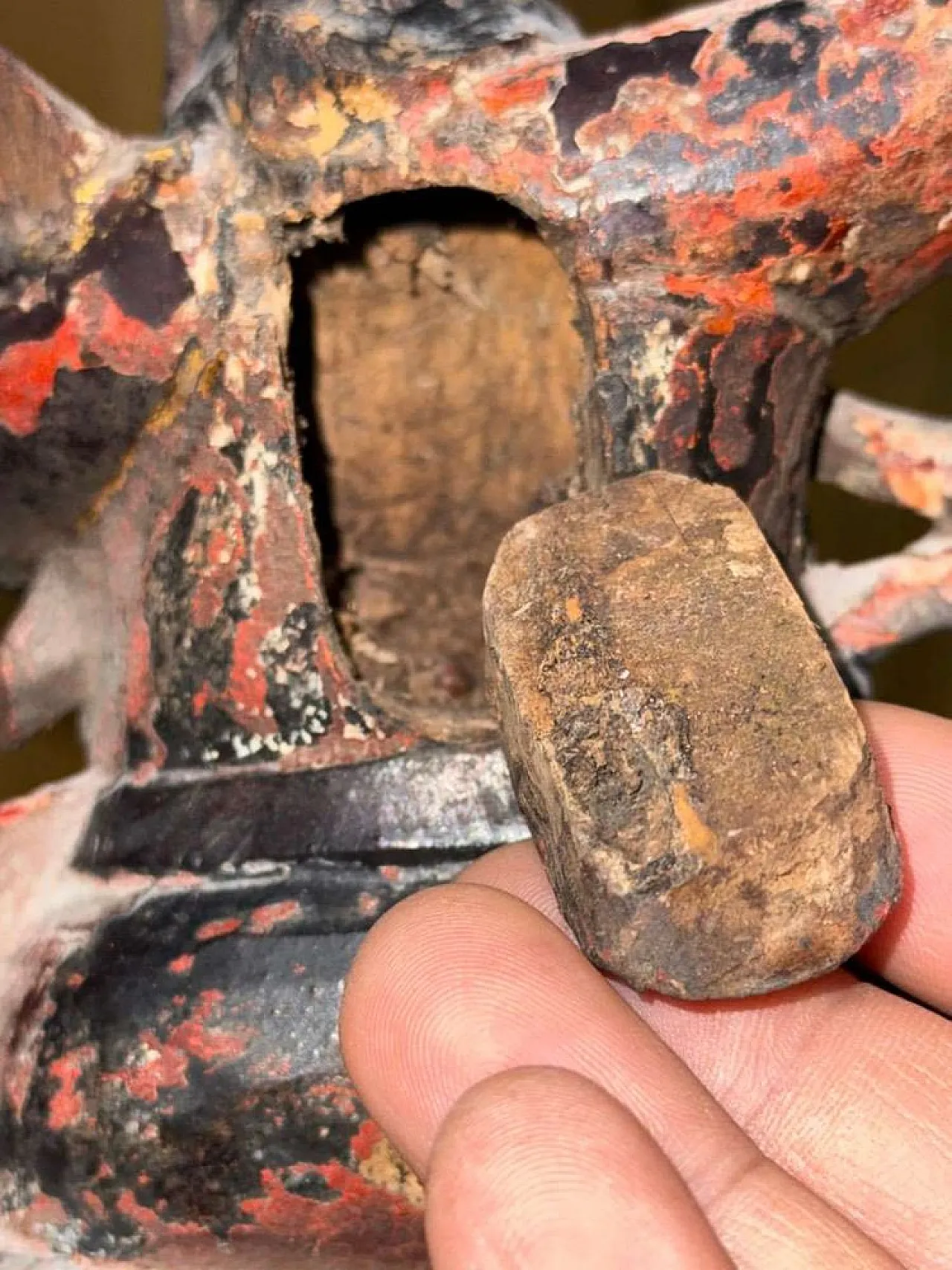
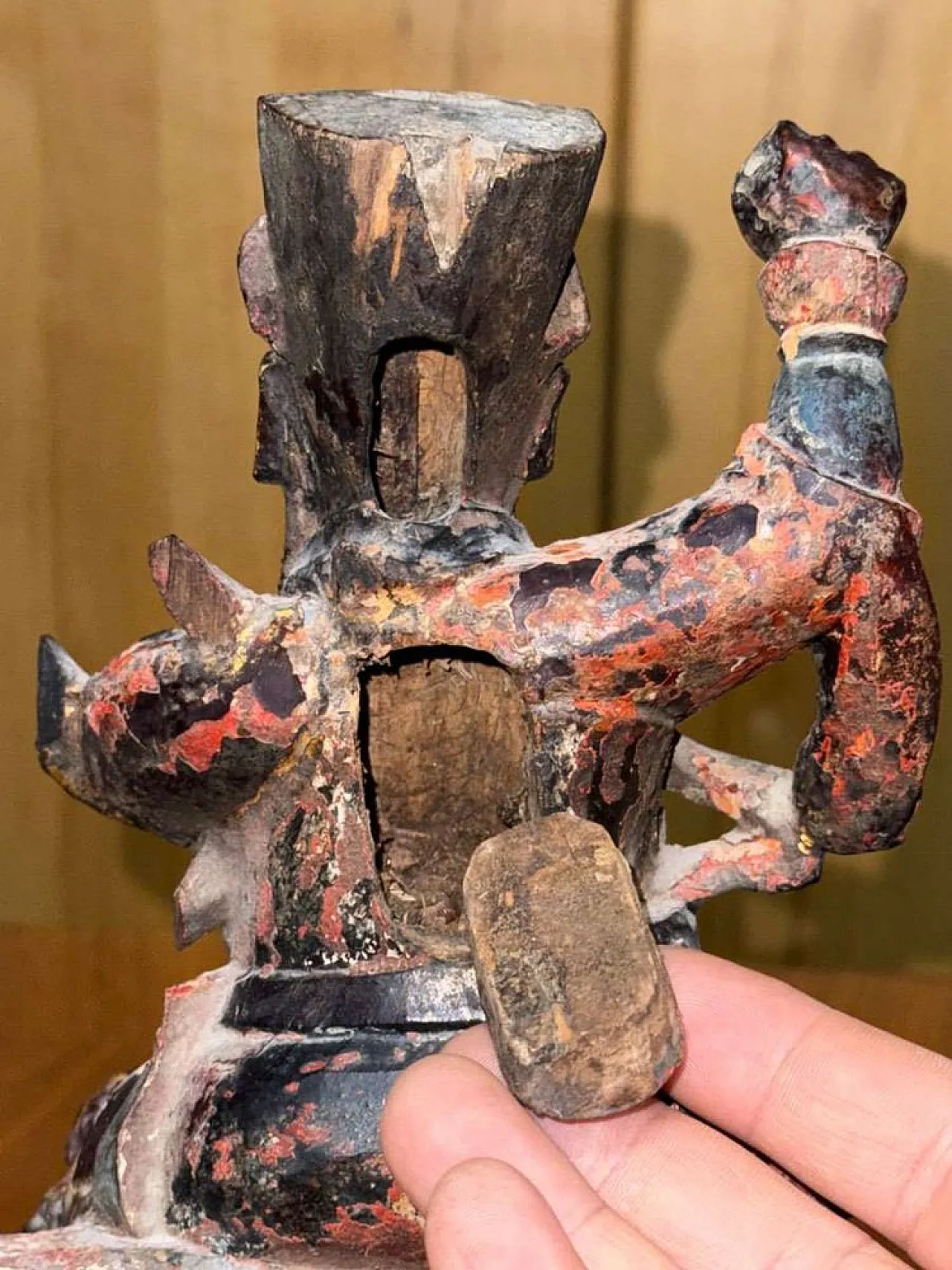
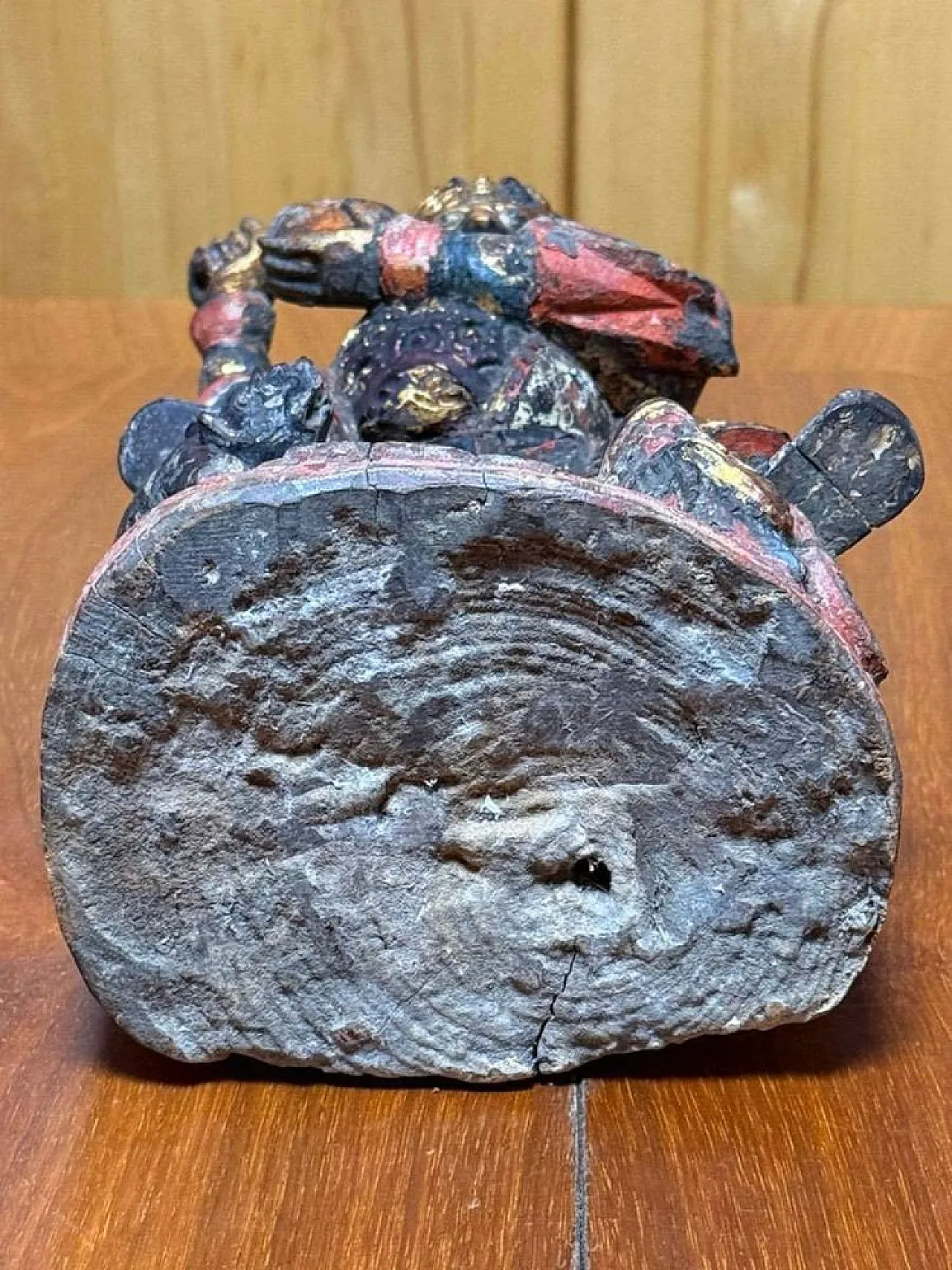
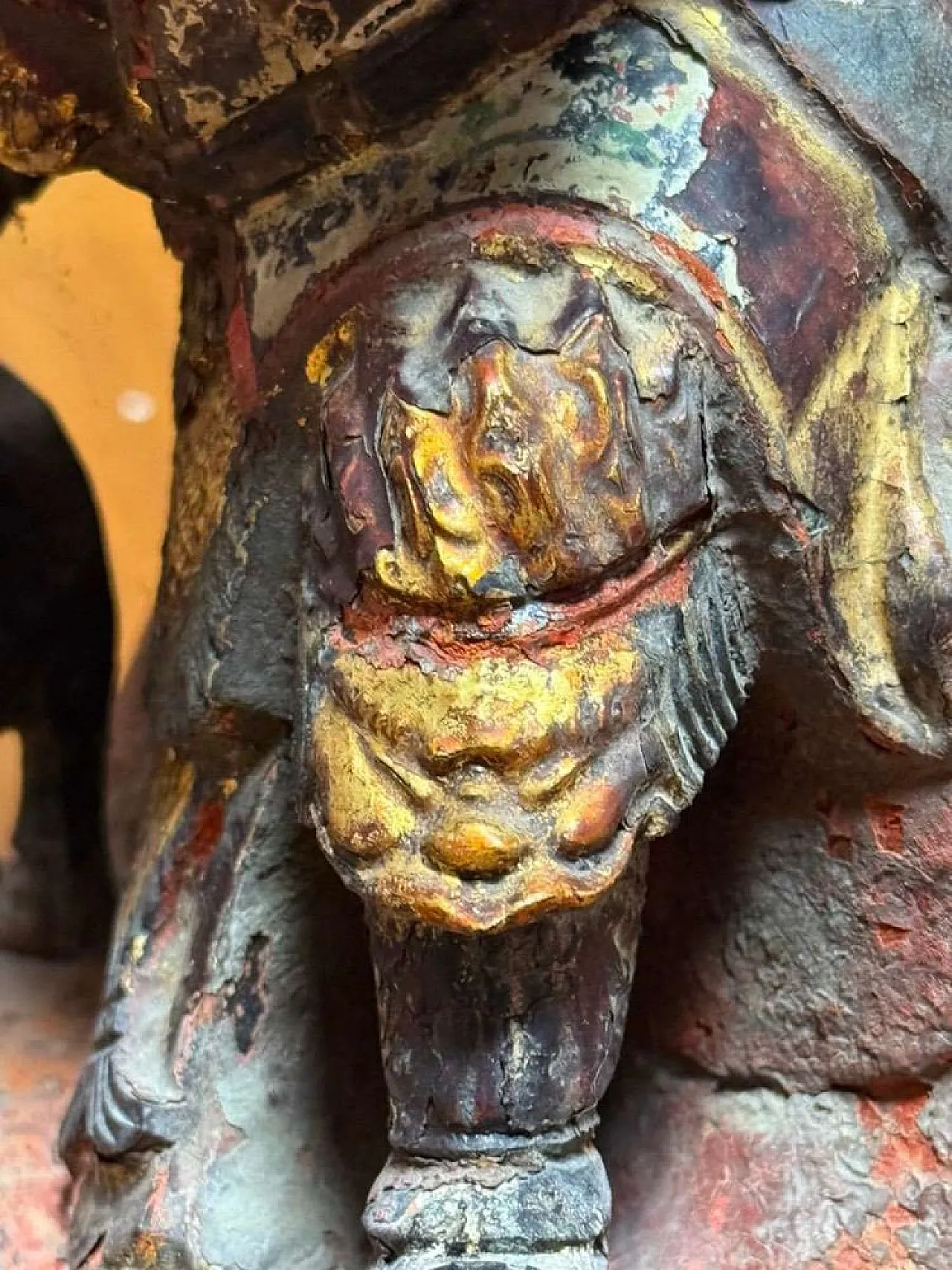
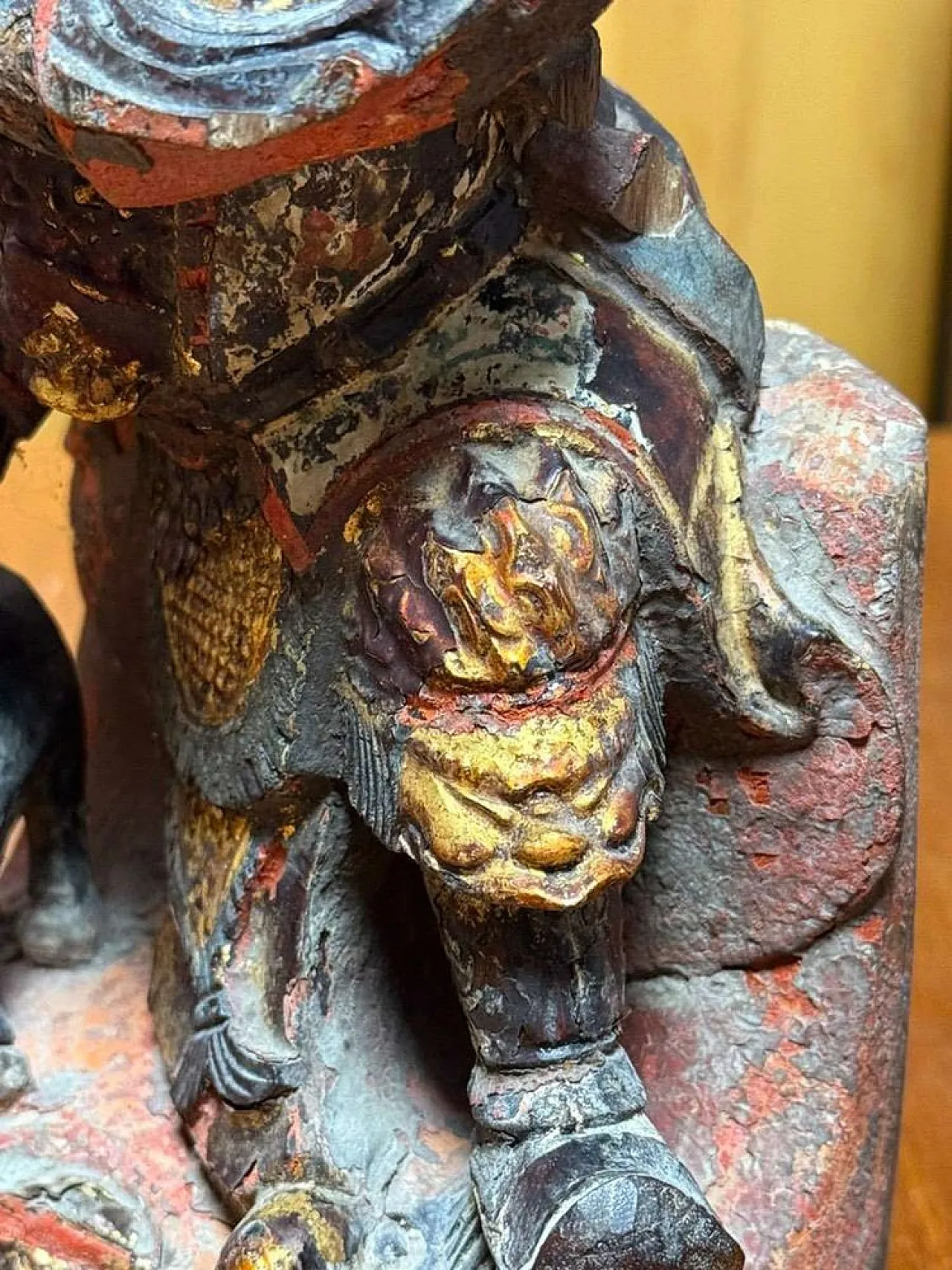
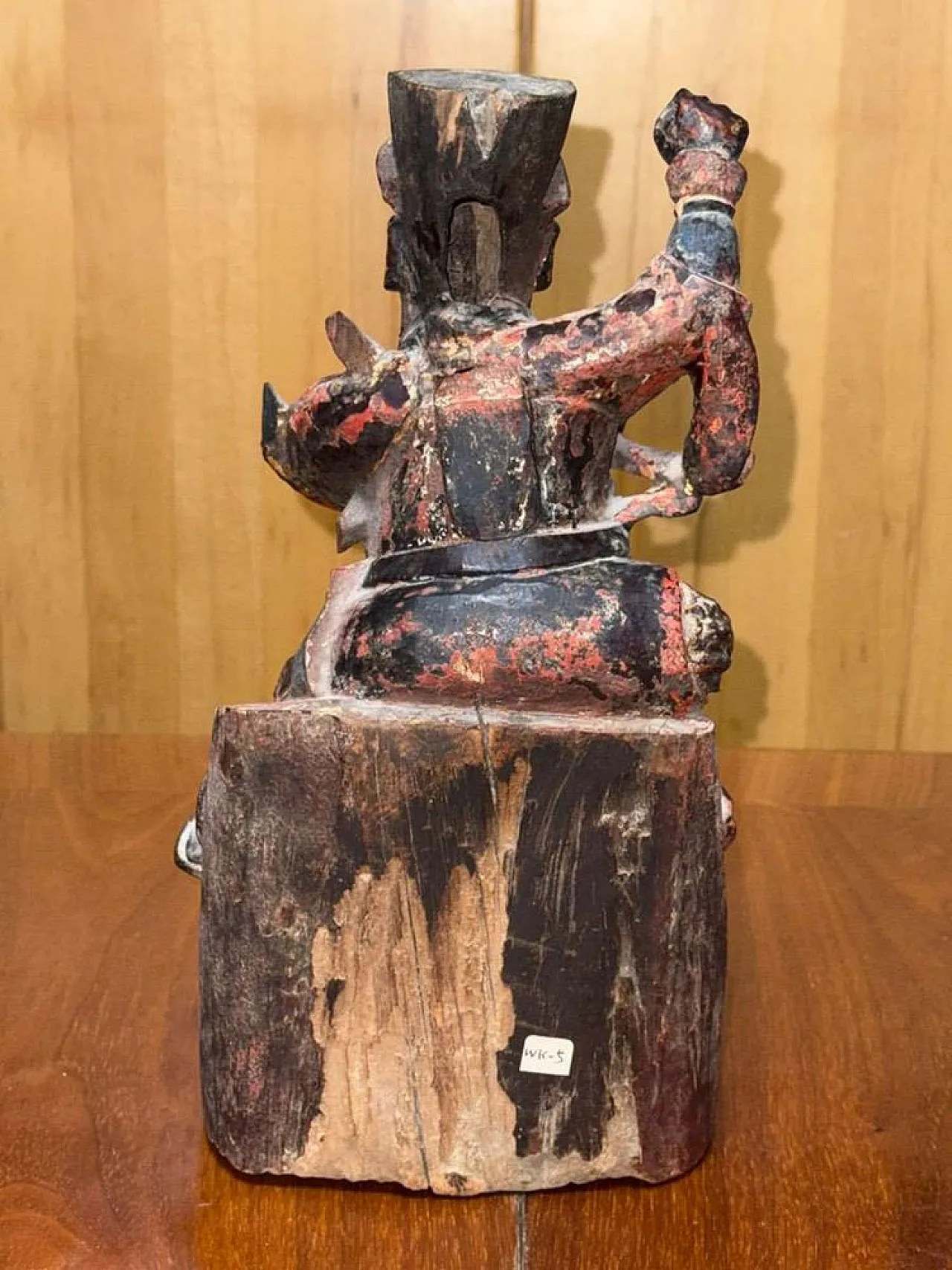
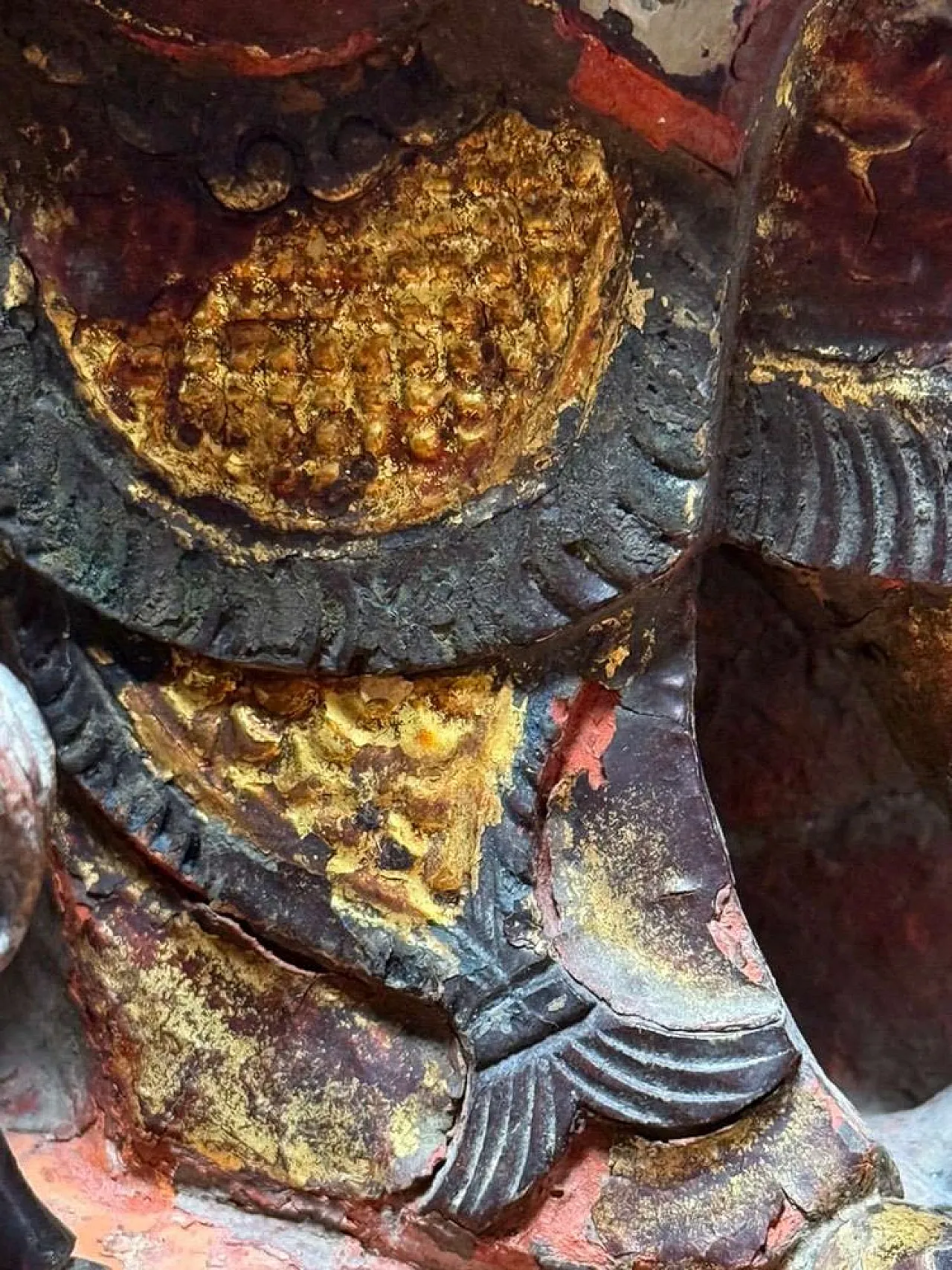
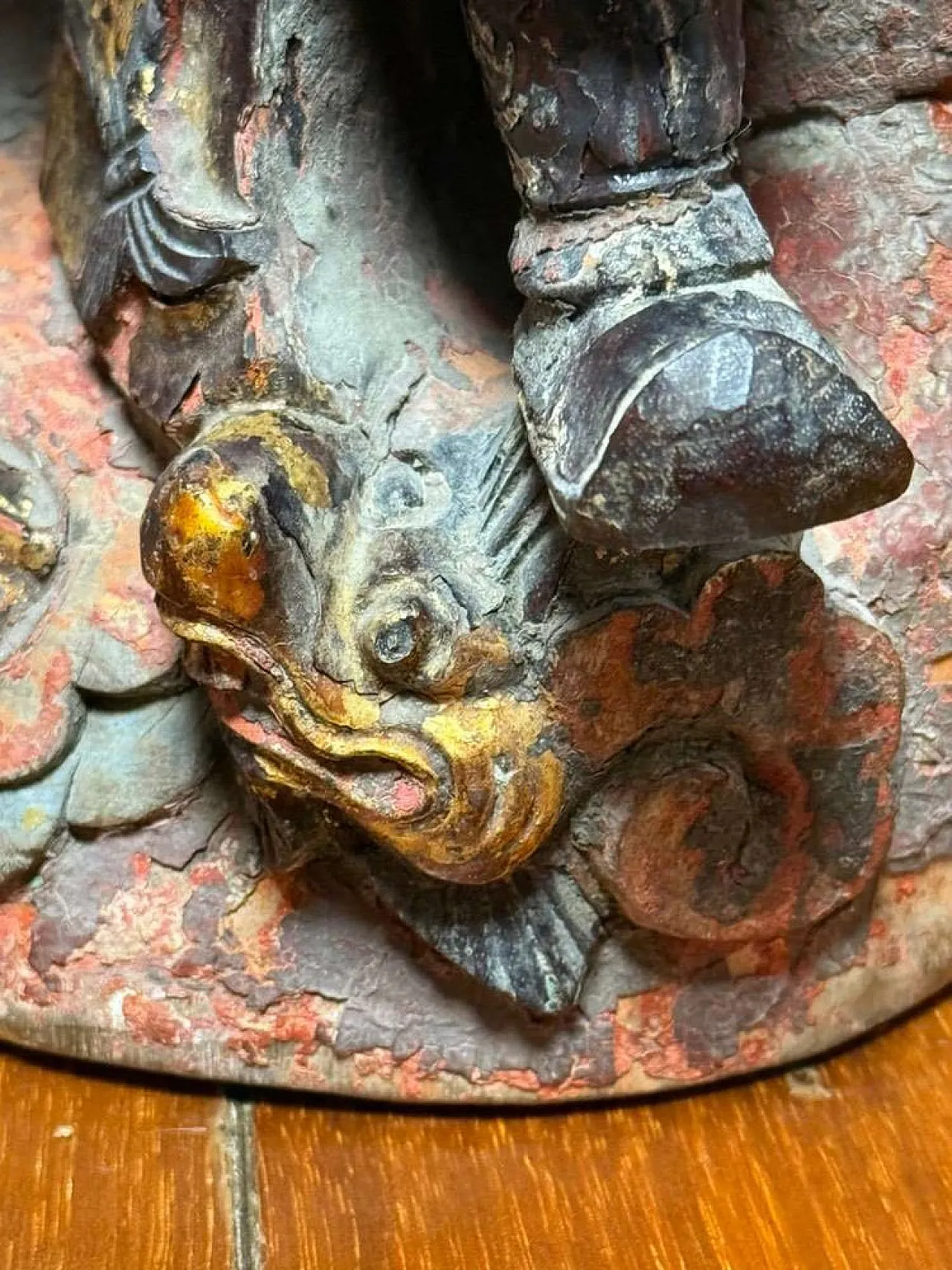
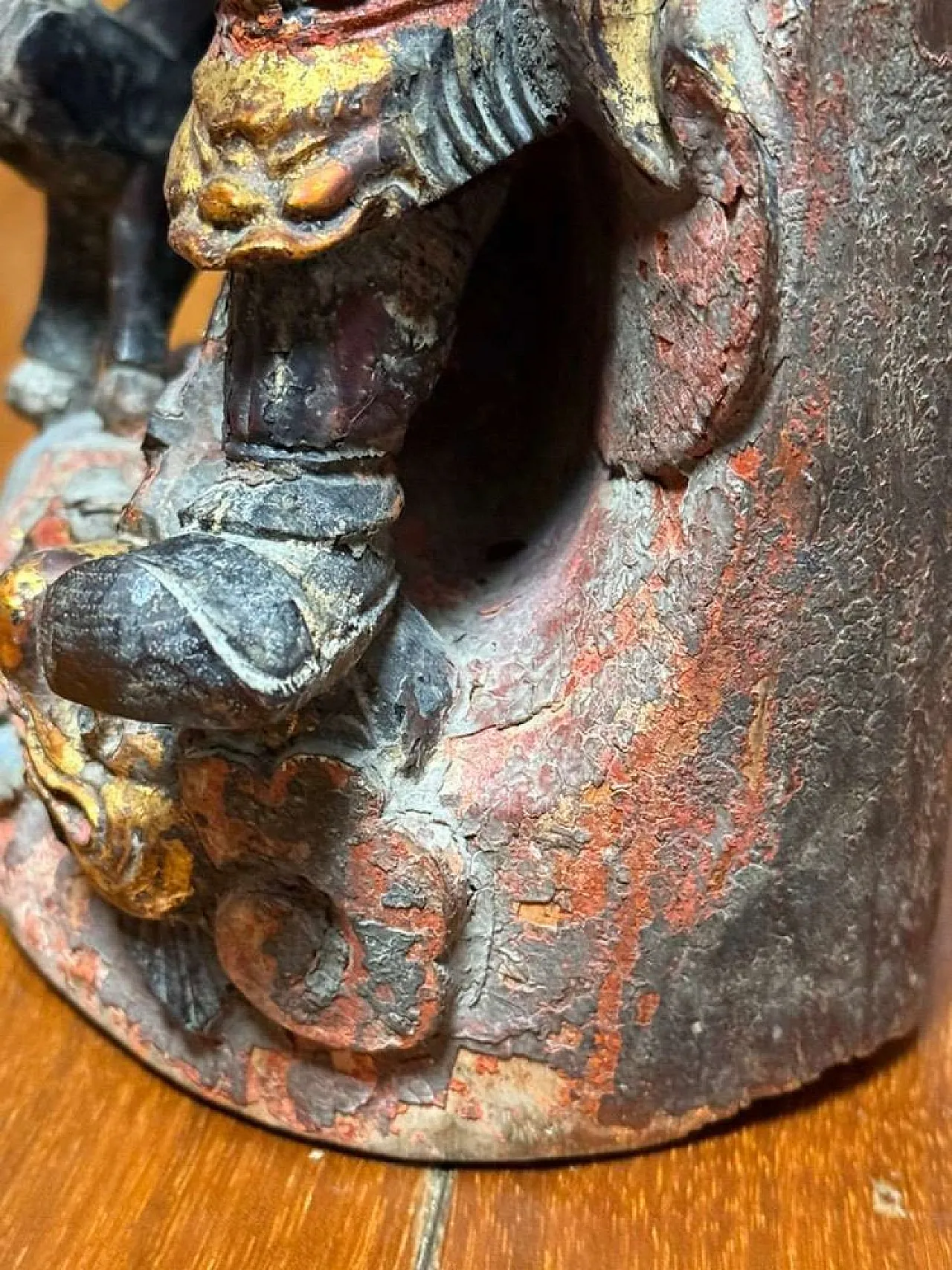
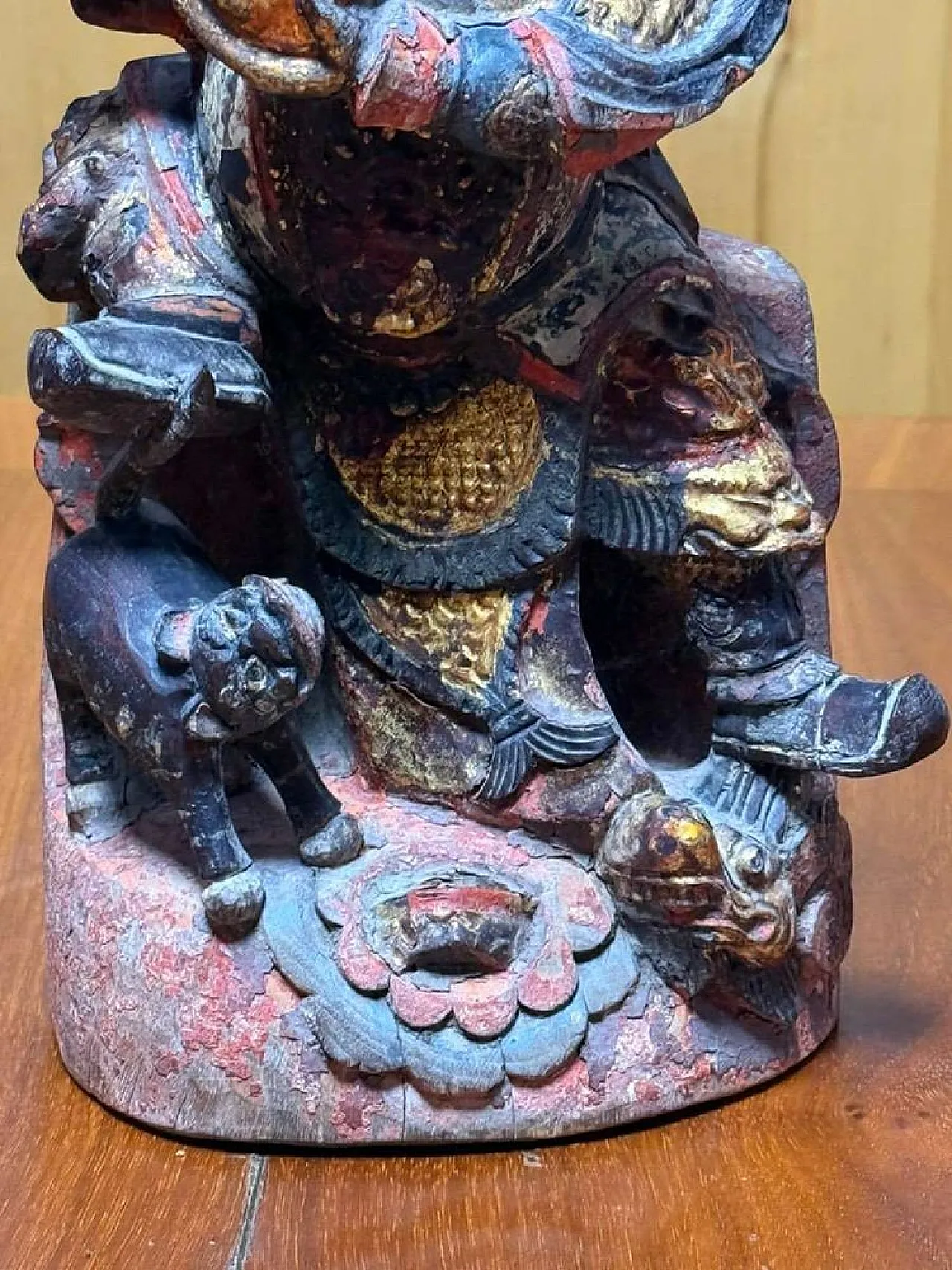
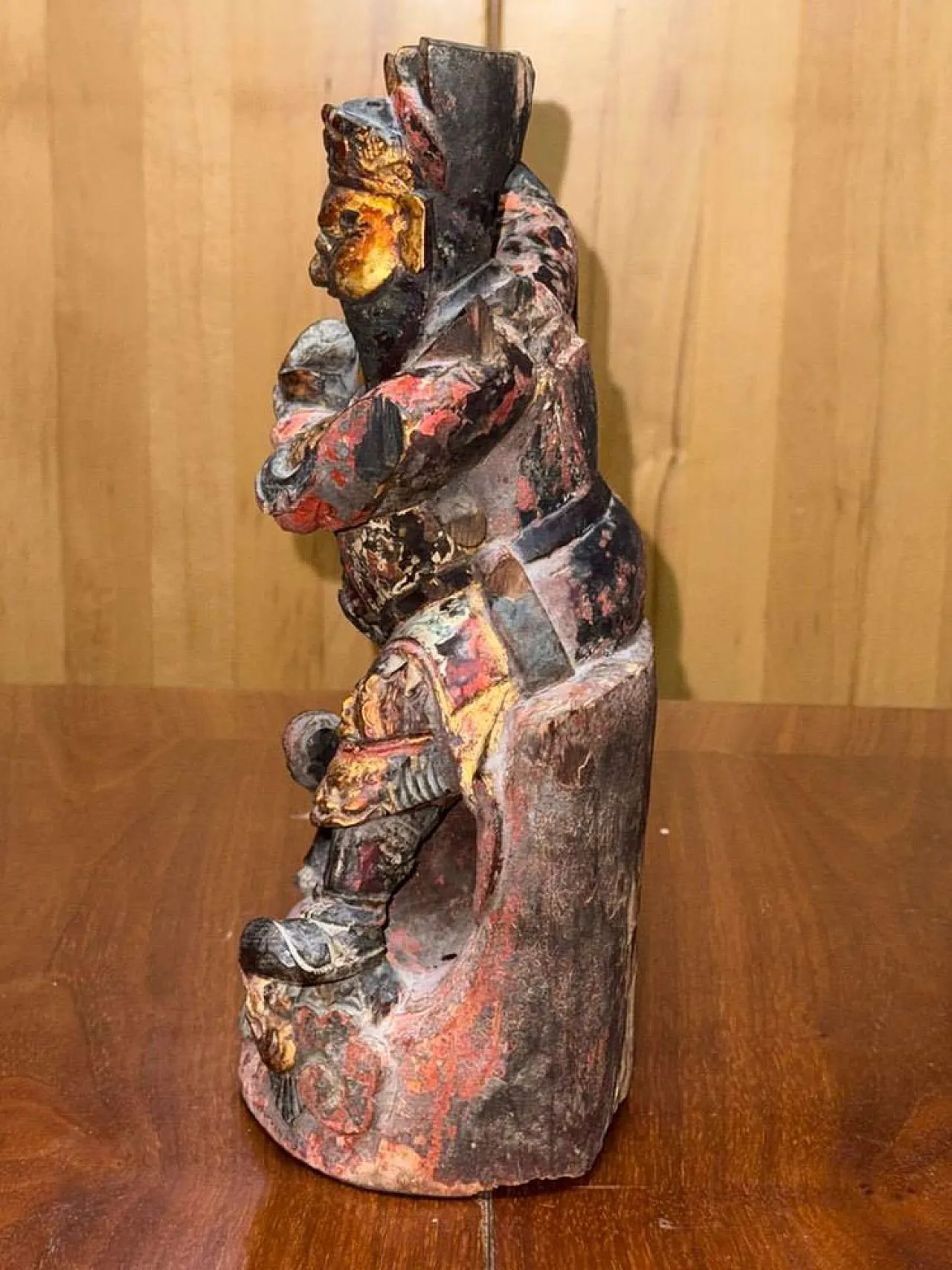
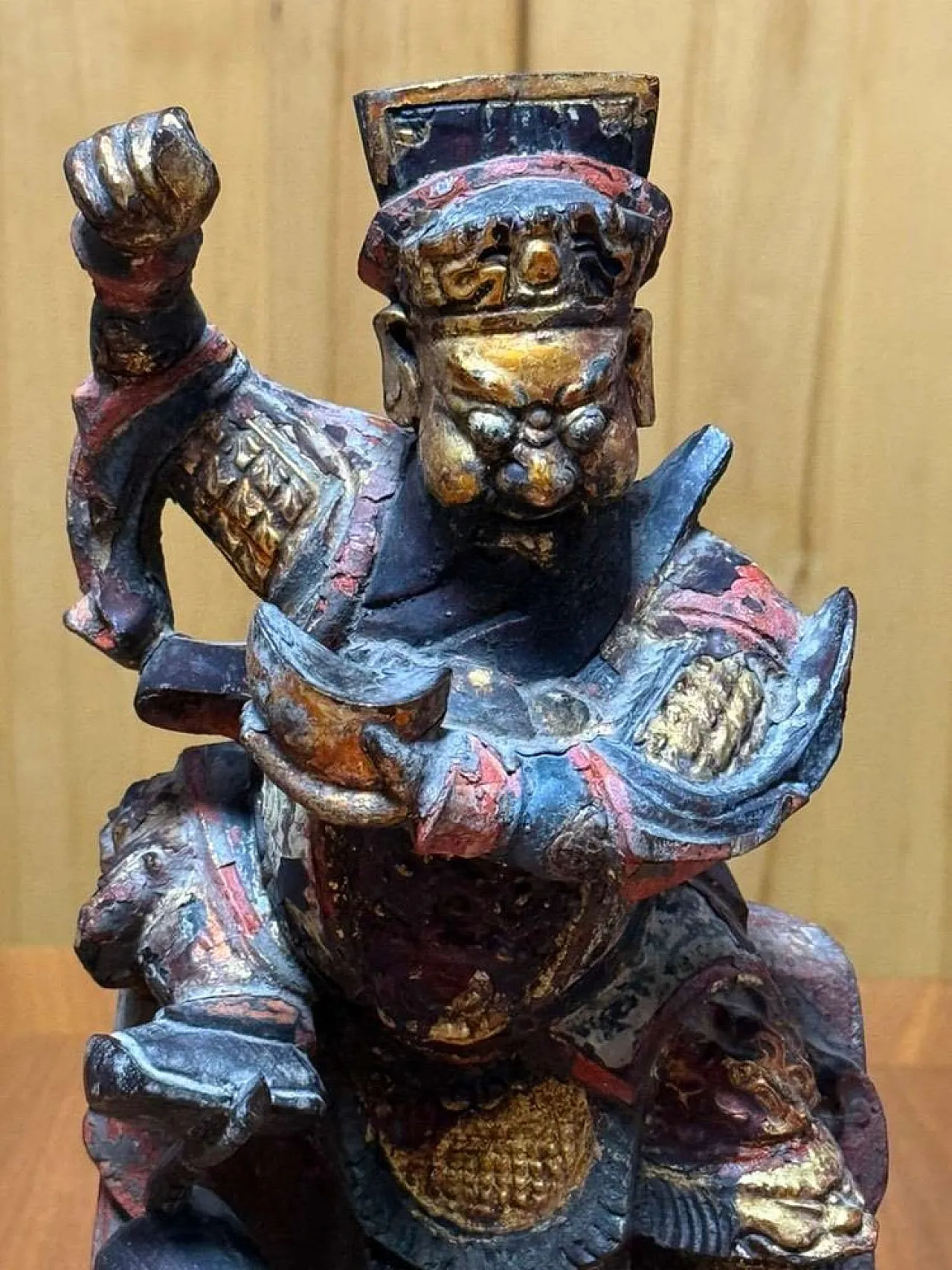
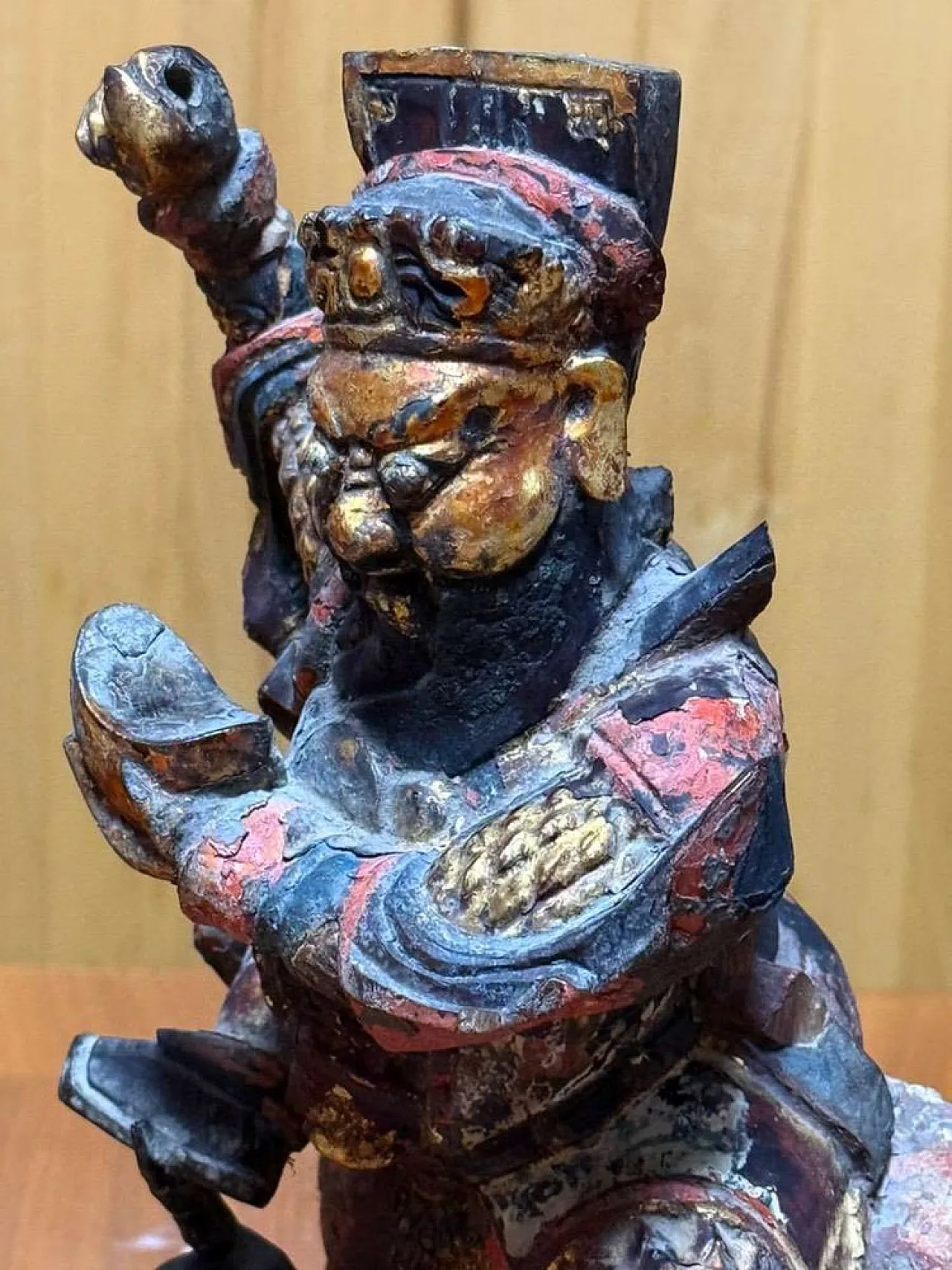
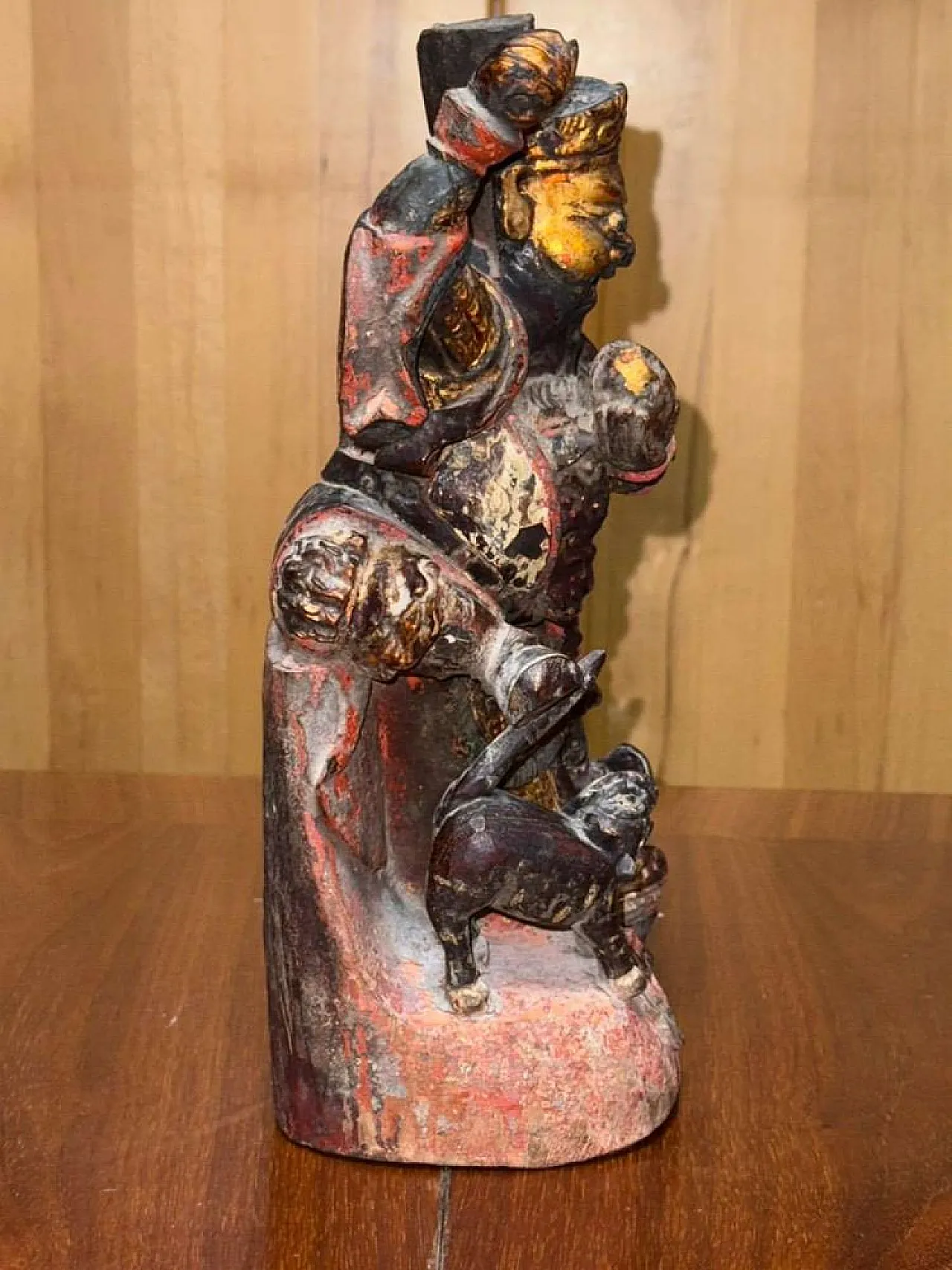
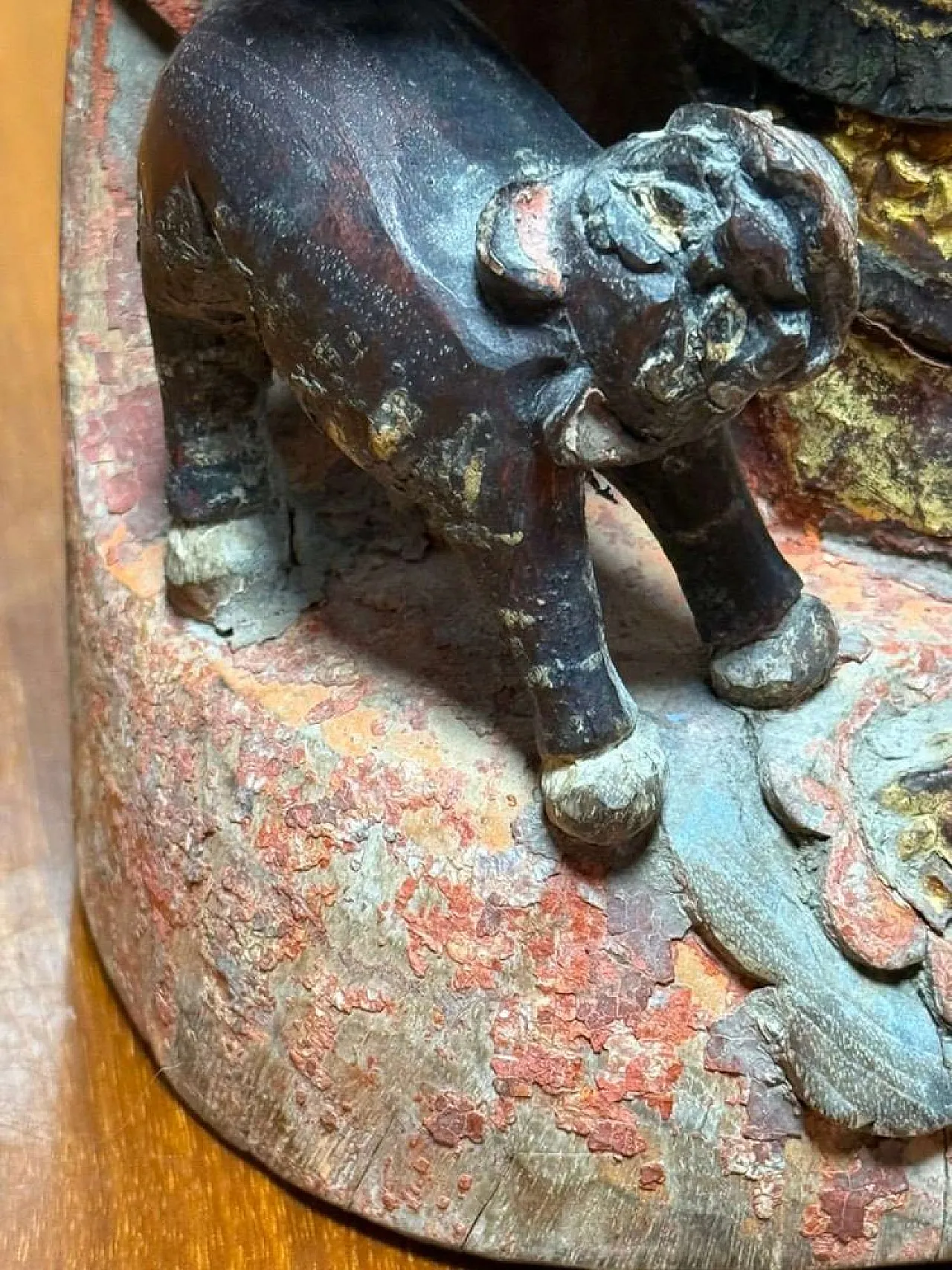
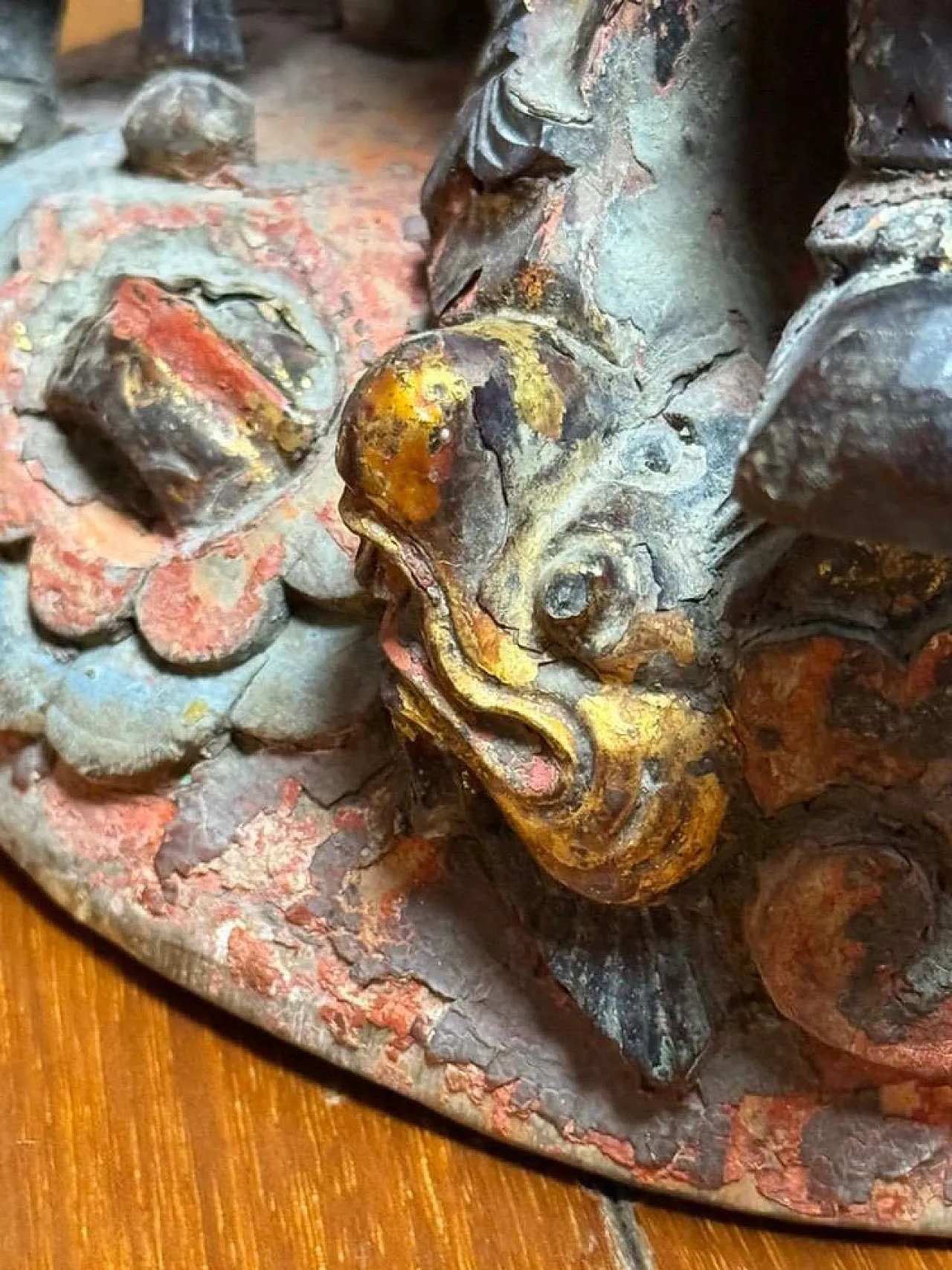
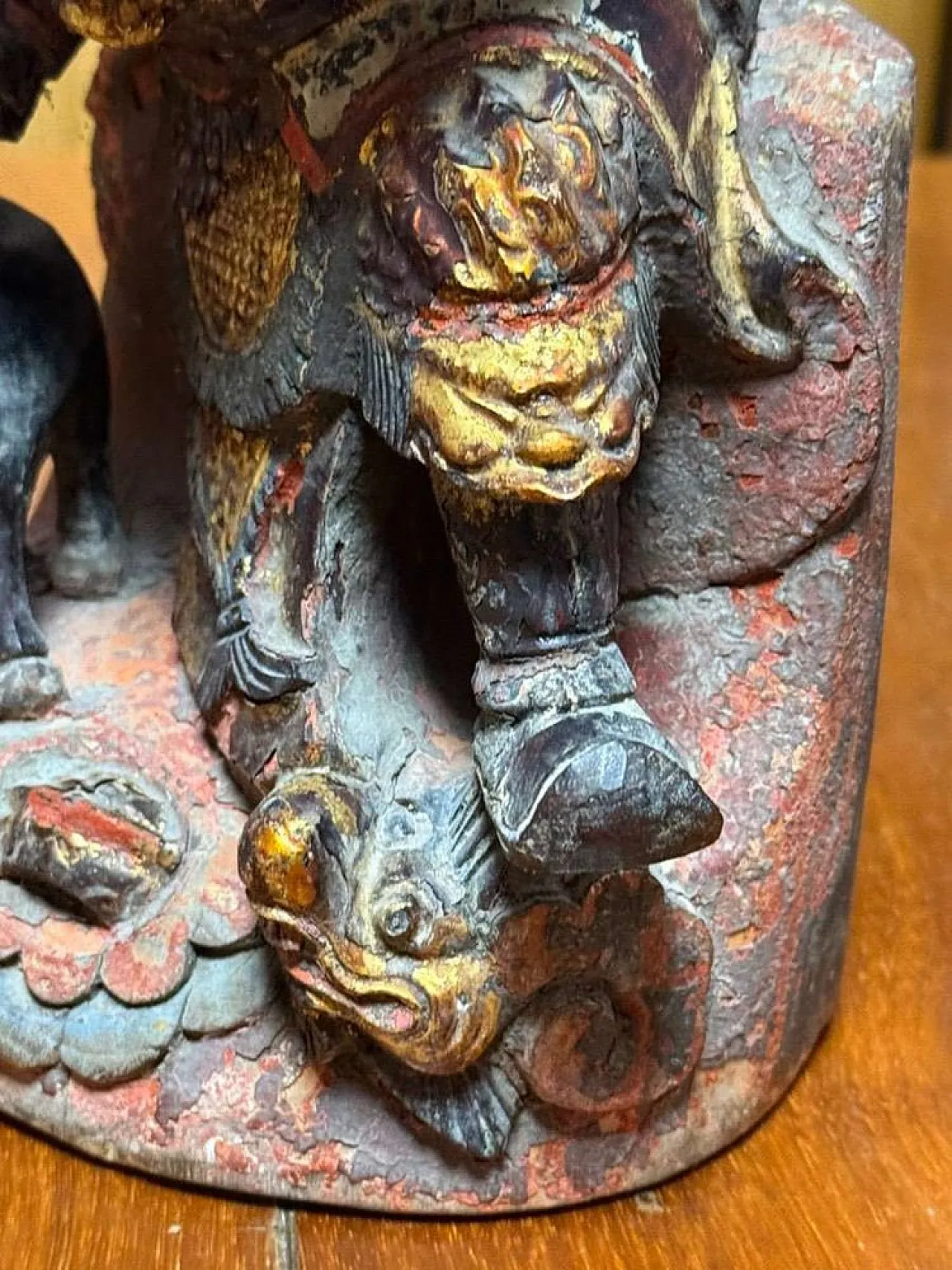
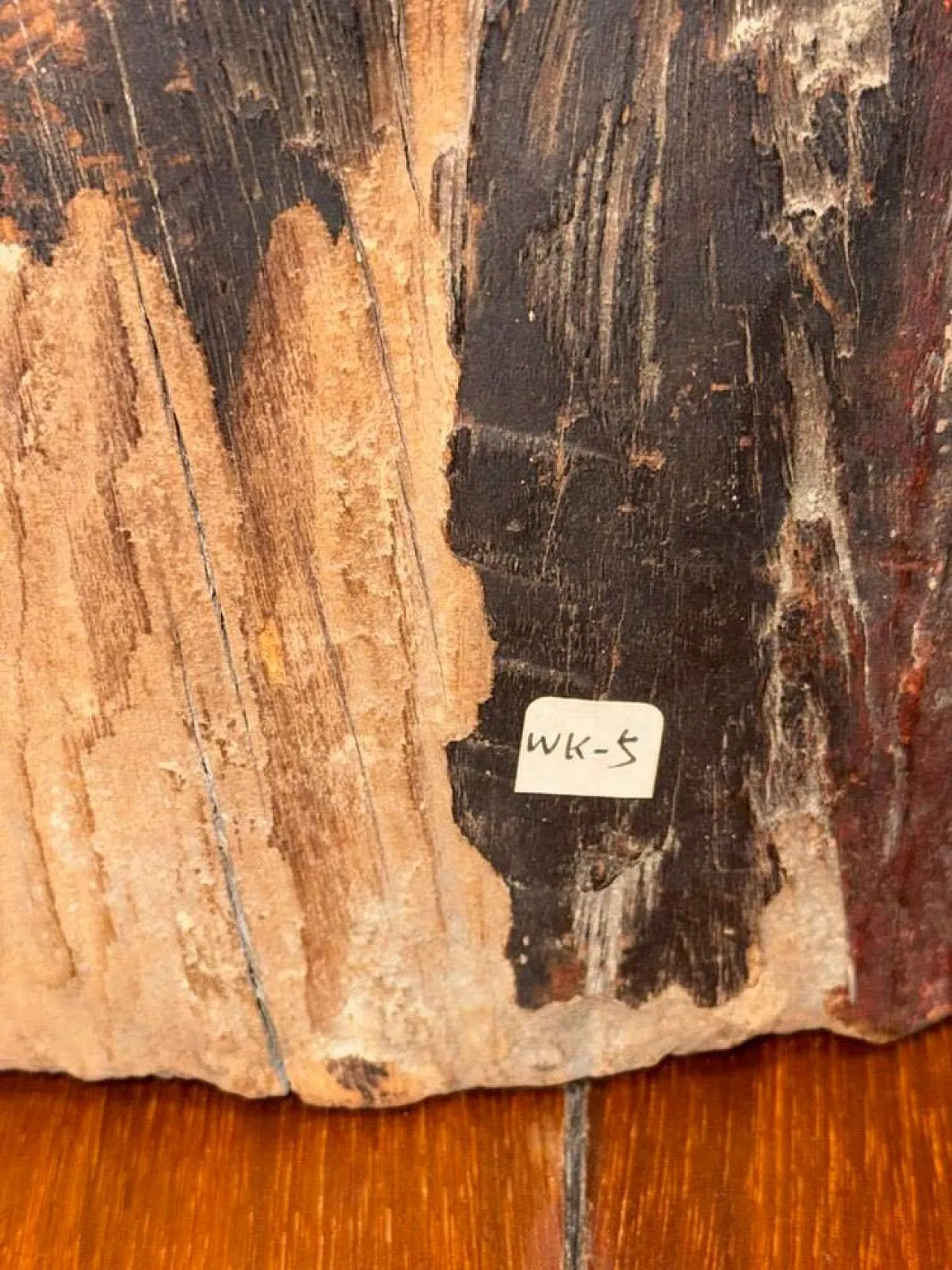
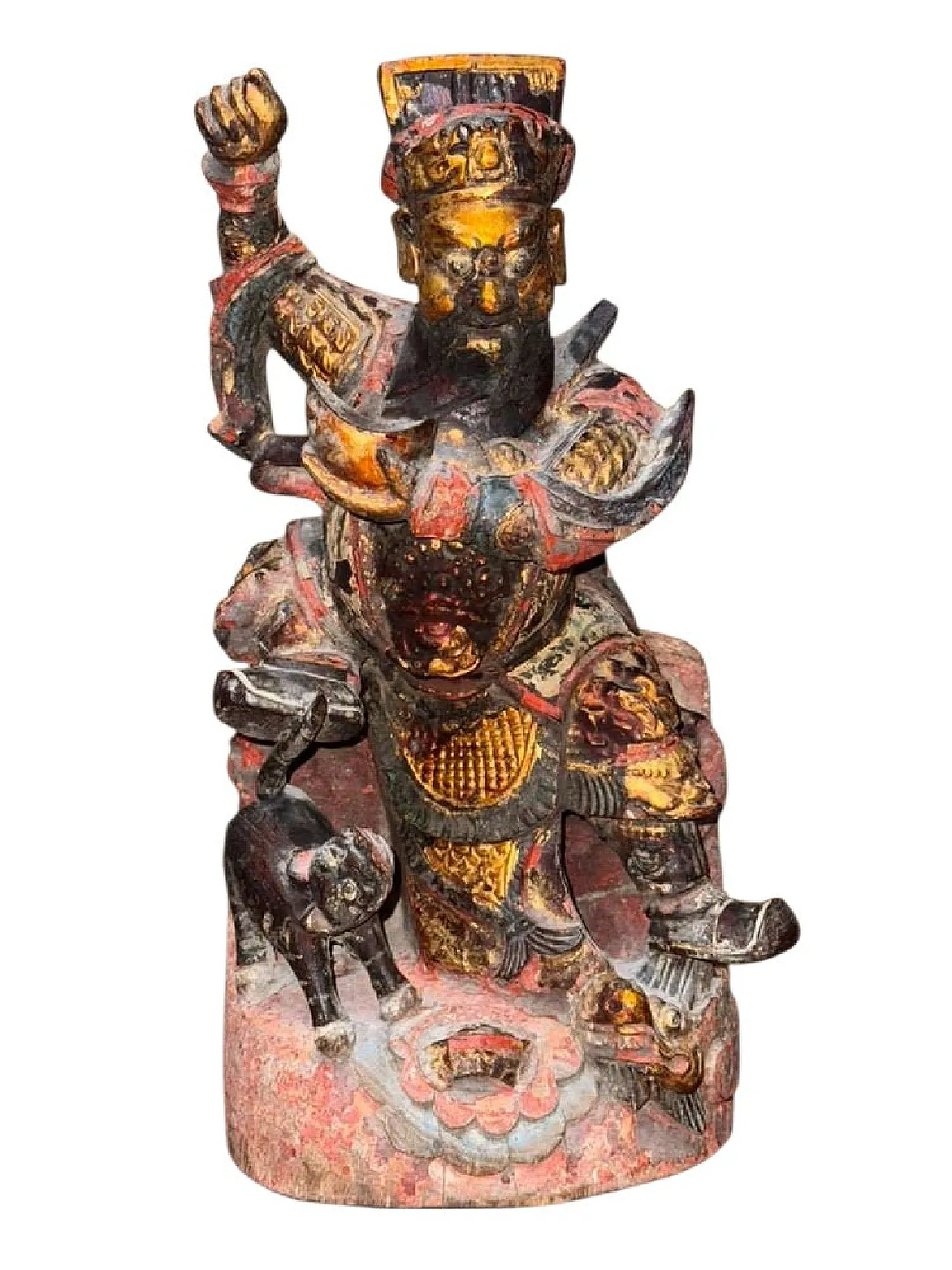
Title: Chinese polychrome wood sculpture depicting the Taoist deity Zhao Gongming China, Qing dynasty, 18th century Rare and authentic Chinese polychrome wood sculpture depicting Zhao Gongming (趙公明), also known as Wu Caishen, the martial god of wealth in the Taoist pantheon. The deity is represented in a dynamic warrior pose, standing triumphantly on a black tiger, his traditional attribute and symbol of subdued demonic forces, protection and the power to bestow wealth. Description and iconography The figure is sculpted as an imposing-looking armored general, with a long beard, richly detailed armor and a helmet adorned with ornamental and symbolic motifs. One arm is raised, originally intended to hold an attribute such as a whip or staff (now missing), in line with classical depictions of Zhao Gongming. The black tiger below the deity is powerfully modeled, with expressive facial features and a dynamic posture, which reinforce the martial and protective nature of the god. The sculpture rests on an intricately carved base resembling a rocky landscape with mythological and cloud-like elements. The surface retains its original polychromy, with visible traces of cinnabar red pigment, black lacquer and remains of golden decorations, all signs of natural wear compatible with age and prolonged ritual use. Construction and Ritual Function The back of the figure contains a consecration cavity with a removable wooden plug, a typical feature of Qing Dynasty religious sculptures. These cavities were used to house prayers, talismans, or other consecration materials, confirming that the sculpture was created for active devotional use, whether in a home shrine or a temple. Dating and authenticity Based on the stylistic features, iconography, carving technique, construction, natural weathering of the wood, and surviving polychrome layers, and supported by comparable examples from museums and auctions, the sculpture can be confidently dated to the 18th century, Qing Dynasty (probably Qianlong period). This is not a modern reproduction, but an original religious sculpture from the Qing period, which has obvious signs of aging, including wood shrinkage, surface wear, loss of pigment, and minor losses consistent with centuries of use. Condition Good condition, compatible with age and use: predictable wear and flaking of the polychromy. The original attribute in the raised hand is missing. Stable structure without traces of modern materials or restorations. Summary Origin: China Period: Qing dynasty Date: 18th century Material: carved wood with polychromy and traces of gilding Subject: Zhao Gongming (Wu Caishen), martial god of wealth Function: sculpture on a Taoist altar Rarity: high, thanks to the depiction of the deity riding a black tiger and the presence of an intact consecration cavity. An exceptional collector's piece for connoisseurs of Chinese religious art, Taoist iconography and Qing Dynasty sculpture.
Origin:
Previously belonged to a private European collection; purchased in the 1920s on the antiques market in Vienna (Austria). The object has been found in Europe for several decades.



.png)



 SILVER Seller in Slovenia, Slovenia