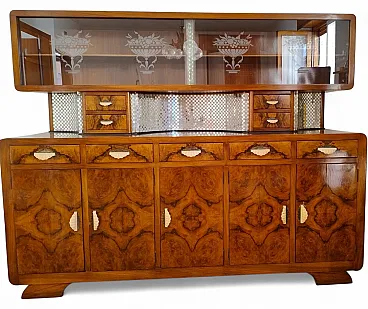
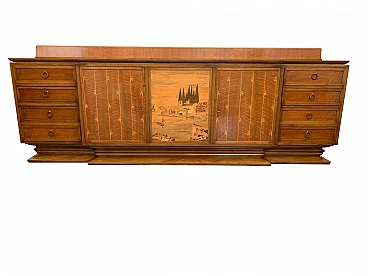
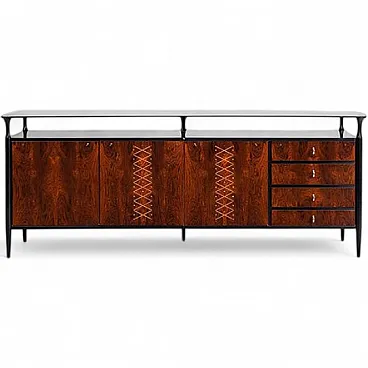
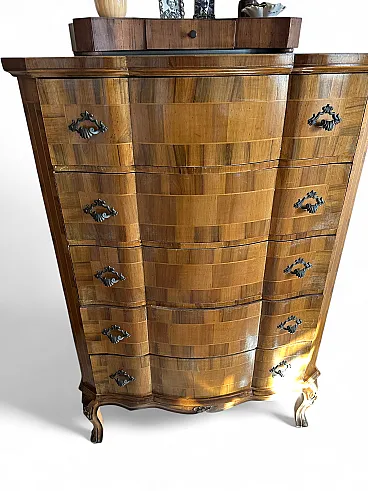
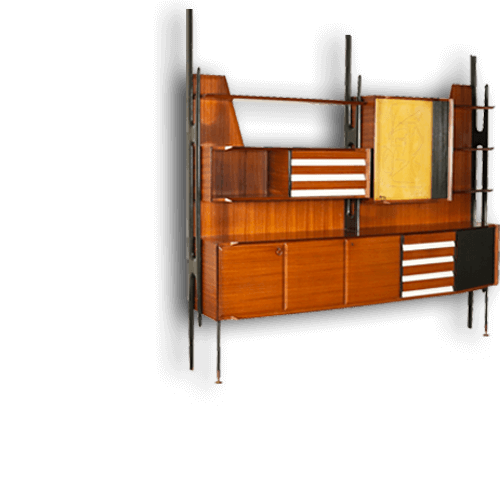
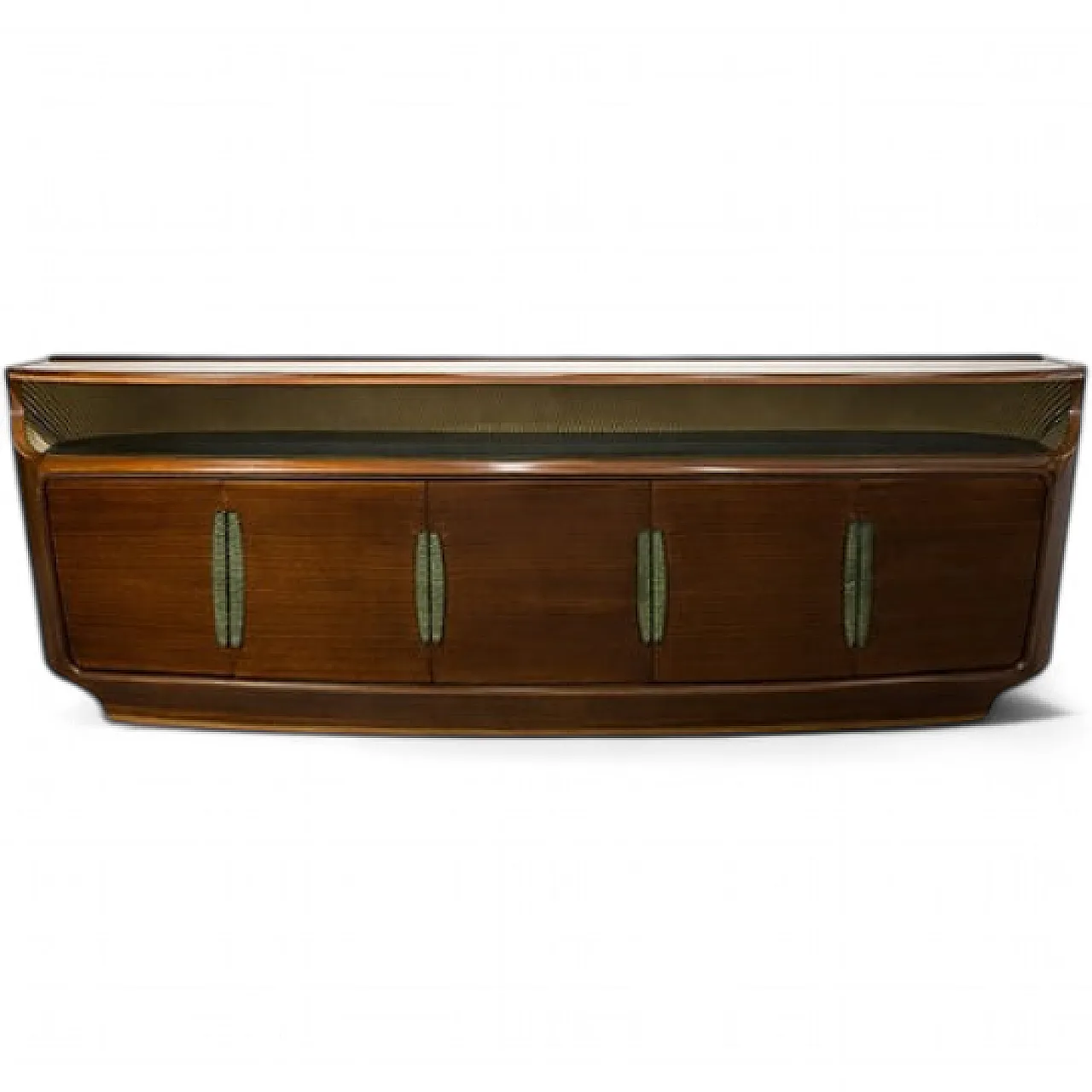
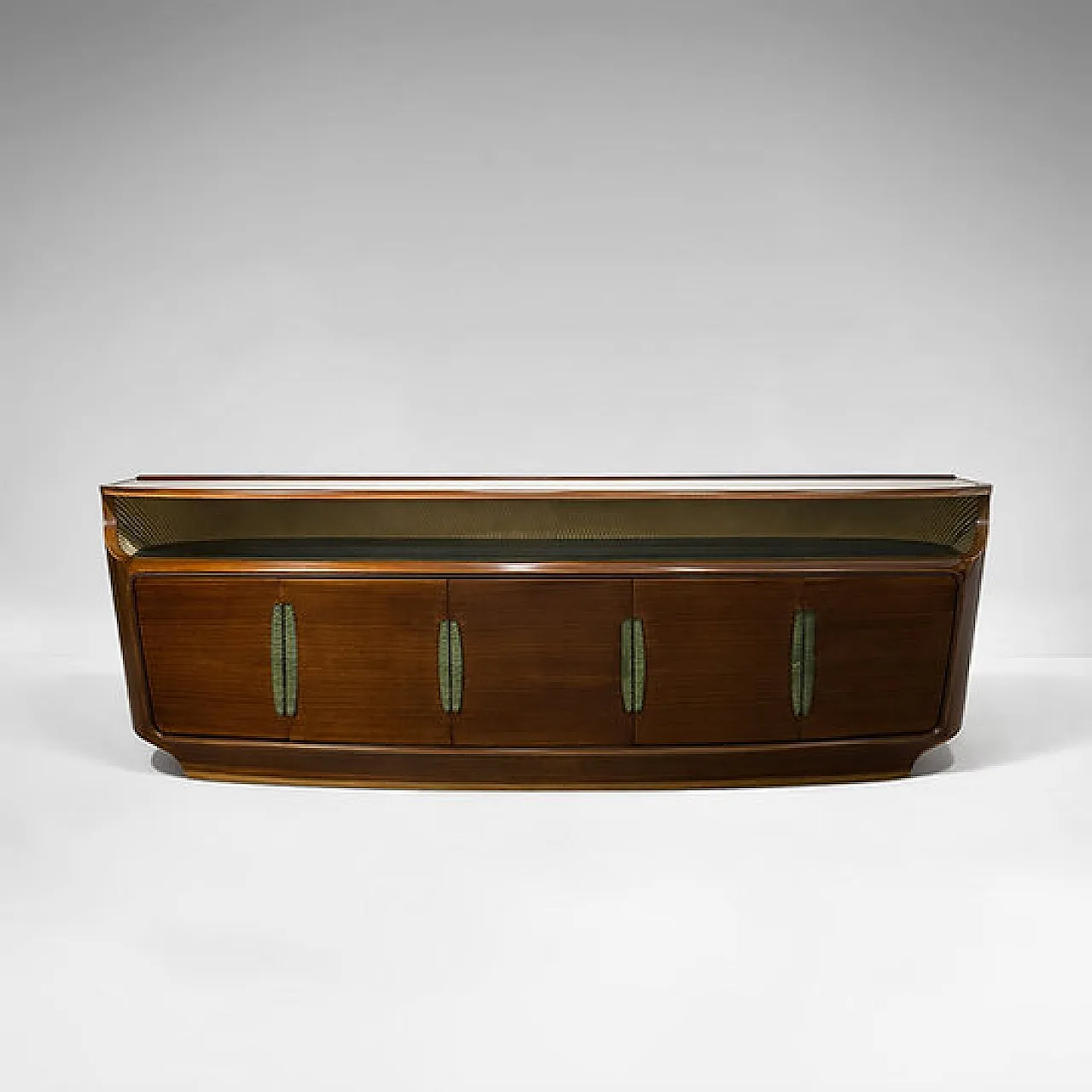
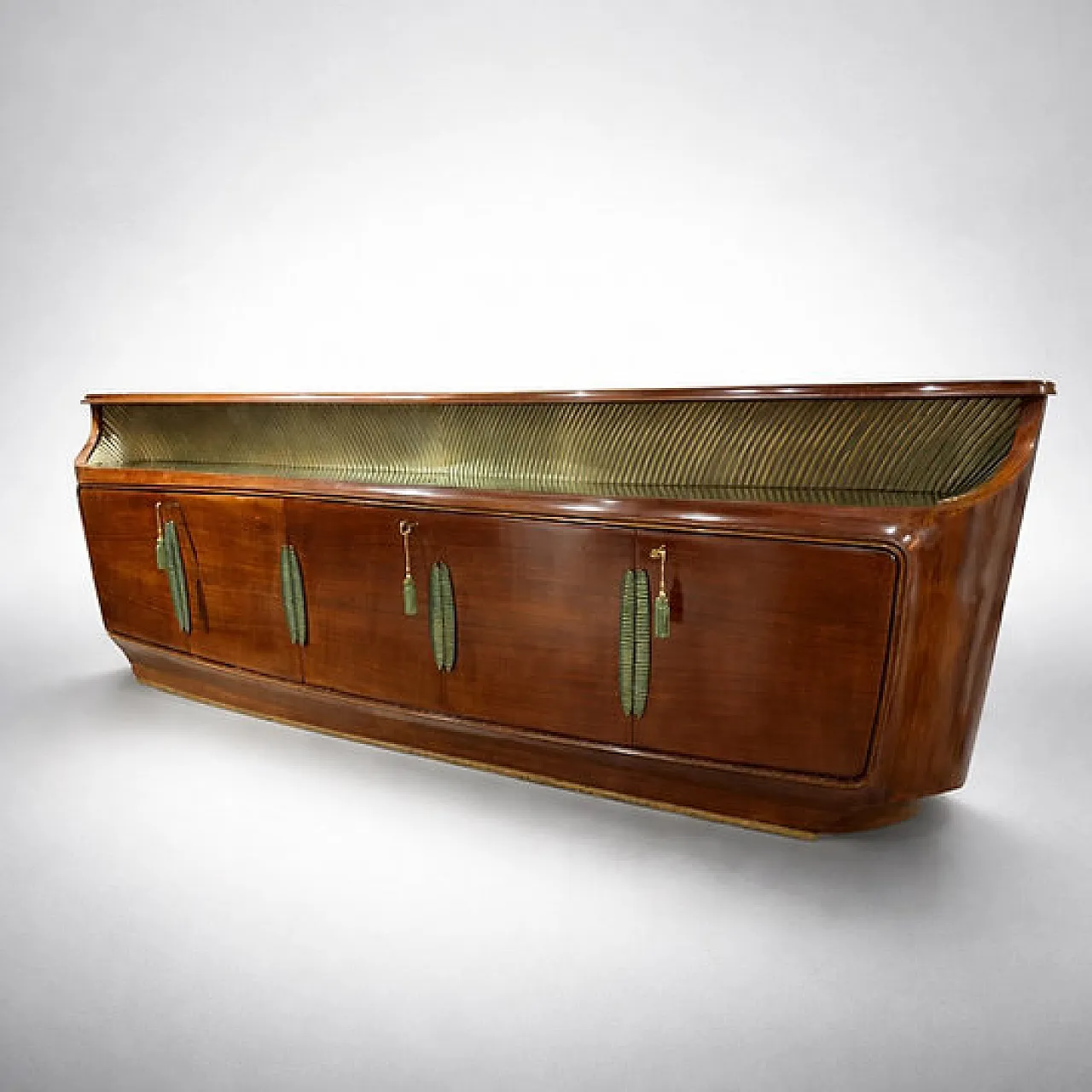
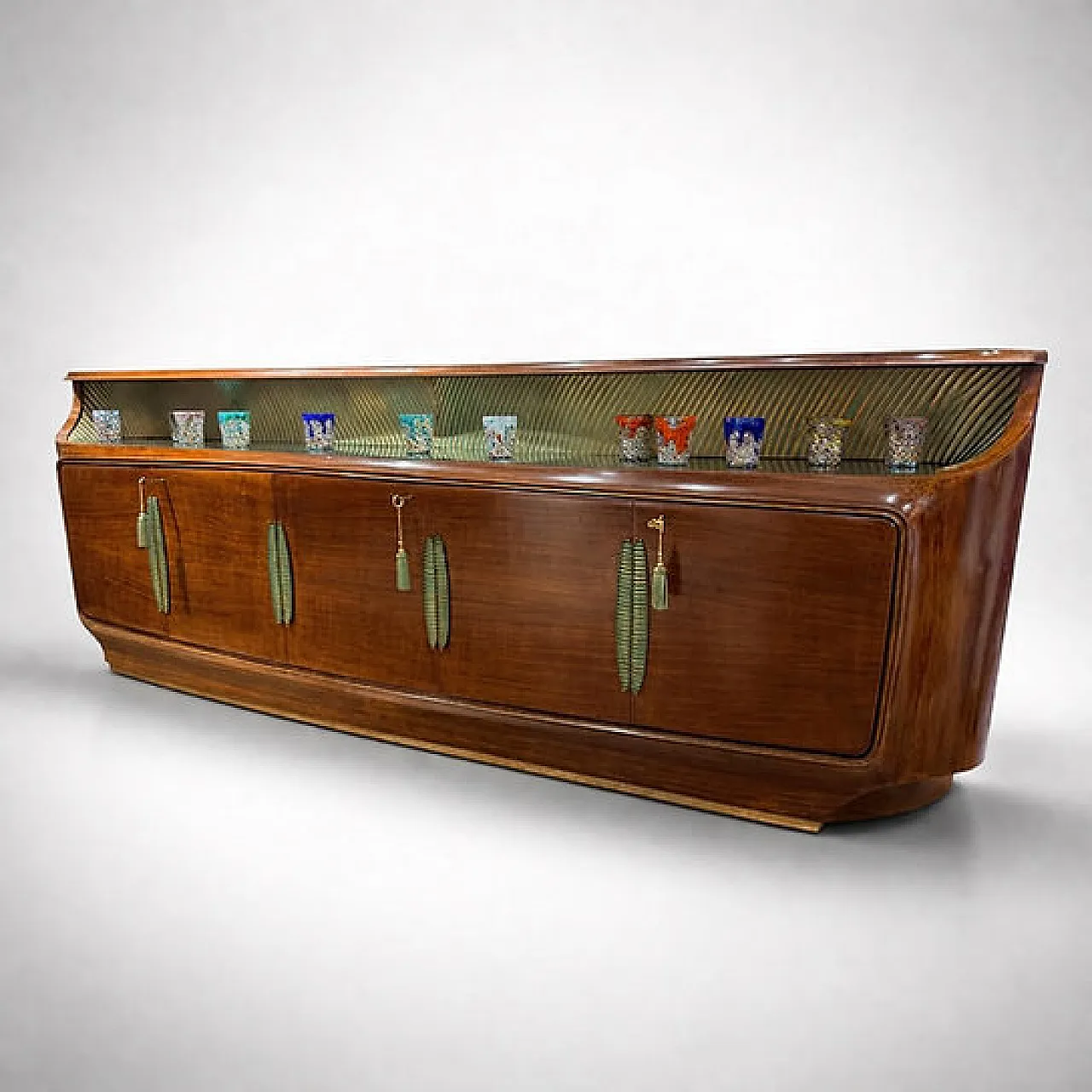
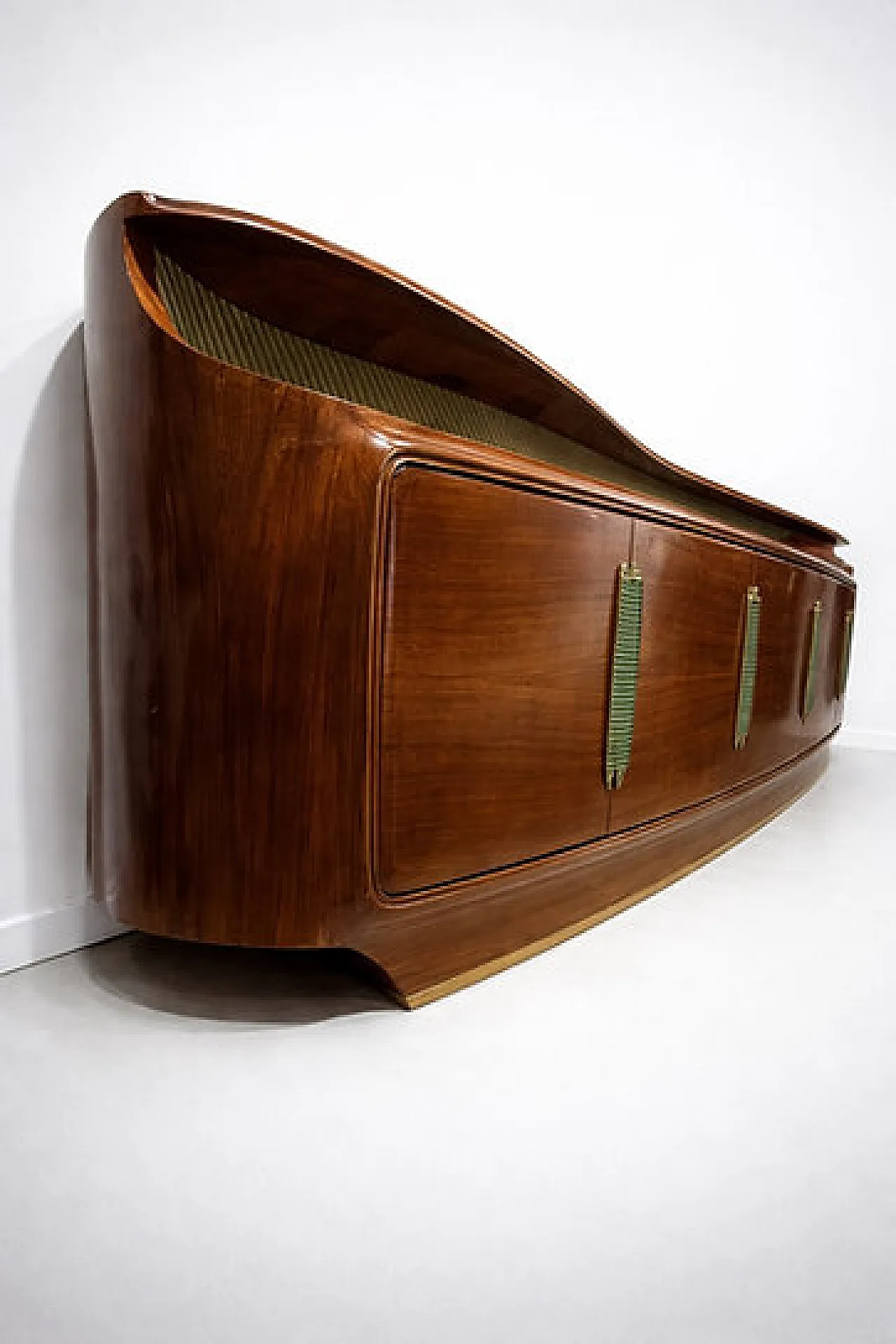
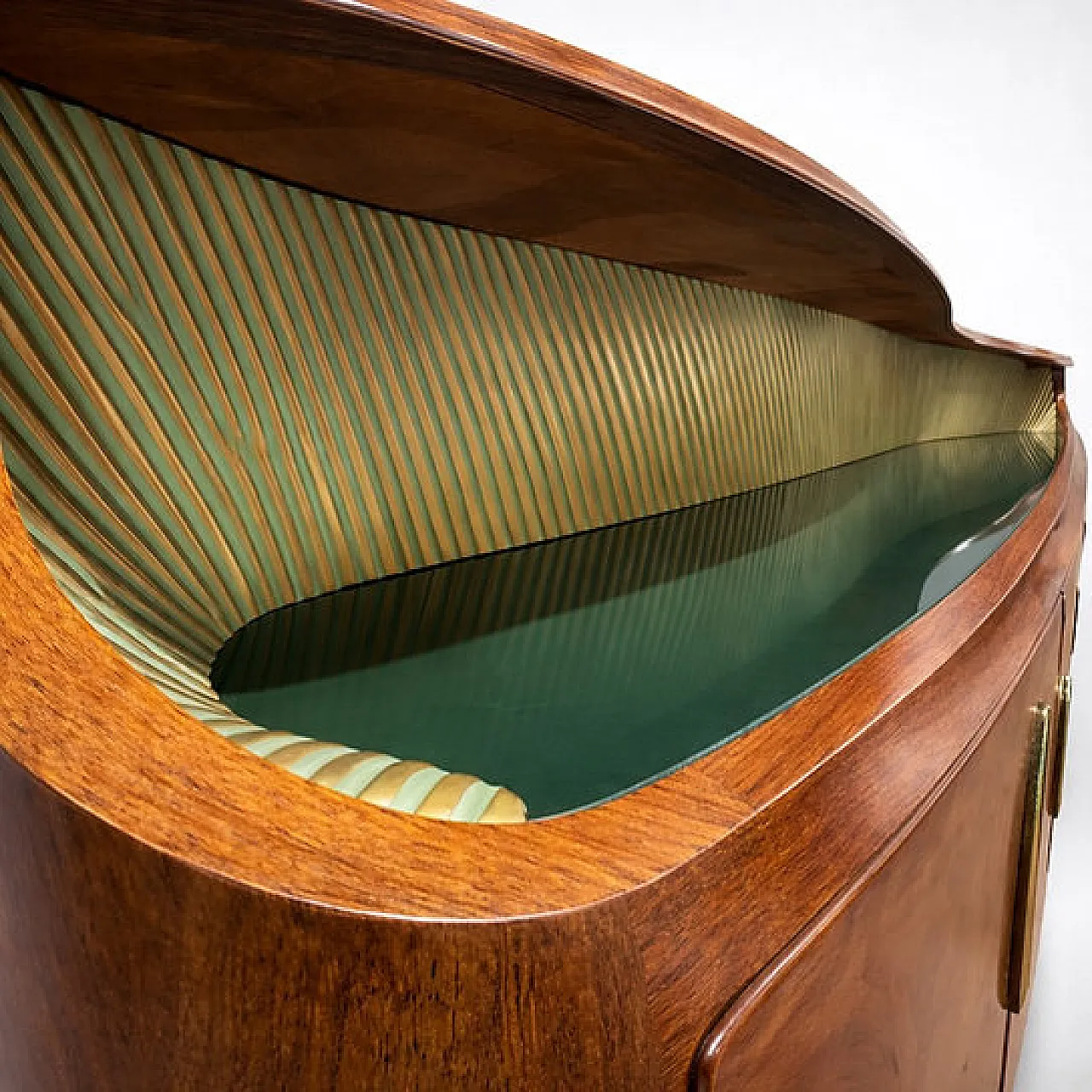
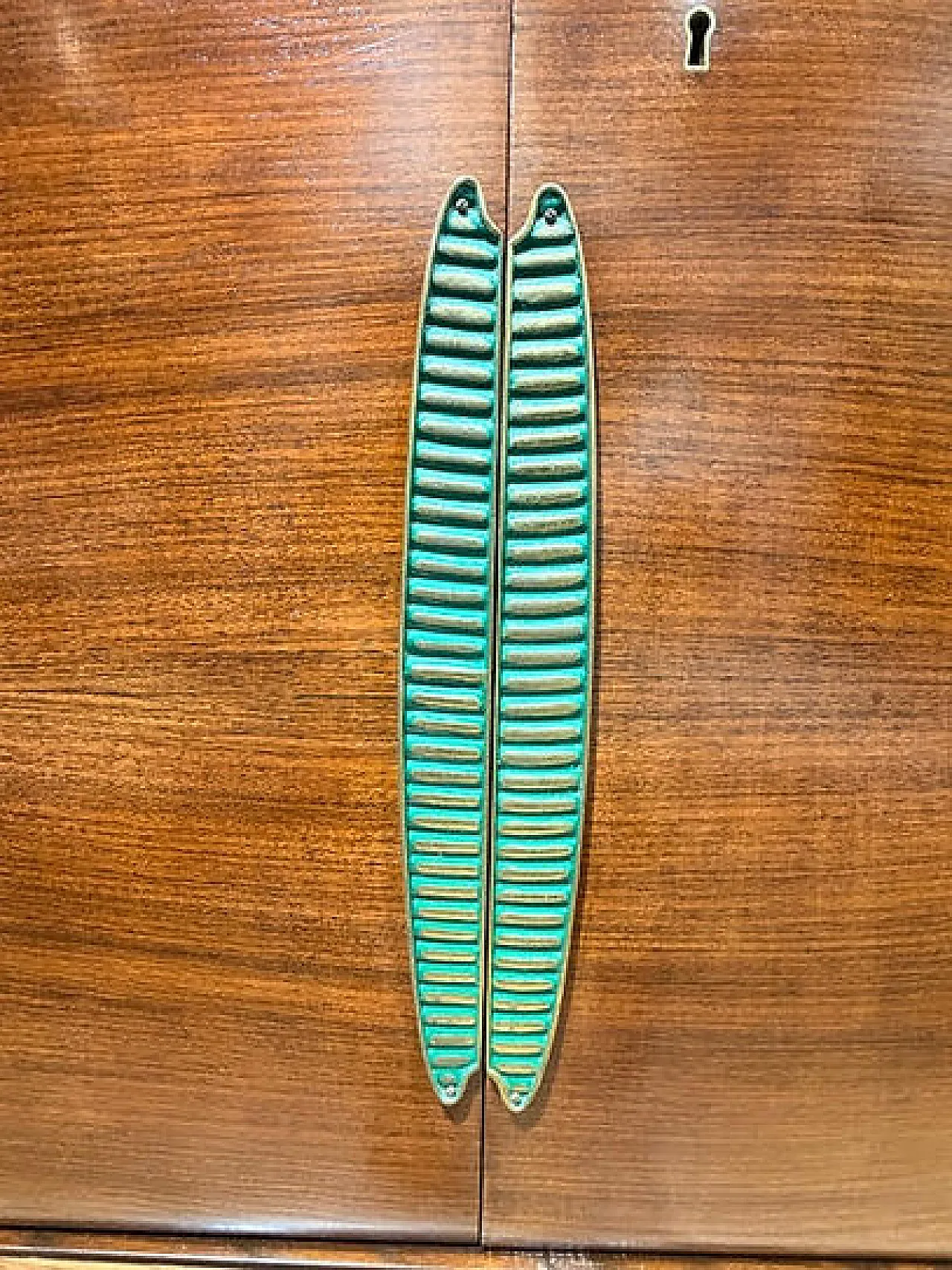
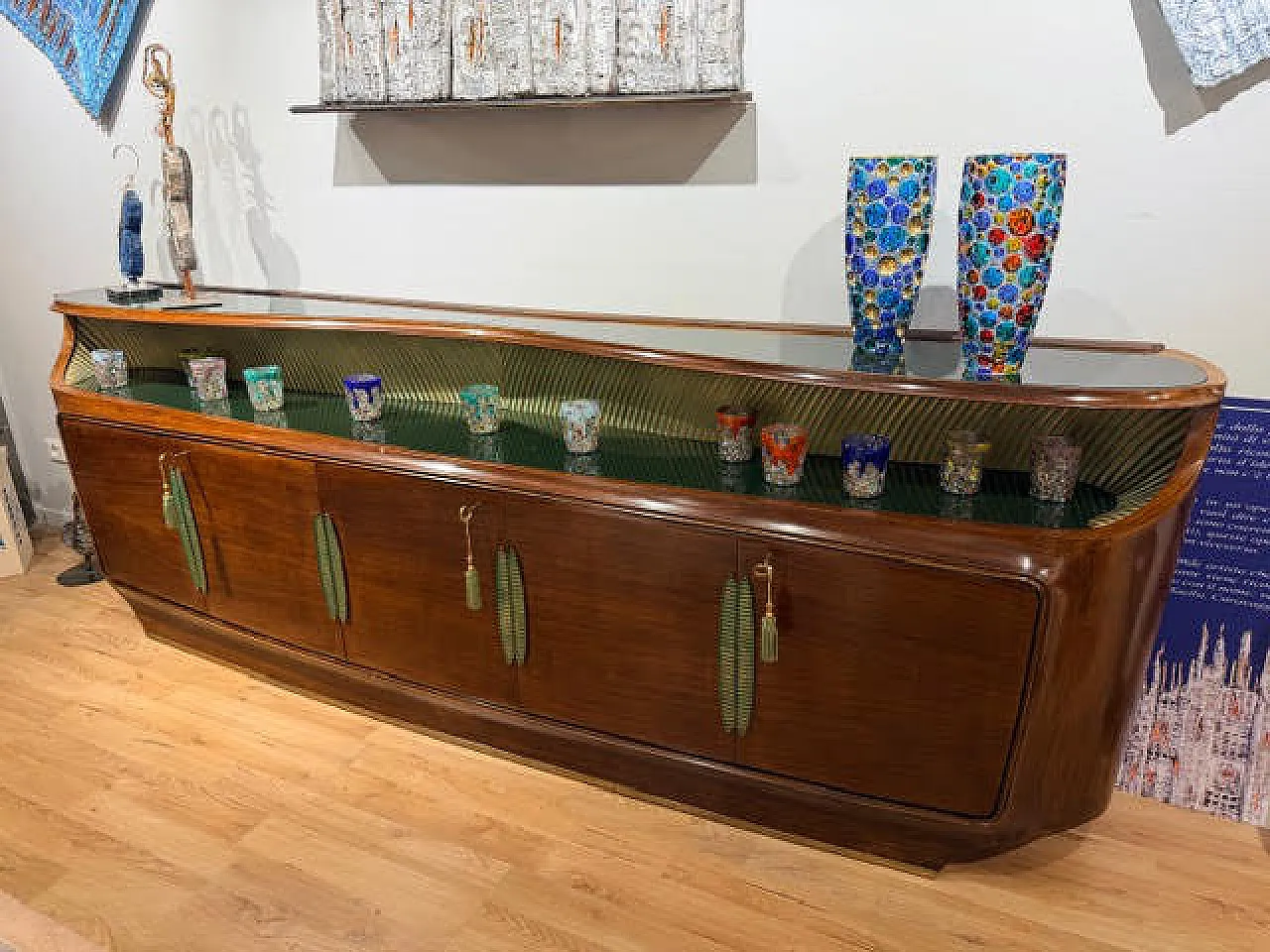
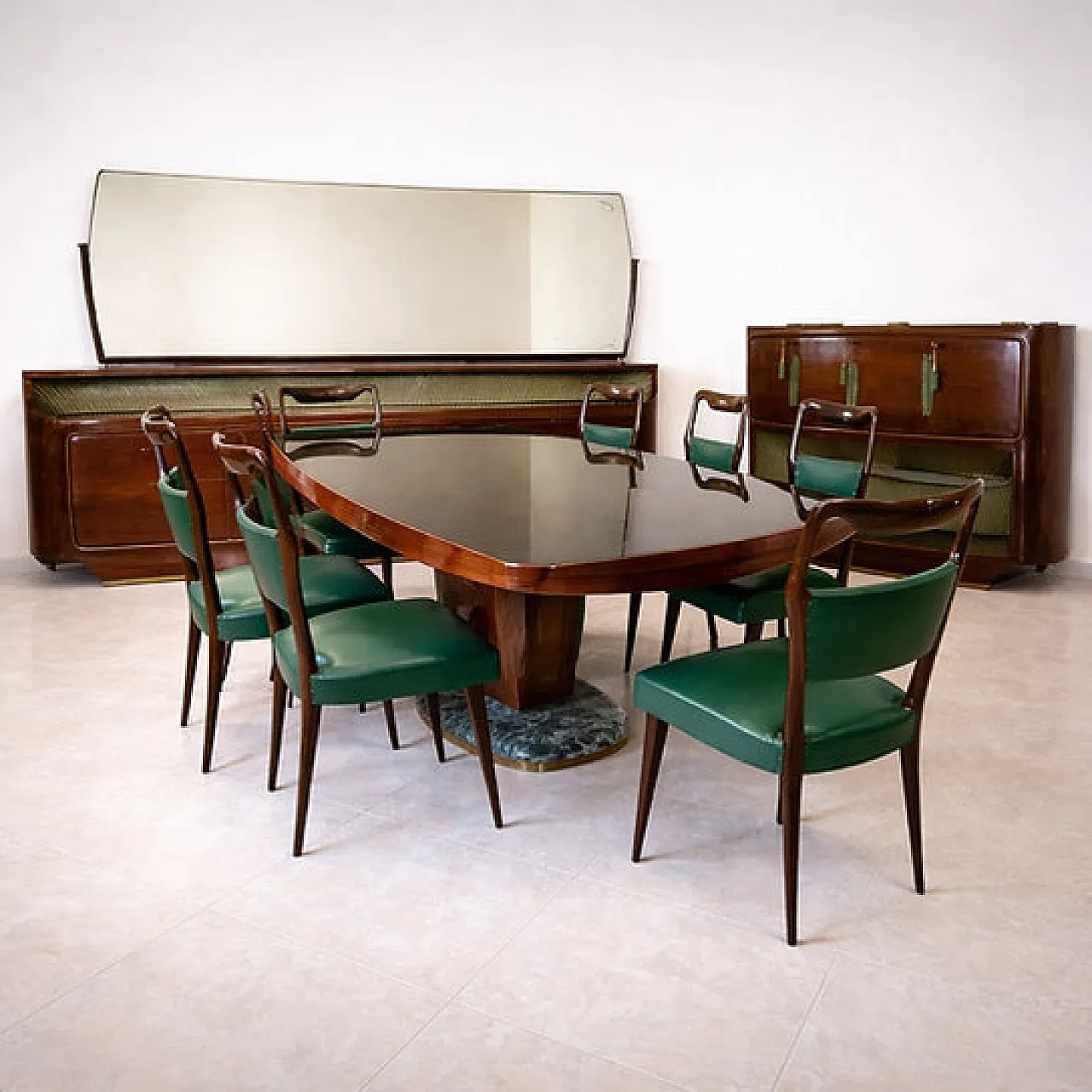
Italian sideboard with 5 doors, rounded and softened lines; the curved ends and the overall aerodynamic but voluminous shape, with "cascade" edges, are hallmarks of the Art Deco style of the 1930s and 1940s in Italy. Luxury materials and finishes, rich rosewood veneer symbolizes the luxury and refinement of the Deco movement. The brass/metal details, the striking stylized vertical handles (reminiscent of palm or banana leaves, a stylized botanical motif common in Art Deco), the horizontal brass finishes along the base, the recessed under-plane band features a grooved texture dyed in the light green tone and finished in a gold hue, creating a strong geometric and material contrast.
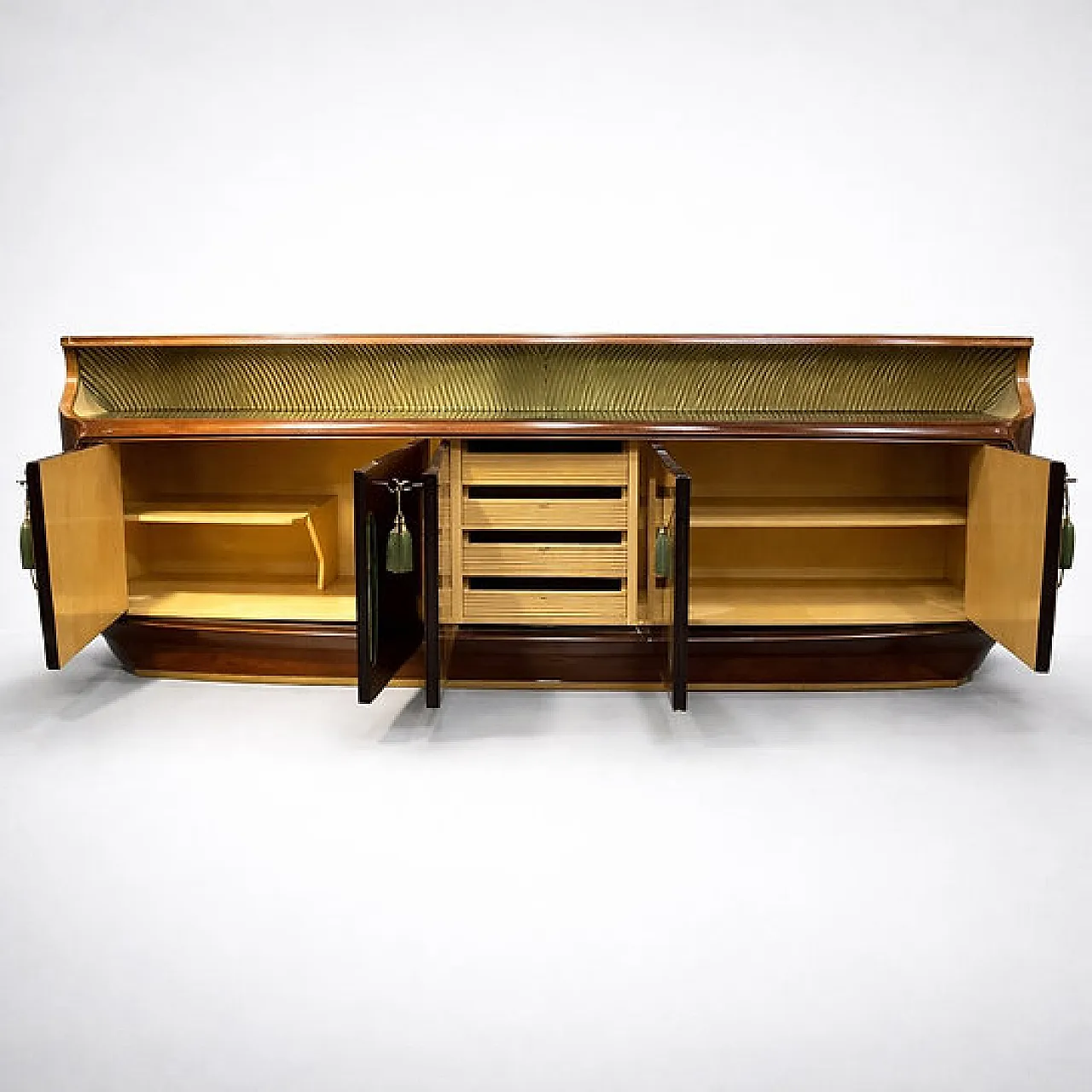
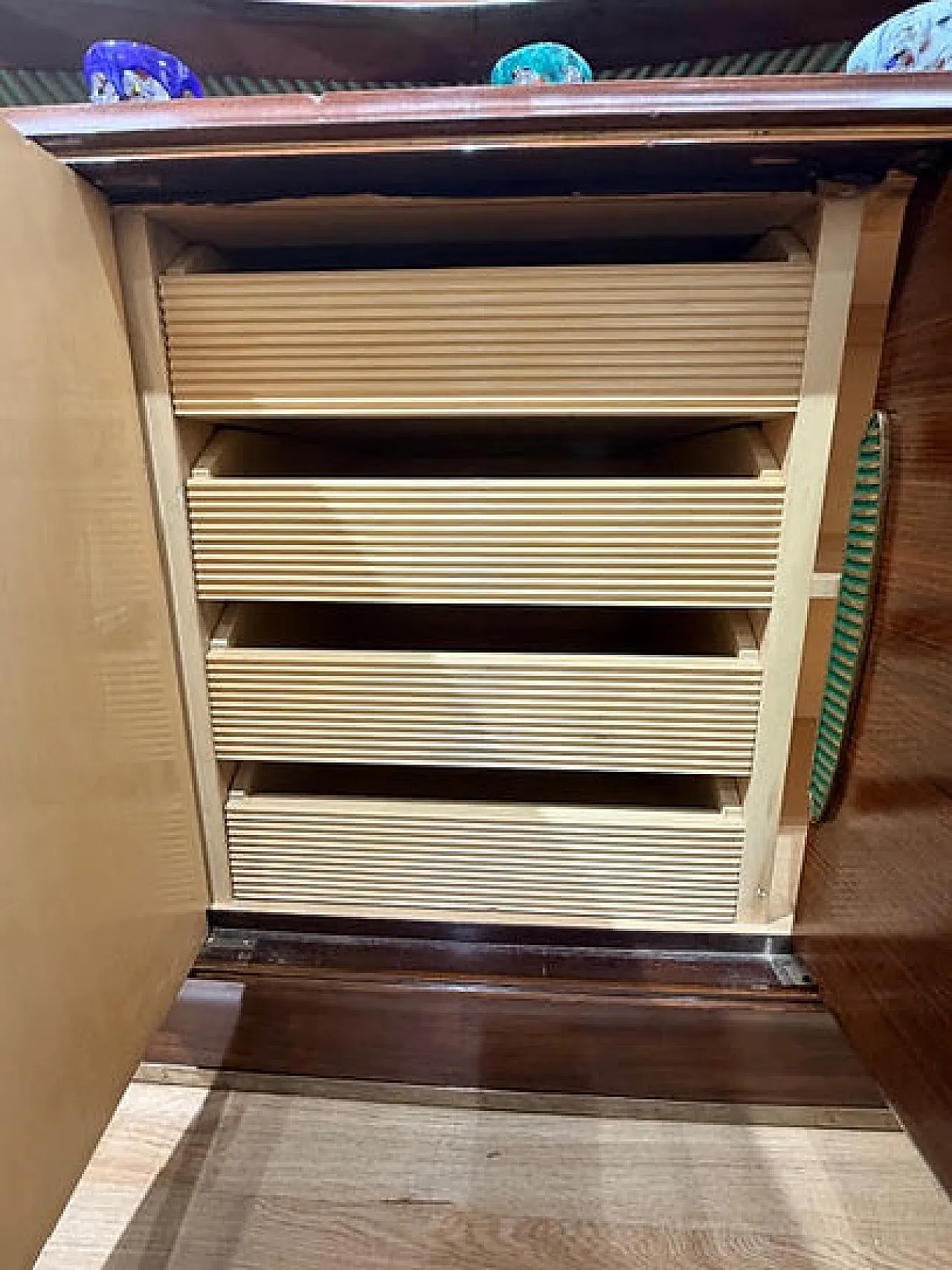
The interior structure shows a combination of shelf spaces and a central row of wooden drawers, which is a standard and practical arrangement for a dining room sideboard. The style perfectly captures the transition between the glamour of Art Deco and the desire for more elegant forms, which leads to the post-war Mid-Century. The sideboard represents a form of craftsmanship celebrated in Italian design in the 1940s, featuring several characteristics typical of late Italian Art Deco, which often bridged the gap between the opulent Art Deco of the 1920s and 1930s and the cleaner lines of Mid-Century Modern.
Measure Cm 300 x 50 x h 90
We also have the table, the six chairs, the large mirror and the bar cabinet.
In Europe, the Art Deco style persisted until the 1940s, especially in Italy, where it often merged with neoclassical-inspired modernism.
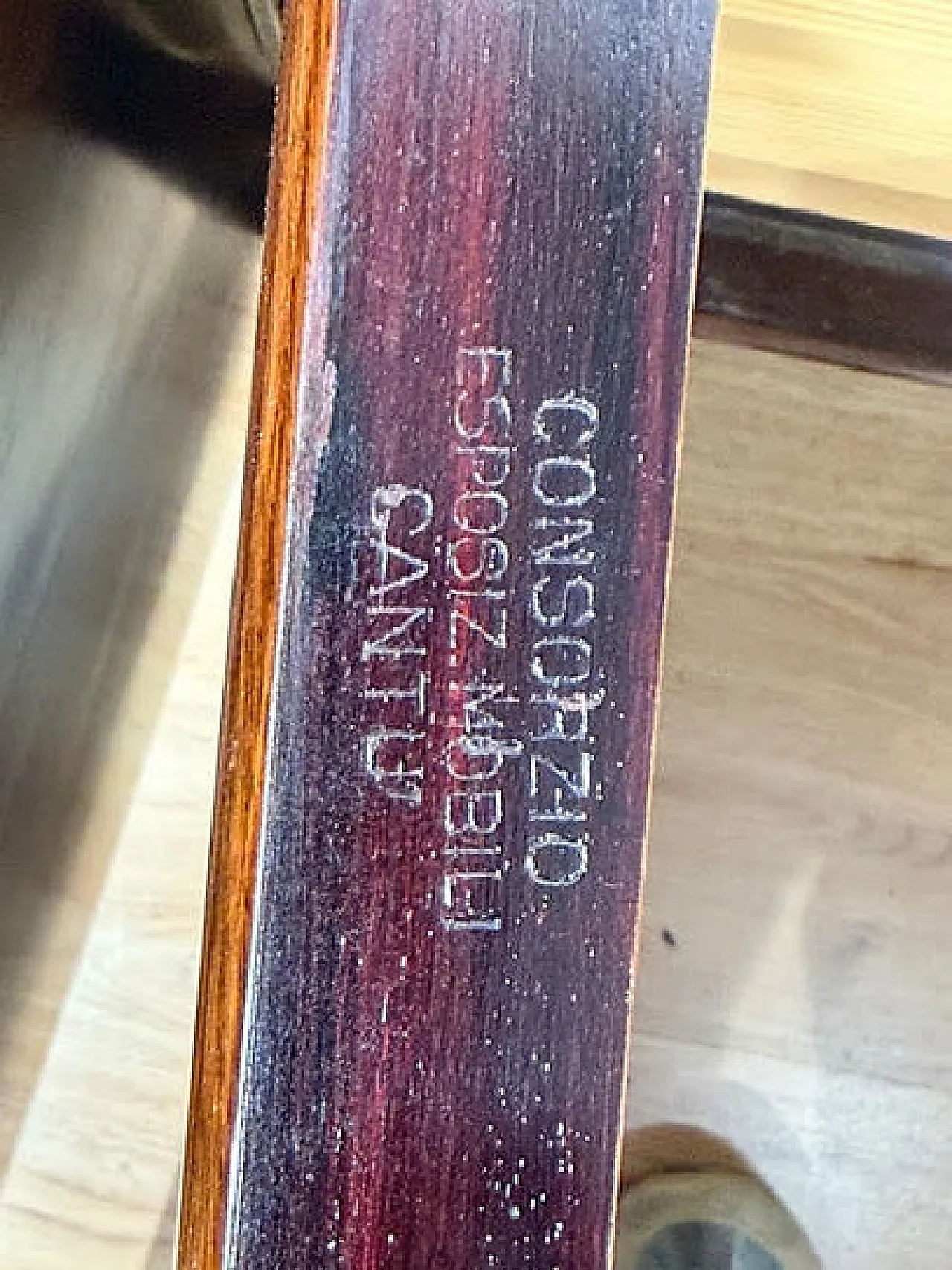
Vittorio Dassi's furniture (1893-1973), made in the 1940s and 1950s, stands out for its choice of fine woods such as rosewood, cherry, ash and walnut, often decorated with inlaid panels and crystals signed by great master glassmakers. Elegant in design without losing its functional quality, its furnishings can be compared to the refined style of Gio Ponti, with whom Vittorio was linked by important collaborations after taking over from his father at the Dassi Mobili Moderni company in Lissone. Among the factory's most important projects is the creation of the furniture for the rooms of the Hotel Royal in Naples, designed by Ponti in the mid-1950s, a period that marked Dassi's shift towards more schematic forms and teak wood for the production of modular furniture. The production of Vittorio Dassi's furnishings covered in parchment and embellished with hand-painted decorations is prized and coveted by collectors.


.png)
 SILVER Seller in Cremona, Italia