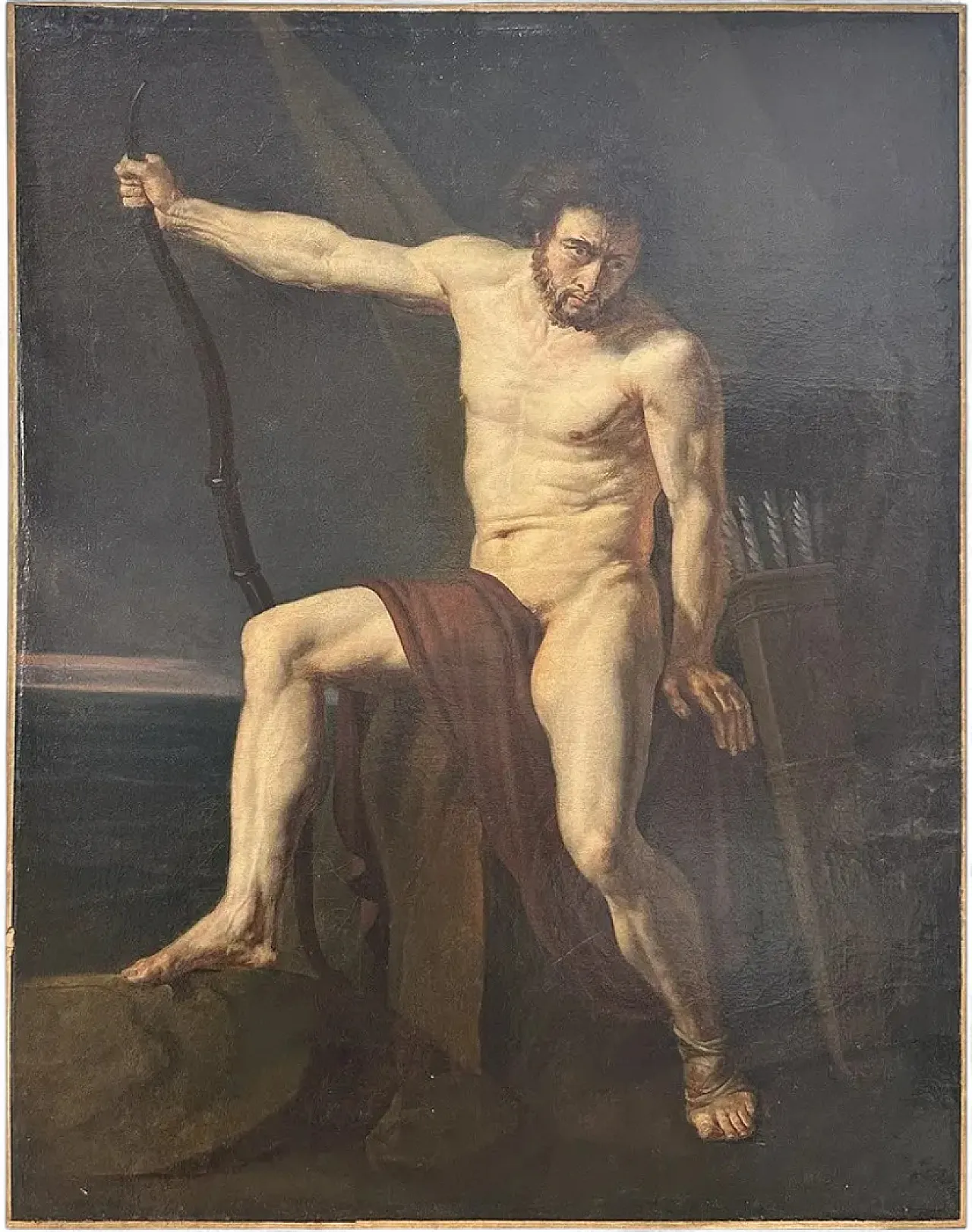
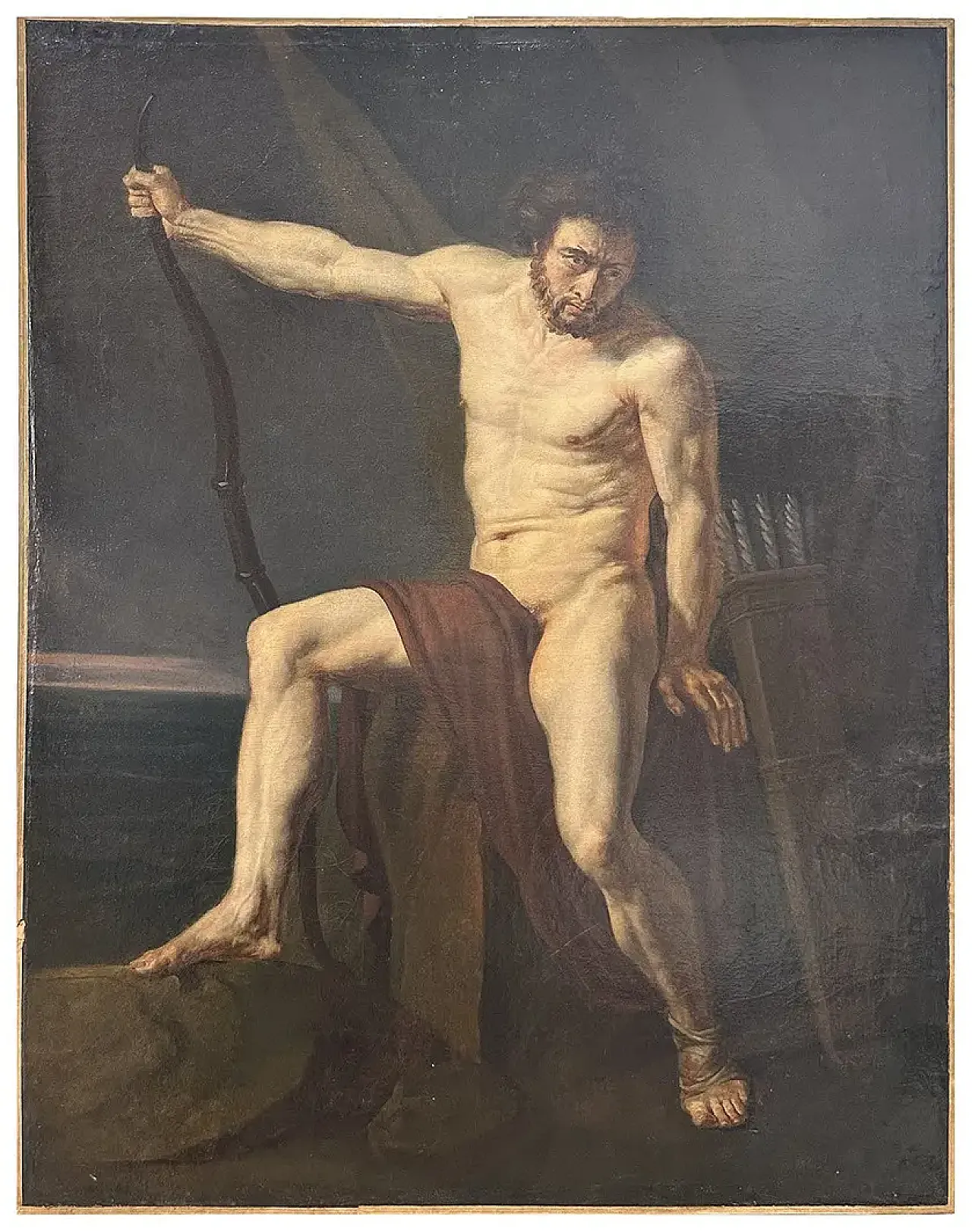
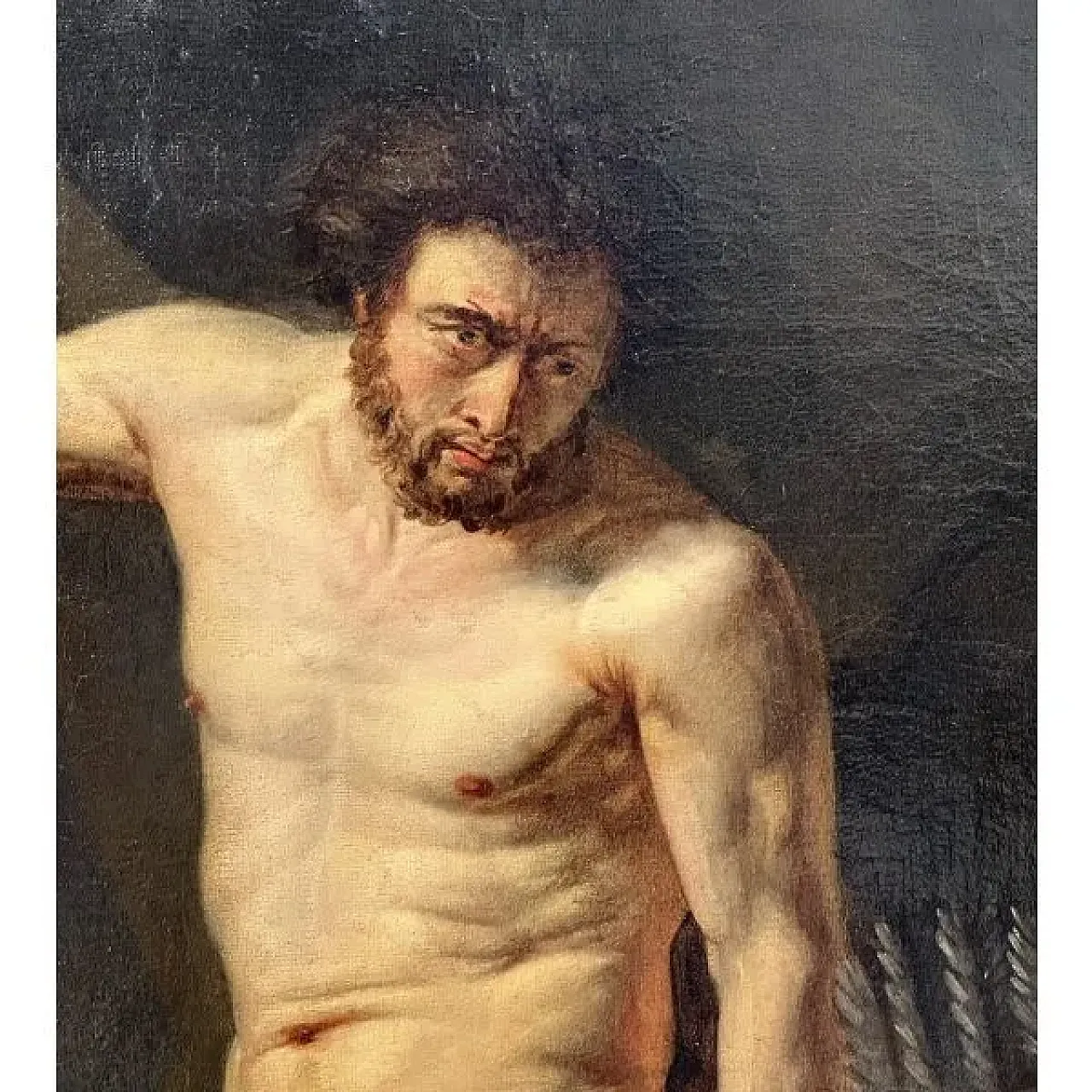
The canvas depicts Philoctetes in full-length, seated on a spur of dark rock, in a cave environment that alludes to the cave-refuge on the island of Lemnos.
The figure – a male nude of imposing anatomical plasticity – occupies almost the entire surface of the pictorial field, imposing itself on the gaze with the force of a sculptural fragment isolated from the surrounding darkness.
The right arm is extended horizontally upwards, the hand firmly squeezes the bow – the primary attribute of the iconographic identification of the character – in a gesture not of shooting but of proud possession, almost as if to claim the inviolability of that heroic legacy that no betrayal could tear away.
The left arm, conversely, falls abandoned along the body, the open hand touching the rock with exhaustion: an expressive contrast of great effectiveness that restores the character's constitutive duplicity – heroically proud and yet marked by prostration.
The face is three-quarters full, turned toward the viewer with a dark, feverish gaze, charged with an emotional tension that doesn't degenerate into pathos but condenses into an expression of proud resistance; the dark hair and unshaven beard accentuate the hero's character of wild abandonment.
On the right side, resting on the rock, the quiver with Heracles' arrows is visible – the second attribute essential to the character's iconography.
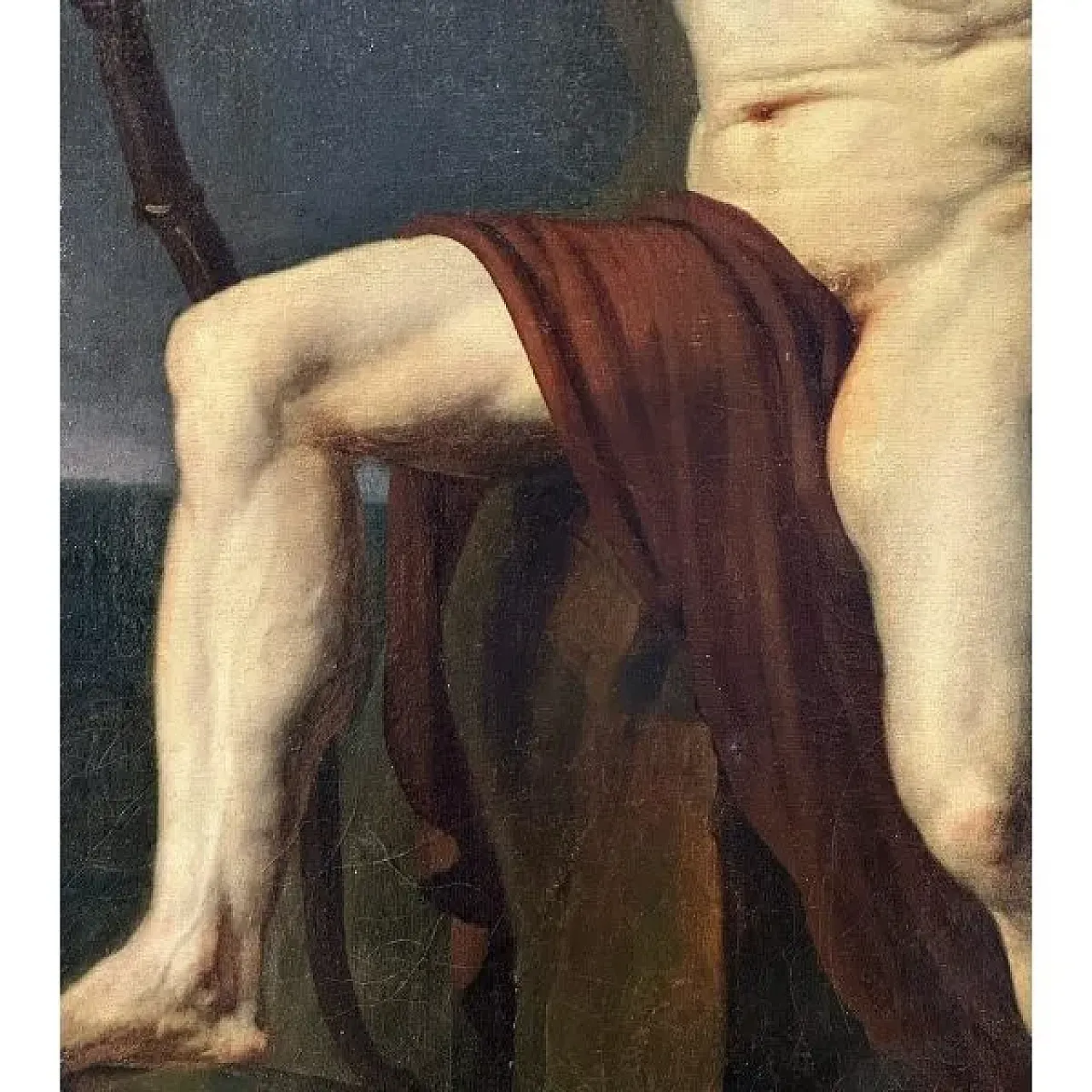
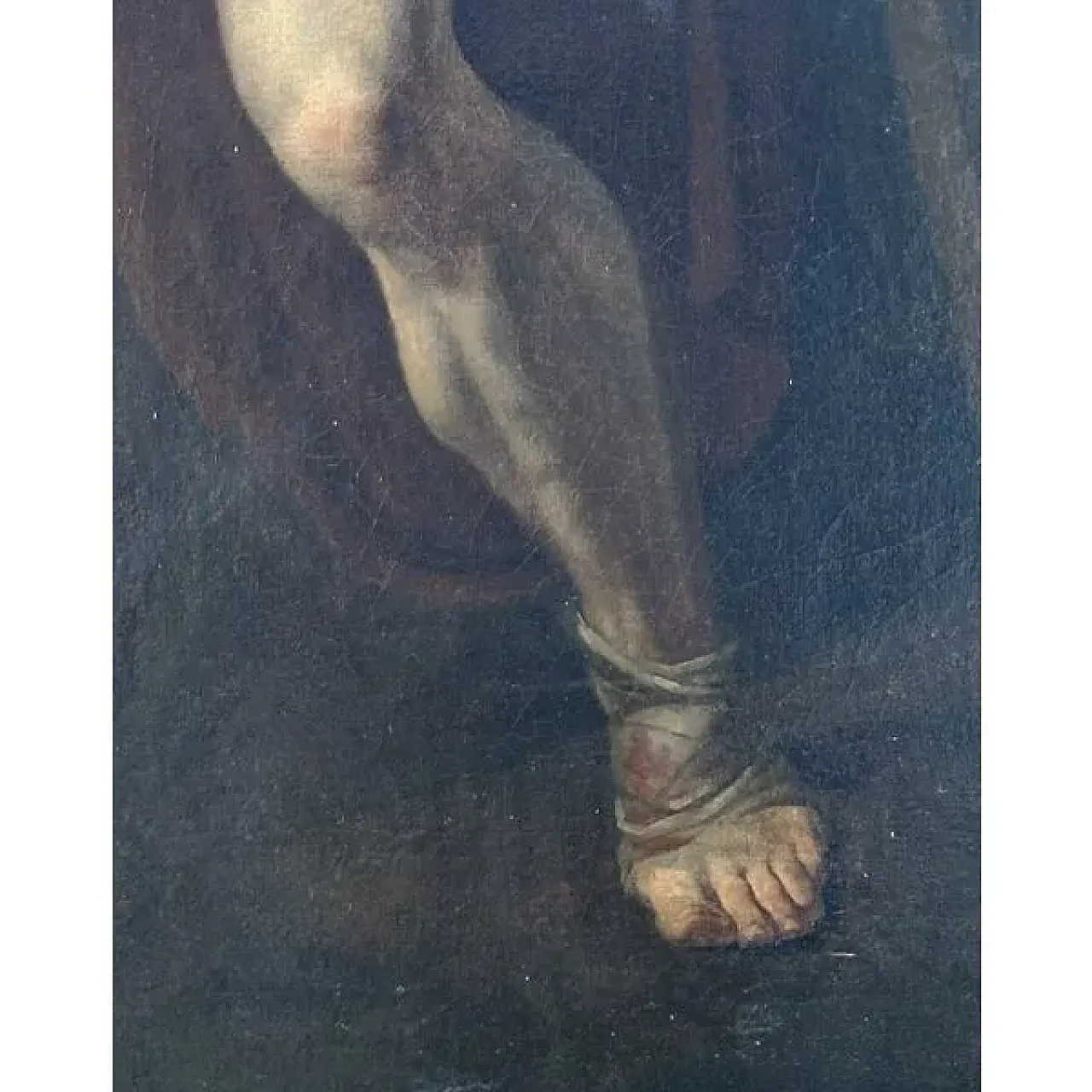
The left foot –the site of the wound– is bandaged with a linen bandage that wraps around the ankle and back of the foot, the only explicit sign of chronic pain; the bandage, brief and experienced, introduces a note of corporeal reality that takes nothing away from the heroic dignity of the figure. Draped on the thighs is a heavy dark red cloth –the only concession to warm color in the overall chromatic economy dominated by cold, earthy tones –, whose volumetric mass helps to underline the structural solidity of the composition.
In the background, on the left, a glimmer of stormy sky and gray-lead sea filters over the rock face, evoking the weather-beaten island and the vastness of the sea that separates the hero from the world.
The composition is structured for opposing masses: the diagonal of the outstretched arm and the arch cuts the space from top to bottom, balanced by the verticality of the quiver and the horizontality of the granite spur.
The light, of left lateral origin, sculpts the muscles with a plasticity of clear anticancer origin – the pectorals, arms, thighs are modelled with an attention to anatomical relief that refers to the direct study of classical sculpture and the casts present in the French academies of the time.


.png)
 SILVER Seller in Venezia, Italy