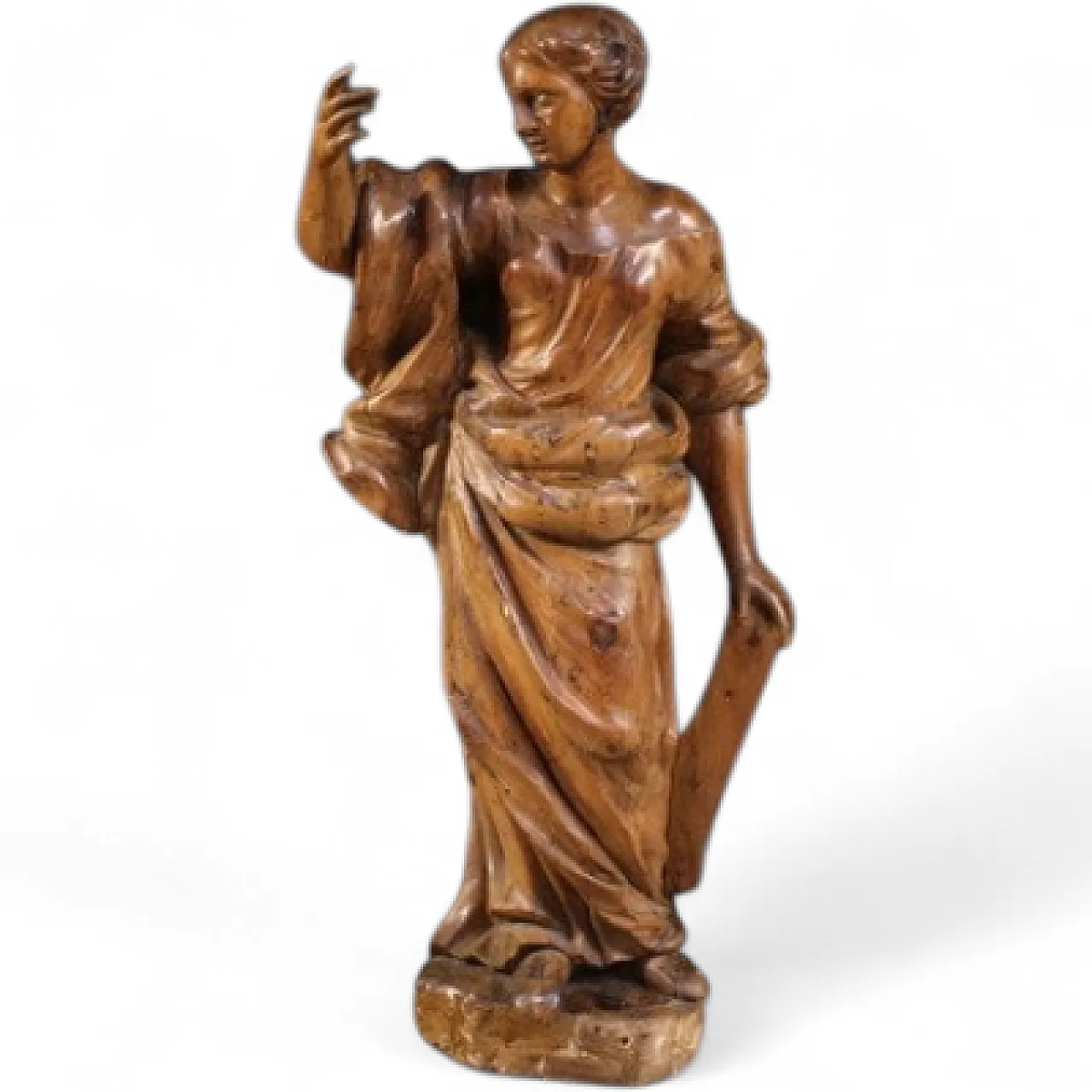
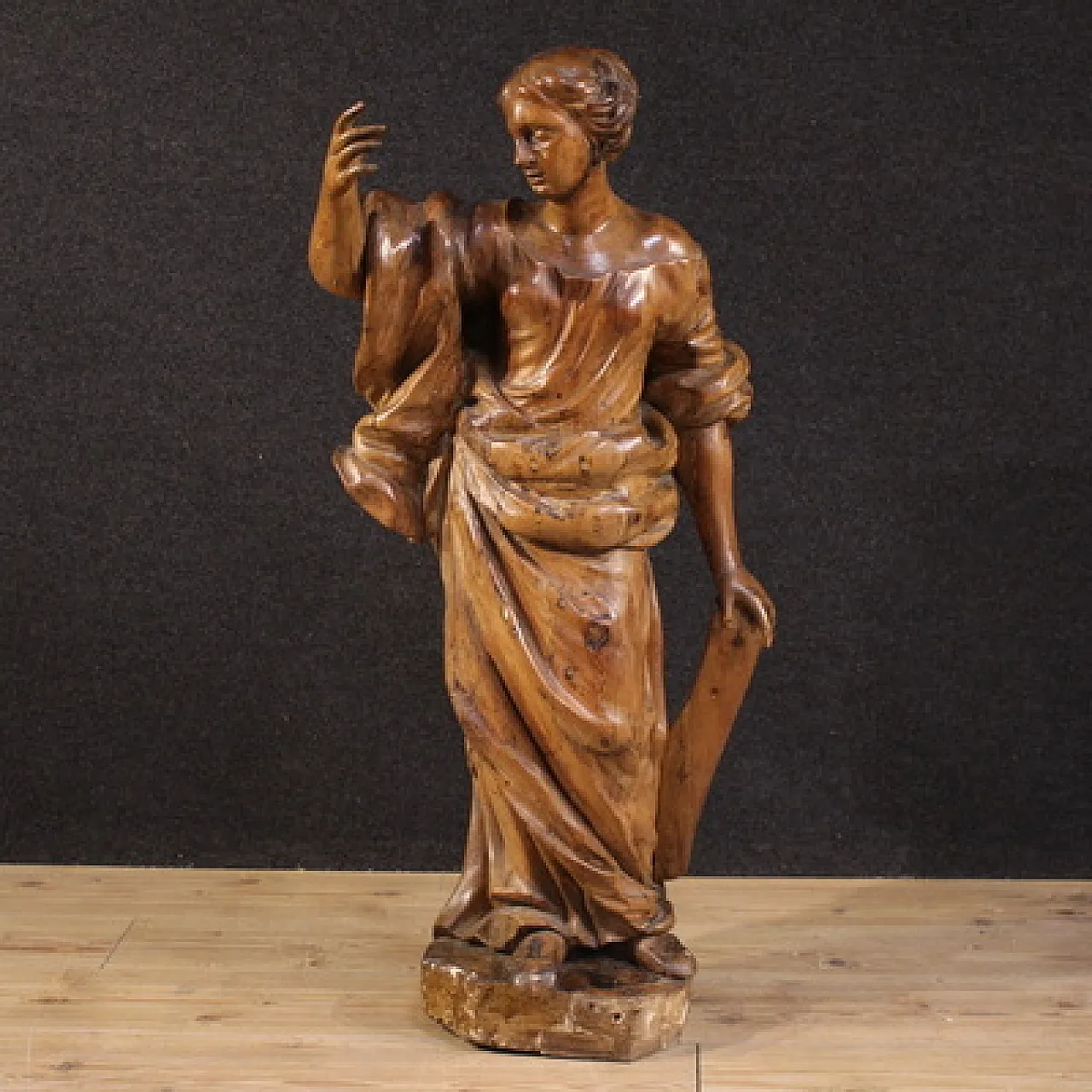
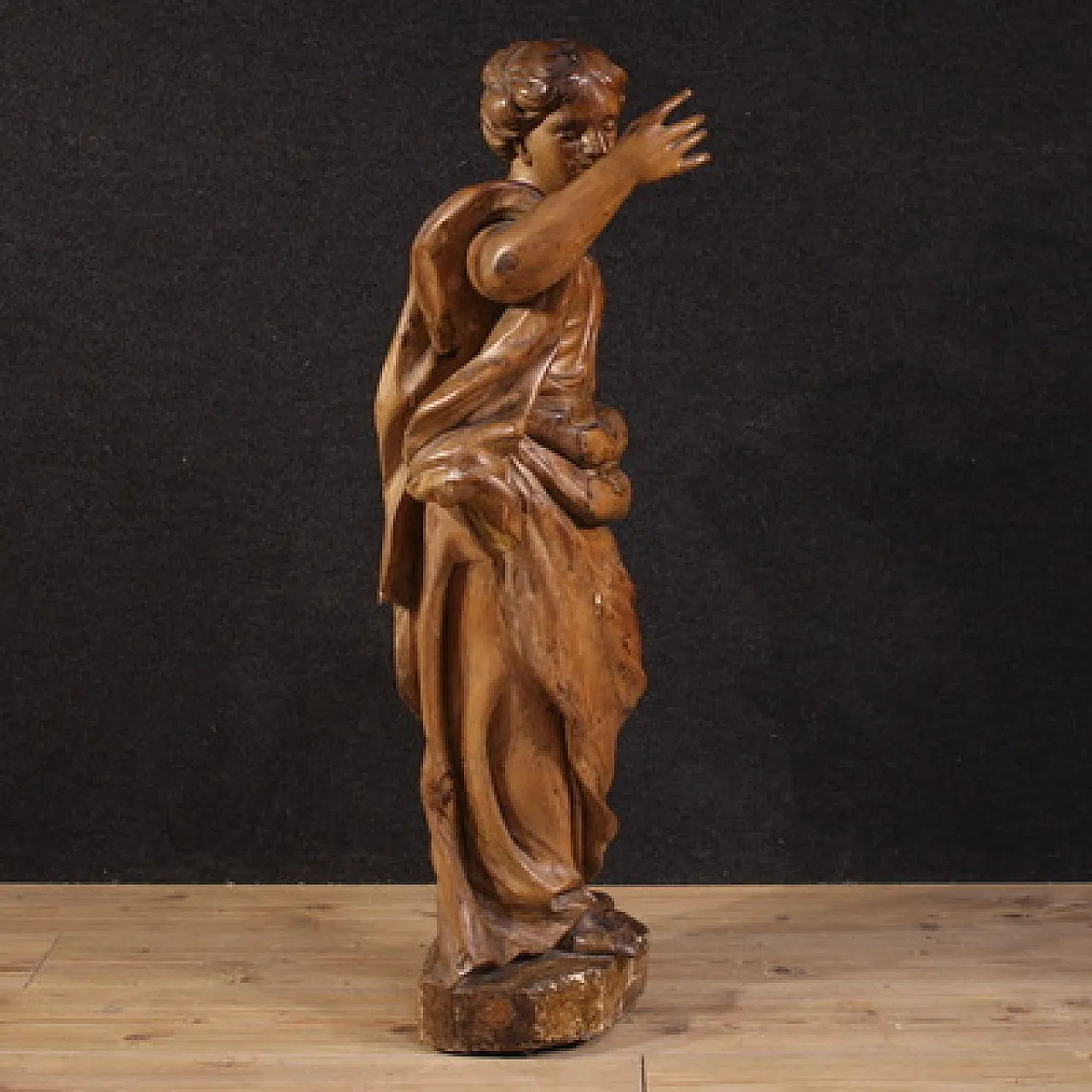
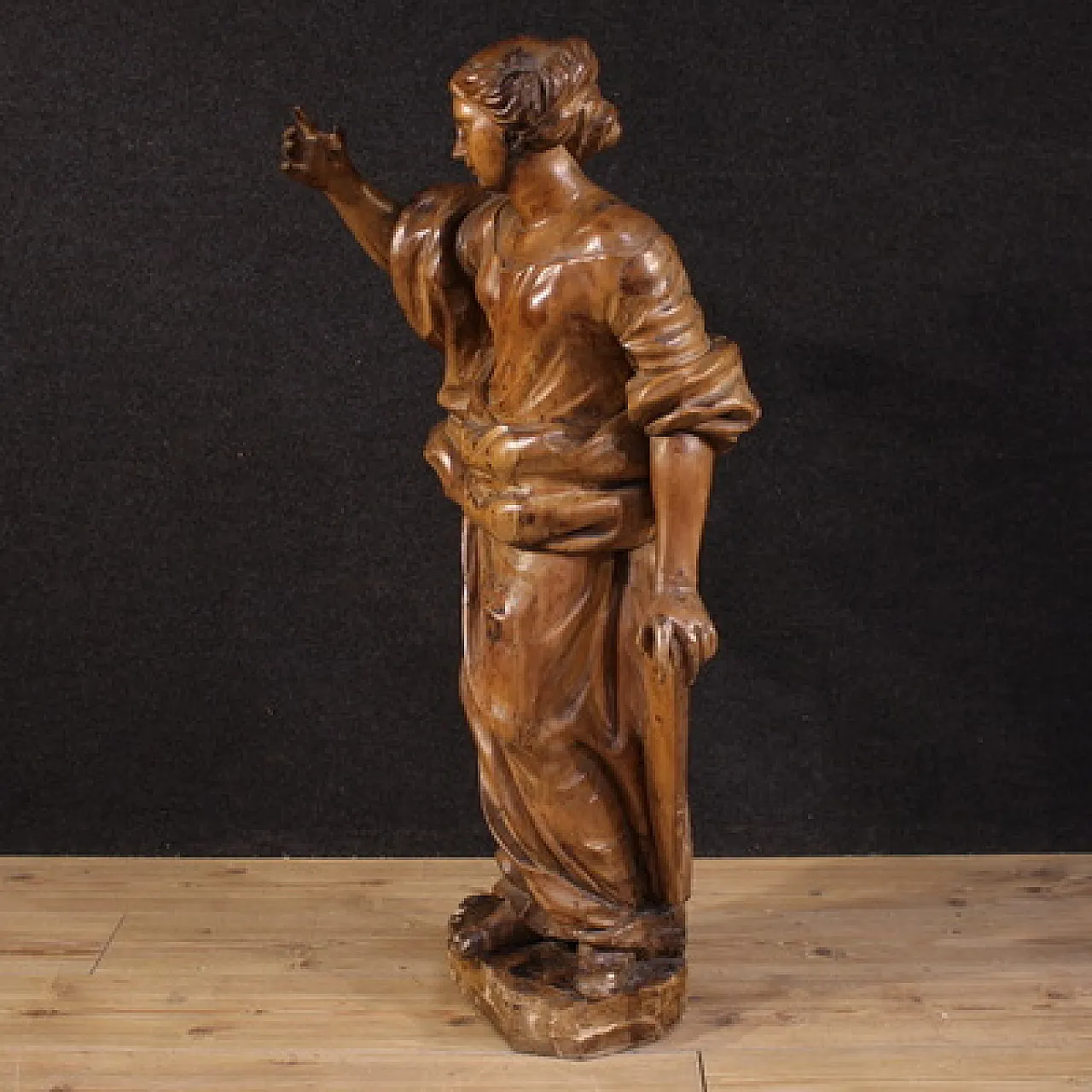
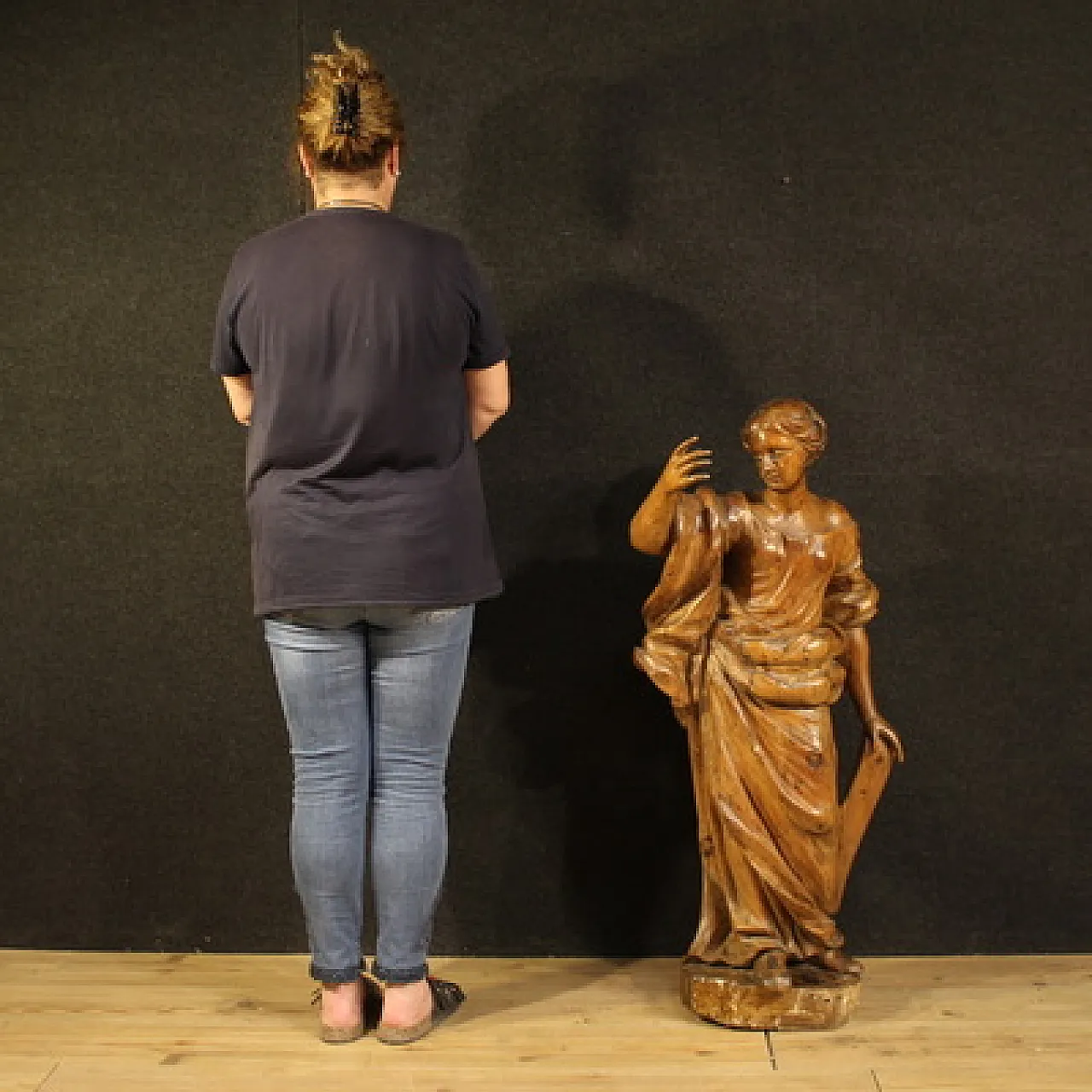
An antique Italian wooden sculpture from the first half of the 17th century, depicting Saint Catherine of Alexandria. Finely carved and carved in Swiss pine, this full-length work features a pleasing patina and a remarkable stage presence.
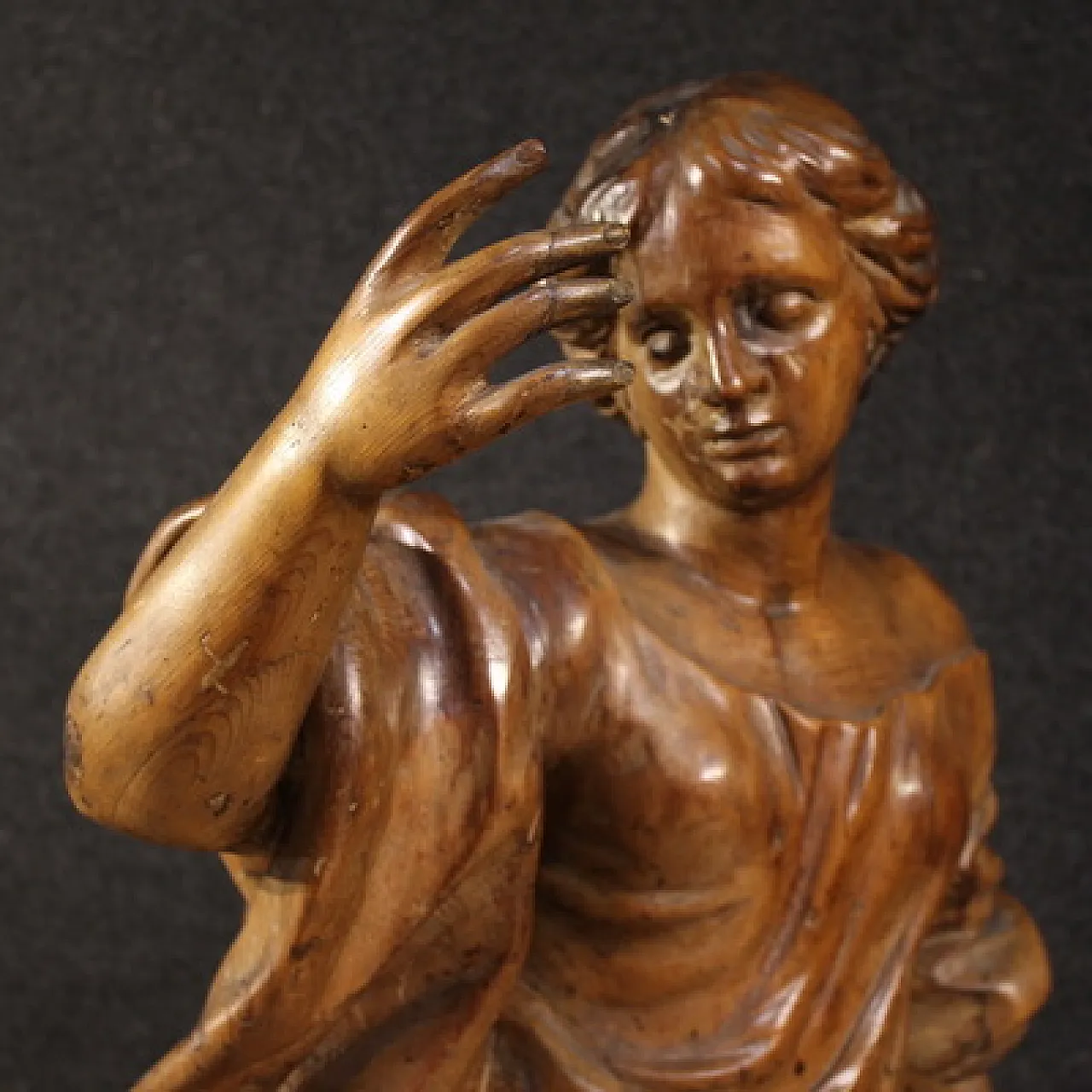
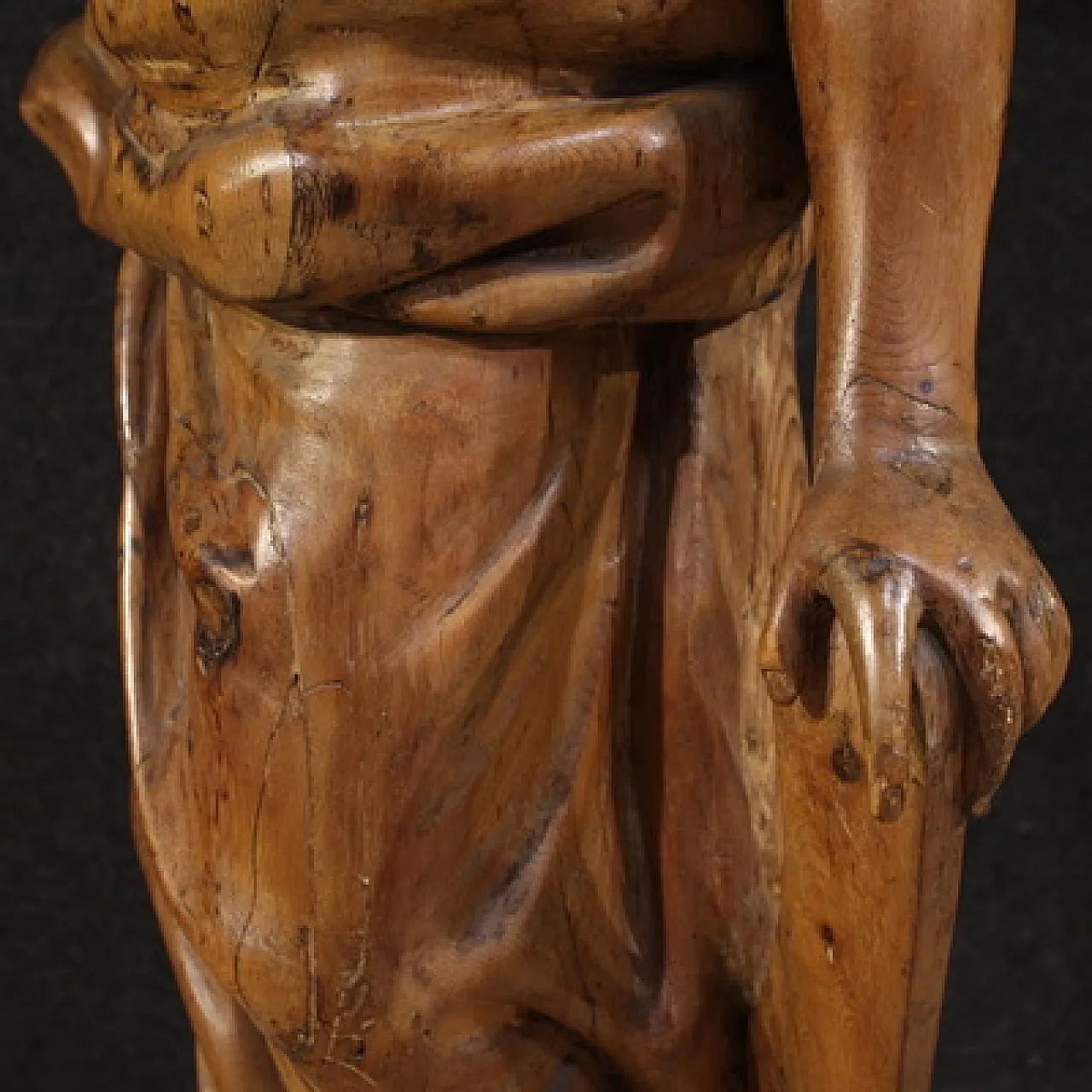
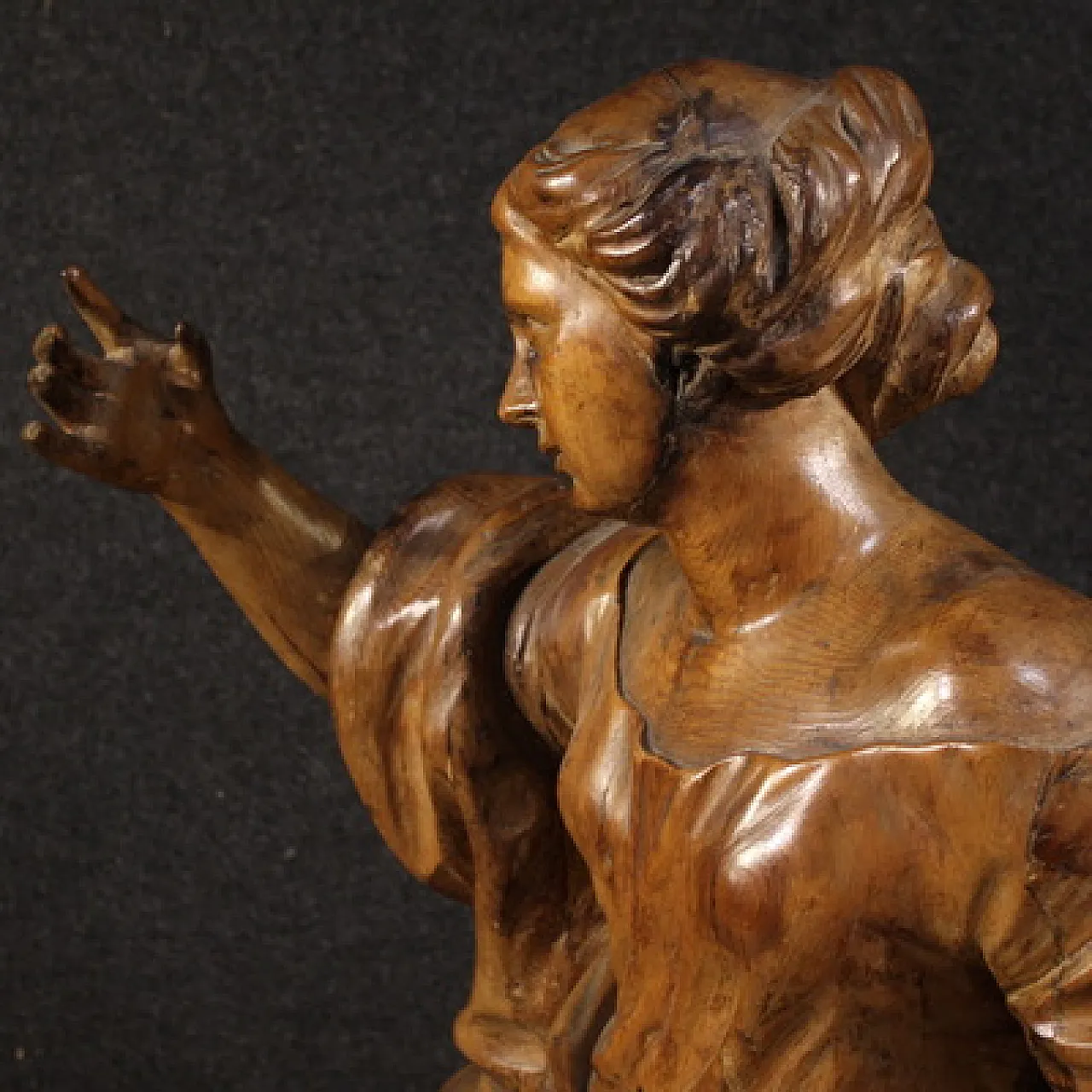
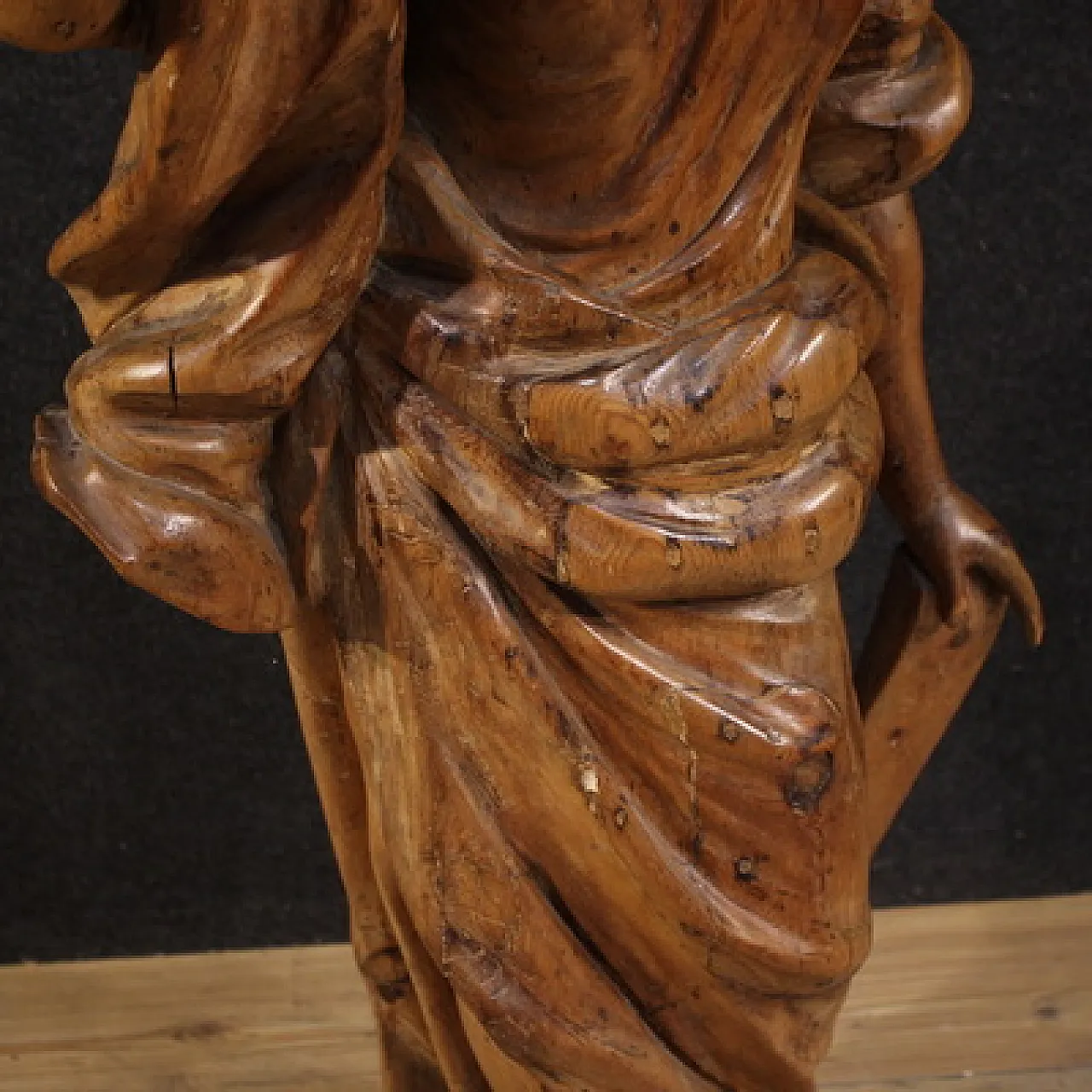
The young saint is depicted standing, elegantly dressed in a long robe gathered at the waist by a loose drape, while a cloak envelops the figure and falls freely along her side. Her right hand is raised in a refined and highly distinctive gesture, likely originally intended to hold a now-lost attribute, perhaps the palm of martyrdom. With the opposite hand, the figure holds a long vertical element, likely interpreted as the remains of a cogwheel, one of the iconographic attributes of the Saint, a reminder of the torture to which, according to tradition, she was subjected before beheading.
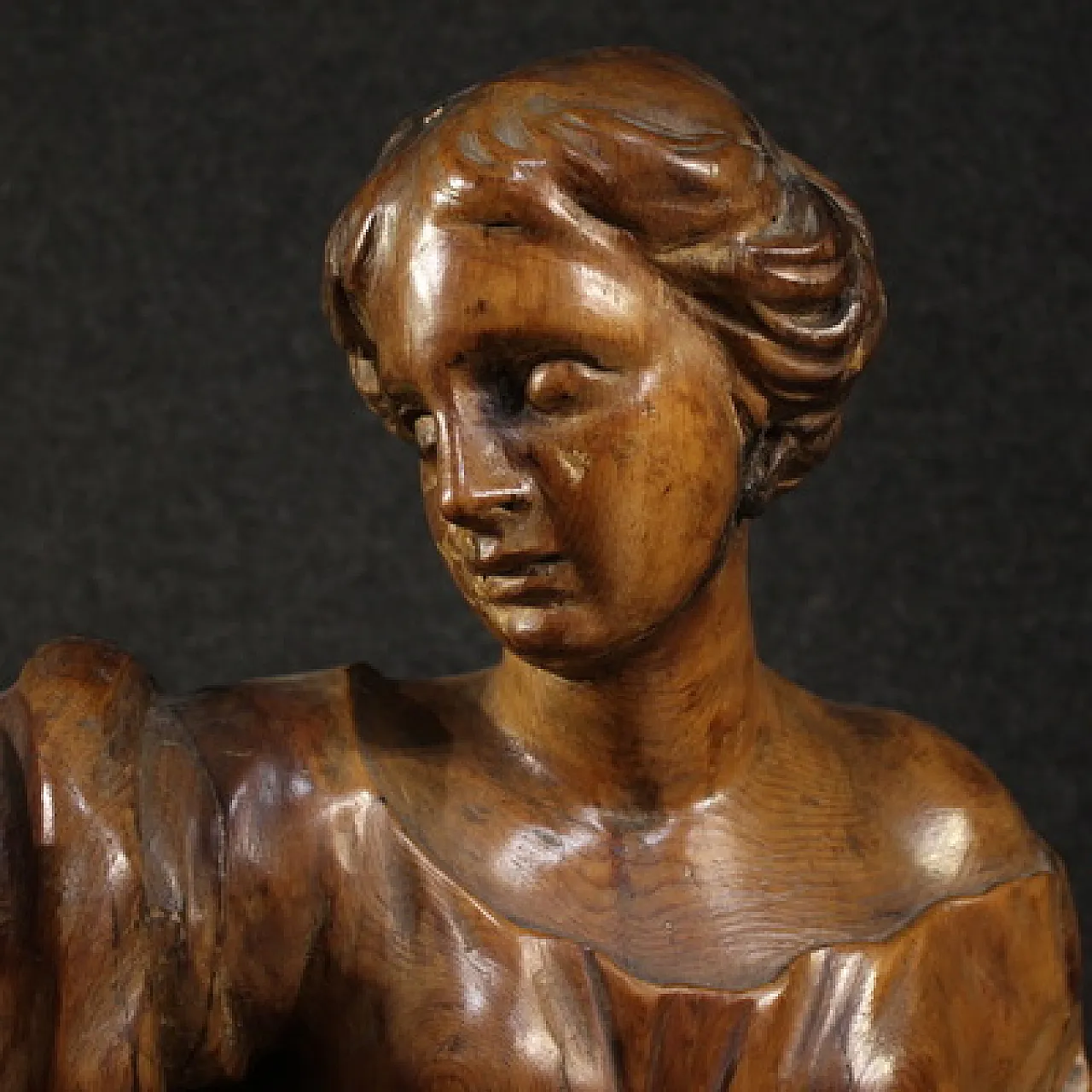
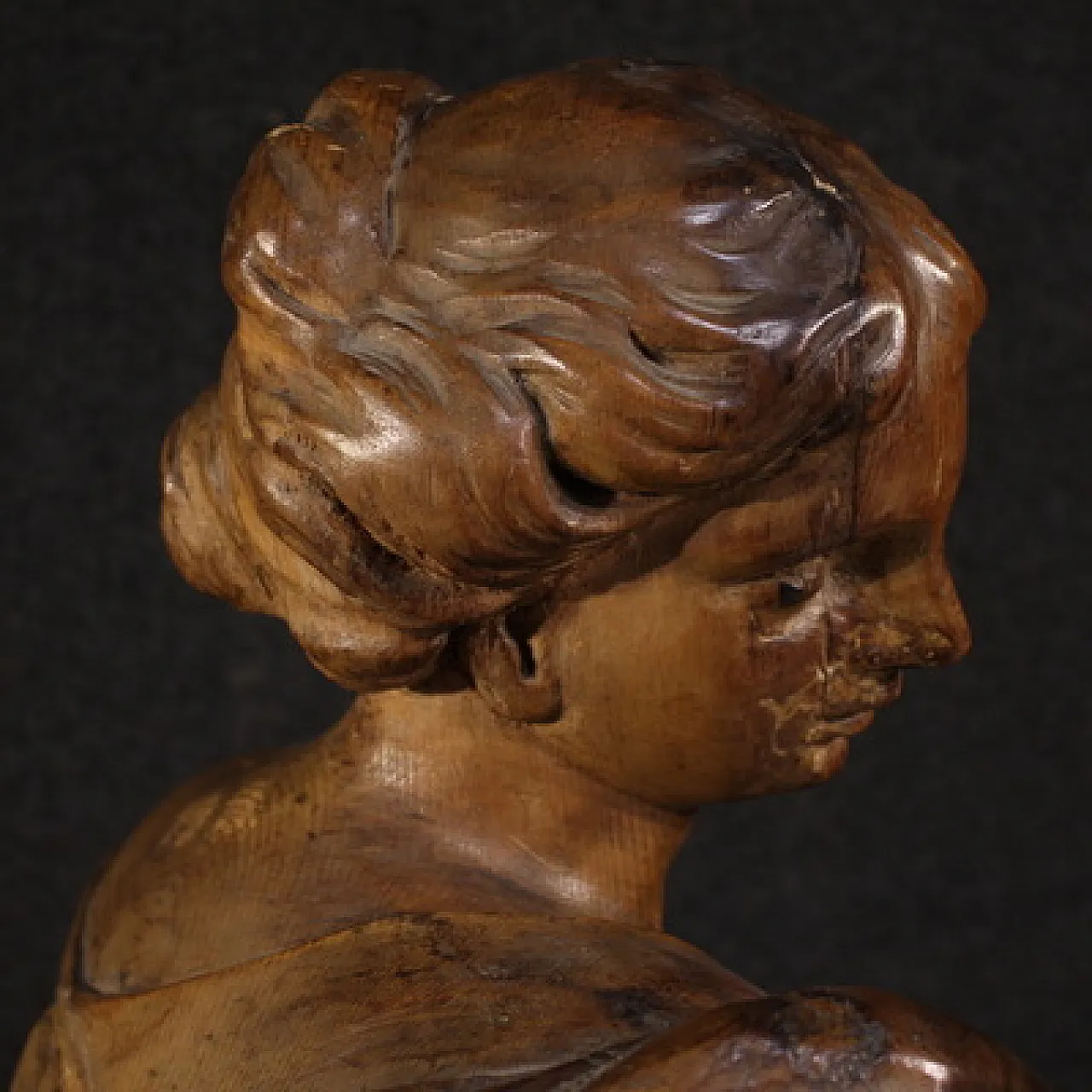
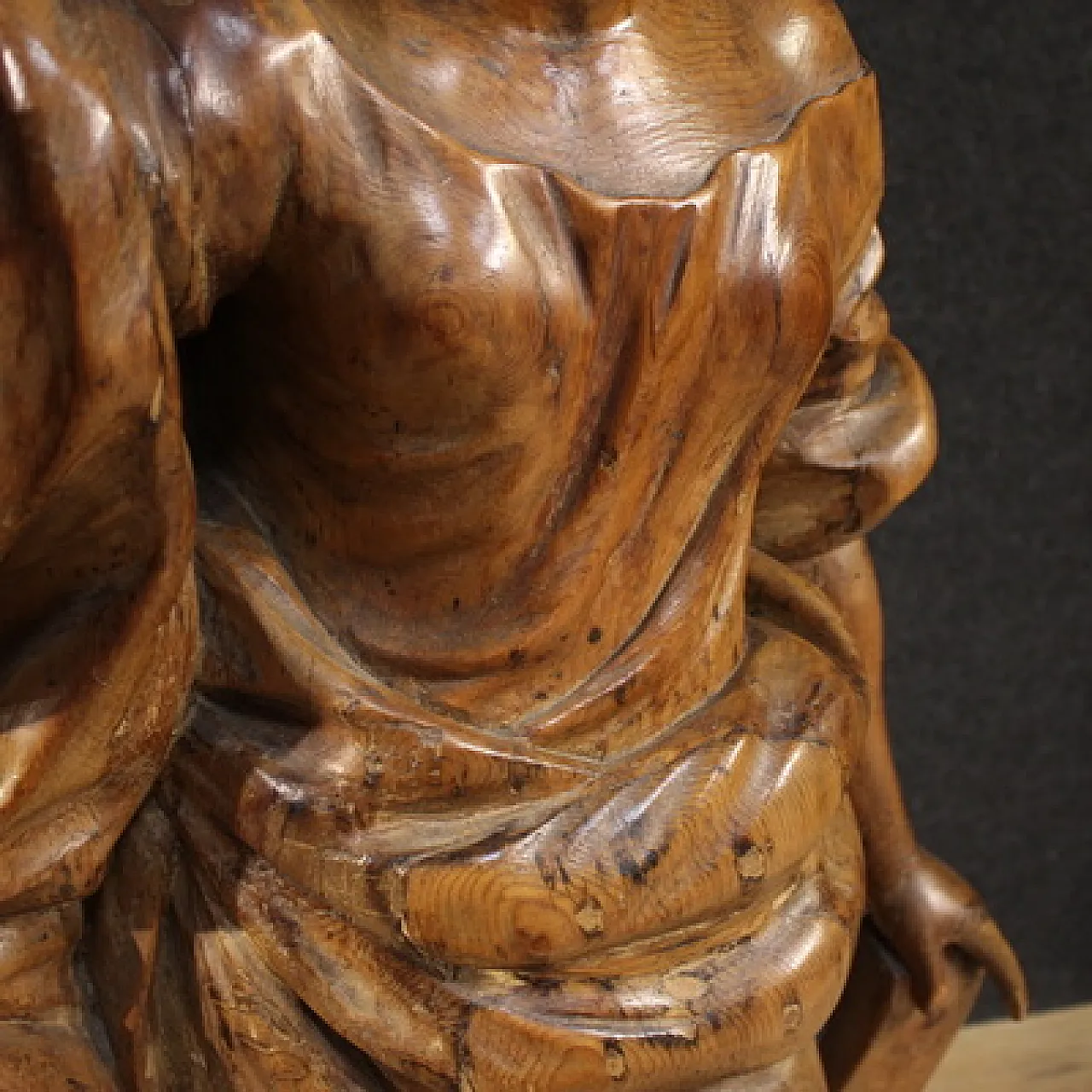
The quality of the carving is particularly noteworthy. The face, youthful and idealized, presents graceful features and a thoughtful expression, while the hair is gathered at the nape of the neck in soft, wavy locks. The rendering of the hands is remarkable, with long, distinctly carved fingers. Great attention is also paid to the drapery: from the minute folds of the upper garment, they move to the large masses of fabric gathered around the waist and the long diagonal pleat that animates the lower half of the figure, lending it movement and depth.
The pose of the figure, combined with the elegance of the drapery, suggests a placement within the context of central-northern Italian sculpture between the late Renaissance and early Baroque, with possible references to Lombardy-Piedmontese production.
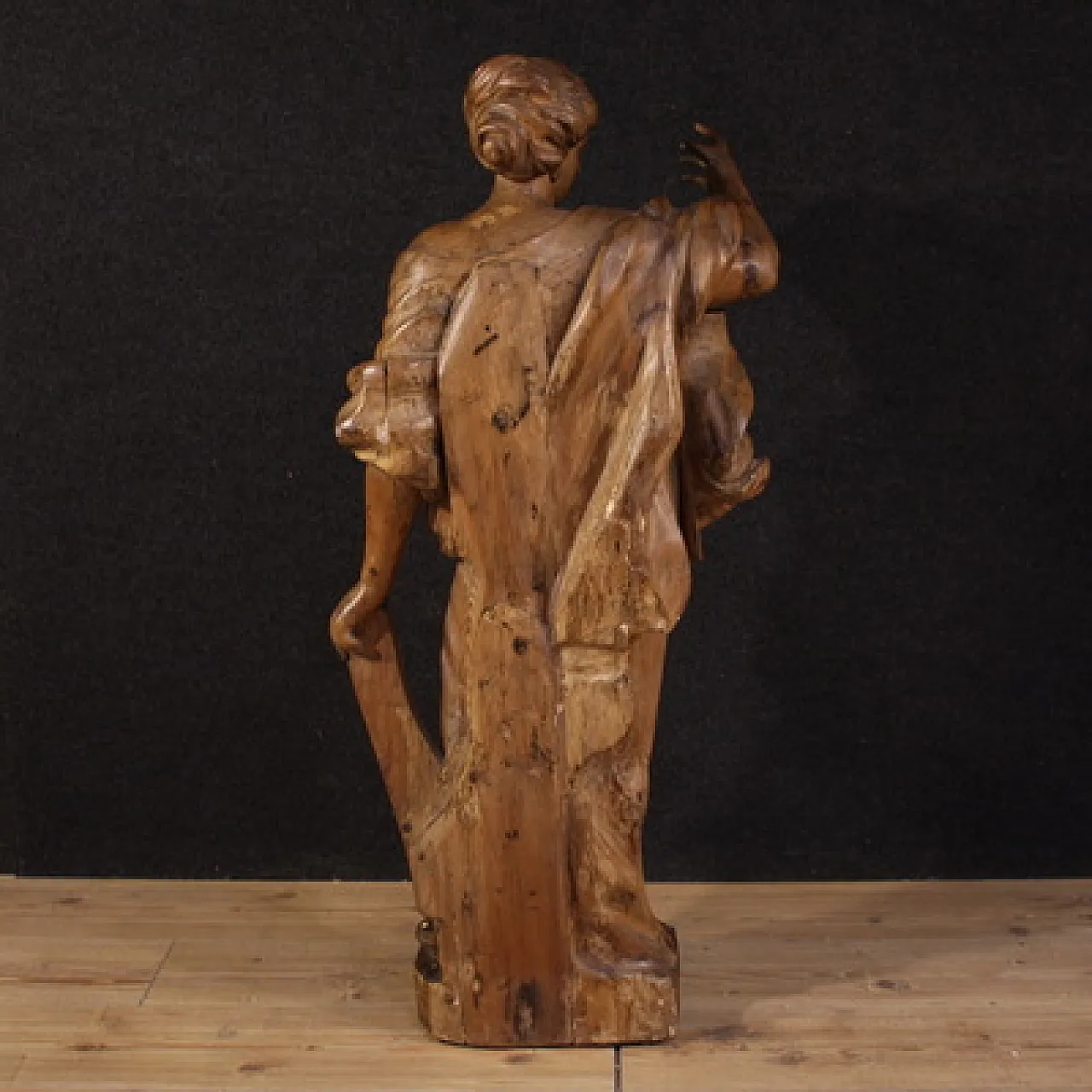
Particularly significant is the back, sculpted only in the parts intended to remain visible and left more roughly worked in the large central areas. This characteristic suggests that the statue was not originally conceived as a free-standing sculpture in the round, but was part of a more elaborate ecclesiastical apparatus, likely inserted within a niche.
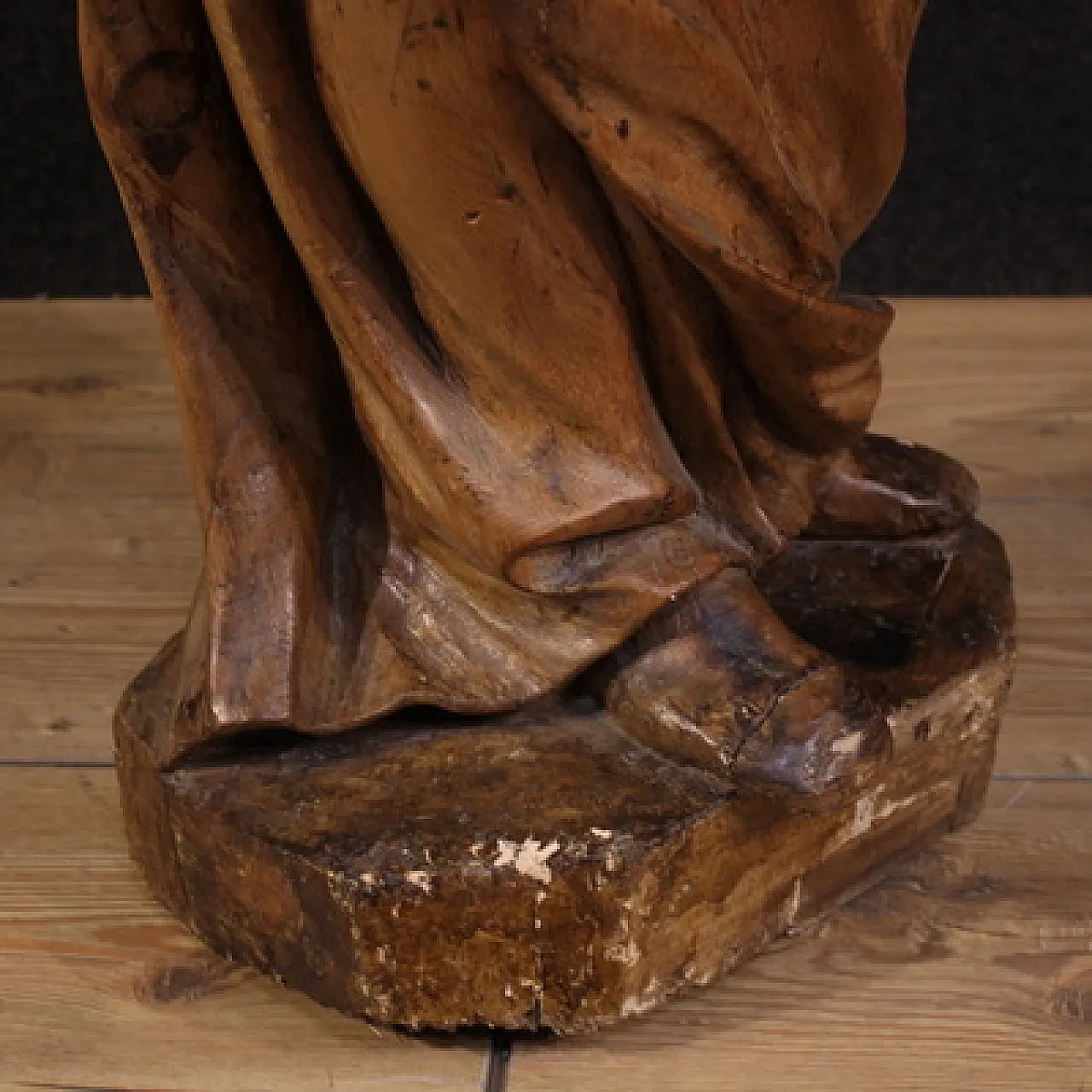
The surface today is predominantly natural wood, with a pleasant patina matured over time. There are signs of aging, cracks, and small losses consistent with the piece's age. Some iconographic features are lost or incomplete (see photo).
A sculpture of considerable charm, appreciated both for the elegance of the figure and the decorative power of the antique wood and its weathered surface. This work is particularly suited to a classical setting, but can also be placed to great effect in a contemporary setting, where the simplicity of the natural patina particularly highlights the sculptural quality of the carving.




.png)



 SILVER Seller in Cuneo, Italy