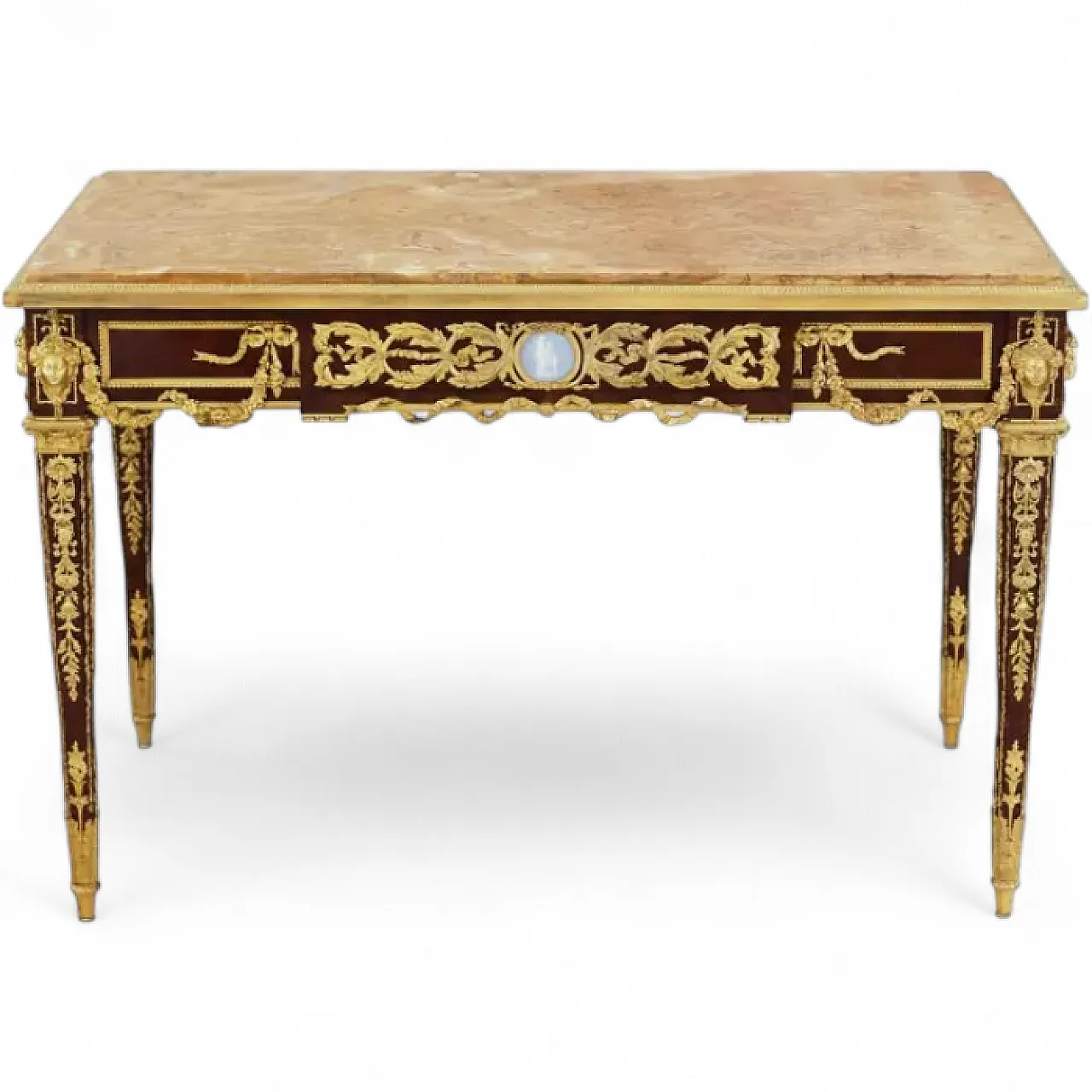
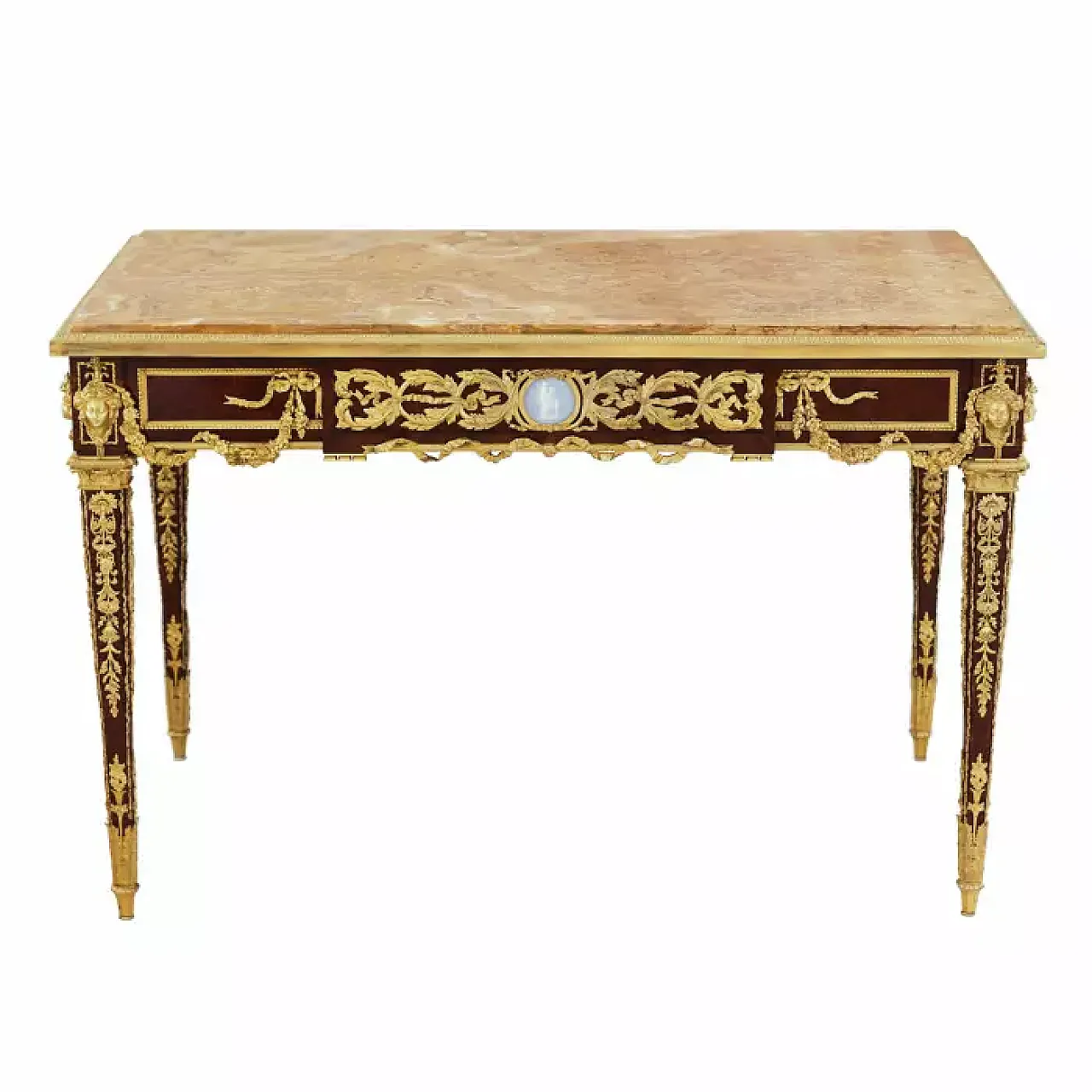
An elegant bureau plat writing desk, executed in Paris in the last quarter of the nineteenth century, represents a high-quality example of Parisian artistic furniture of the Belle Époque period, created in the tradition of the Louis XVI revival. The piece demonstrates characteristic features of French haute ébénisterie of the Napoléon III era, when cabinetmakers turned to refined models of royal furniture of the eighteenth century.
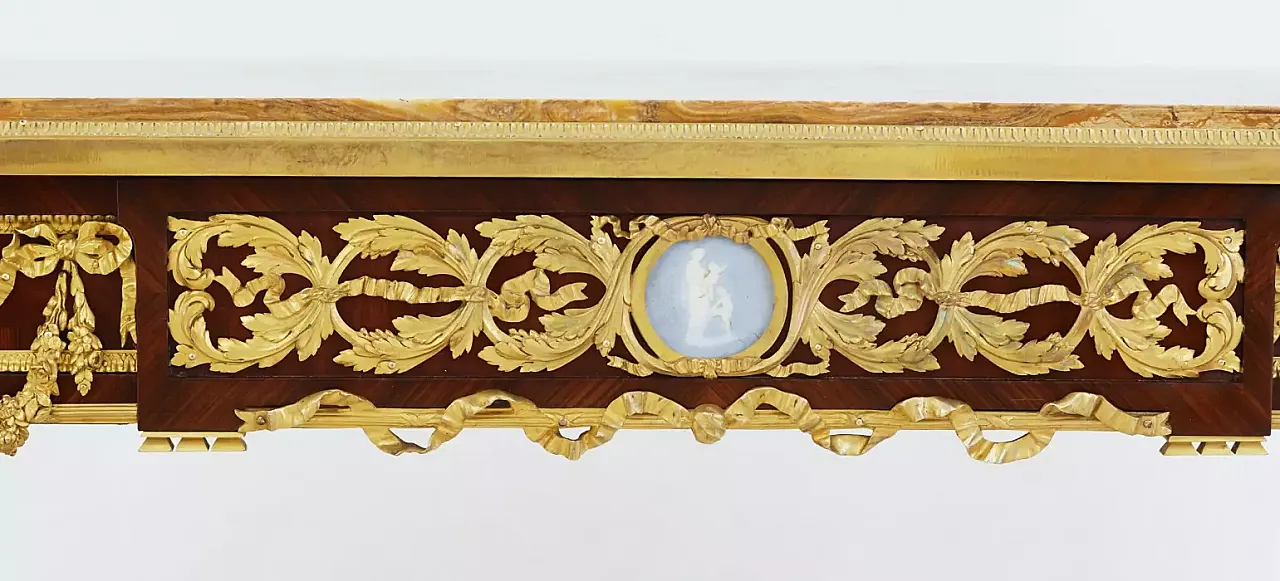
The structure is crafted from mahogany with carefully selected veneer and enriched with an elaborate set of gilt bronze (ormolu) mounts. The frieze is decorated with a graceful composition of garlands, ribbons, and vegetal motifs executed in deep chasing and refined by hand. The central part of the front frieze is adorned with a circular medallion of blue and white porcelain of the jasperware type, executed in the manner of the English Wedgwood manufactory and depicting an antique allegorical scene in relief.
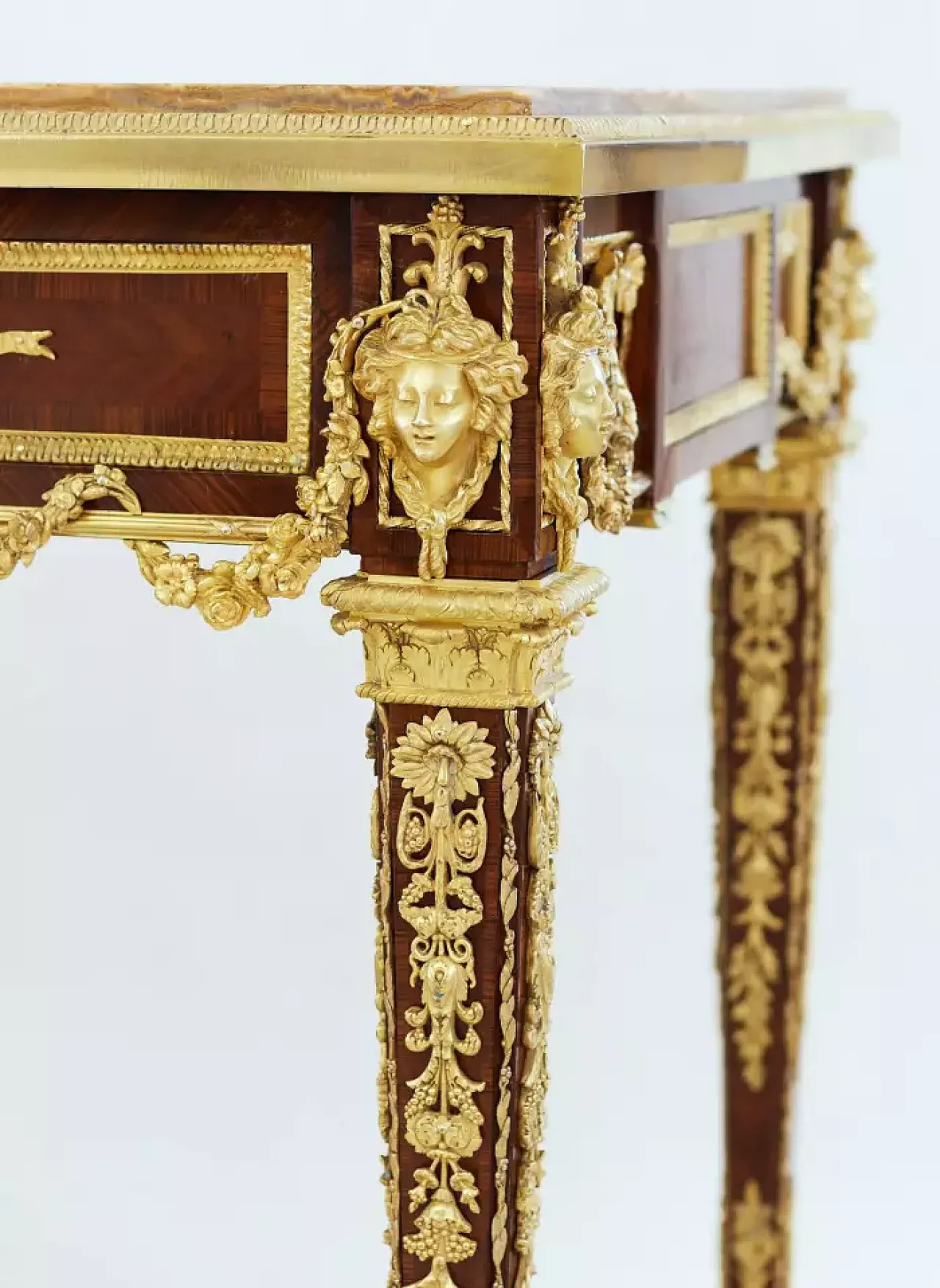
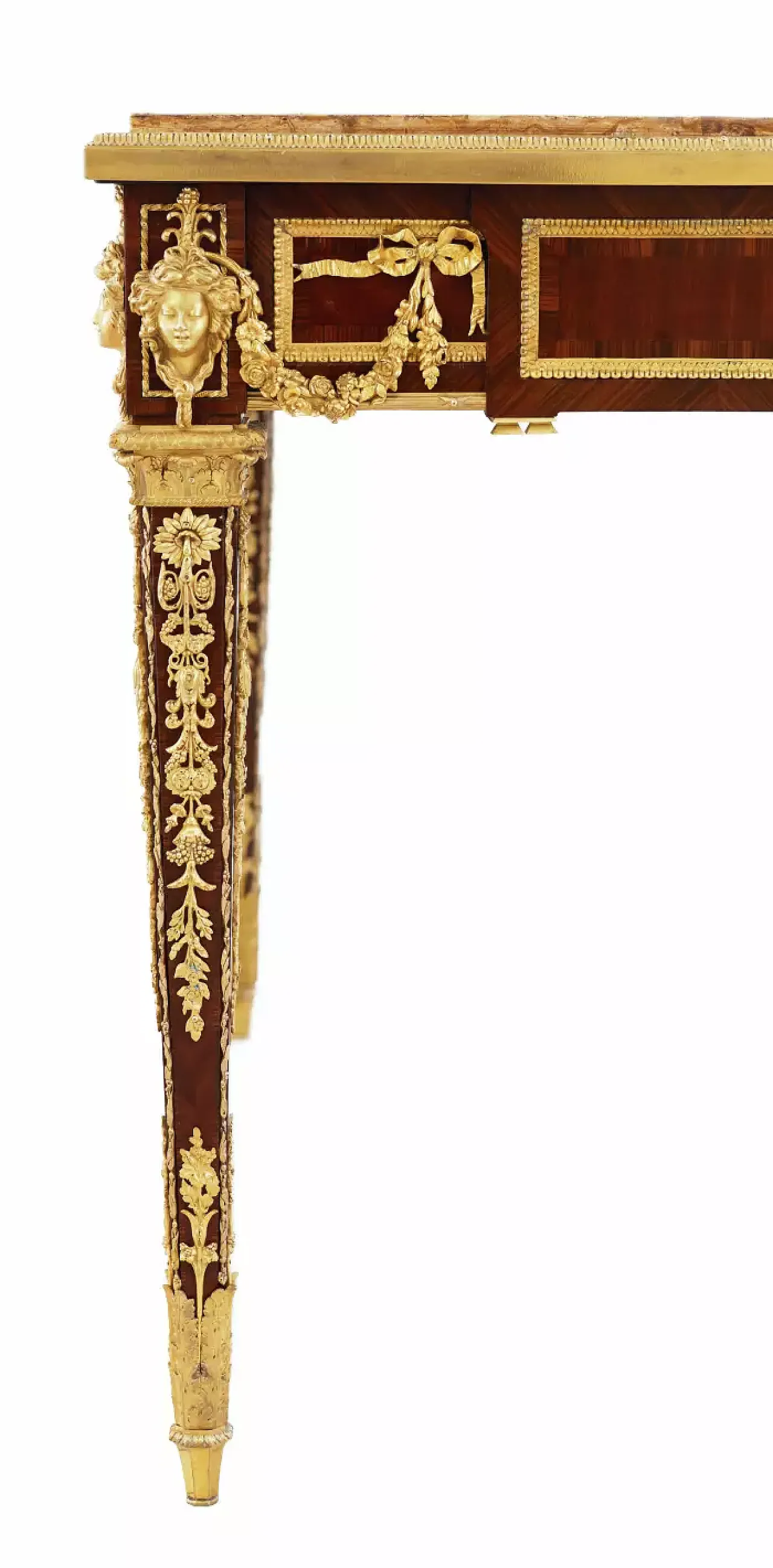
The corners of the desk are ornamented with expressive mascarons in the form of female heads with flowing hair and decorative ribbons, characteristic of high-quality Parisian bronze work. From these mascarons extend garlands that connect the corners with the central section of the frieze, creating a harmonious decorative composition.
The fluted legs are enriched with elongated gilt bronze mounts featuring vegetal ornament and terminate in elegant sabots. The architectural conception of the legs derives from furniture models of the Louis XVI period.
The desk is fitted with a concealed mechanism opening the central drawer, activated by a push element. Such technical solutions are typical of high-level Parisian cabinetmaking workshops of the late nineteenth century.
The top is executed in polished onyx of a warm honey-golden tone with a natural stone pattern, enhancing the decorative character of the piece and emphasizing its ceremonial appearance.
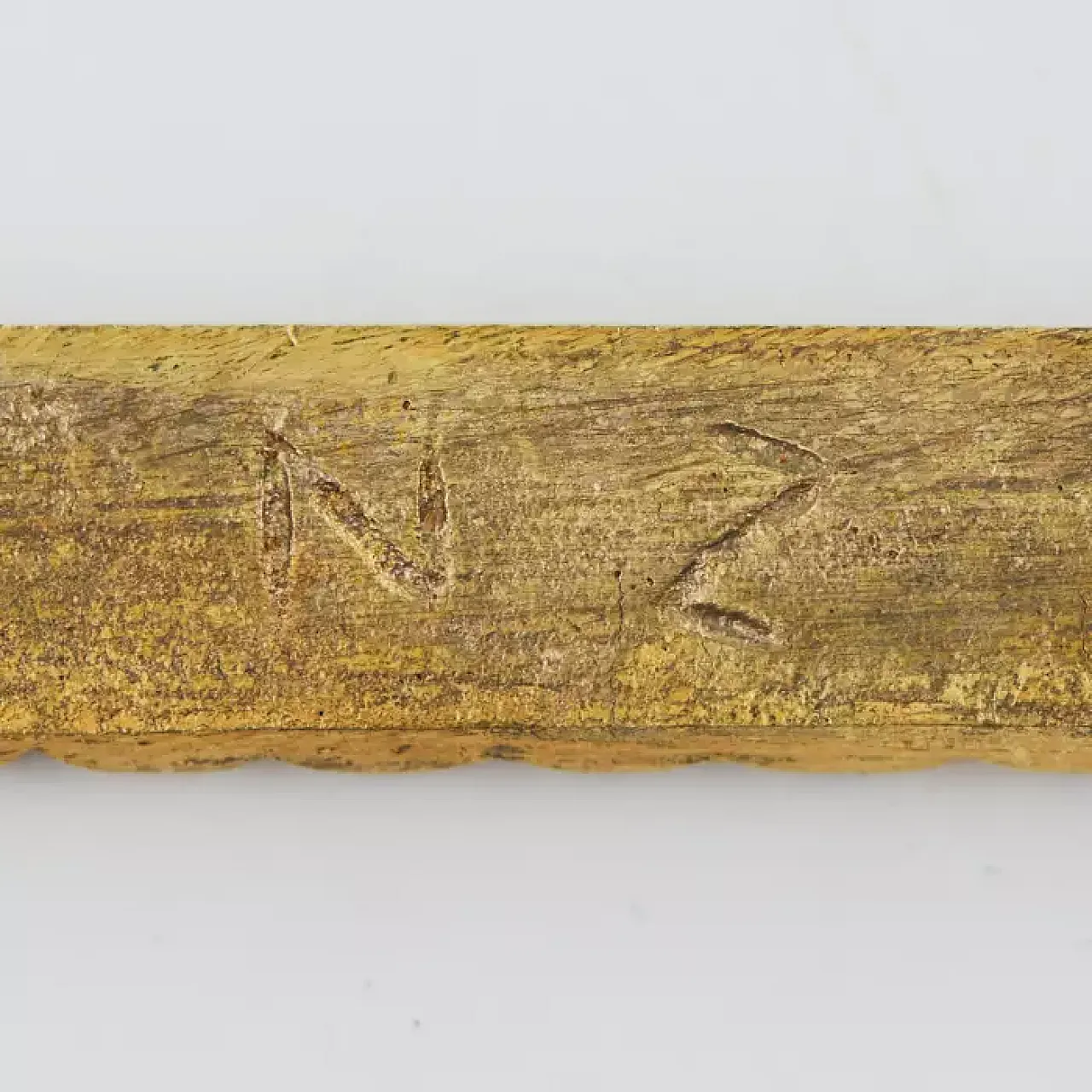
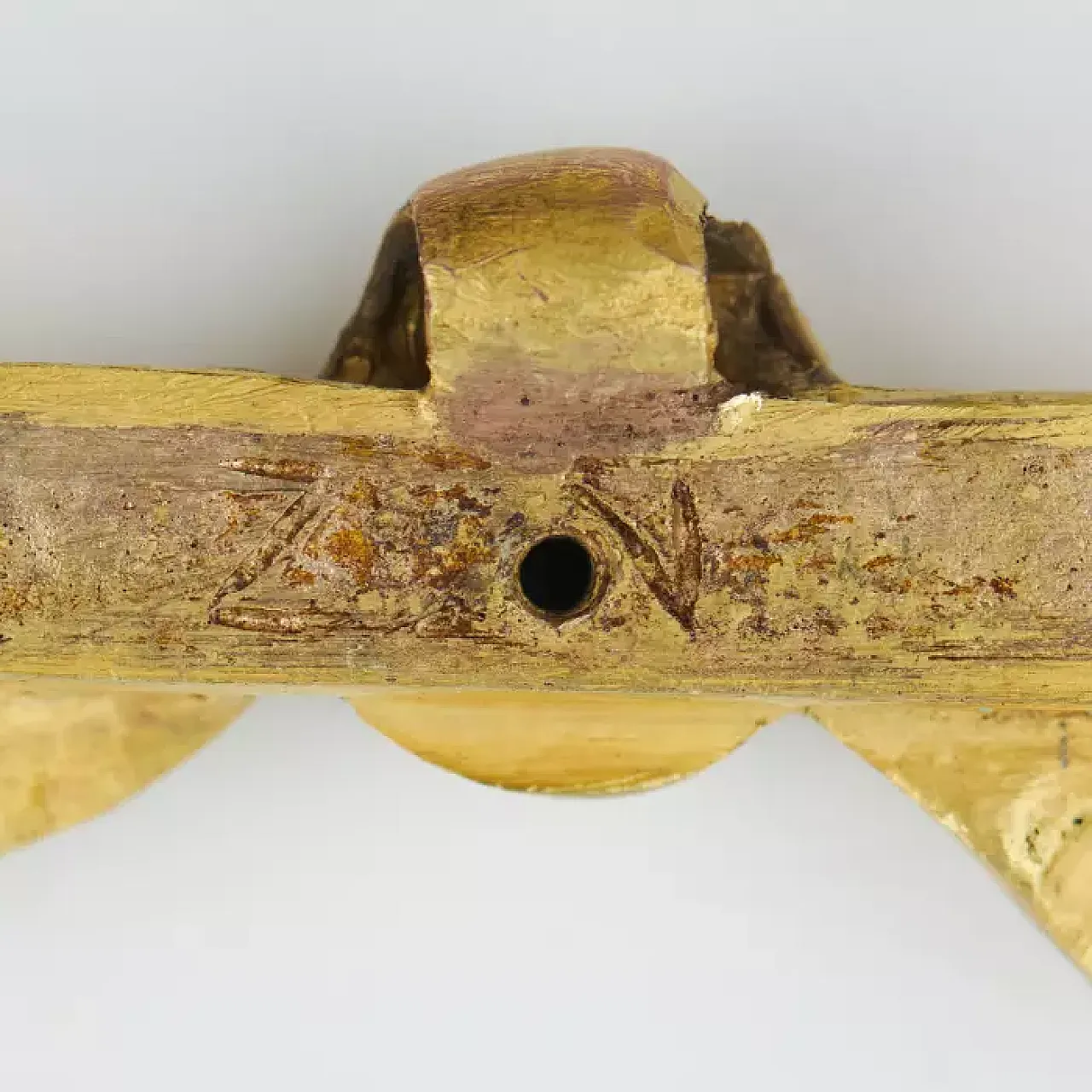
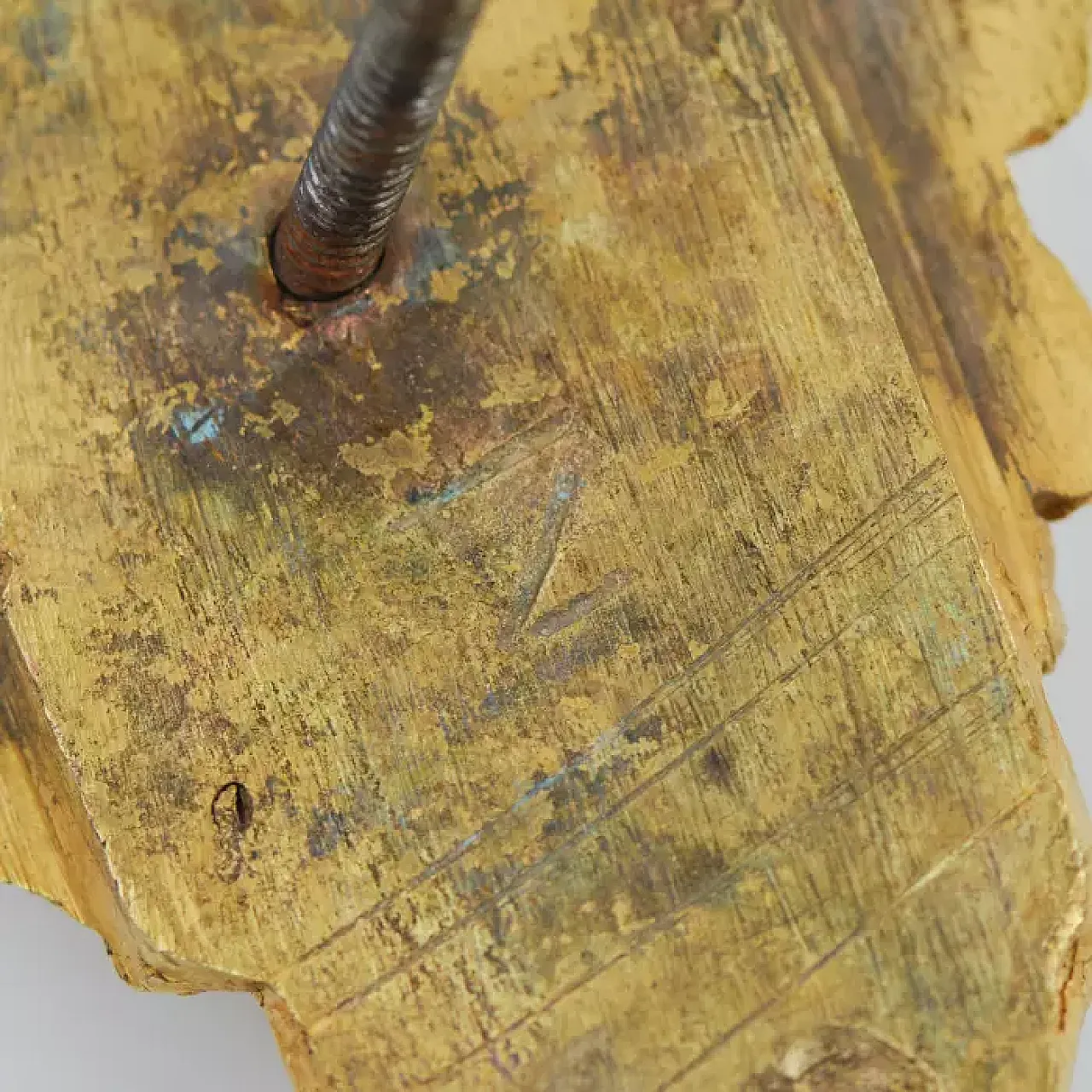
On the reverse side of the bronze mounts there are assembly marks in the form of engraved letters, including the combination “ZN”. Such marques de montage were widely used in Parisian bronze workshops of the second half of the nineteenth century to identify elements during the assembly of furniture and to ensure the precise fitting of decorative mounts. Comparable assembly marks are frequently encountered on furniture produced by leading Parisian haute ébénisterie workshops, including pieces attributed to the workshop of Joseph-Emmanuel Zwiener.
The stylistic features of the gilt bronze decoration, the composition of the frieze with a porcelain medallion, the character of the mascarons and garlands, the quality of bronze chasing, the refinement of bronze modelling, as well as the nature of the veneering and the structural construction allow the piece to be confidently attributed to the workshop of Joseph-Emmanuel Zwiener, one of the leading Parisian cabinetmakers of the Belle Époque, whose works were distinguished by luxurious execution and a high level of artistic craftsmanship.


.png)
 SILVER Seller in Alpes-Maritimes, France