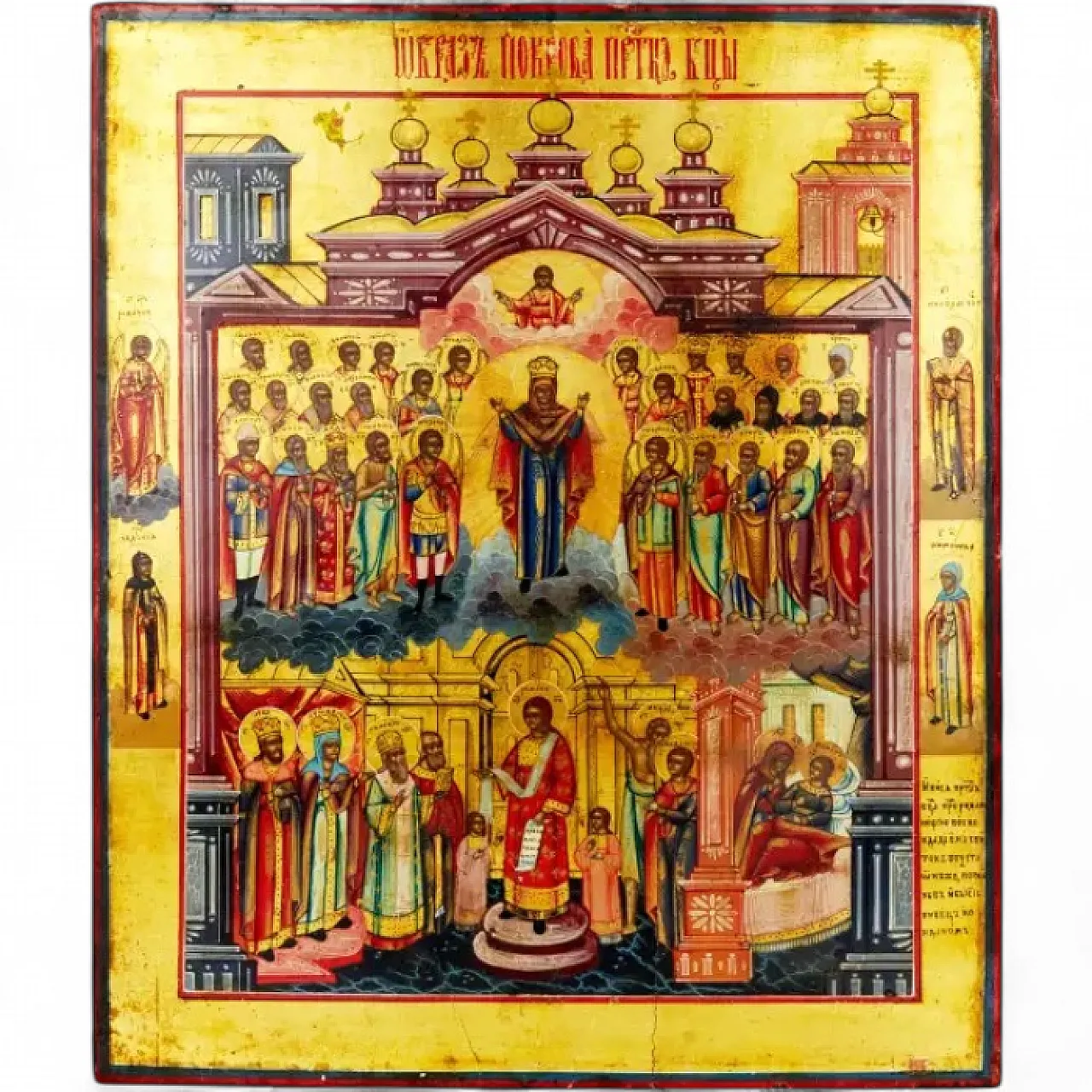
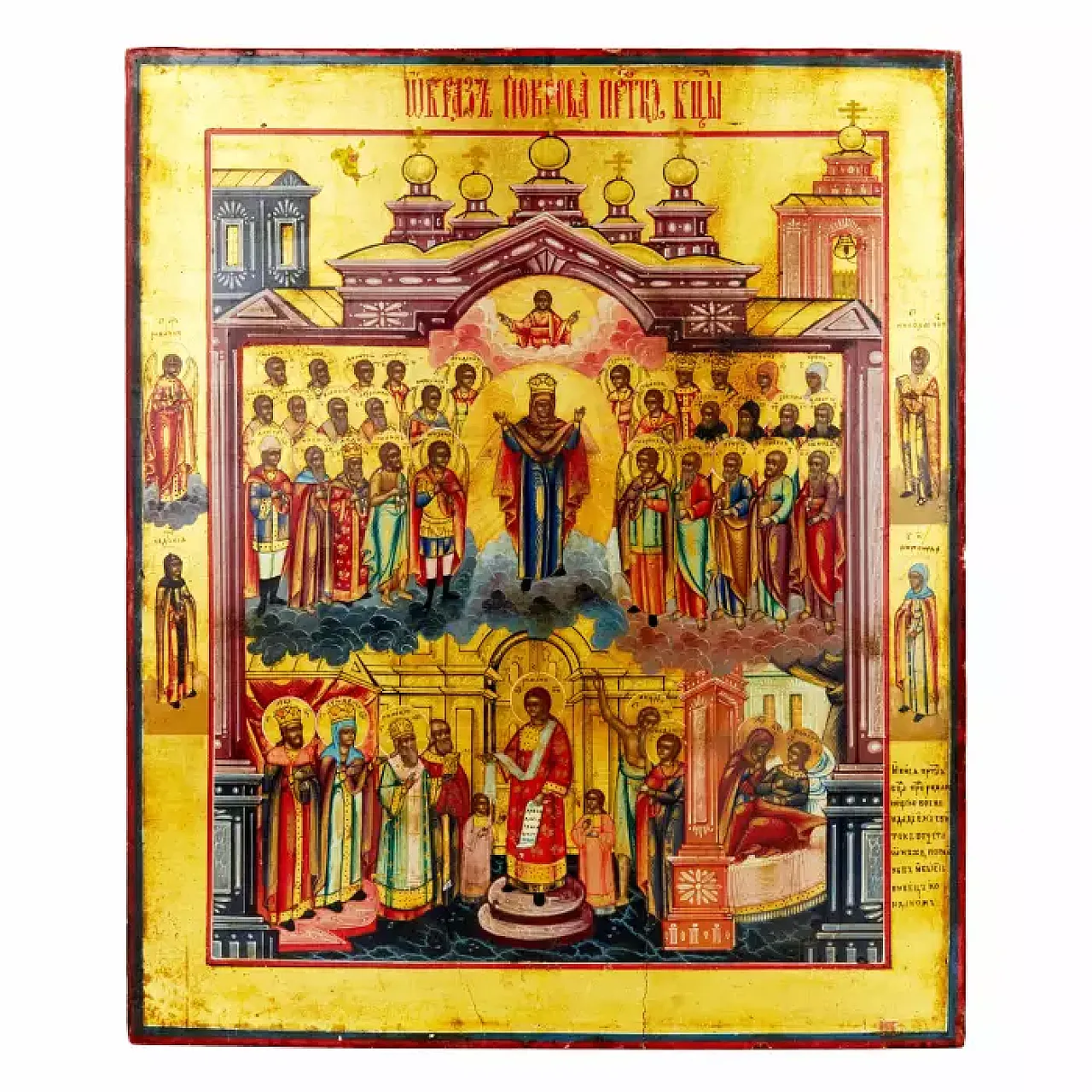
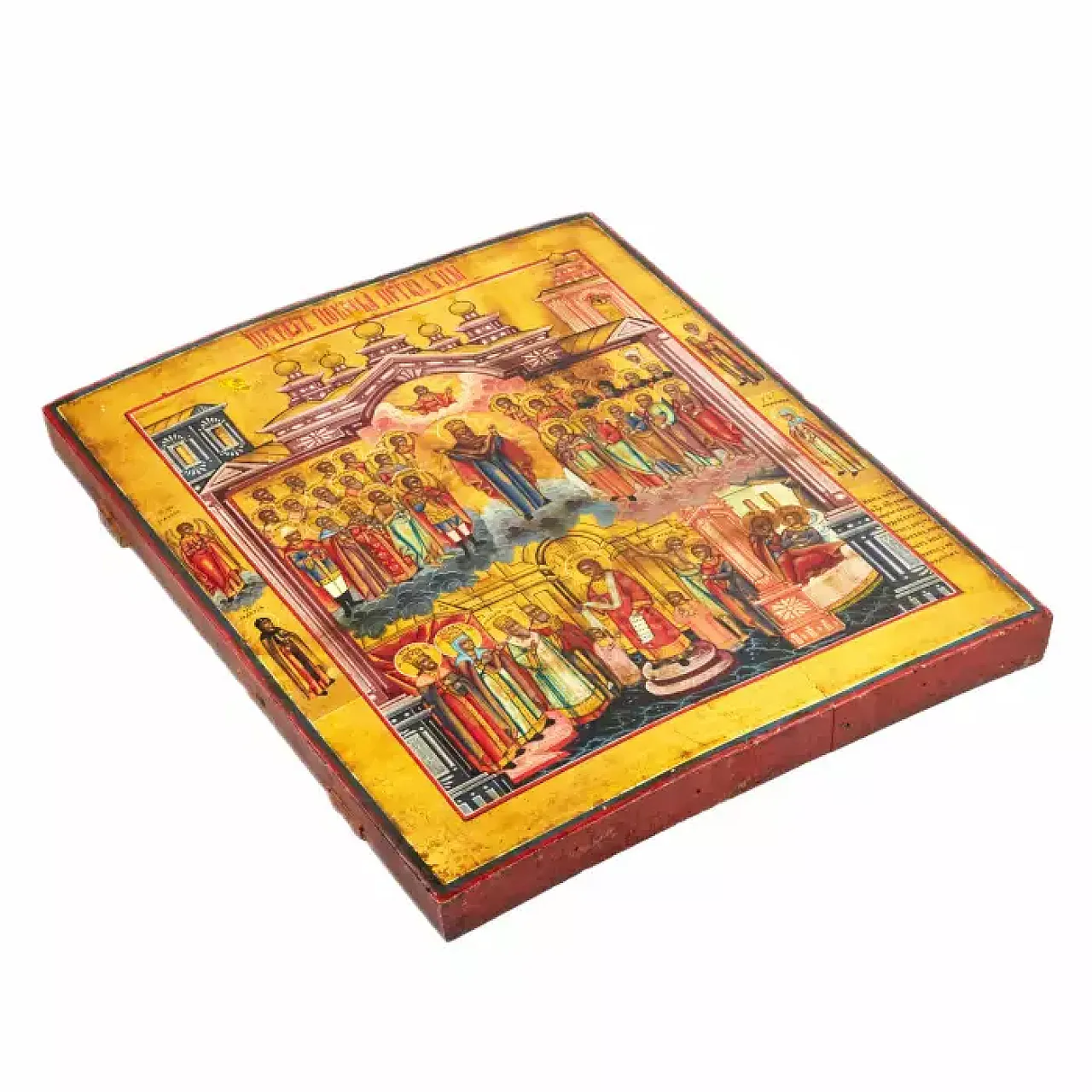
The Icon of the Intercession of the Mother of God, created in the mid third quarter of the 19th century, represents one of the most venerated iconographic subjects of the Orthodox tradition. The composition follows the ancient Russian Novgorod iconographic type of the Intercession of the Mother of God and is associated with the tradition of the miraculous apparition of the Most Holy Theotokos in the Blachernae Church of Constantinople and her divine protection.
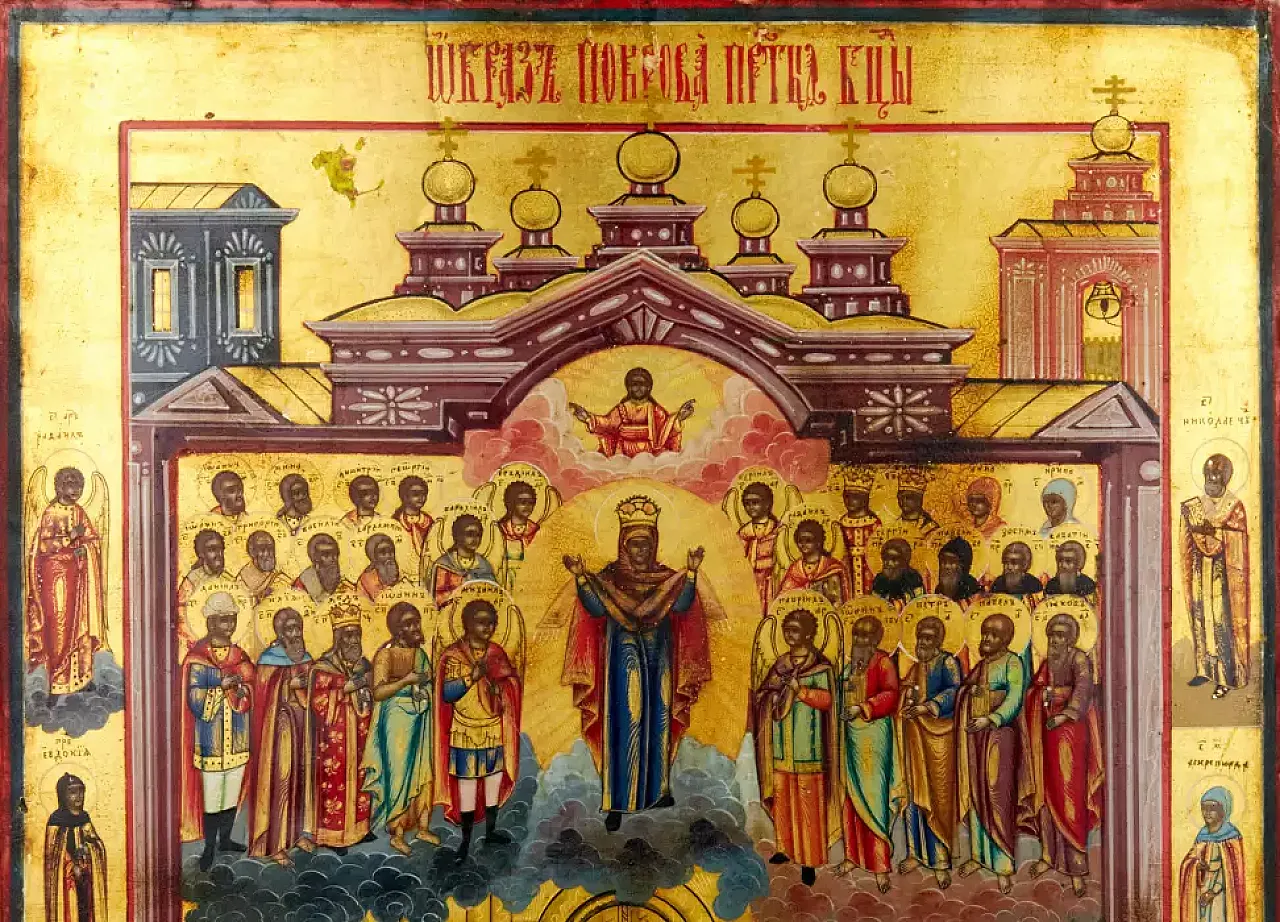
The icon is arranged as a centralised multi-figure composition. In the upper register, the Mother of God is depicted holding the protective veil, symbolising her intercession and spiritual protection over the Christian world. The architectural background presents the image of a church with five domes, a bell tower and additional architectural structures, creating a solemn setting for the sacred event.
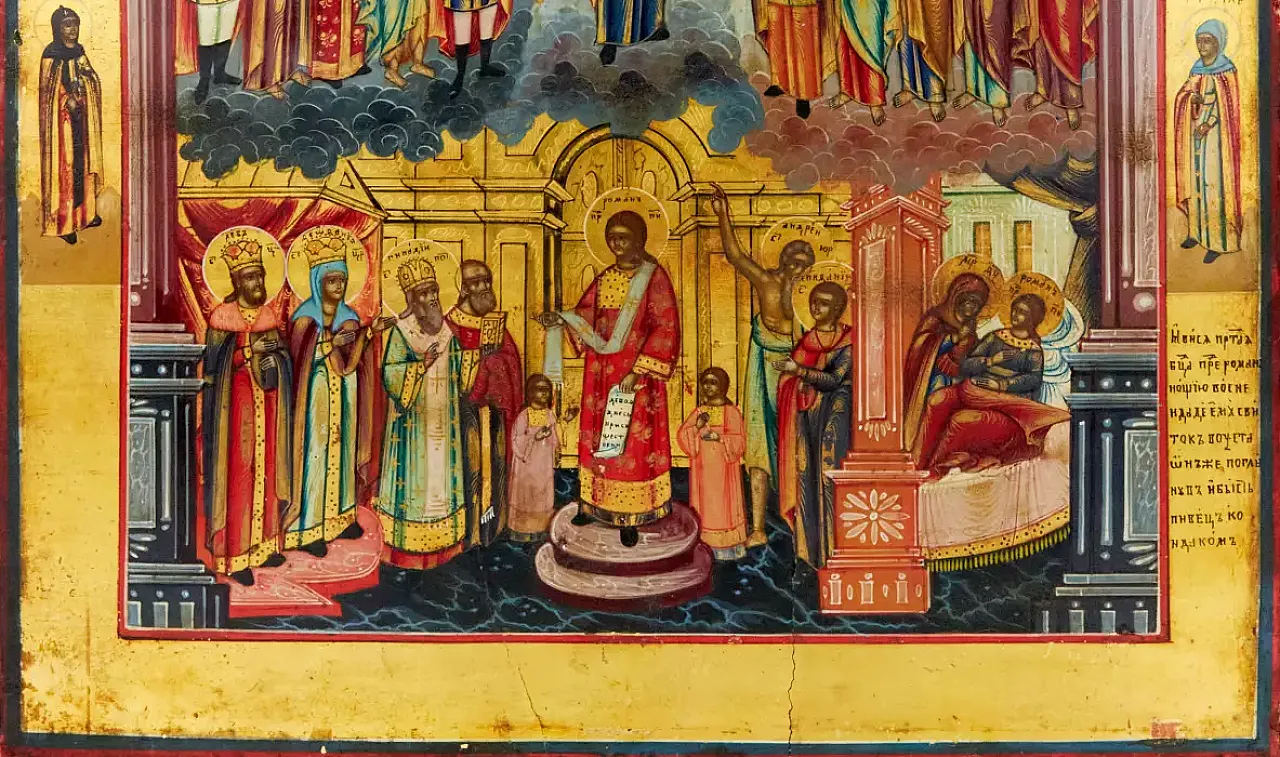
The lower register is dedicated to Saint Romanos the Melodist, shown performing a hymn before the emperor and empress in honour of the Mother of God and her miraculous intercession. On the right side of the composition, behind an architectural column, appears the scene of the prophetic visitation of Romanos the Melodist by the Mother of God.
The icon is distinguished by the purity and precision of its painting on a gilded ground, its rich festive palette and expressive decorative quality. The treatment of the faces, the construction of the figures and the colour scheme are closely related to the artistic traditions of the masters of the Vetka icon-painting school of the mid third quarter of the 19th century. The borders depict selected saints: Saint Nicholas the Wonderworker, Saints Eudokia and Agrippina, as well as an Archangel.



.png)

 SILVER Seller in Alpes-Maritimes, France