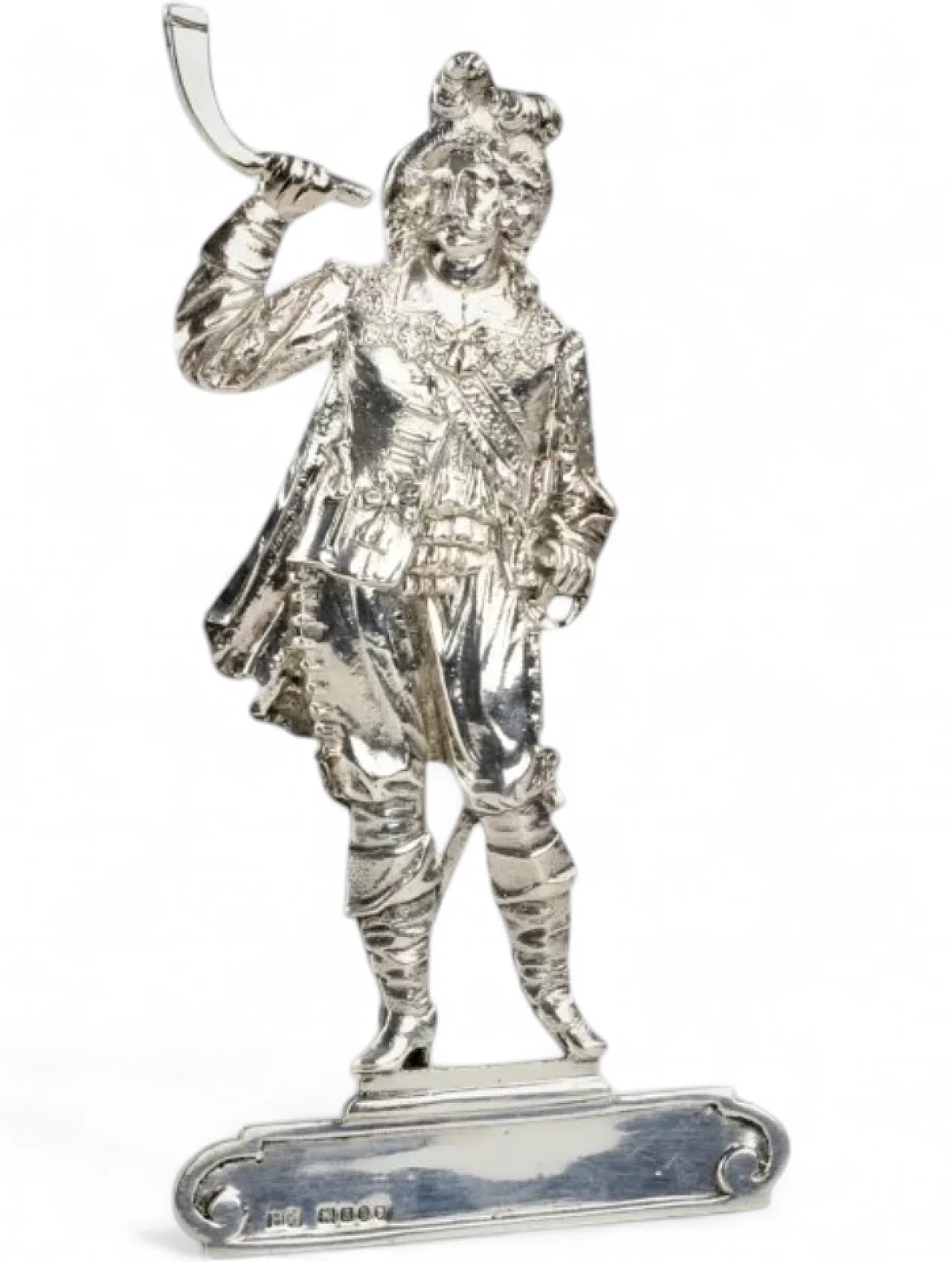
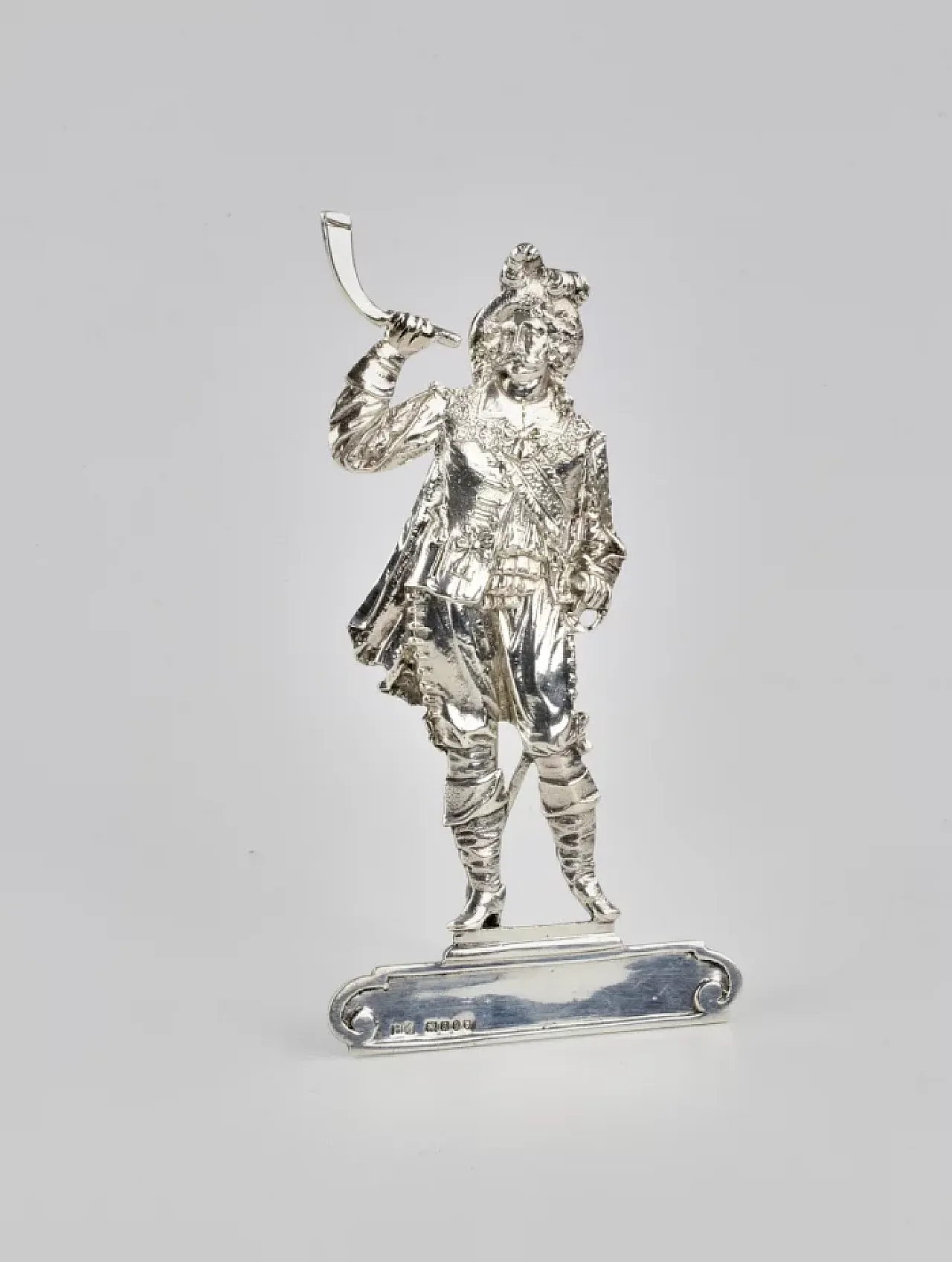
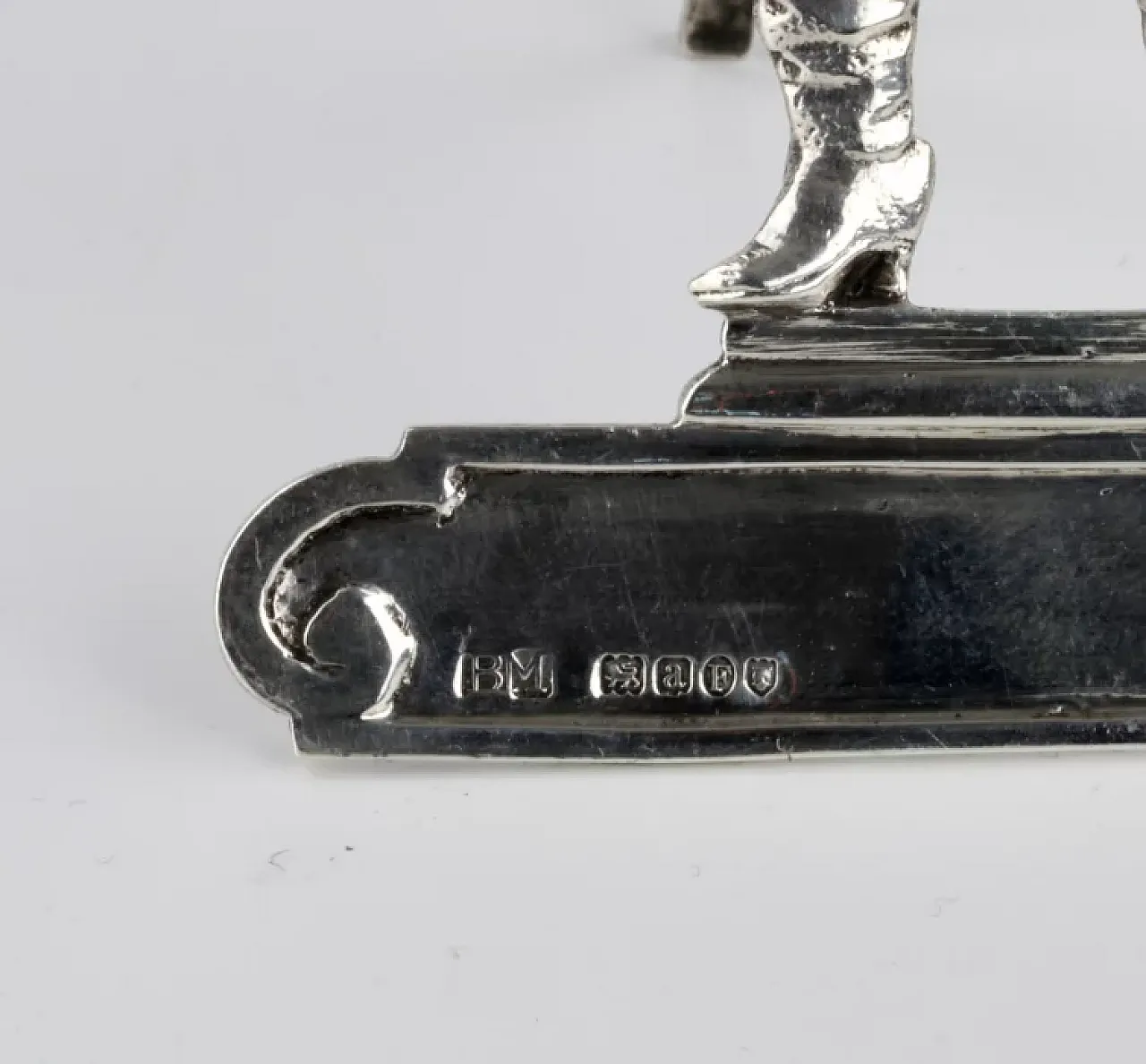
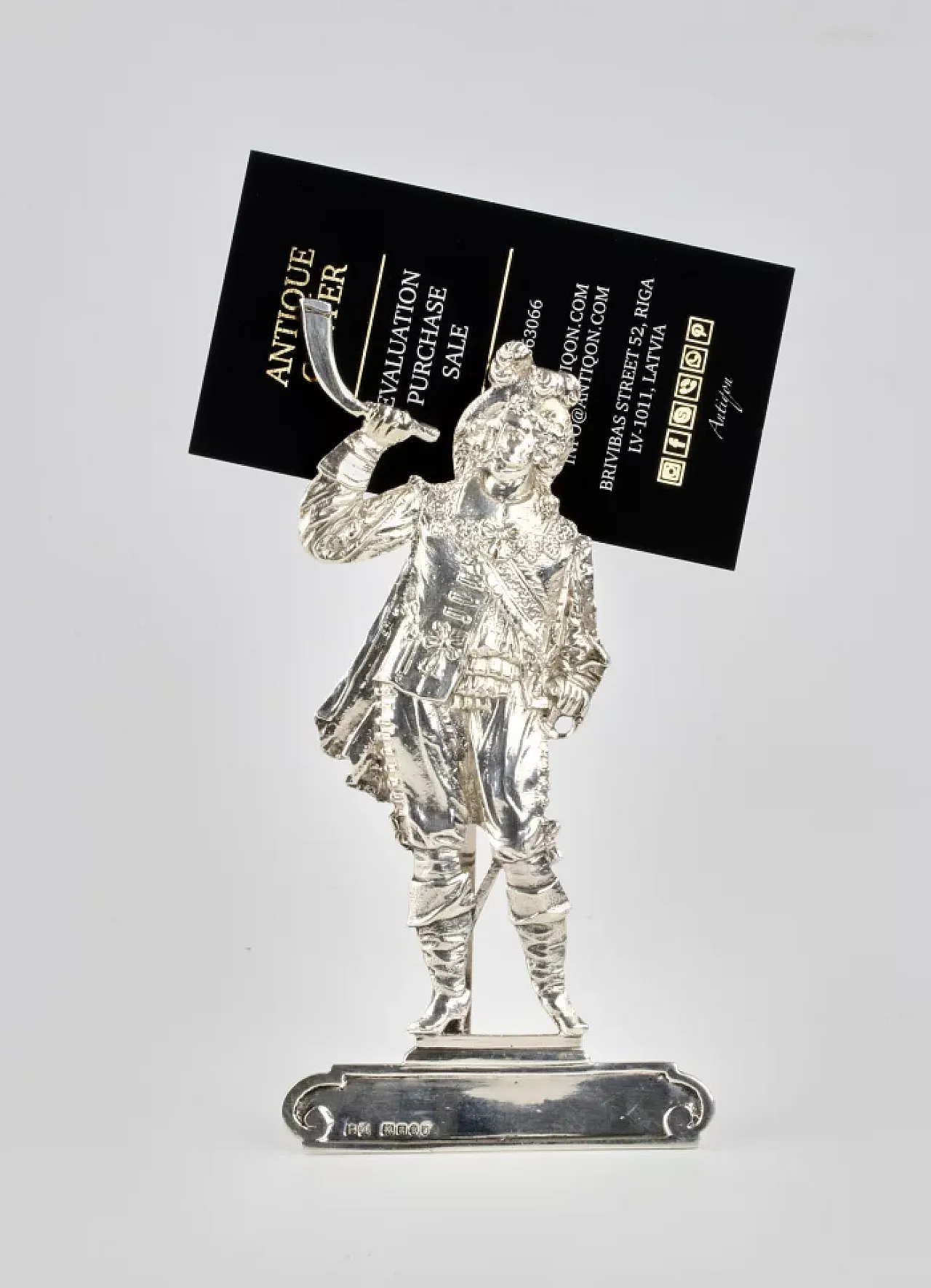
An original English silver card holder of the late Victorian period, made in London in 1896. The object is conceived as a freestanding figure of a musketeer dressed in a theatricalised 17th-century costume. The figure stands upon an elongated profiled base with scroll-shaped terminals.
The musketeer is depicted in a dynamic pose, his right arm raised as he holds a curved hunting or signal horn. The costume is finely articulated in relief: a broad-brimmed feathered hat, baldric, doublet, cloak, high boots and weapon combine to create a romanticised image of a cavalier from the age of the musketeers. The chased and relief-modelled surfaces are further enhanced by selectively engraved details.
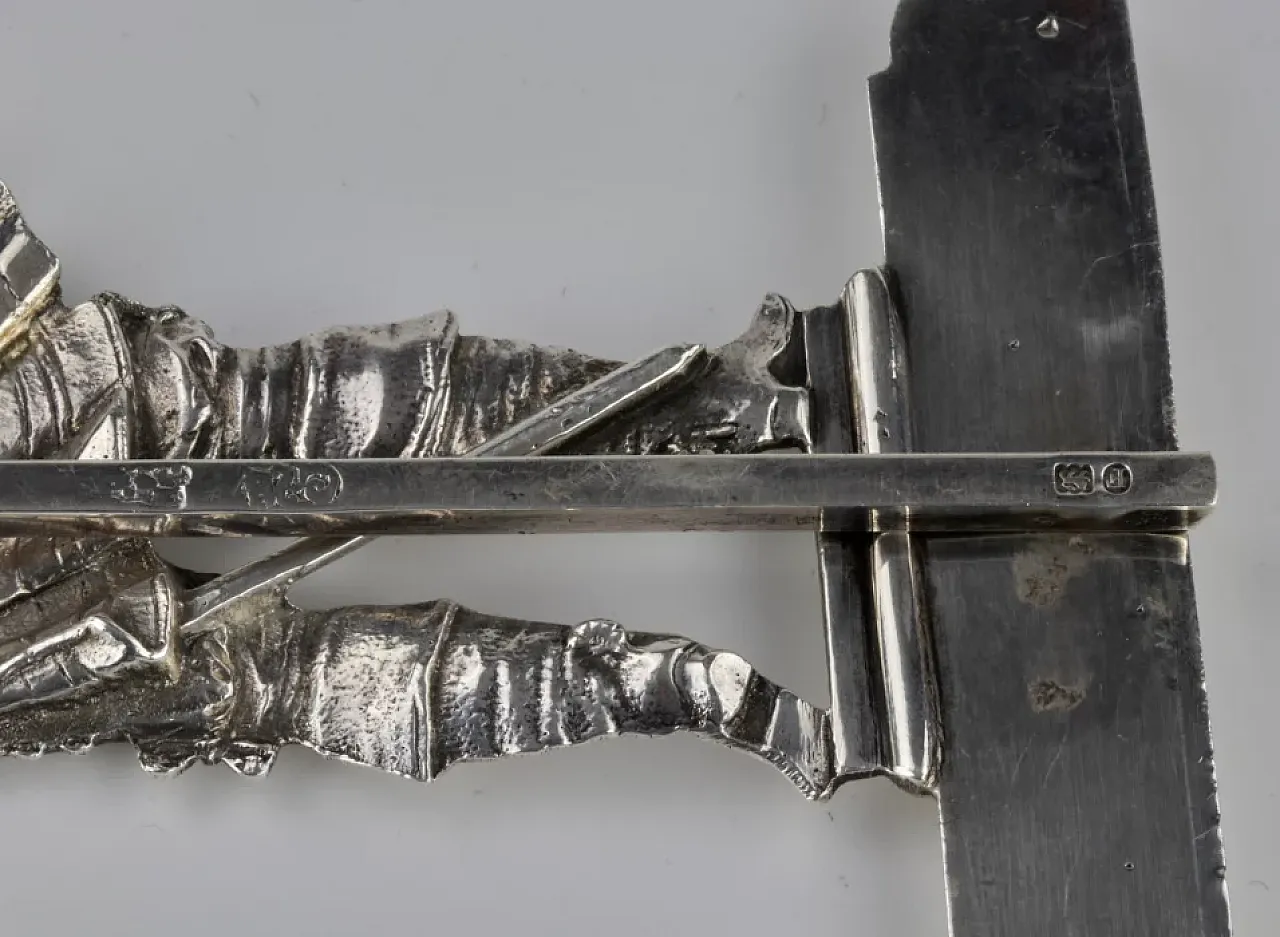
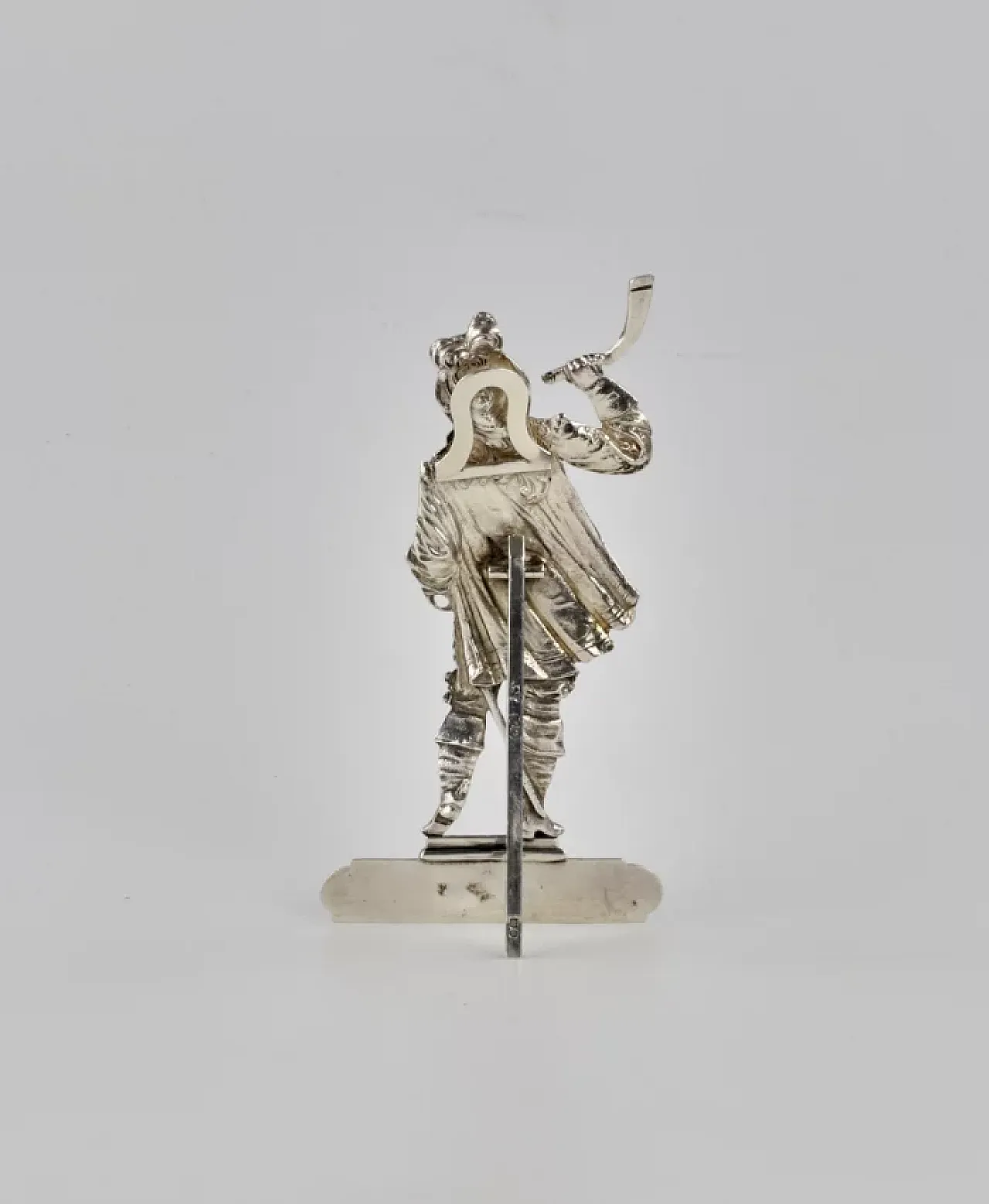
The functional construction of the card holder becomes apparent when viewed from the reverse: a metal support positioned behind the figure forms a rest for visiting cards while simultaneously allowing the object to stand securely on a surface. The sculptural composition thus combines the character of decorative cabinet sculpture with the practical function of an elegant desk accessory.
Such references to historical figures and costumes of earlier centuries were characteristic of the decorative arts of Victorian England, where utilitarian objects were frequently transformed into small-scale genre sculptures.





 SILVER Seller in Alpes-Maritimes, France