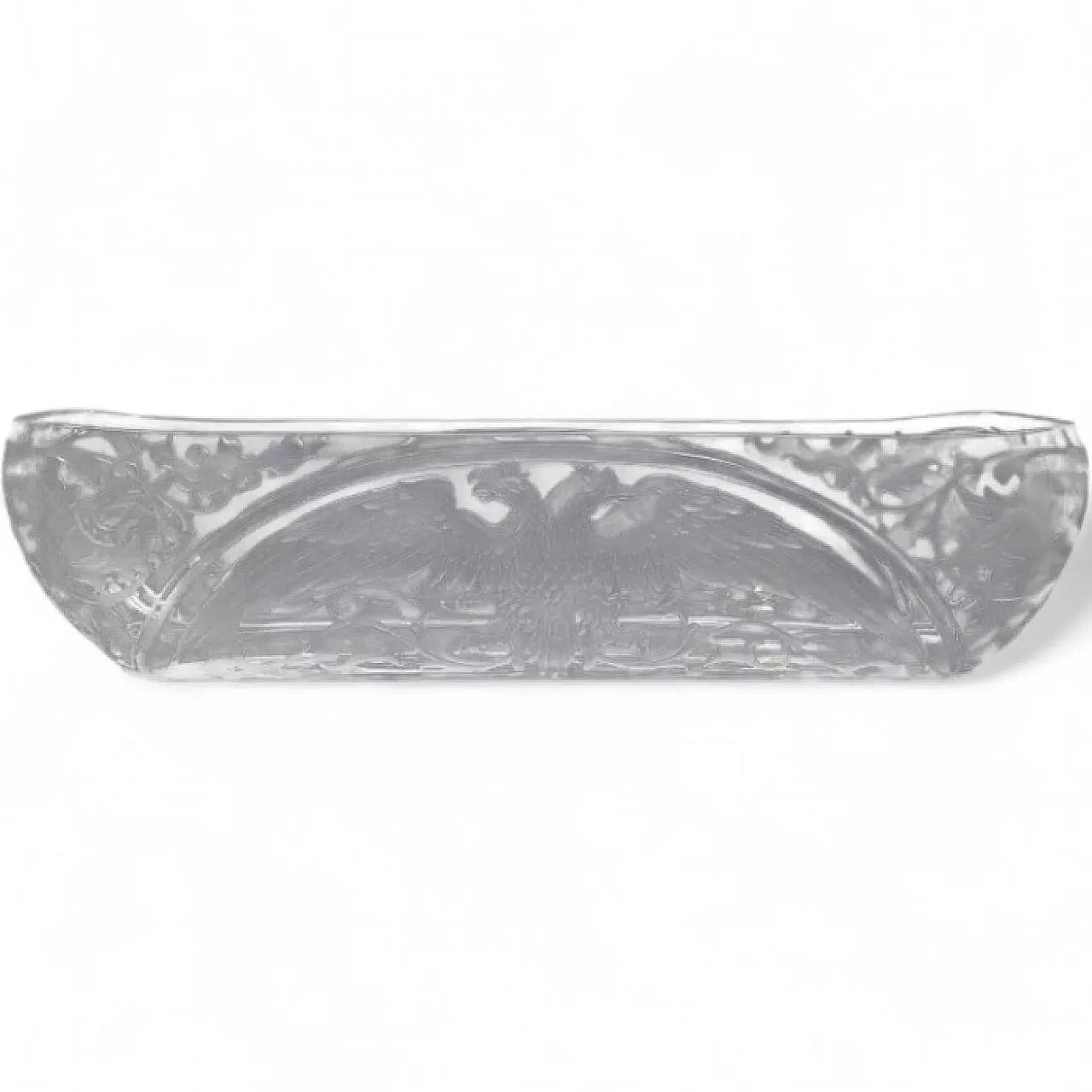
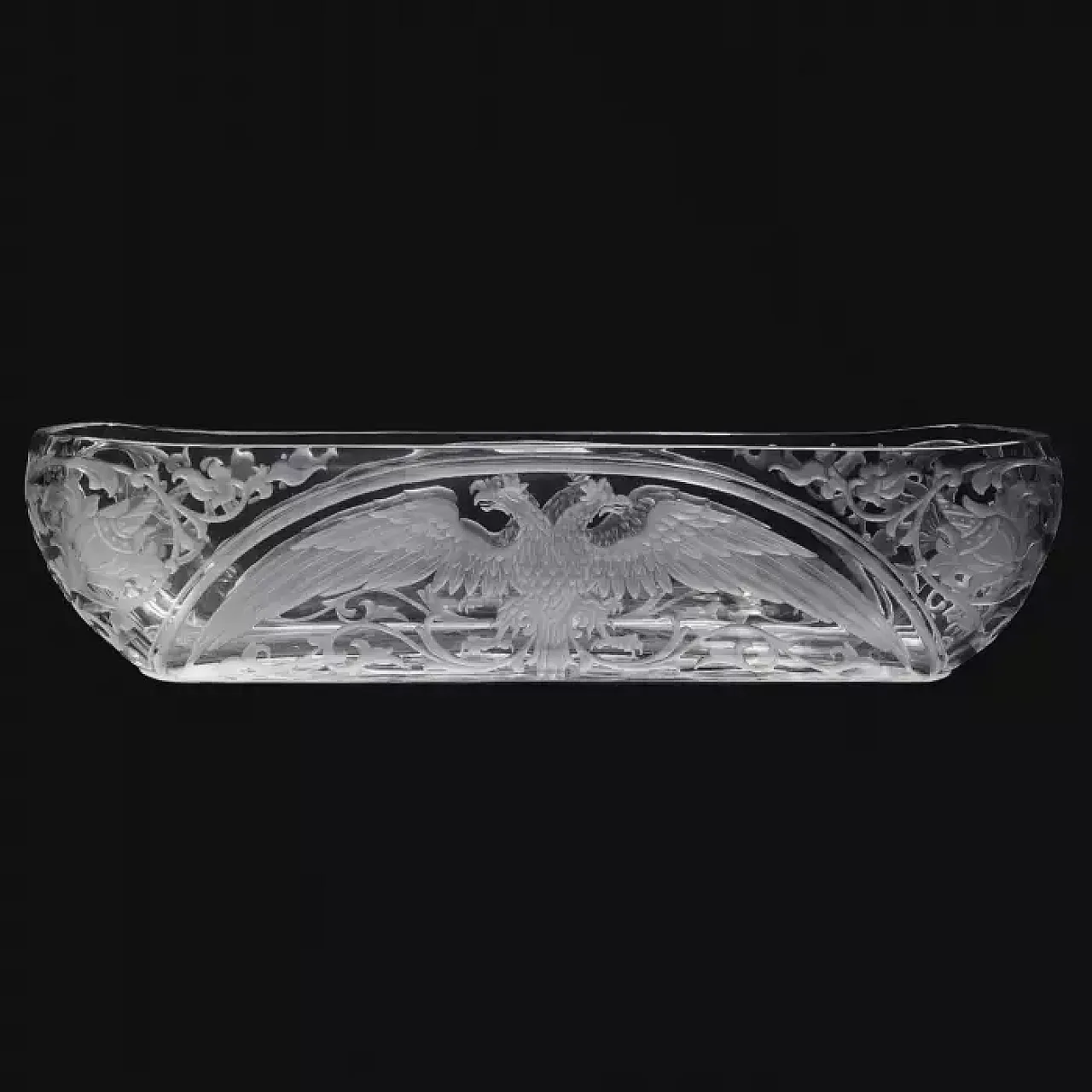
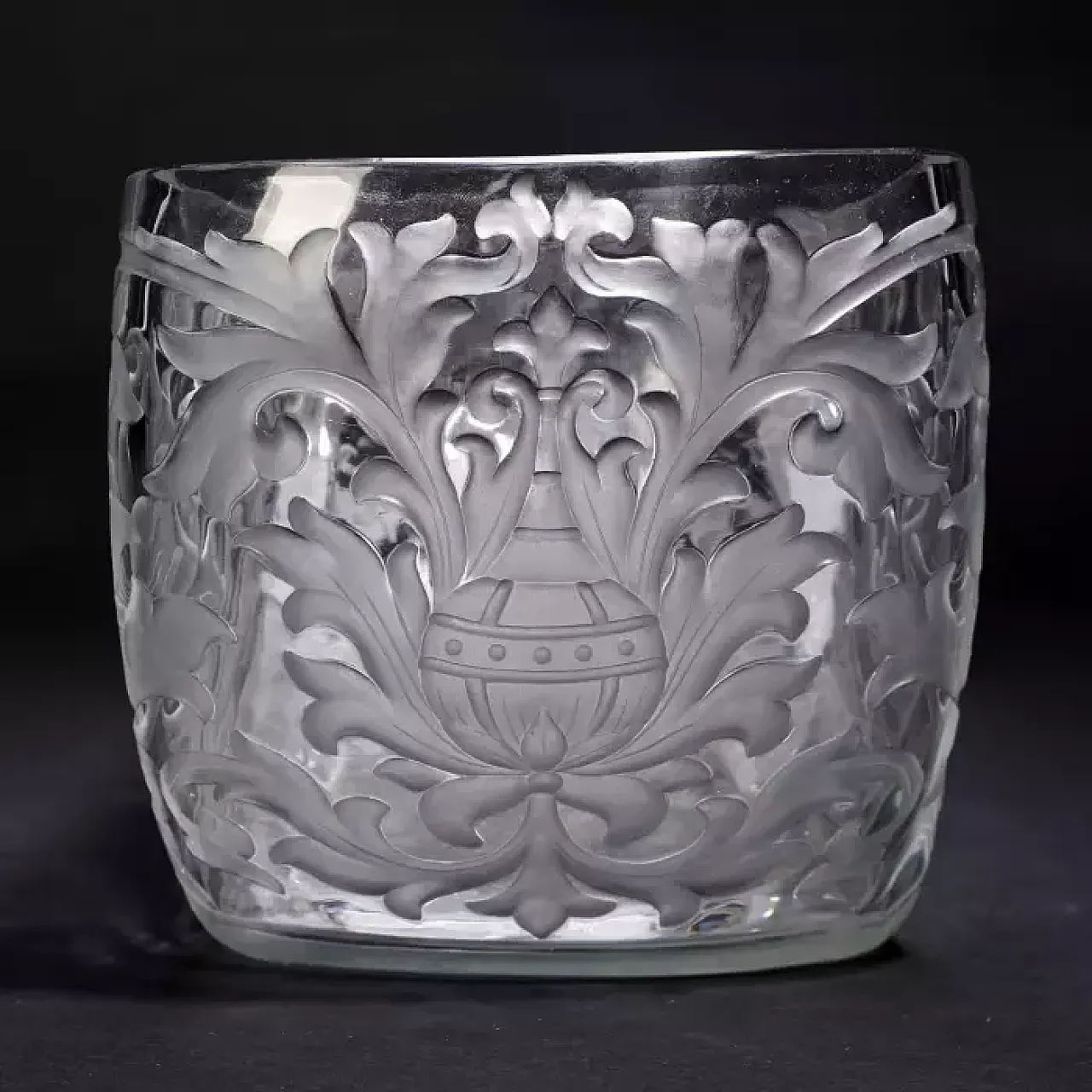
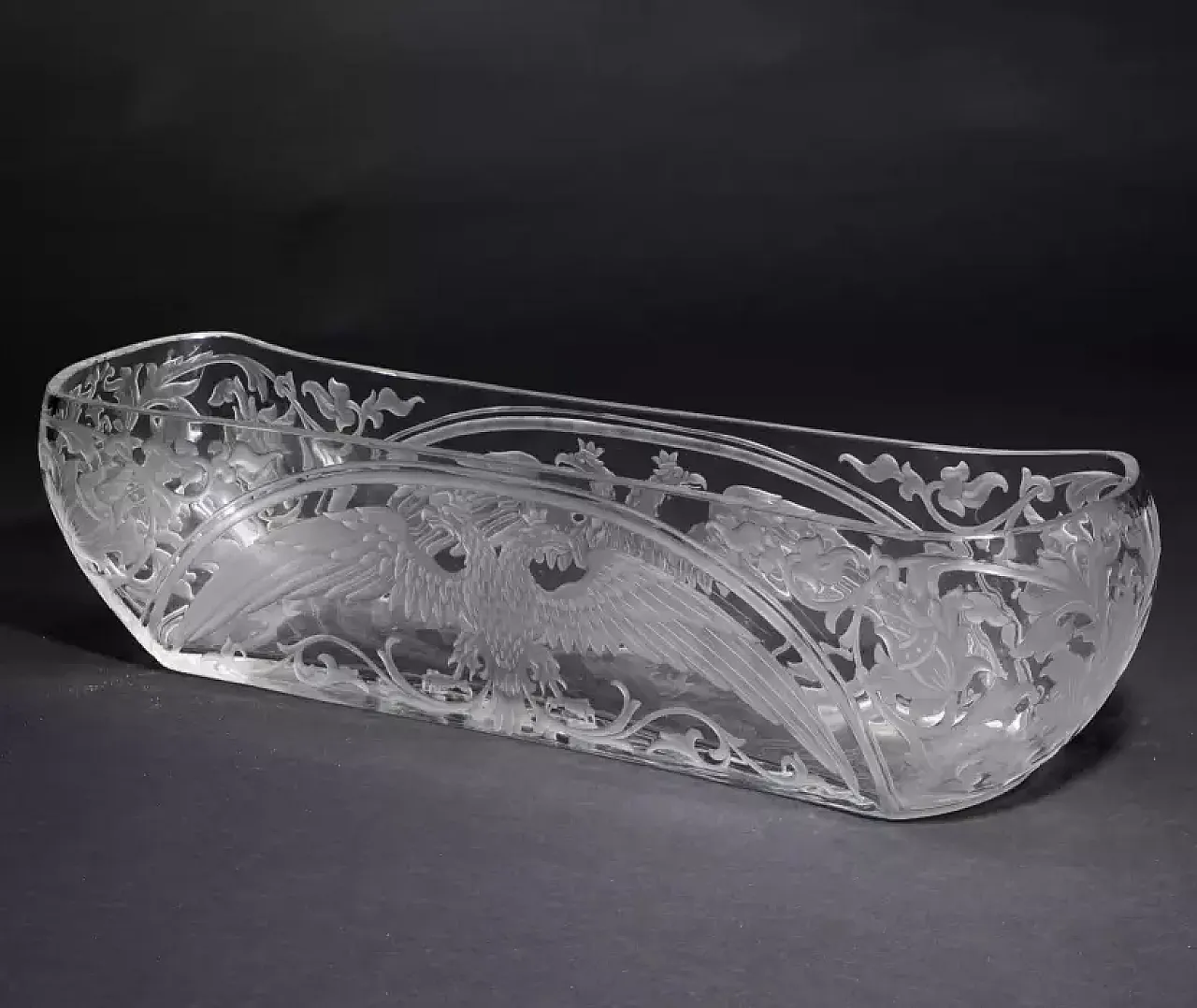
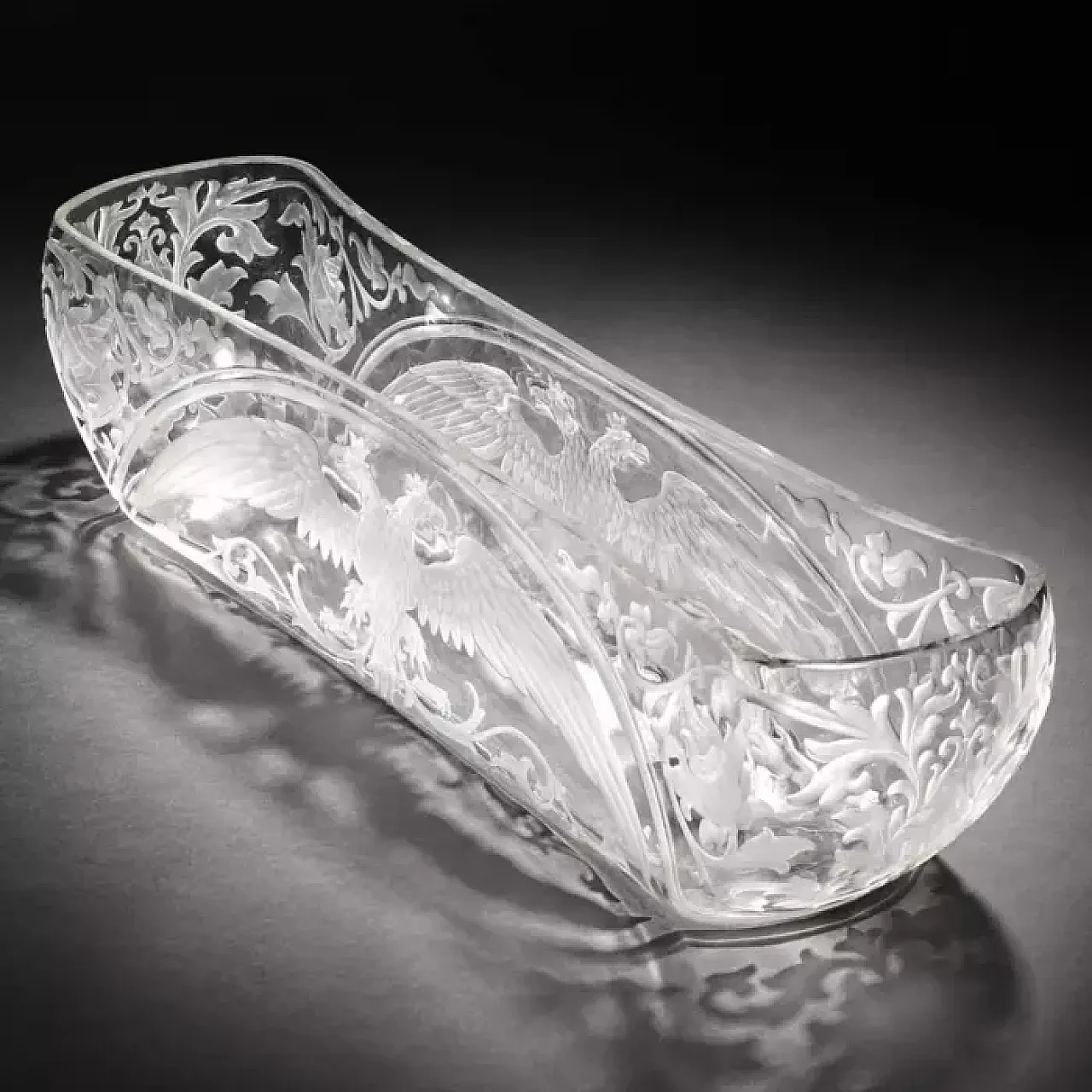
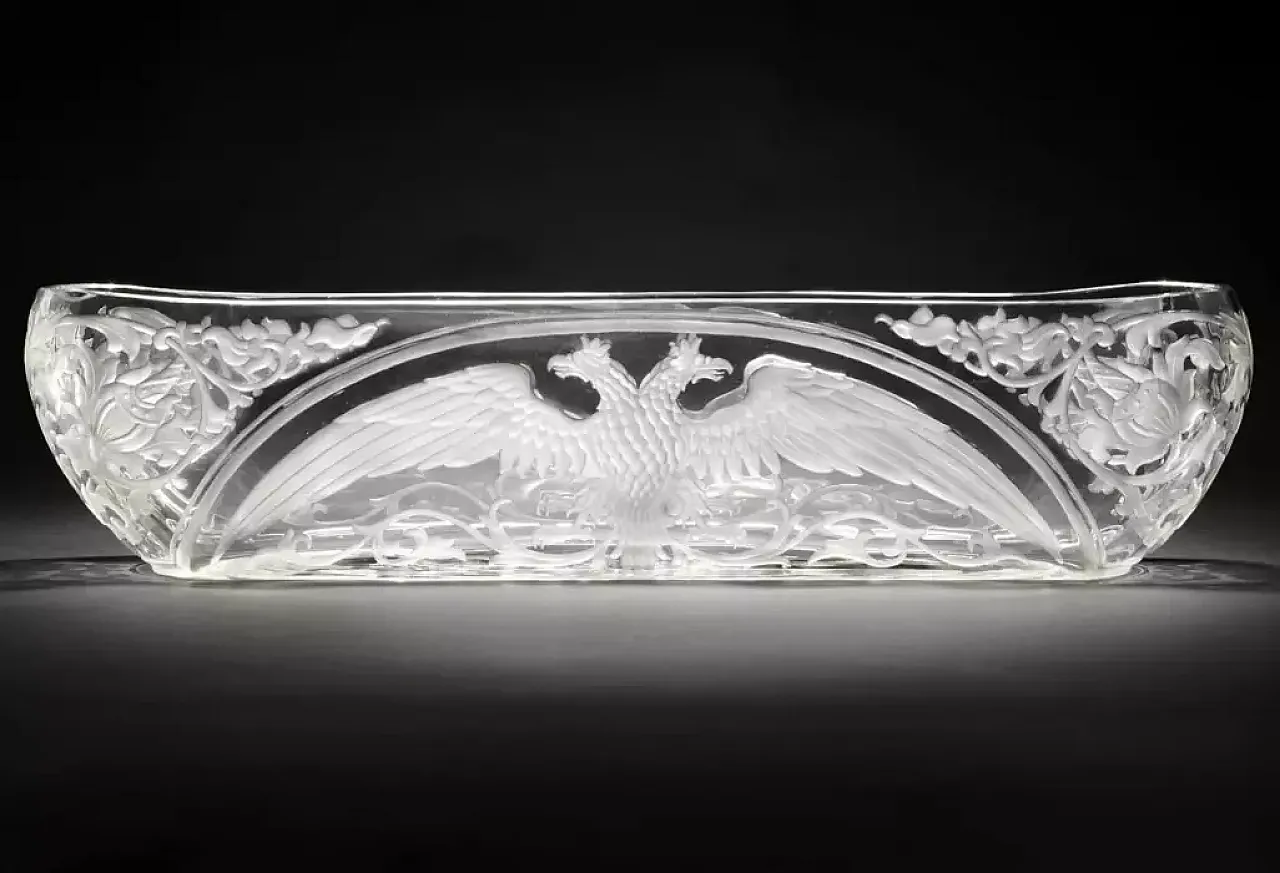
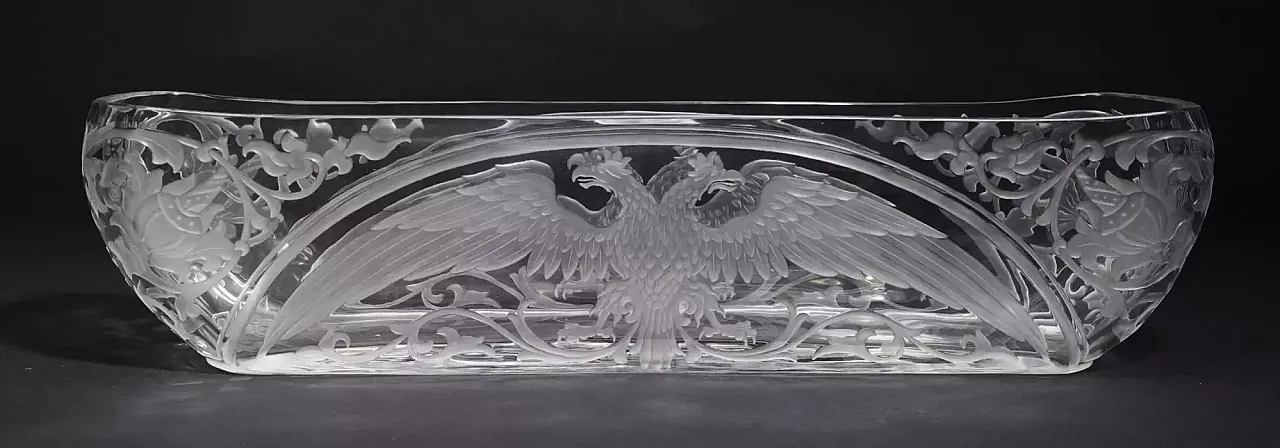
A remarkable crystal jardinière produced by the Imperial Glass Factory represents a rare example of ceremonial decorative art of the early 20th century. Monumental in scale and conceived for grand state interiors, the piece demonstrates architectural clarity and refined balance. Its rectangular body with slightly concave sides, rounded corners and gently protruding ends creates a dynamic yet harmonious silhouette.
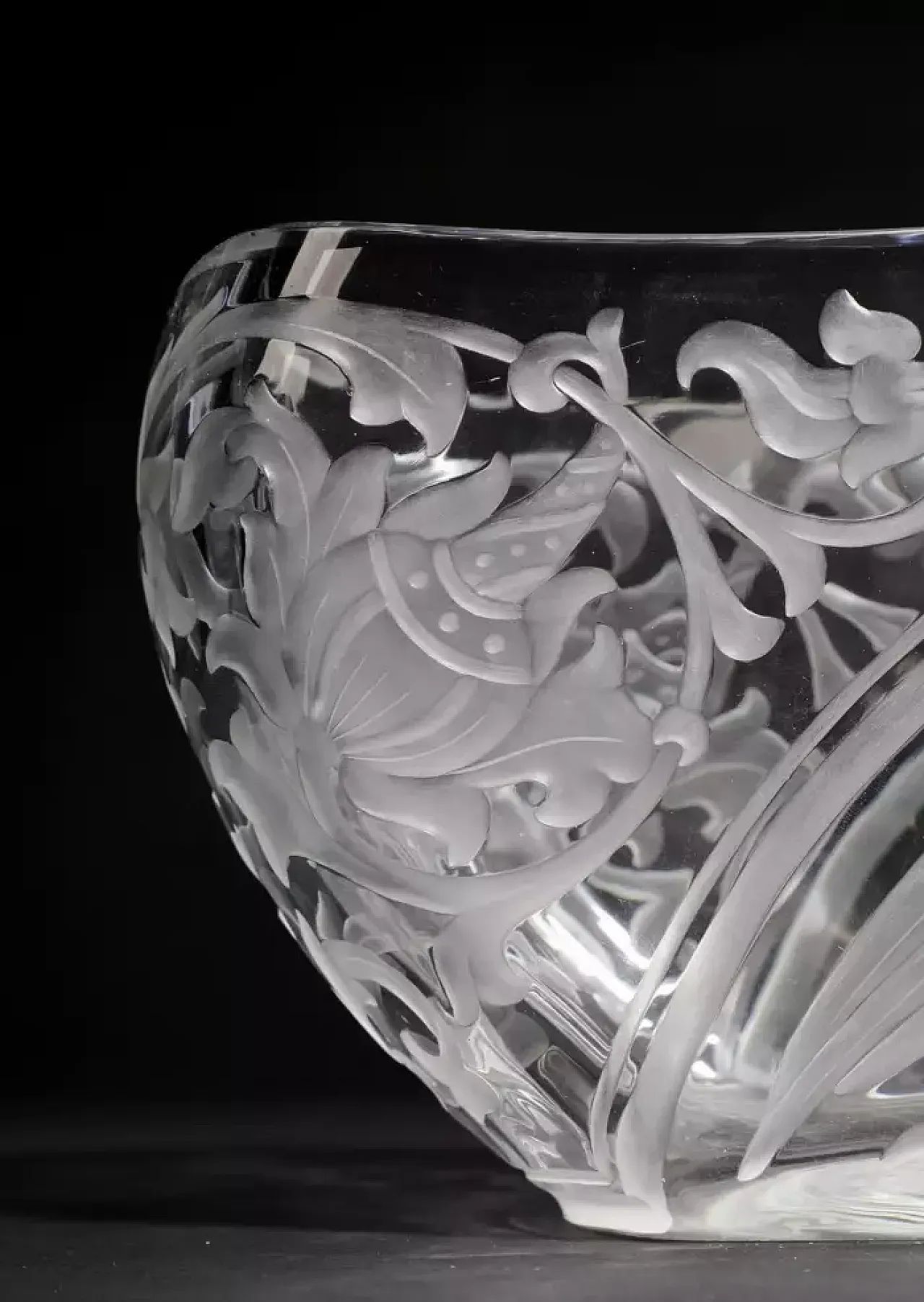
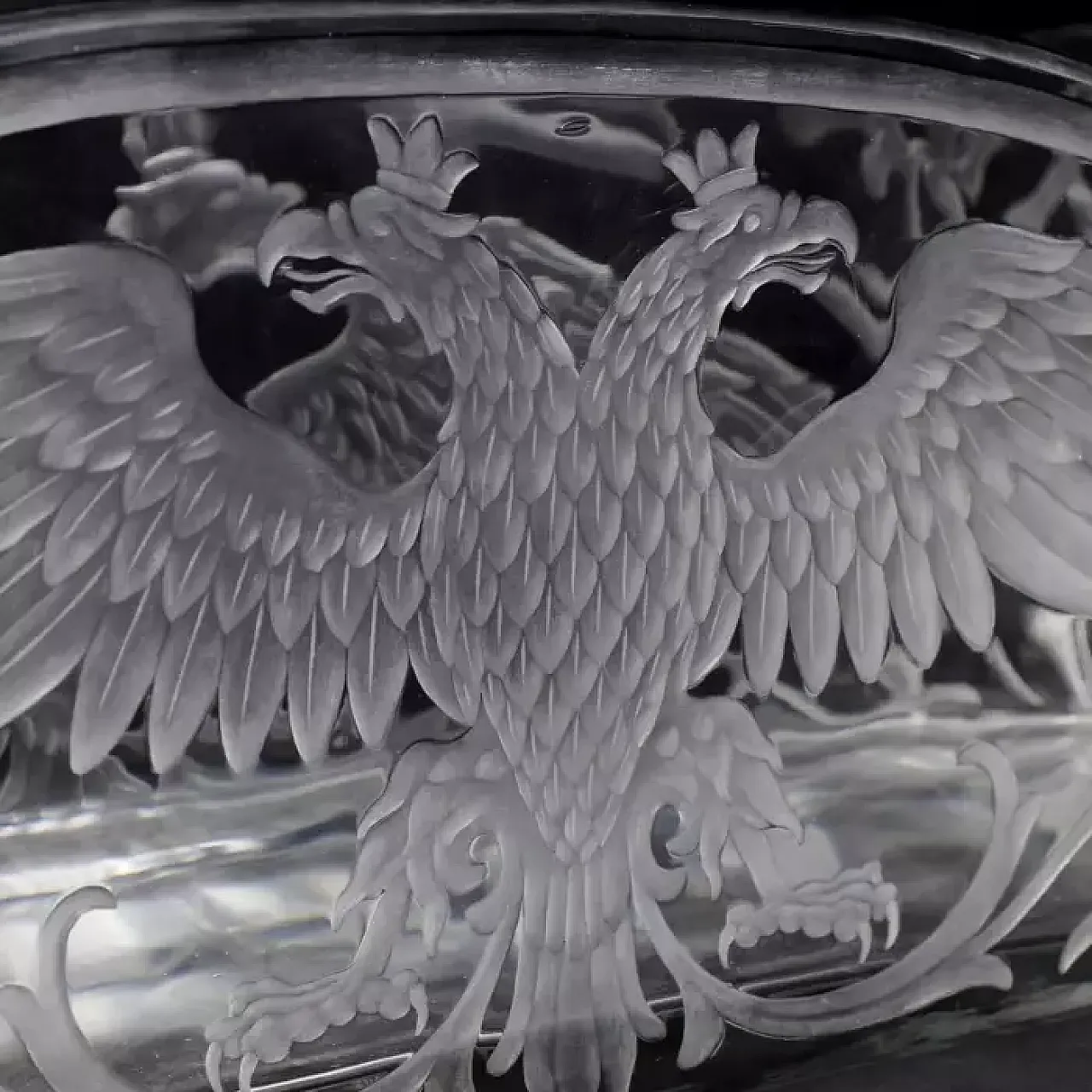
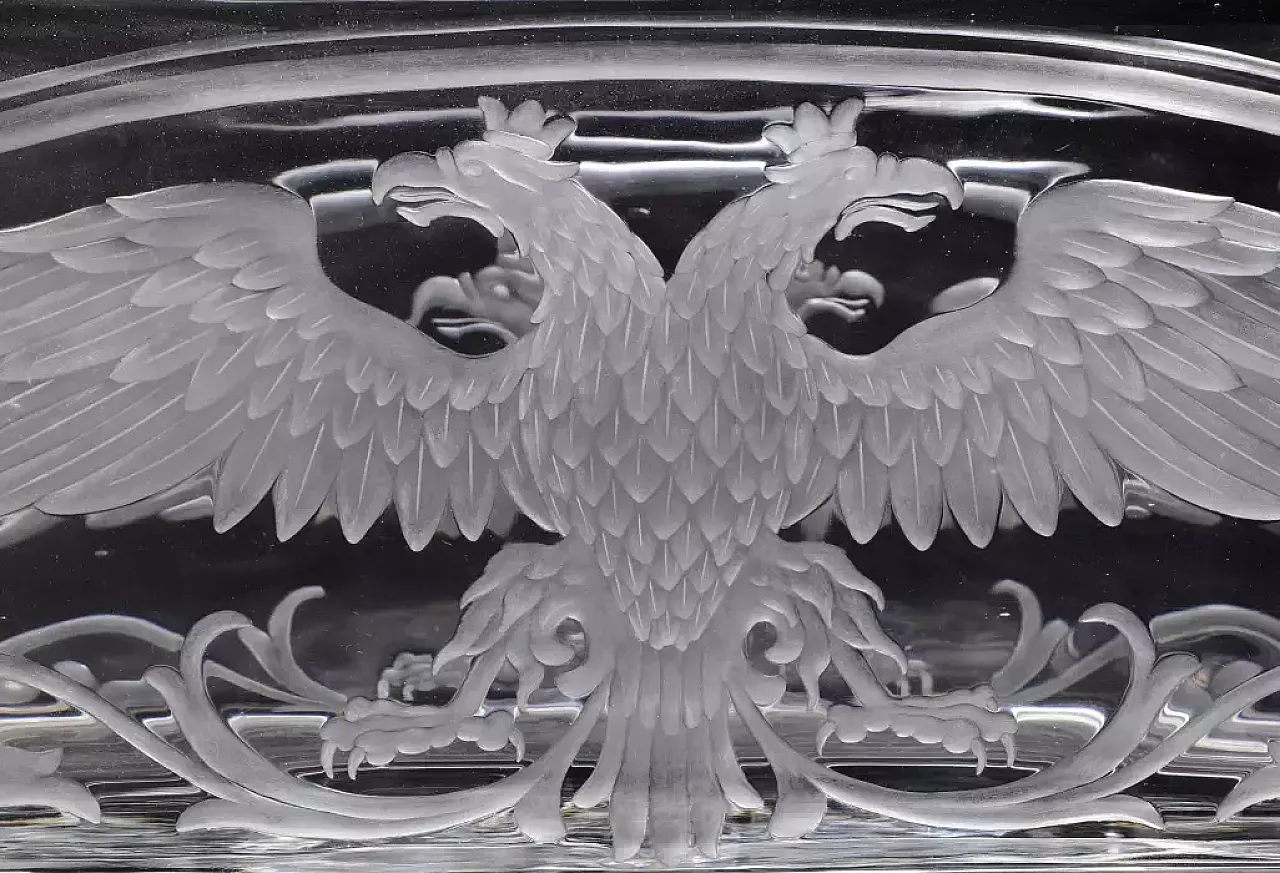
The carved decoration is of particular artistic importance. The sides are adorned with finely executed double-headed eagles, the emblem of Imperial Russia, rooted in Byzantine heraldic tradition and firmly established in Russian state symbolism. The eagles are rendered with exceptional precision, their feathers and crowns deeply cut into the crystal, revealing the virtuosity of the factory’s master engravers. Flowing floral scrolls and foliage complement the imperial imagery, forming an intricate ornamental rhythm that unites symbolism and decorative plasticity.
The carving reflects Renaissance inspiration, characteristic of the late 19th - early 20th century revival of historical styles. At the same time, elements of 17th century Russian ornamental vocabulary are evident, demonstrating the conscious synthesis of European artistic heritage and national tradition.
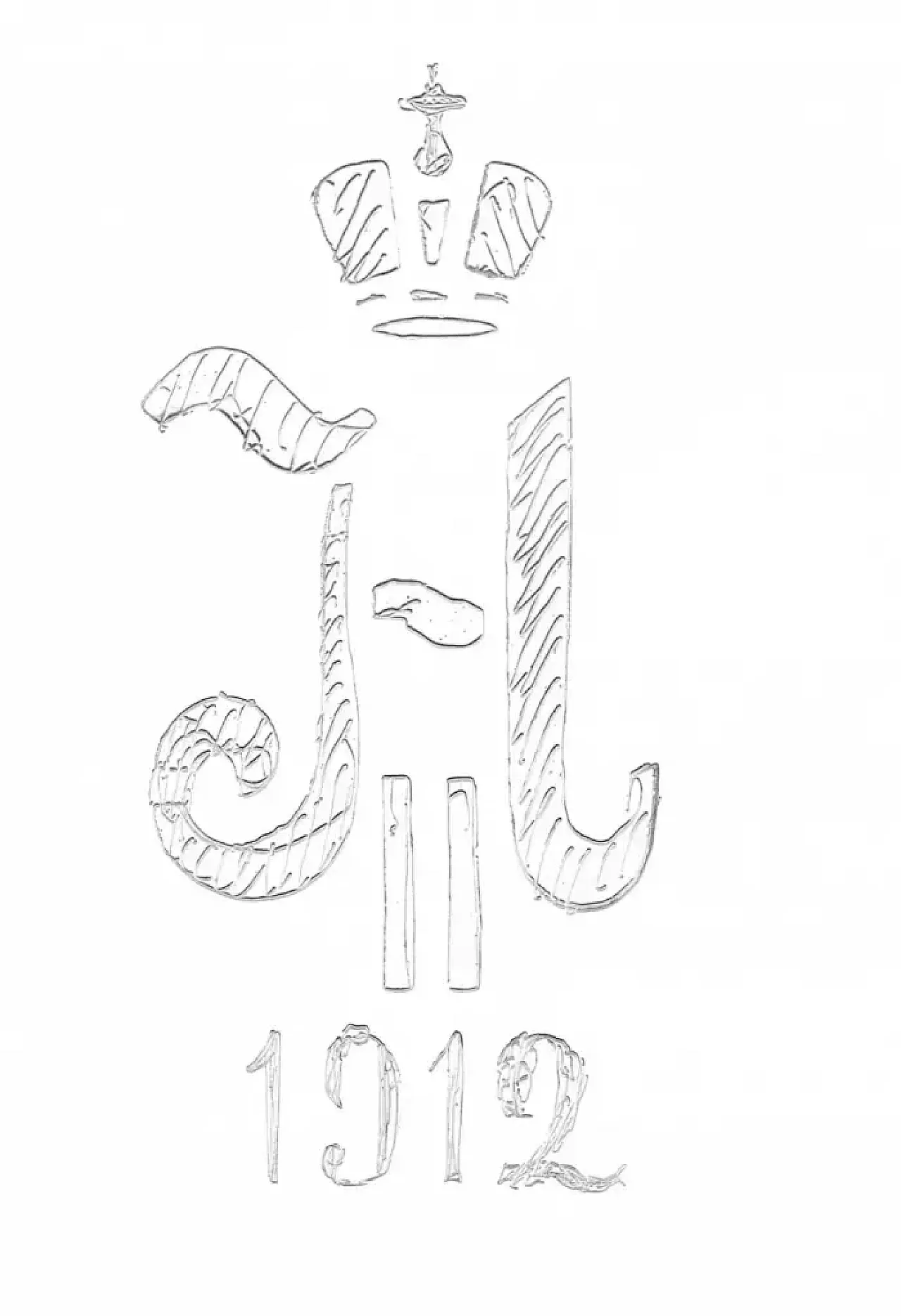
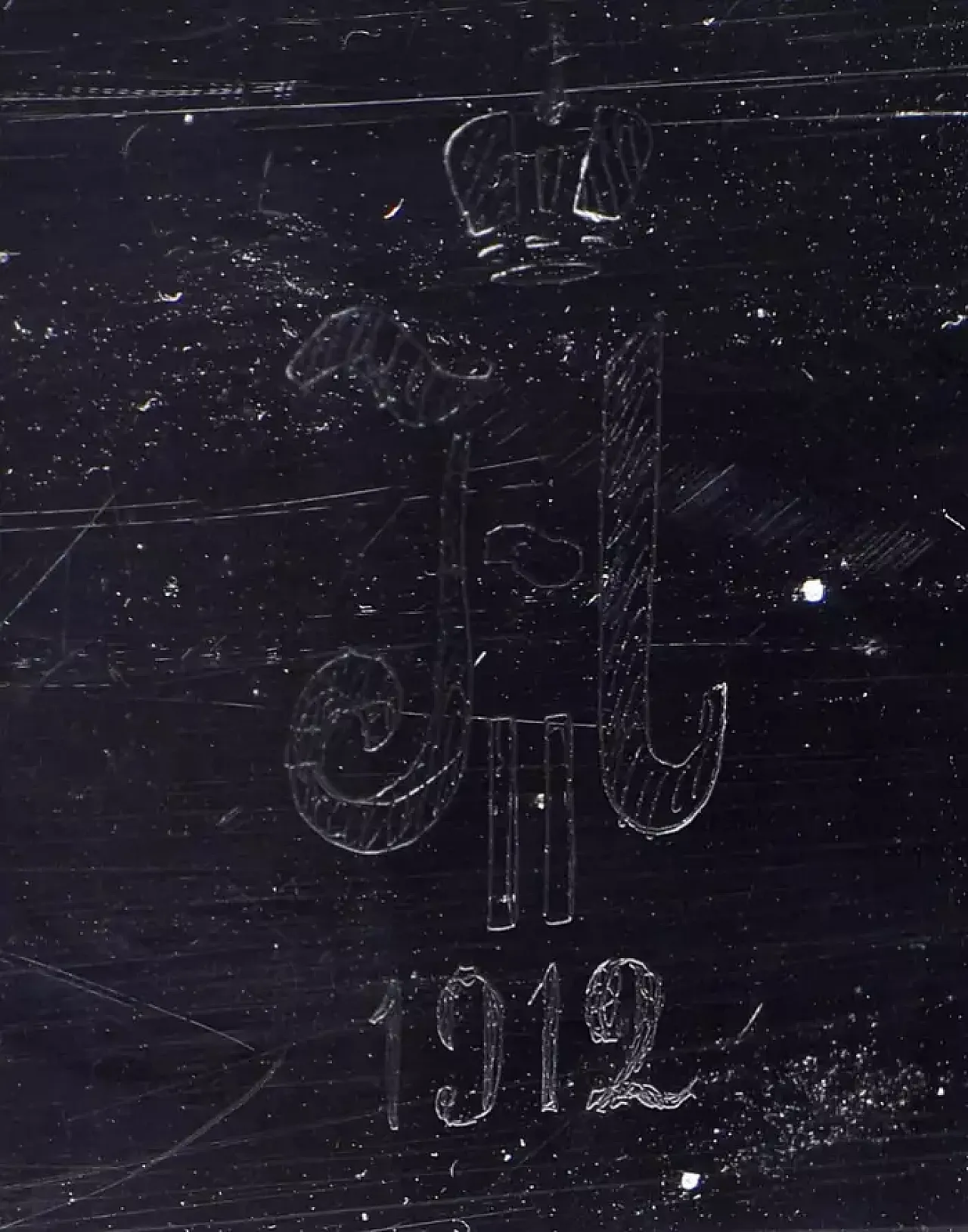
On the base appears the incised mark “H II 1912”, indicating the reign of Nicholas II and confirming the date of production.
Comparable examples are preserved in museum collections, including the Hillwood Museum in Washington, where related works designed by Pyotr Ivanovich Krasnovsky and executed by the engraver Grigory Omrokov attest to the exceptional artistic standard of the Imperial Glass Factory in the early 20th century.



 SILVER Seller in Alpes-Maritimes, France