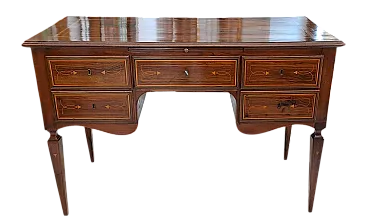
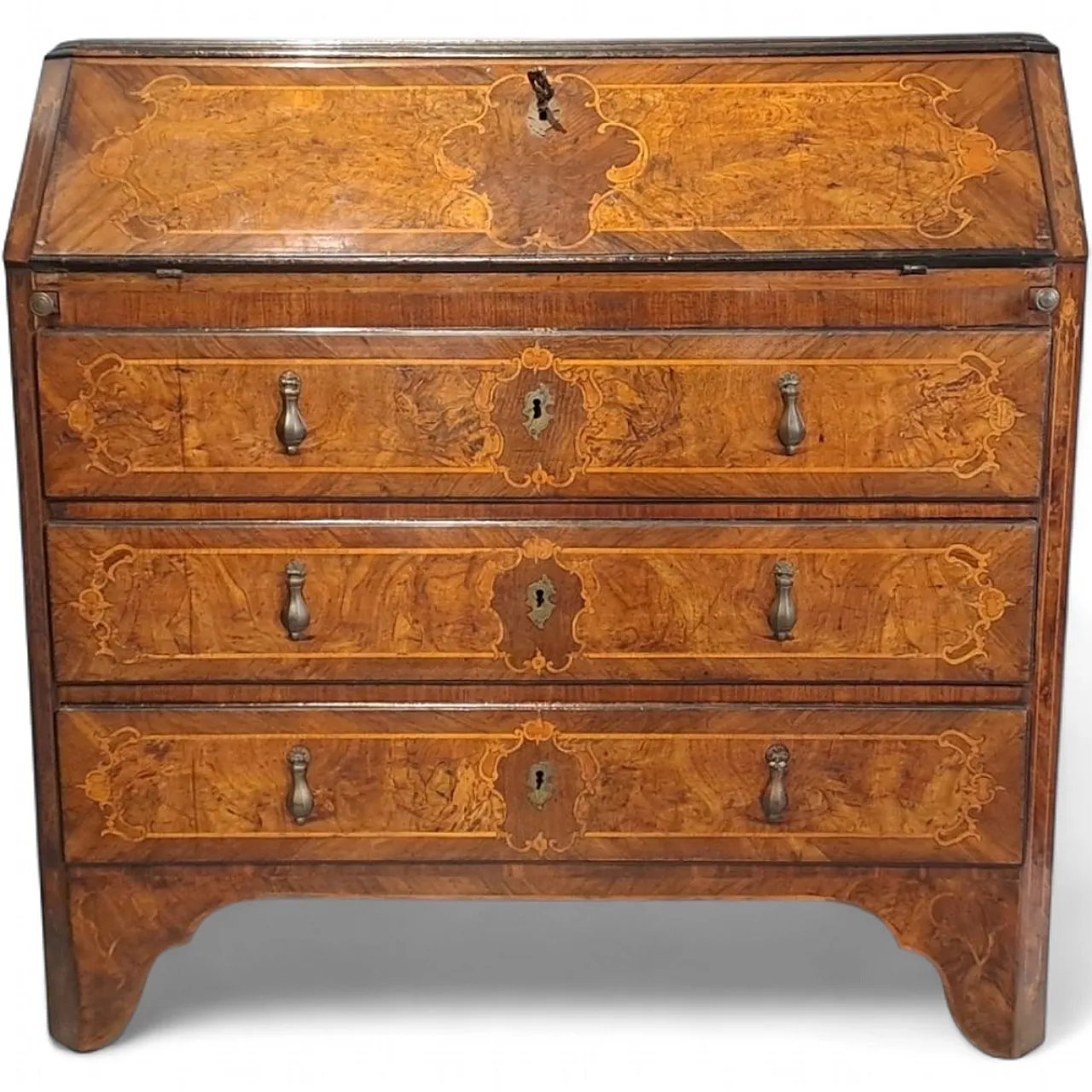
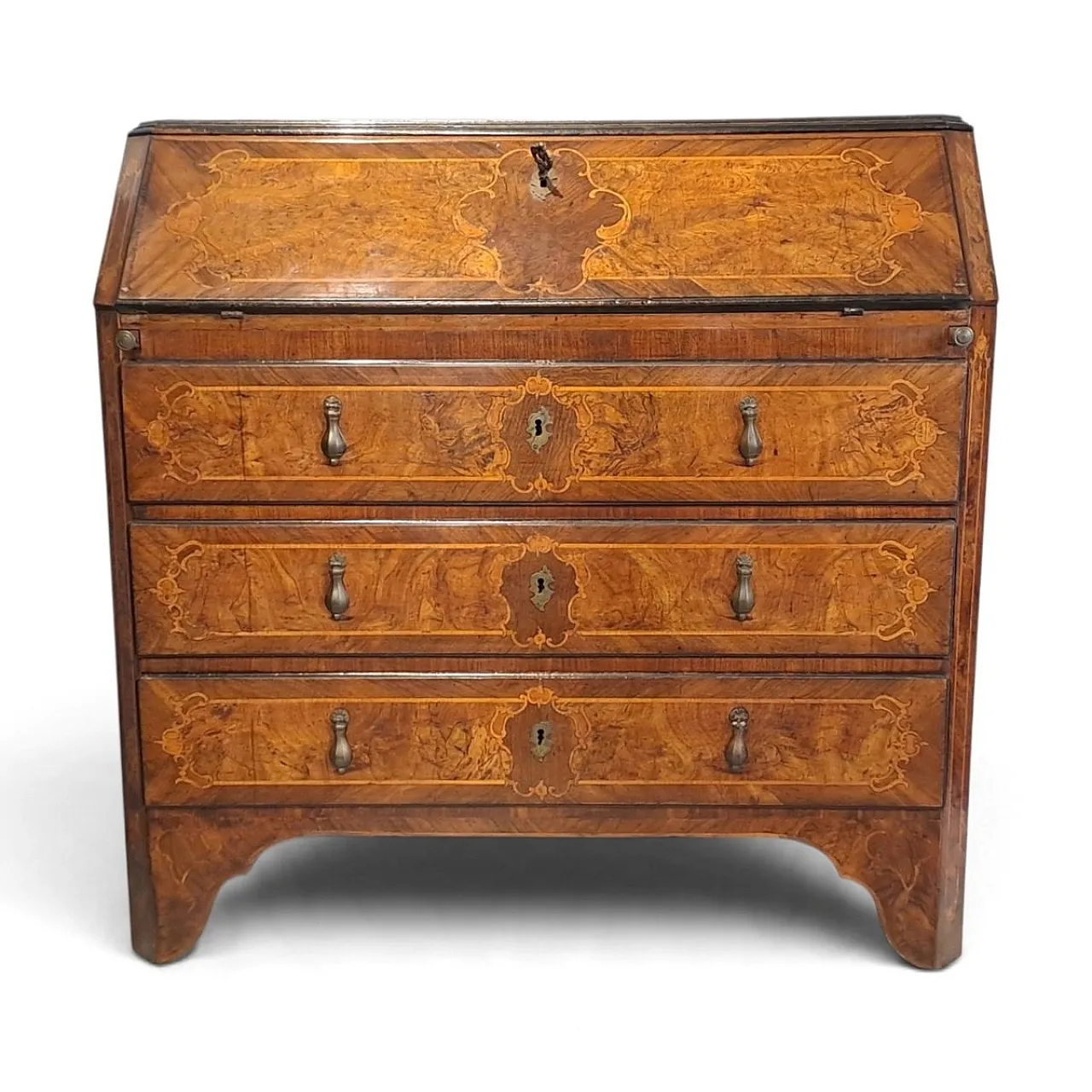
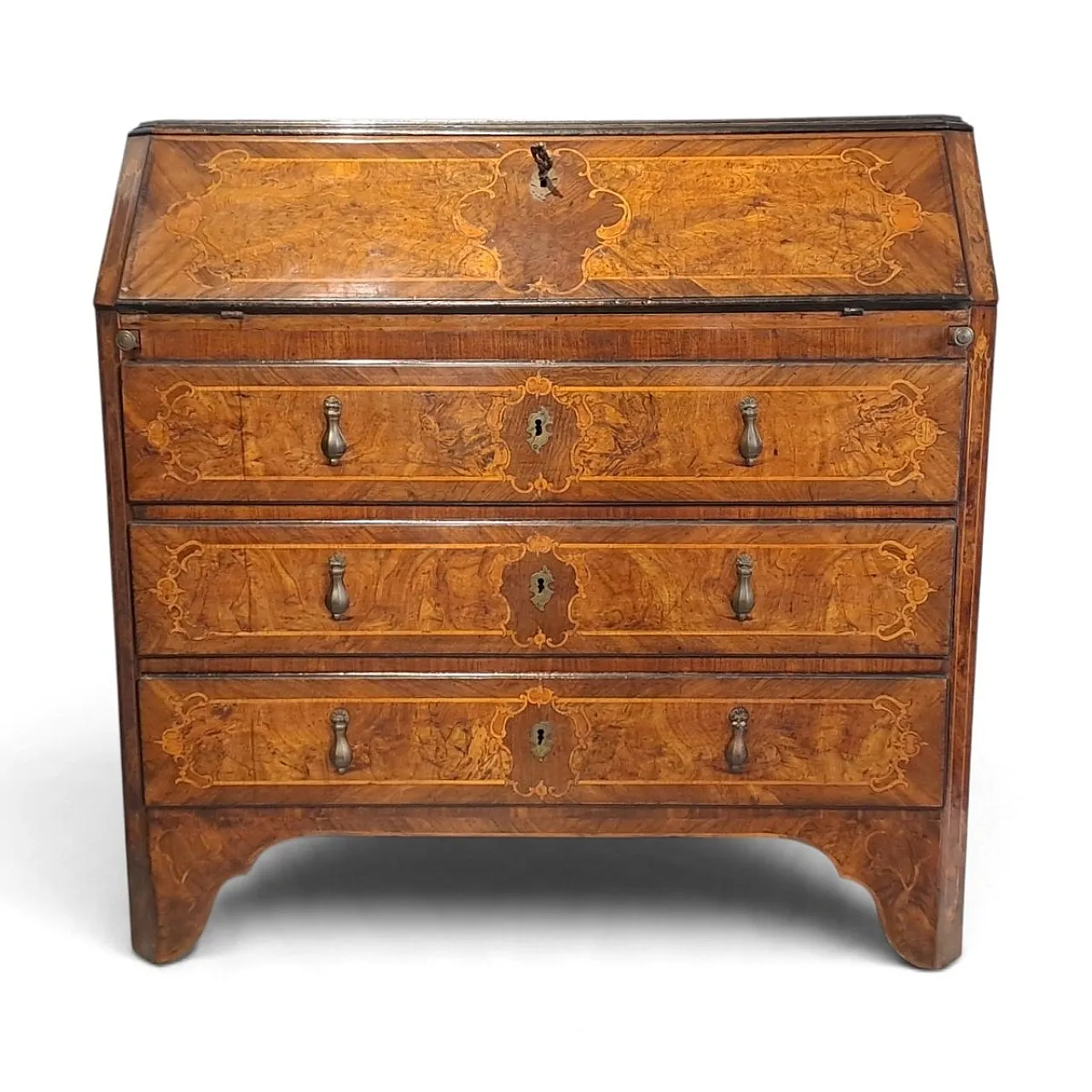
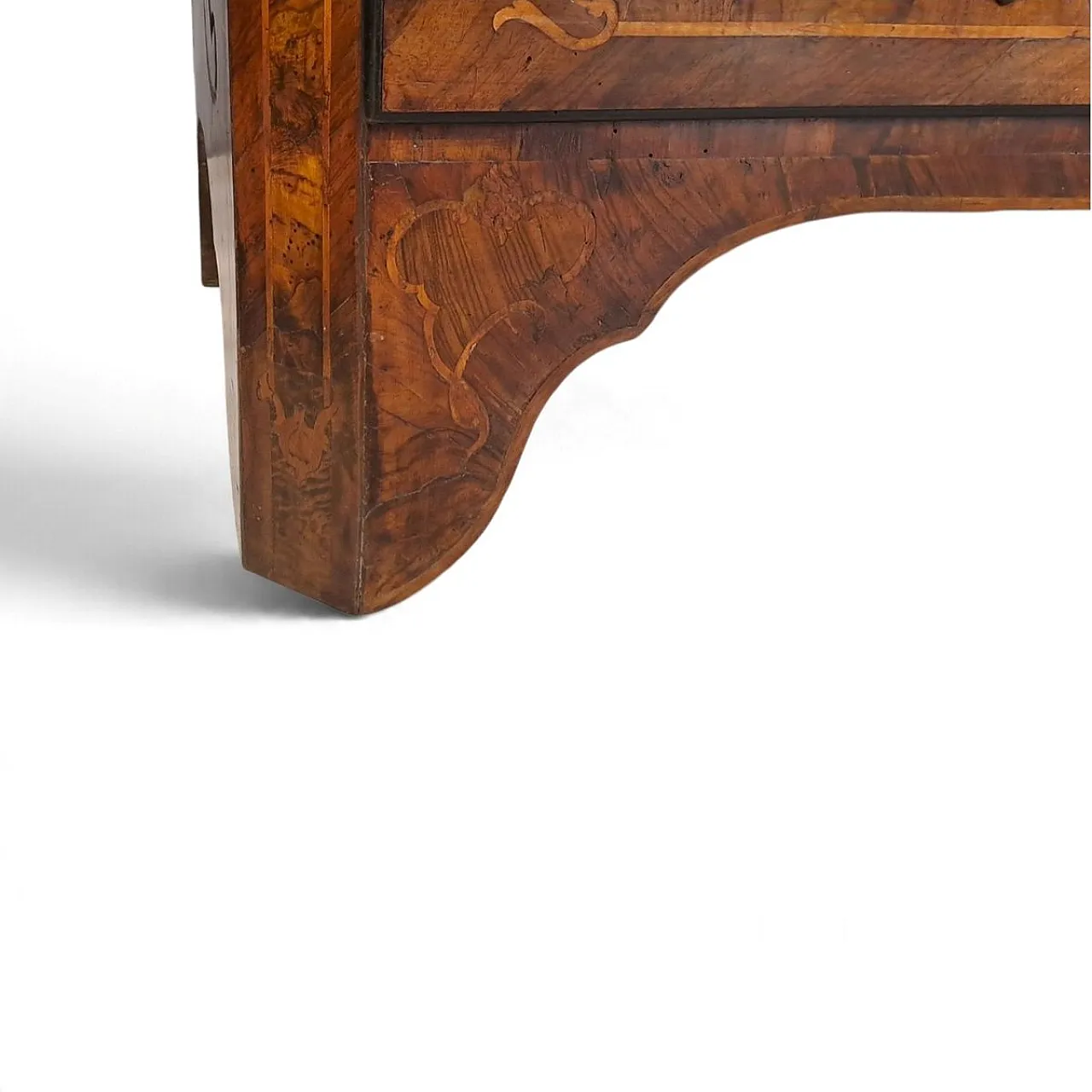
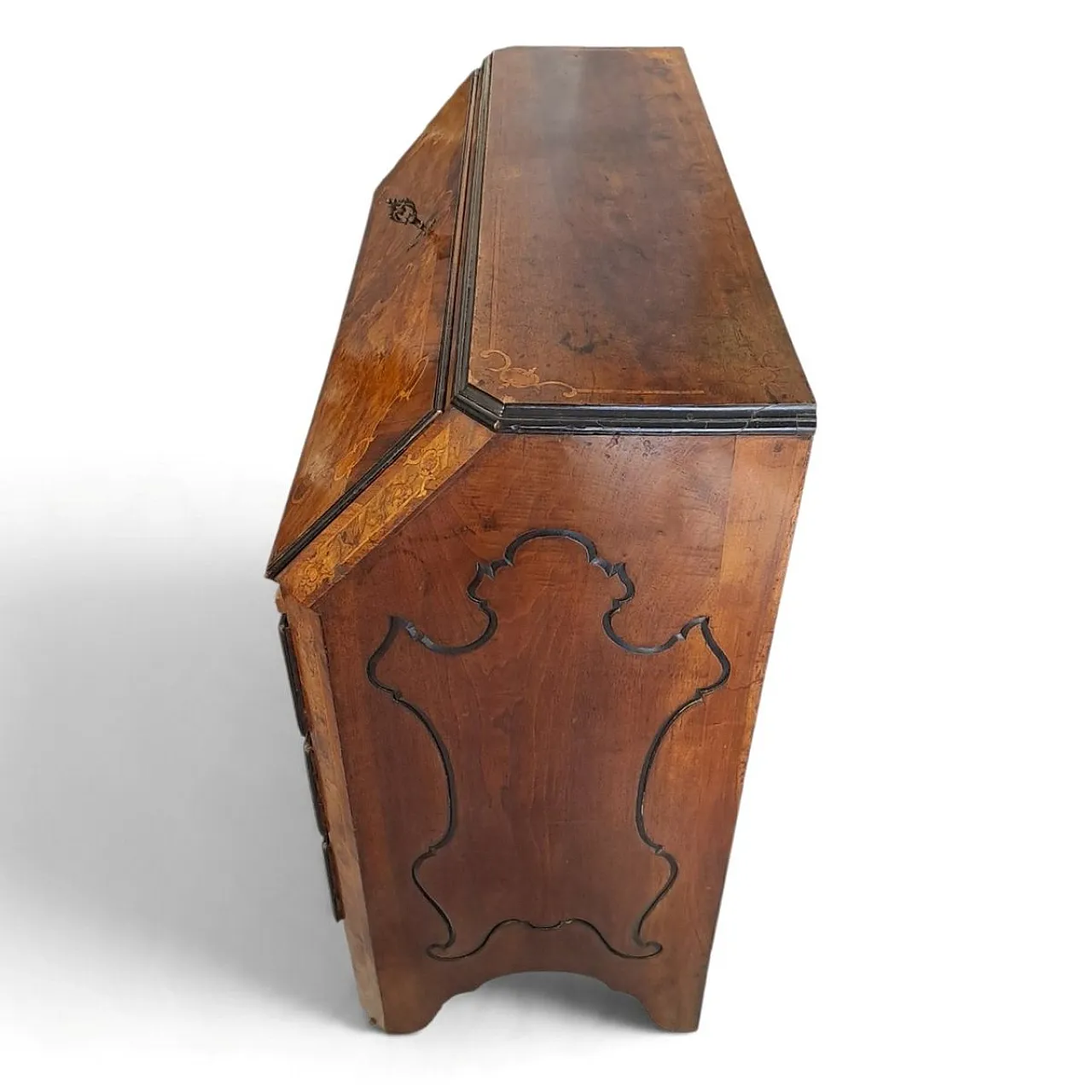
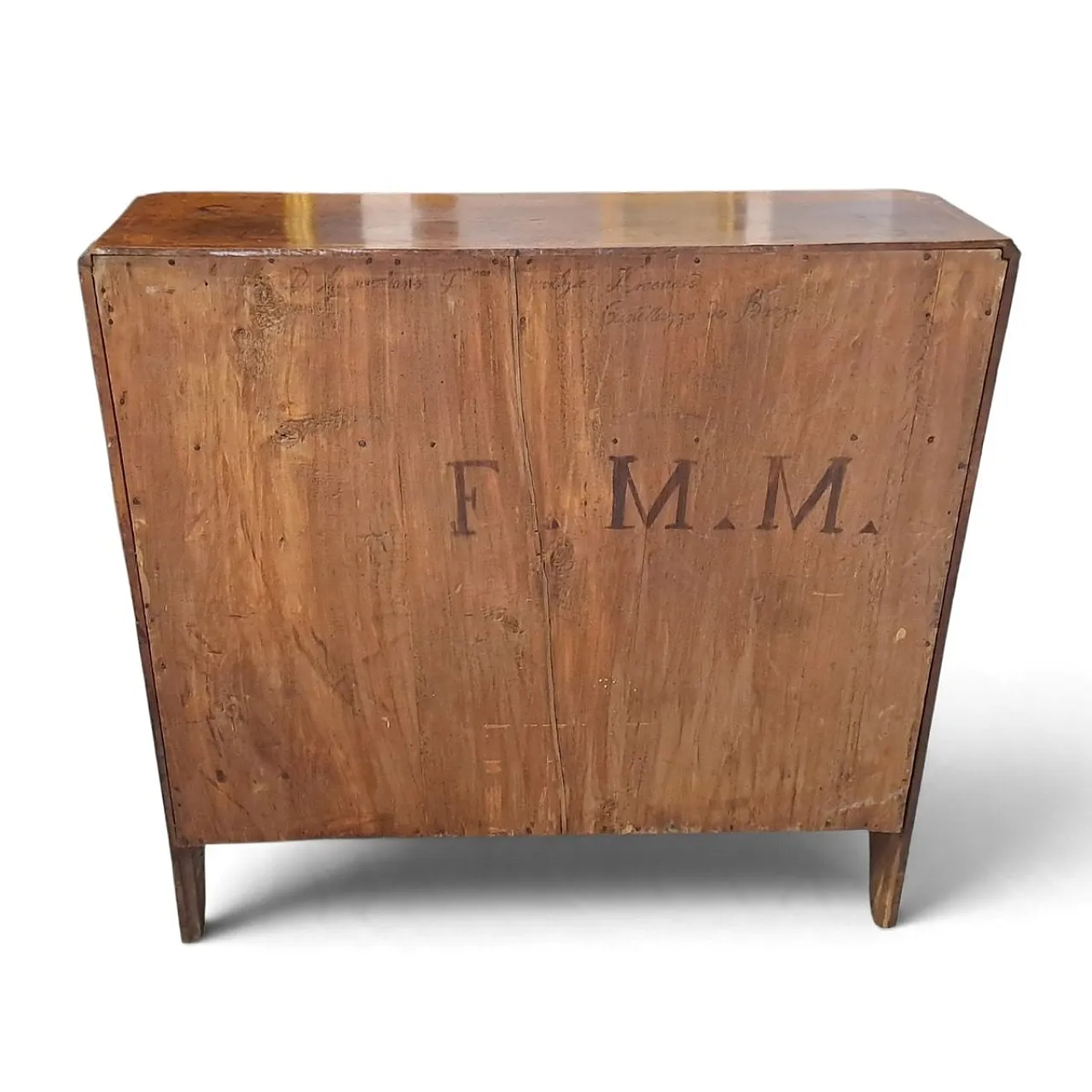
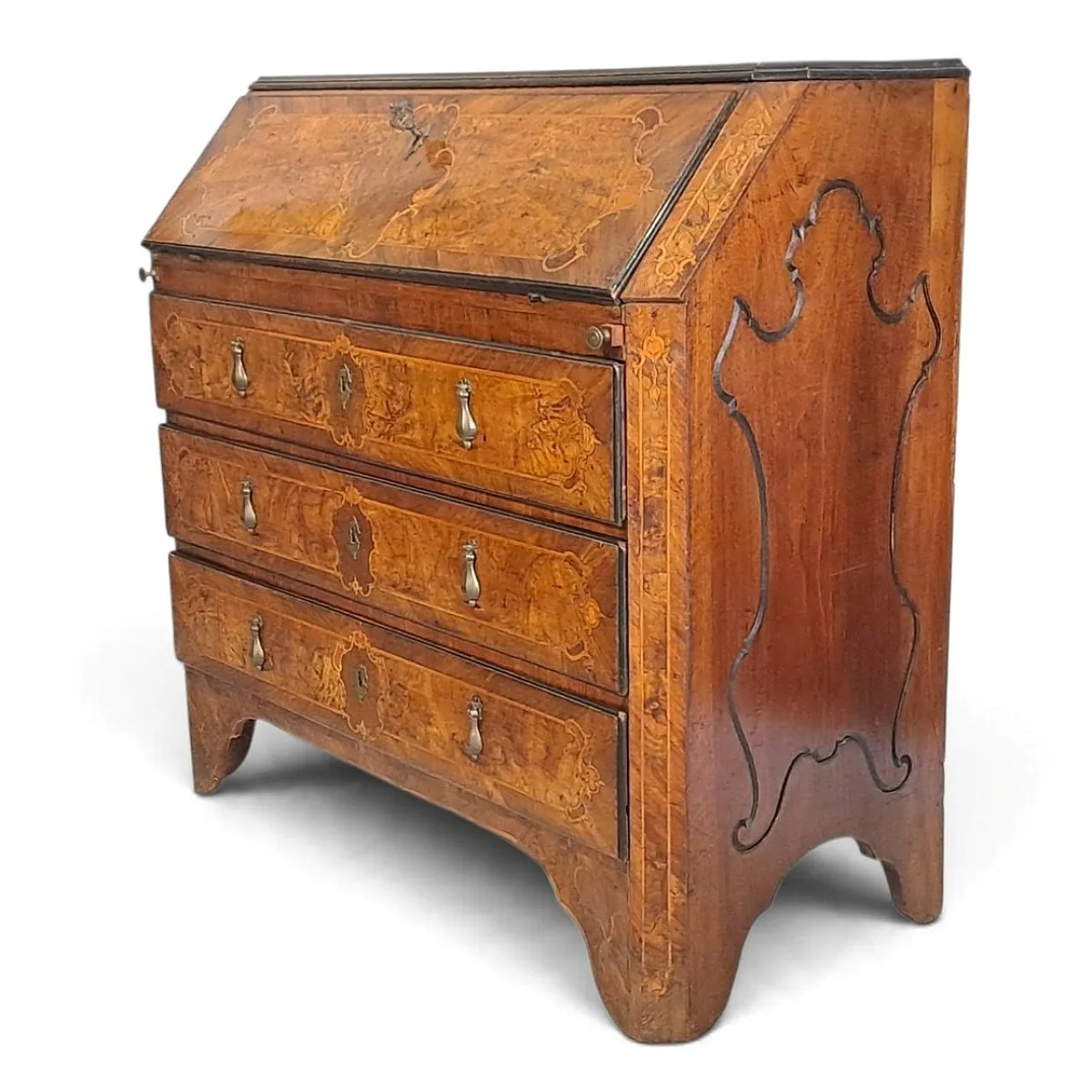
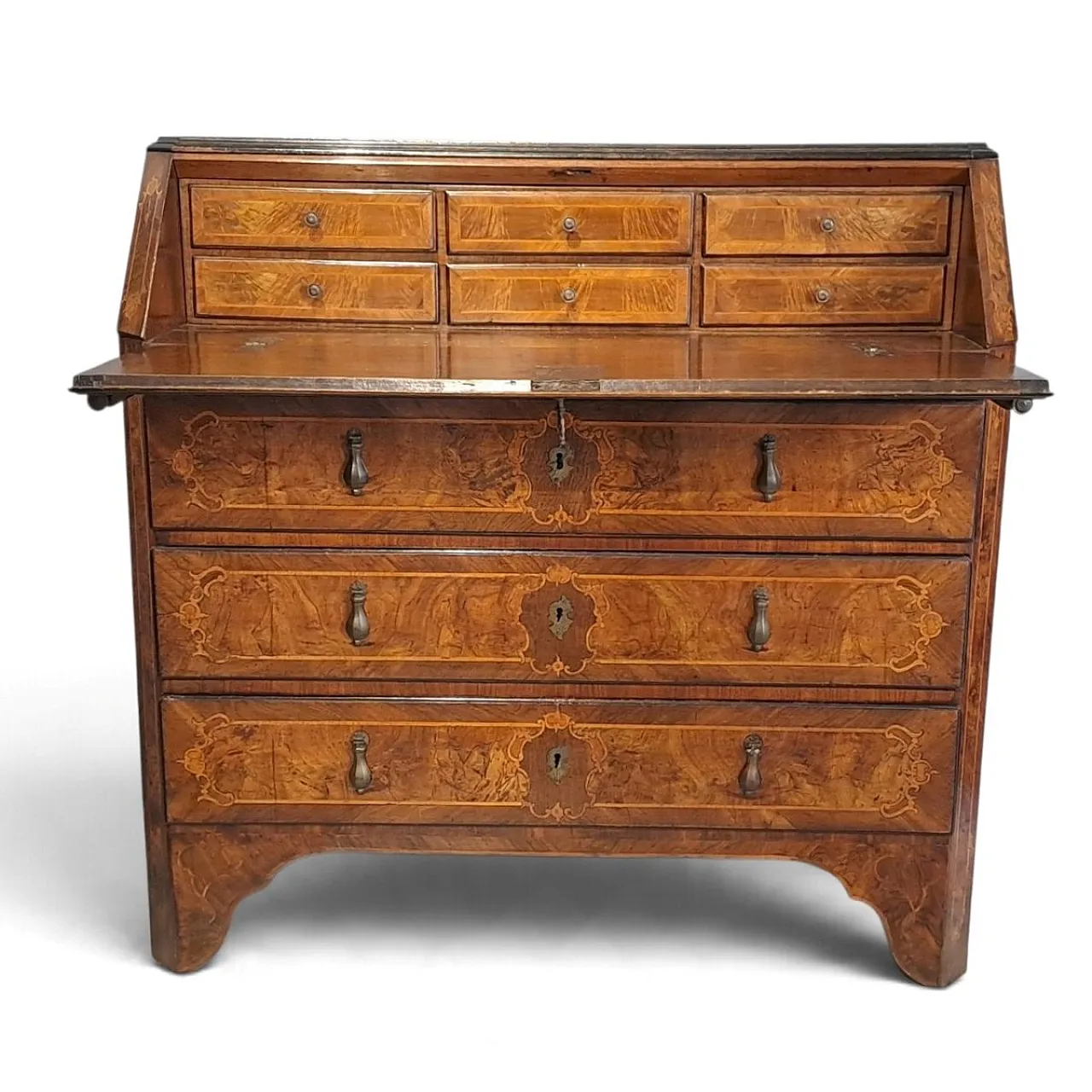
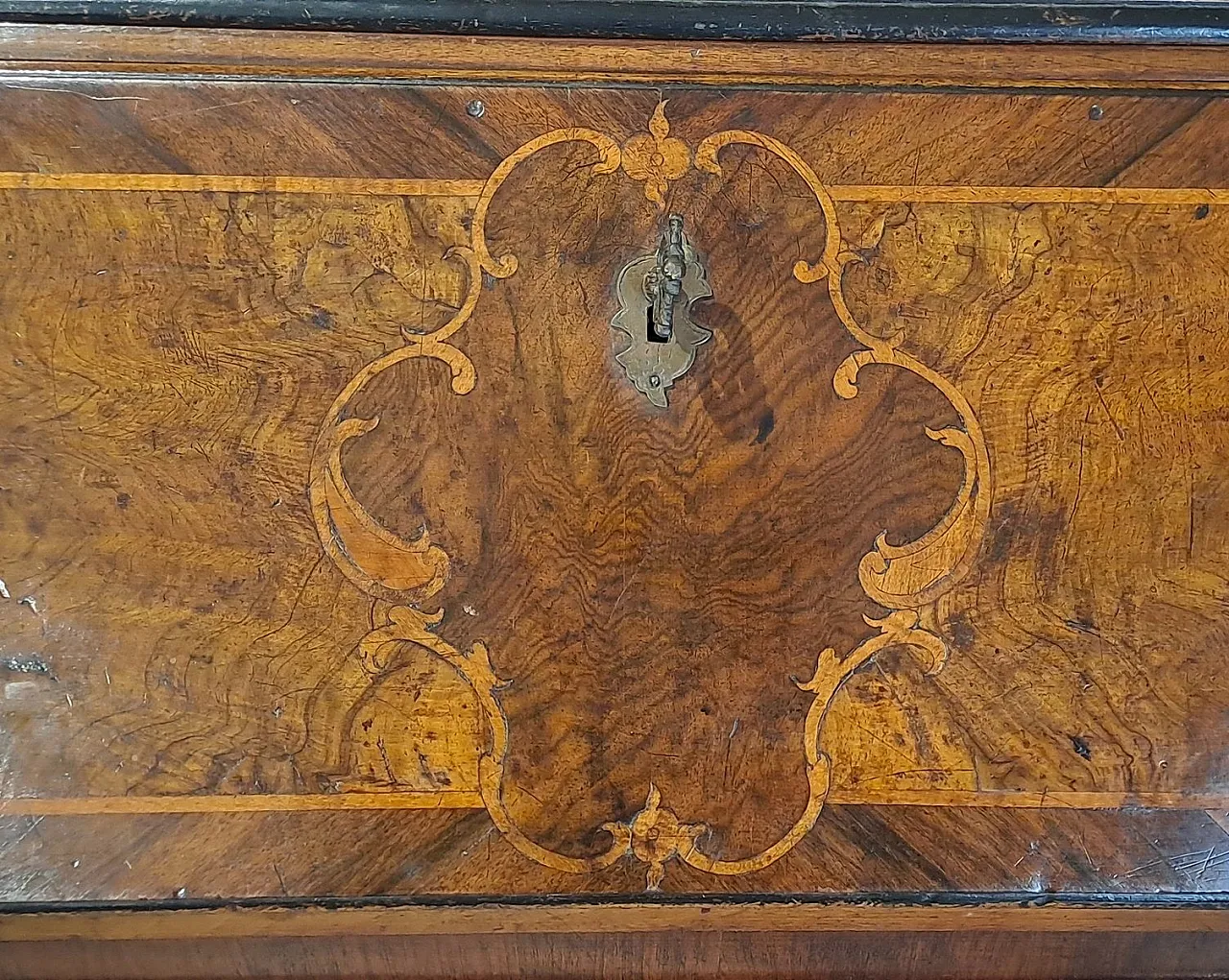
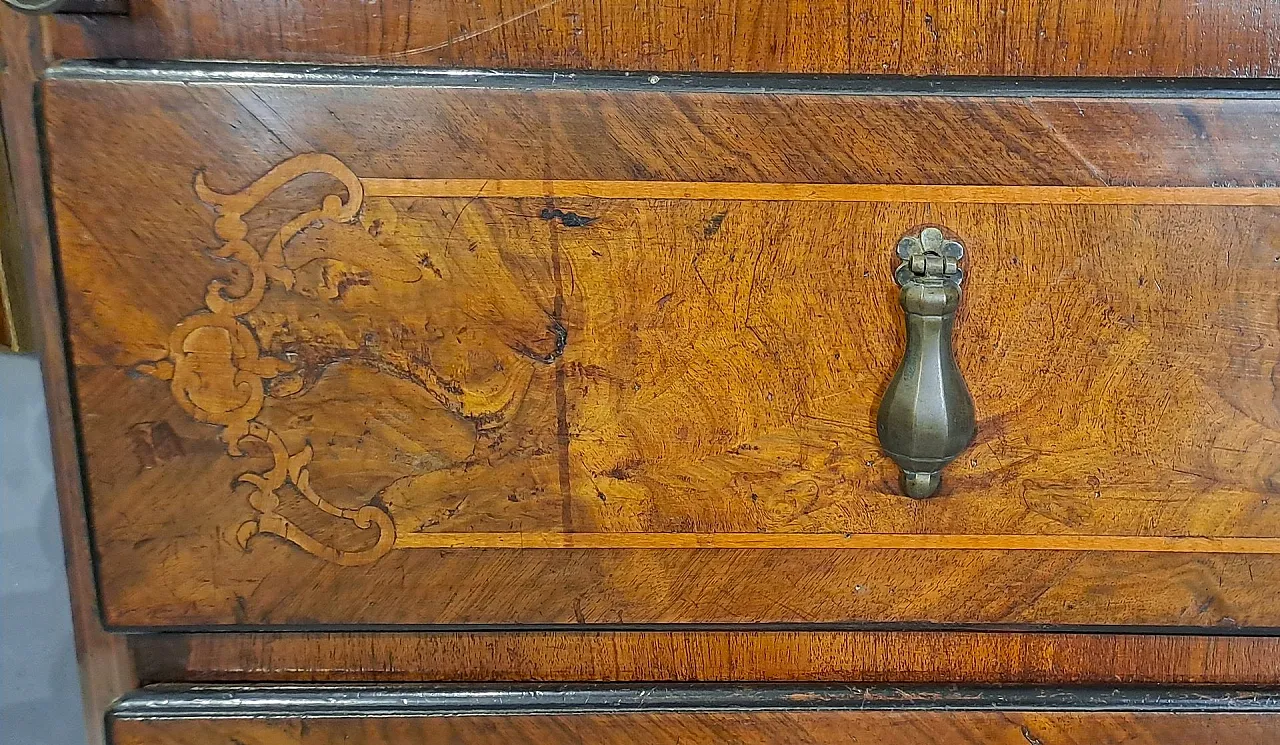
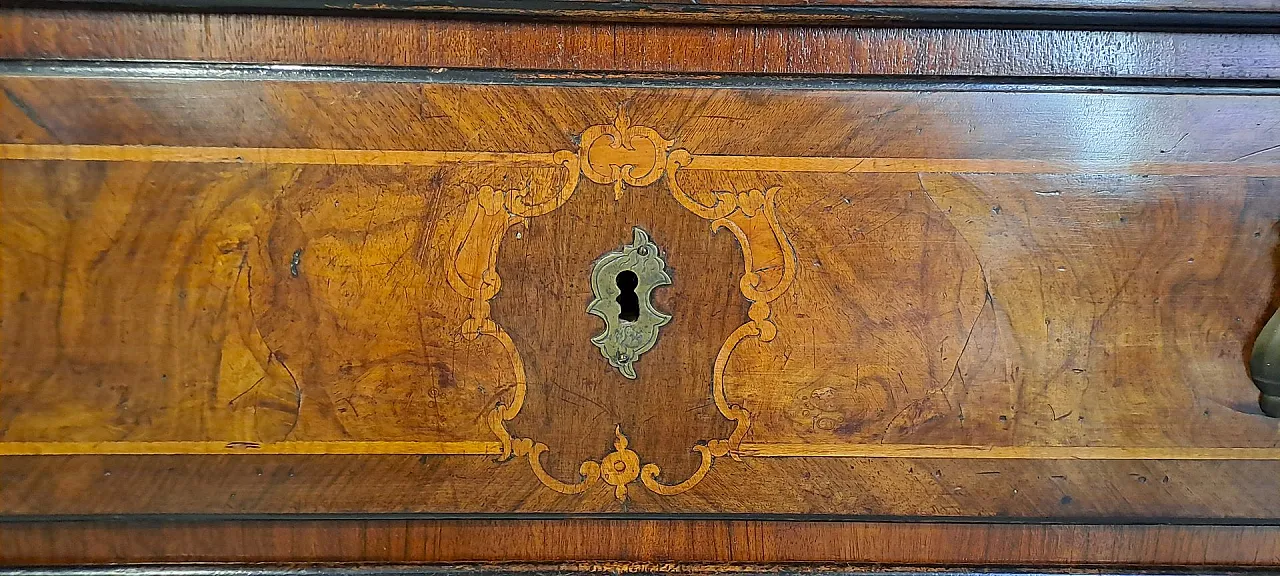
Como drop-leaf desk from the mid-18th century, Lombard Baroque - Louis XV period. Structure and Typology The lower part features three large, overlapping drawers with a rabbet; the upper part features a drop-leaf that, when opened, forms a writing surface. Straight body with straight sides and front splays. The lower apron is curved and curved, with truncated bracket feet typical of Como production. The upper surface features a beak-shaped profile. Materials and Cabinetmaking Technique Solid walnut and fir frame. Carefully selected walnut and burr walnut veneer on the front. The perimeter of the upper surface and the joining profiles between the front and sides are highlighted by a contrasting ebonized motif typical of Lombardy craftsmanship. Traditional joint construction, with a two-piece back. The back bears an antique initials "F. M. M." - likely the workshop or original owner's initials. Antique bronze pendant hardware. Original locks present and working. Inlay decoration This is the most valuable element. Reserve inlay made of light-colored boxwood on a burl wood background. Typical inlay motif known as "pel de rava." Front: on the drawer front and on the three drawers, a large shaped central burl wood panel, surrounded by double fillet and rocaille scrolls at the corners. The lock is set on a shaped shield-shaped escutcheon. Sides: large central ebonized mixtilinear cartouche, typical Como "shield" motif. Upper part: perimeter fillet with small corner floral scroll ornaments. Apron: reserve inlay with a folder motif on the foot. Interior - The Cabinet Opening the drawer, as shown in the photo, reveals the cabinet with six small drawers arranged in two rows, with fronts also veneered in burl and inlaid with fillet. The writing surface is made of walnut. Dimensions 119 x 56 (85 open), height 118 cm




 SILVER Seller in La-Spezia, Italia