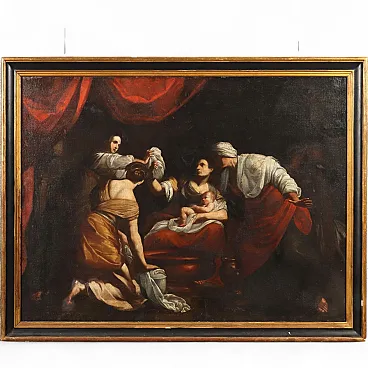
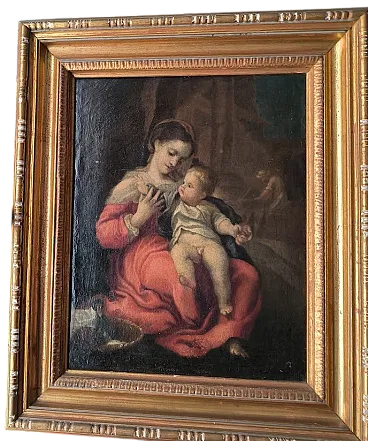
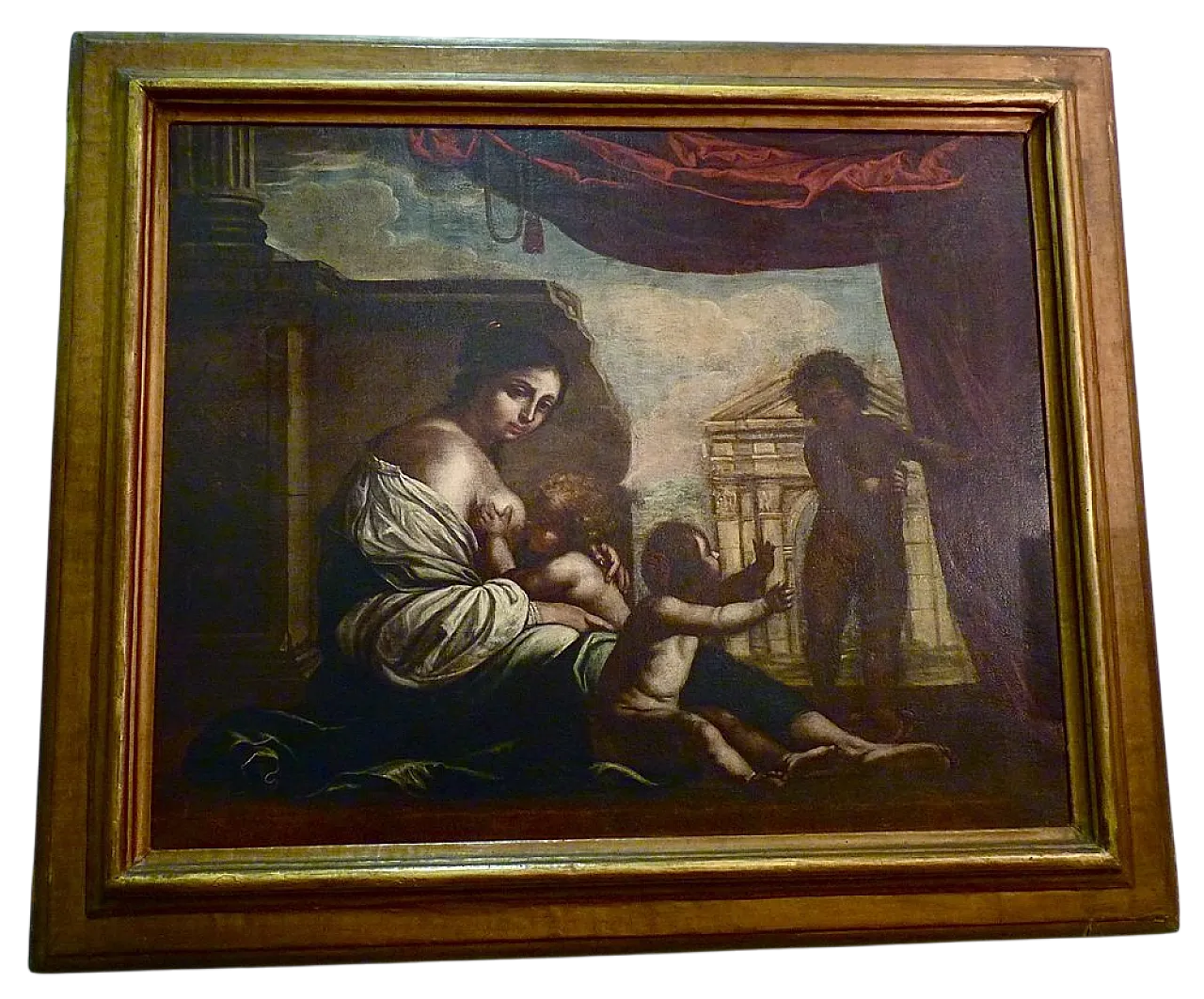
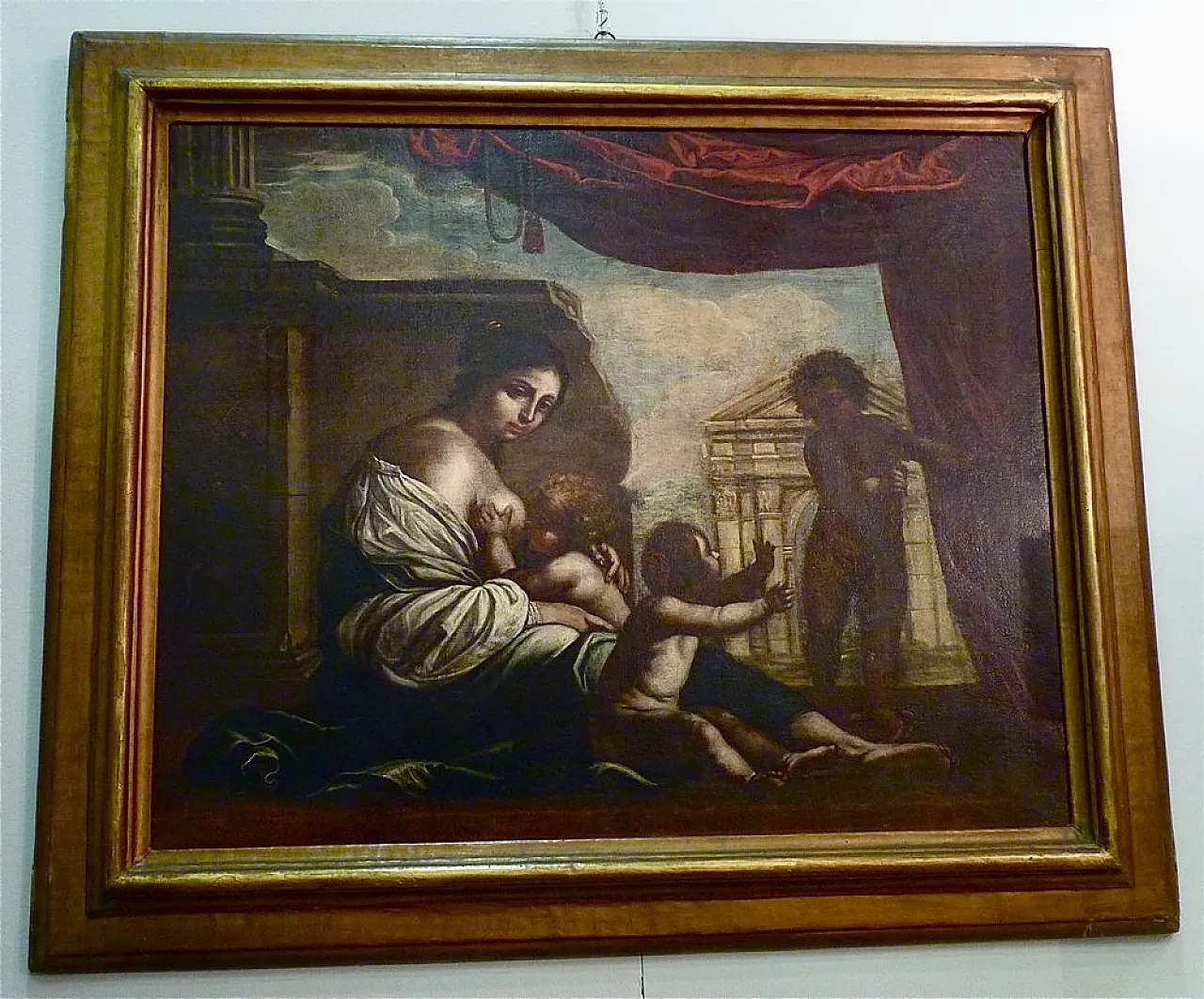
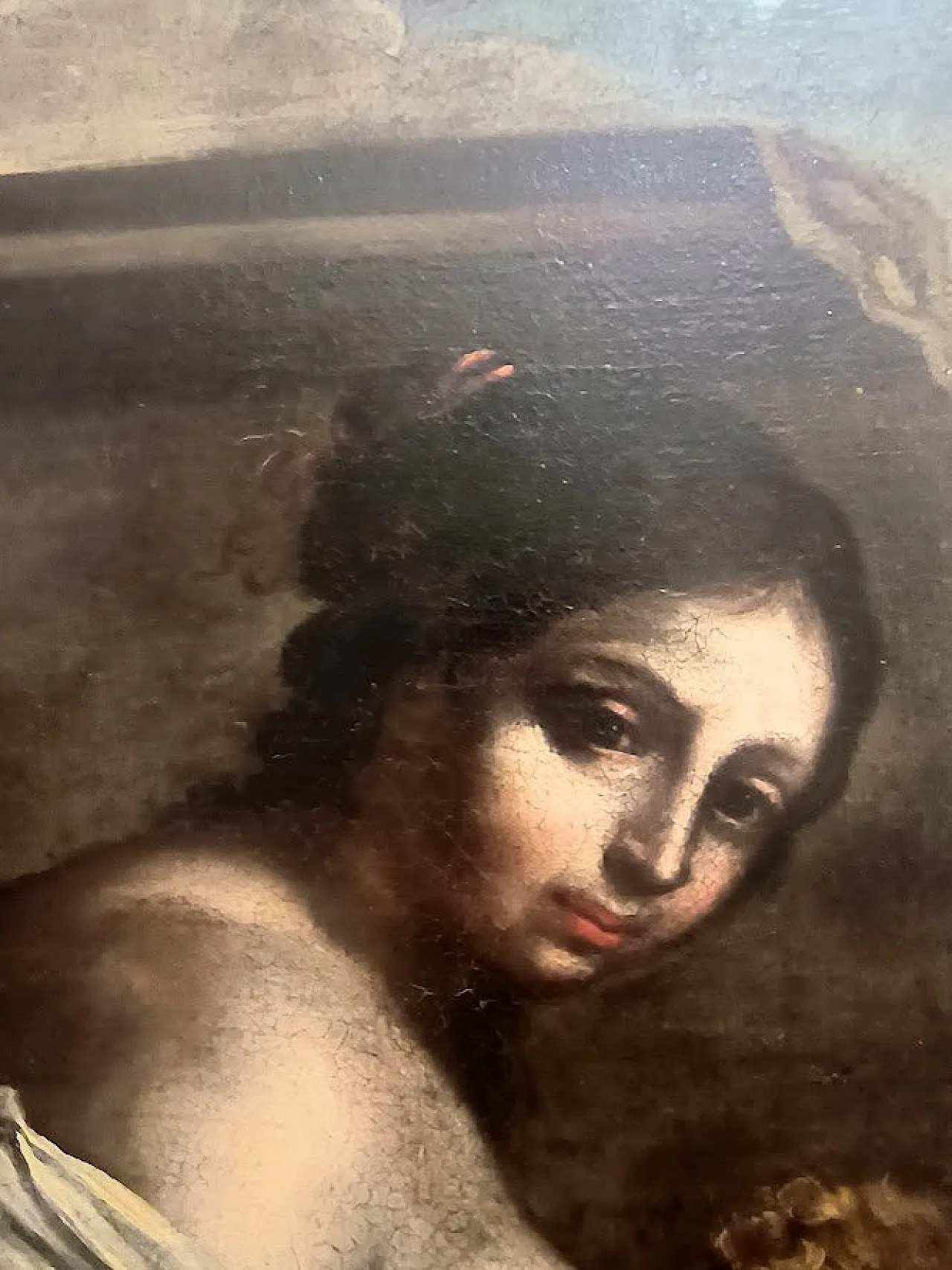
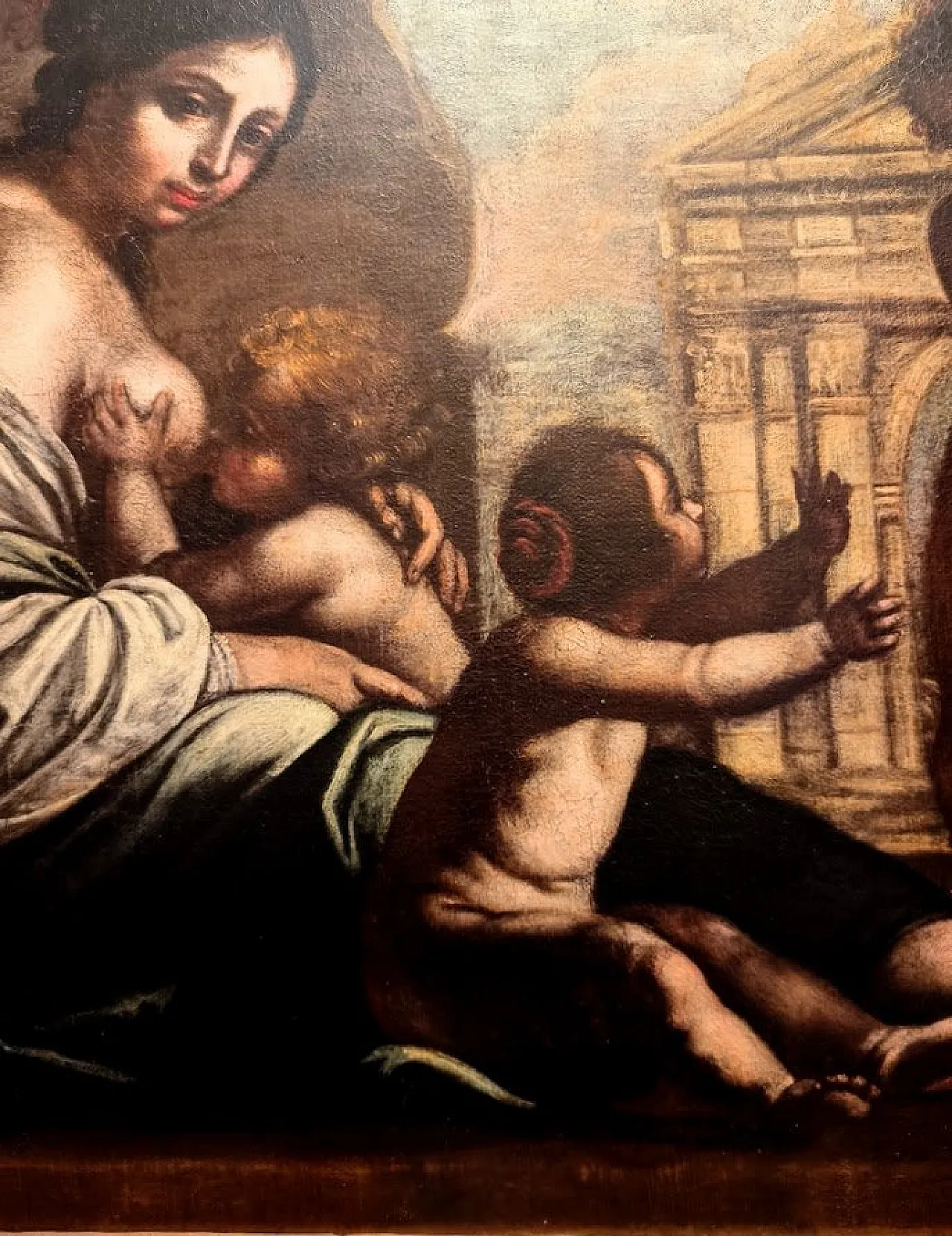
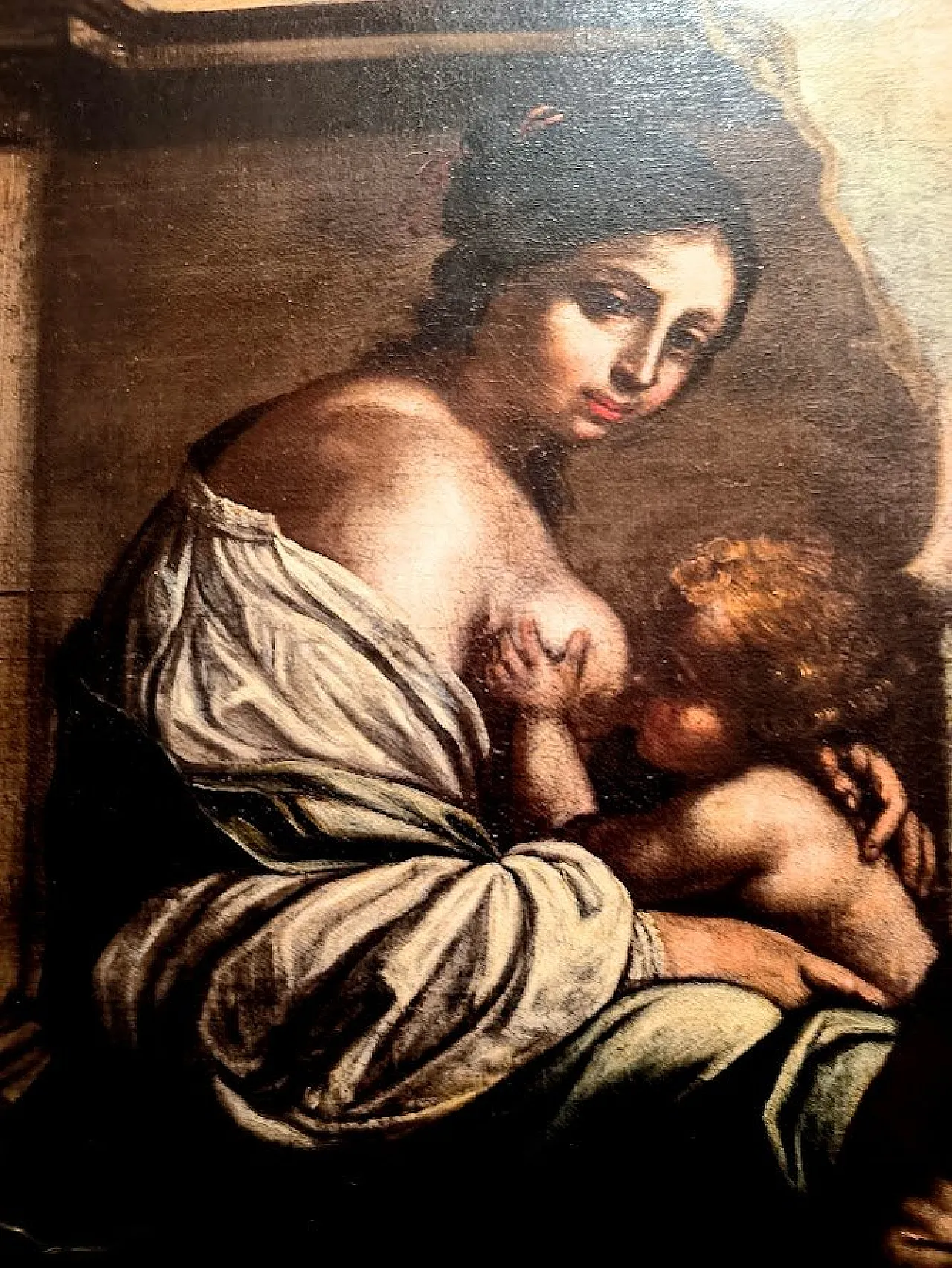
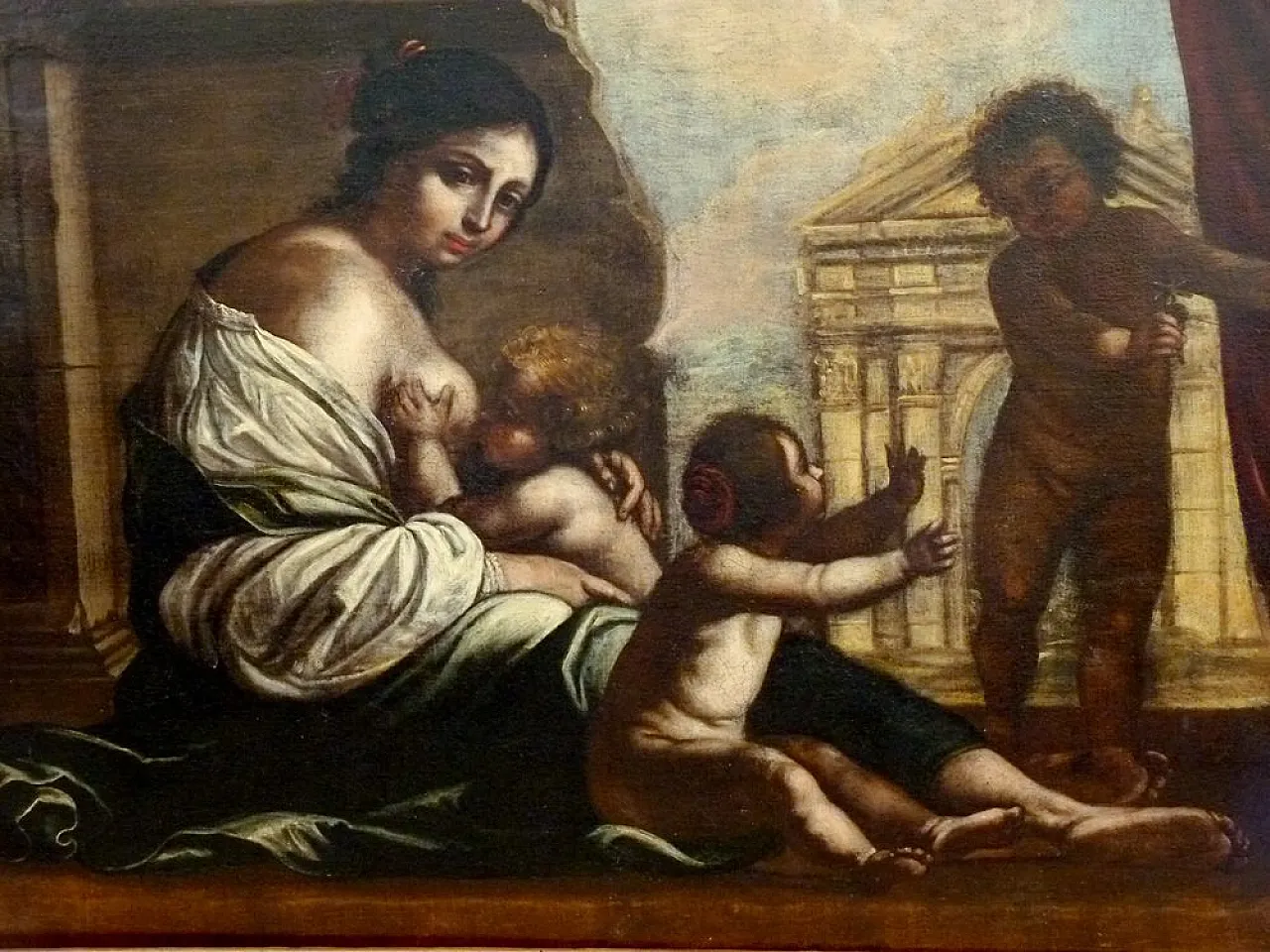
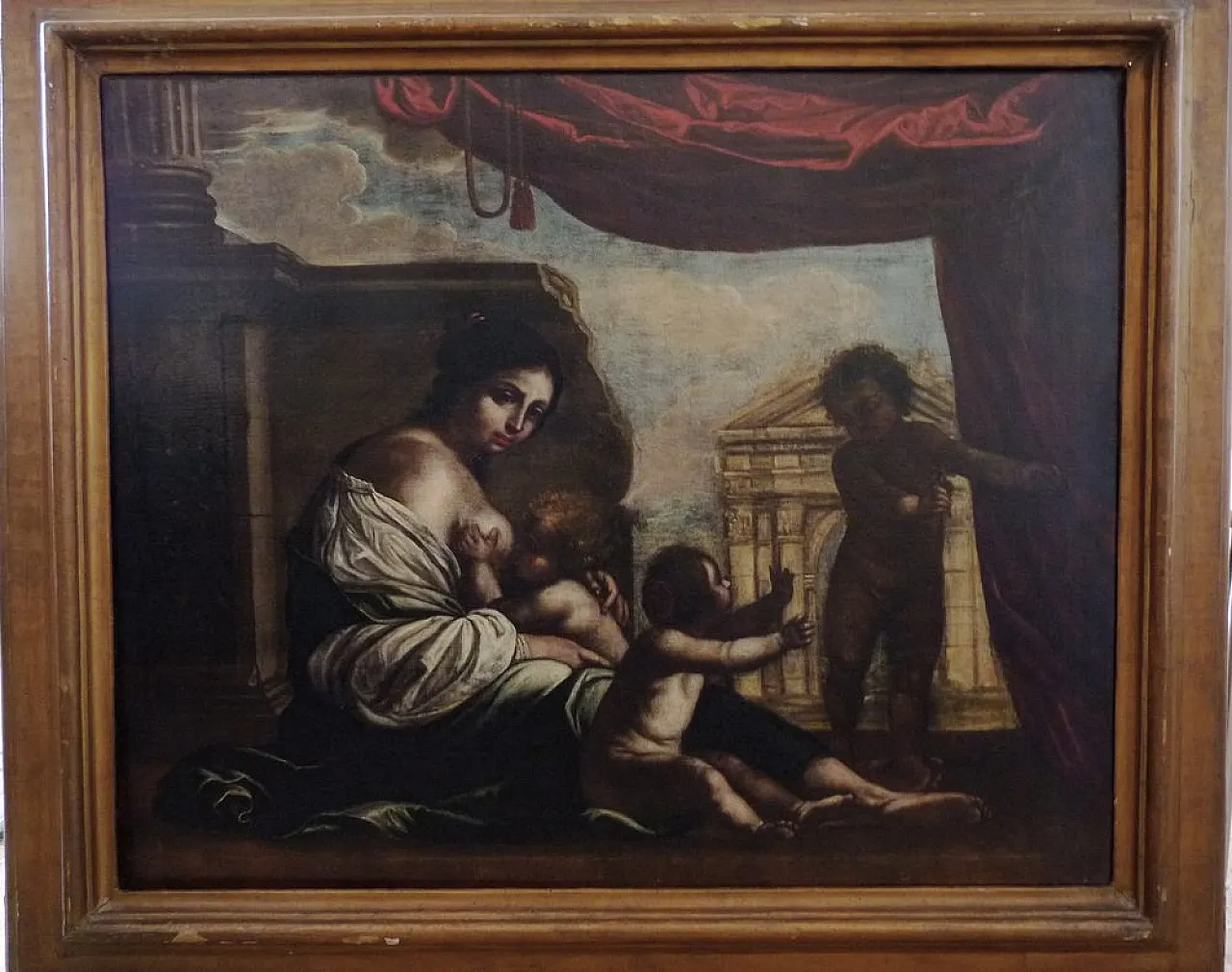
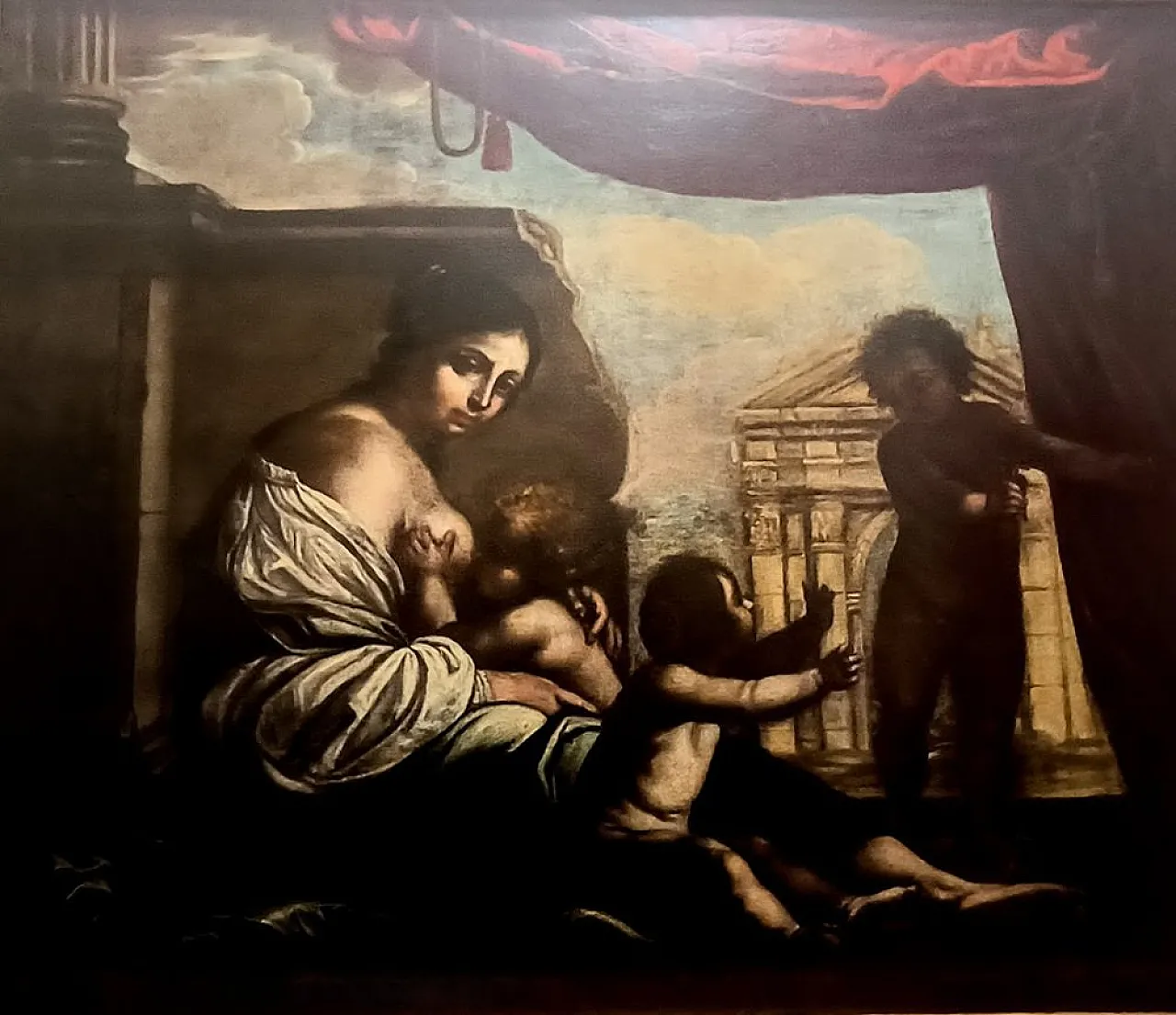
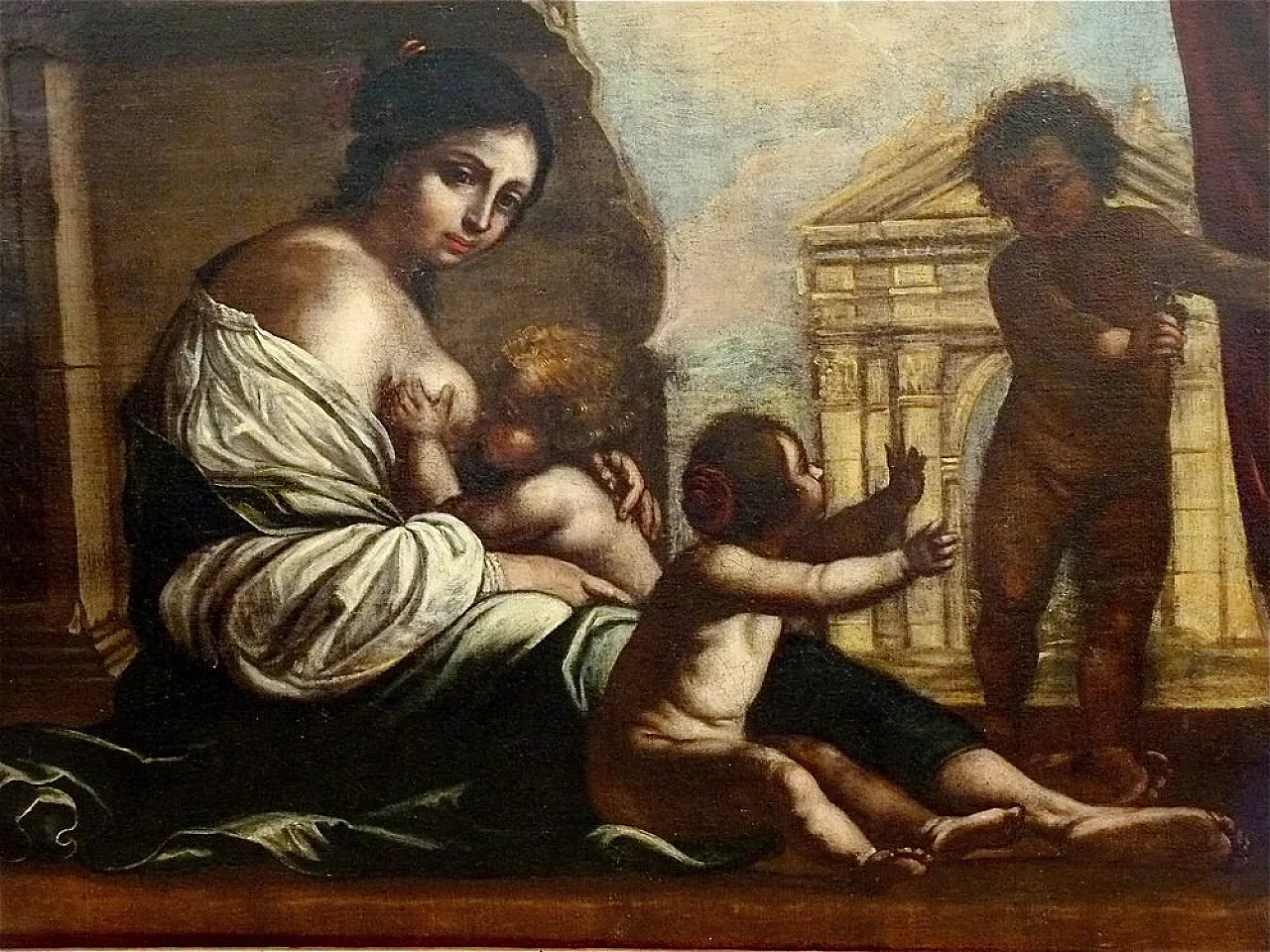
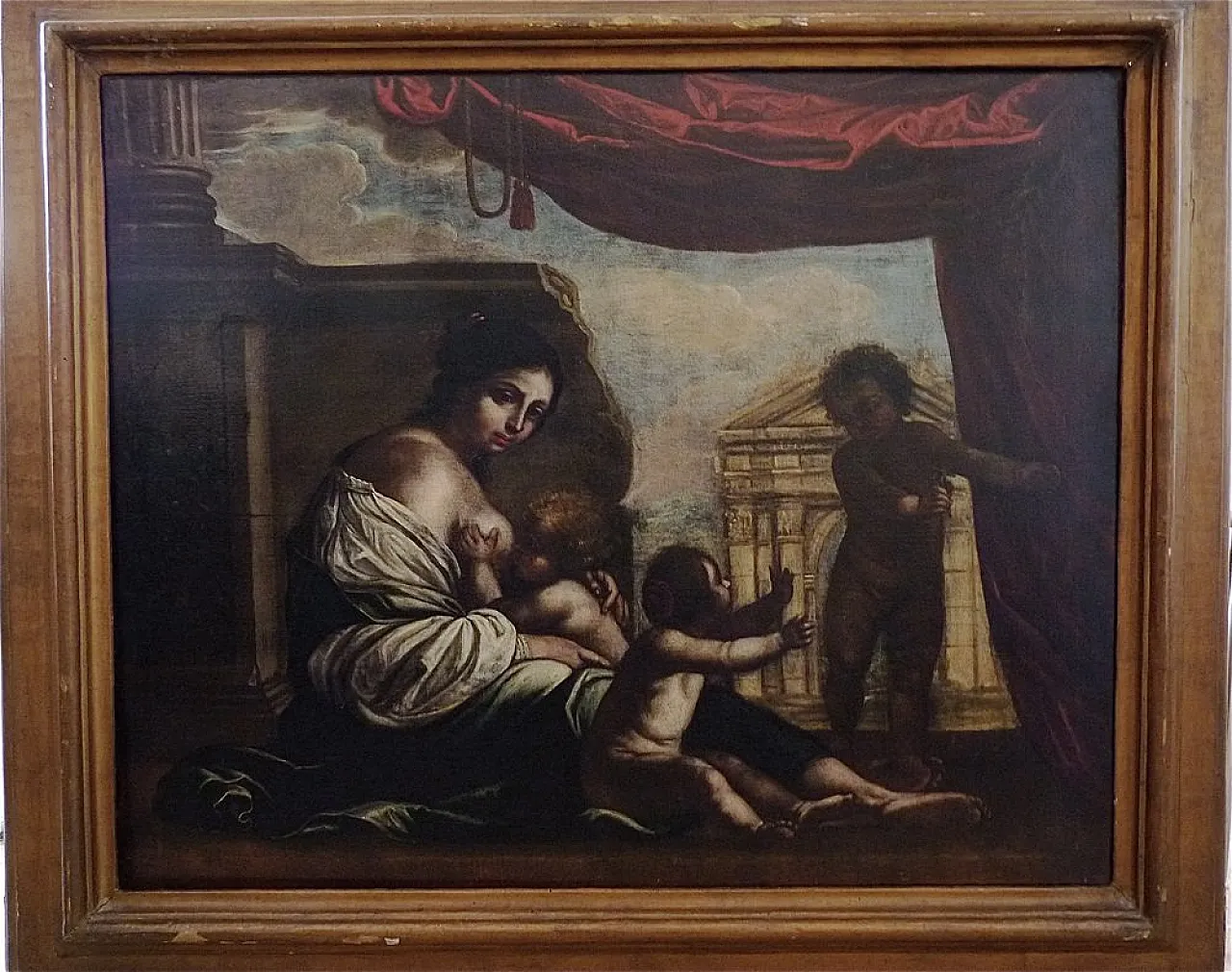
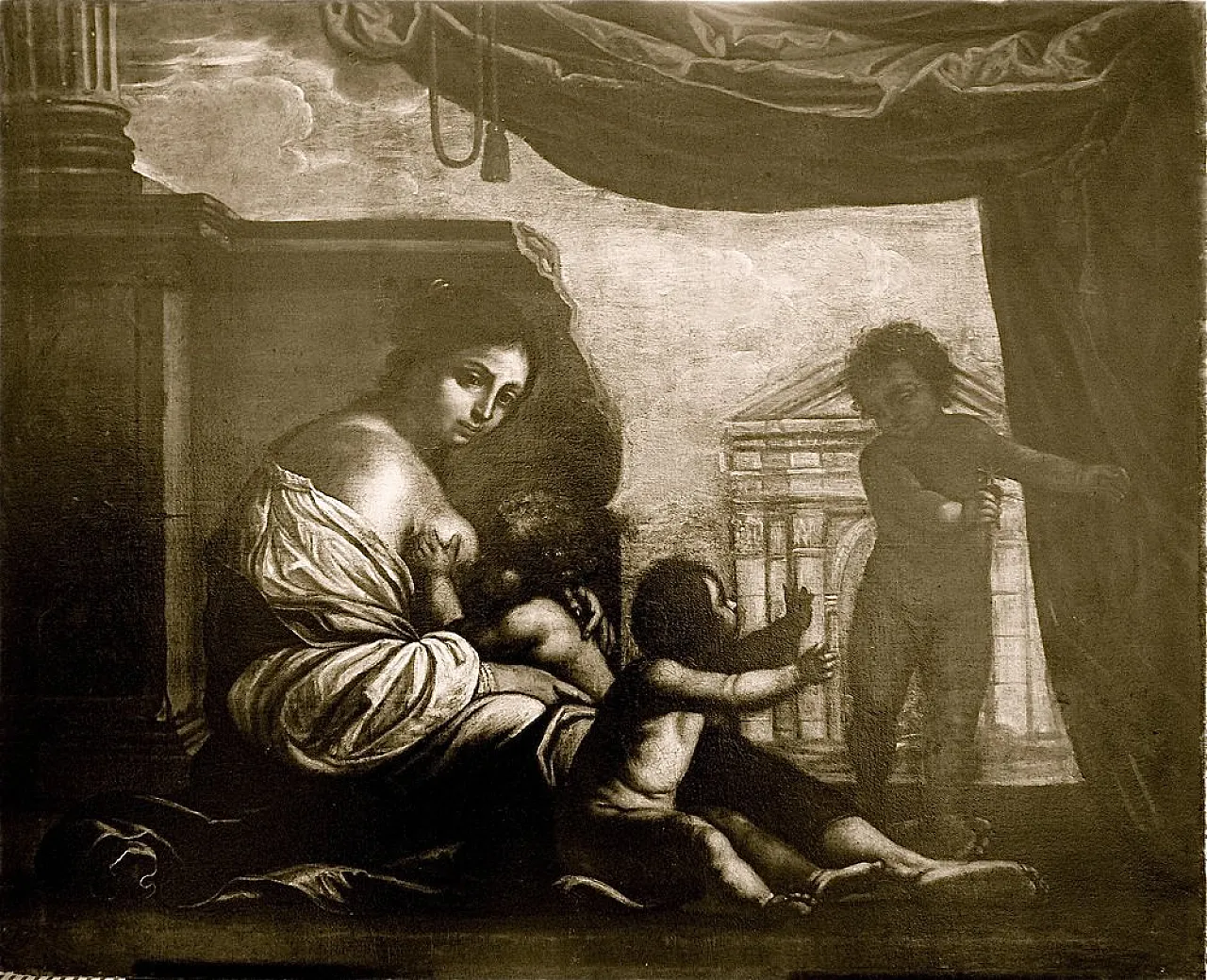
Painting "Christian Charity" or also called "Roman Charity" from the 17th century. Attribution to Francesco Furini - Florence 1603-1646. Canvas only: 80 x 100 cm with frame (coeval): 104 x 124 cm Painting relined and slightly restored and cleaned. Original frame The painting, attributed to Francesco Furini and dated to the 17th century, bears the significant title of "Christian Charity". It embodies one of the fundamental principles of the Christian faith: love and compassion for others, represented through a familiar and emotionally intense scene. Furini, a Florentine Baroque artist, known for his soft visual language and his ability to evoke spiritual intimacy, conveys a strong symbolic and moral charge with this work. The scene represents a mother breastfeeding two children in a moment of tender humanity. This gesture is the universal symbol of care, nourishment and altruistic love, elements that embody "Christian charity". In the background, a third child stands next to an architectural arch, opening a space that evokes the outside world and connects the intimate gesture to a broader, more universal context. The female figure (Charity): The woman in the centre, with a composed appearance and an intense gaze directed towards the observer, symbolizes the virtue of charity. Wrapped in light garments that highlight her motherhood, the woman represents Christian altruism, offering nourishment not only to her child, but also to another. The two children represent innocence and the need for care, evoking the idea of protection and support for the weakest. Their nakedness recalls human purity and vulnerability. The figure in the background: The child on the right, placed in a shaded area and near the arch, could represent an observer or a symbolic figure. His distant position compared to the mother and the two central children calls for a reflection on the breadth of charity, which also embraces those outside the family circle. The use of soft light that hits the bodies at the center of the composition creates an intimate and meditative atmosphere. The delicate shadows give depth to the scene and highlight the typical theatricality of the Baroque. In the background, columns and arches recall the stability and majesty of the Christian faith. The arch could also symbolize the passage between the earthly and divine worlds. The red cloth, the curtain that frames the upper part of the scene emphasizes the sacred and solemn character of the representation, as well as adding a touch of theatricality. The choice of the title Christian Charity reinforces the moral meaning of the work, which invites reflection on the values of universal love, sharing and solidarity. The central figure of the mother becomes the symbol of unconditional love, a founding principle of Christianity. Through a daily and natural gesture, Furini manages to sublimate the humanity of the scene into a spiritual dimension, demonstrating his mastery in blending the sacred with the profane. Although the attribution is not certain, the composition, the elegance of the figures and the treatment of light are in line with the style of Francesco Furini. This painting, like other works attributed to him, underlines the artist's ability to express beauty and grace even through simple but meaningful subjects.




.png)




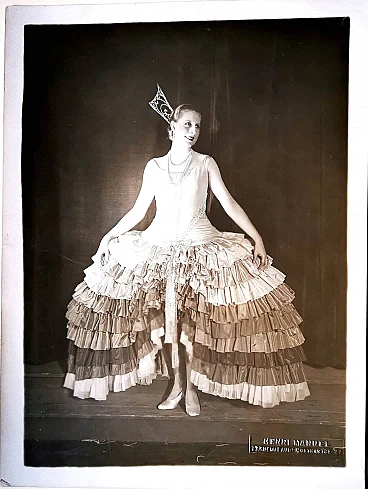
 SILVER Seller in Ferrara, Italy