


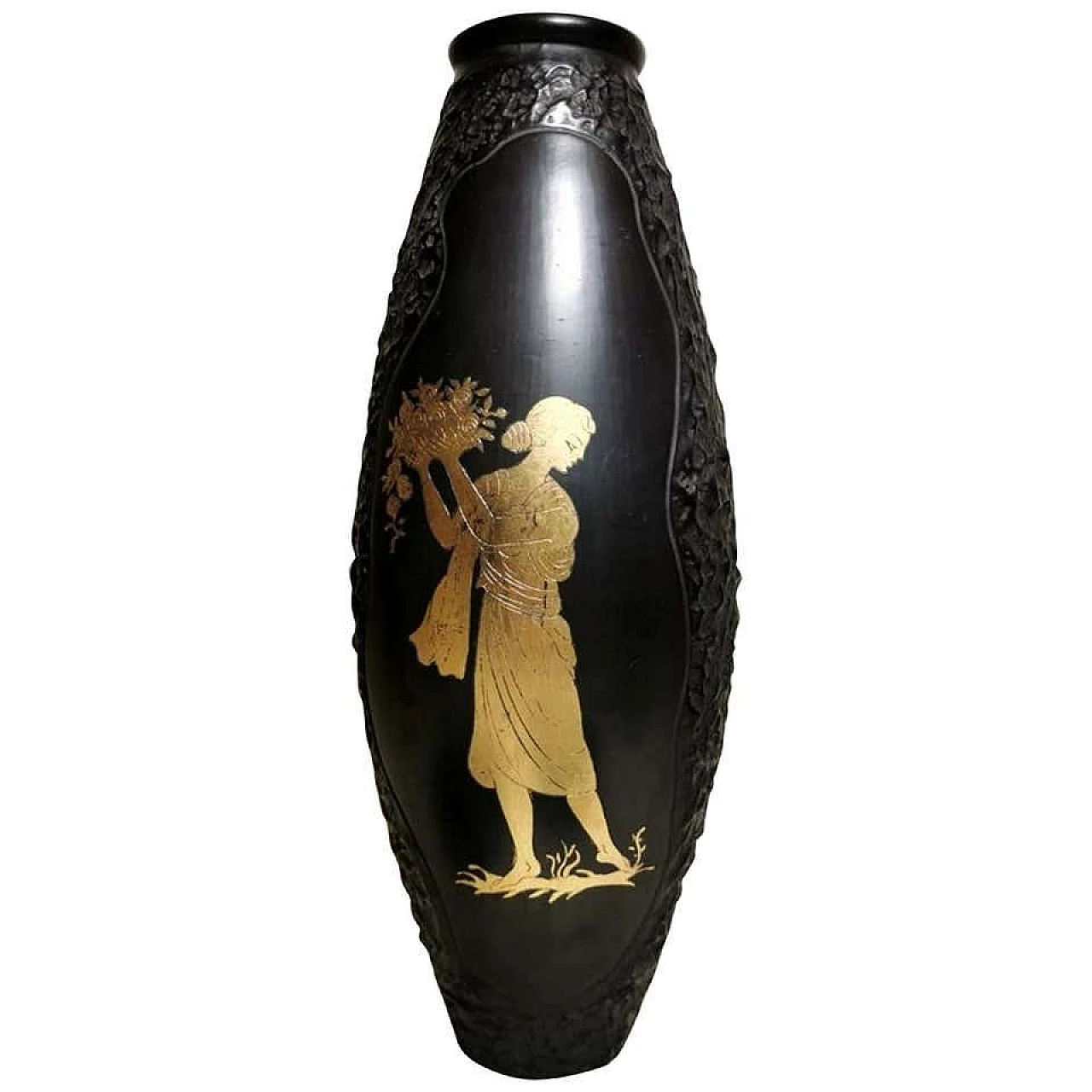
Bucchero ceramic vase with decoration in gold leaf by Carlo Alberto Rossi, 50s
.png)
Iconic ceramic vase Bucchero: the bucchero is a type of black and shiny pottery, often fine and very light, produced by the Etruscans to make domestic furnishings and decorative objects. The bucchero was used in Etruria from the second quarter of the seventh century BC to the first half of the fifth century BC. The black monochrome integral is the most evident feature of this type of pottery and the coloring was obtained through a particular firing. The term bucchero comes from the Castilian bùcaro, with which they defined some vases arrived from South America more or less in the same period of the first findings in Etruscan archaeological sites. In the bucchero is black both the mixture and the surface, which is shiny and compact. The color is not obtained by painting but thanks to a special firing process in the absence of oxygen, which prevents the chemical transformations of oxidation that make it take on the typical orange coloring to the iron ores contained in the clay. This bucchero vase was made by Carlo Alberto Rossi (1903-1970) in his workshop in Via Savelli Della Porta in the historic center of Gubbio (Italy) and bears the artist's signature on the bottom. This vase produced between 1950 and 1955. The elegant and delicate female figure is inspired by a Hellenistic model, it is made with graffito decoration, pure gold leaf and polished. The vase, produced with an ancient and unique technique, combines classicism and design, an example of exquisite beauty and superb quality. Many works from this workshop can be found in various museums around the world and have received several national and international awards.
ID: 4672-1610881516-14248
Time period

 SILVER Seller in Prato, Italy