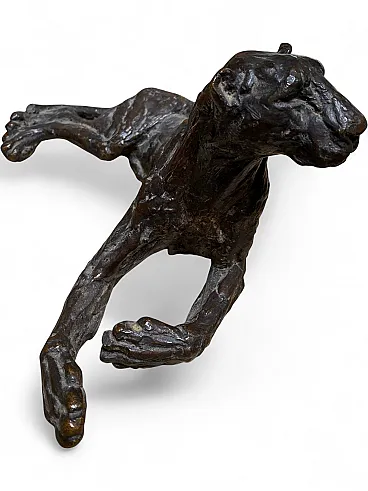
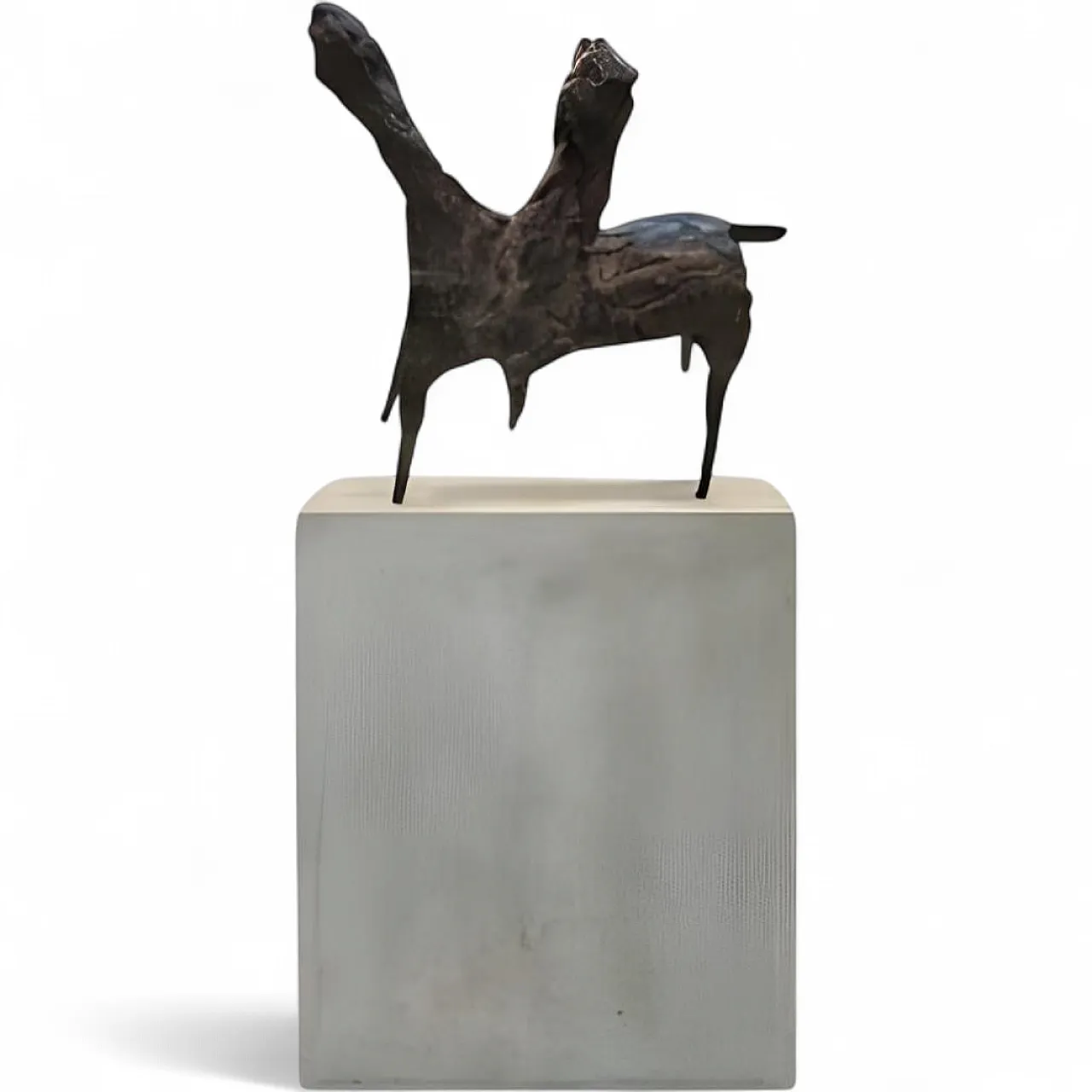
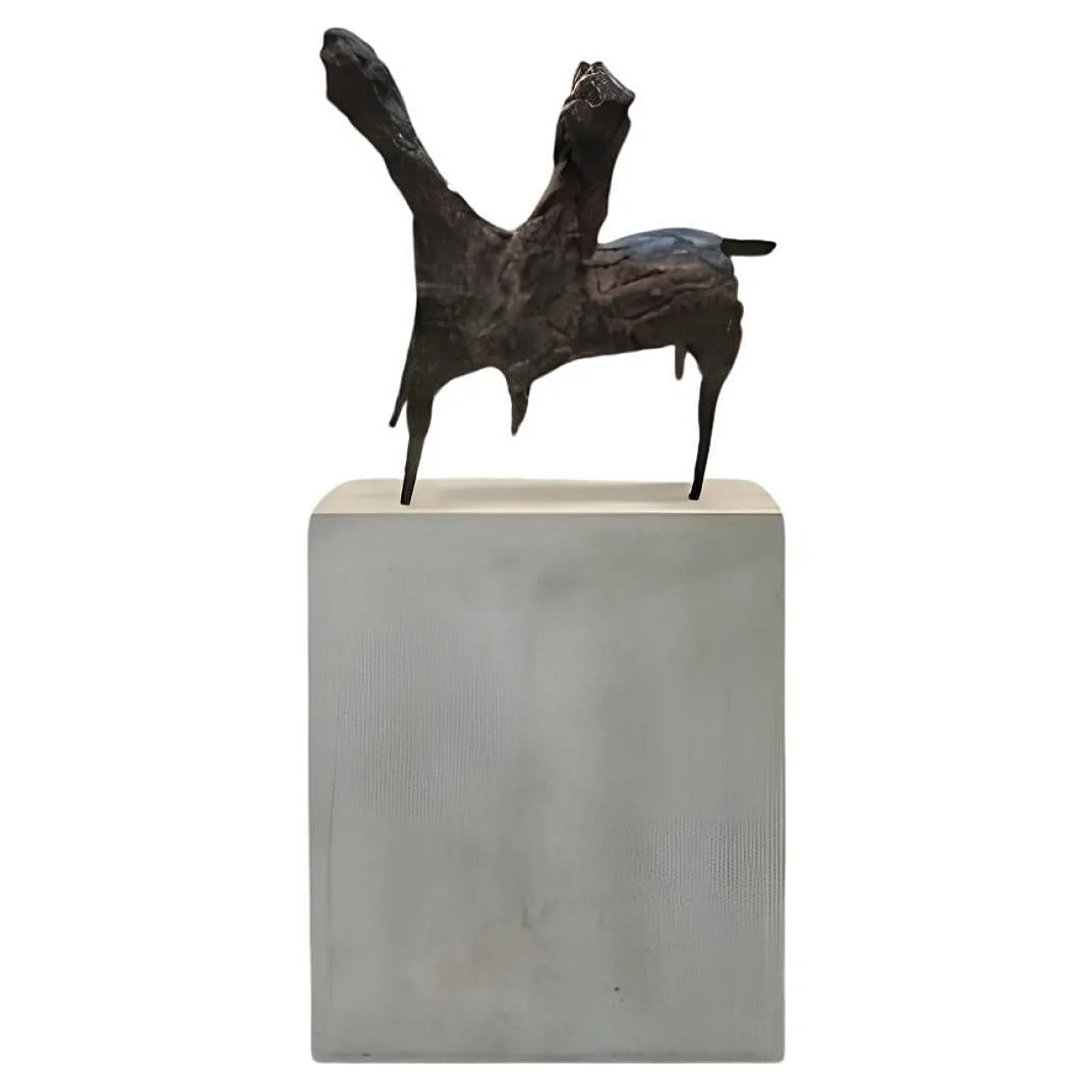
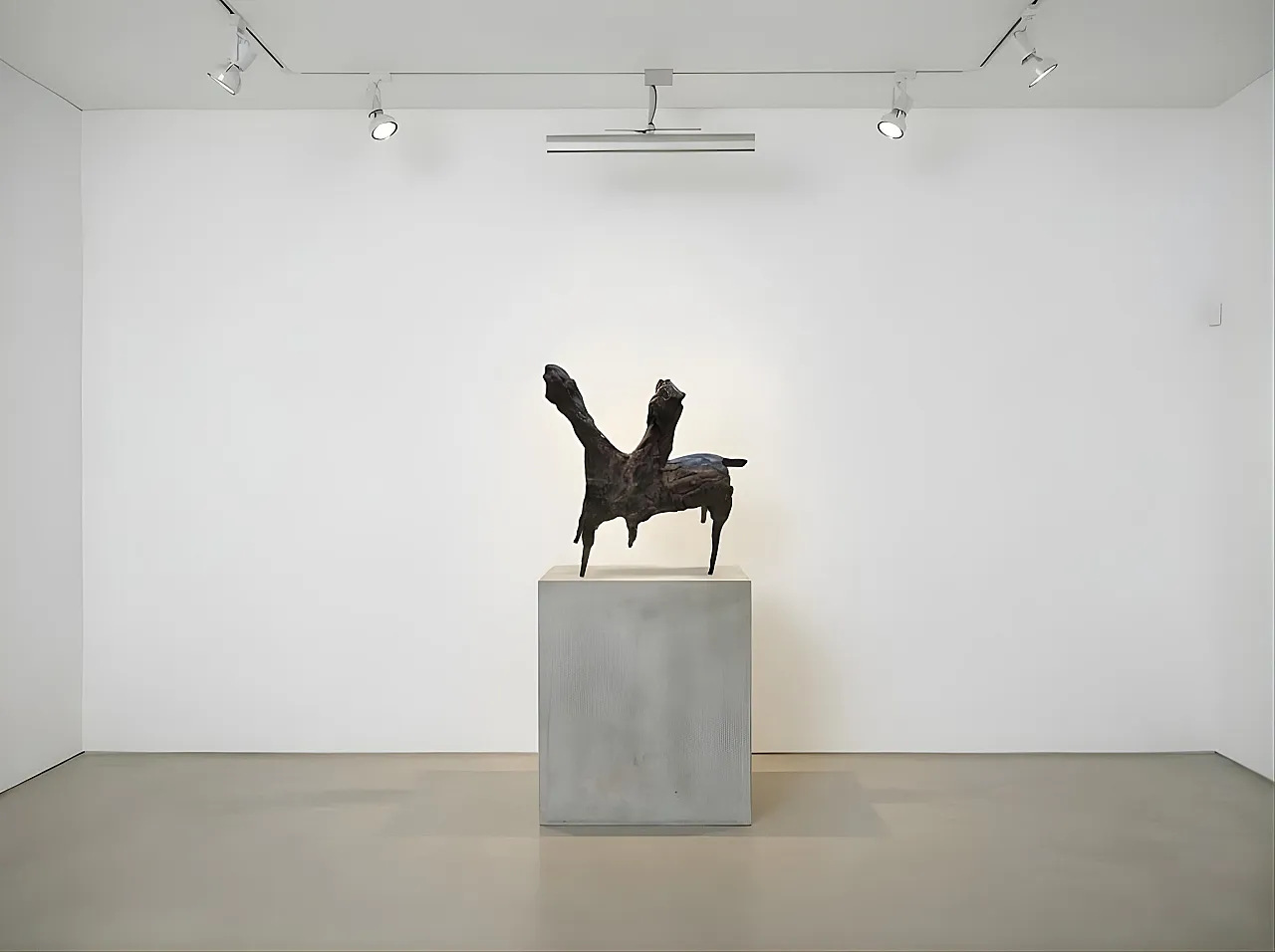
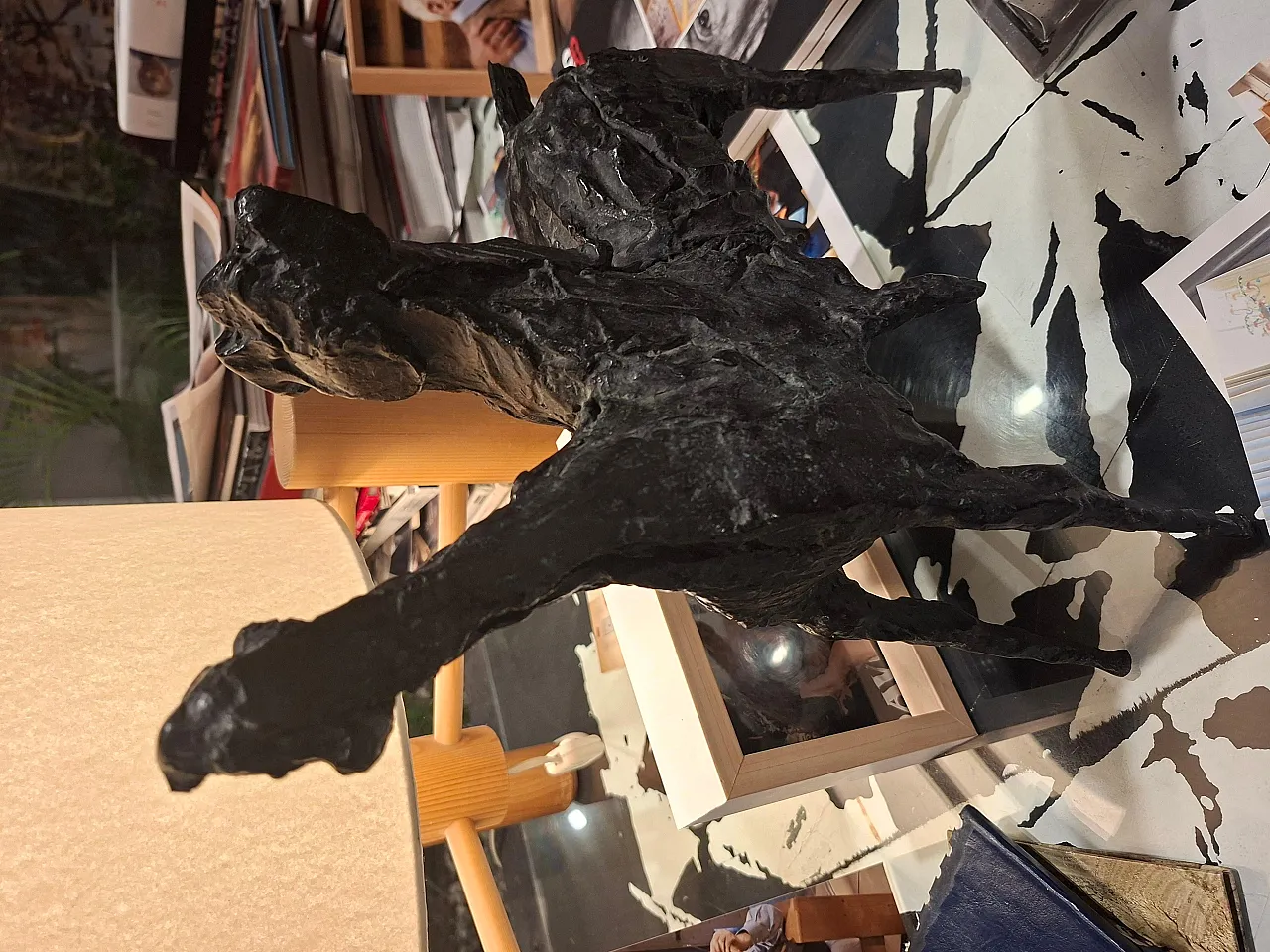
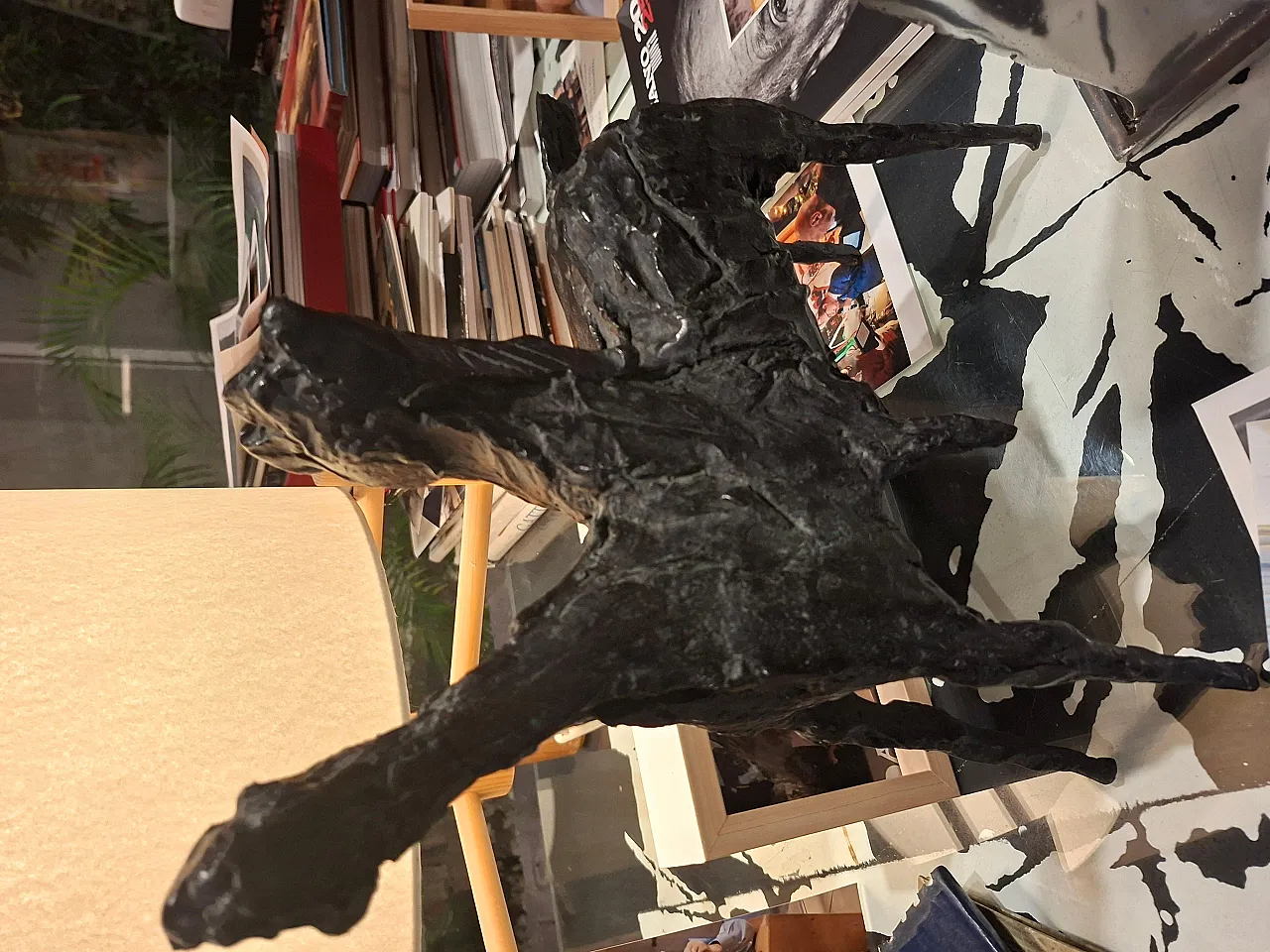
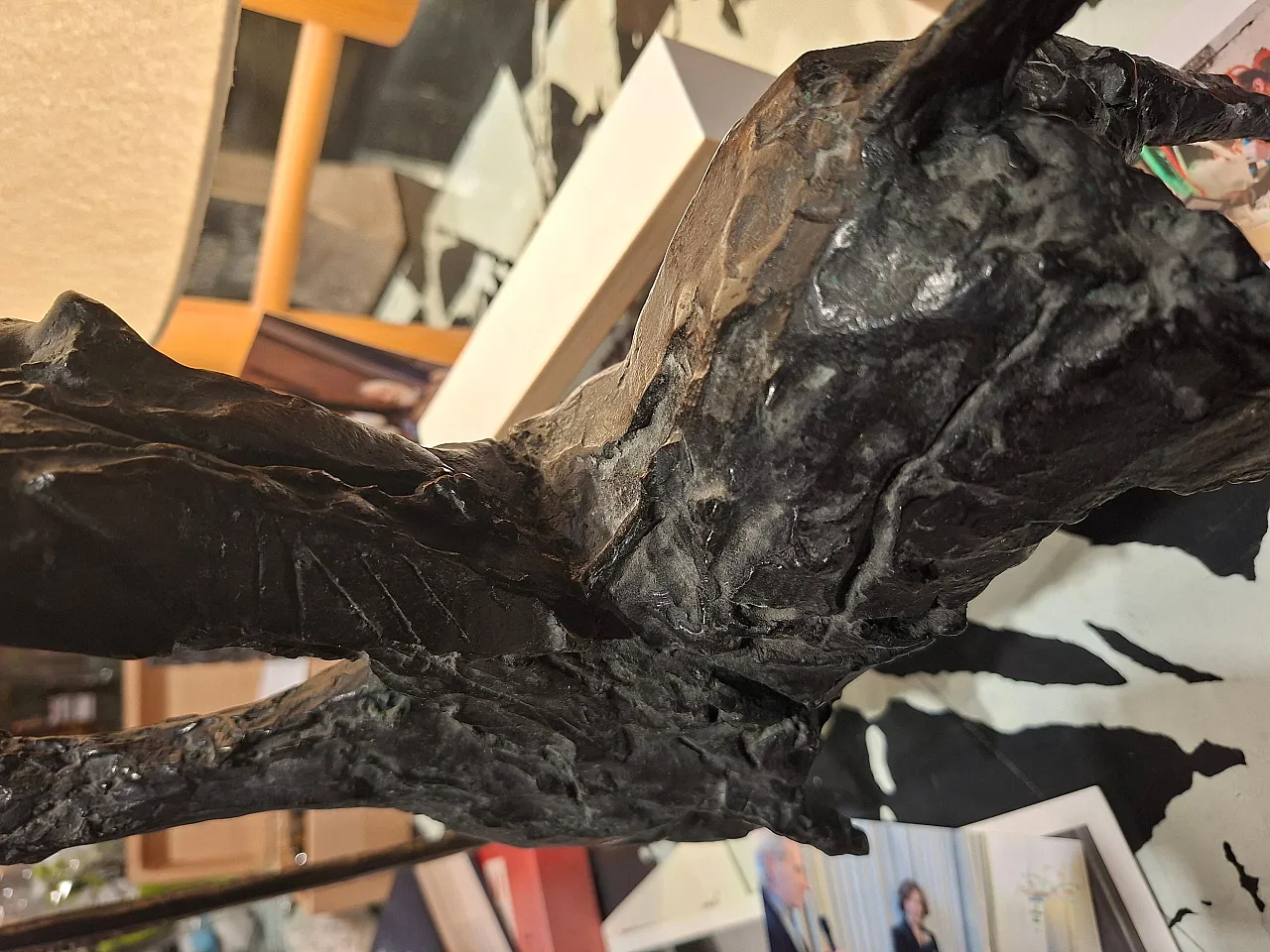
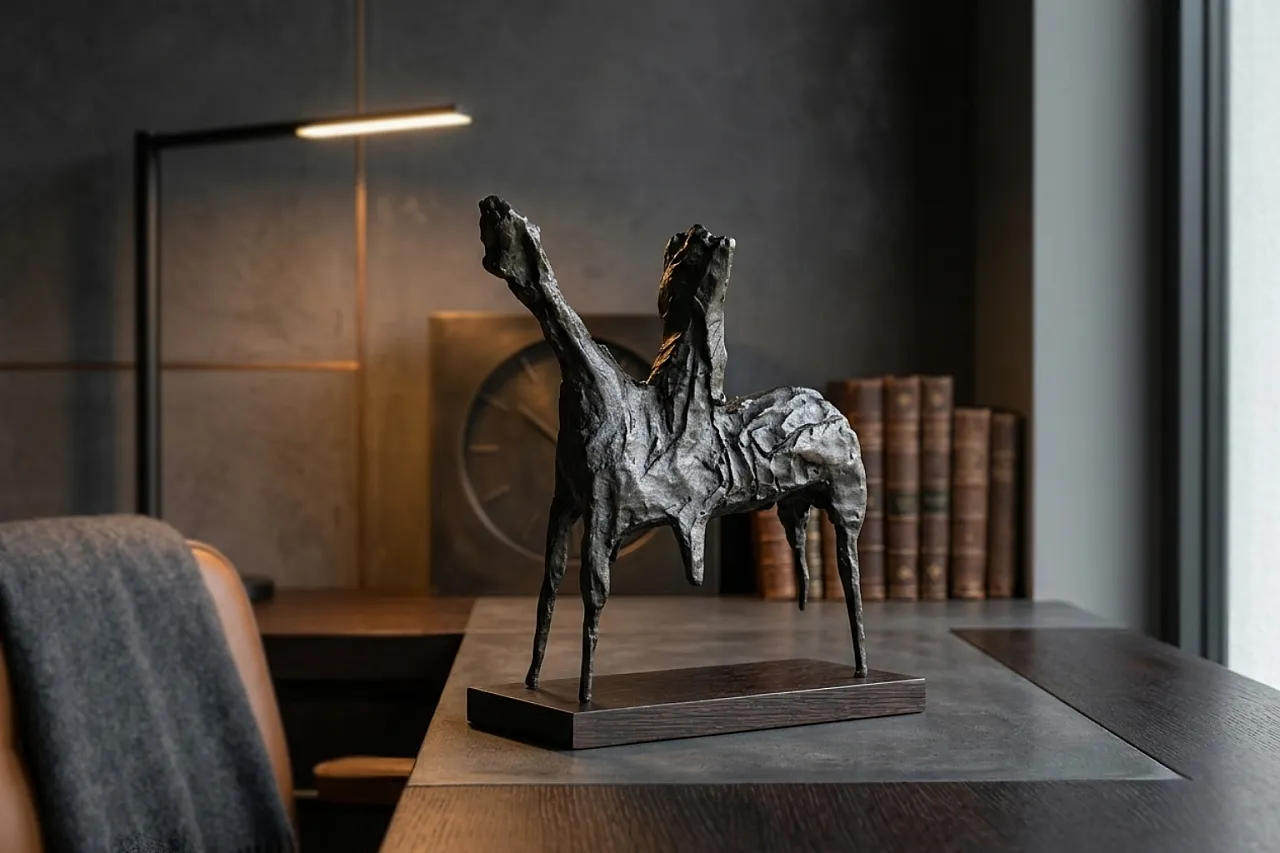
Giorgio Celiberti BIOGRAPHY Giorgio Celiberti was born in Udine in 1929. He began painting at a very young age and, at just nineteen, he took part in the 1948 Venice Biennale, the first after the war. In Venice he attended art high school and then Emilio Vedova's studio. In the lagoon city, I share a study room with Tancredi at the Accademia pension. Intense interactions with Carlo Ciussi, Marco Fantoni, and Romano Parmeggiani, who spent a period of training in Venice in the same years. In the footsteps of his uncle Modotto, one of the most important Udine painters of the 1930s, protagonist, together with the Basaldella brothers (Afro, Dino and Mirko) Filipponi and Candido Grassi, of the twentieth-century renewal of Friulian art, Celiberti moved to Paris at the beginning of the 1950s, where he came into contact with the major representatives of figurative culture beyond the Alps. Thus began a series of trips that would remain fundamental to his education: in 1956 he won a scholarship from the Ministry of Education which allowed him to stay in Brussels, where he was able to complete his research on avant-garde art. From 1957 to 1958 he was in London: these were the years in which the expressionism of Bacon and Sutherland dominated. A tireless, curious traveller, tormented internally by a fever of novelty and knowledge, he stayed in the United States, Mexico, Cuba, Venezuela. From these experiences he drew a repertoire of signs and techniques, which he reworked in the following years. Upon returning to Italy he moved to Rome for a long and fruitful period, where he frequented the leading artists of the Italian scene. The return to Udine, towards the mid-sixties, allowed Celiberti to begin a work of self-reflection, which still continues today, full of creative outcomes always from a devouring desire for experimentation. In 1965 a fat man happened who was destined to radically modify his art. Visit the Te rezín concentration camp, near Prague, where thousands of Jewish children, before being massacred by the Nazis, left testimonies of their tragedy in graffiti, drawings, in short diary sentences and in a booklet of poems, touching testimonies of their tragedy. In 1975 the Anthropomorphic Walls arose from reflection on the finds from the necropolis of Porto, near Fiumicino, early Christian Rome, Roman Aquileia and Lombard Cividale. Since the 1960s he has dedicated himself specifically to sculpture, although his creative activity has been characterized, with ever greater emphasis, by an original symbiosis between plastic and pictorial expression. The first works in bronze, stone and ceramic are dedicated to the monumental themes of Horses and Riders, followed by an original wildlife gallery: Cats, Birds, Goats. Subsequently, the sculpture abandons the setting of monumental grandeur to weave a private conversation with the traces of an ancestral past, which seem to emerge from a collective unconscious, of which the artist positions himself as the inspired spokesperson. In affinity with the "Archaeological" themes of painting, the Splinters and the Steles are born, which recall very old tombstones engraved with enigmatic hieroglyphic inscriptions, the light Bassori, similar to fragments of lost civilizations sunk into an immemorial past. He has participated in the most significant art events in Italy and abroad: the Venice Biennale, the Rome Quadrennial, the Esso Prize, the Burano Prize, Marzotto, Michetti, La Spezia, San Marino, Autostrada del Sole, the Fiorino International Prize, the exhibition of New Italian Painting in Japan. Over a hundred personal exhibitions. Among the most significant are those of Paris (1953 and 1982); London (1956); Dallas (1963); New York (1963); Toronto (1976); Vienna (1978); Amsterdam (1979); Nova Gorica (1982); Novo Mesto (1983); Jaffa, Jerusalem and Tel Aviv (1983); Brussels and Strasbourg (1987); Salzburg, Los Angeles (1989); London, Düsseldorf, Barcelona (1990); Madrid and Paris (1992); Millstat, Ghent (1993); Chicago (1995); Zagreb Museum (1998). It has also been exhibited several times in Bologna, Florence, Genoa, Palermo, Rome, Turin, Trieste, Venice, Verona and of course Udine. A painting anthology was set up in 1980 at the Spazzapan Gallery in Gradisca d'Isonzo (Gorizia). The spring of the following year was the exhibition at Villa Simes Contarini in Piazzola sul Brenta (Padua), in whose park, alongside the hundred or so paintings presented in the rooms, the large bronze, stone and steel sculptures were set. The Villa Simes experience was resumed and developed in the summer of 1985 inside and in the parks of the Venetian Villas of Carbonera (Treviso). In the same year, Celiberti, invited by the Municipality and the Tourist Board of Trieste, placed monumental steles in steel and resin in the main streets and squares of the Julian capital, bronze sculptures at the Castle of San Giusto, and stone sculptures at the Castle of Miramare, for an entire year. The exhibition moves from Trieste to Udine, taking in the castle, the city and the Friulian Center for Plastic Arts. Between the end of the Eighties and the early Nineties, prestigious exhibitions continued in Italy and abroad: Exhibition at the Pagani Foundation in Legnano (1987); anthology at Villa Varda di Brugnera in Pordenone, at the Palazzo dei Diamanti in Ferrara, at Art L.A. of Los Angeles (1989); Exhibitions at the Davico Gallery in Turin; at the Galleria Forni in Bologna, at the Art London in London, at the Art Forum in Düsseldorf, at the Sala Pares in Barcelona, solo exhibition at the Galleria Giulia in Rome (1990); exhibitions at the Arco in Madrid, at the Gran Palis in Paris, at the September Salon in Venice, at the Galleria Rotta in Genoa and a new anthology of painting and sculpture in the spaces of the G. E. Ghirardi Foundation of Villa Simes Contarini in Piazzola sul Brenta (1992); personal exhibition at the Galleria Annunciata in Milan, exhibition of frescoes at the Galleria B. S. in Venice, exhibition of monumental bronzes in the city of Millstatt, Austria (1993). In 1991 Celiberti also executed two prestigious public works: the Mosaic of Friendship in the atrium of the University of Ljubljana and the fresco covering over 800 square meters of surface on the vault of the Kawajyu hotel in Shirahama, Japan. Other exhibitions were held in 1994 at Palazzo Costanzi at the Risiera di San Saba in Trieste and at the Fiac in Paris. In January 1996, an anthological exhibition opened in Conegliano at Palazzo Sarcinelli, followed by one set in Pergine Castle. In 1997 an exhibition of paintings and sculptures was included in the events of Villa Manin in Passariano. The exhibition activity in 1998 testifies to the growing interest in the artist: Celiberti's sculptures are placed in a European context set in the bastions of the walls of Treviso, Lignano Sabbiadoro hosts other monumental sculptures and the master holds a solo exhibition in the Angel Orentsanz Foundation gallery in New York, at the Museum of Saint Paul de Vence and at the Zagreb Museum. The final international scope saw him exhibit in Umag, Ljubljana and Munich between 1999 and 2000, and in the year of the Jubilee he created a three-metre cross at the Church of Fiumesino (Pordenone). There are numerous exhibitions in this period, between Italy and abroad, among the most important are an exhibition in 2002 in the former ghetto of Vittorio Veneto and in the rooms of the former university of Bergamo. In 2003 Celiberti won the Sulmona Prize and in 2004 his hometown, Udine, dedicated an anthology to him at the “Giovanni da Udine” Theater with a broad review of his recent productions. In 2005, the Villa Breda Museum in Padua hosted: “Giorgio Celiberti Anthology from the Biennale to Giotto” and Prince Emanuele Filiberto of Savoy donated a large painting by Celiberti to the MART of Trento and Rovereto, which was included in the permanent collection of the Museum. Group exhibition of sculptures in Prato della Valle and in the gardens of the Scrovegni chapel. 2006: exhibitions in Venice (Venice Design Art Gallery), Munich (Galerie Prom), Conegliano (House Museum of the “Cima da Conegliano” Foundation). 2007: Castelfranco Veneto (Art&Media Gallery) and Tolmezzo (Palazzo Frisacco). 2008: Prato (Confartigiana to), Cividale del Friuli: outdoor sculpture exhibition. 2009: for his eightieth birthday he exhibits at the Jewish Museum of Venice and at the Rosazzo Abbey. In 2011 he was invited for the fifth time to the Venice Biennale; he donates a large stele which is placed in the courtyard of the Terezín fortress (Prague). 2012: exhibition at the Casa dei Carraresi in Treviso. Sculptural exhibition in the squares of Valletta (Malta). 2013: anthological exhibition at Villa Manin. Between 2014 and 2015: exhibition The passion and the body of history at the National Museum of Ravenna. In 2016 he exhibited at the Philippe Daverio Library in Milan, in 2018 at the Marino Marini Museum in Pistoia, from 2019 to 2020 at the Maca Museo Arte Contemporanea in Acri (Cosenza). 2021: exhibition at the Luxury Hotel Danieli in Venice and at the Heart gallery in Vimercate (Monza and Brianza). Installation for Remembrance Day, 26 January 2022, on the highest bell tower in Italy in the city of Mortegliano (Udine), and exhibition in San Vito at the former prisons. Honorary citizenship from the Municipality of Mortegliano with recognition by the President of the FVG Regional Council Pietro Mauro Zanin of the Lombard Seal. Rome 2022: visit to the Ministry of Culture and career mention by Minister Dario Franceschini; visit to the Ministry of Economic Development: meeting with Minister Giancarlo Giorgetti. Exhibition in Cividale del Friuli from 25 June to 25 September. On 5 October 2022 the Historical Archive of the Venice Biennale dedicates a study conference to him entitled: "Giorgio Celiberti, from the 1948 biennial to today". Midolini Lifetime Achievement Award. Exhibition "Gioiel li di Celiberti at the "Loft ai Dogi" in Passariano di Codroipo (Udine). Personal exhibition in Portogruaro (Venice) at the Arte Androne 51 gallery. 2023: exhibition in Gradisca d'Isonzo, at the La Fortezza gallery. Exhibition at the headquarters of the Friuli Venezia Giulia regional council. Lives and works in Udine.


.png)
 SILVER Seller in Udine, Italia