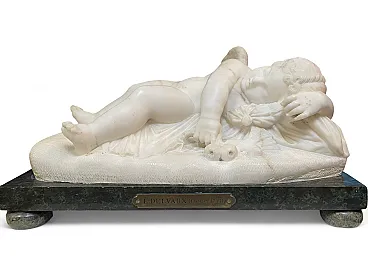
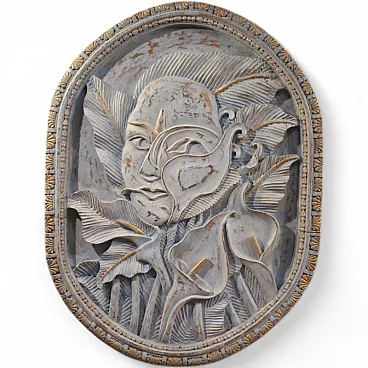
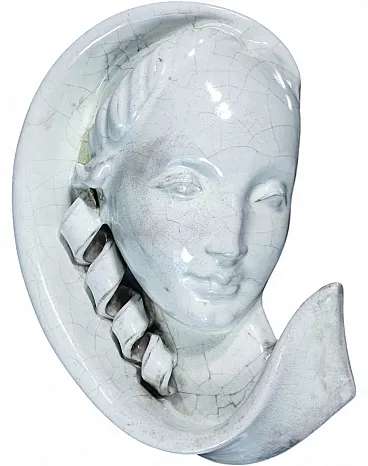
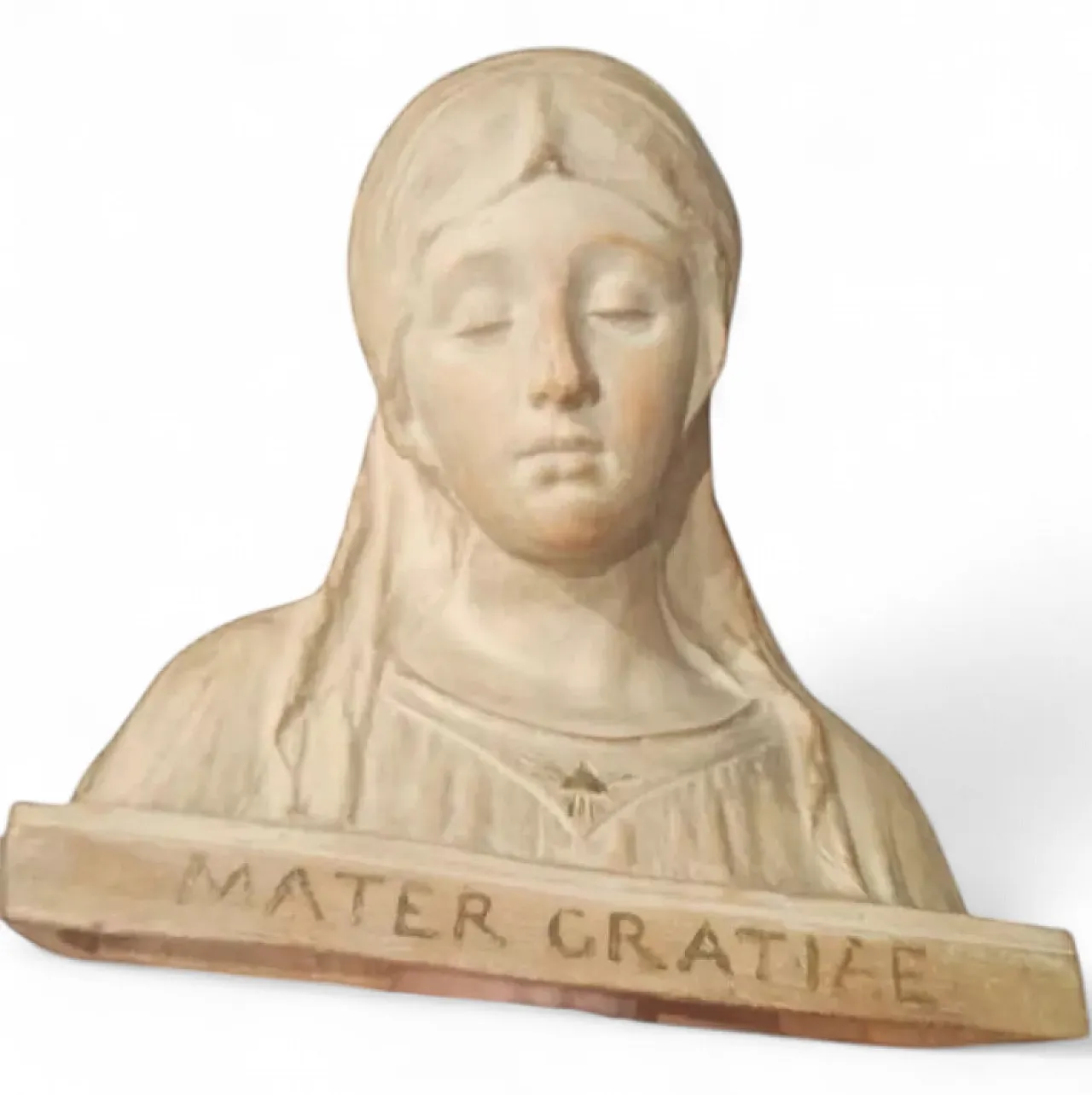
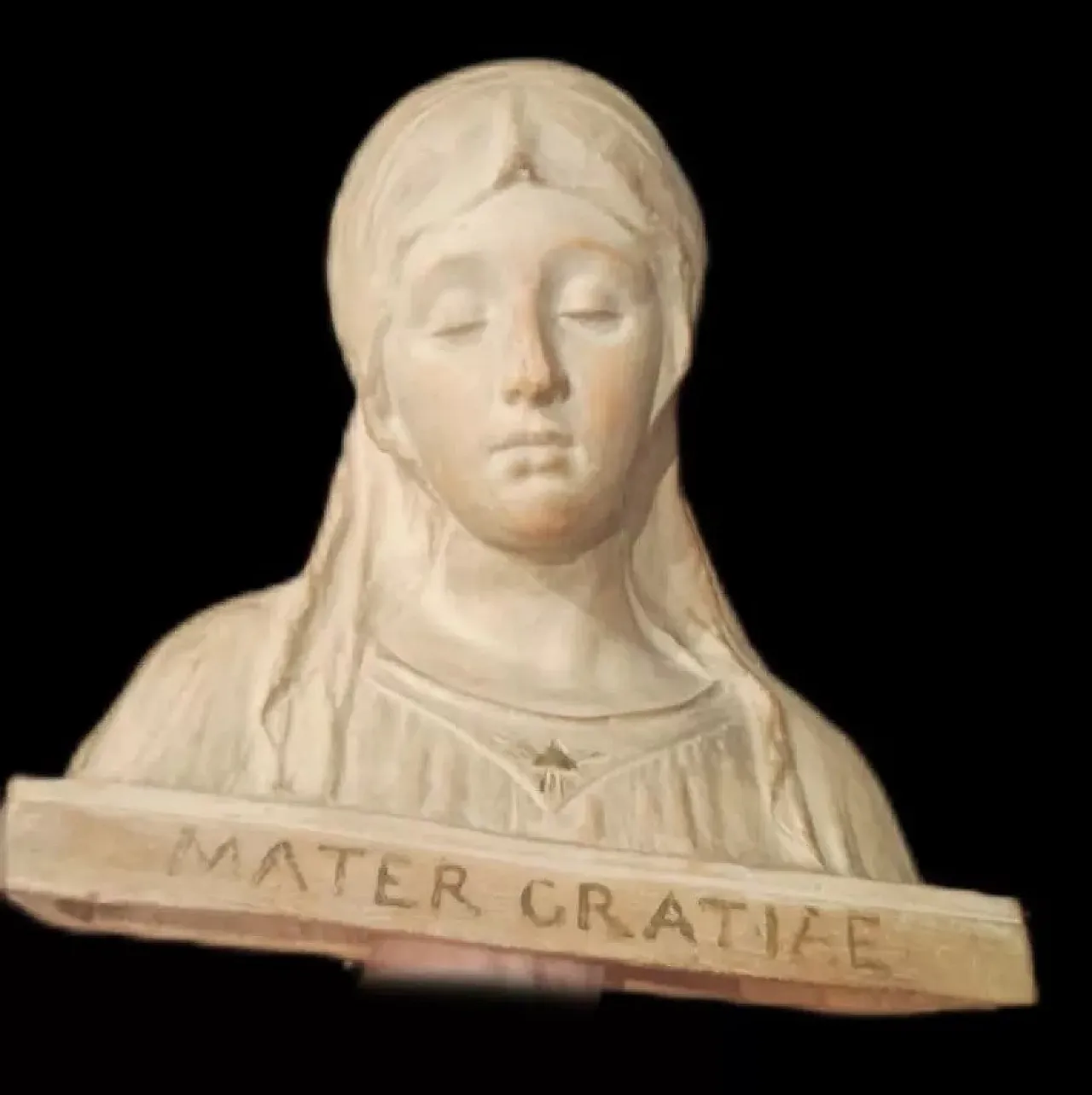
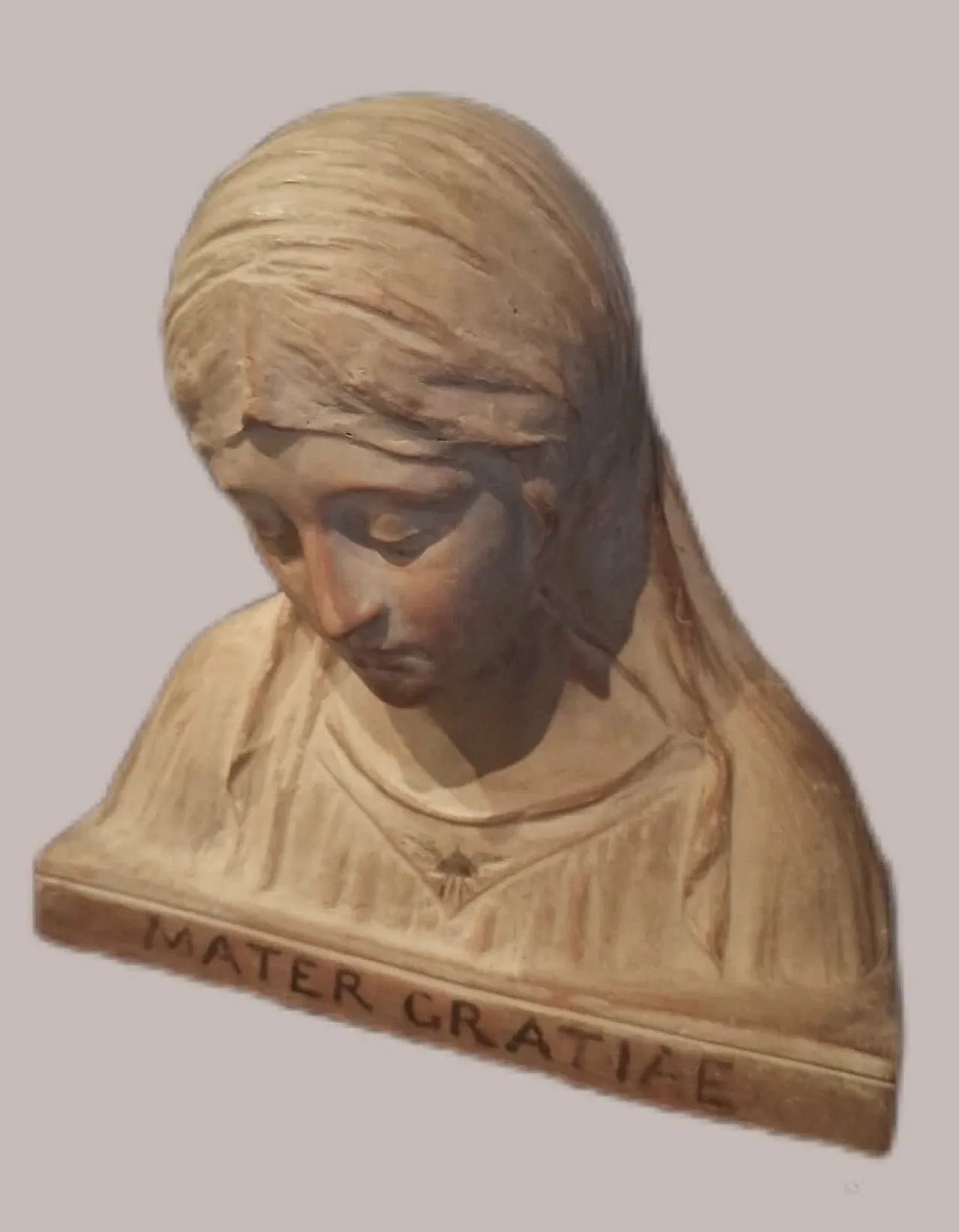
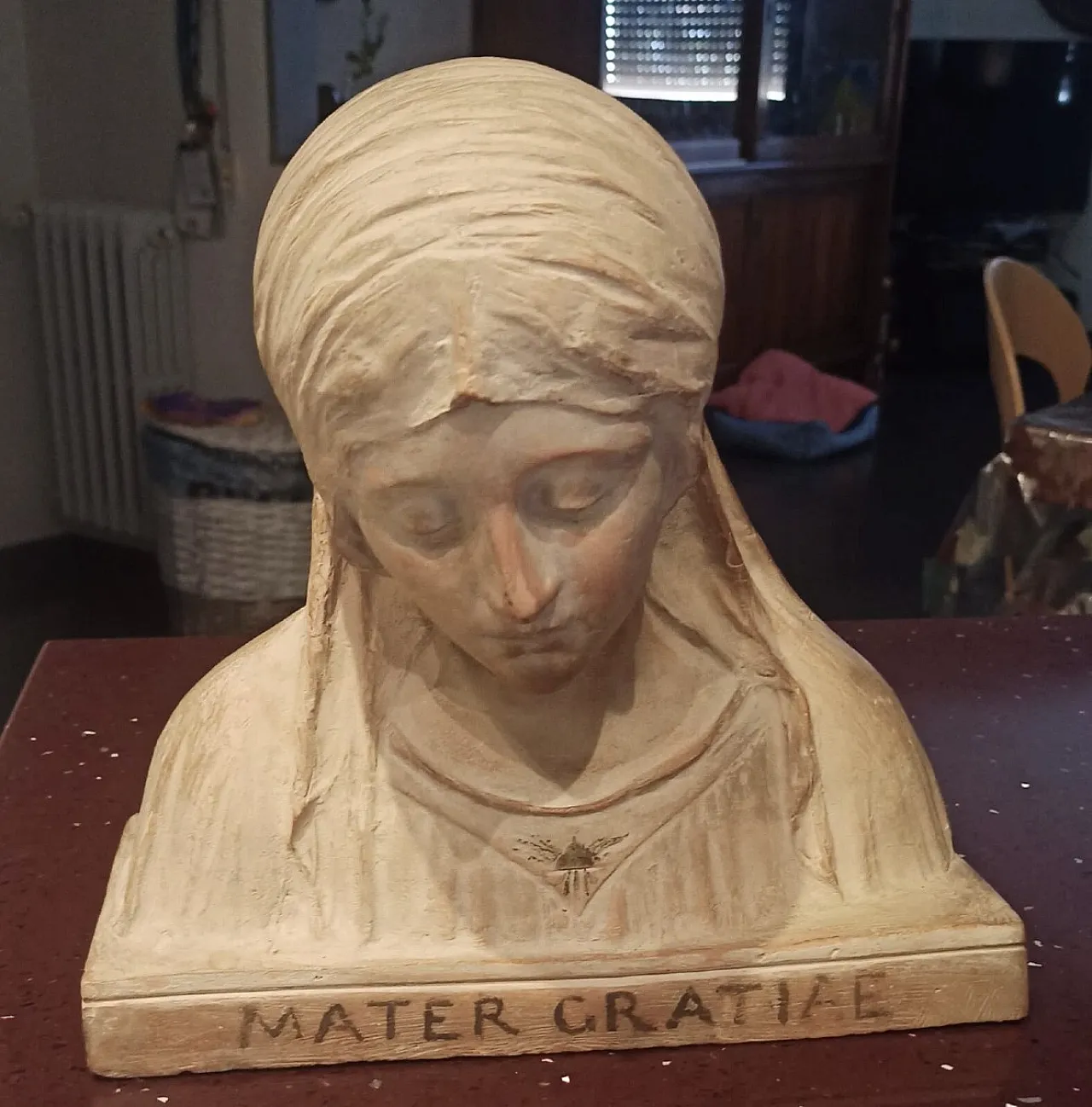
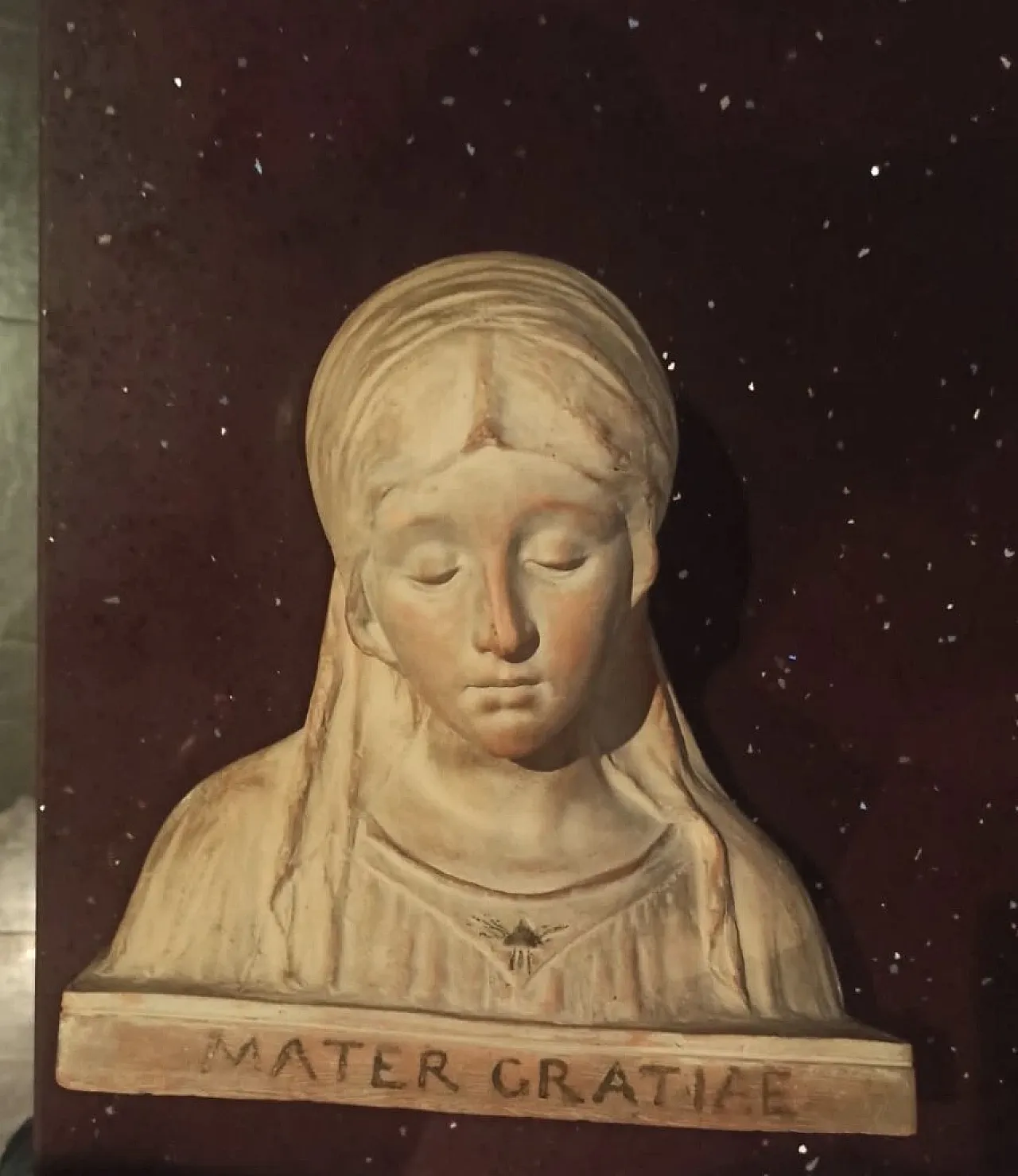
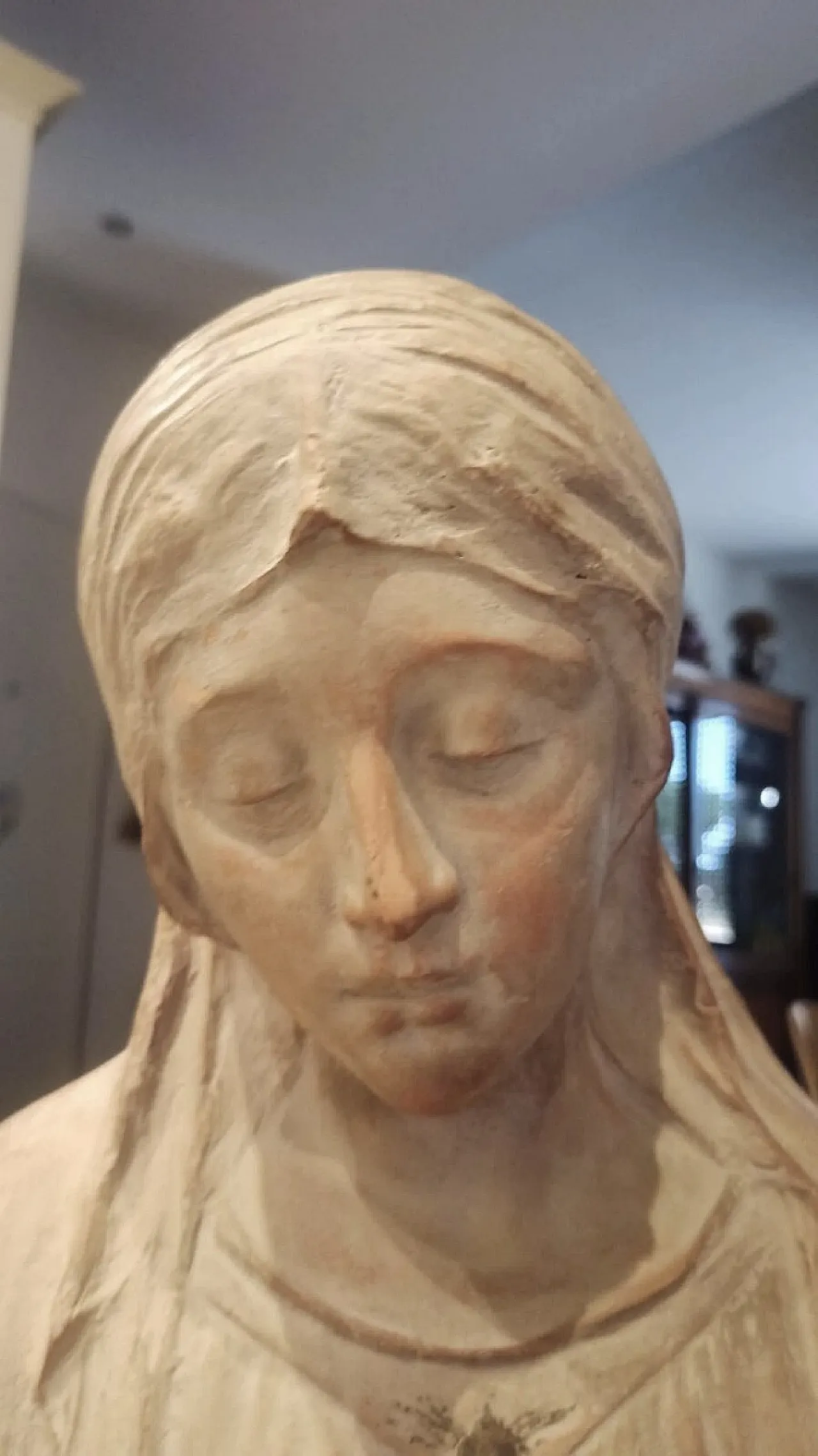
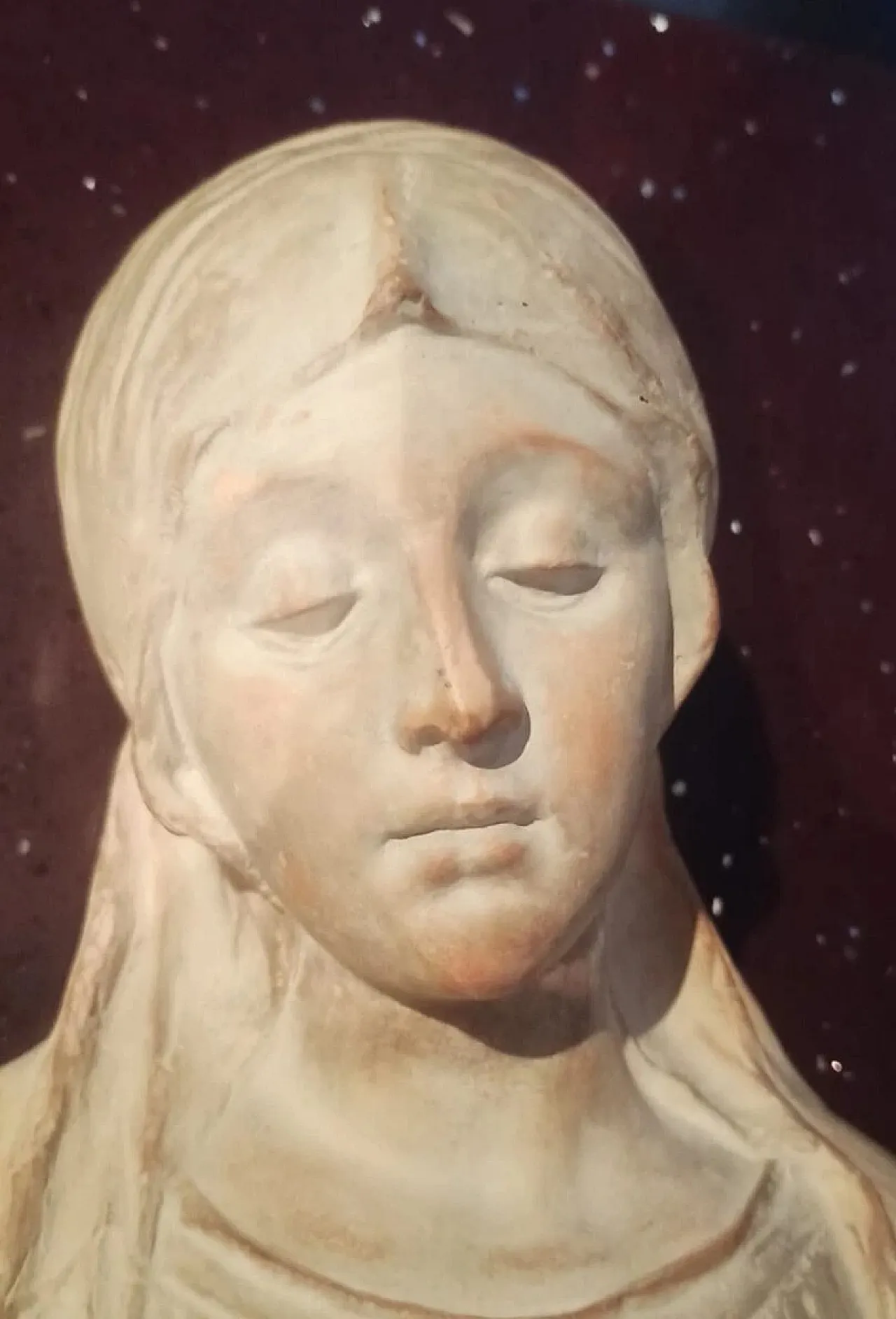
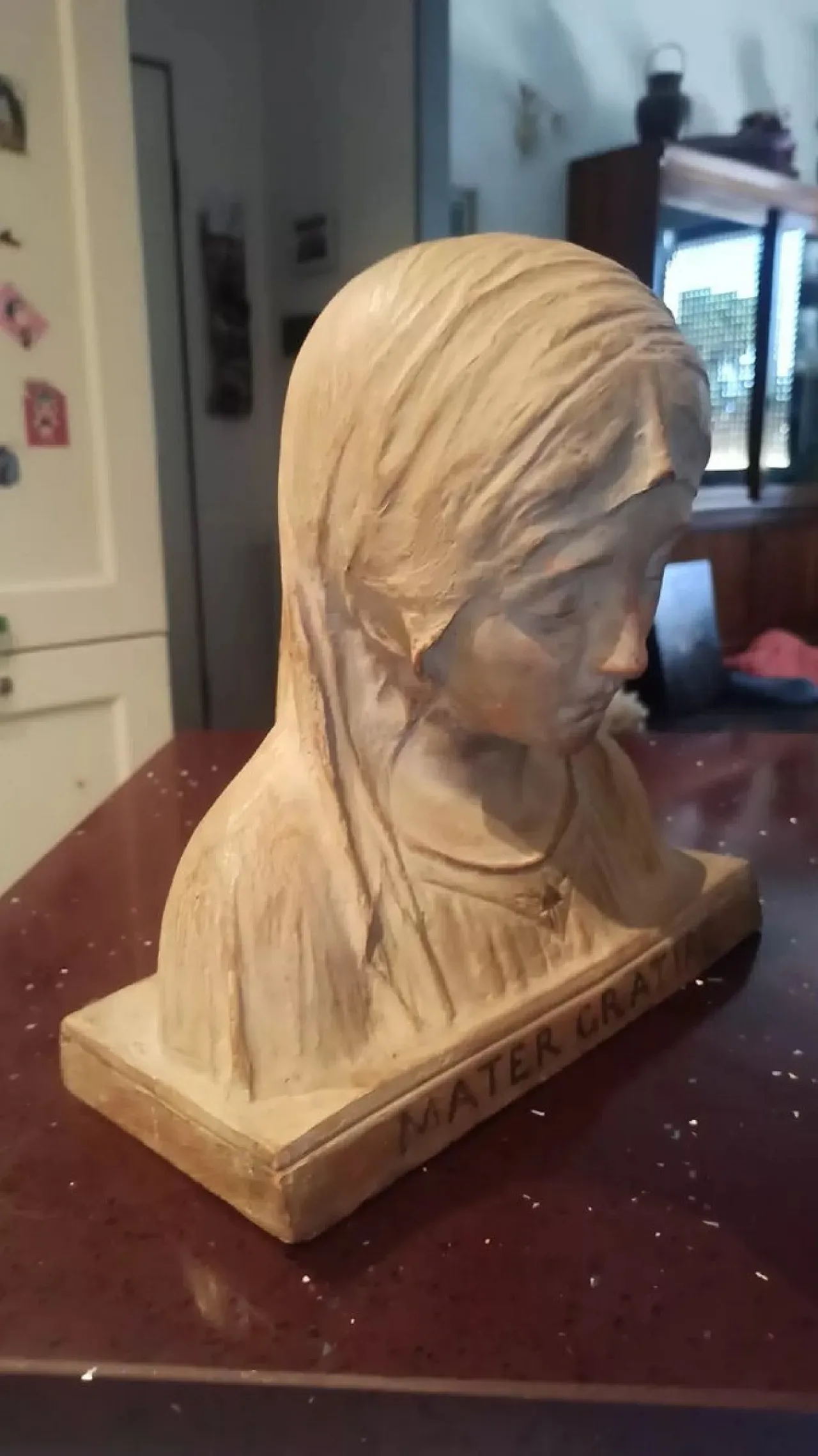
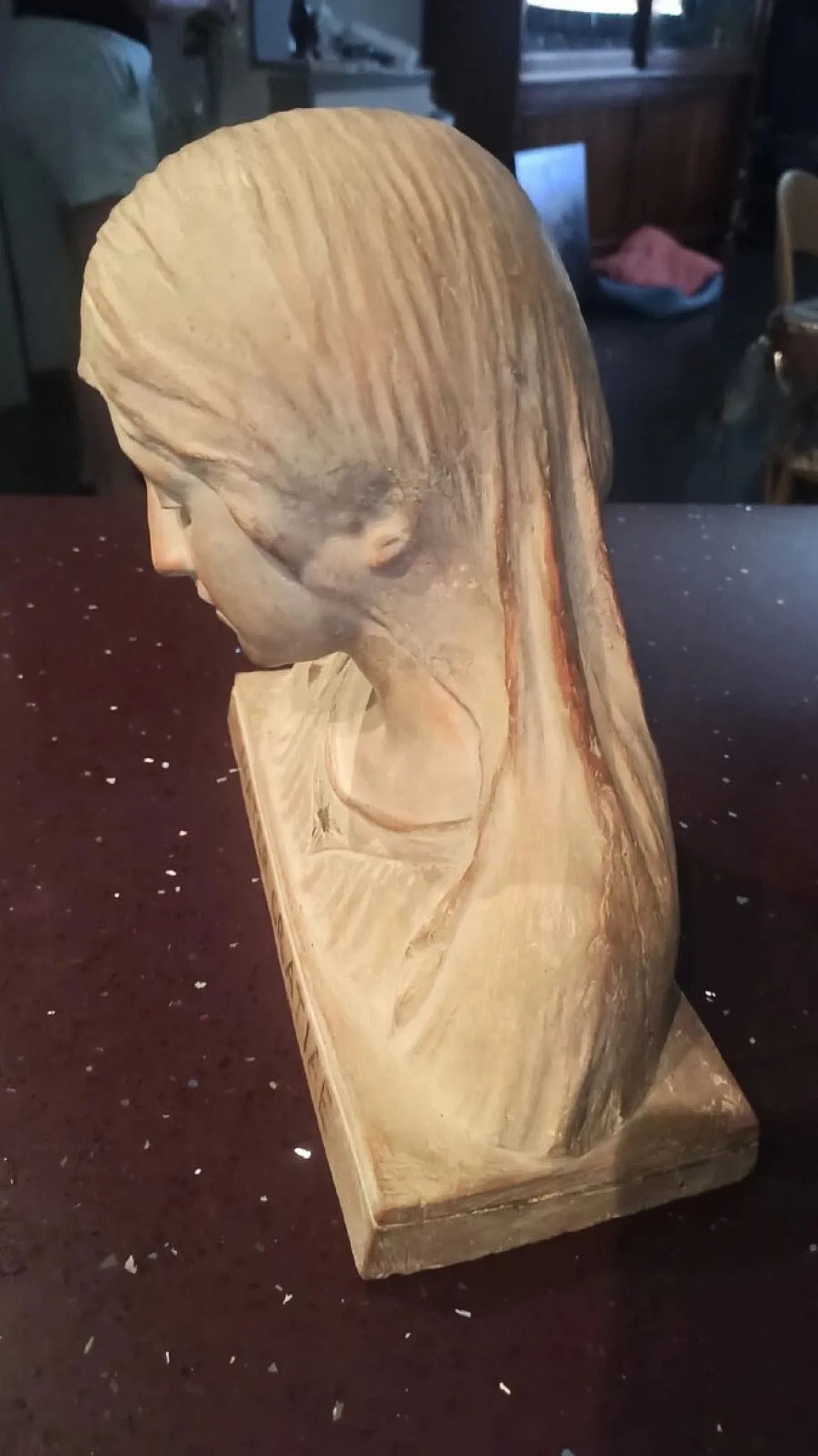
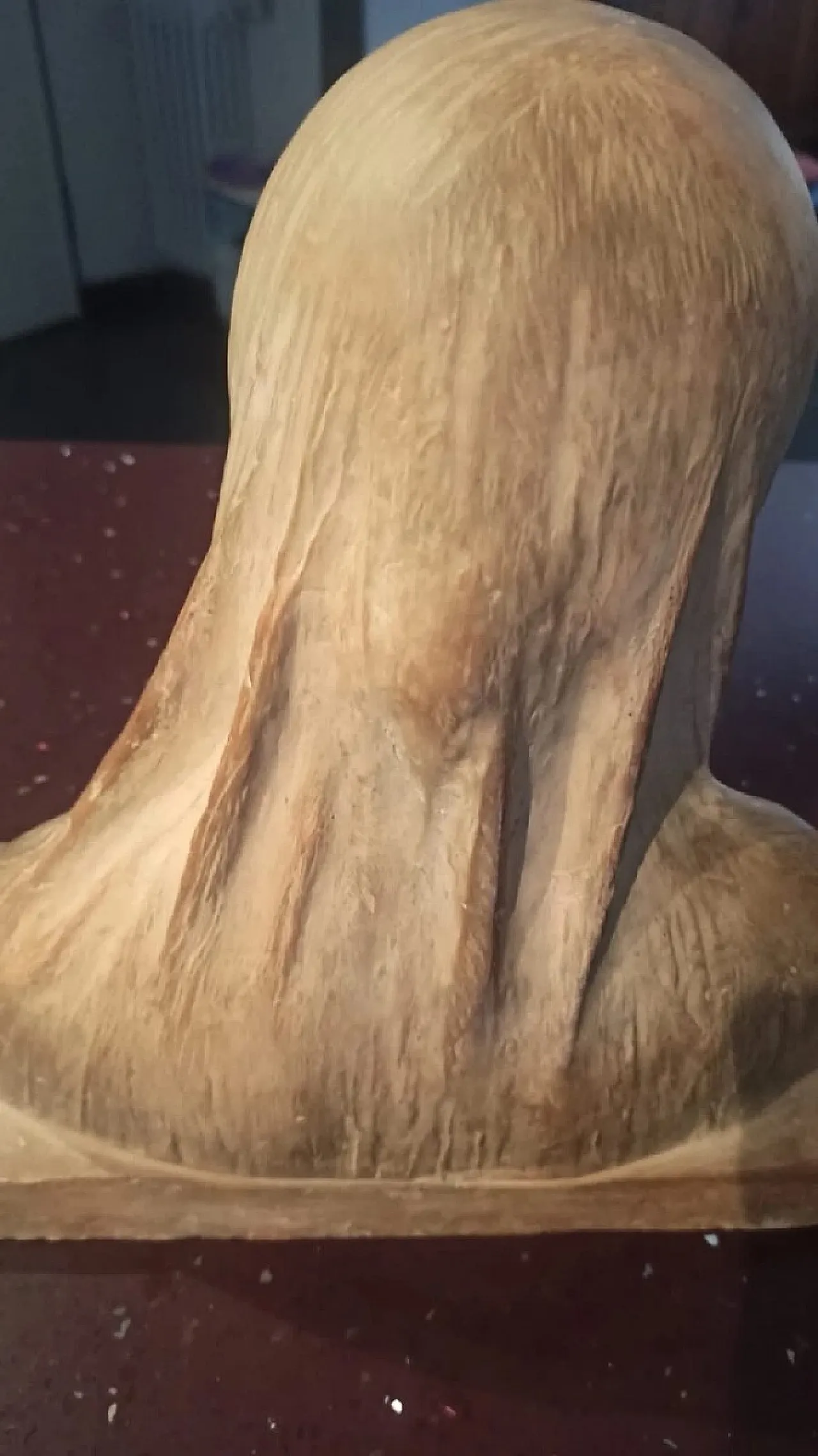
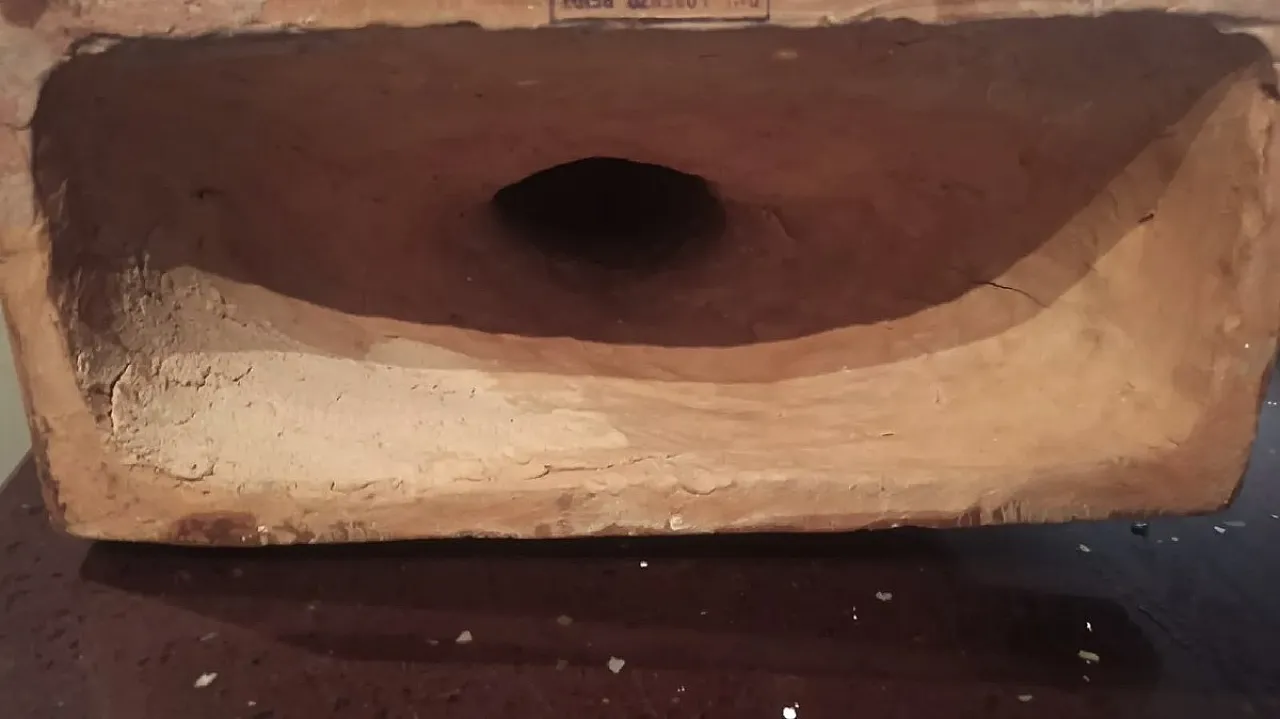
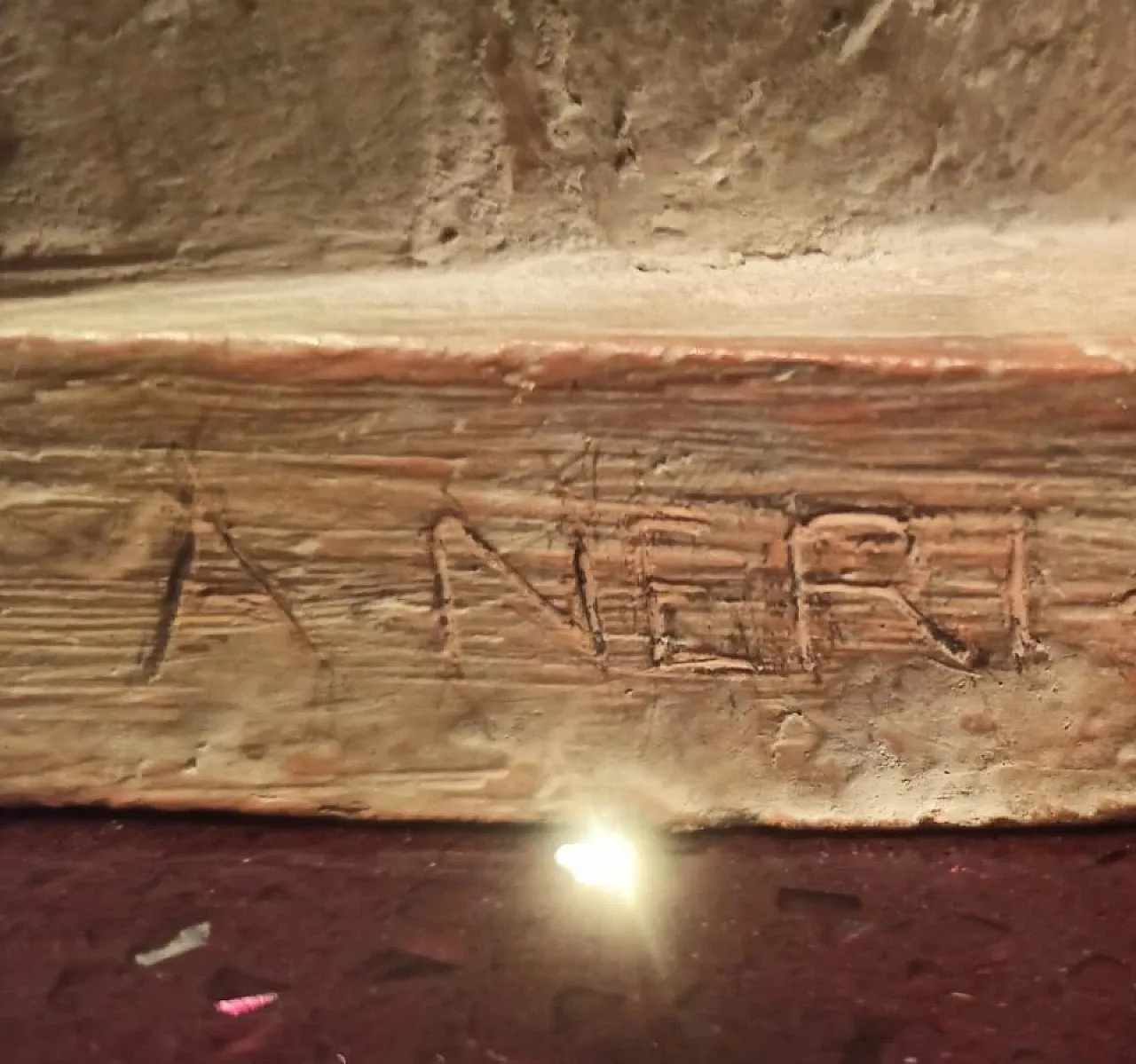
Terracotta sculpture depicting the bust of the Virgin Mary, signed A. Neri (Alfredo Neri 1862-1928). Early 20th century. In perfect condition. Dimensions: L 29 x H 27 cm. Terracotta bust of a sculpture of the Virgin Mary, entitled "MATER GRATIAE" (Mother of Graces). The sculpture is a bas-relief representing the Virgin's face with closed eyes and a serene expression. Few works by the sculptor Alfredo Neri are known (Bologna, 14 July 1862 - 1928 or 1932). Among the rare works cited is the one presented at the General Exhibition of Turin in 1884, entitled "Man's First Sleep", of which the Museum of the Risorgimento in Bologna preserves a period photograph. The subject chosen by Neri allowed him to showcase the knowledge acquired during his studies in anatomy and sculptural techniques at the Academy of Fine Arts in Bologna. Twenty years earlier, Alessandro Massarenti (1846-1923) had exhibited a sculpture of the same title at the Academy, thus offering the young artist a source of study and inspiration. The theme of the reclining nude male figure was clearly inspired by Roman copies of Hellenistic sculptures. Giovanni Duprè, with his Dying Abel (1842), and Giovanni Strazza with Ishmael (1845), were the first to propose a modern reinterpretation. Another famous work is the decoration of the portico of the Arena del Sole in Bologna, completed in 1888 with stucco ornaments and concrete sculptures in the attic. At the Certosa Cemetery he created several works, including the Resignment in the Galletti Cell and several portraits, such as that of his friend Giuseppe Pacchioni. His other funerary sculptures include those of the Ceneri and Romagnoli families, both modernized to reflect the evolution of international taste, which was moving towards Art Nouveau. Finally, mention should be made of the refined angel preserved in Cella Vignoli, signed and dated 1891.


.png)
 SILVER Seller in Firenze, Italy