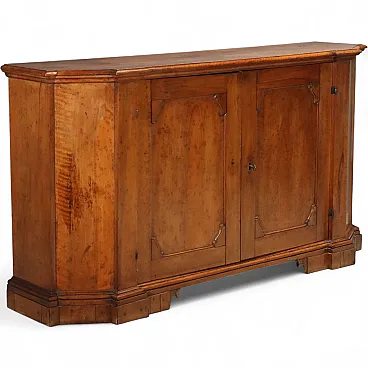
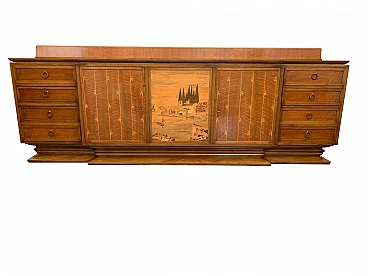
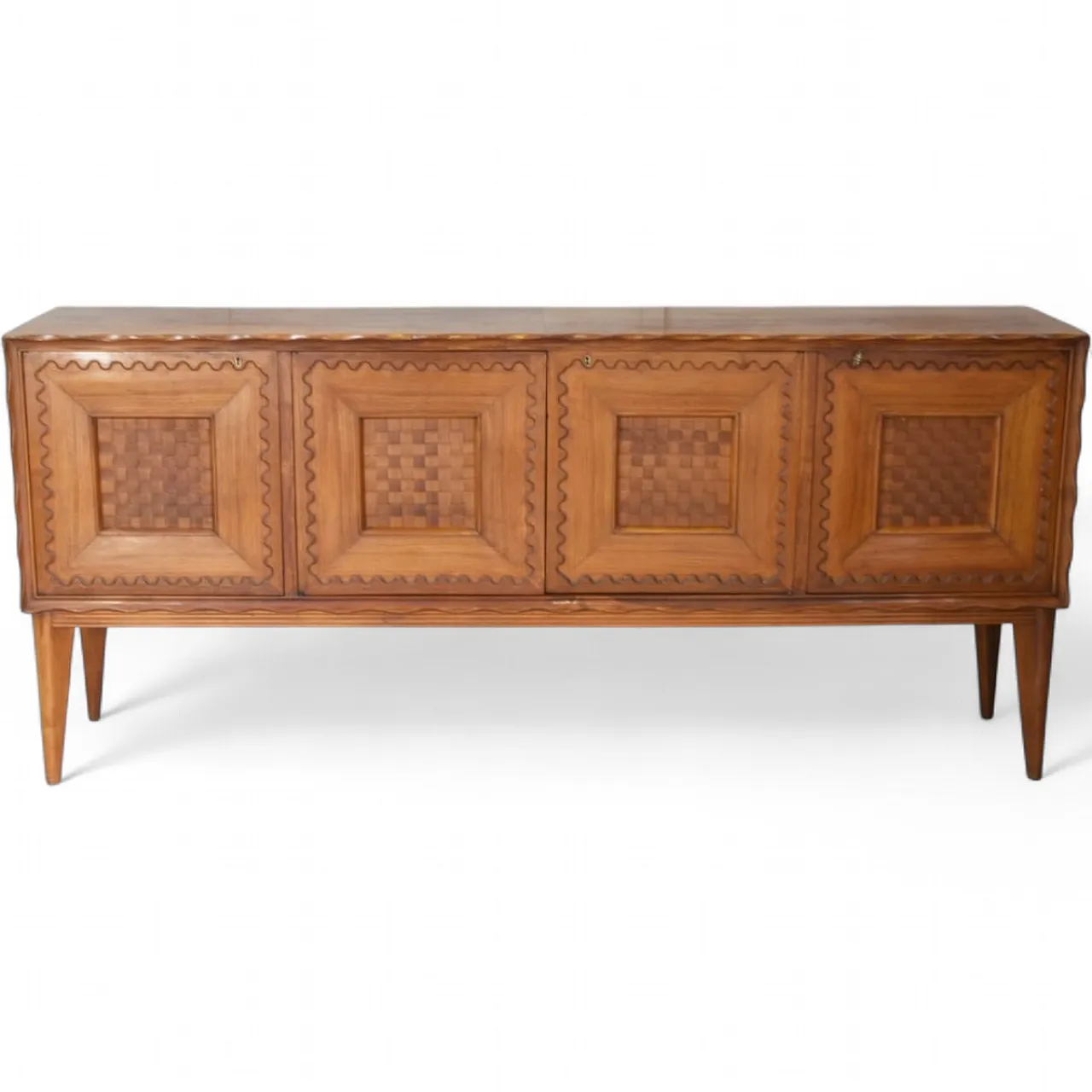
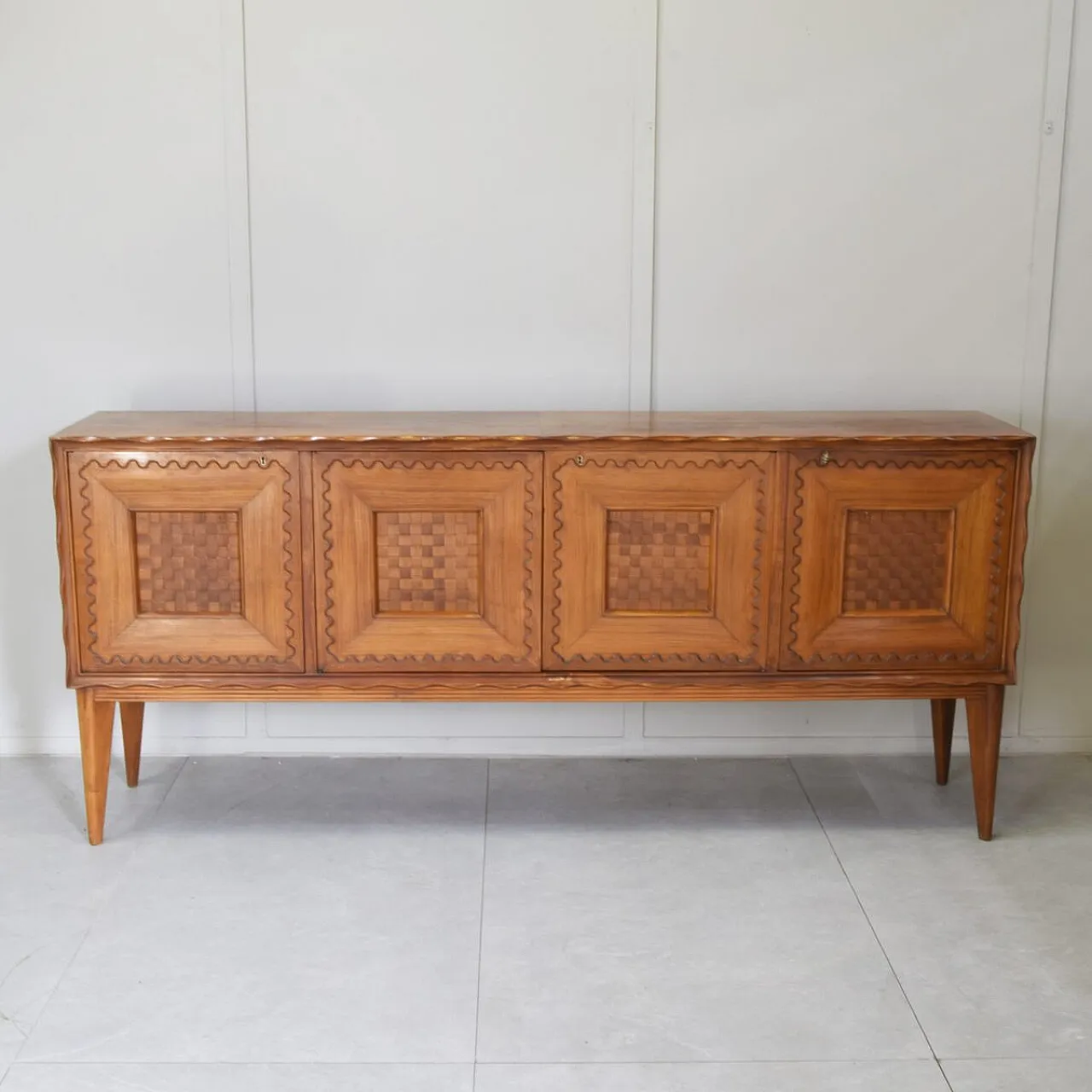
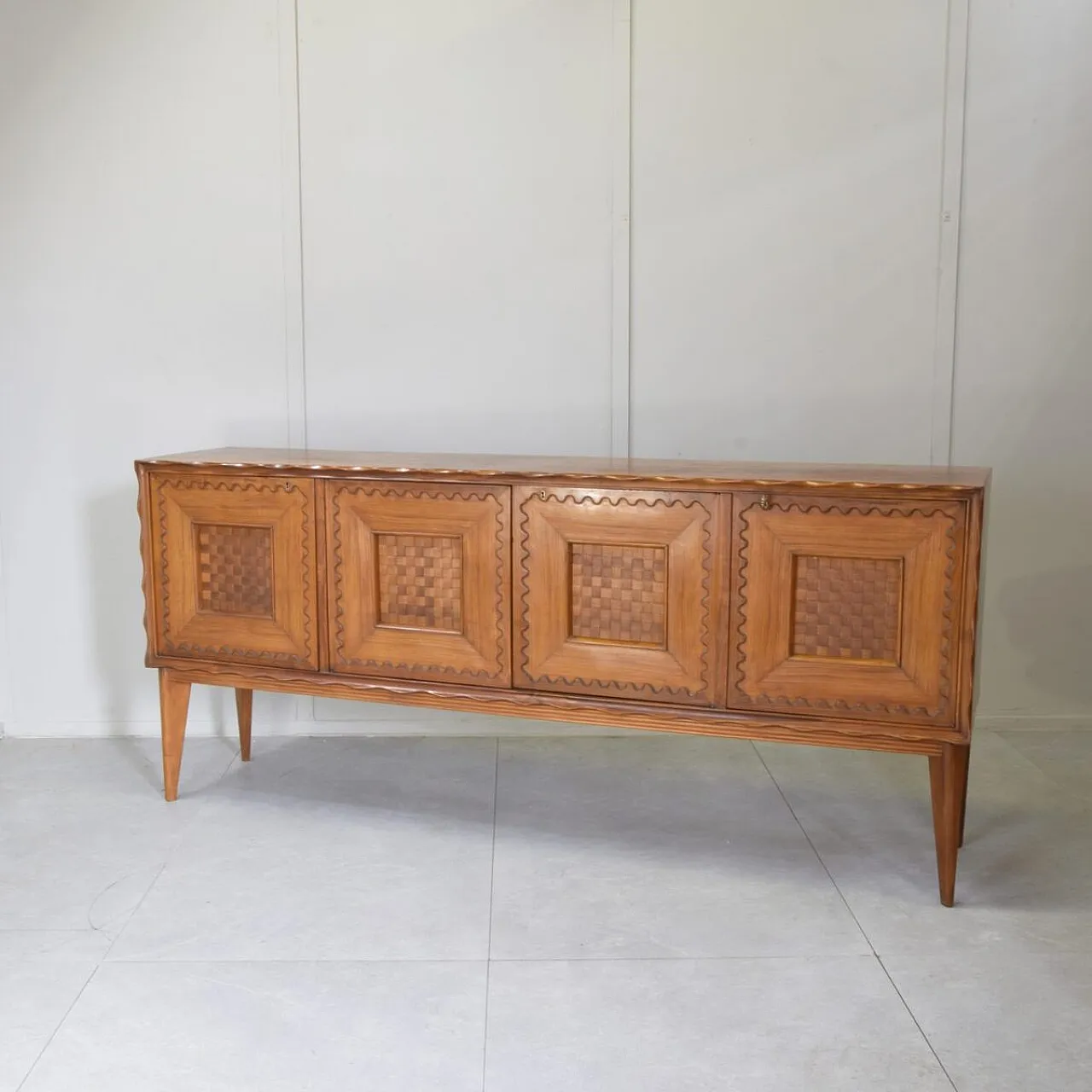
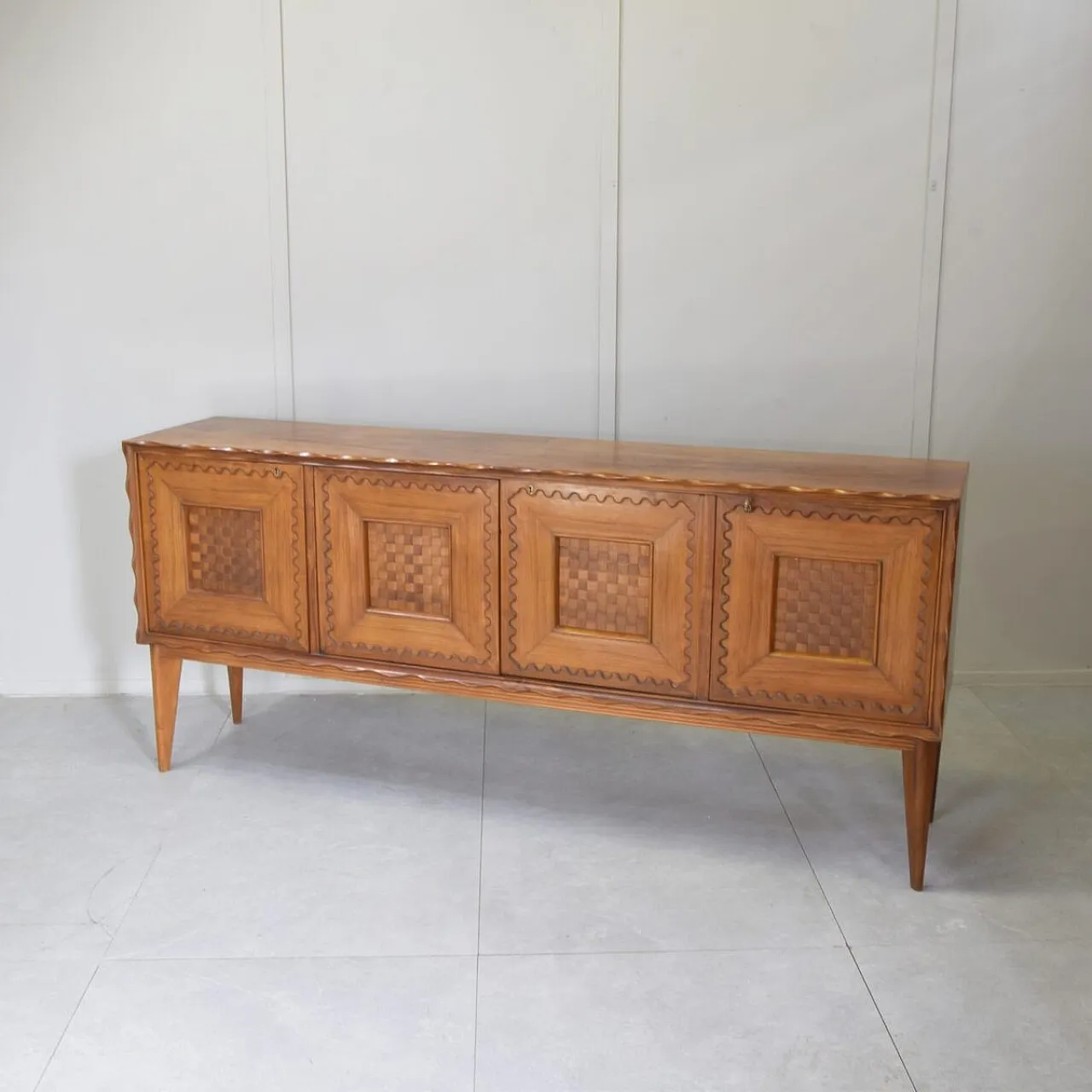
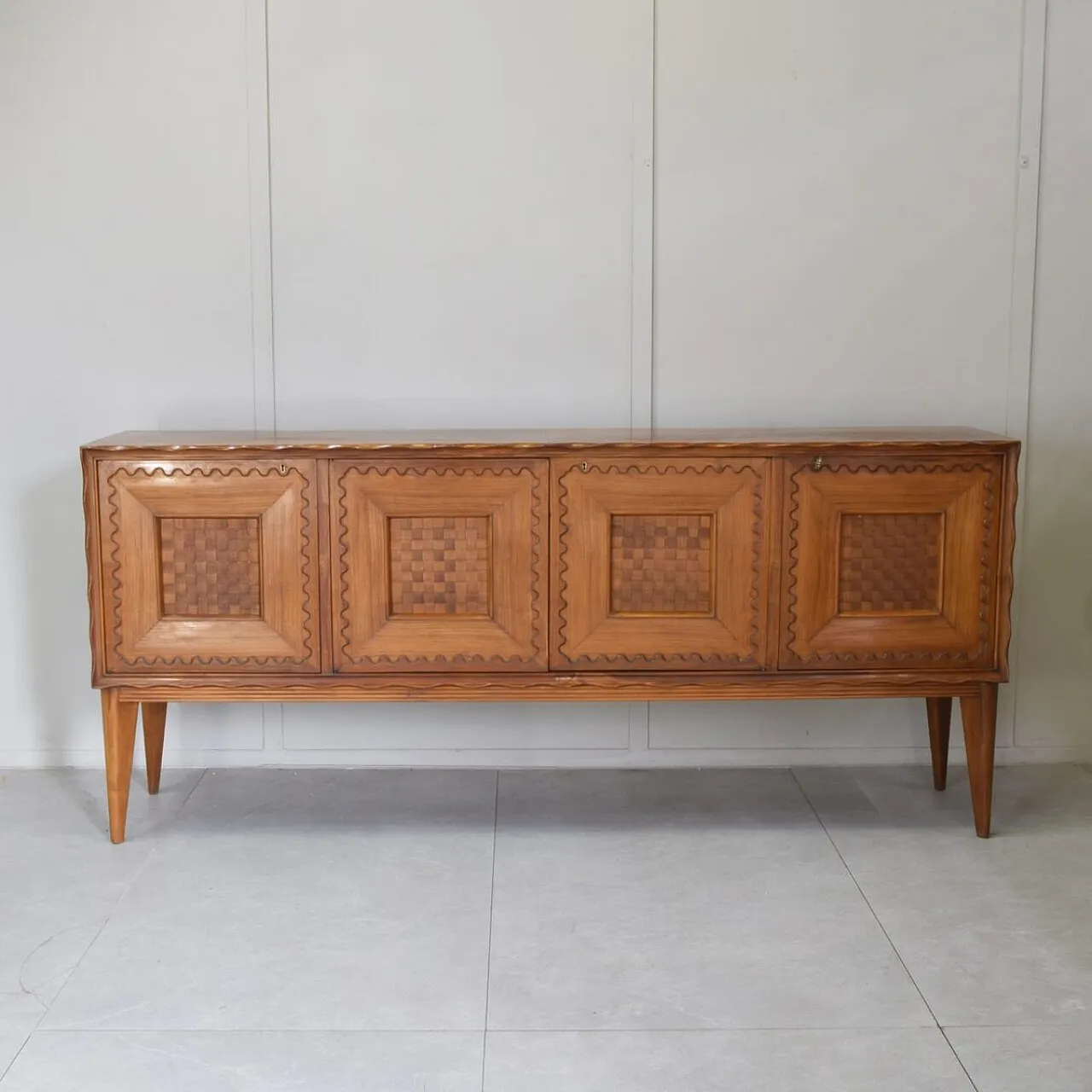
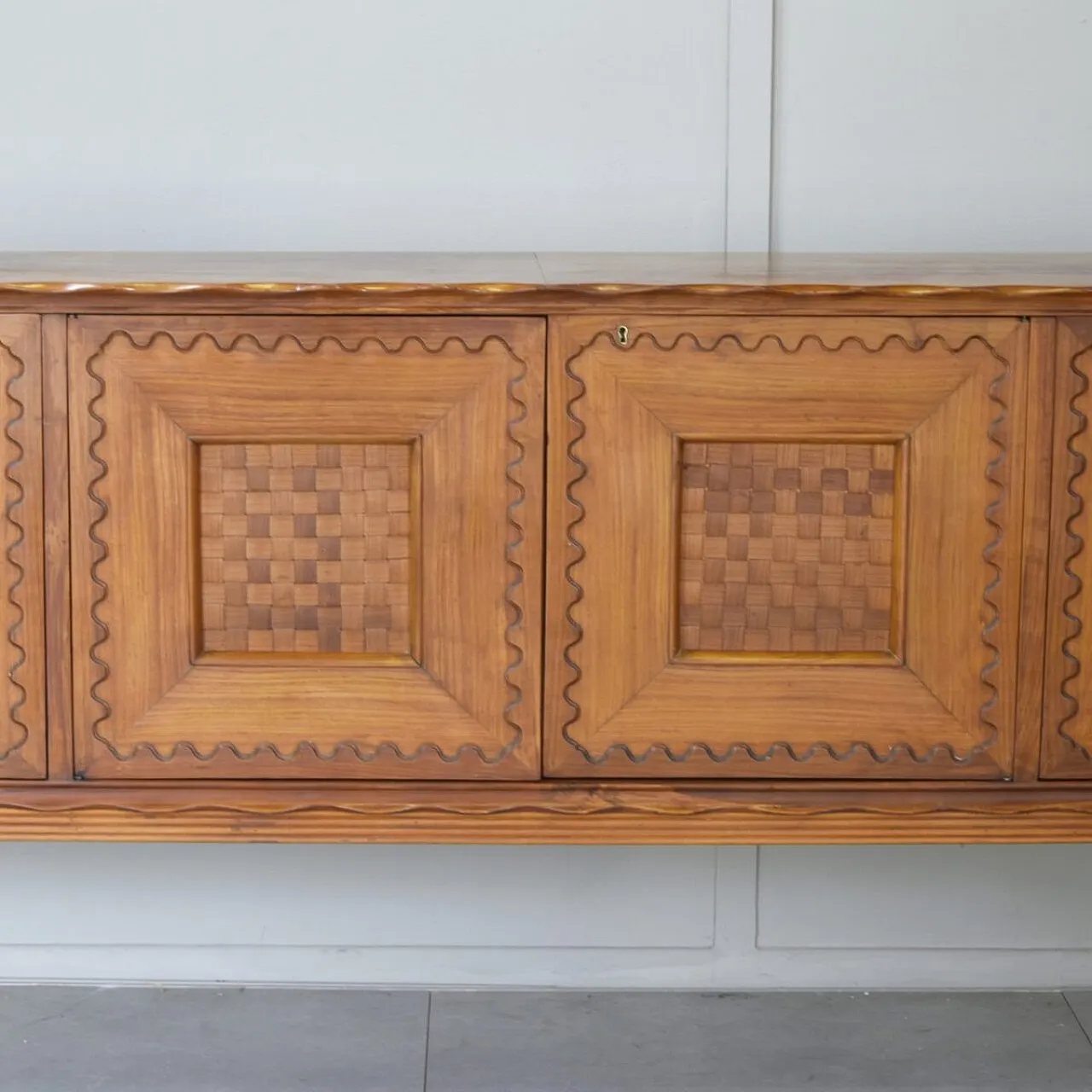
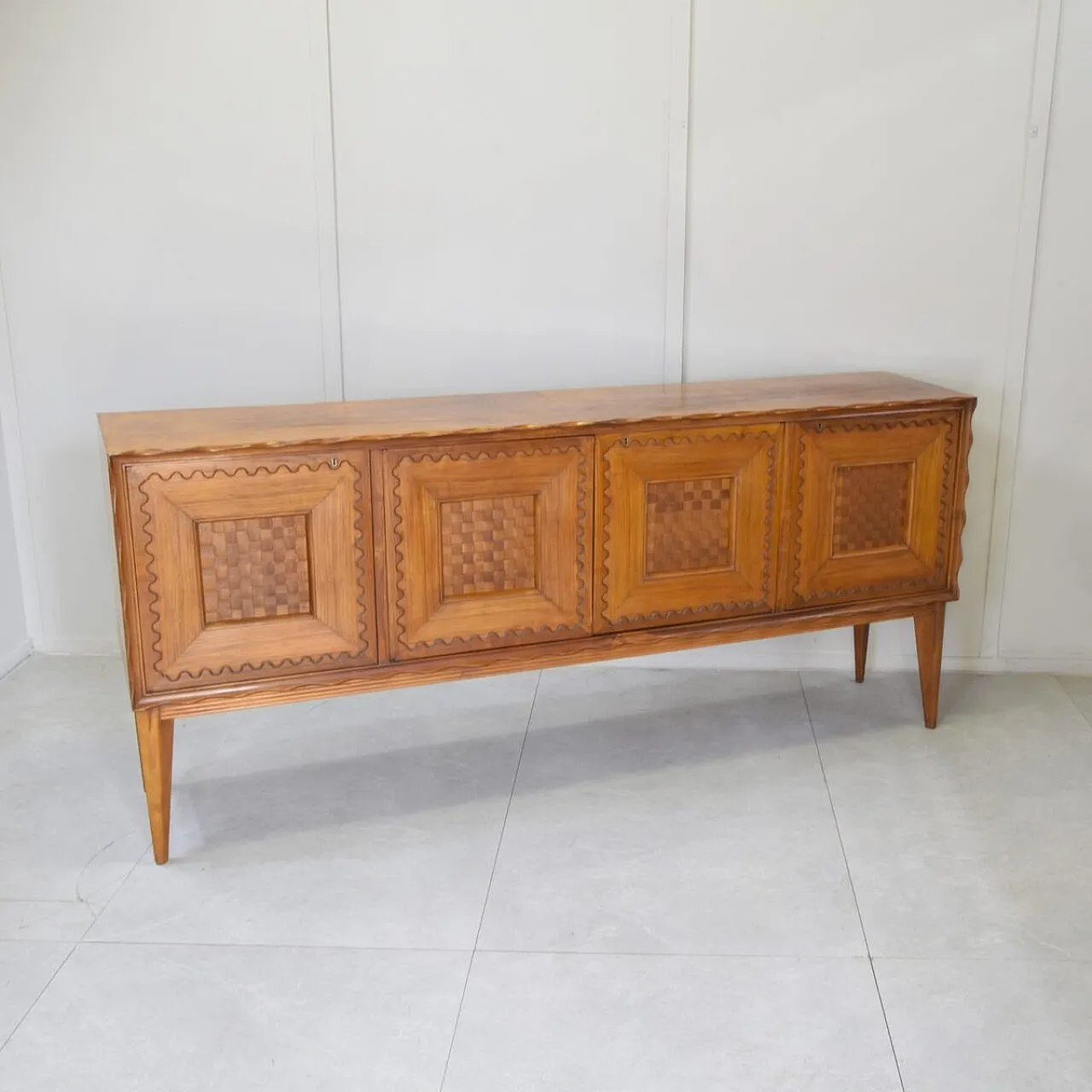
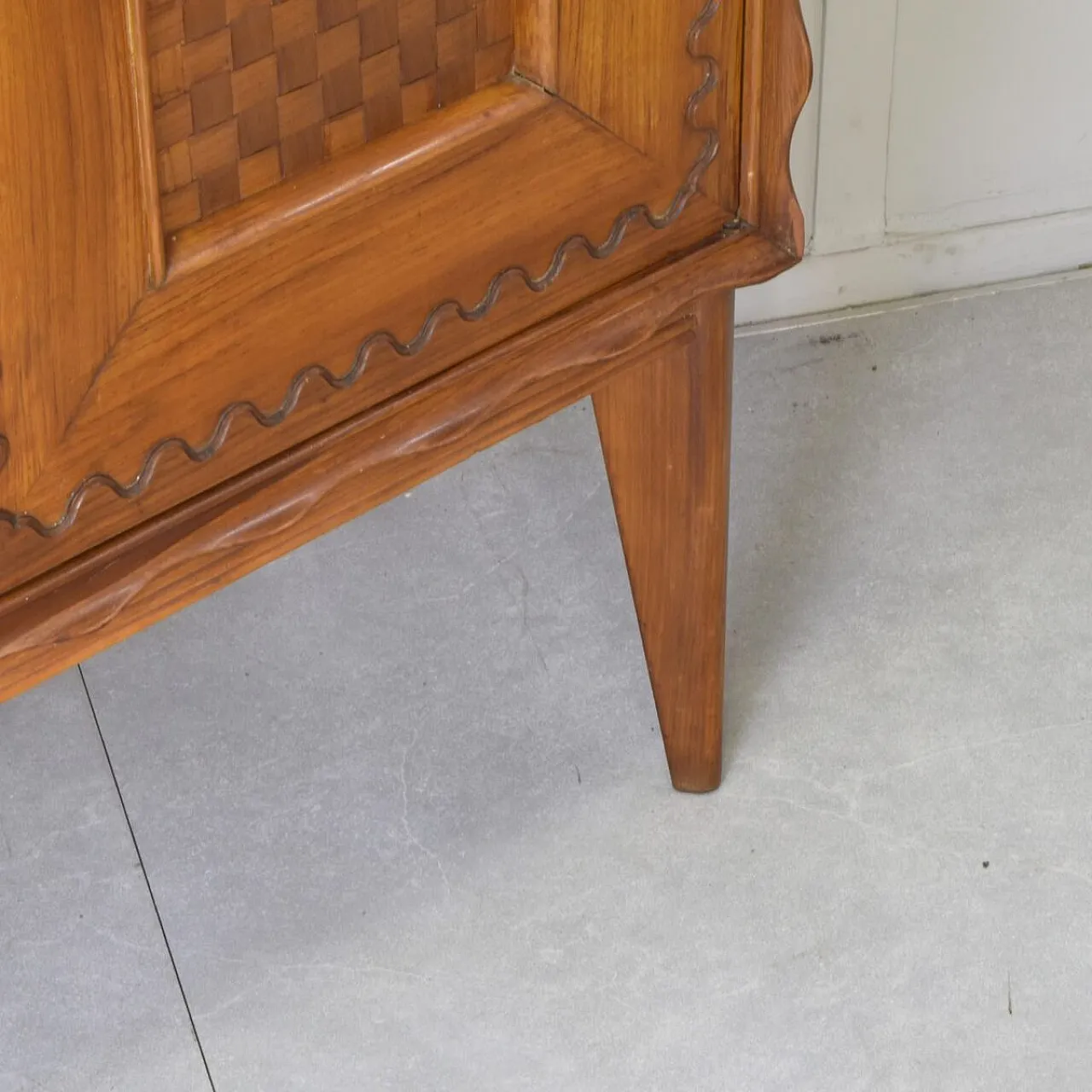
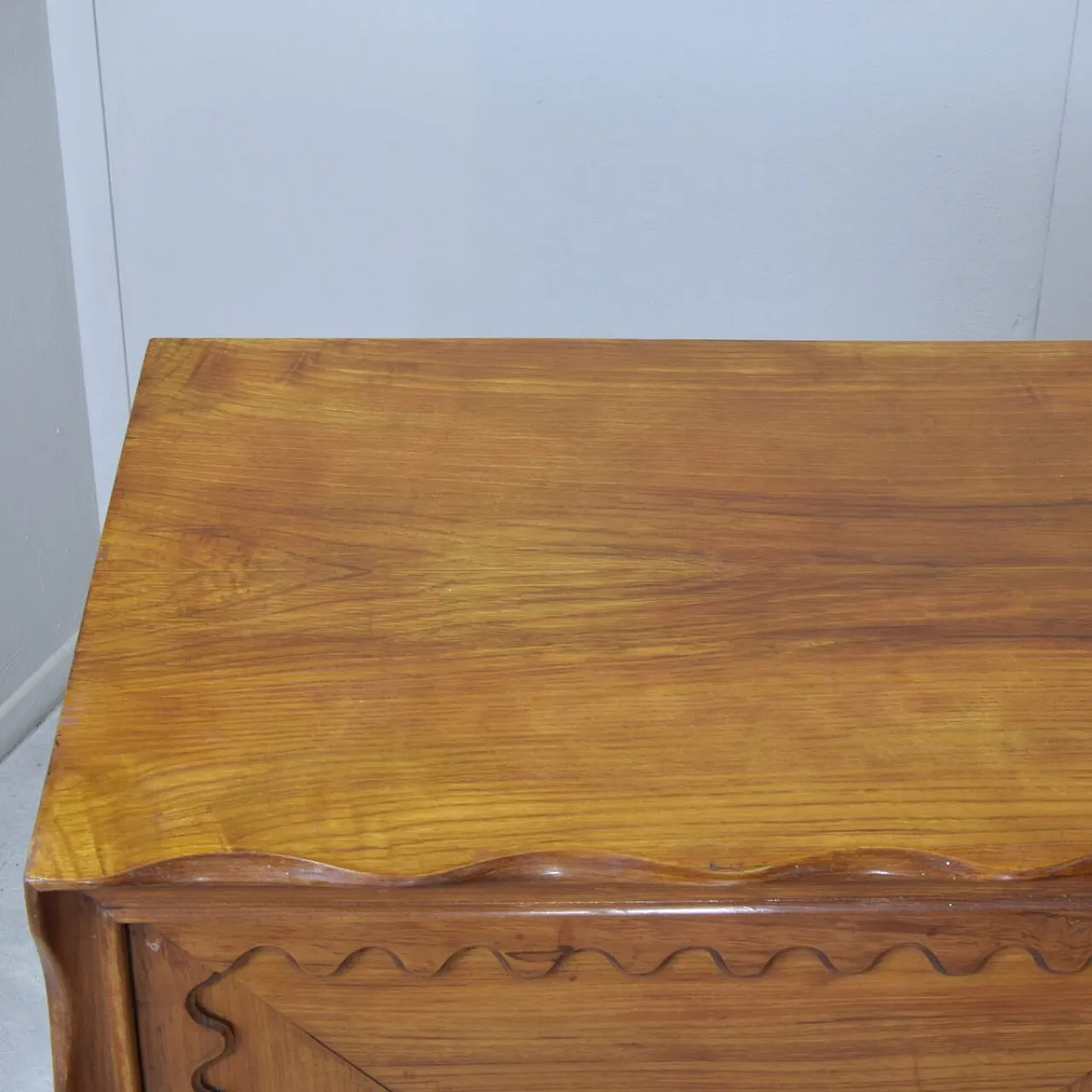
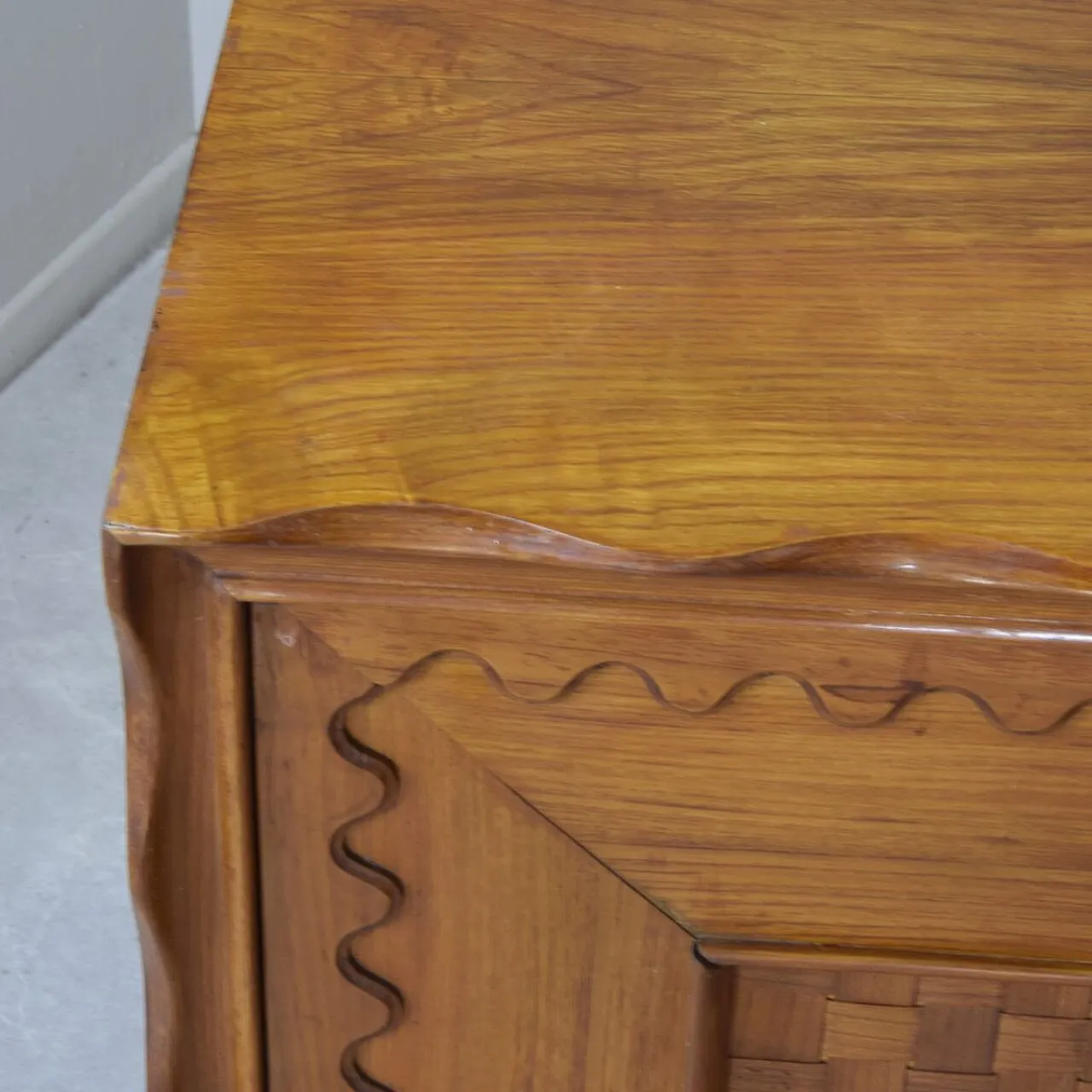
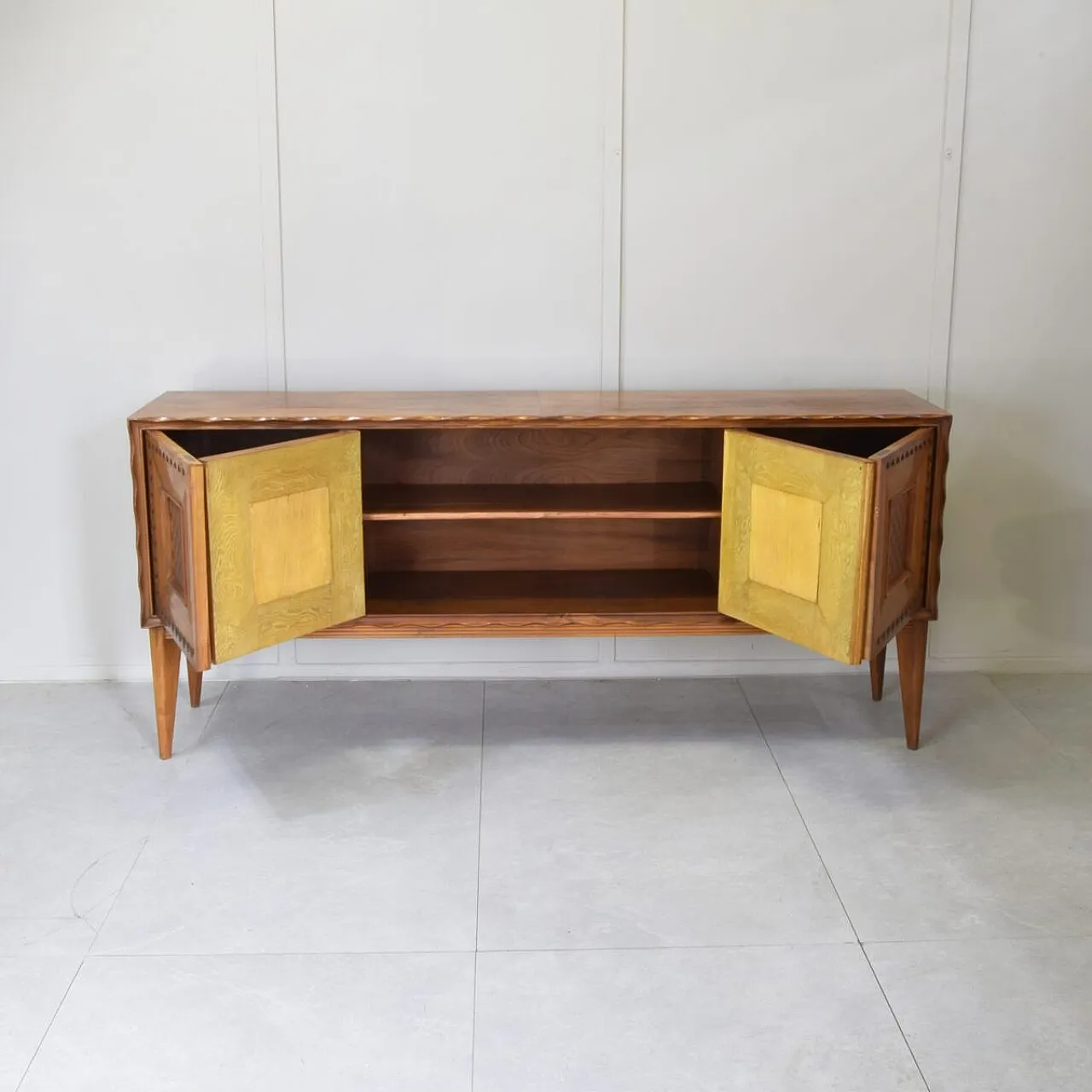
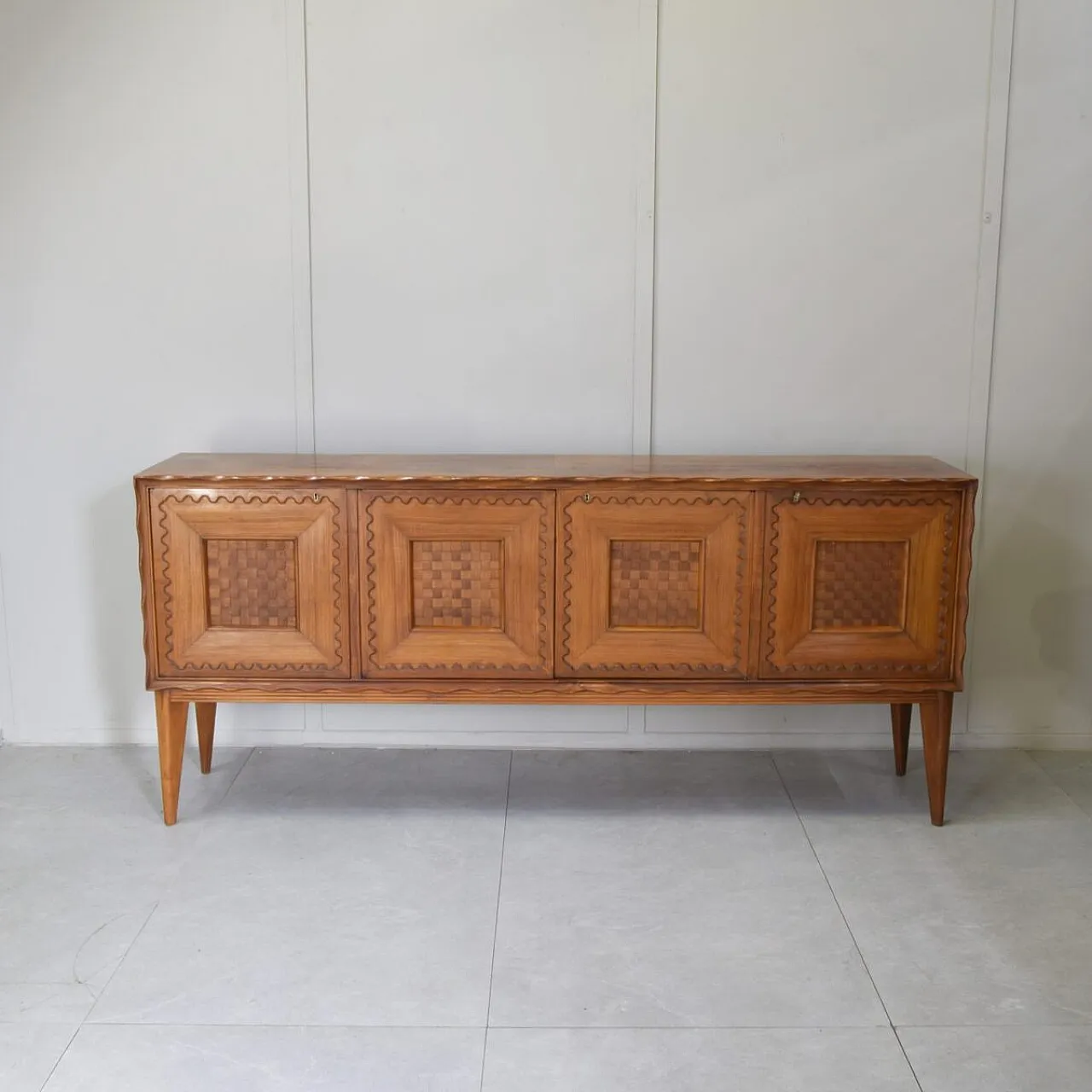
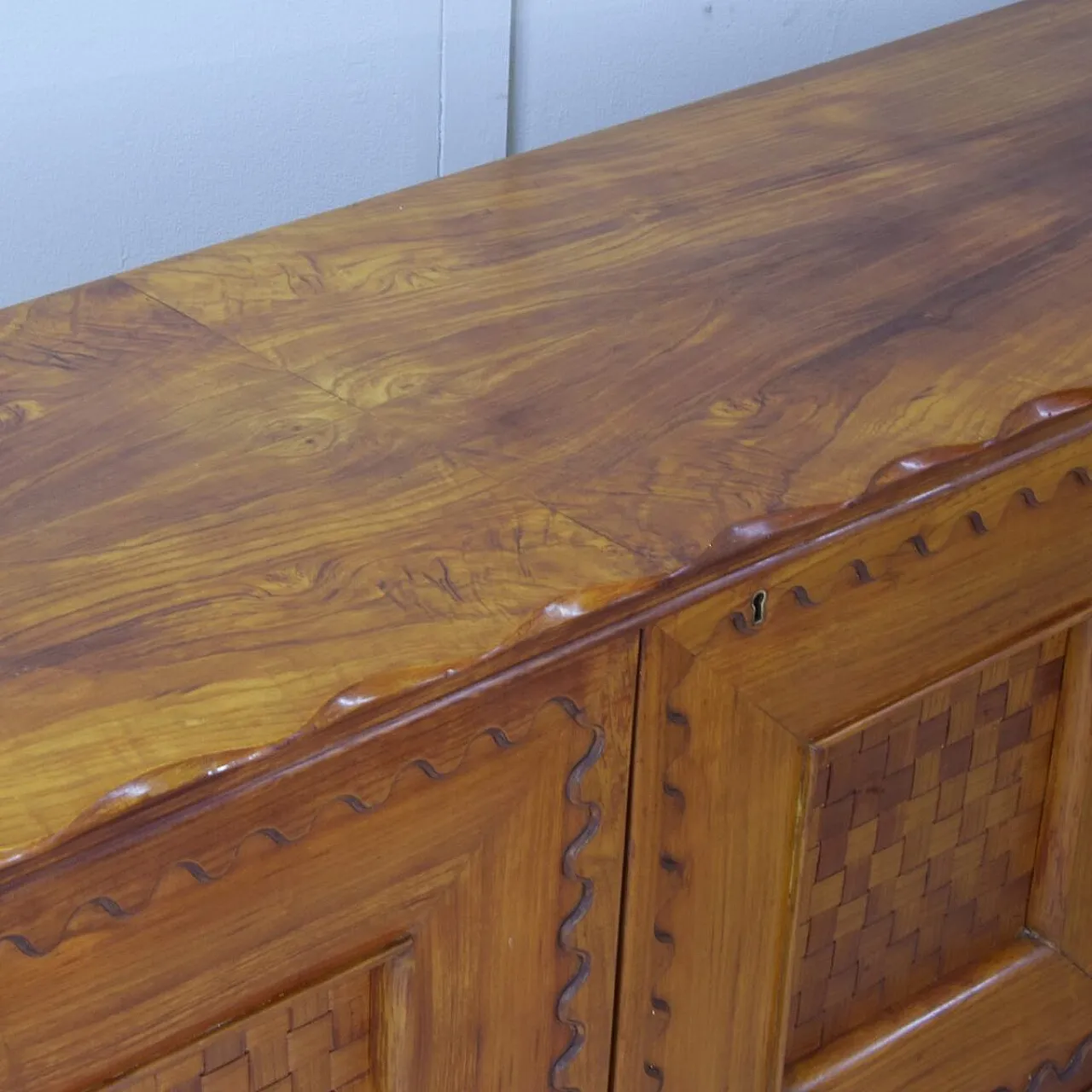
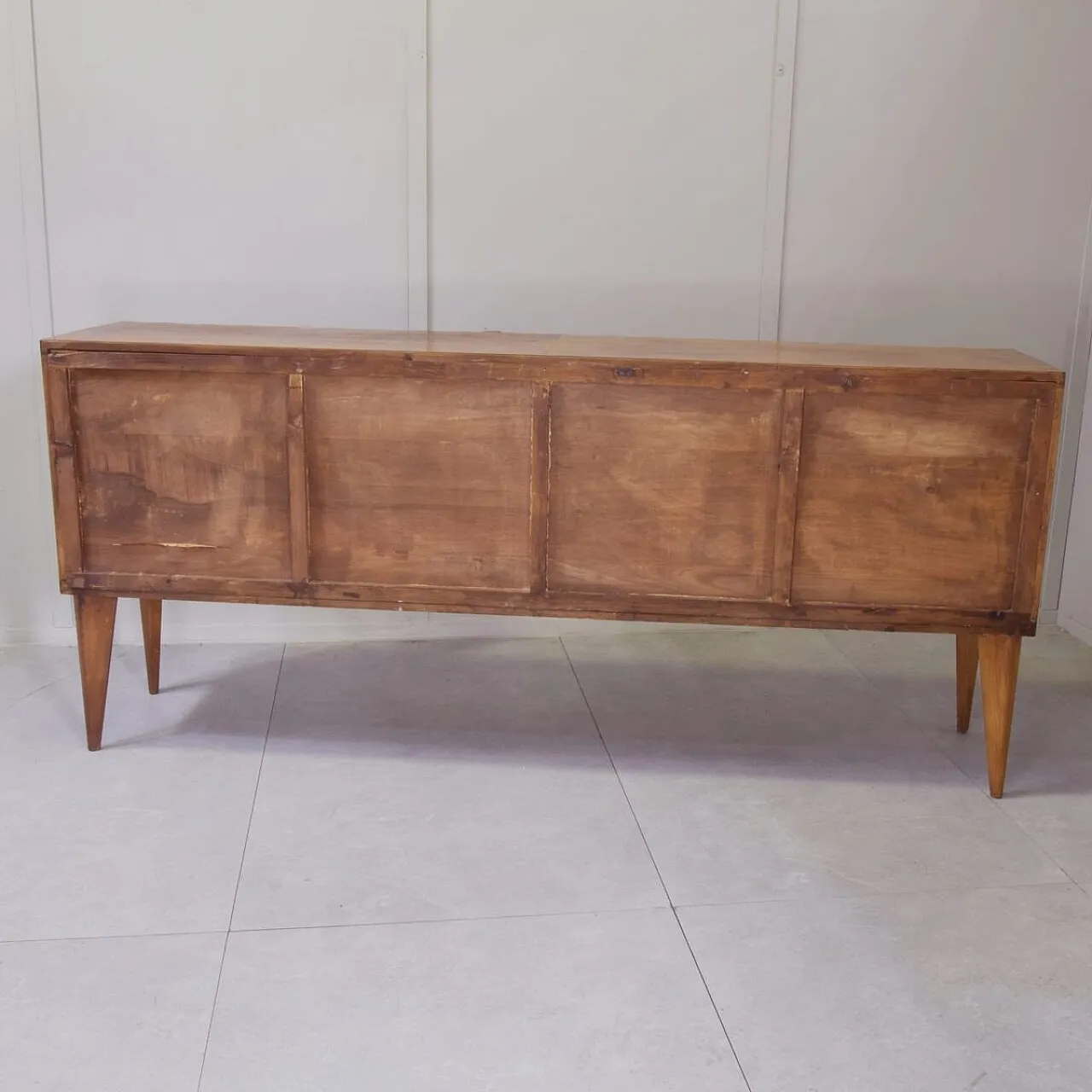
Paolo Buffa (Milan, 1903–1970) trained in the studio of Gio Ponti and Emilio Lancia and became one of the most accomplished postwar Italian architects and designers, known for furniture that blends neoclassical discipline with modernist structure. His pieces are recognizable for their elegant neoclassical lines, fine woods, and refined inlay work; the finest examples combine classical Milanese taste with a design rigor comparable in quality to that of the French master Émile-Jacques Ruhlmann. This sideboard, attributed to Buffa and likely made by one of the high-quality workshops in the Cantù furniture district, is part of the most characteristic production of the 1950s: pieces designed by Buffa and commissioned by the finest Cantù craftsmen, combining elegance with superior construction quality. The body is crafted from solid veneered Italian walnut, a wood Buffa favored for its warm hue and fine grain. Each of the four doors features a central panel with a checkerboard inlay in alternating two-tone walnut veneer—a motif also documented on Buffa pieces created for Palazzi dell’Arte Cantù—framed by a carved wave/zigzag molding that runs around the perimeter of each door. The body's profile is slightly wavy, with a wavy upper edge that avoids rigidity. The four tapered spinning-top legs—a recurring formal solution in Buffa's production—visually lighten the cabinet's mass. The original brass lock escutcheons are visible on the central doors.


.png)
 SILVER Seller in Bari, Italy