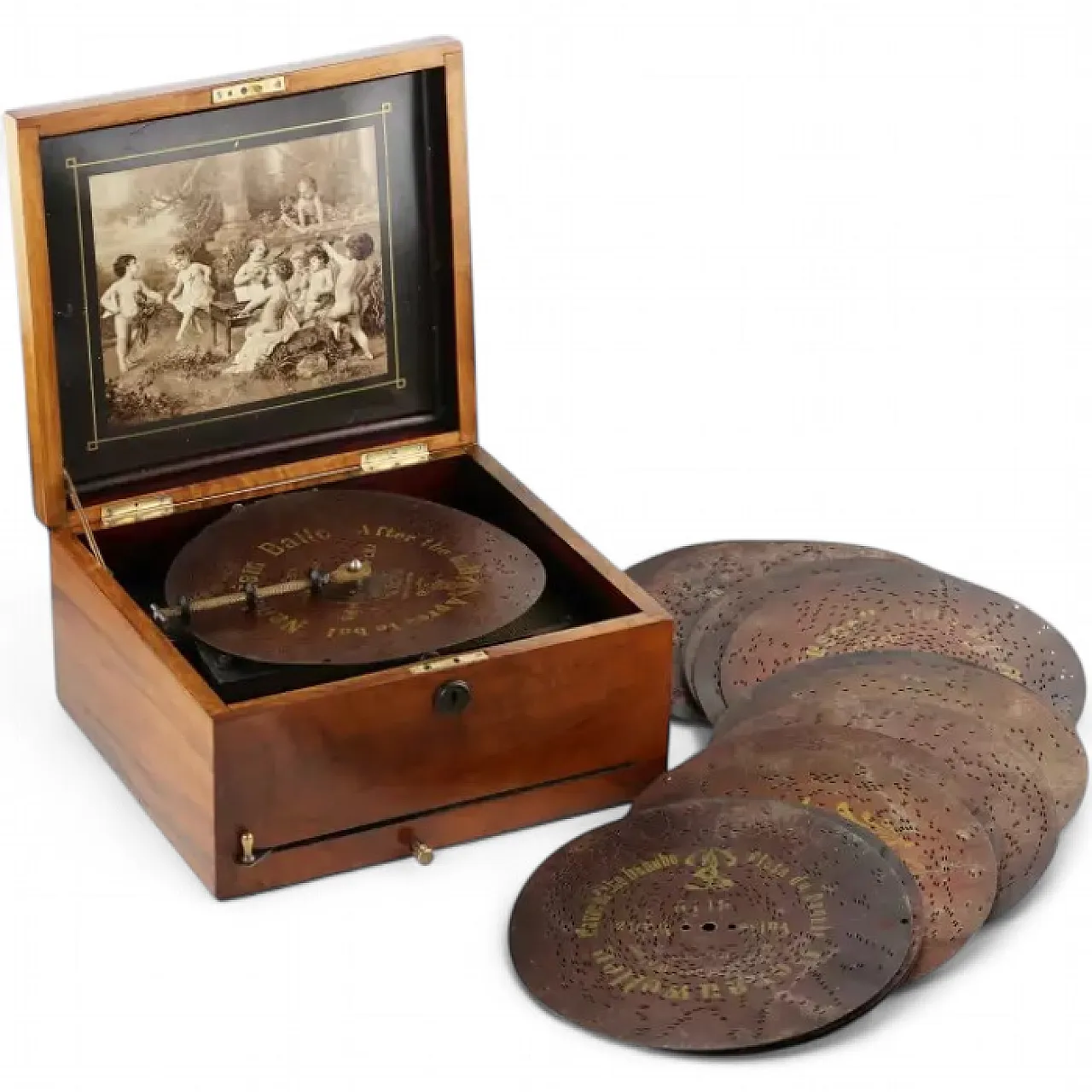
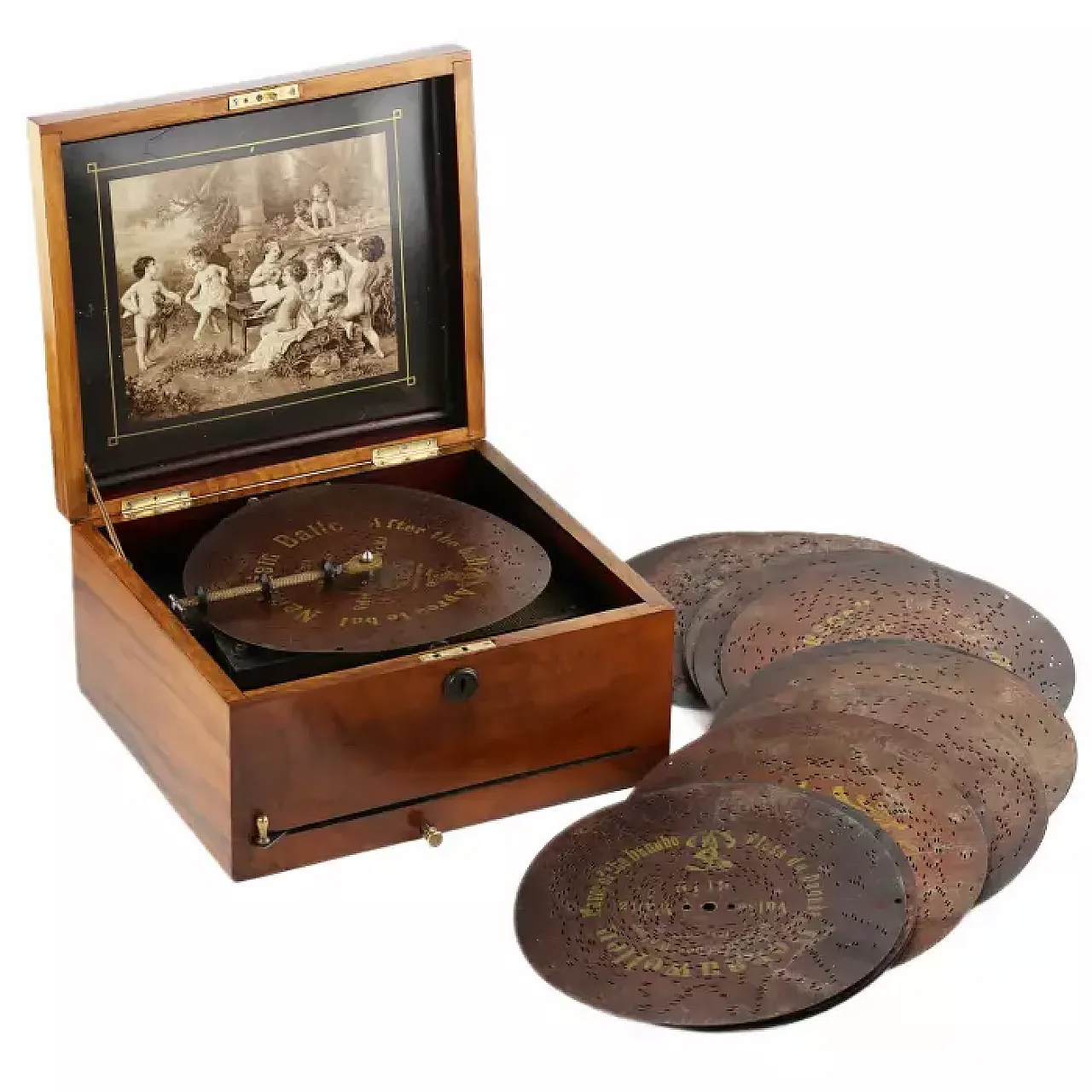
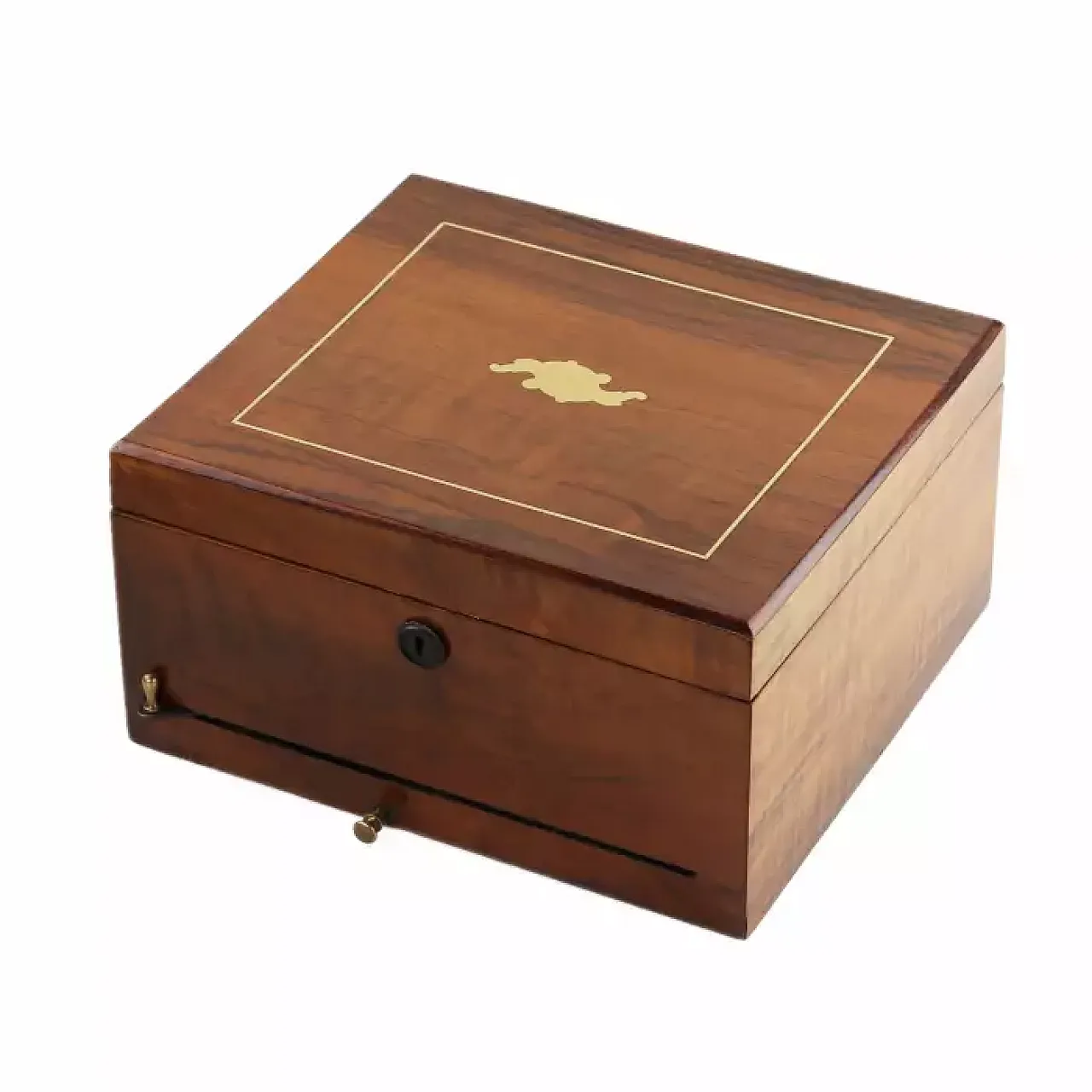
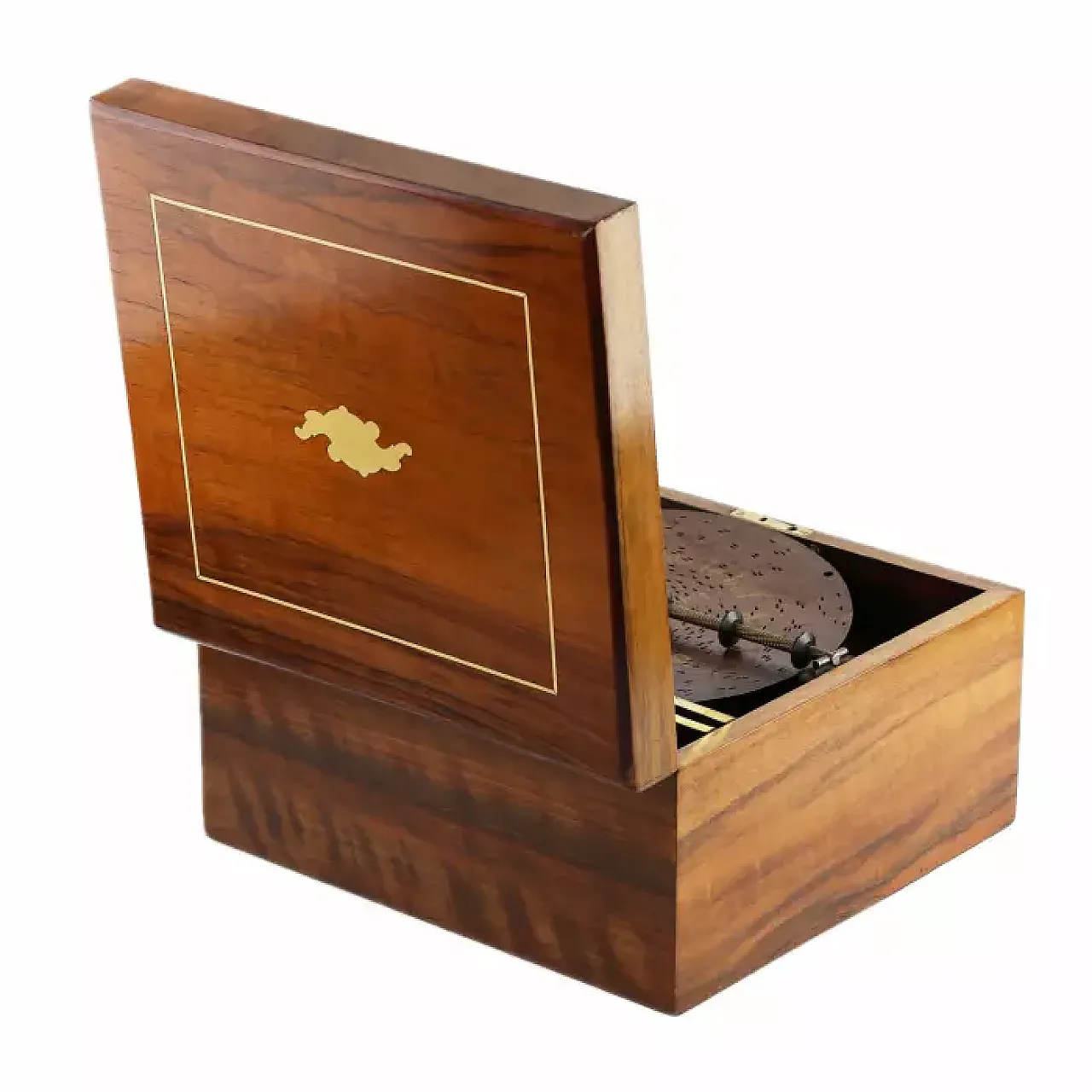
A tabletop Polyphon disc music box, manufactured in Leipzig circa 1900. The rectangular case is crafted from walnut and fitted with a hinged lid. Its restrained architectural form is enhanced by decorative inlay on the lid, featuring a curved cartouche and a light-coloured inset panel.
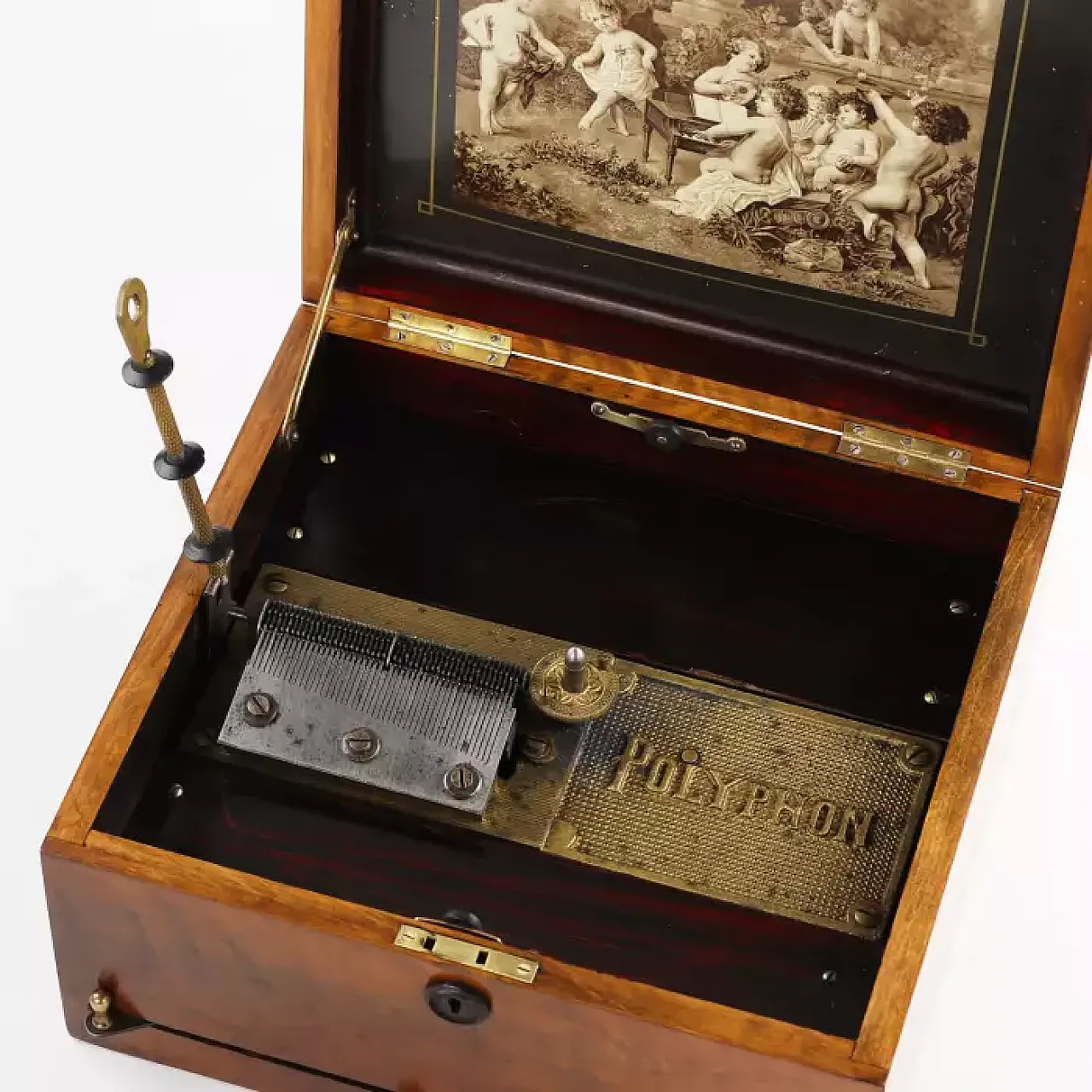
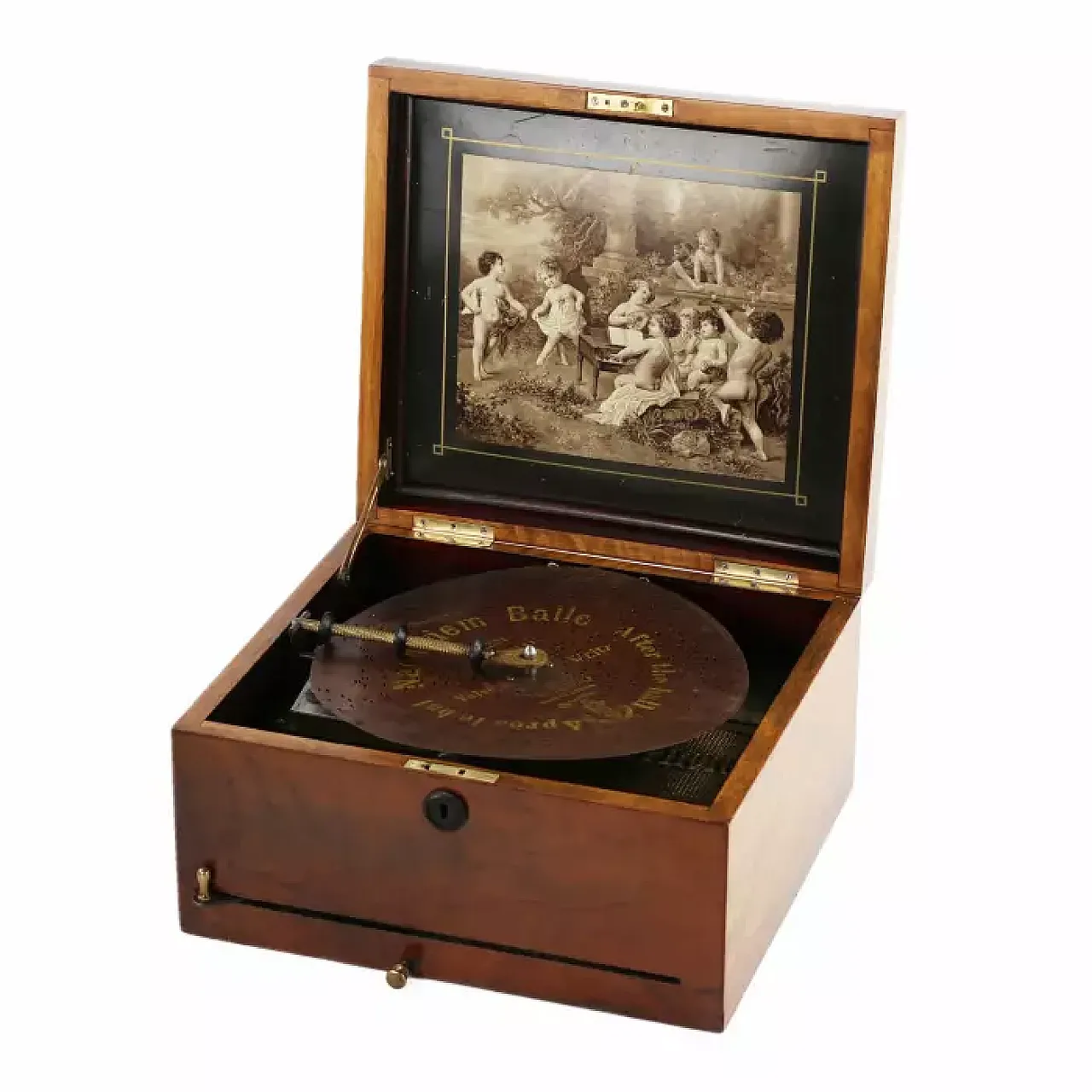
The interior of the lid is decorated with a monochrome image of music-making putti, framed within a restrained decorative border. This subject is directly associated with the musical purpose of the object and is characteristic of the decoration found on mechanical musical instruments around the turn of the 20th century. A closely comparable early 20th-century Polyphon preserved in the collection of the Science Museum Group likewise features a walnut case and an image of music-making cherubs on the inside of the lid.
Beneath the lid is a mechanical musical movement designed to accommodate interchangeable perforated metal discs mounted horizontally. As the disc rotates, its projections activate the sound mechanism, producing the melody. The mechanism is powered by a spring-driven movement. The ability to change discs with relative ease enabled the owner to assemble and enjoy a personal musical repertoire.
The music box is accompanied by 23 metal music discs and a separate wooden storage box, significantly enhancing the completeness and collectible appeal of the ensemble.



.png)



 SILVER Seller in Alpes-Maritimes, France