

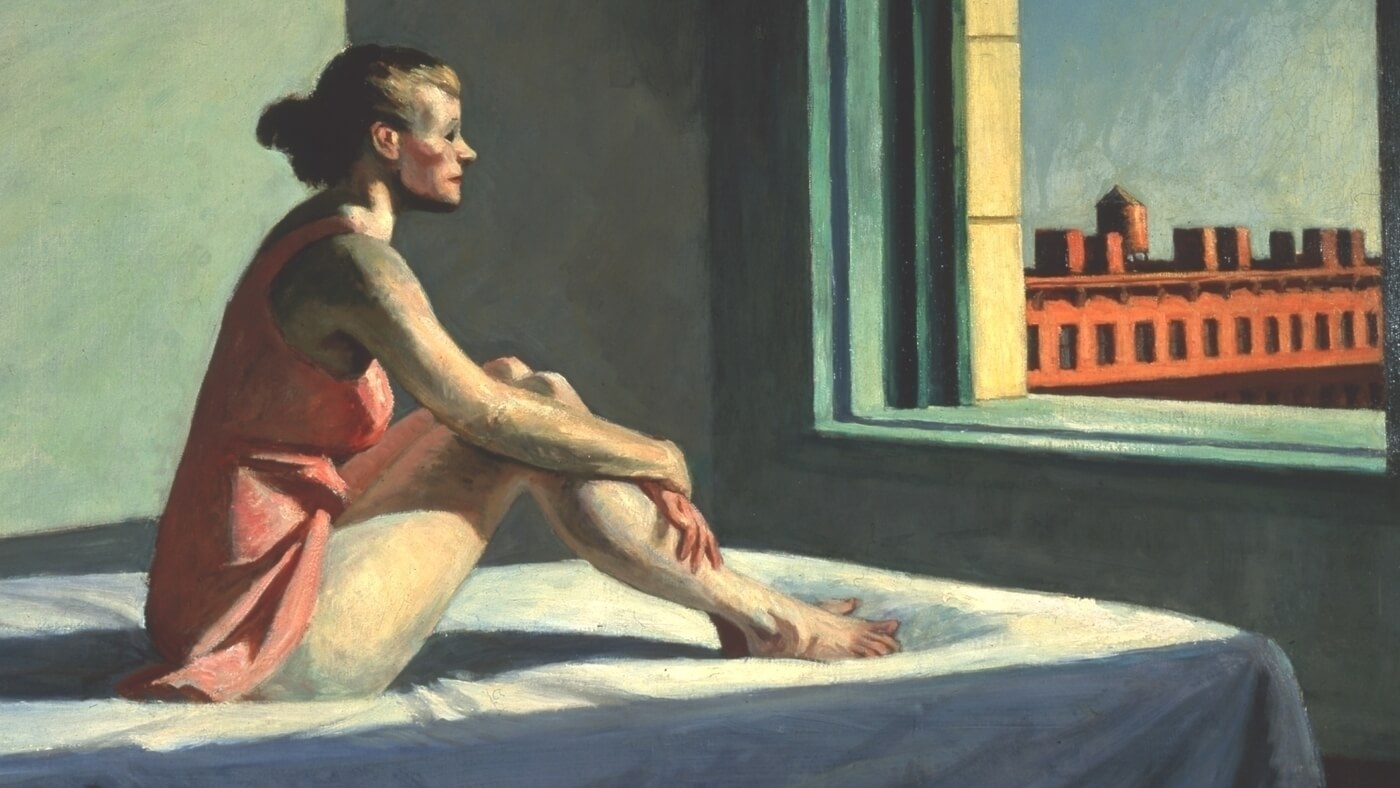
Pair of Argyle chairs by Charles Rennie Mackintosh for Alivar, 1970s
.png)
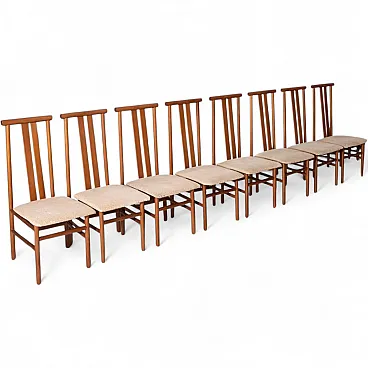
This is a high-backed chair created for the Argyle Street Tea Rooms in Glasgow and designed Charles Rennie Mackintosh, featuring a square ash frame stained black, on which the designer made curvilinear cuts and affixed elliptical elements that recall Celtic art and taste. The chair has been reissued by Cassina since 1973. While Mackintosh is best known for his architectural works, including the Glasgow School of Art, Hill House and House for an Art Lover, he also designed much of their furniture. One of the most important figures in Mackintosh's career was Catherine Cranston-a patron who allowed him to showcase his talent as a designer and appreciated his all-encompassing approach. Cranston was a Glasgow businesswoman with a passion for the arts, who came up with the idea of opening a series of tea rooms in the city with artistic interiors. Having already established a successful tea room on Argyle Street, she invited Mackintosh to work alongside architect and designer George Walton on the interiors of a new location on Buchanan Street in 1896. The following year, Mackintosh and Walton collaborated again on the design of the Argyle Street Tea Rooms in Cranston, with Mackintosh focusing on the furniture. It was the first major private commission of his career and an opportunity to implement some of his ideas about using furniture to create a feeling of enclosure and spatial separation within a room. One of the pieces Mackintosh designed for the project was a high-backed chair for the dining room that aimed to provide a more intimate dining experience for diners. The Argyle chair features long tapered uprights that intersect with an enlarged oval headrest. The stylized shape of a swallow in flight is carved from the headrest to give it an artistic and emblematic quality. The chair's combination of simple, sculptural elements with an emphasis on natural forms echoed the ideas put forth by the Arts and Crafts movement, of which Mackintosh was an admirer. Its extraordinary back legs are a complex piece of woodwork, with a shape that starts at the base before curving and gradually tapering to become circular at the top. The unusual height of the chairs meant that they formed a screen around the tables, creating the feeling of a room within a room. It was a technique that Mackintosh would explore and further refine in many of his later furniture designs. In 1900, the Argyle Chair was exhibited at the 8th Vienna Secession Exhibition in Austria, where Mackintosh's work was held in high regard and strongly influenced the work of artists, architects and designers in the Wiener Werkstatte community. Excellent vintage condition, minor signs of wear and tear from time. Produced by Alivar in the late 1970s. Width 48 cm, depth 48 cm, height 136 cm.
ID: 30303-1664808564-47051
Time period

 SILVER Seller in Bari, Italy