




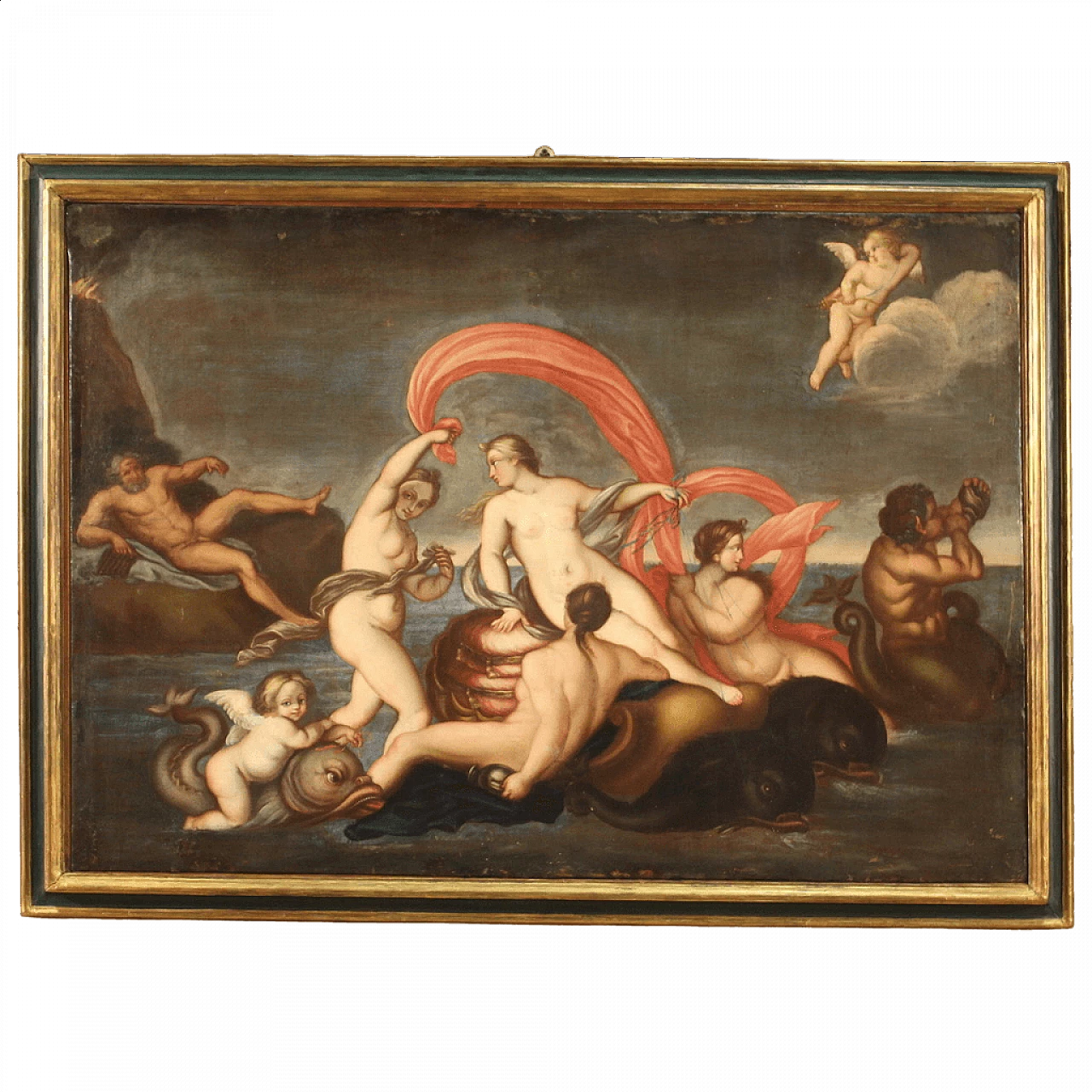
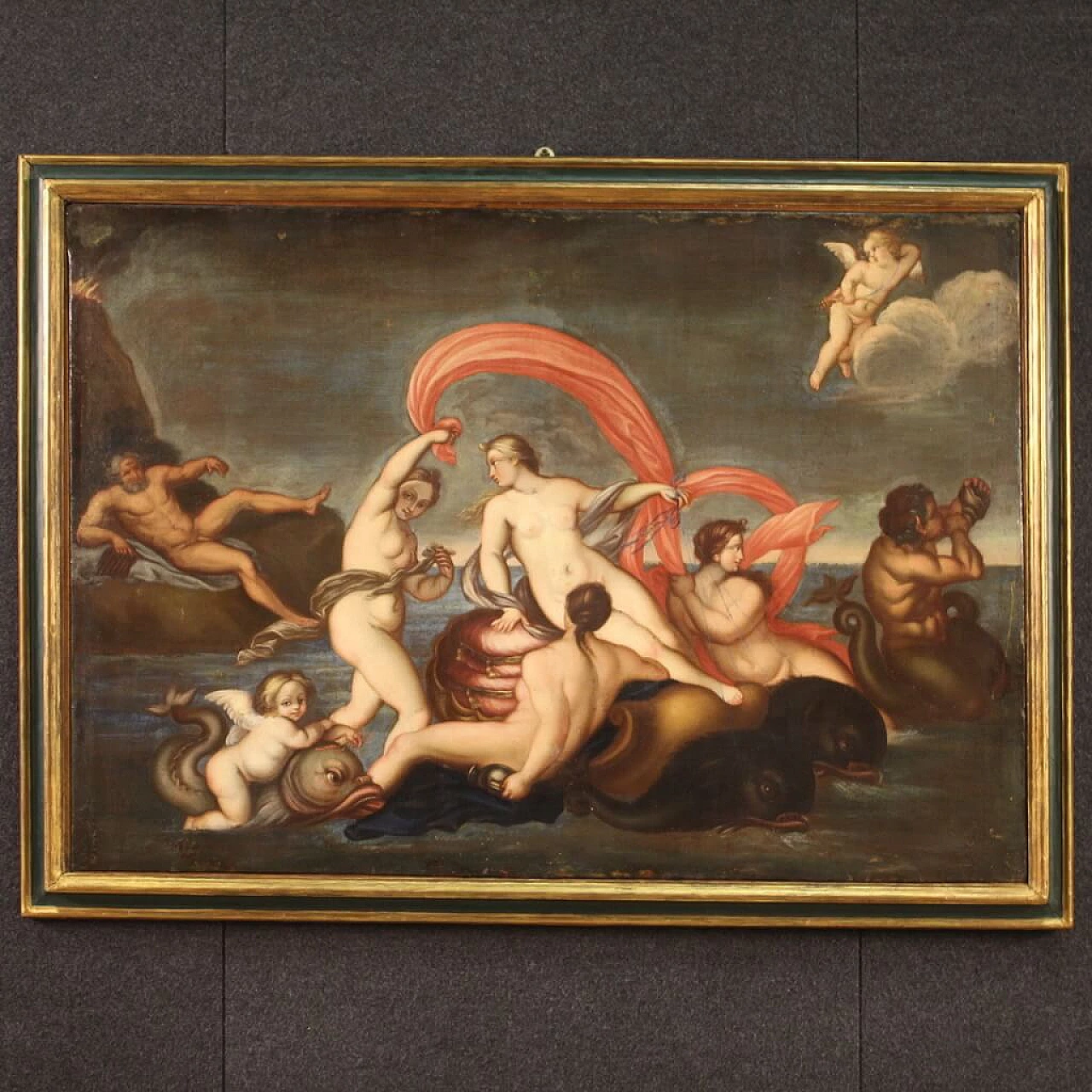
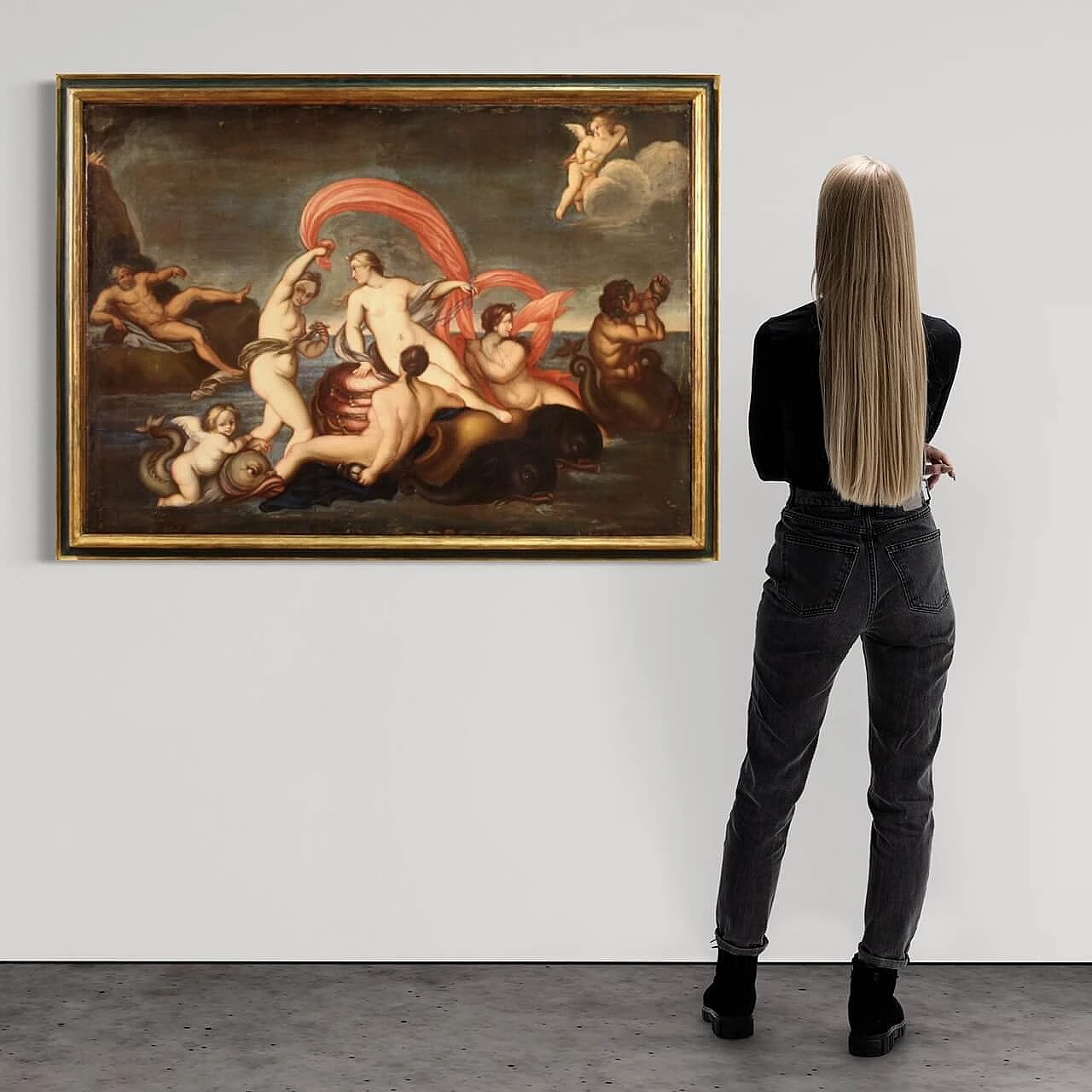
Italian painting of the Triumph of Galatea, oil on canvas, 18th century



.png)
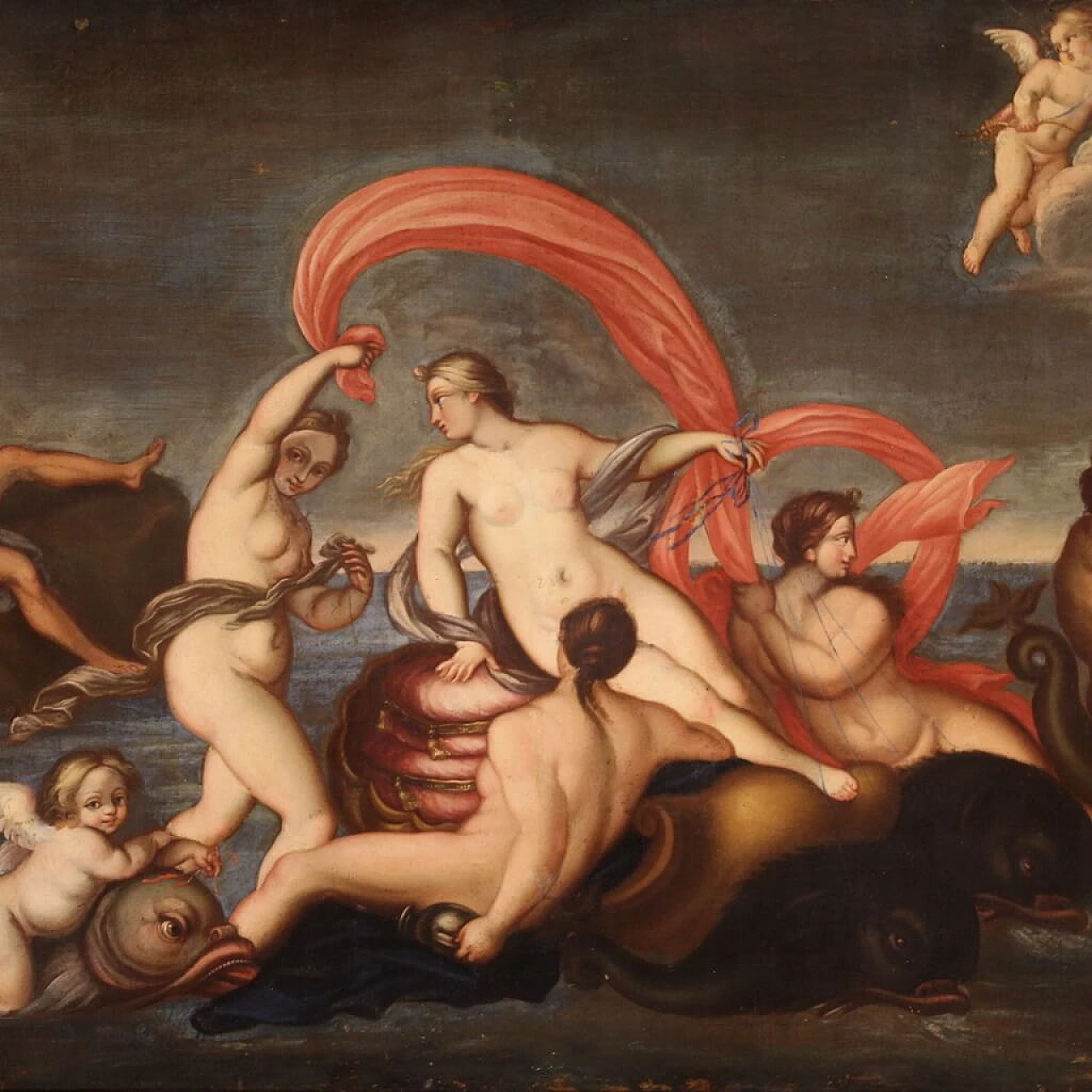
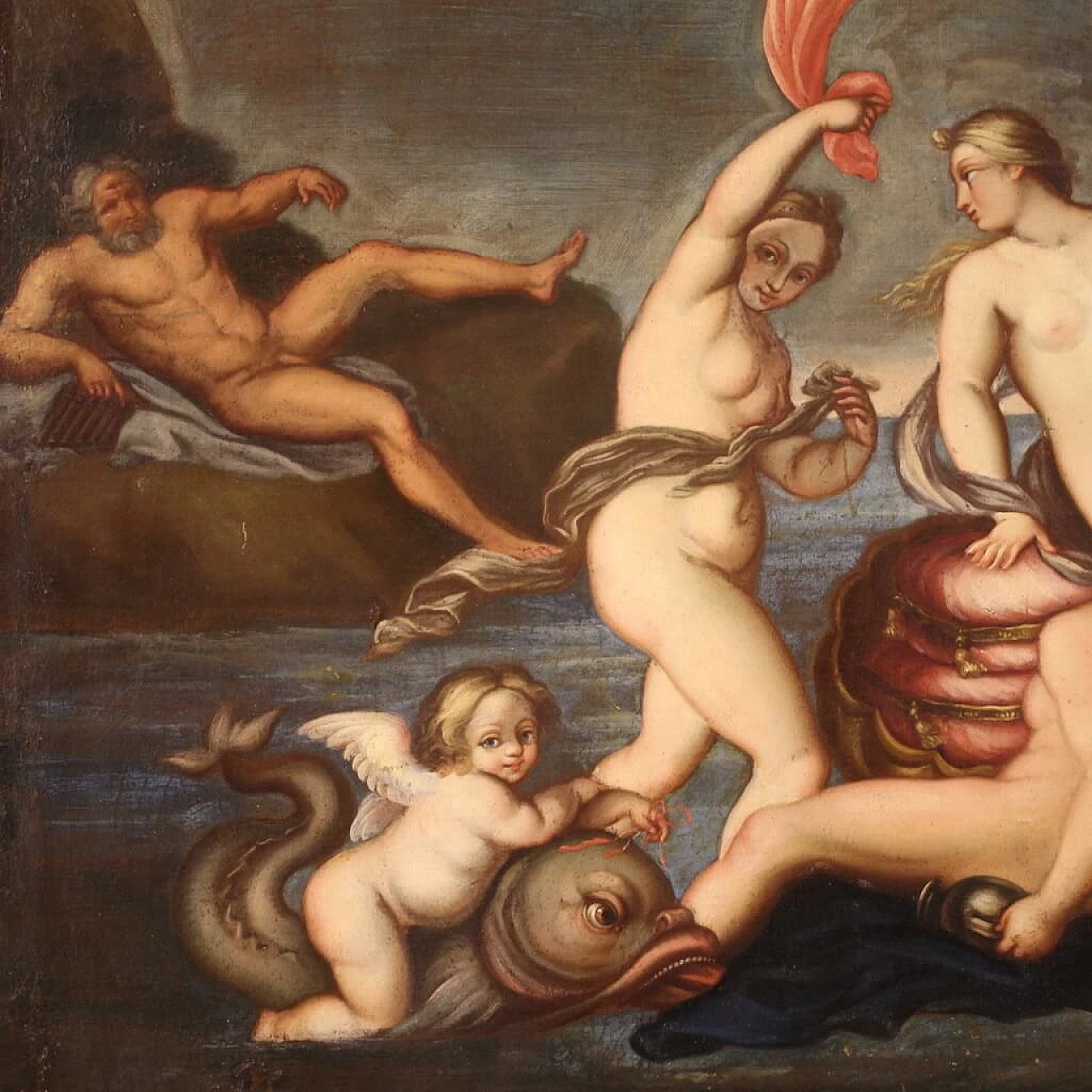
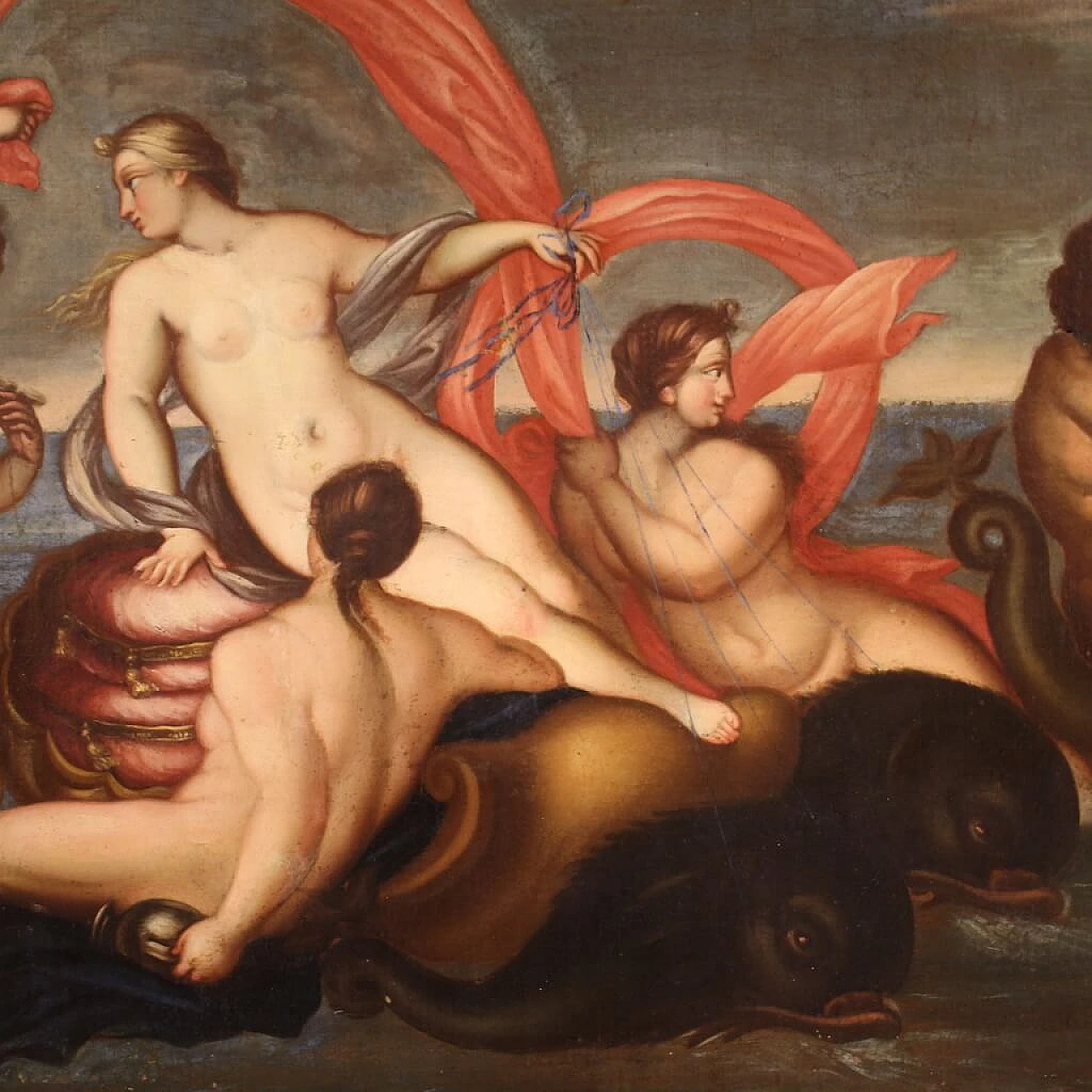
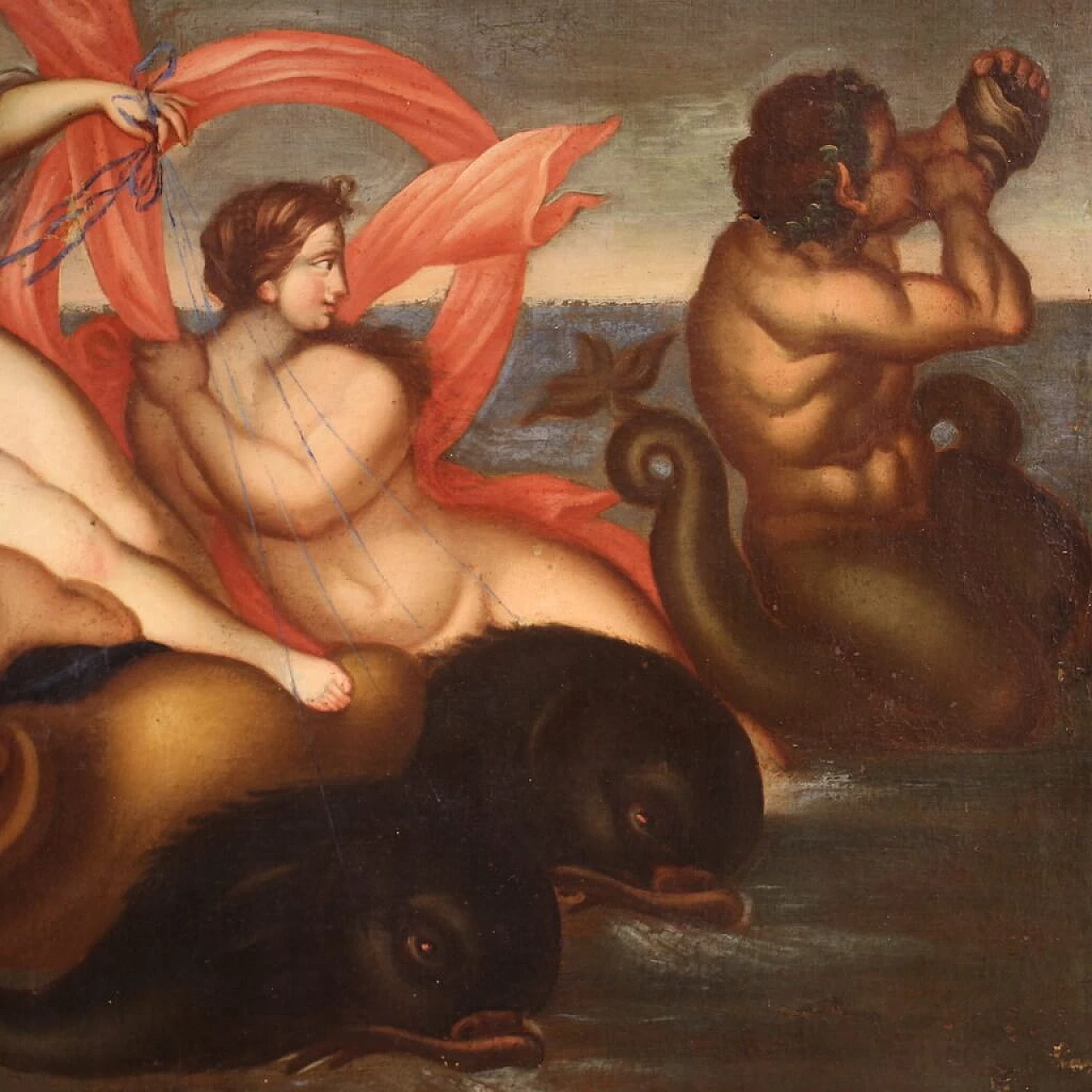
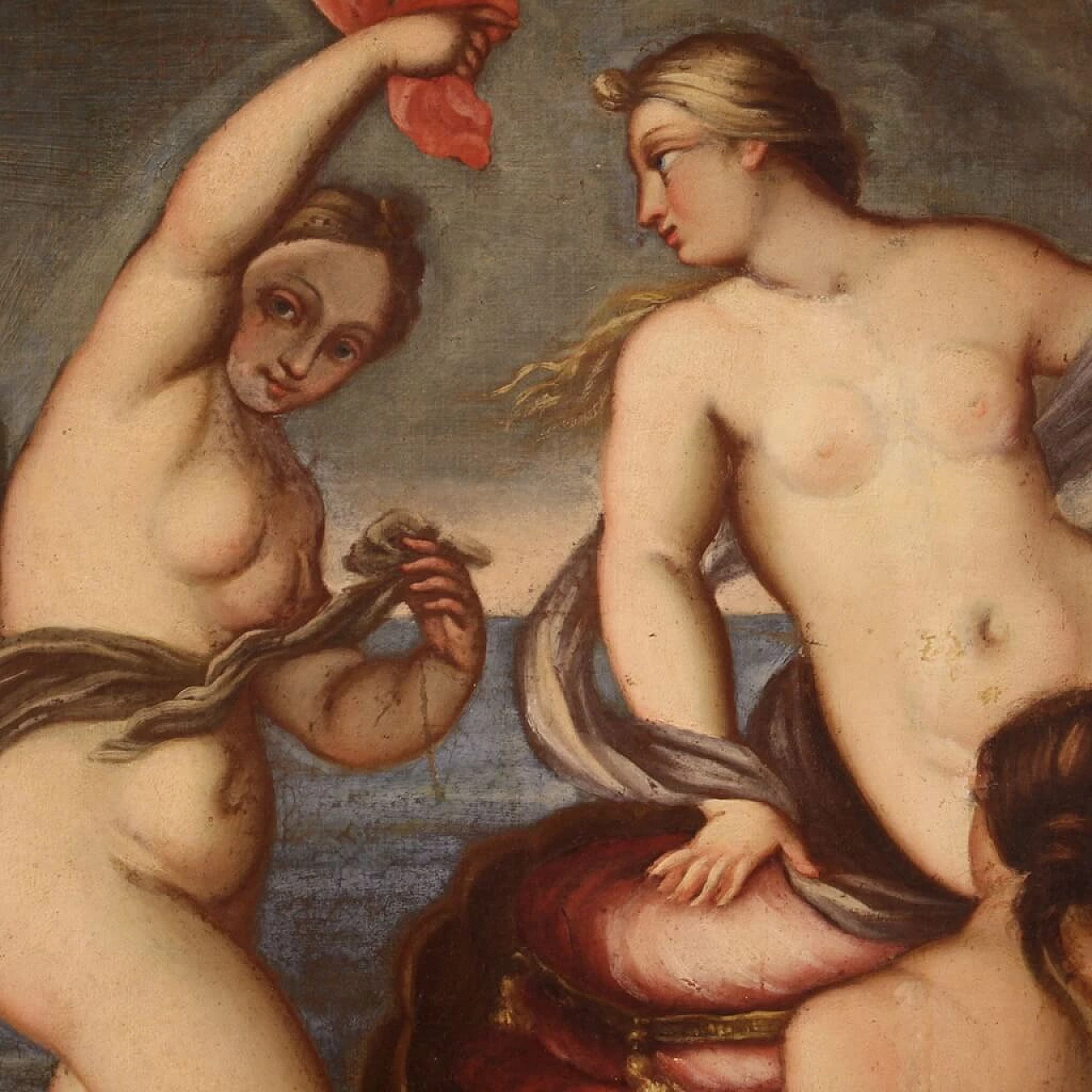
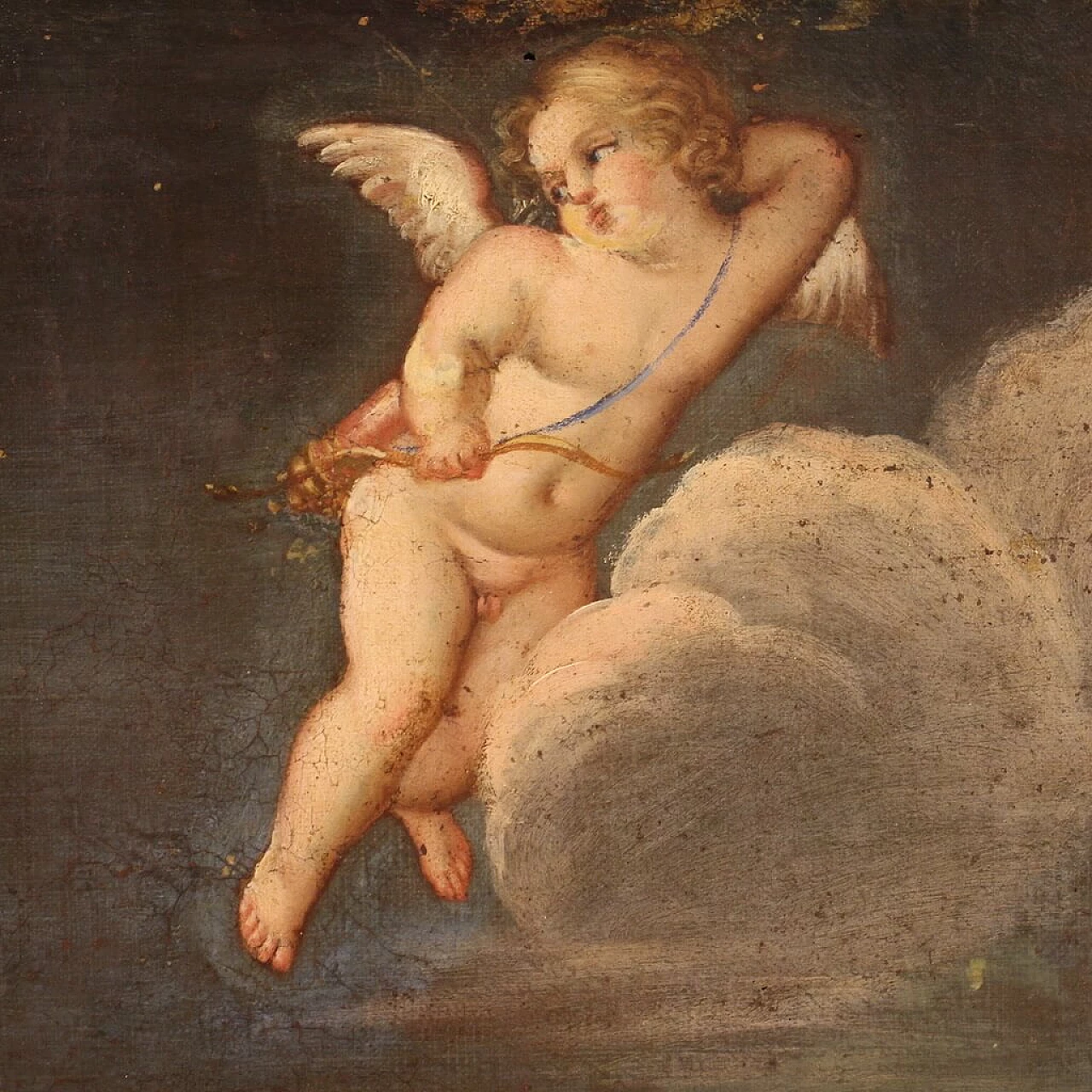
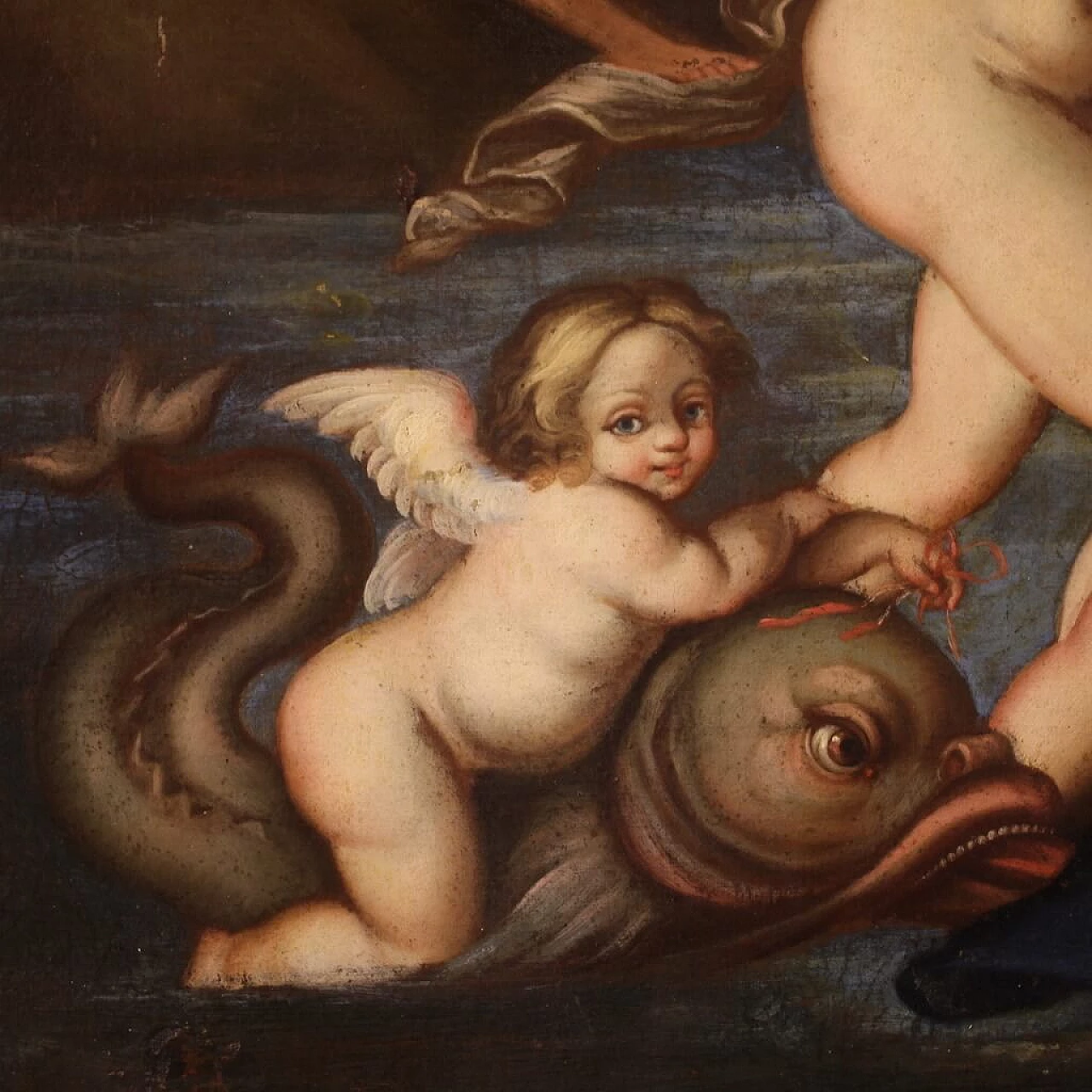
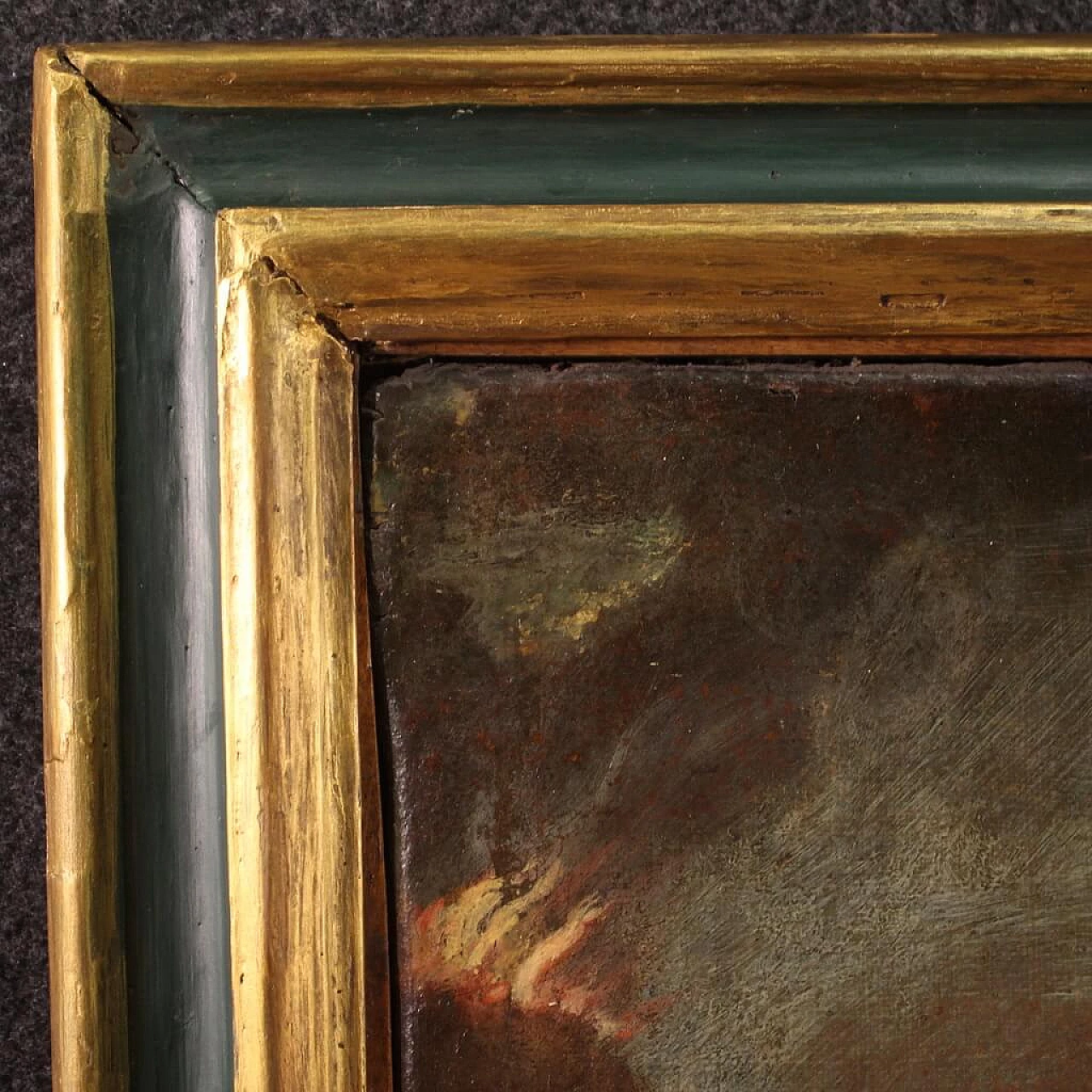
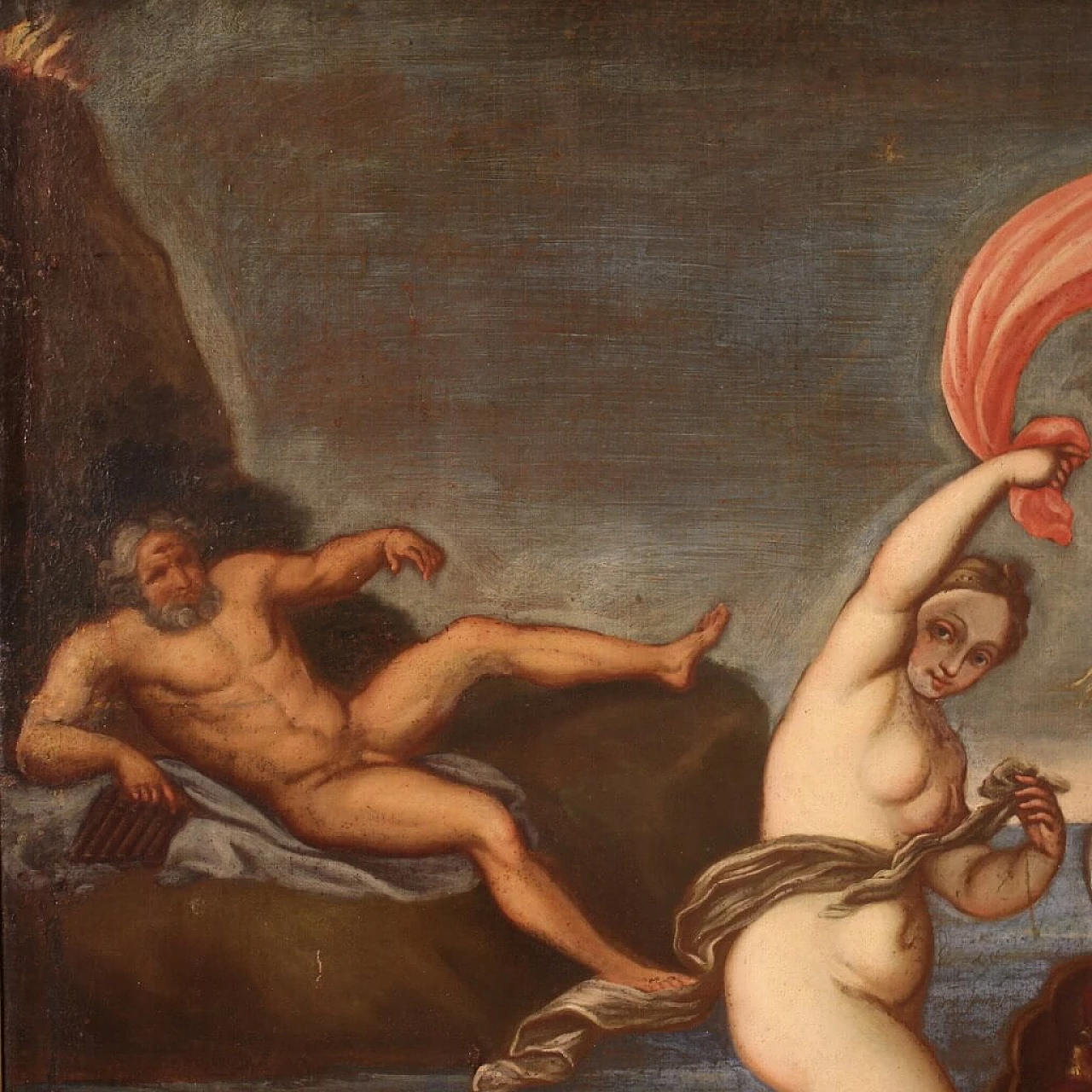
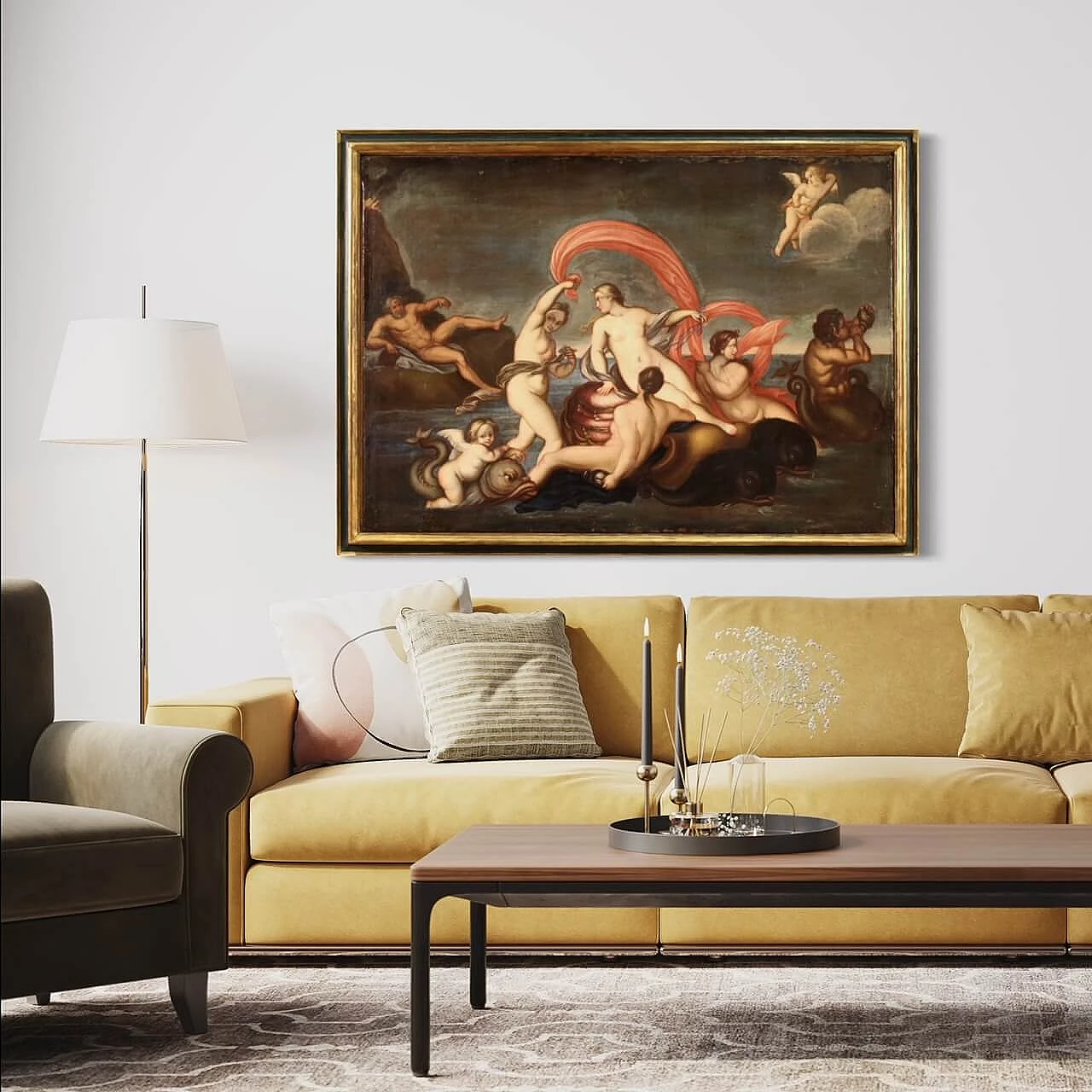
Large Italian painting from the second half of the 18th century. Oil painting on canvas depicting mythological subject 'The Triumph of Galatea' by an excellent painterly hand. Fabulously decorative painting complete with 20th-century carved, lacquered and gilded wooden frame (see photo). A work of fabulous dynamism finely painted in every detail. A rich scene with Galatea in the centre, cupids, dolphins and a triton with a shell (see photo). On the left, portrayed at the foot of a volcano is the figure of the Cyclops Polyphemus with flute. The myth has it that Galatea was in love with Aci, a handsome young man, and that the Cyclops Polyphemus, envious of the young man and in turn in love with the nymph, tried one day to lure her with the sound of his flute, but failed. One evening Polyphemus, seeing the two lovers in the moonlight, blinded by rage hurled a boulder of lava at Acis, leaving him lifeless. Painting that has undergone conservative restoration, re-staining and colour repainting in some places (see photo). In good condition with some signs of time. Light painting H 94 x W 134 cm.
ID: 2102-1666963770-49190
Time period

 SILVER Seller in Cuneo, Italy