

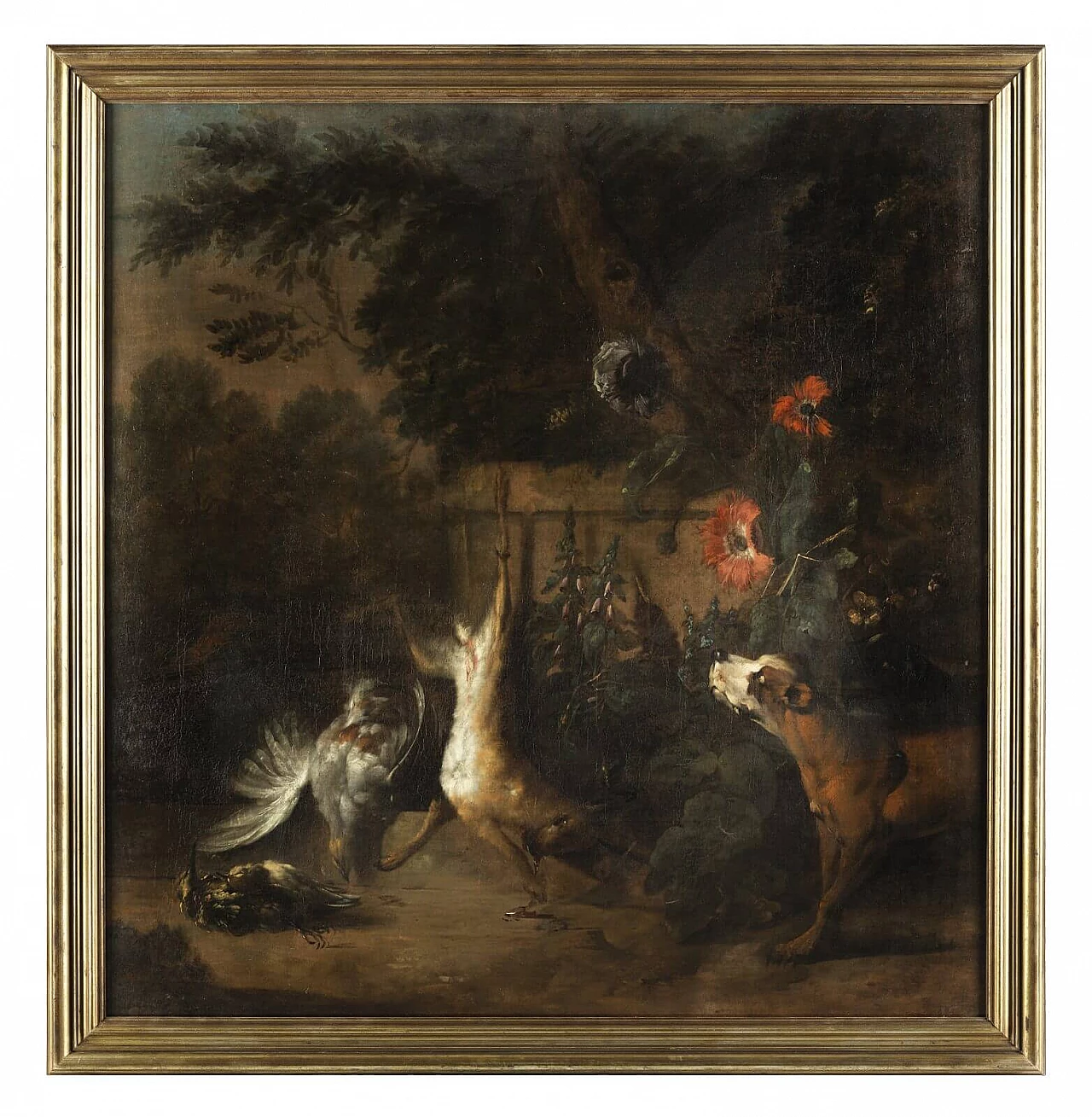
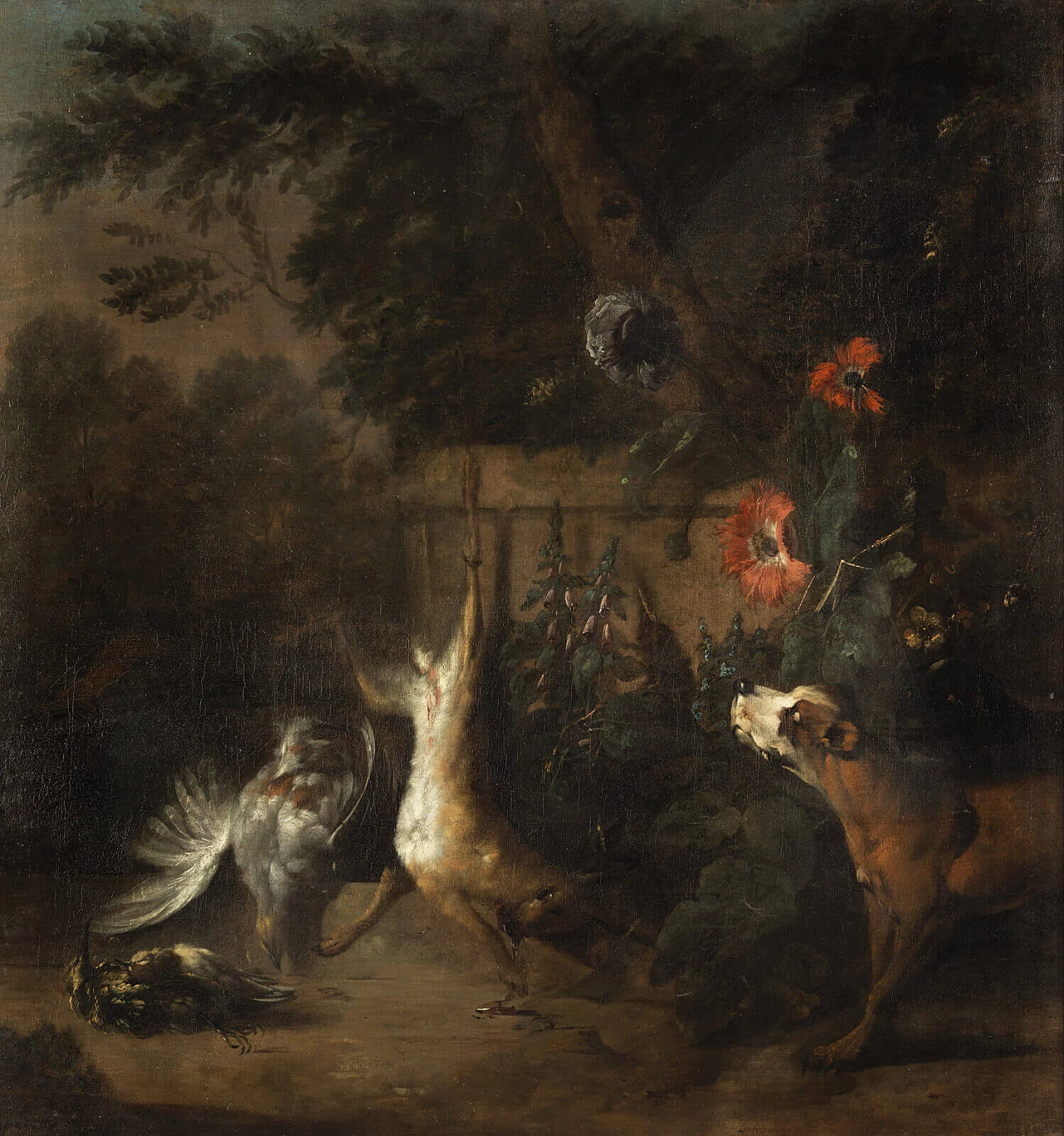
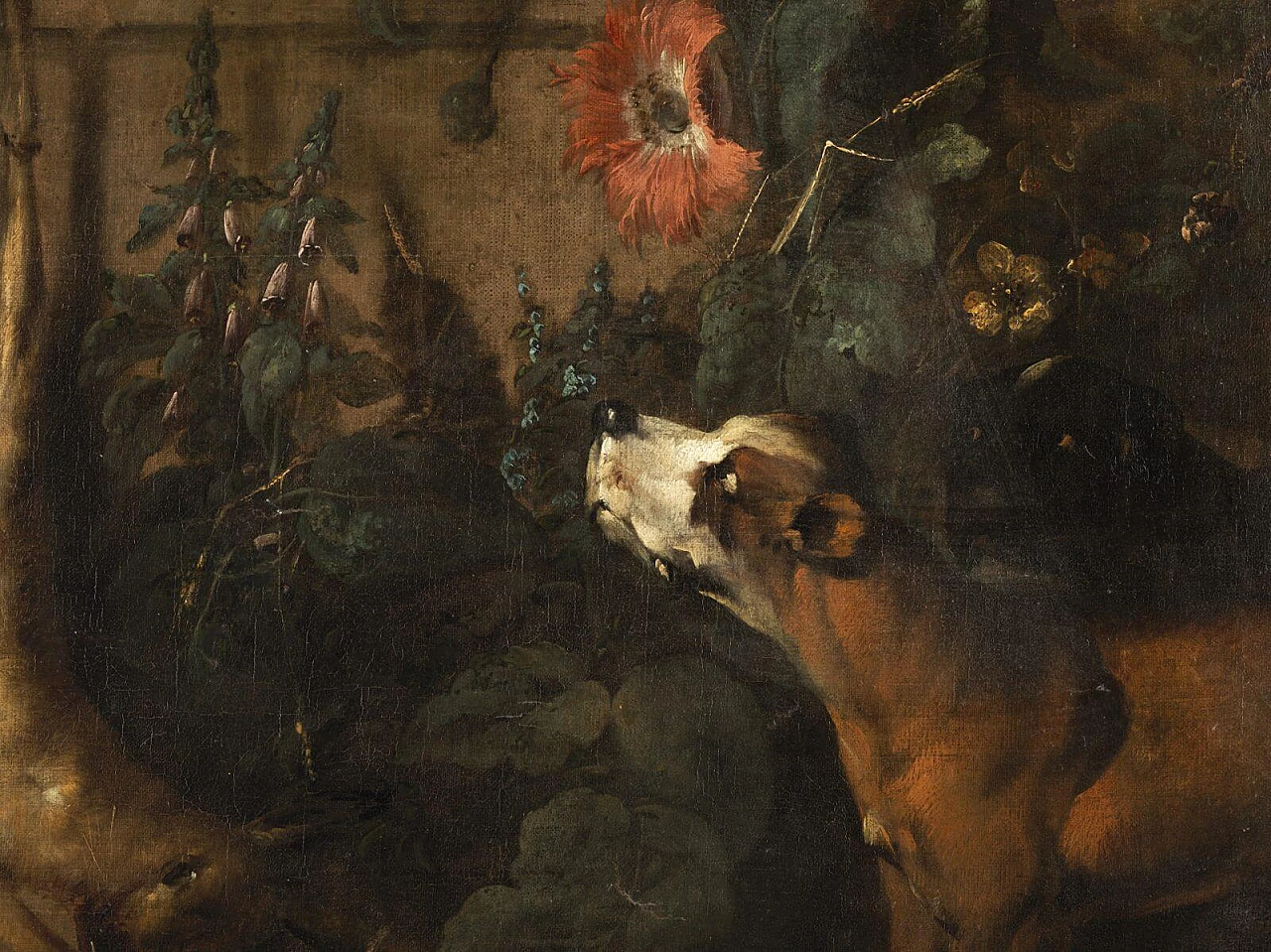
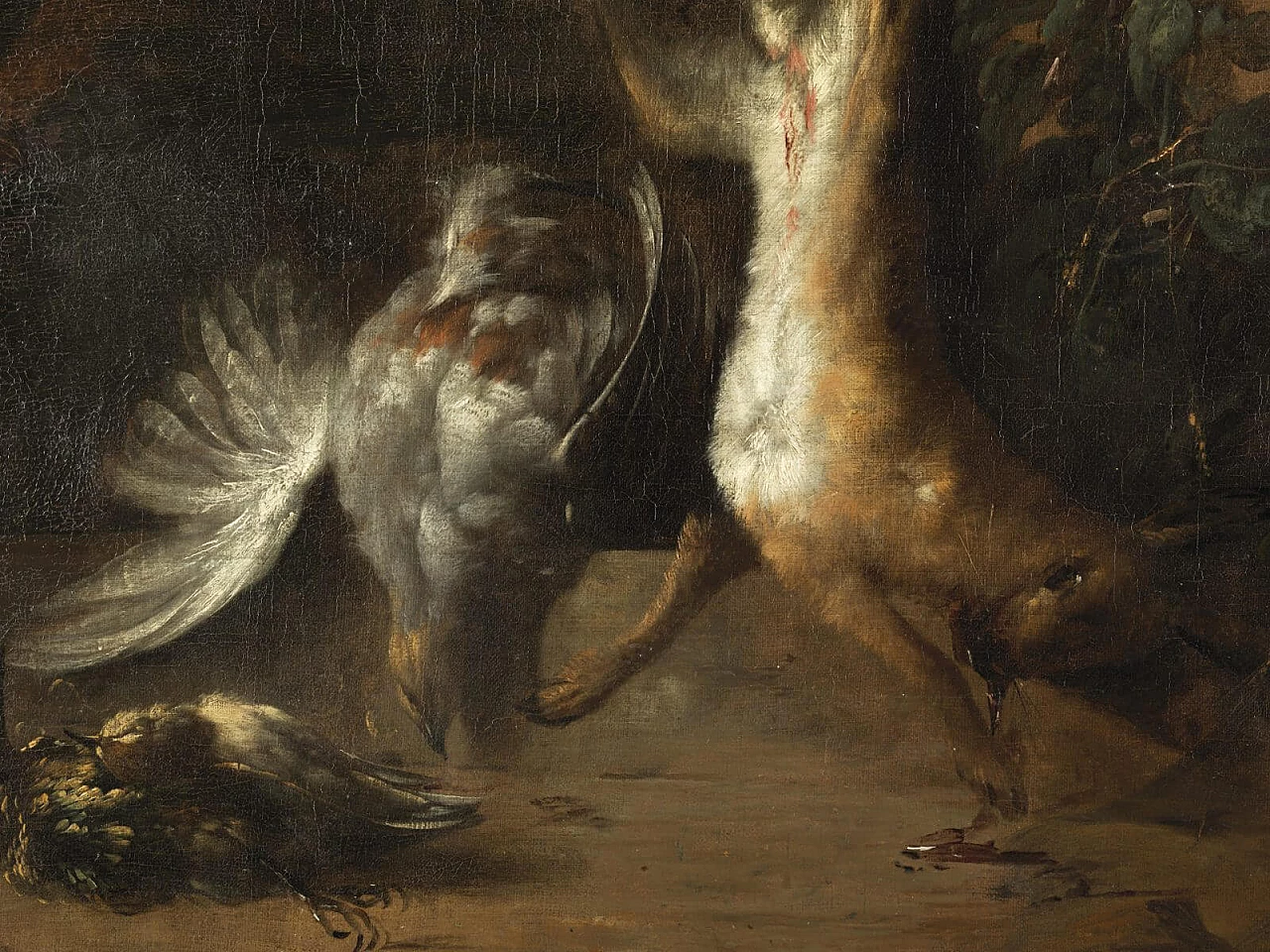
Still life with dog, oil painting on canvas attributed to Jan Weenix, 17th century
.png)
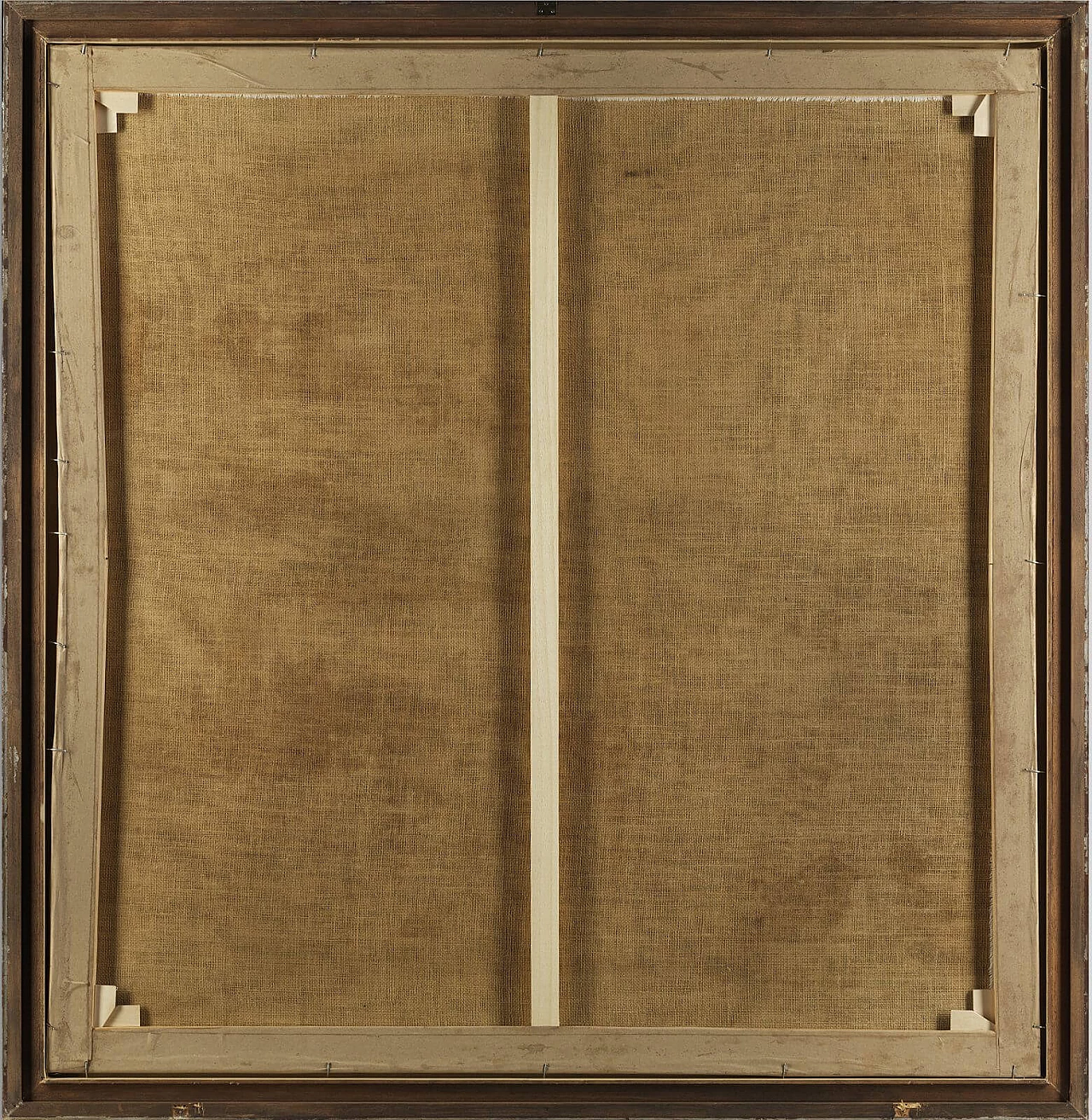
Oil painting on canvas attributed to Jan Weenix (1640/41-1719) depicting a still life with dog, 17th century. The scene takes place in a courtyard surrounded by a wall. A brown hound seems to be checking the outcome of the recently concluded hunting trip, carefully observing the paw of a hare hanging on the wall painted next to two lifeless birds. Above the dog's head grows a green bush with two beautifully flowering reddish gerberas with frayed petals. On the other side of the wall lies a wooded landscape surrounded by an evening sky. Painting subjected to partial restoration, minor retouches. The painting is attributed to Jan Weenix. Son of the painter Jan Battista Weenix (1621-1660/61) was born in Amsterdam in 1640/41. At the age of five he moved with his family to Utrecht. Starting from 1657 he became his father's pupil in the studio set up in the large family house outside the city, learning the Italian way of painting genre scenes. Unlike his father, however, he never visited Italy. He fully joined the Utrecht painters' guild before moving in 1670 to his hometown where he married. This is the period during which Weenix abandons the painting of Italian scenes in favor of more extravagant genres through which his father had already achieved a certain success. Jan Weenix's paintings were quite sought after by the bourgeois of Amsterdam and his reputation attracted the attention of the German Elector in Dusseldorf, John William of the Palatinate, who commissioned numerous play scenes and still lifes from him. He was considered one of the best Dutch animal still life painters of his time. He dedicated himself to painting particularly detailed still lifes with flowers, lifeless animals and game, landscapes and portraits. This type of work, for which he is mainly known, was often life-size and in addition to dead game, a live dog was sometimes present. Later, in his paintings of game he began to insert various hunting trophies in the rosy brightness of the twilight. Sometimes he immersed the scenes in a park enriched with classical or pseudo-classical sculptures, ancient urns and in the background the view of a sumptuous house or the surrounding wall of the latter. Given the above, it is believed that the painting dates back to the first period that the artist dedicated to still lifes with dogs. The scene is set at dusk, there is a wooded landscape in the background but there is no trace of trophies or classical architecture that will appear in subsequent paintings. The hare hanging from the hook upside down with the trickle of blood coming out of its mouth is a characteristic feature of many scenes created by the artist who seems to study the poor little animal in all his poses. Similarities are noted with Jan Weenix's painting Partridges, songbirds, a duck, a gun and a quailwistle in a parkland landscape (1695), presented by the Dorotheum auction house in Vienna on 06/09/2020 (lot 87, estimated between 50,0000 and 70,000 euros). Note the similarity, both in the colors used and in the ways of handling the brush, with the birds painted at the bottom left and with the larger bird with white and brown plumage. The petals of the red gerbera sometimes recall, in both cases, small feathers supported by the light air.
ID: 73557-1705574664-80881
Time period

 SILVER Seller in Venezia, Italy