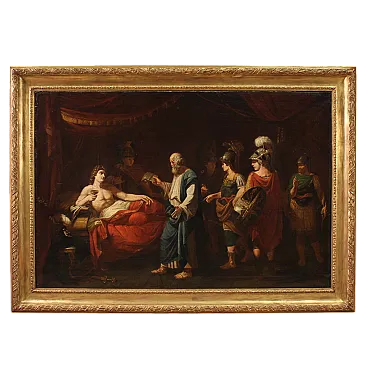
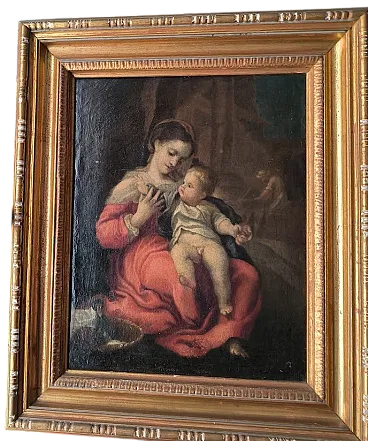
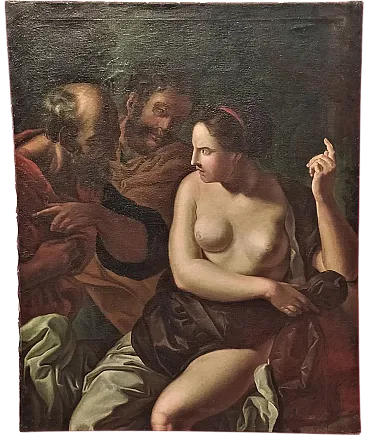
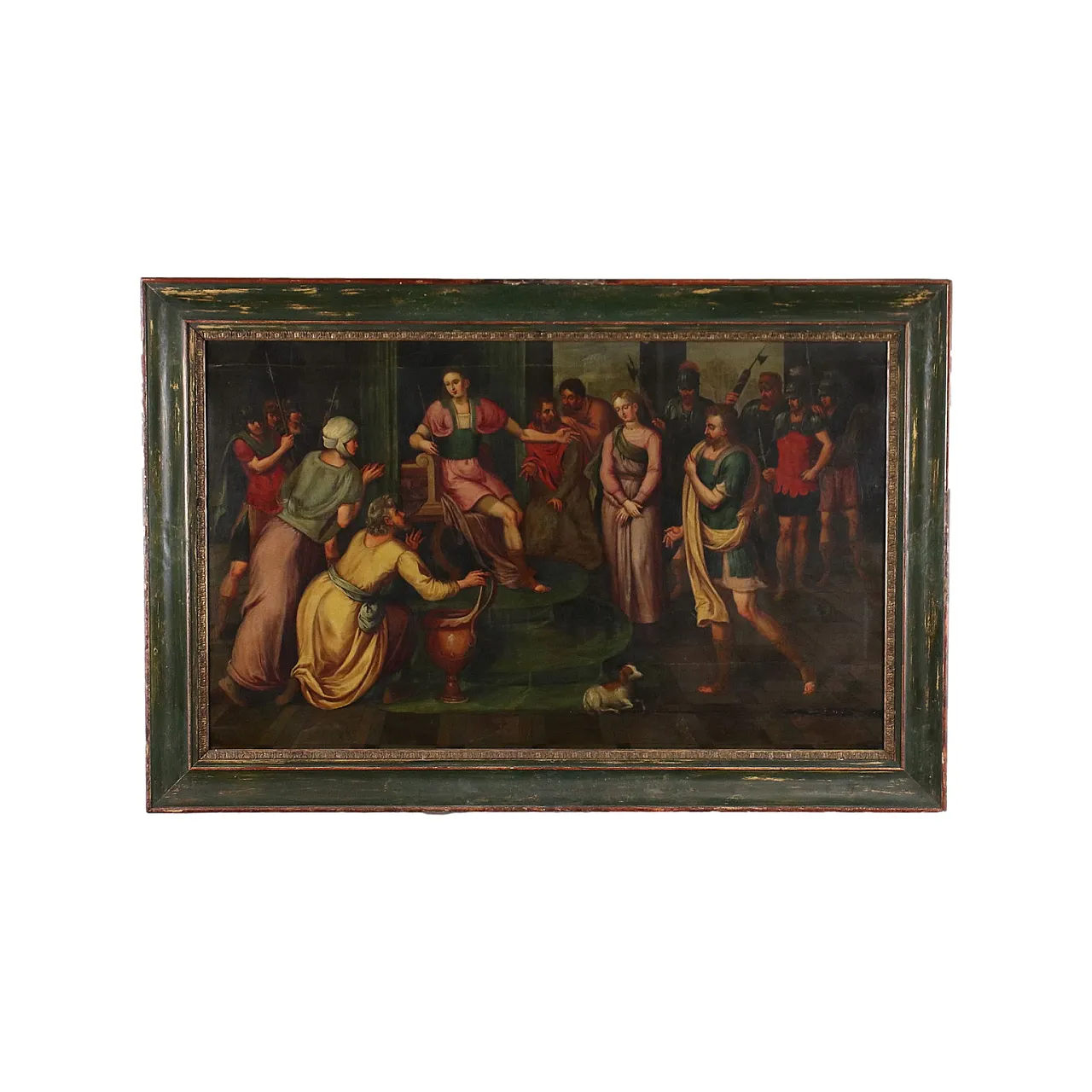
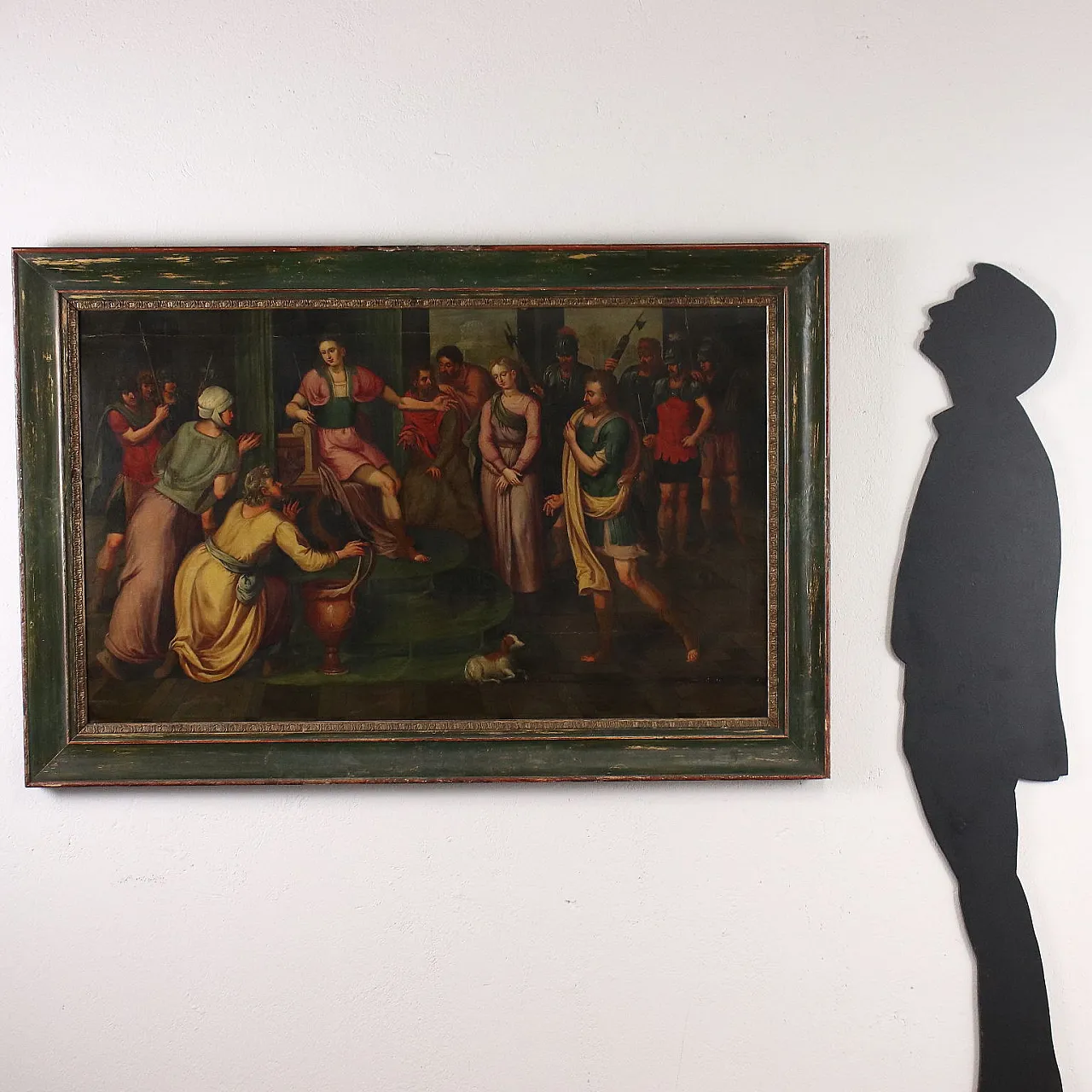
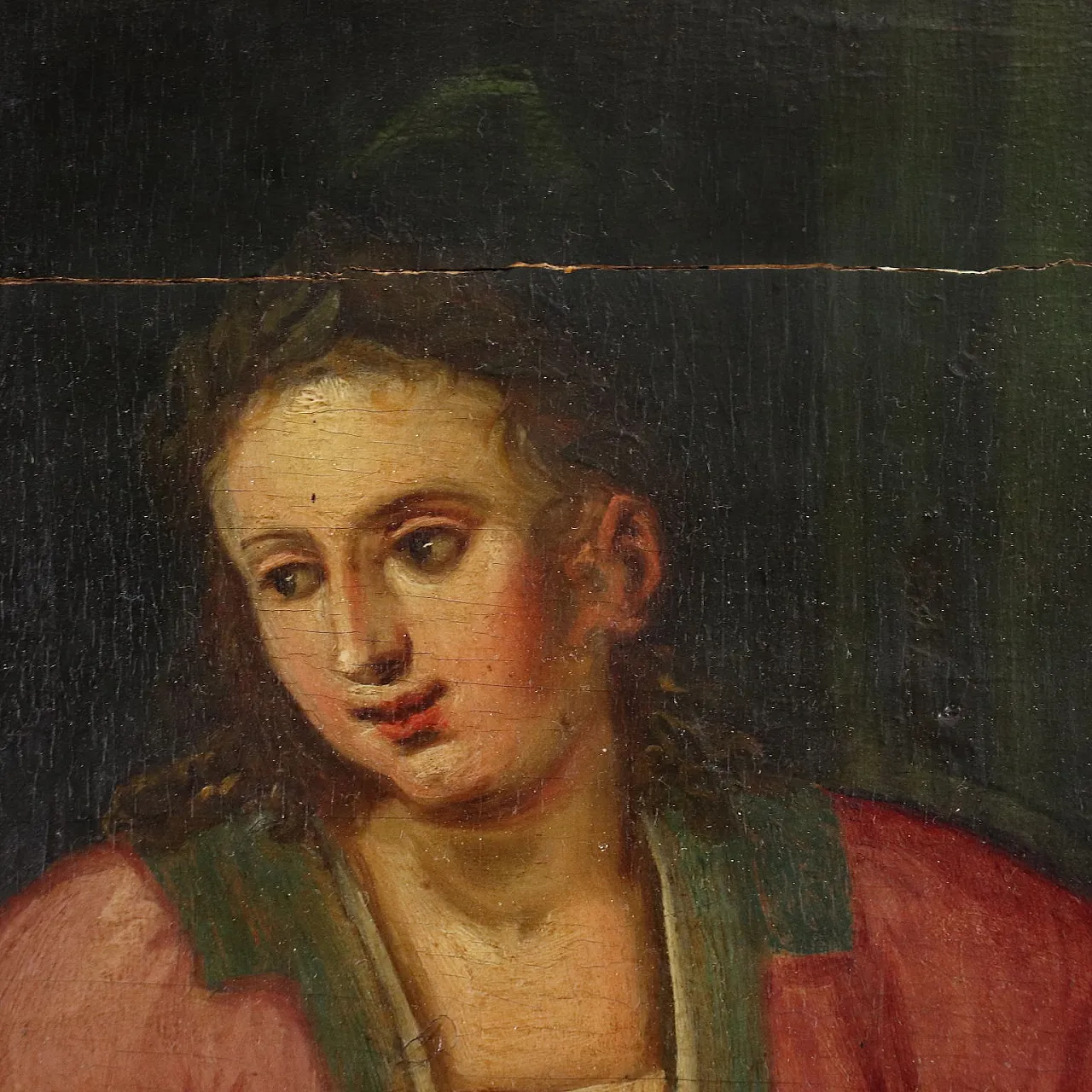
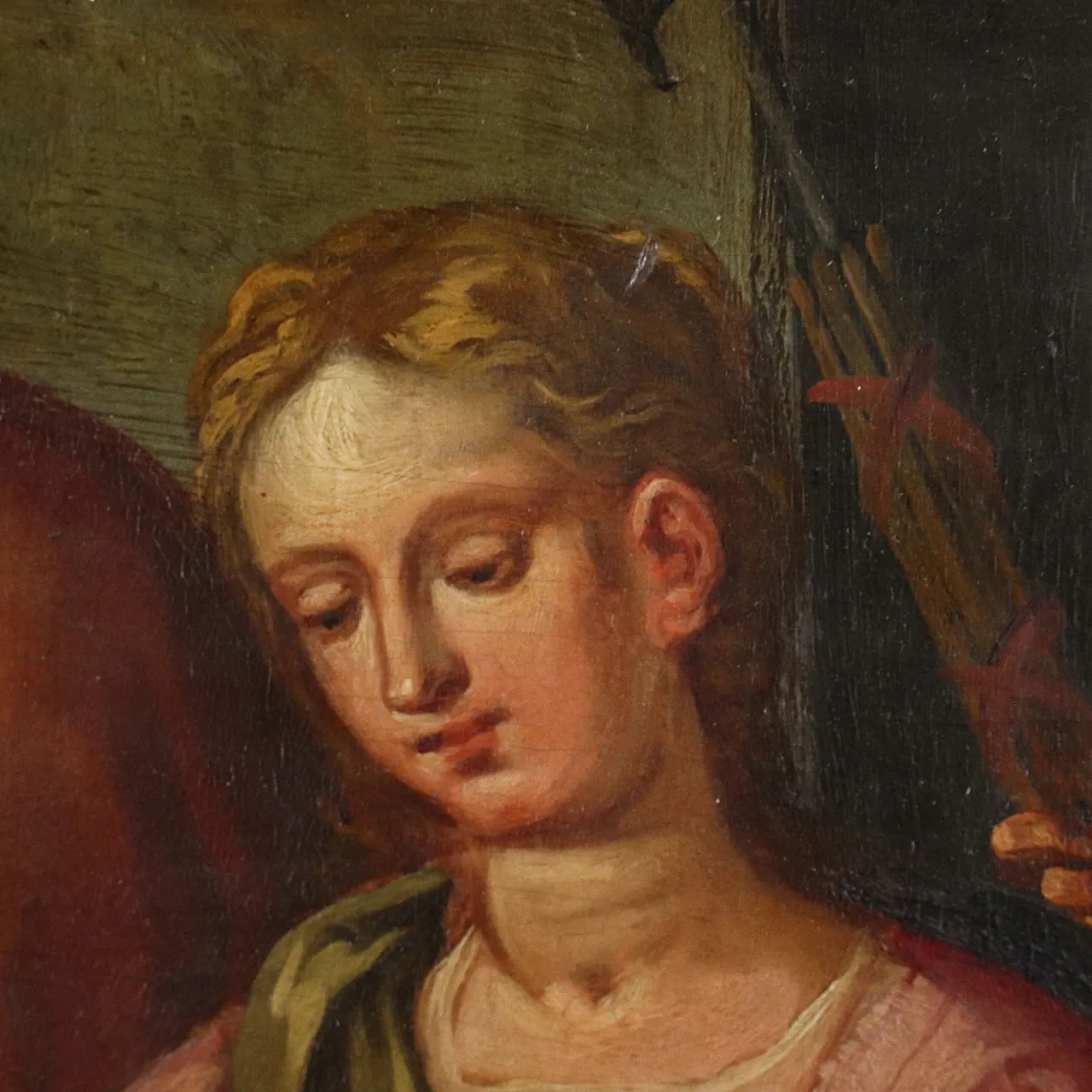
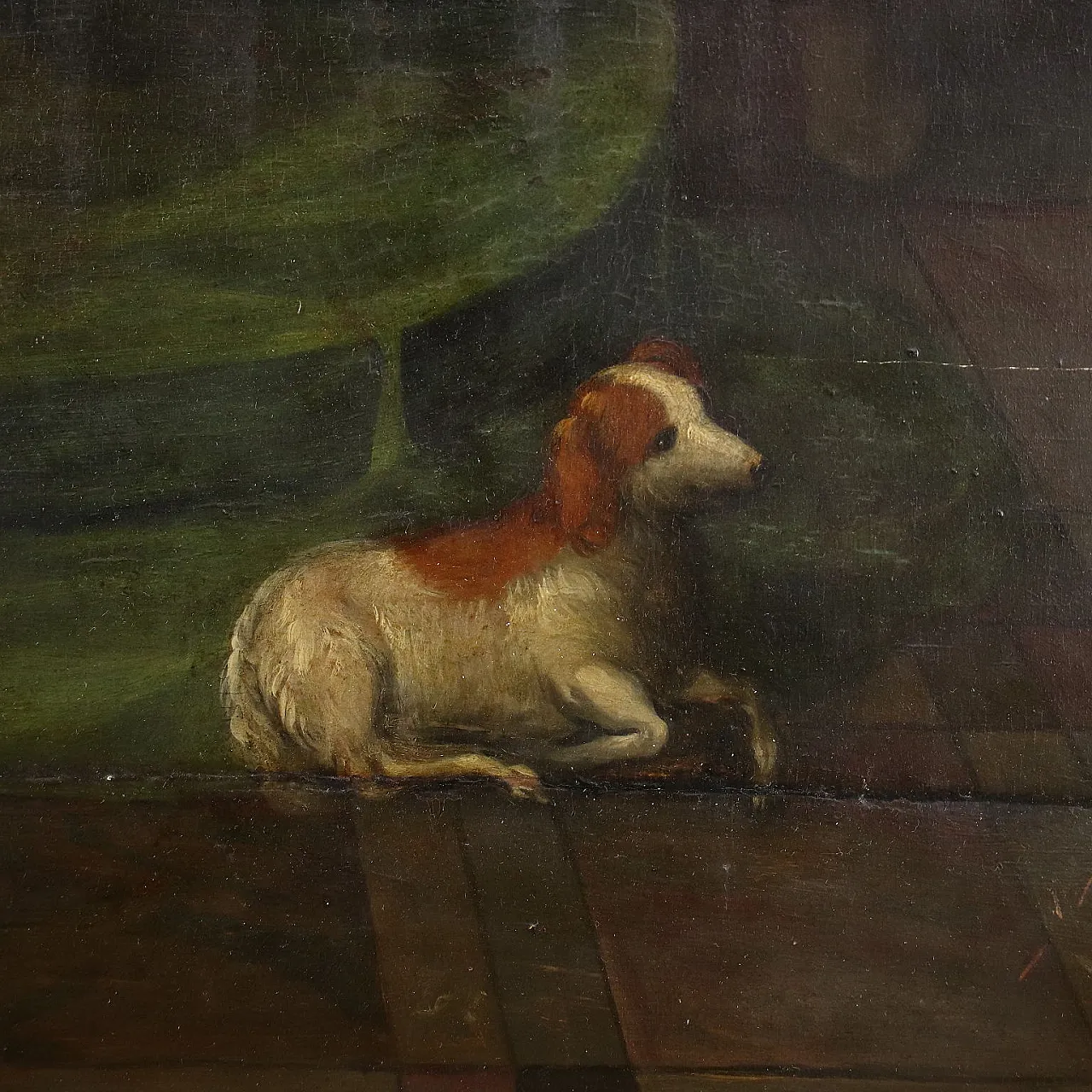
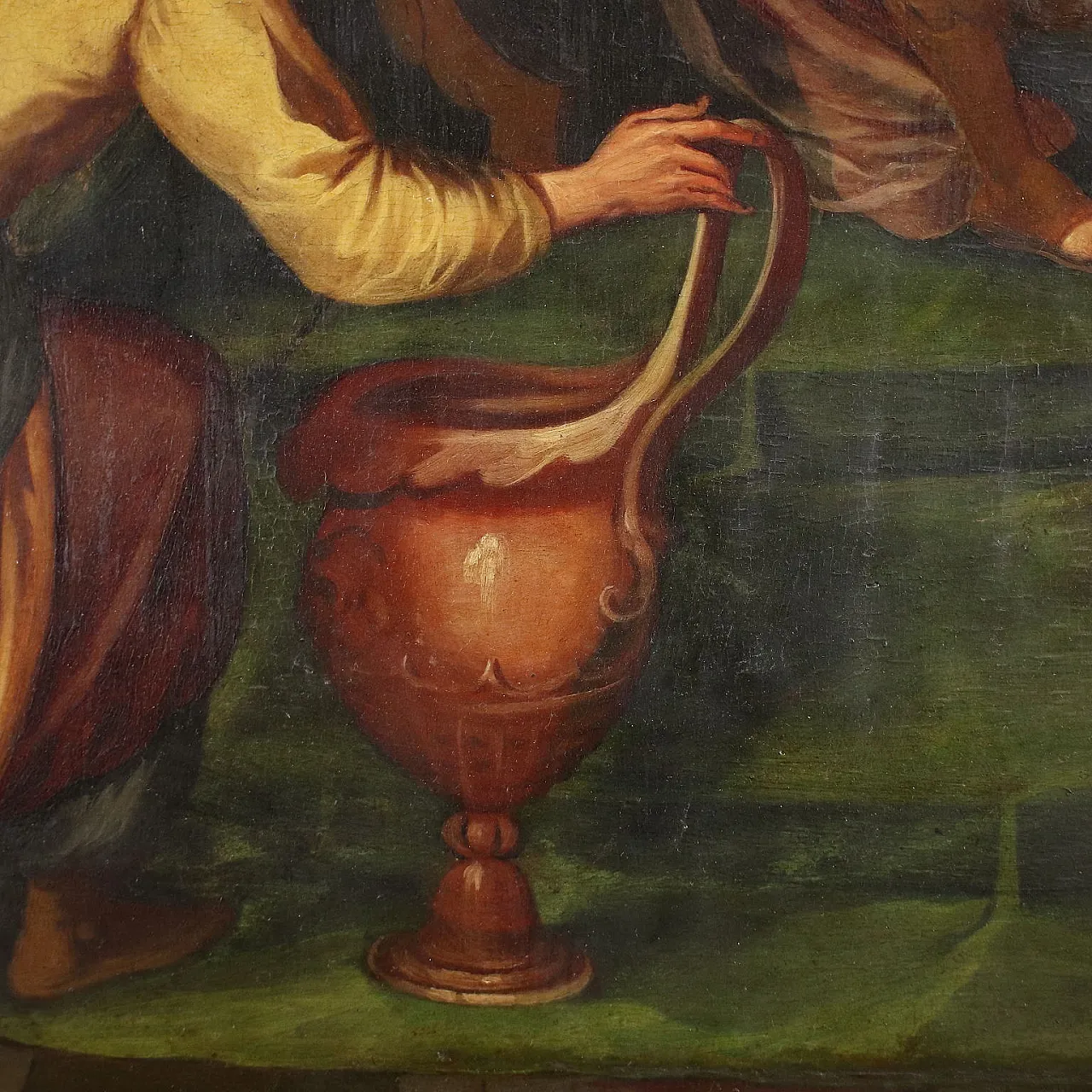
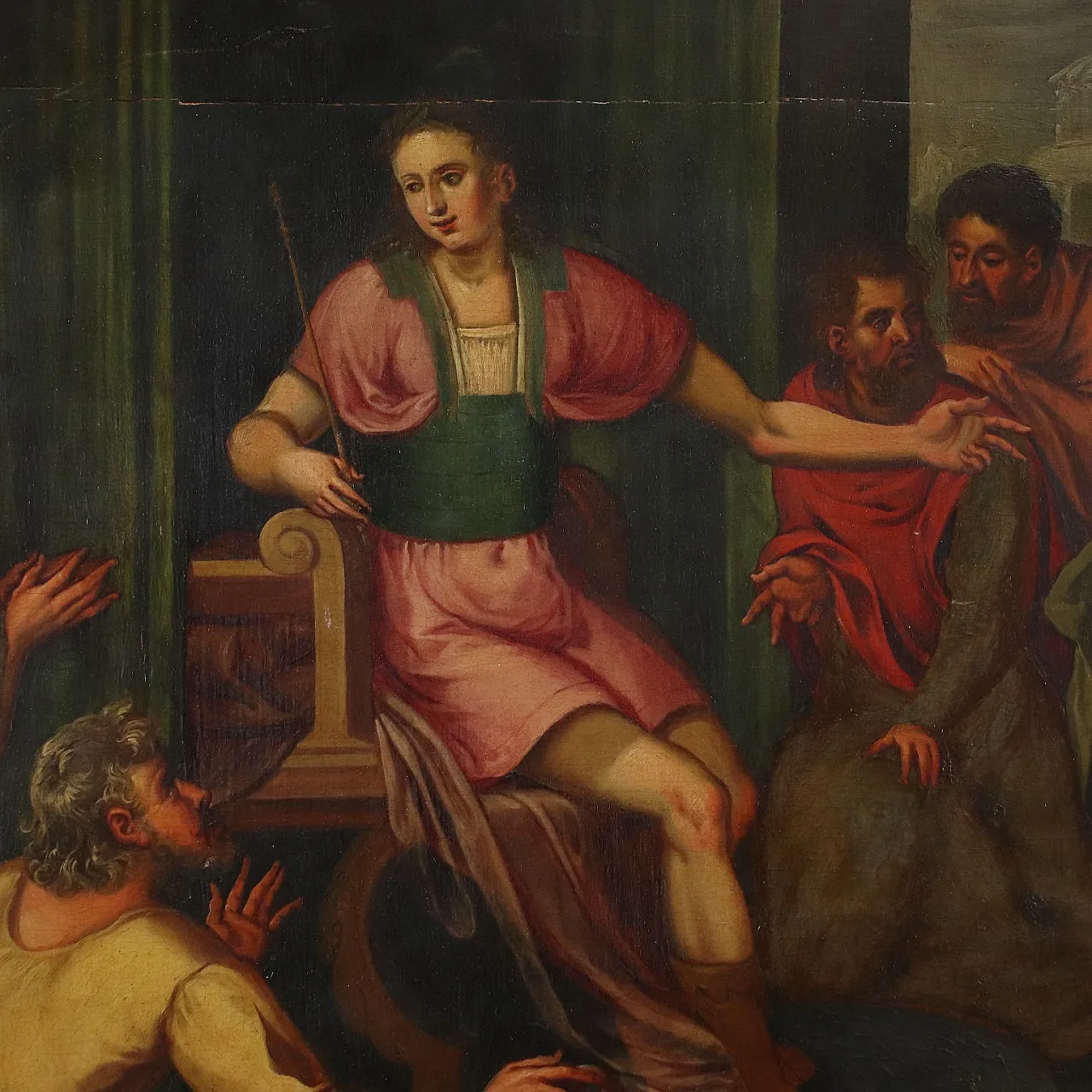
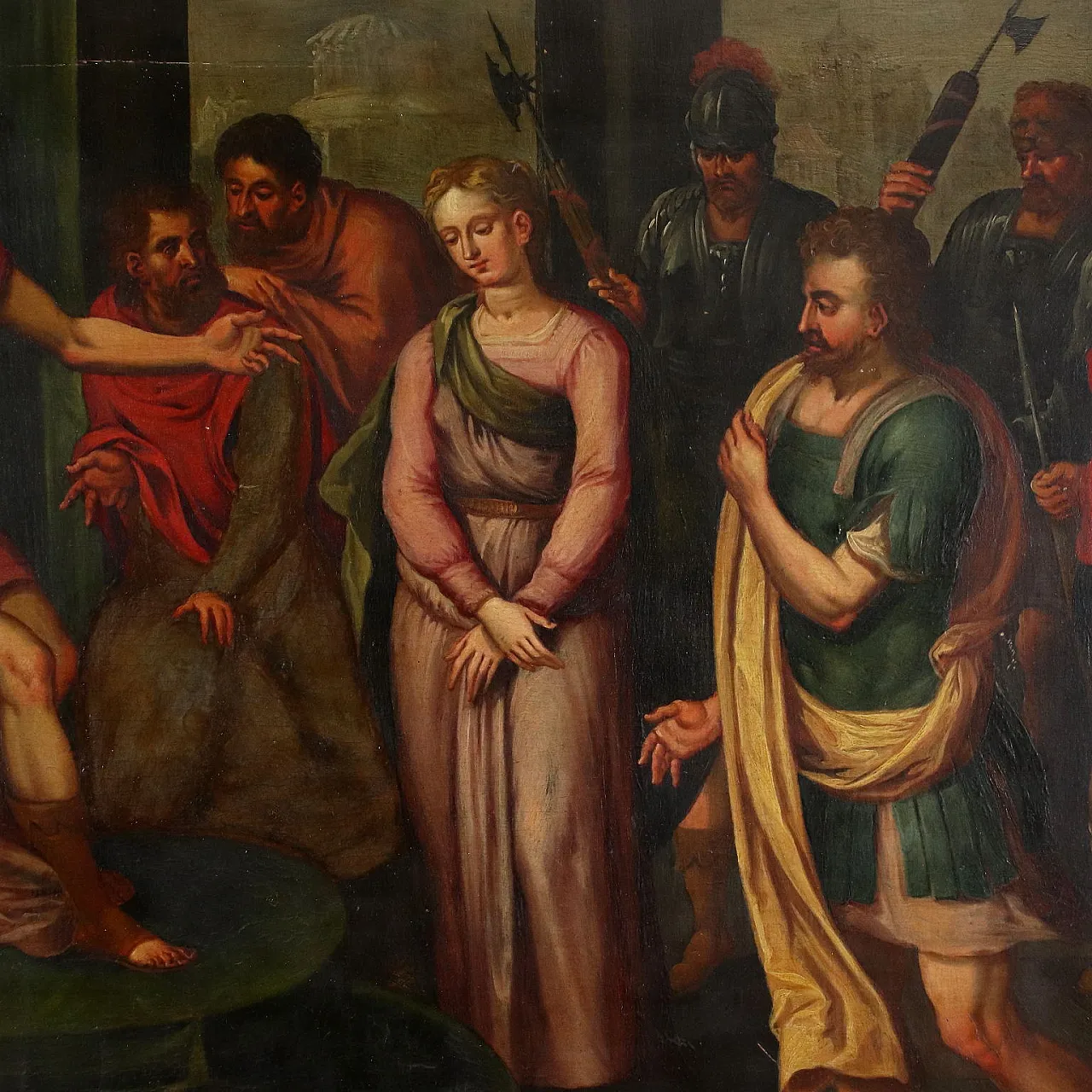
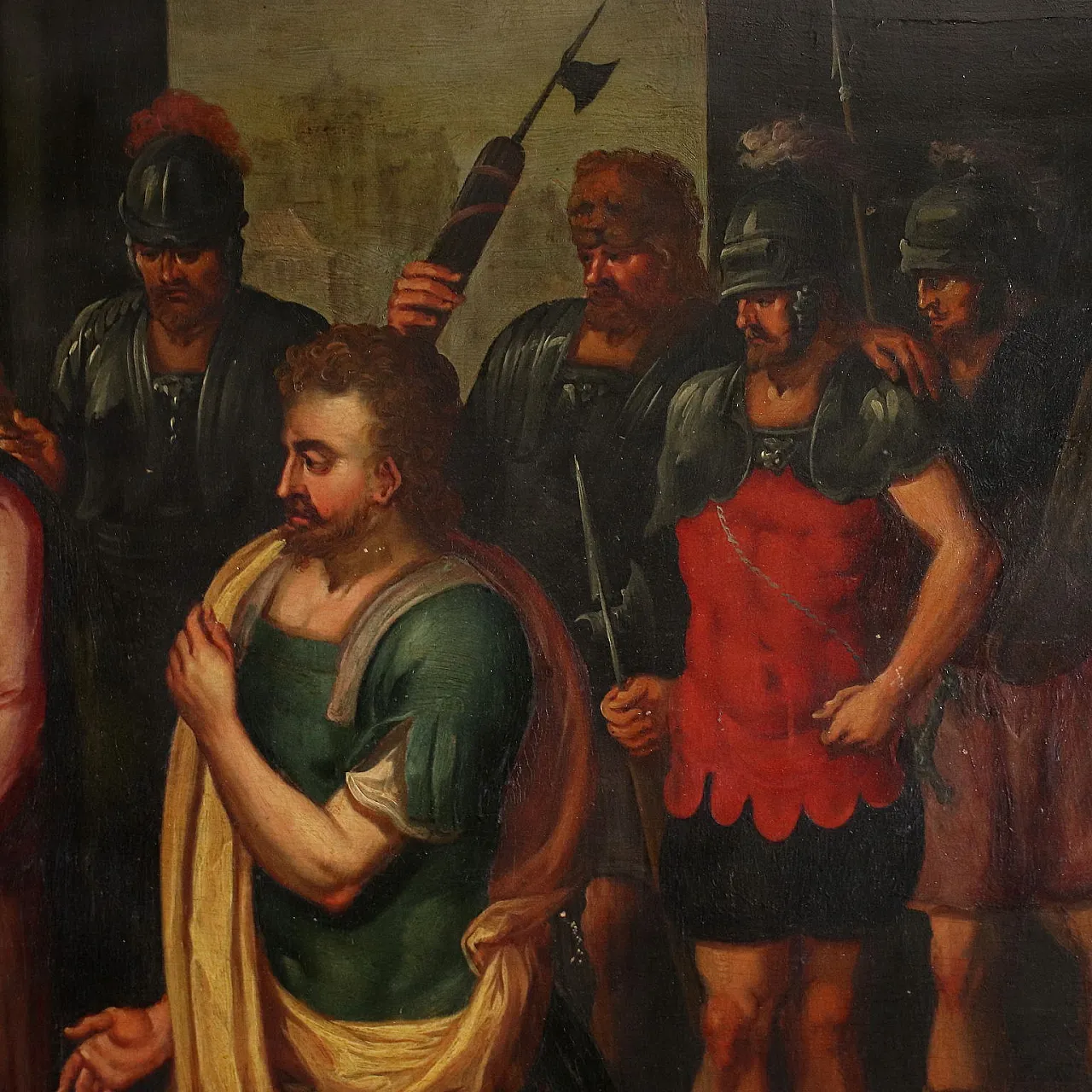
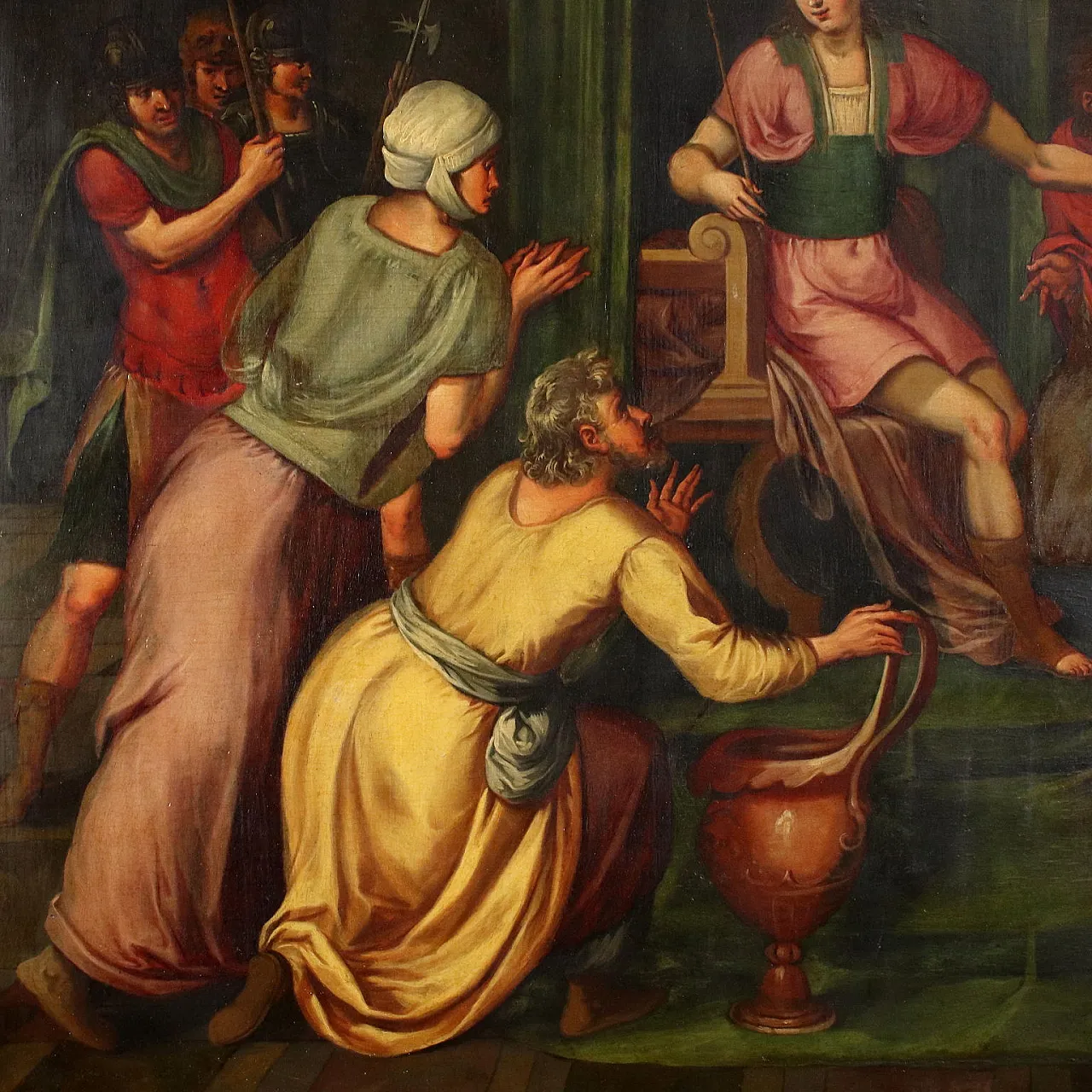
Oil on panel. North-European school of the 17th century. The scene depicts an episode of the life of Scipio narrated by Titus Livius and Valerius Maximus. Publius Cornelius Scipio, then known as Scipio the African, in 209 B.C. during the campaign of Spain, after the capture of Cartagena received as personal homage a beautiful virgin, who was in the group of hostages. But he, listening to the pleas of his family, respected her and sent her back to her parents and boyfriend, with the only recommendation that her betrothed should work for peace between Rome and Carthage. In the representation Scipione is in the center, sitting on his throne and turns to the left, to the pleading parents of the girl, while with a gesture of mercy, he tells them to take back their daughter, standing on the right, flanked by her boyfriend. Around, soldiers and followers of the king. The scene is rich in figures, bright and colorful, and emphasizes the positivity of the king, central and powerful character, but capable of meekness and leniency. The painting, restored, was reinforced at the back with wooden strips. It is presented in frame style.




.png)



 PLATINUM Seller in Milano, Italy