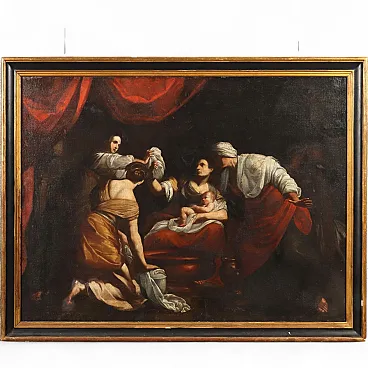


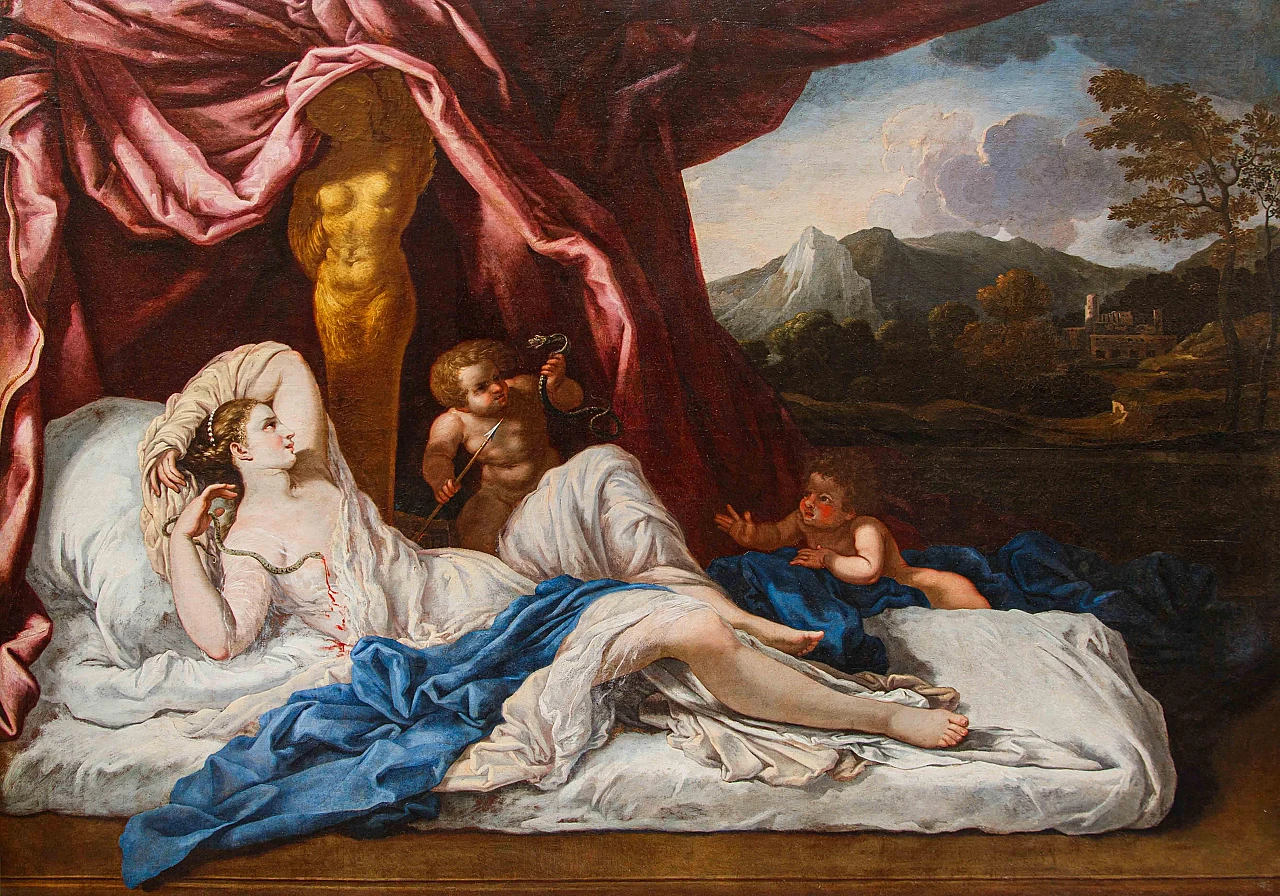
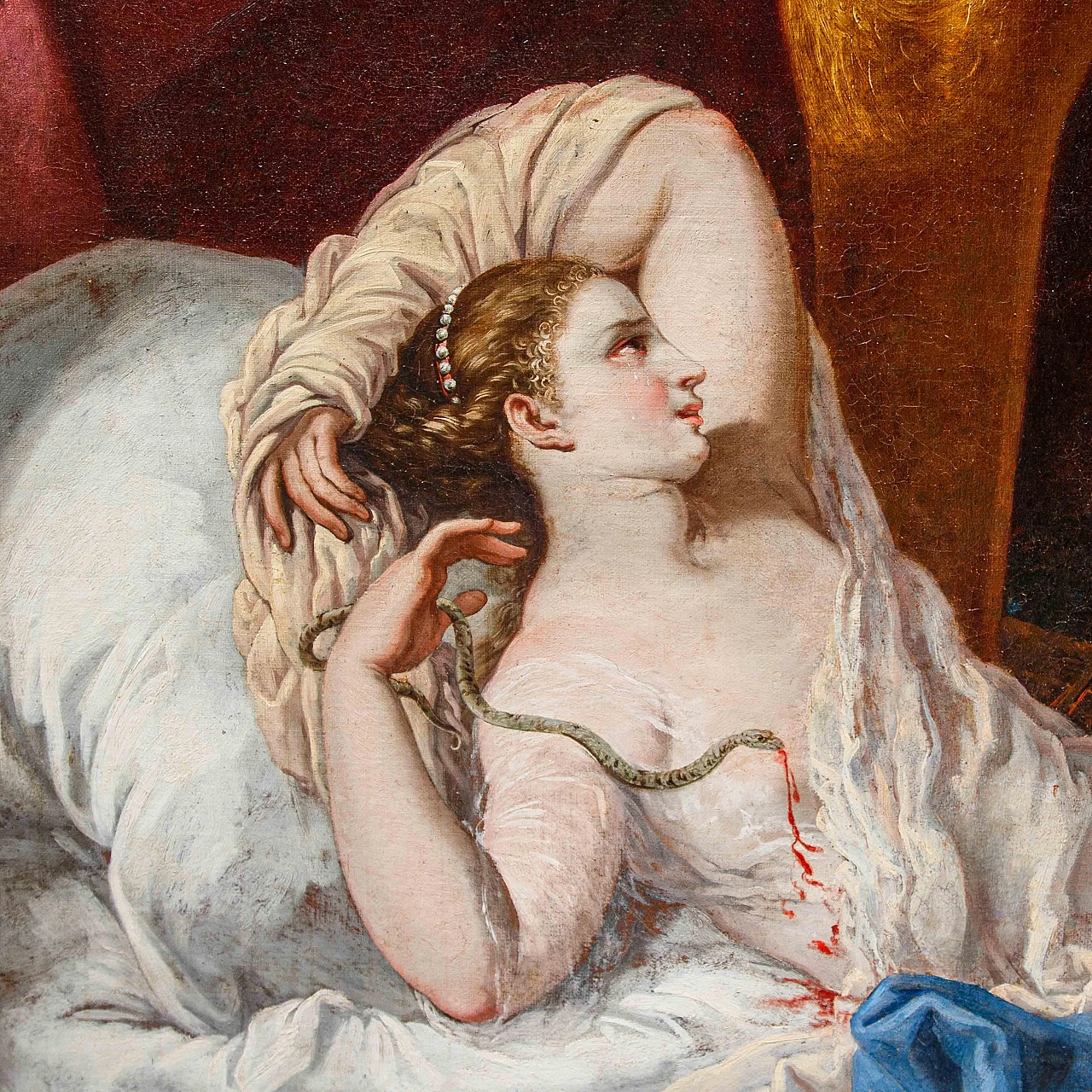
Attributed to Nicolas Pierre Loir, The Death of Cleopatra,17th century

.png)
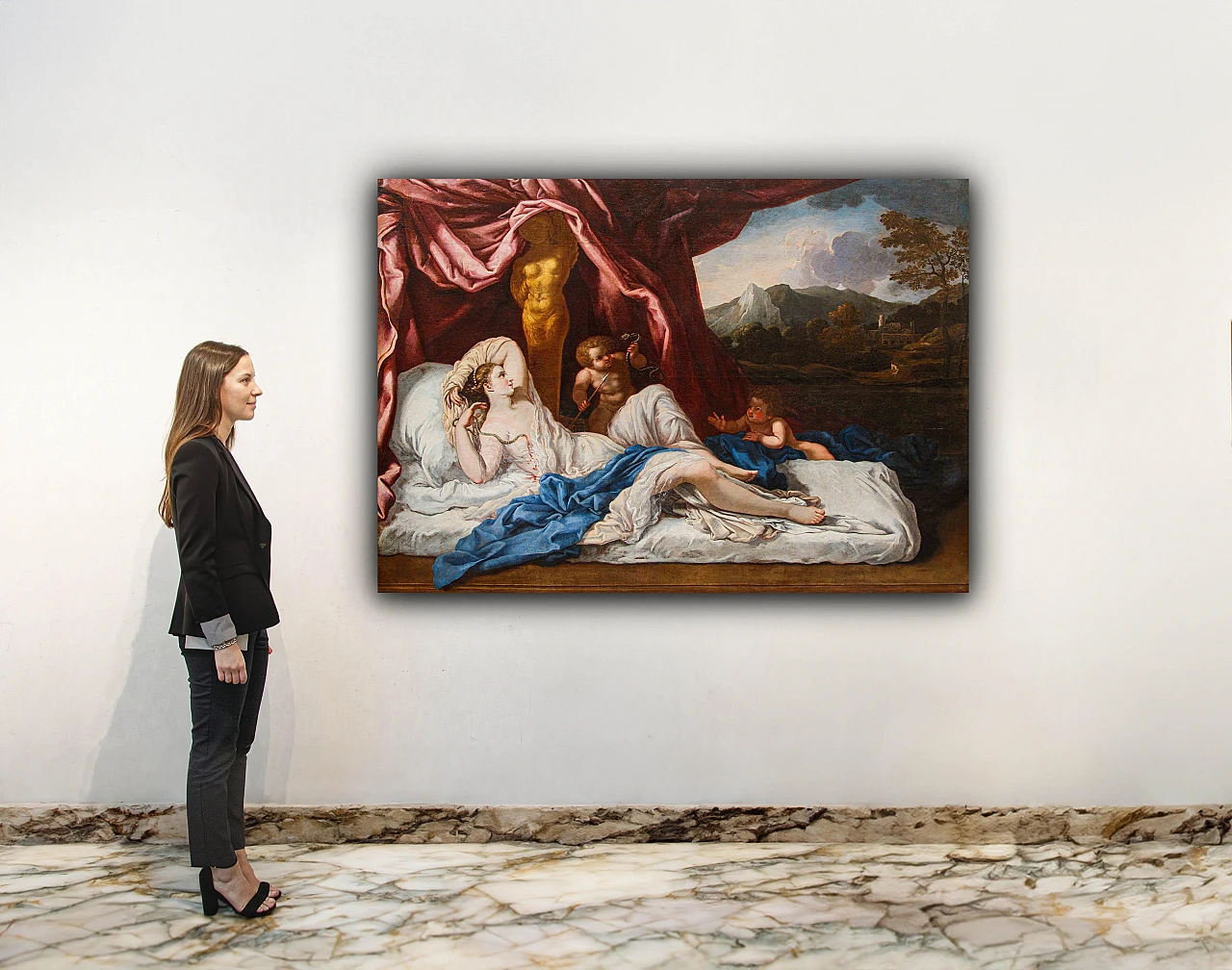
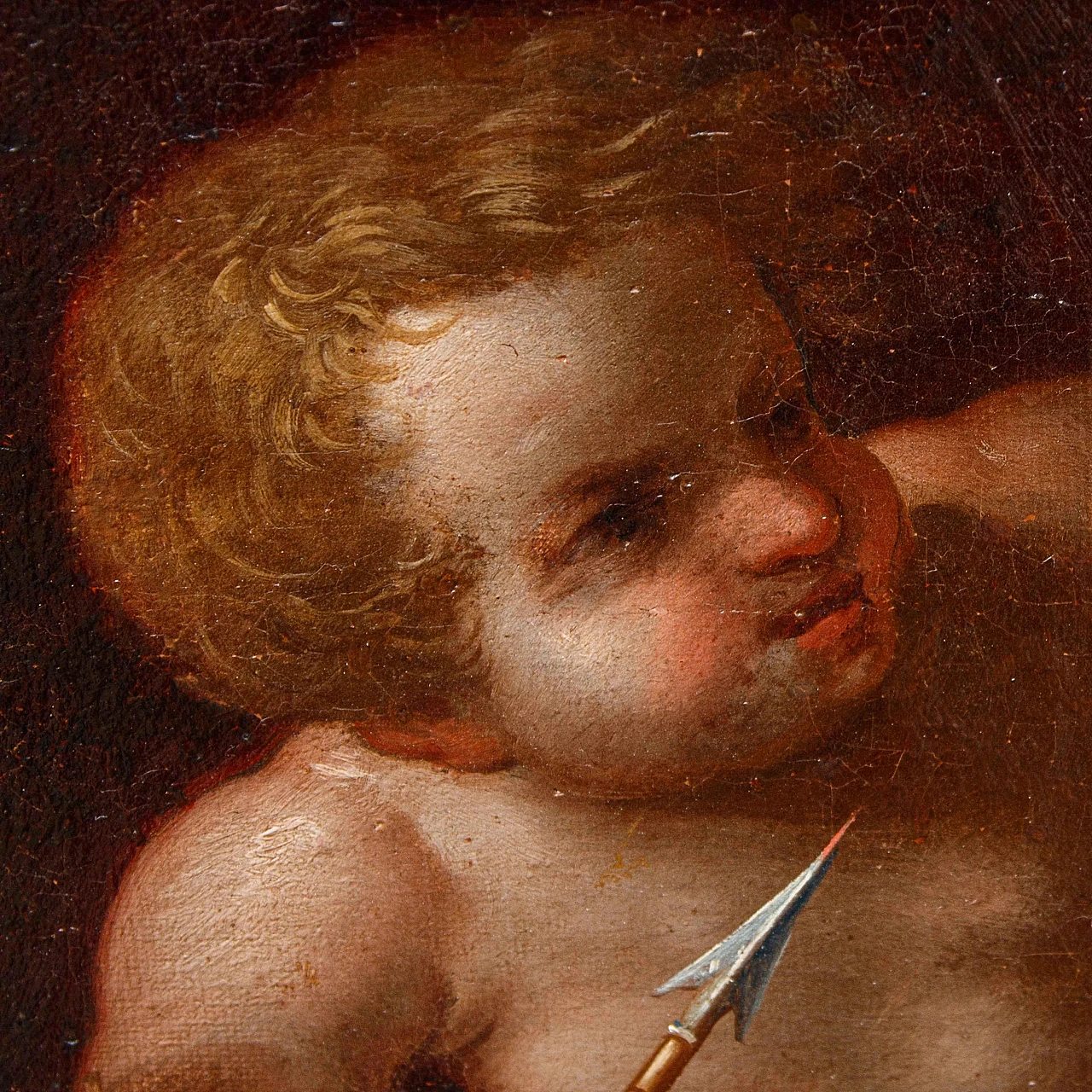
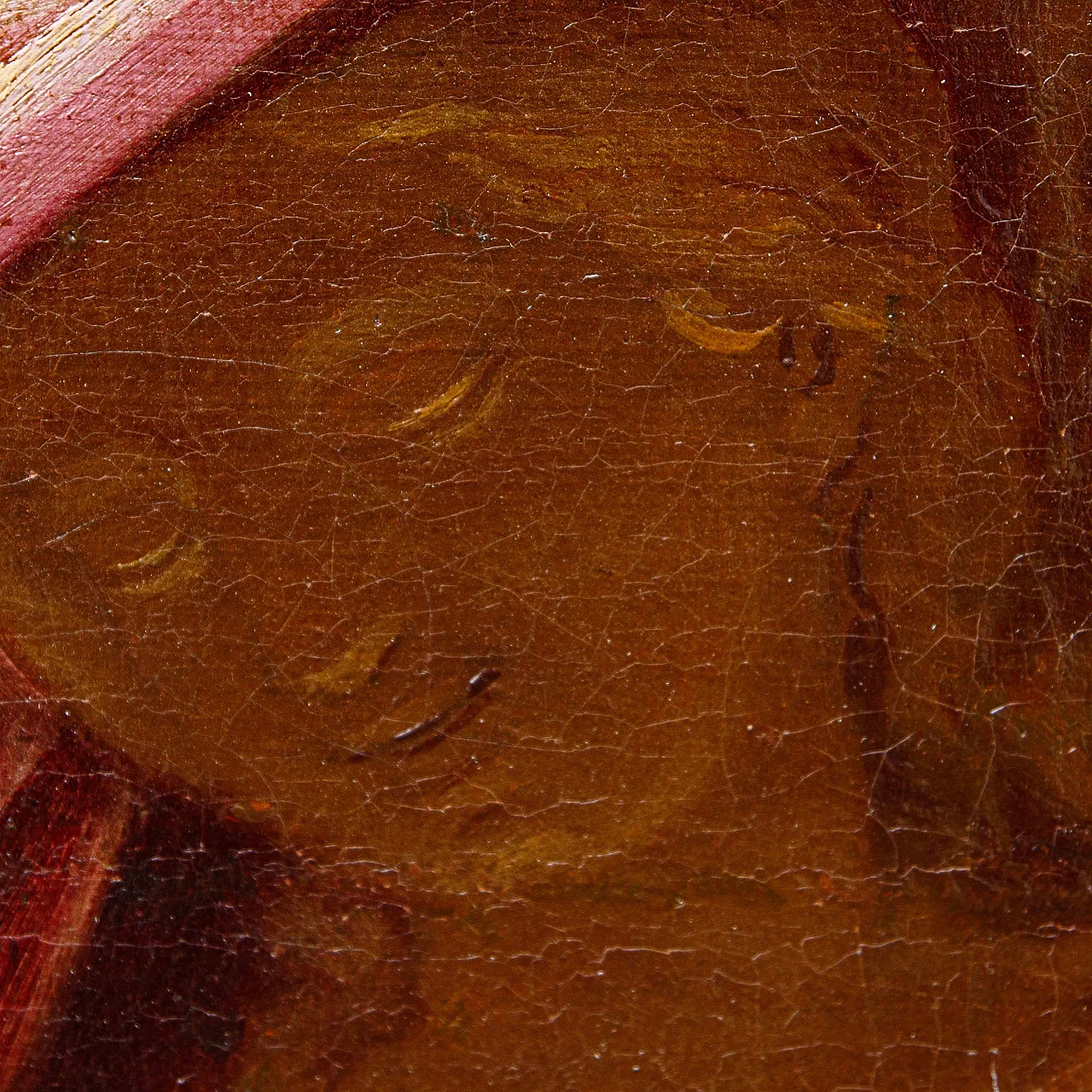
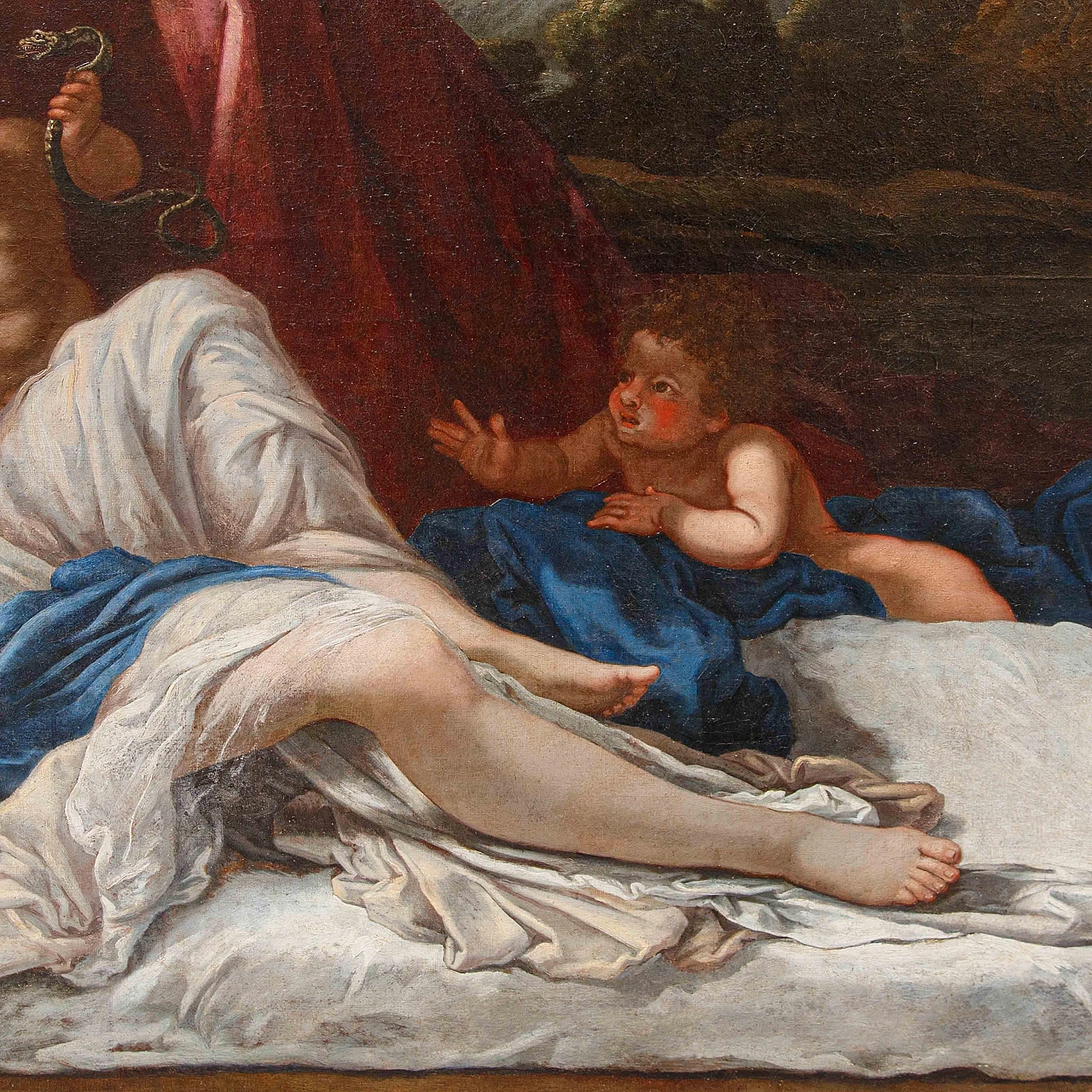
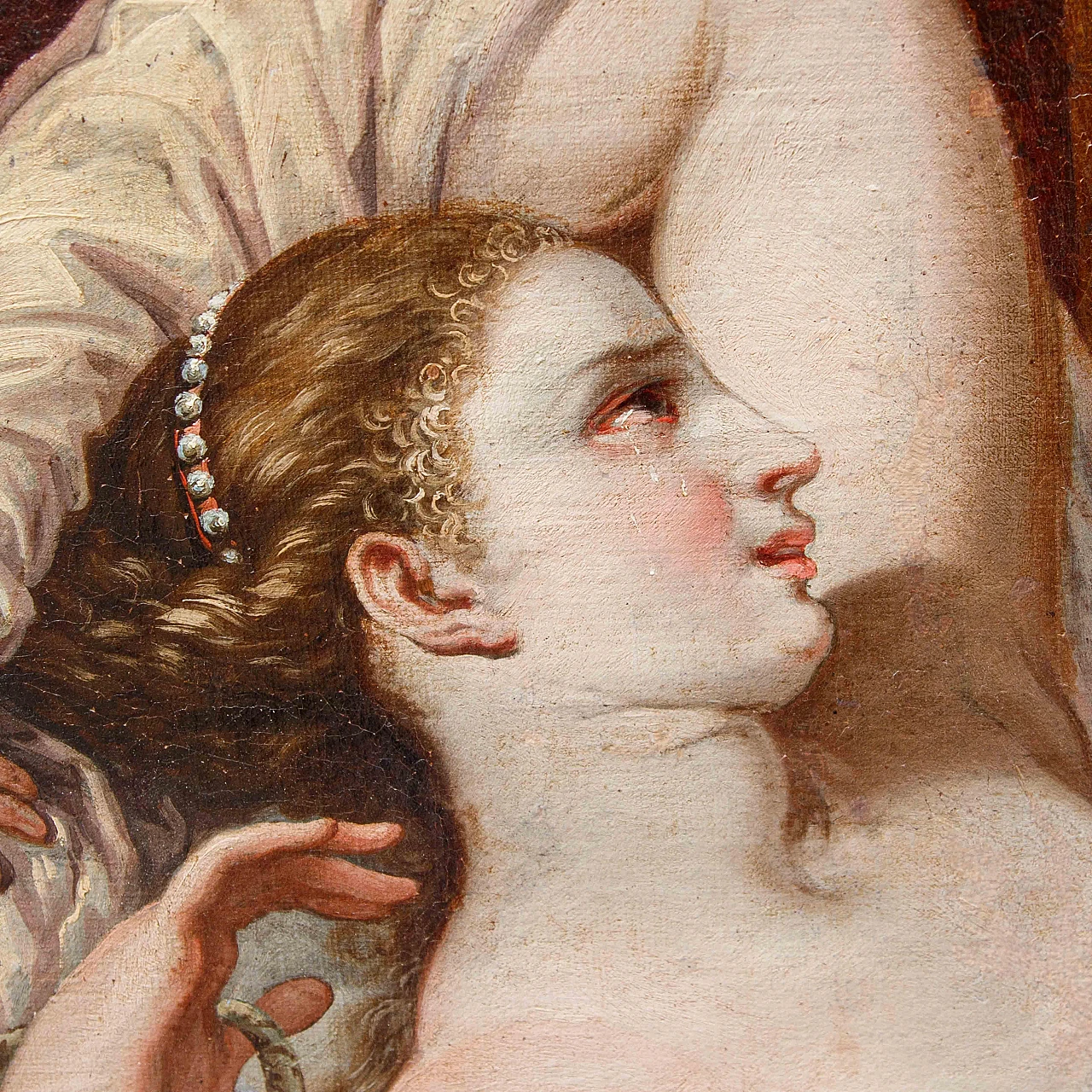
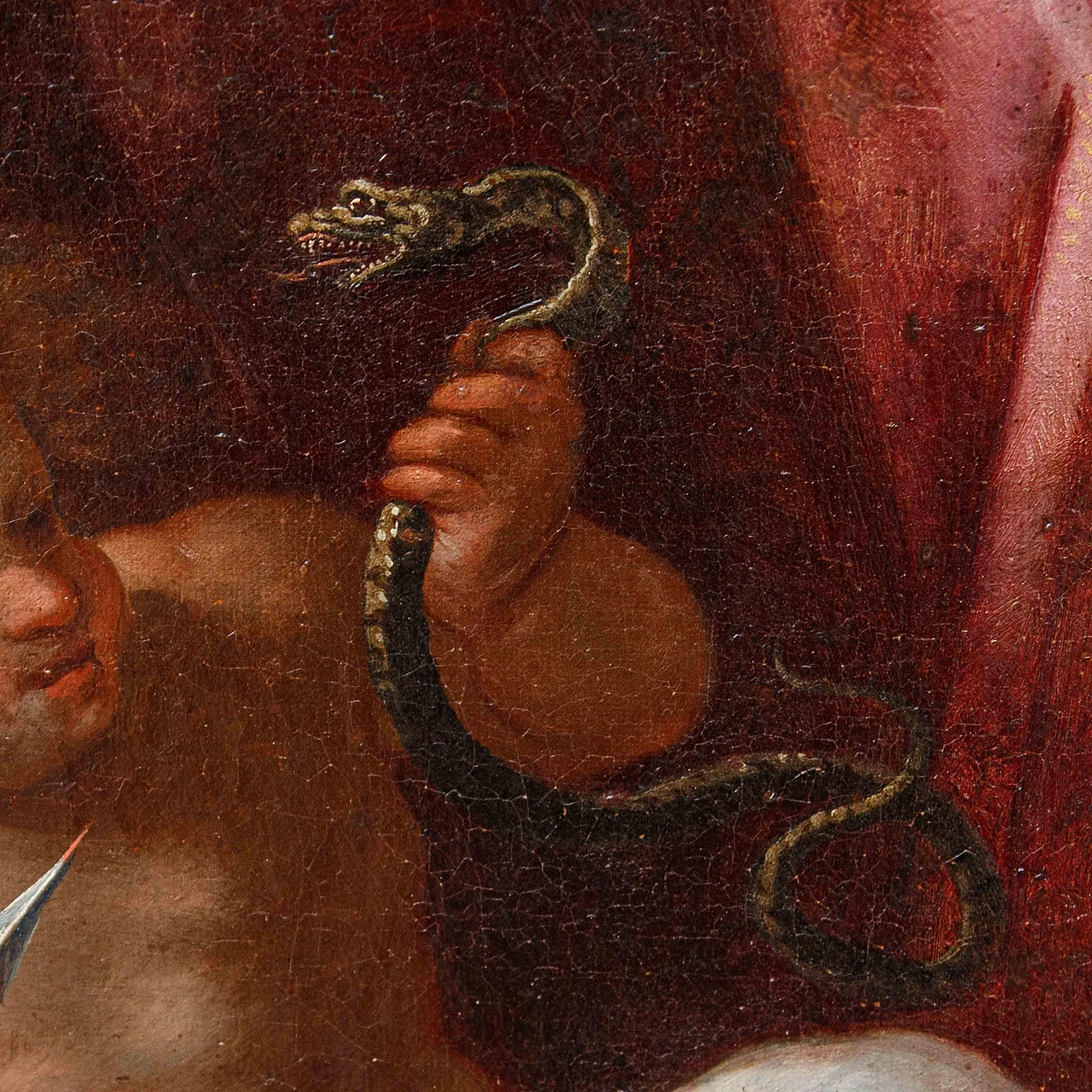
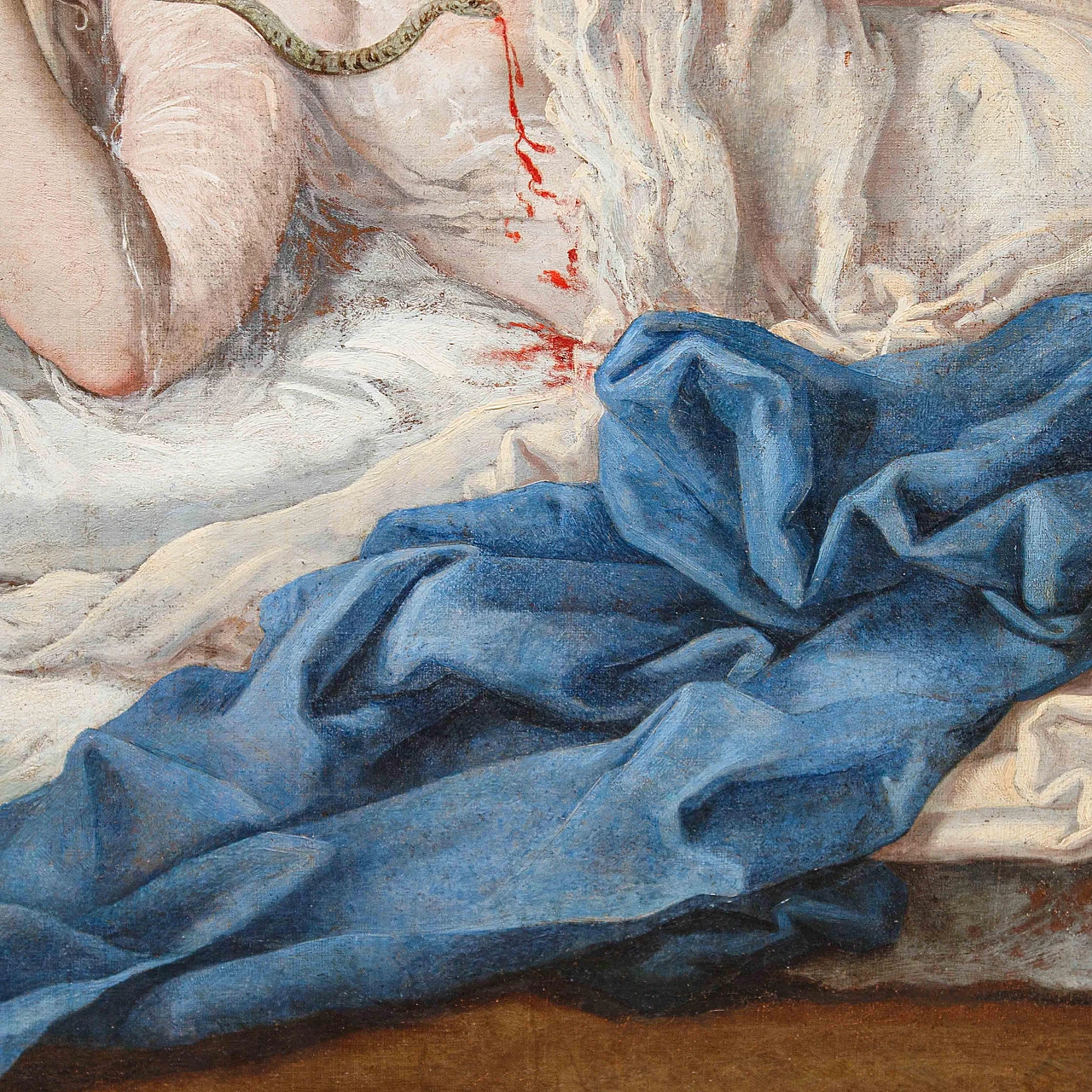
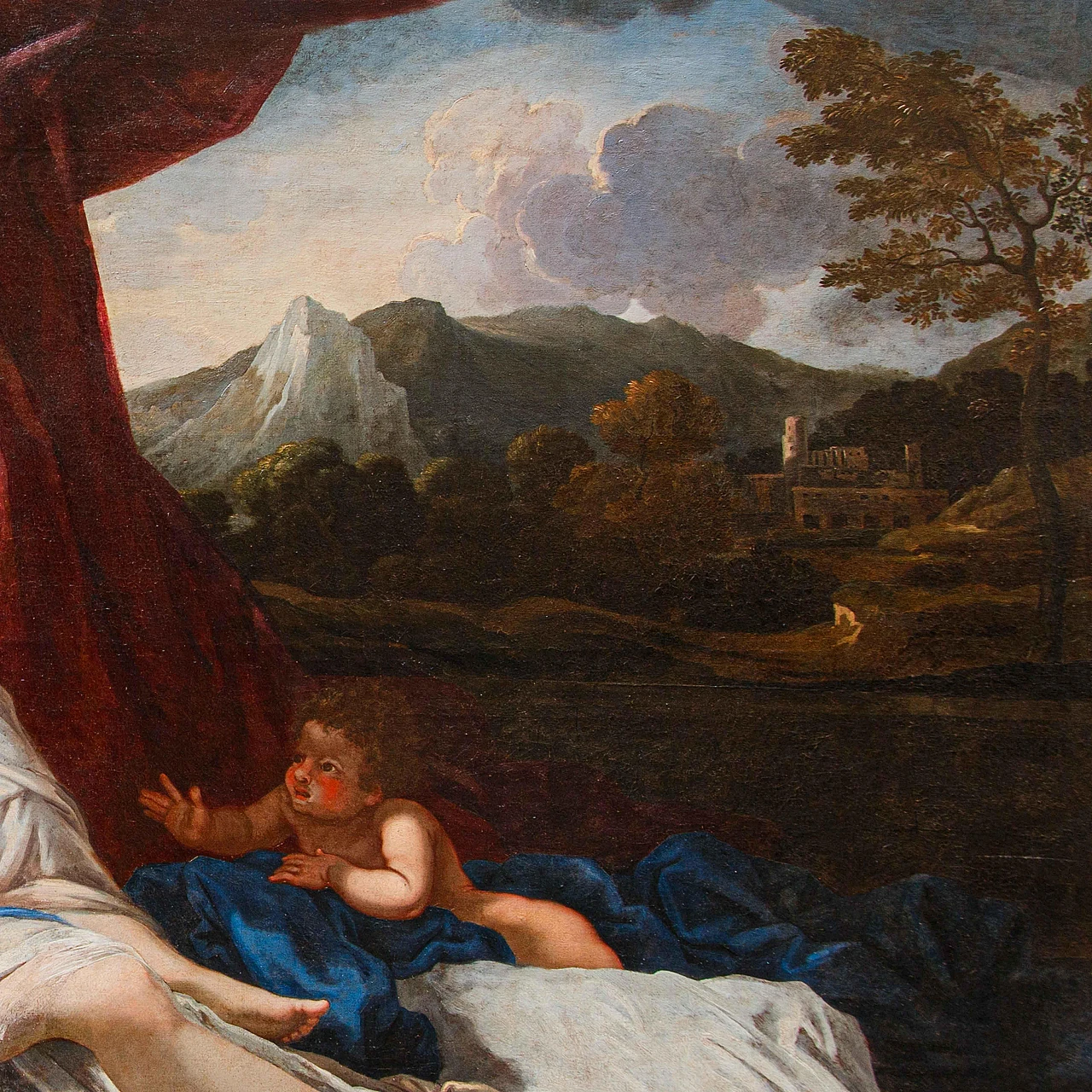
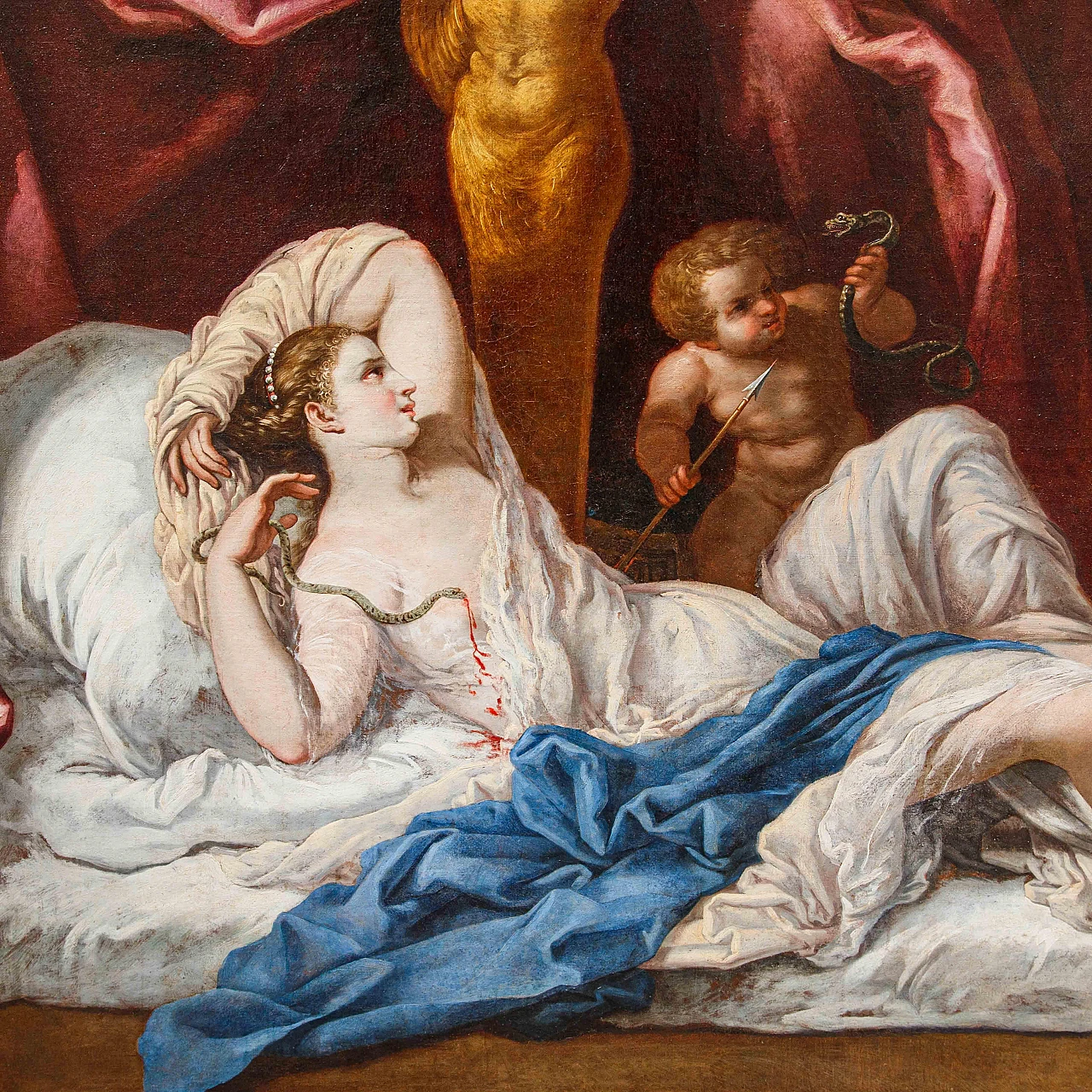
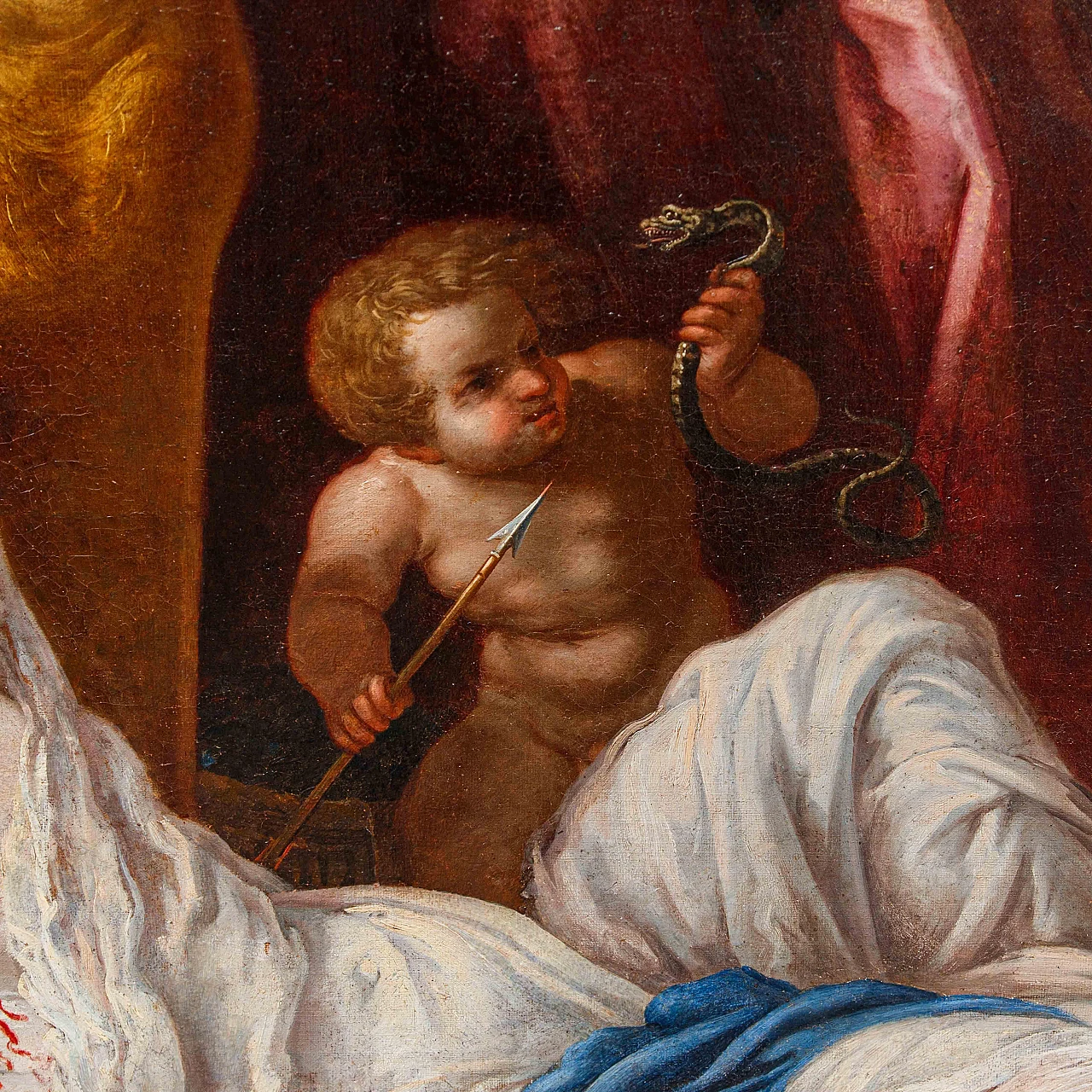
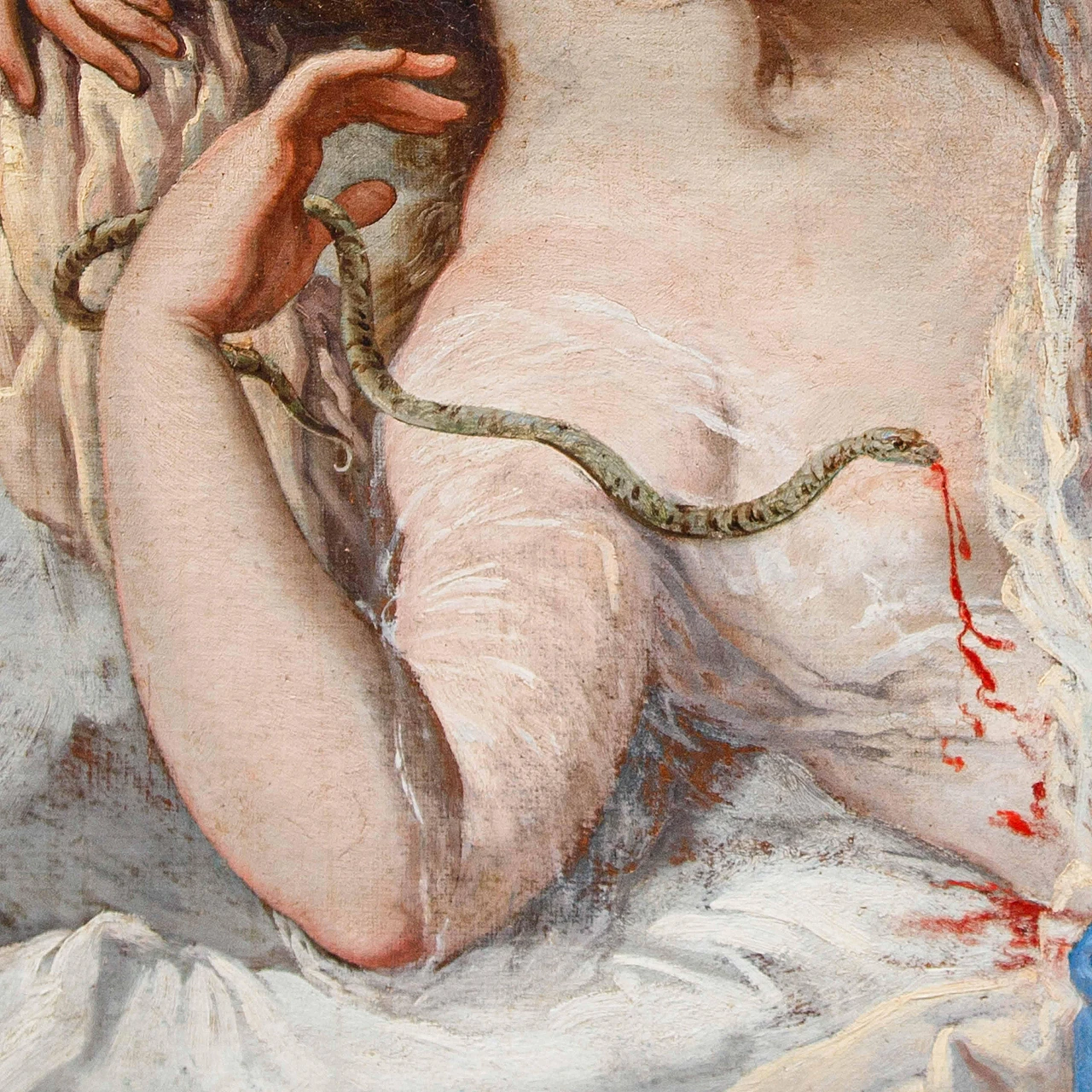
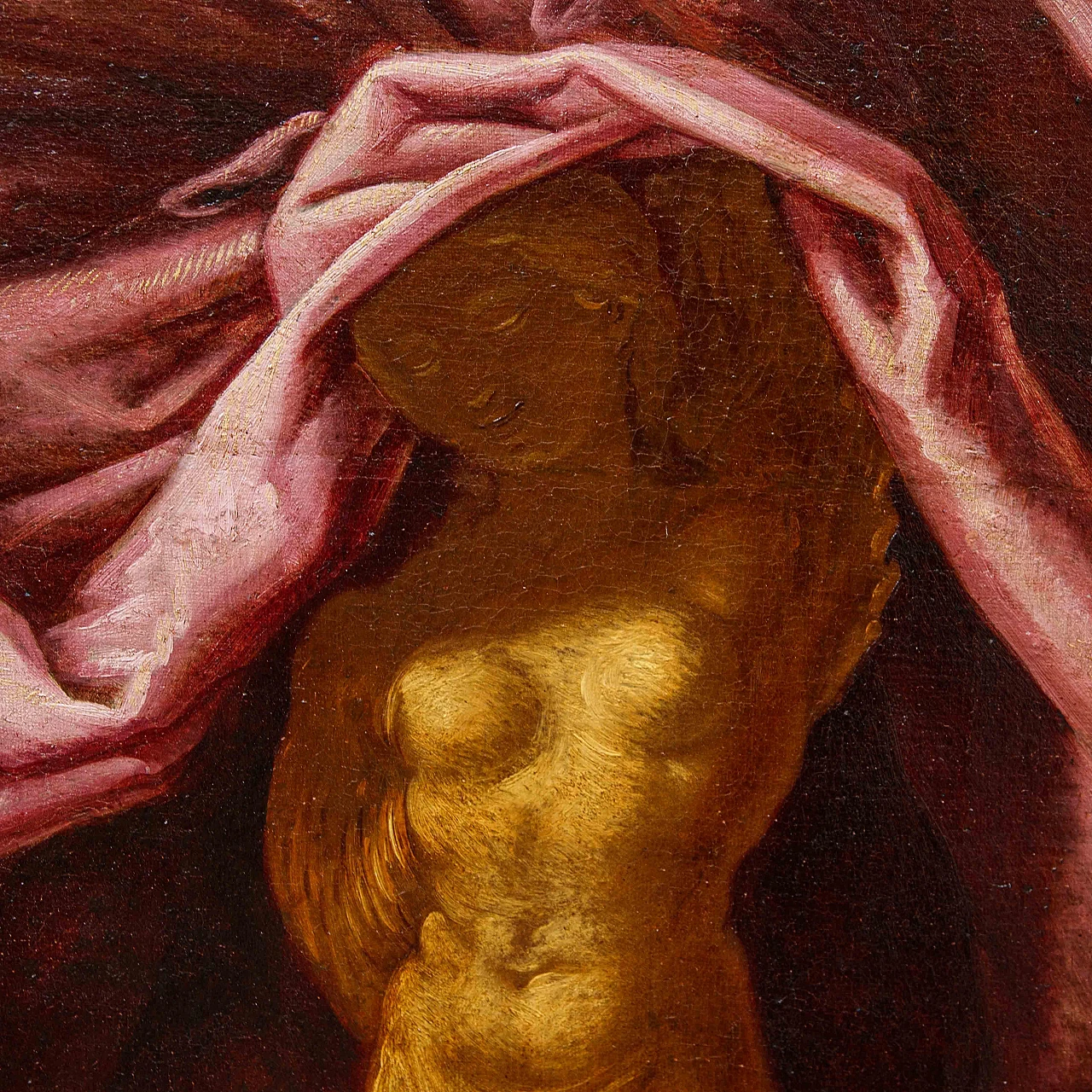
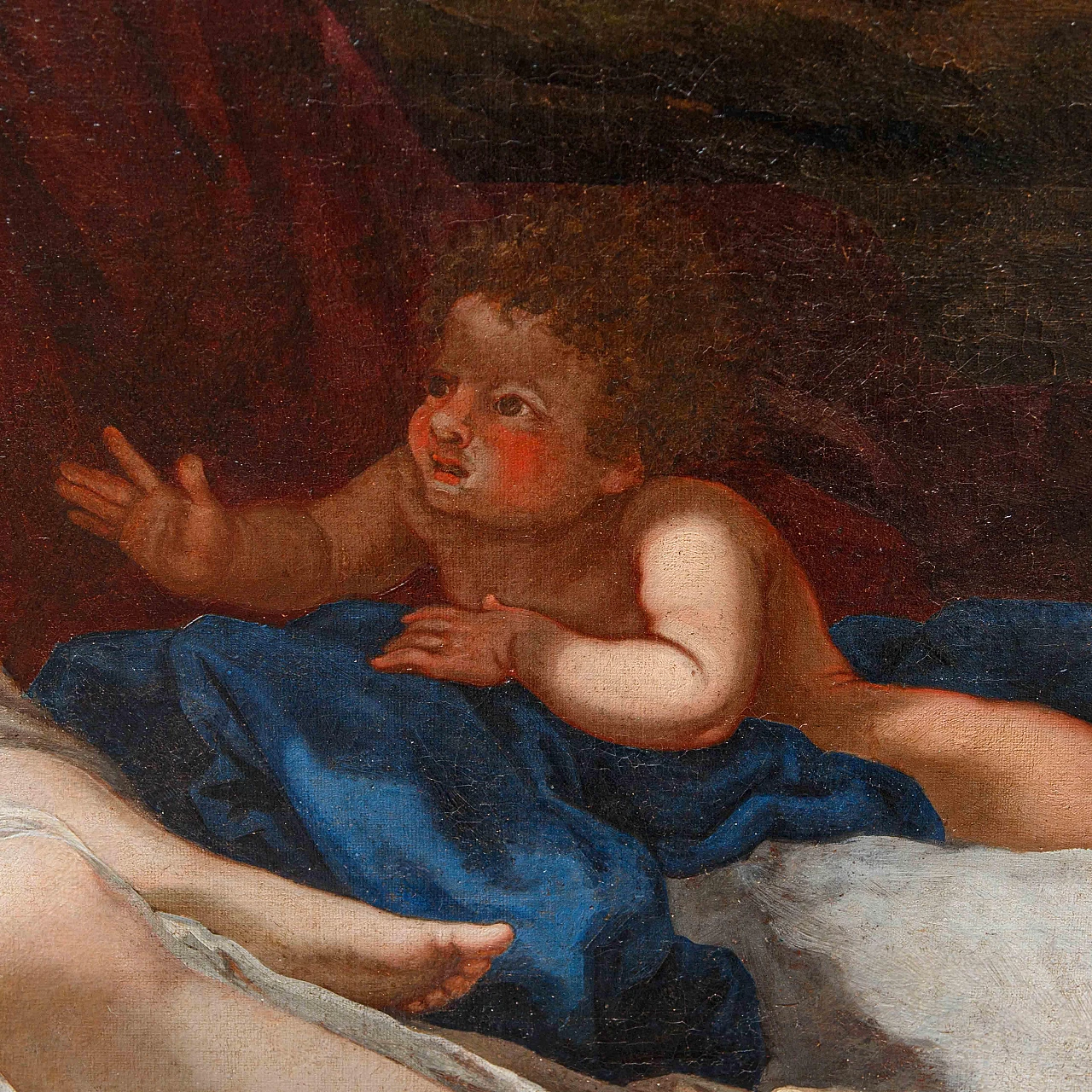
Nicolas Pierre Loir (Paris, 1624-ivi, 1679), attr. Cleopatra undergoing the bite of the asp, oil on canvas, 124 x 172 cm, framed 140.5 x 188 cm. An honourable death, that of Cleopatra, who did not wait for the disastrous outcome of the civil war to which Mark Antony dragged Ptolemaic Egypt. In the present painting the asp is duplicated, agonising on one side in the queen's blood and clutched, on the other, in the hands of an incredulous putto-helper, heir to the classical iconographic tradition. The pose of Cleopatra, borrowed from the type of the sleeping Ariadne, for which a realistic prototype can be recognised in the sculpture housed in the Vatican from 1779 onwards, can also be traced back to the same context, to which the gilded sculpture behind the bed representing a siren with her wing-arm raised above her head should also be traced. Acquired in 1512 by Pope Julius II for the Courtyard of the Statues of the Belvedere, Cleopatra herself was mistakenly identified in this work on account of a snake armlet. Correctly identified as the Cretan maiden by Ennio Quirino Visconti, the Ariadne was later universally admired by artists on the Grand Tour. Among them was Nicolas Pierre Loir, to whom this painting can be traced and who came into contact with the papal art collections. Coming from a family of goldsmiths, Nicolas Pierre Loir had notable masters from the beginning, such as Sébastien Bourdon and Simon Vouet. The inevitable Italian sojourn fell between 1647 and 1649, thanks to the direct interest of the embassy secretary André Félibien. His meeting with the knight collector and traveller Cassiano dal Pozzo, a Roman by adoption in the papal retinue, who opened his own collection to Loir's eager eye, led to the discovery of the works of Nicolas Poussin, abundant in Cassiano's cabinet. Loir was then convinced of the need for an Italianising landscape for his own paintings, also treasuring the compositional suggestions of Gaspard Dughet, who was already in close contact with Poussin through family connections. Returning to his homeland in 1650, Nicolas Pierre devoted himself actively to the Company of Goldsmiths and, consequently, to the so-called minor arts for the cathedral of Notre-Dame in Paris. Having been privately commissioned by Henri du Plessis-Guénégaud and his château in the vicinity of Villeroy, the artist followed up his commitments as a professor first and then rector of the Royal Academy of Painting and Sculpture in the capital (1663), thanks to the support of Charles Le Brun and King Louis XIV himself, by executing a series of seven canvases at the flat of Queen Marie-Thérèse of Austria. Having obtained the life-long support of the royal pension, Loir was also able to approach the textile art of the Gobelins Manufacture for the château of Saint-Germain-en-Laye in the Tuileries. A master in turn of François de Troy, who adopted the typical Poussinian blue of the palette, Loir lavished a perfect series of paintings with mythological or historical archaic subjects. From this point of view, the present Cleopatra draws heavily from Loir's Classical pronunciation, drawing obvious affinities with other autograph paintings of his, such as the Allegory of the Founding of the Royal Academy of Painting and Sculpture (Versailles, châteaux de Versailles et de Trianon), Pithopolis Serves Golden Plates to King Pithès (Bourg-en-Bresse, Musée de Brou) and The Queen Addresses the Soldiers (Paris, Musée du Louvre).
ID: 77435-1715697238-90637
Time period



 BRONZE Seller in
Milano, Italia
BRONZE Seller in
Milano, Italia