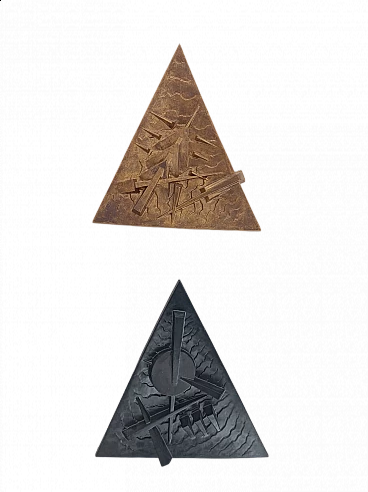
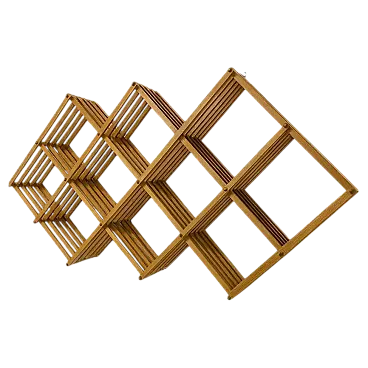
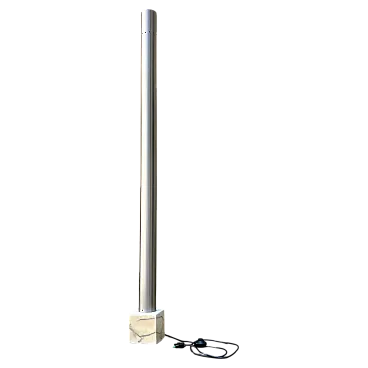
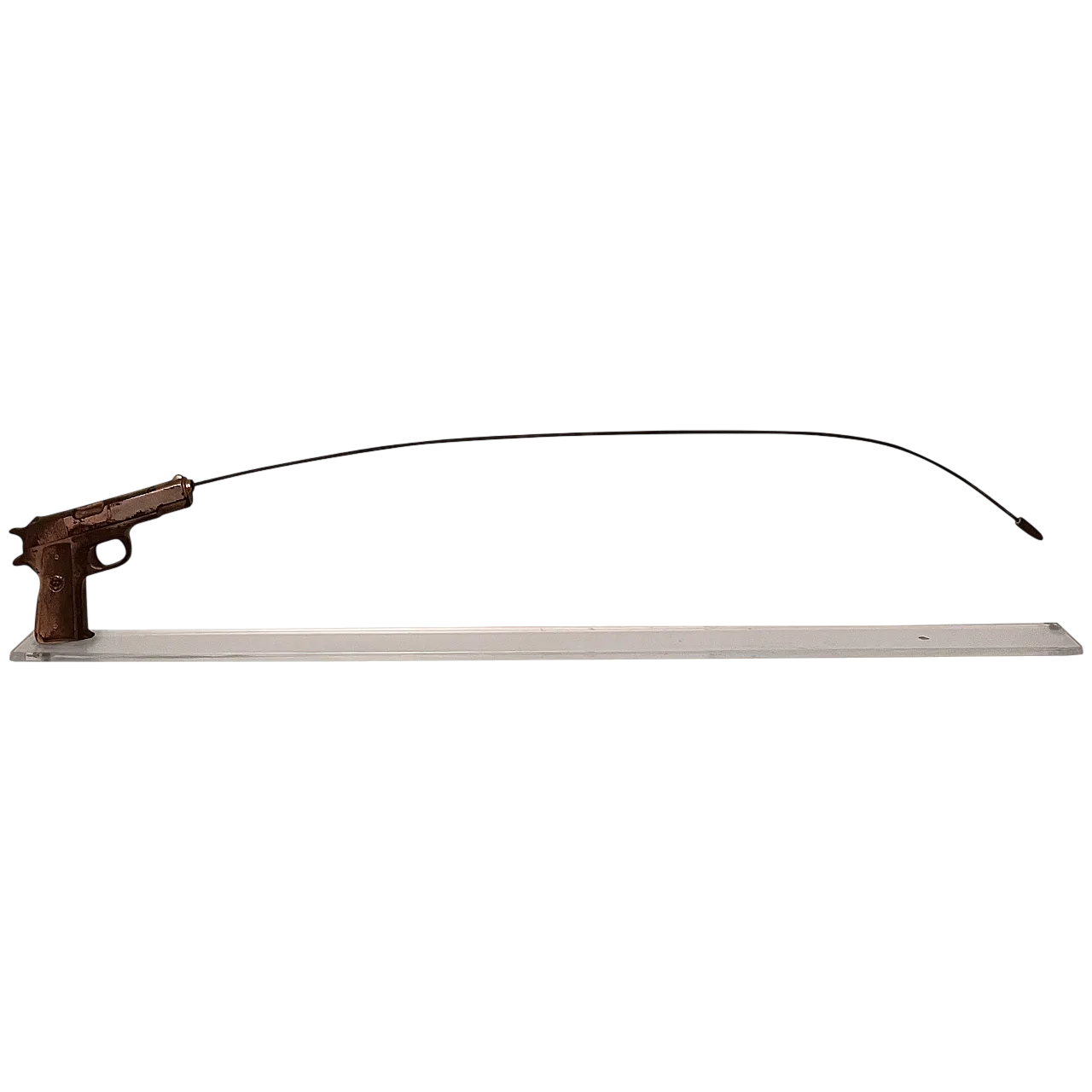
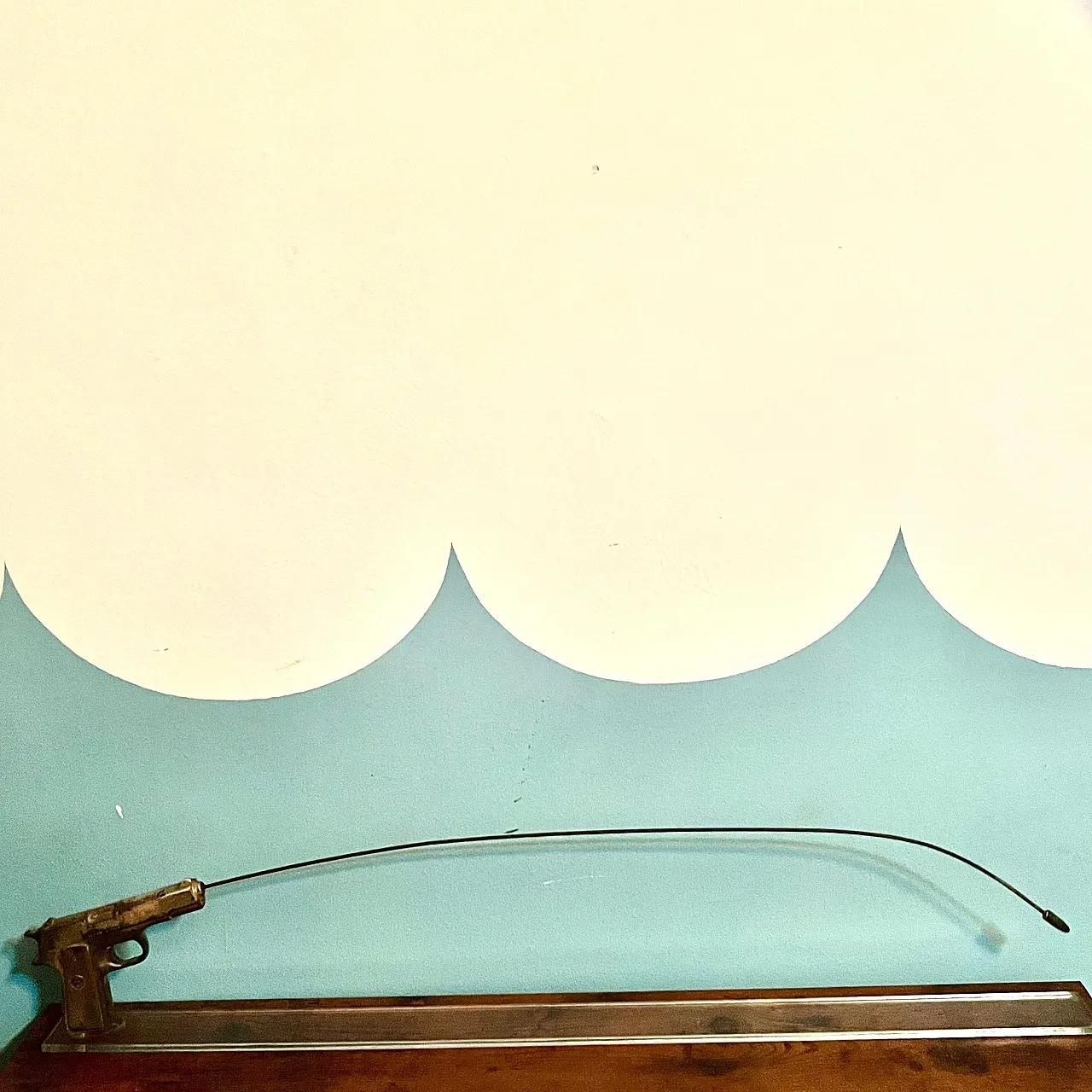
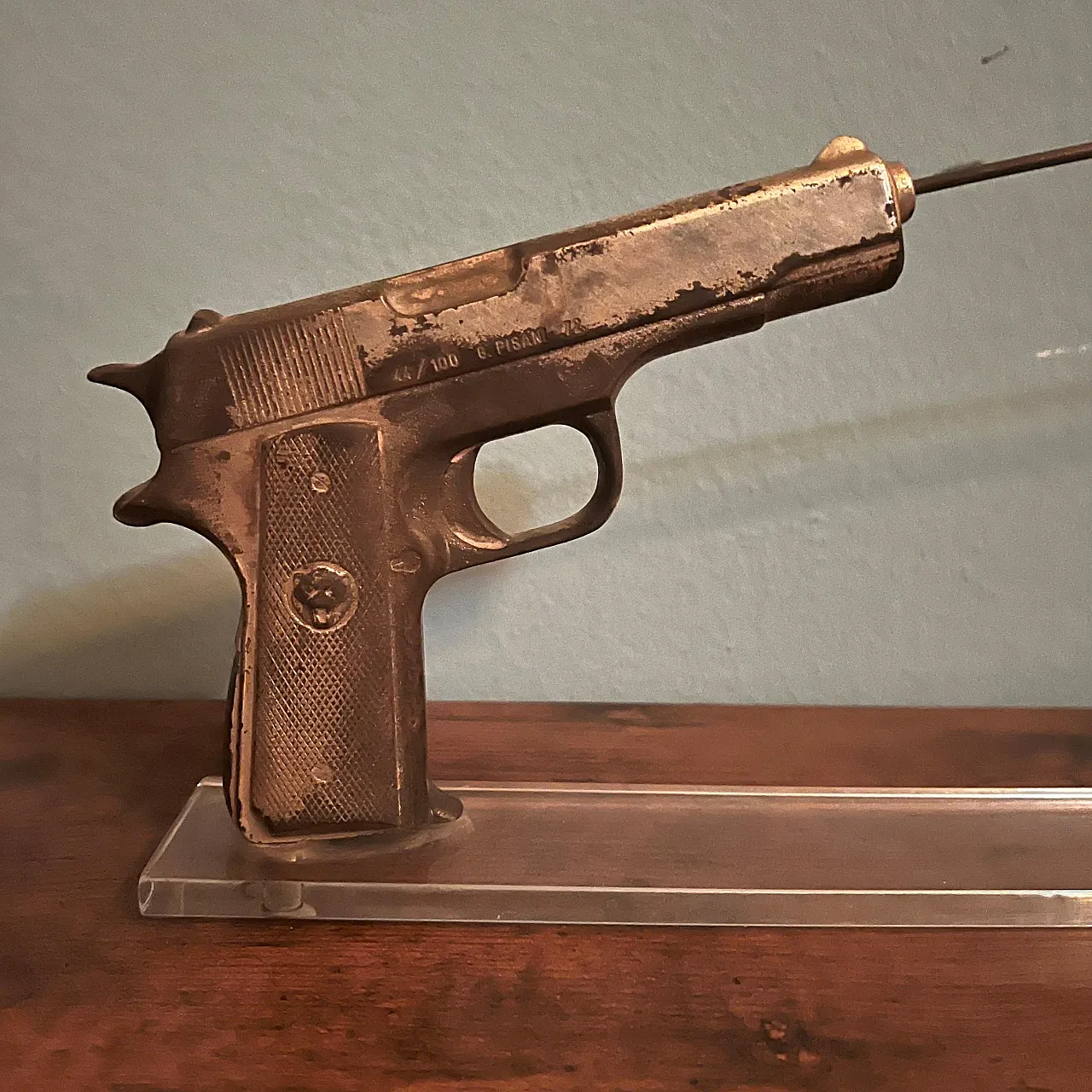
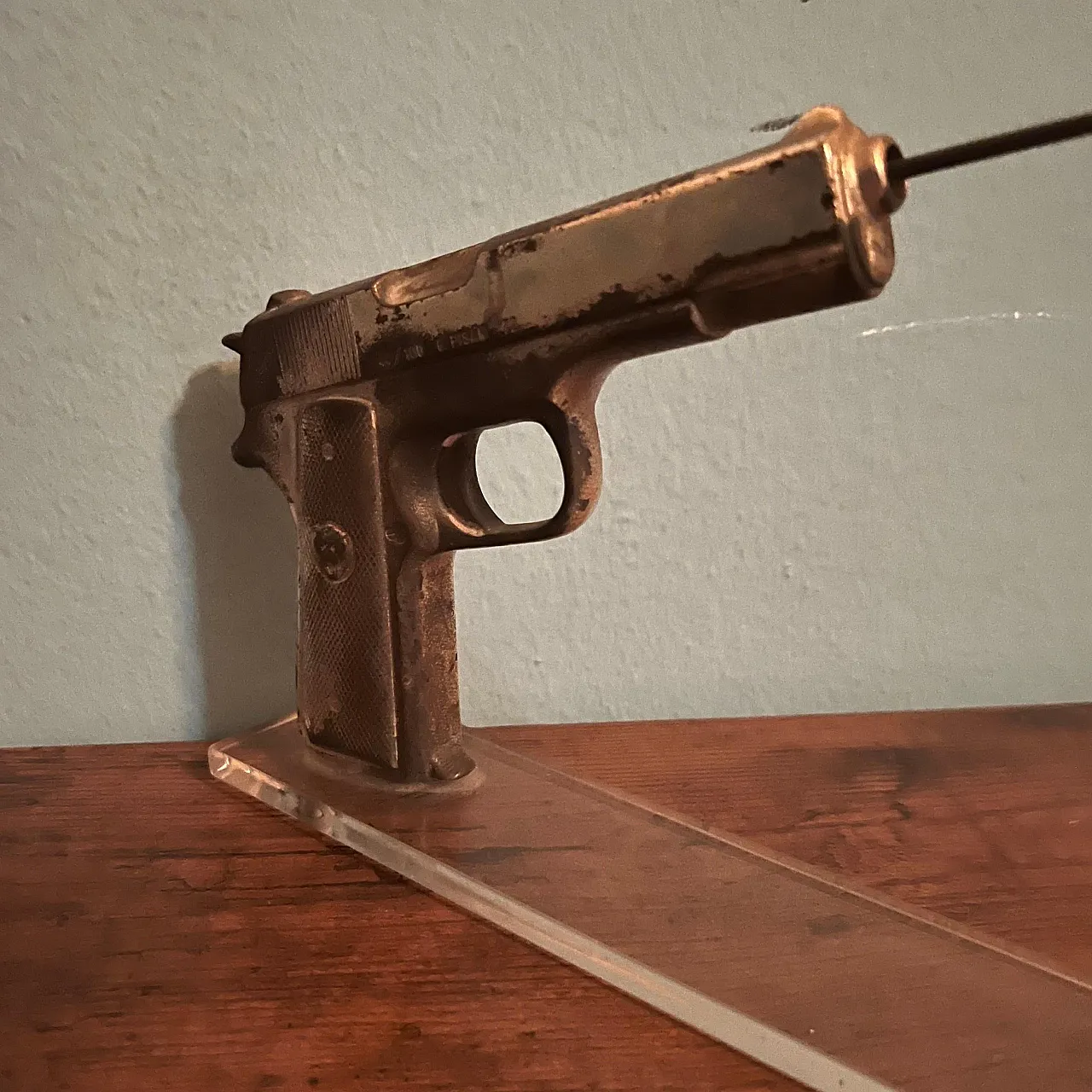
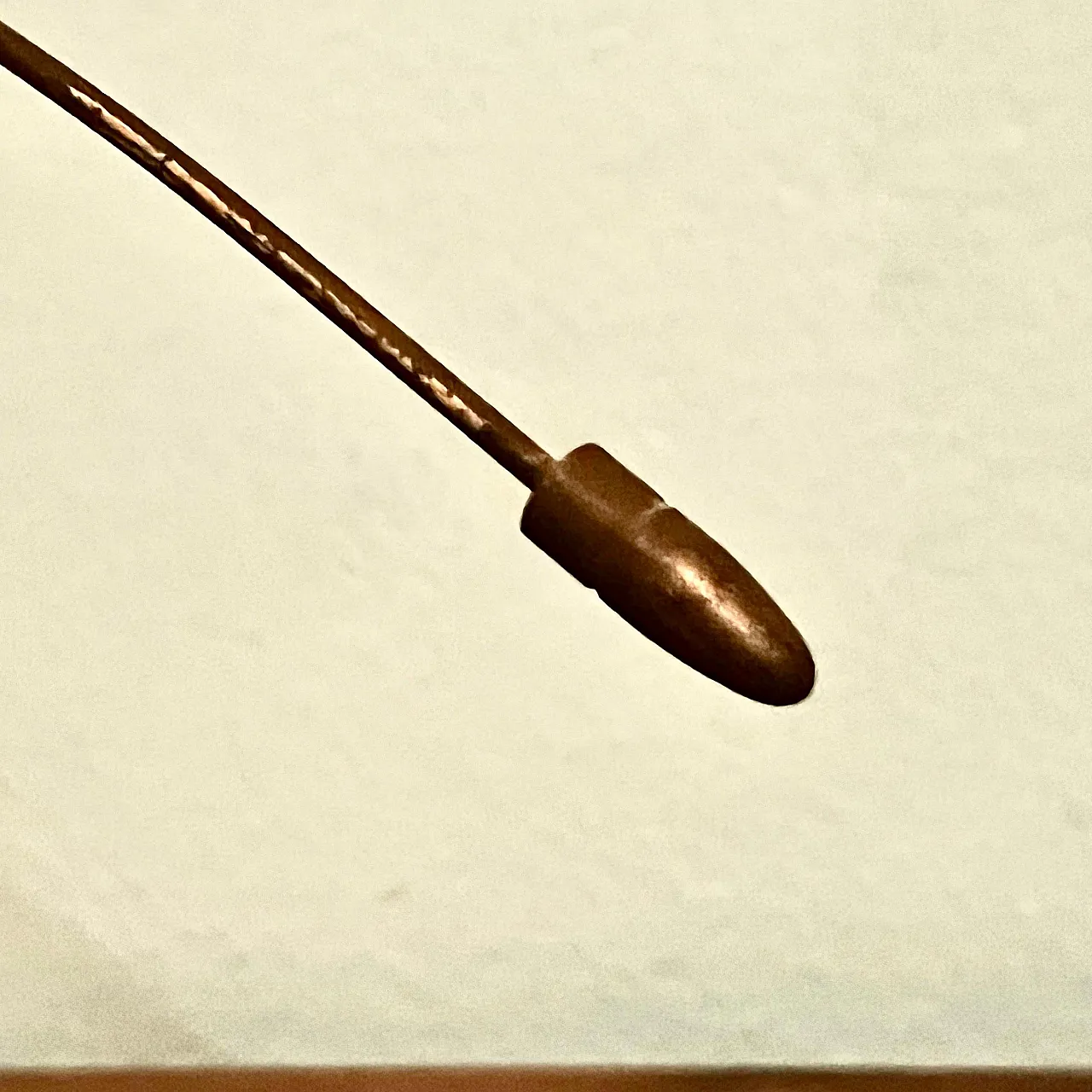
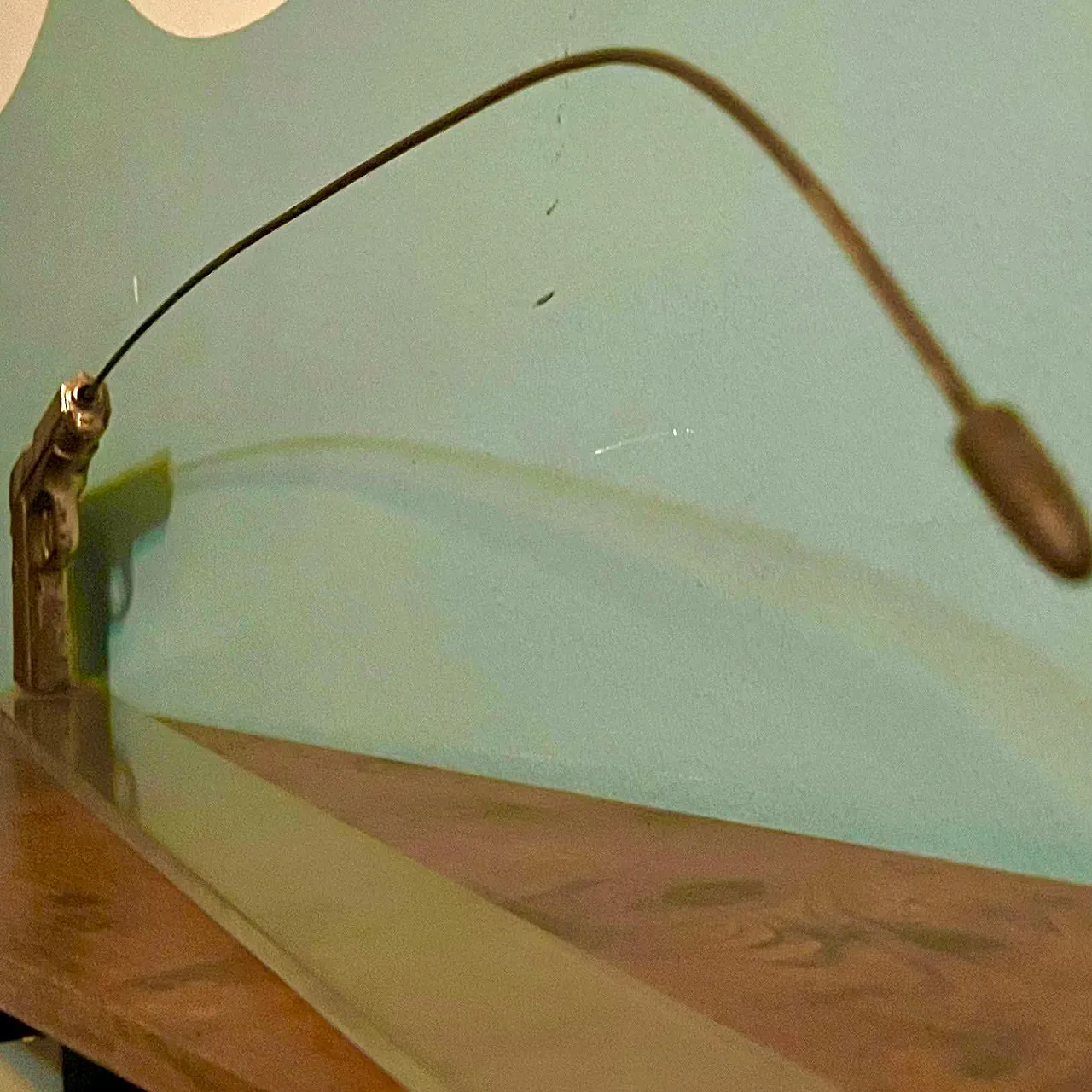
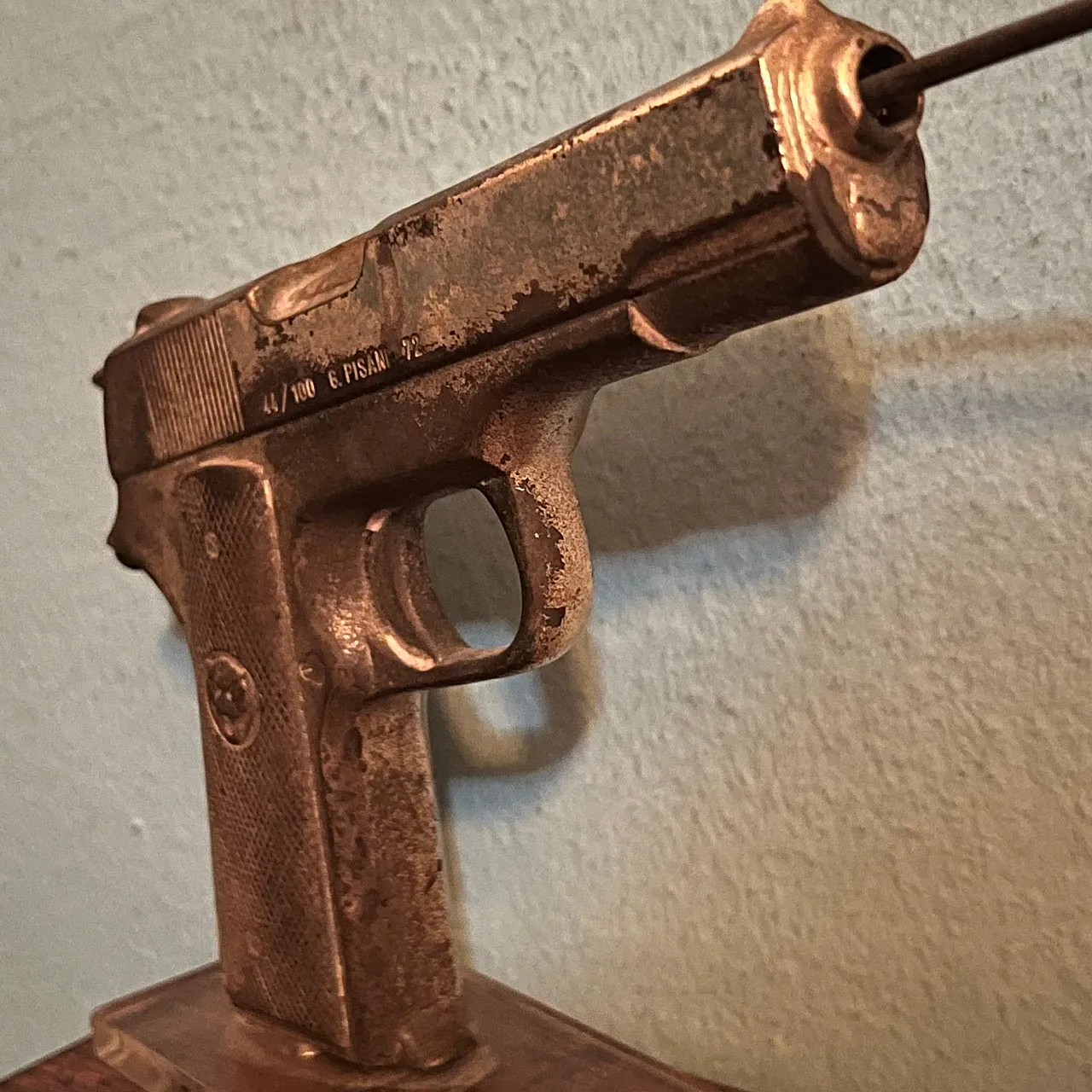
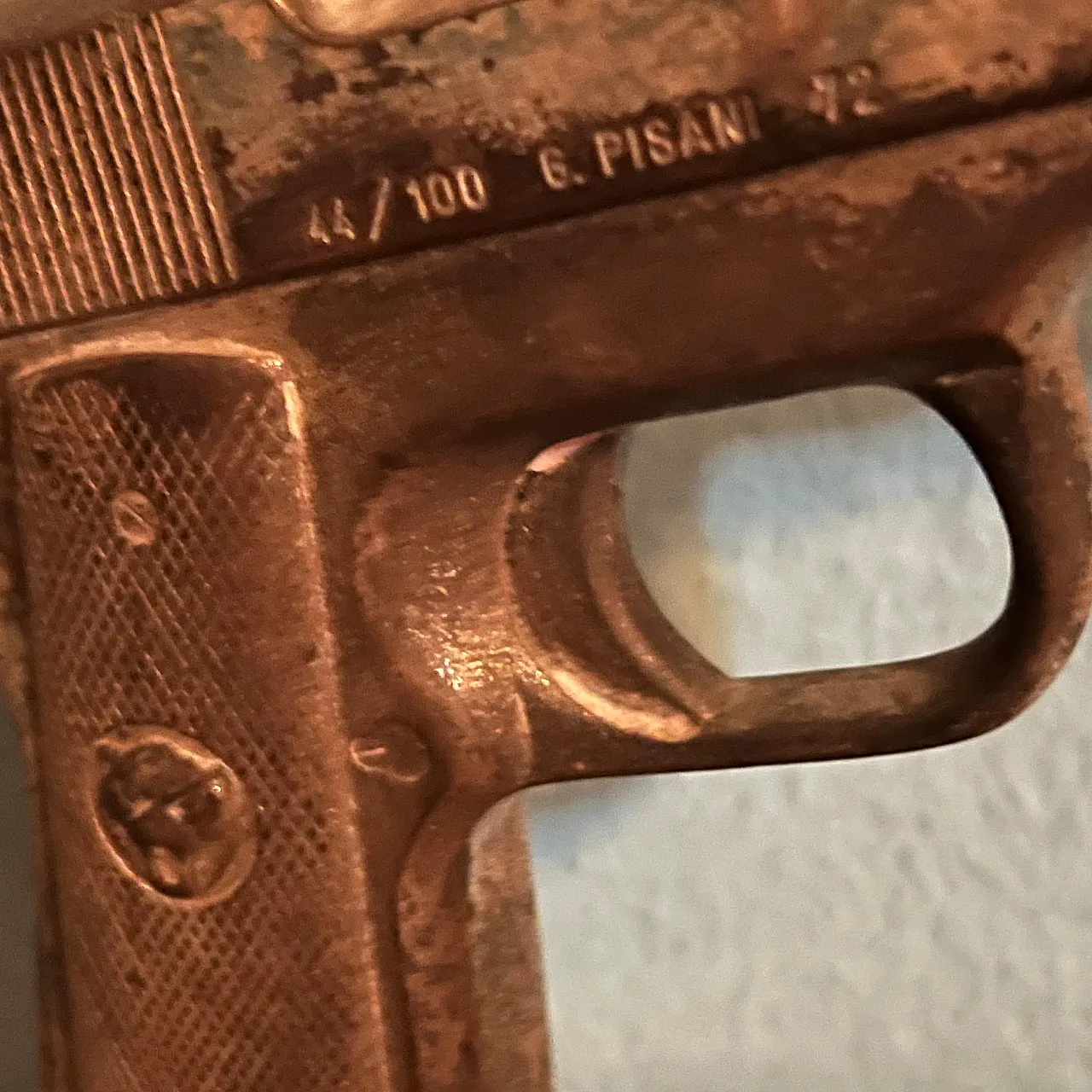
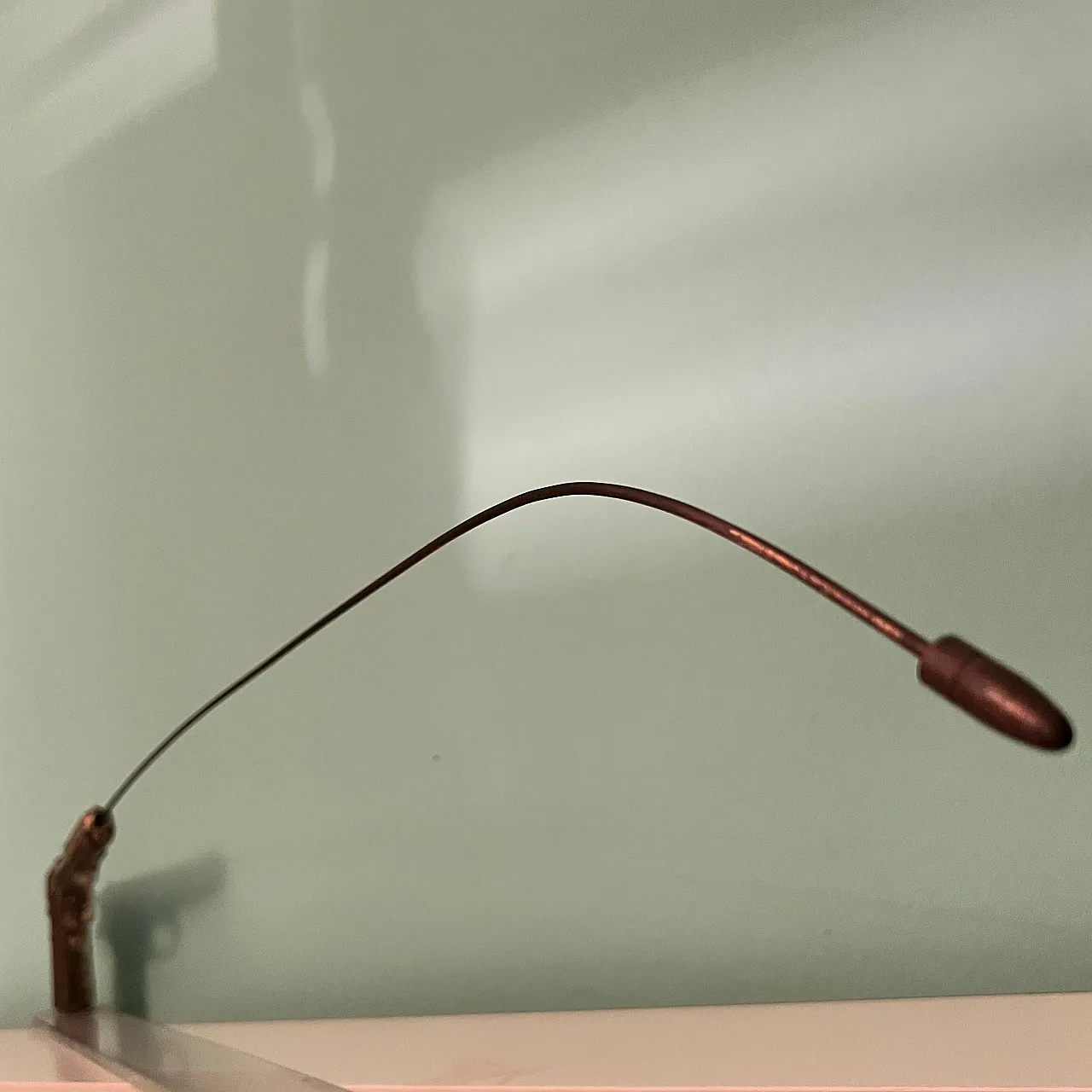
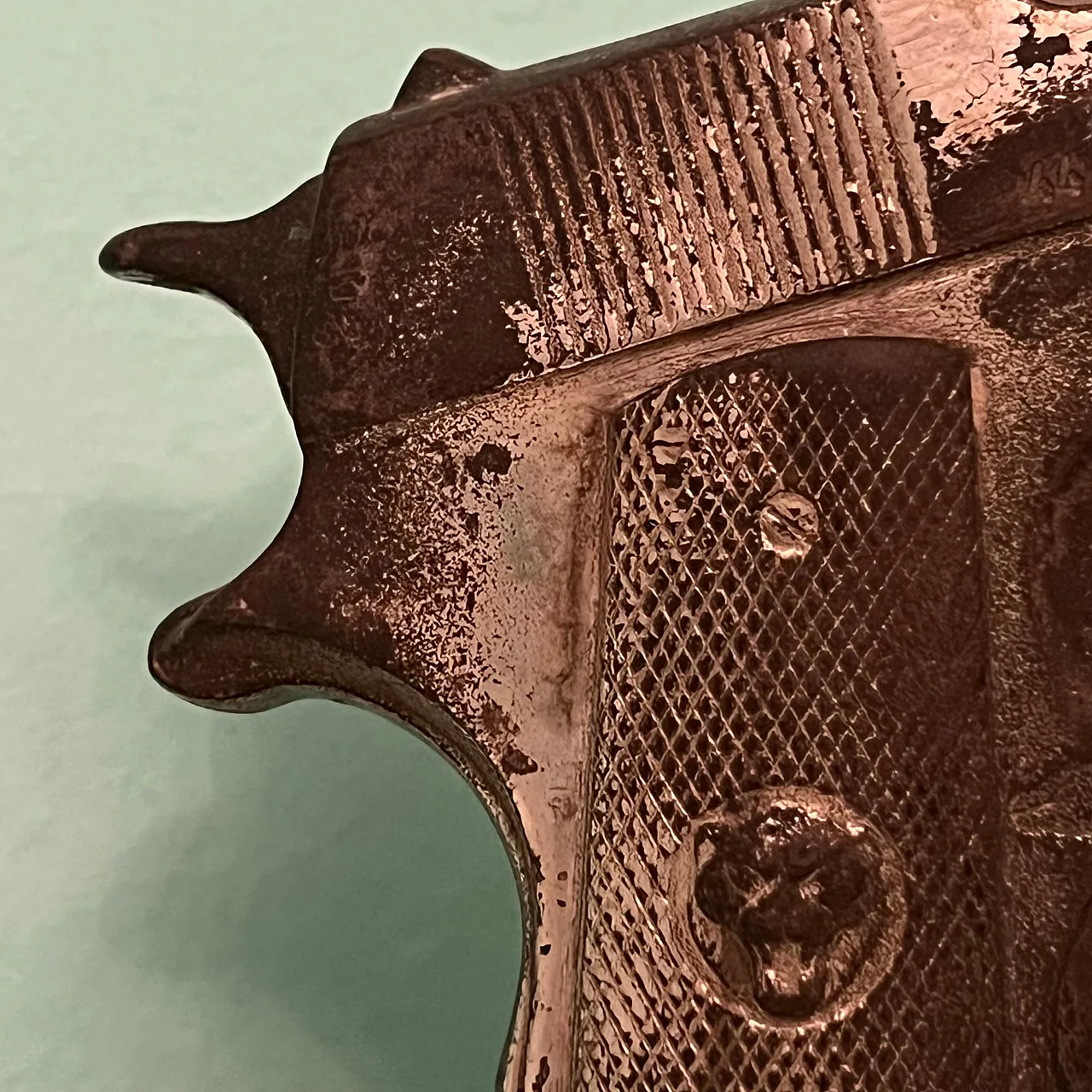
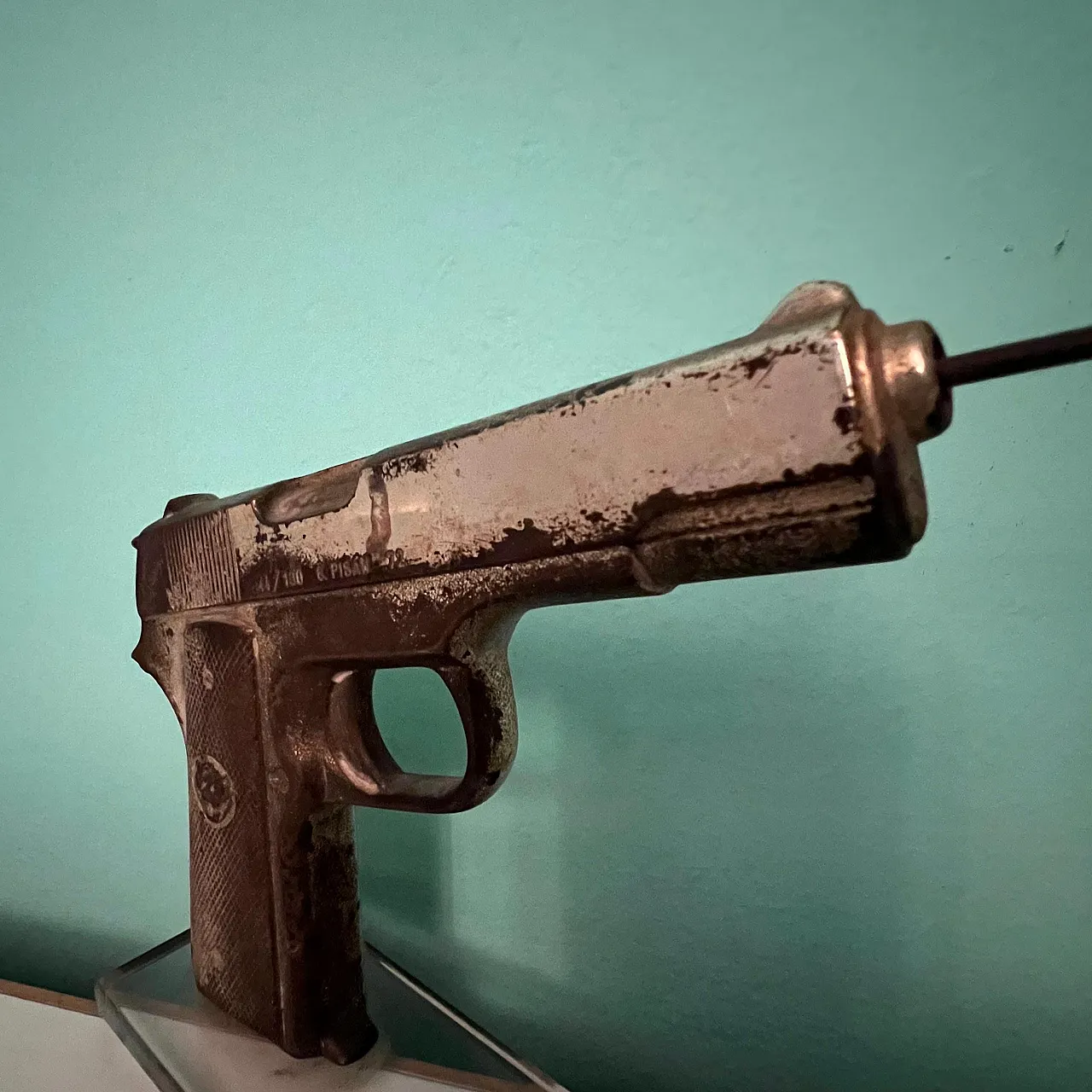
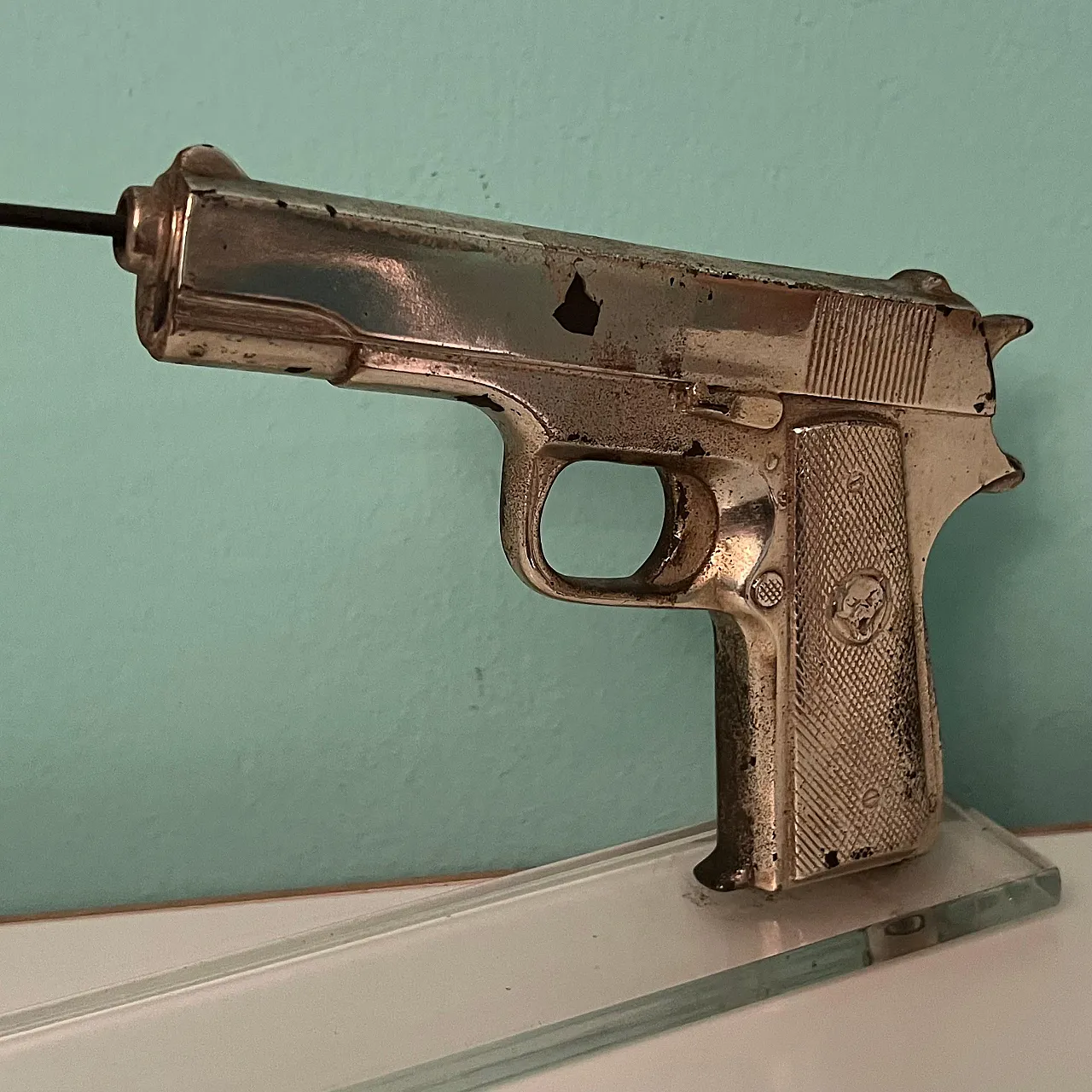
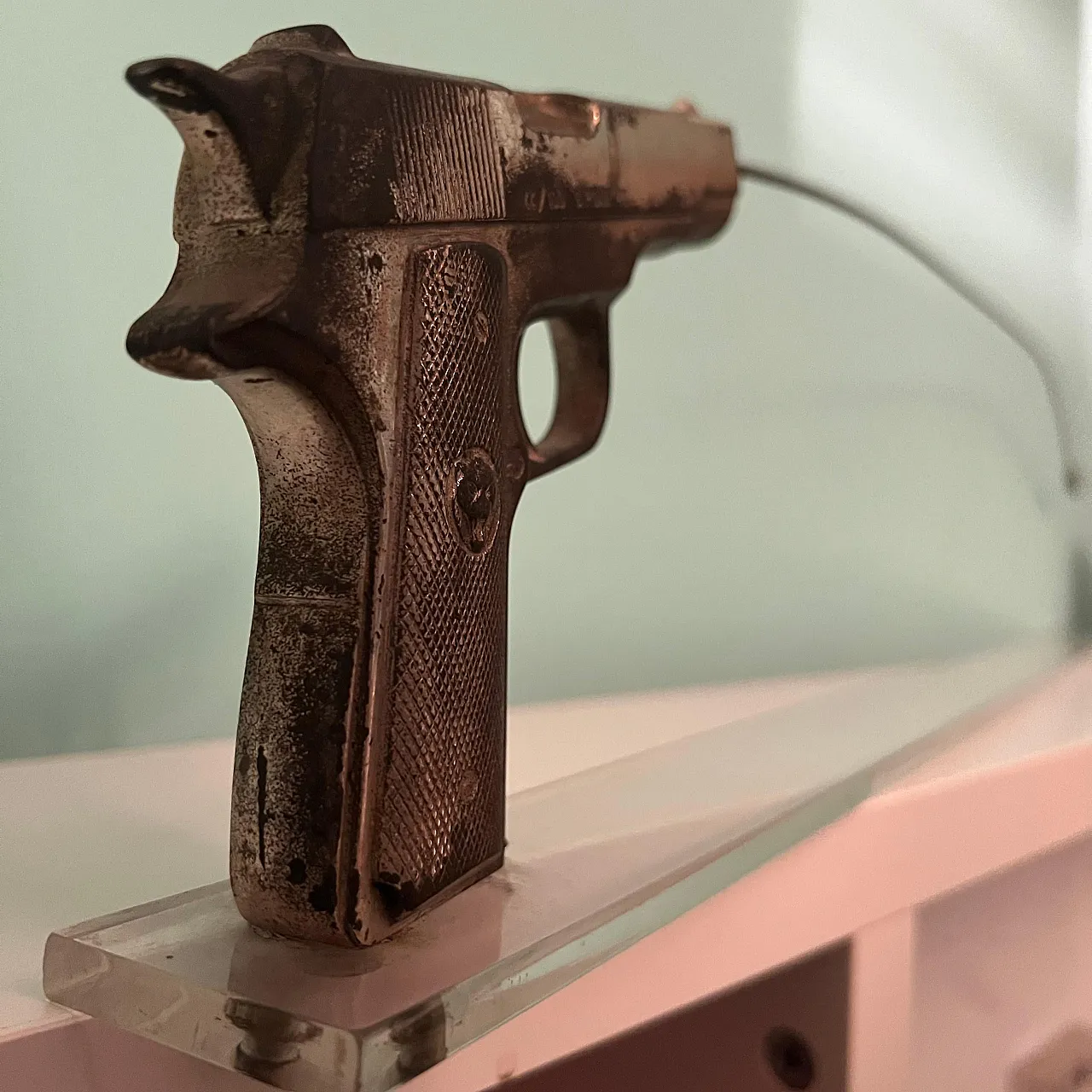
The sculpture under consideration, created by Gianni Pisani in 1972, is a work that embodies the essence of contemporary Italian art in the 1970s. This multiple, specimen 44 of 100, consists of chrome-plated brass and metal, resting on a plexiglass base, with dimensions of 90 cm in length and 17 cm in height. The use of chrome-plated brass gives the work a luster that captures and reflects ambient light, creating reflections that vary depending on the angle of the viewer. The choice of metal as the main material underscores Pisani's quest for a synthesis of form and material, while the transparent plexiglass base lends lightness to the whole, almost as if the sculpture were floating in space. The composition develops in a linear and balanced structure, where geometric shapes intersect in a harmonious dialogue. The clean lines and smooth surfaces evoke minimalist aesthetics, while the attention to detail and precision execution reflect the artist's technical mastery. This sculpture is not just a decorative object, but a work that invites contemplation and reflection on the relationship between space, form, and light. Born in Naples in 1935, Gianni Pisani undertook his artistic training at the Academy of Fine Arts in his hometown, where he was a student of Emilio Notte. Since the early years of his career, Pisani has shown remarkable versatility, exploring different forms of expression ranging from painting and sculpture to installations and performances. In 1955, at the age of 20, he won his first awards, winning the Prize at the National Exhibition of Fine Arts Academies and the Cesenatico Prize with the work "Crucifixion." This early success marked the beginning of a prolific artistic career. In the 1960s, Pisani expanded his artistic research to include "object" works and assemblages, such as "Il letto" (1963), preserved in the Capodimonte Museum, and "La Credenza" (1964), part of the Terrae Motus collection at the Royal Palace of Caserta. These works testify to his penchant for multimedia and formal innovation. In addition to his artistic activity, Pisani devoted part of his life to teaching, contributing to the training of new generations of artists and leaving a significant imprint on the contemporary art scene. His work is characterized by continuous experimentation and deep reflection on the role of art in society. Gianni Pisani passed away in 2022, leaving behind a rich and varied artistic legacy that continues to influence and inspire the contemporary art world.


.png)





 SILVER Seller in Milano, Italy