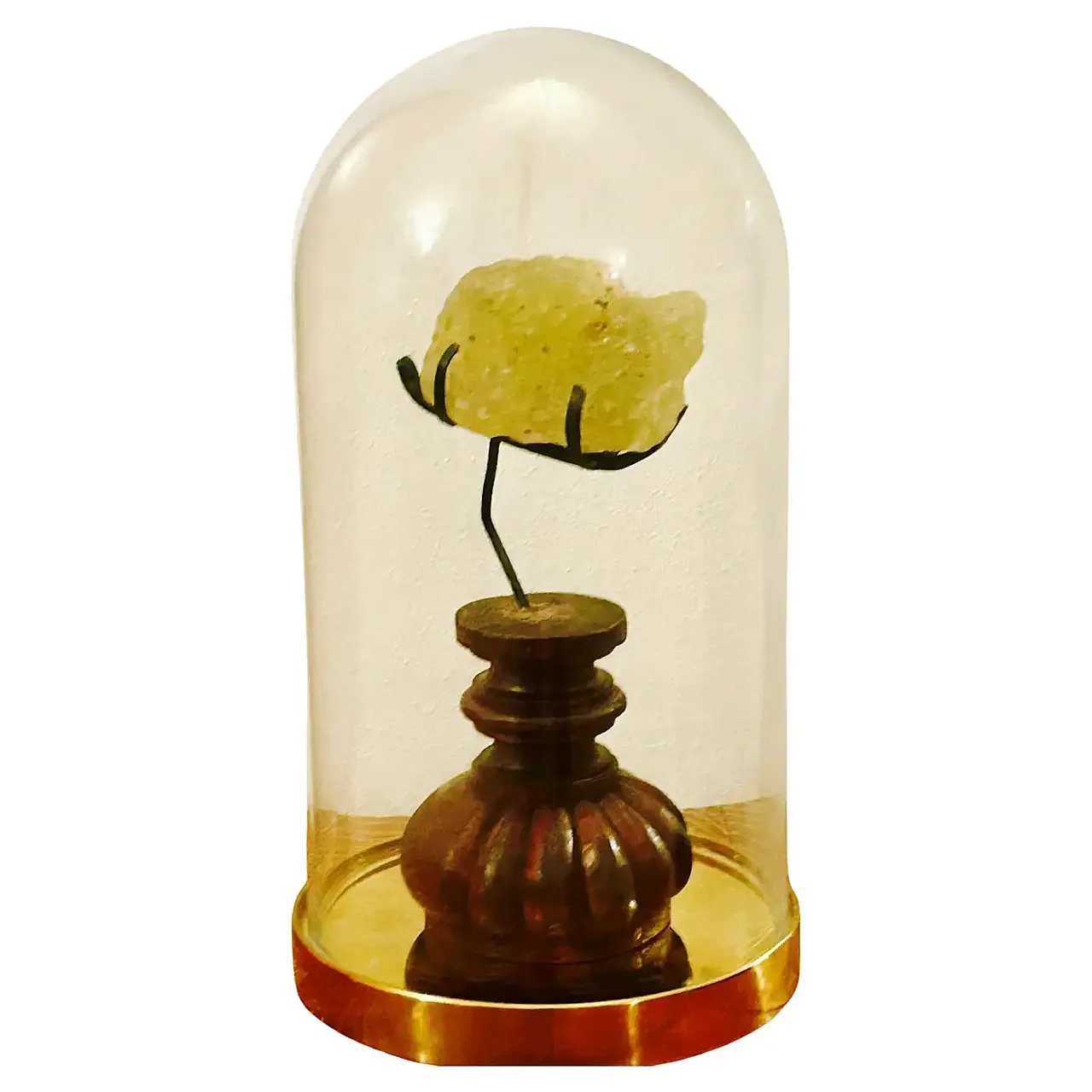
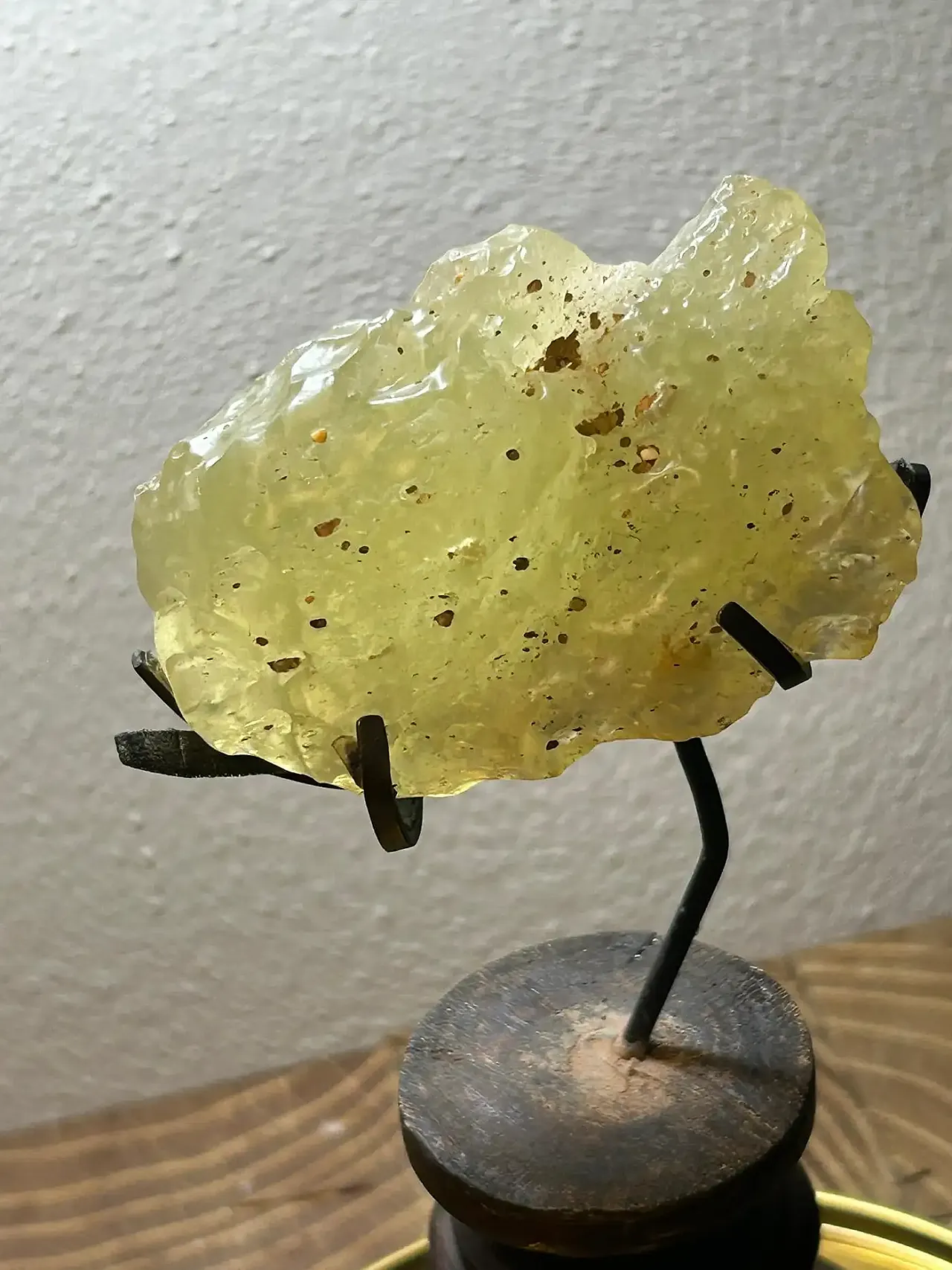
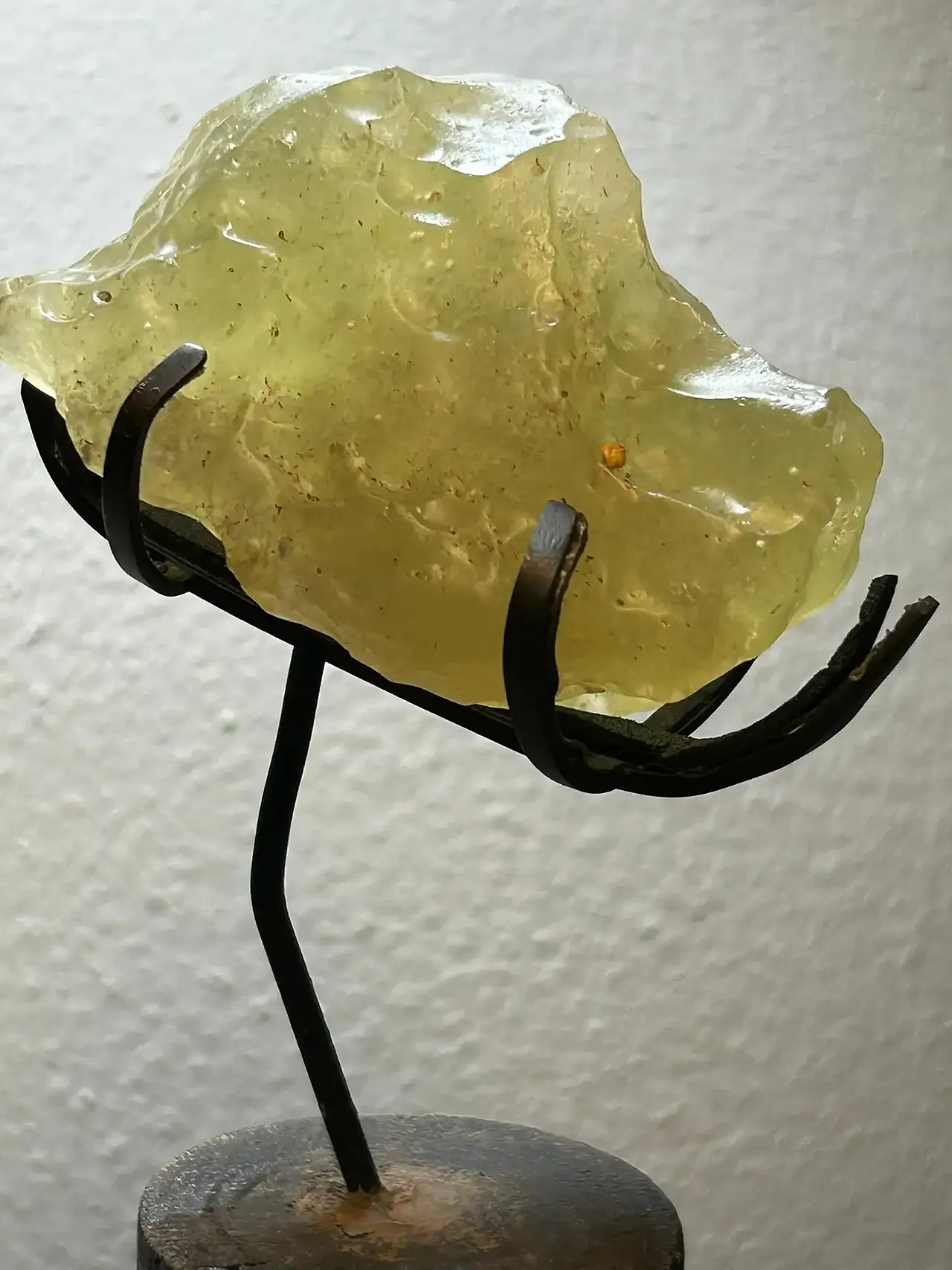
A magnificent fragment of Libyan desert glass, honey-yellow in color with amber hues, recovered from the high dunes of the Great Sand Sea, between Egypt and Libya. Long a mystery to the scientific community-some researchers even hypothesized a lunar origin-this extraordinary material was born from the explosive impact of an extraterrestrial body that struck Earth about 29 million years ago, generating enough energy to melt desert sand at over 1. 600 °C, a temperature higher than that of the hottest lava on the planet.600 °C, a temperature higher than that of the hottest lava on the planet. At that instant, the sand liquefies into a tektite (from the Greek tektos, "molten"), forming the purest silica glass known on Earth. Its smooth surfaces and sculptural form are the result of millions of years of erosion by arid desert winds. The specimen proposed here - weighing 178 grams - presents a texture rich in natural vesicles and internal reflections that vary in light, mounted on a period turned wooden base with a burnished iron support that enhances its sculptural and contemplative presence. First scientifically recorded in 1932, Libyan desert glass had been known and revered for millennia. Like obsidian, it was worked in the Neolithic to make blades and amulets; in the Pharaonic era it became a symbol of solar energy and regeneration. Tutankhamun's famous breastplate preserves a scarab carved in LDG, called "God's rock" by the ancient Egyptians. Today, its appeal lies in the contrast between the ethereal delicacy of its forms and the cosmic violence of the explosion that gave rise to it: a fragment of the sky, solidified on Earth. An ideal piece for a contemporary Wunderkammer, where science, art and mystery merge into a single subject.


.png)






 SILVER Seller in Milano, Italy