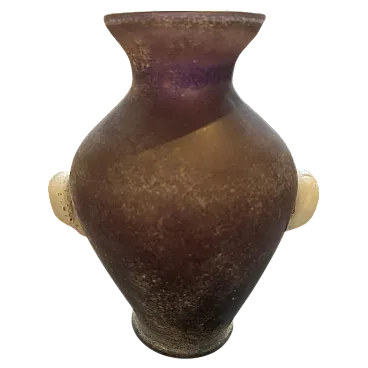
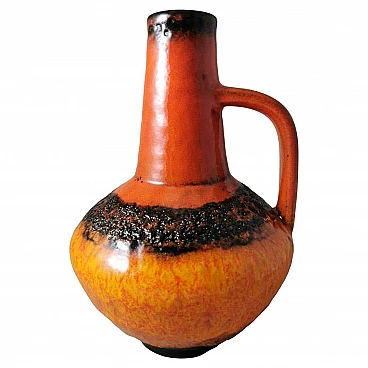
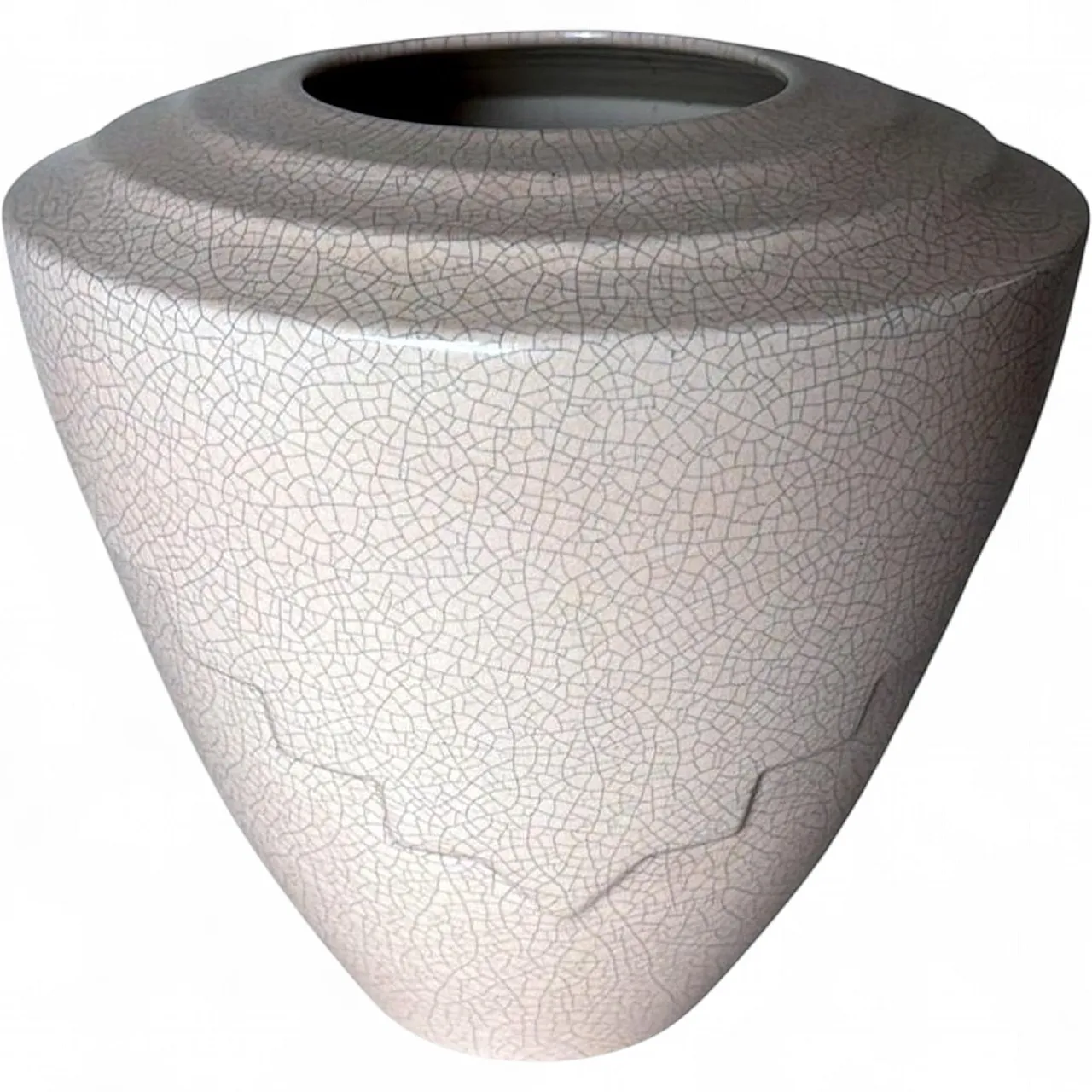
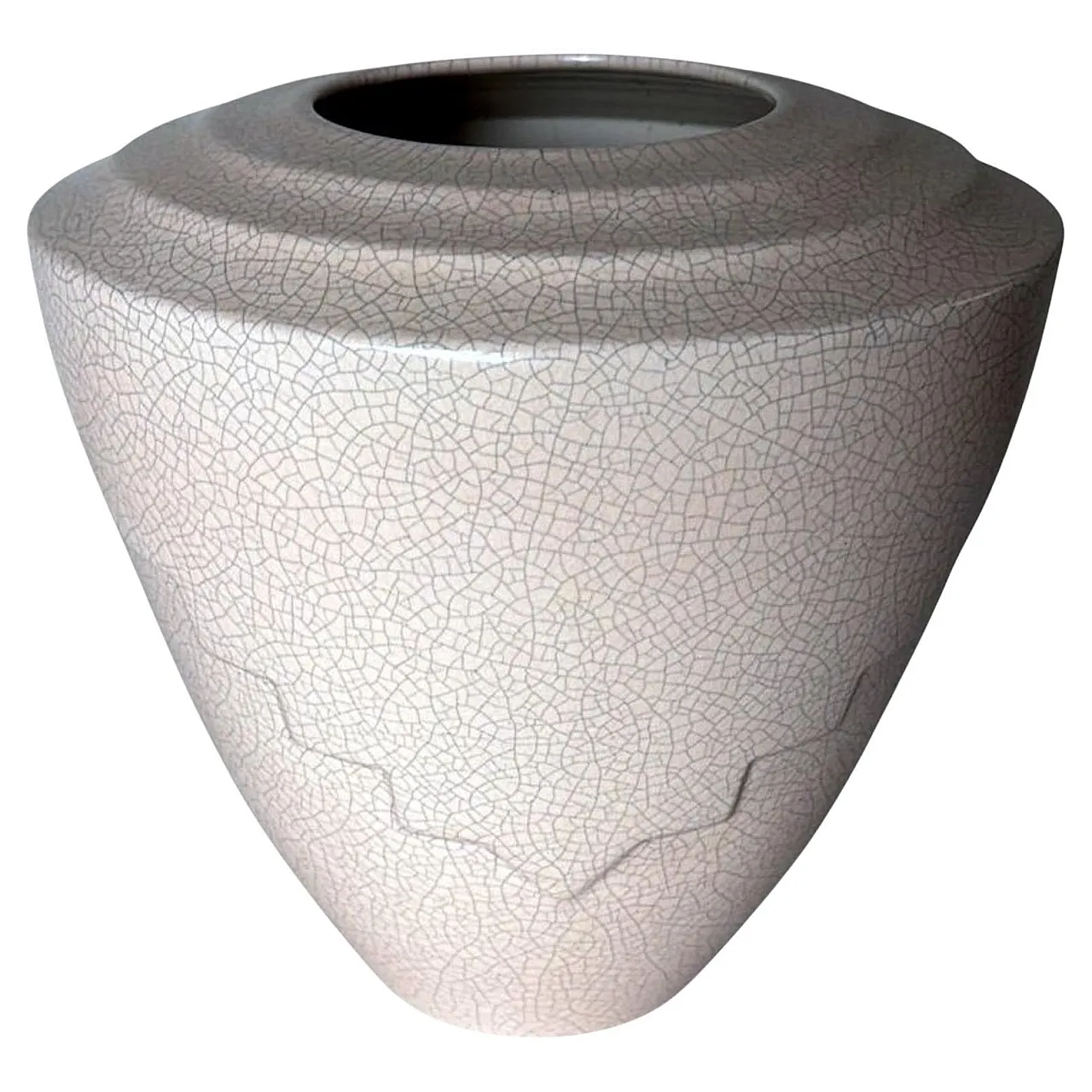
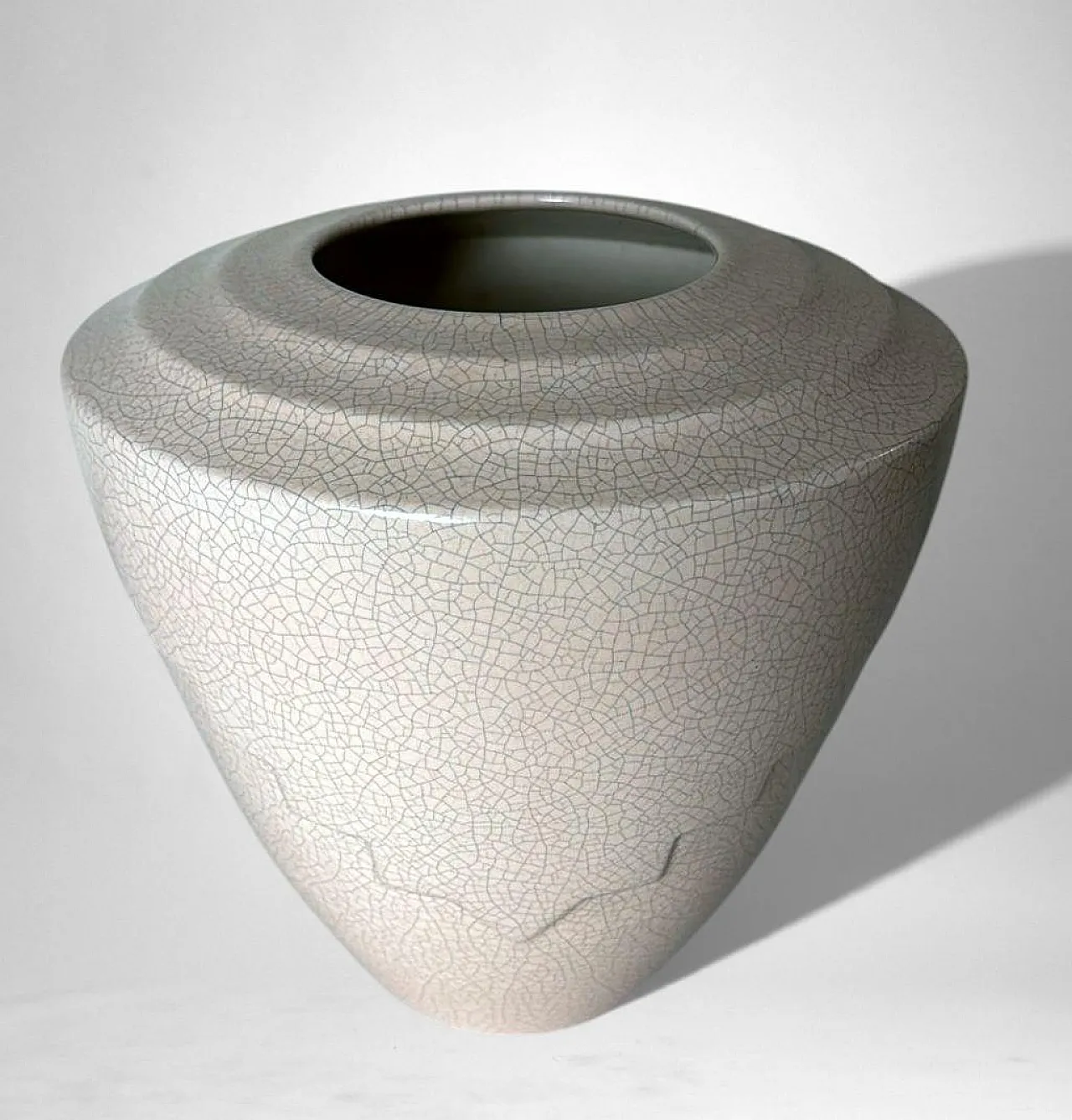
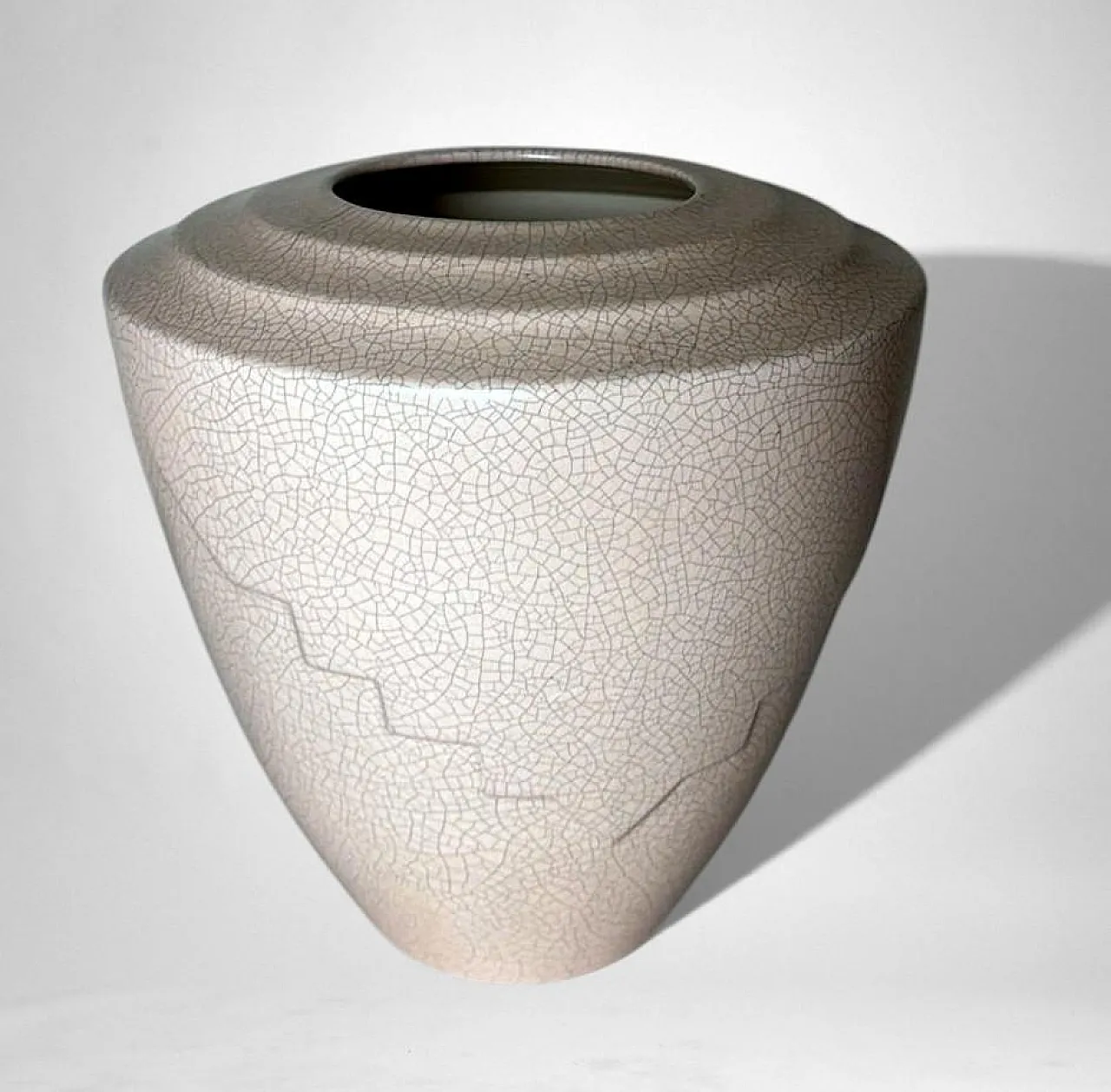
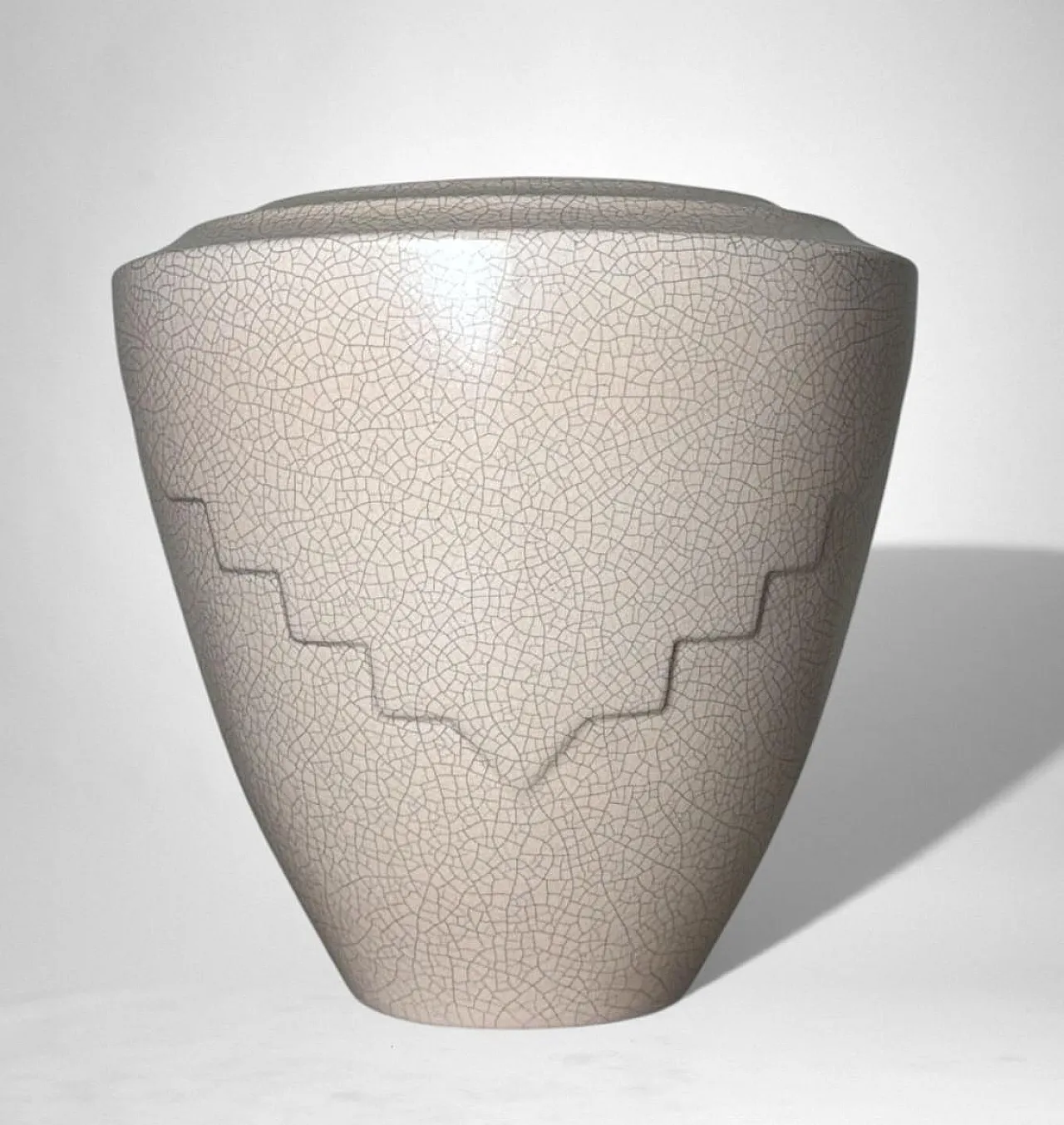
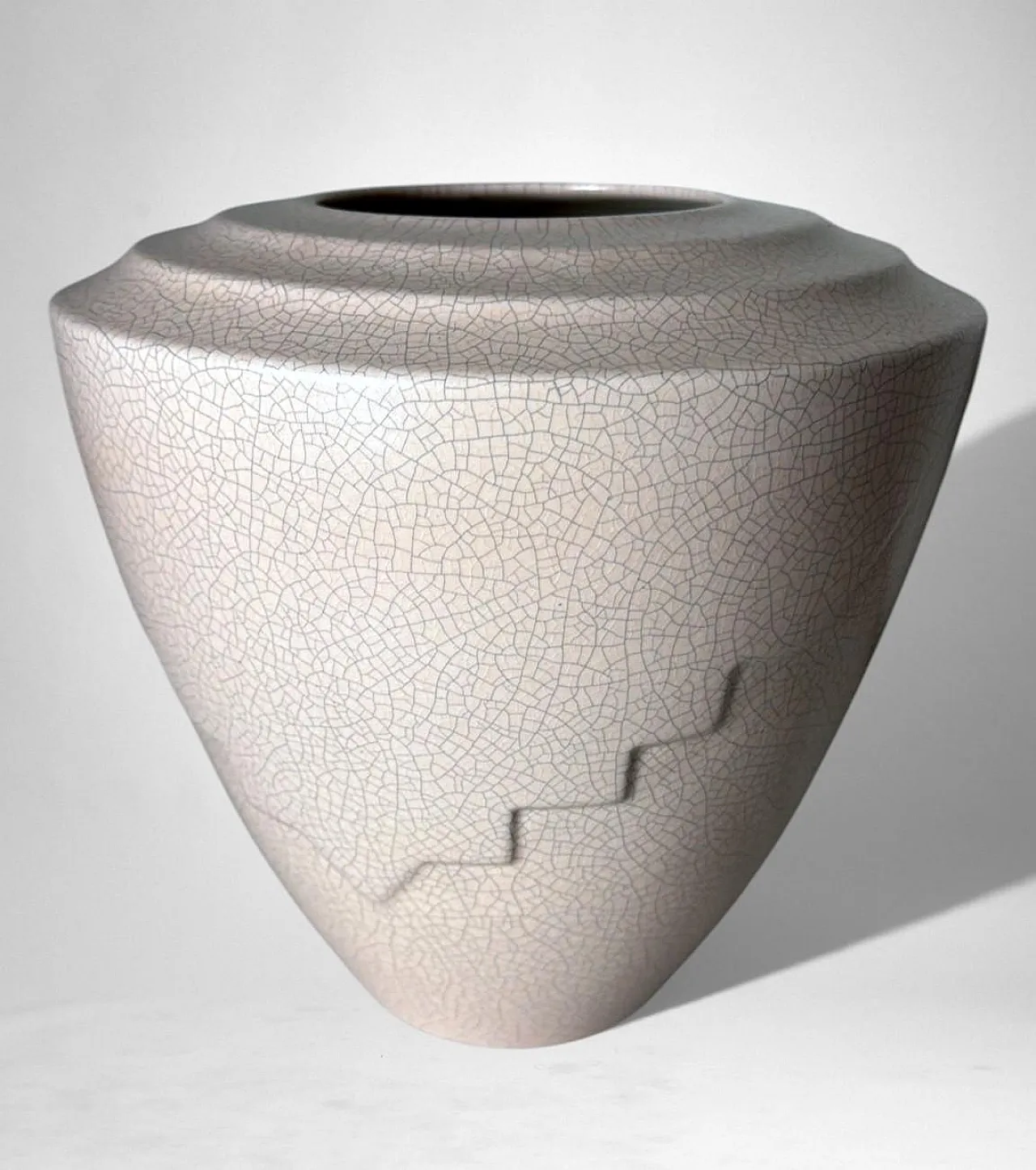
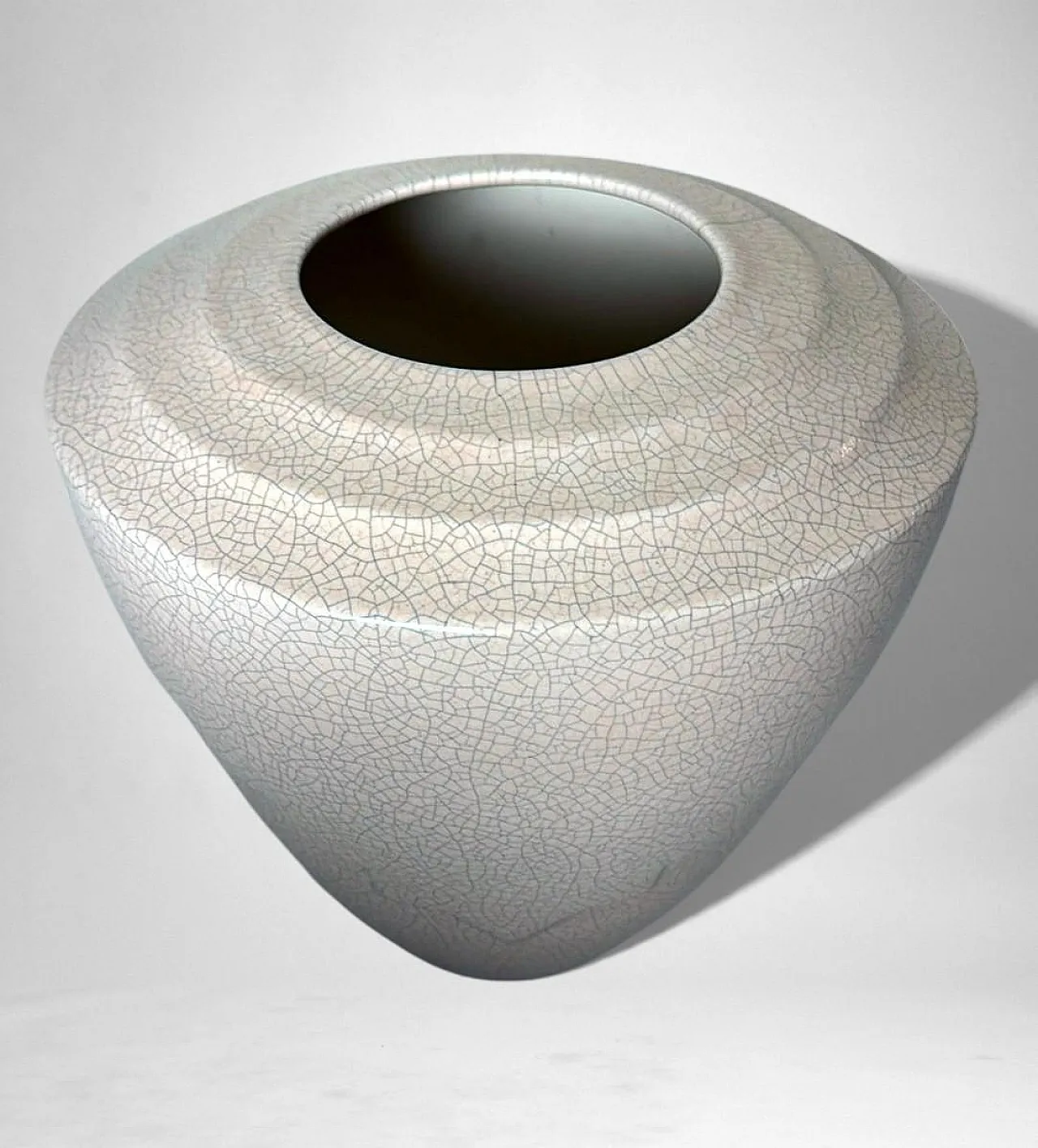
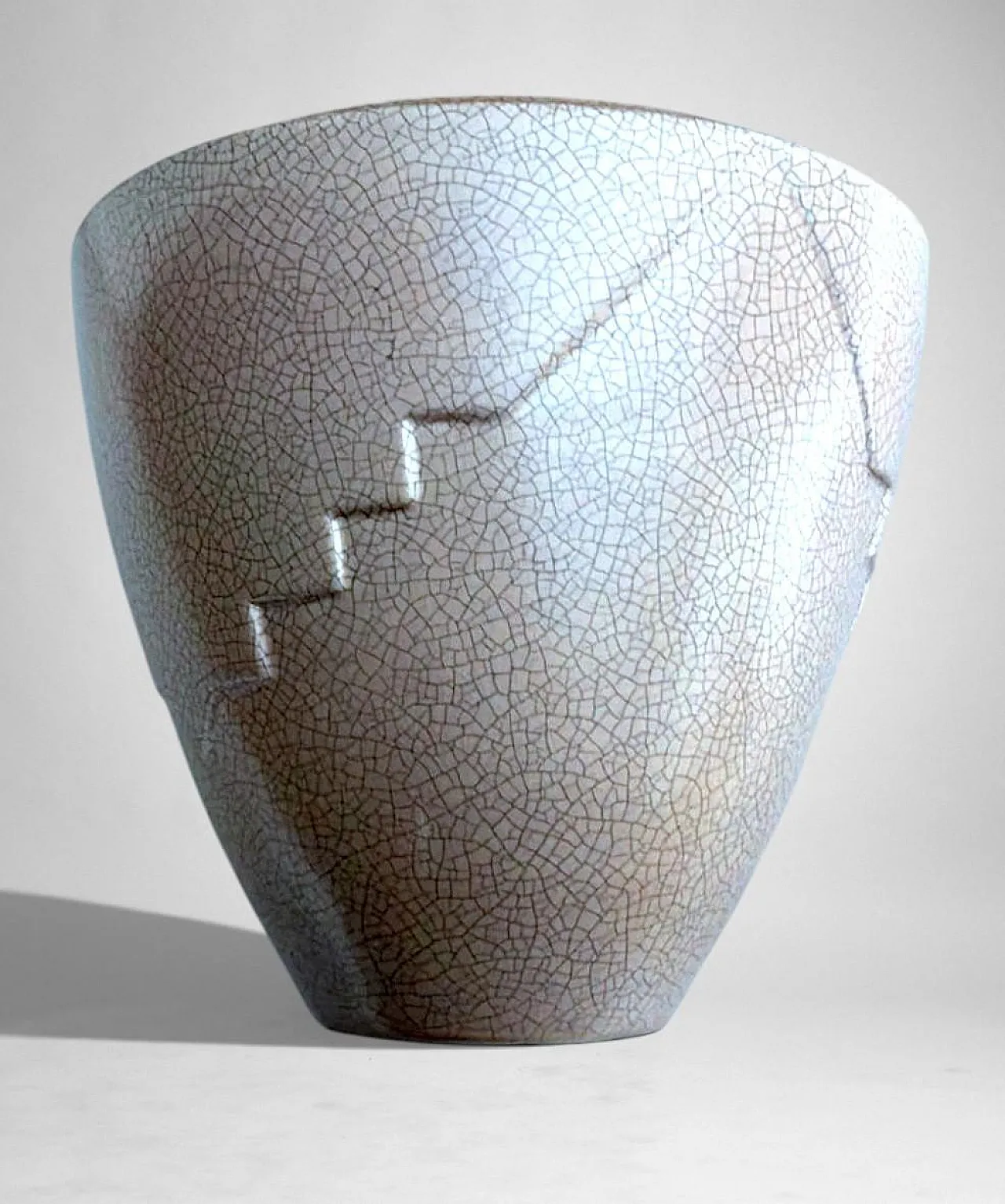
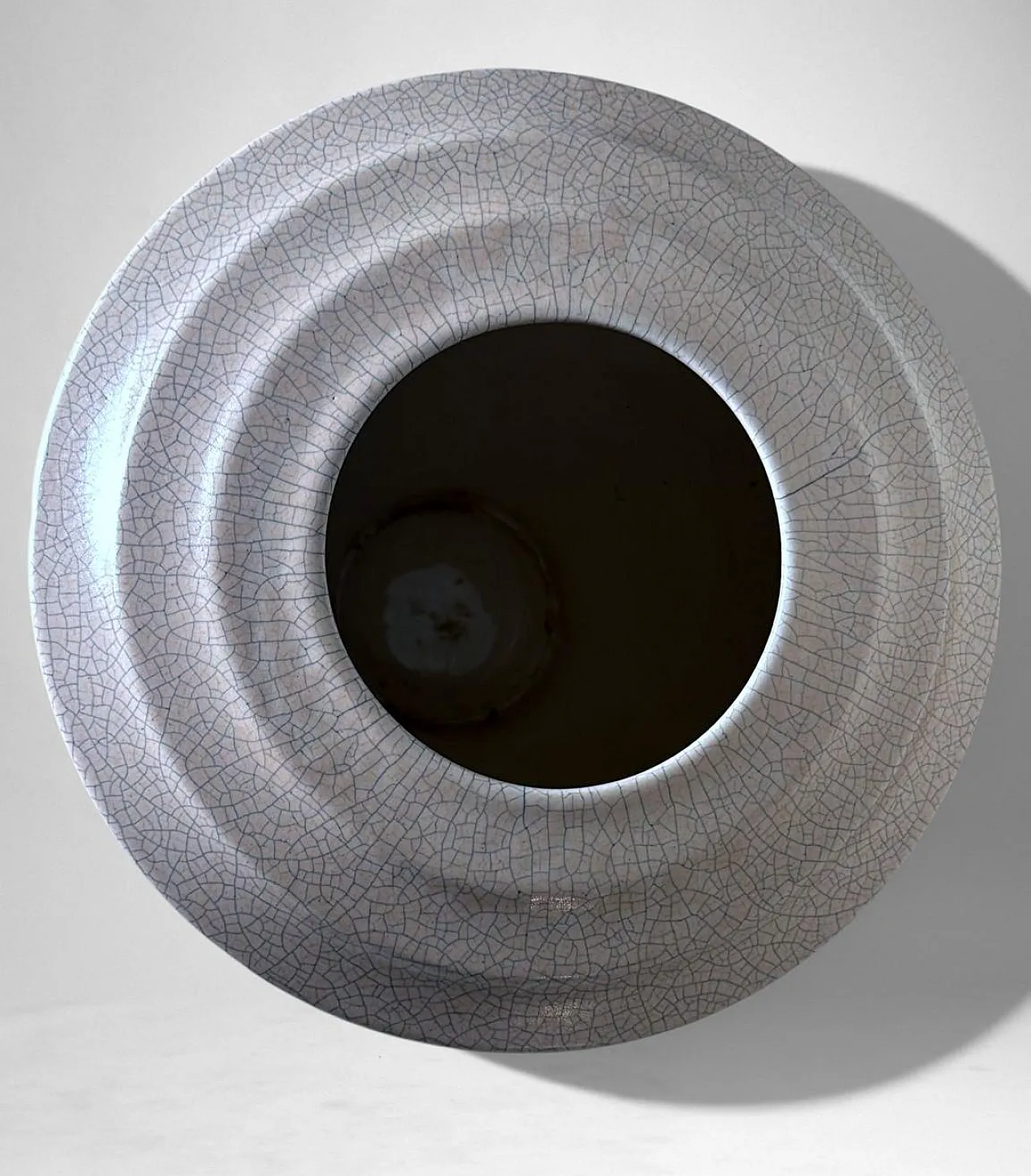
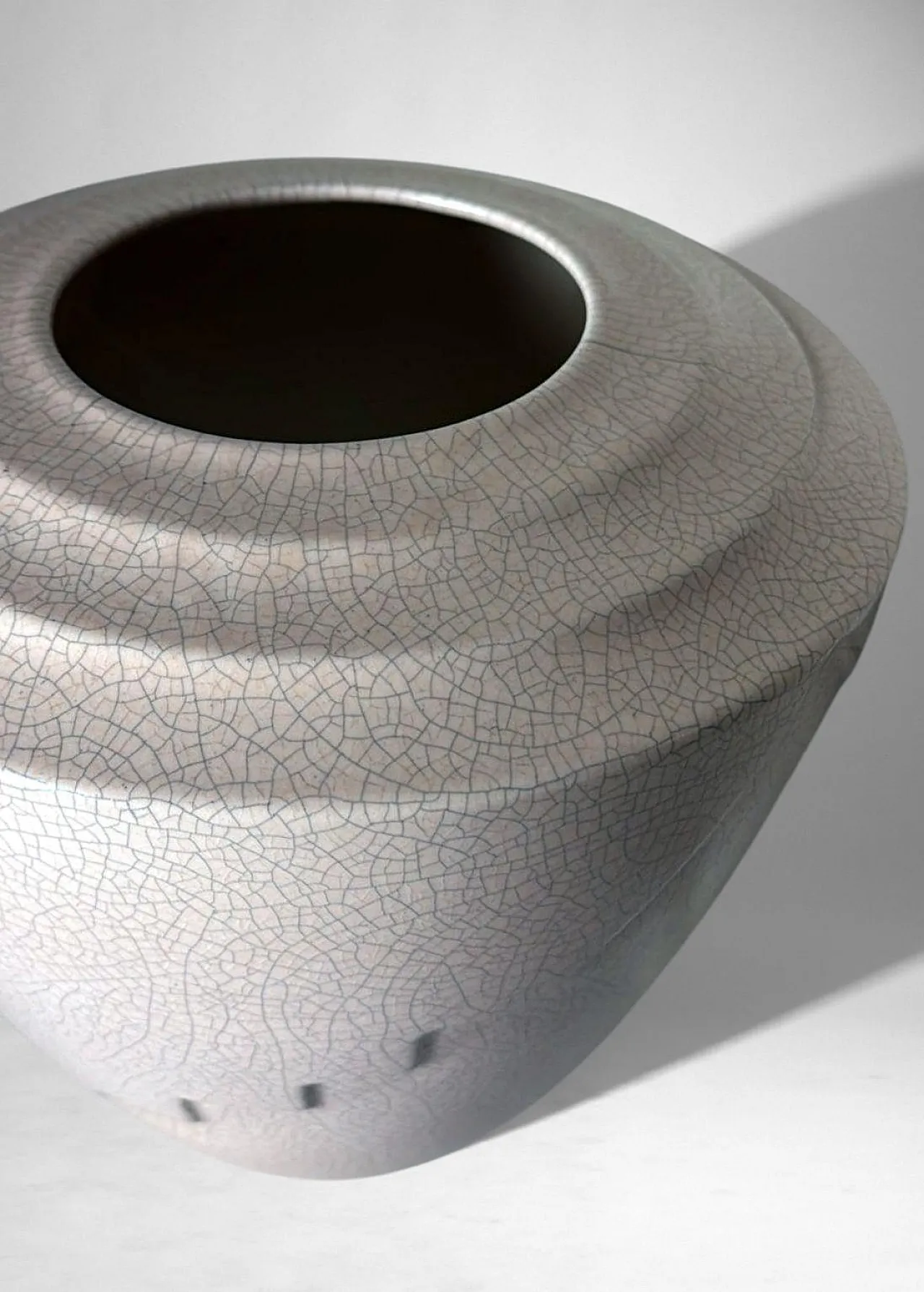
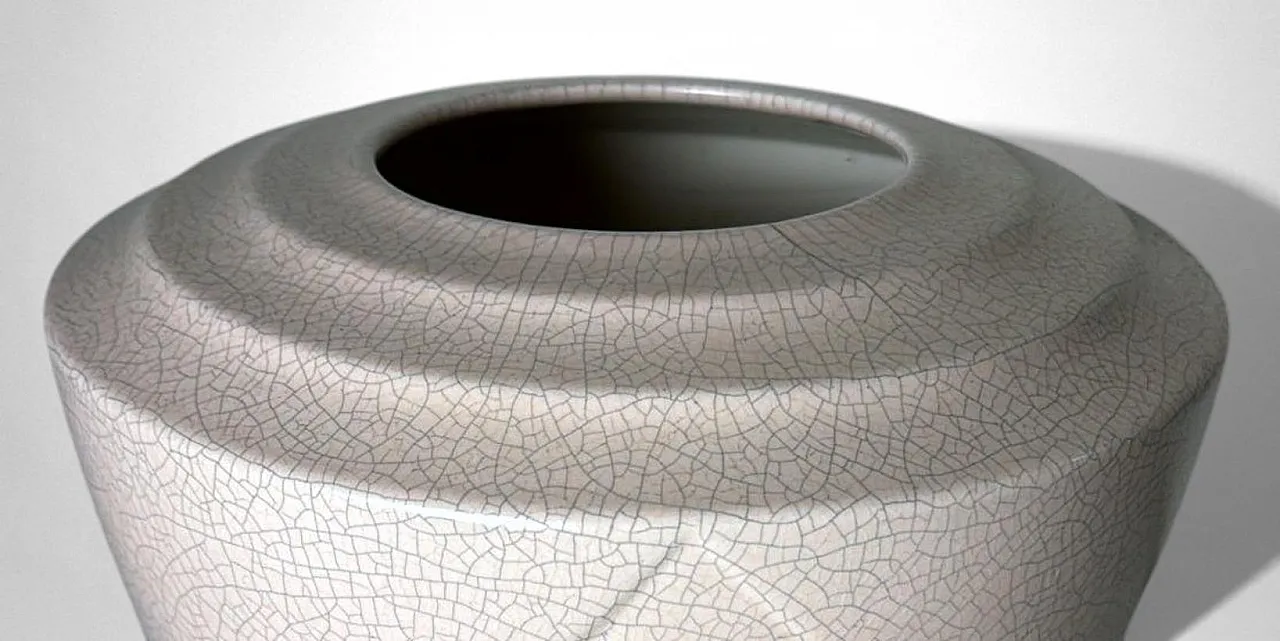
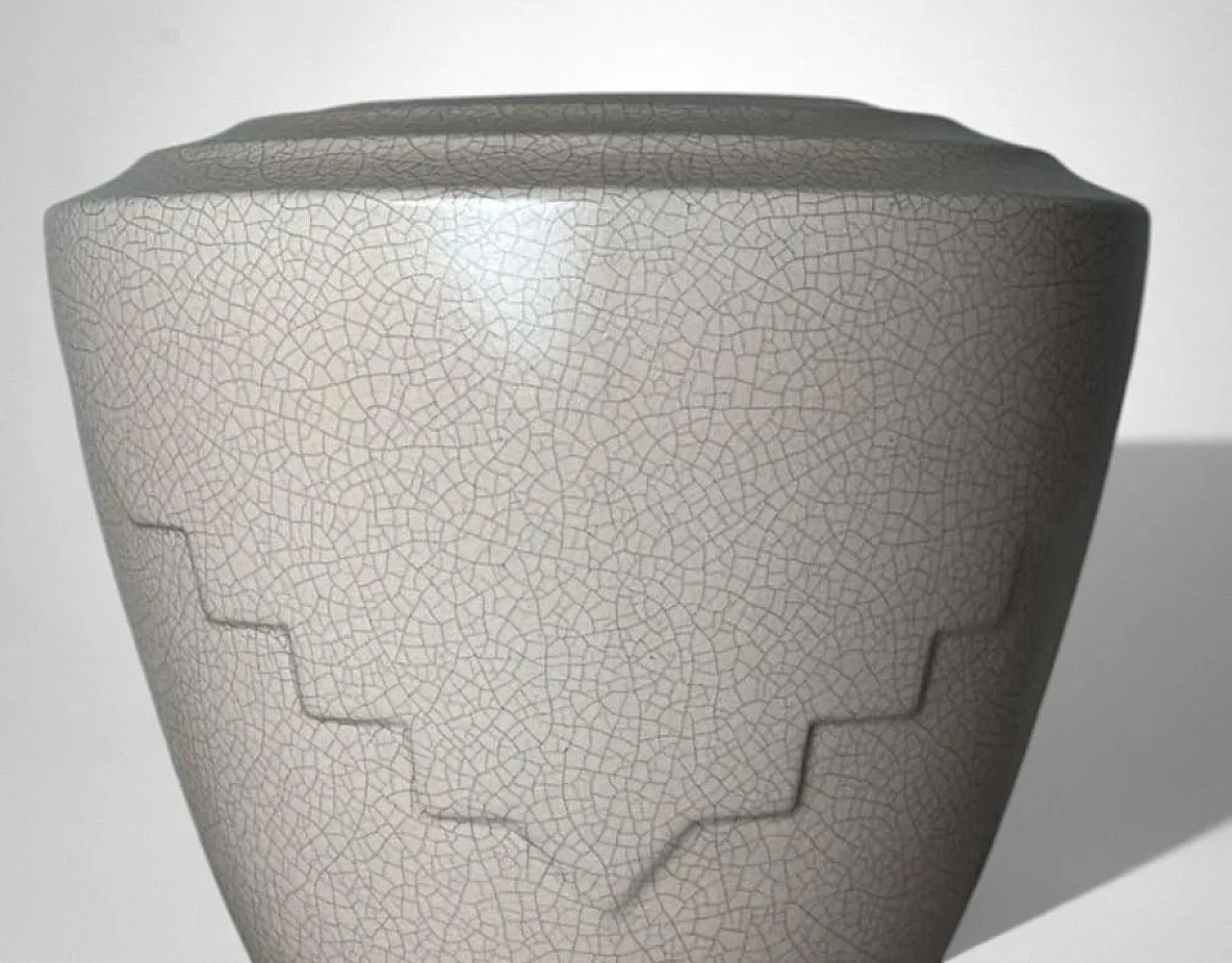
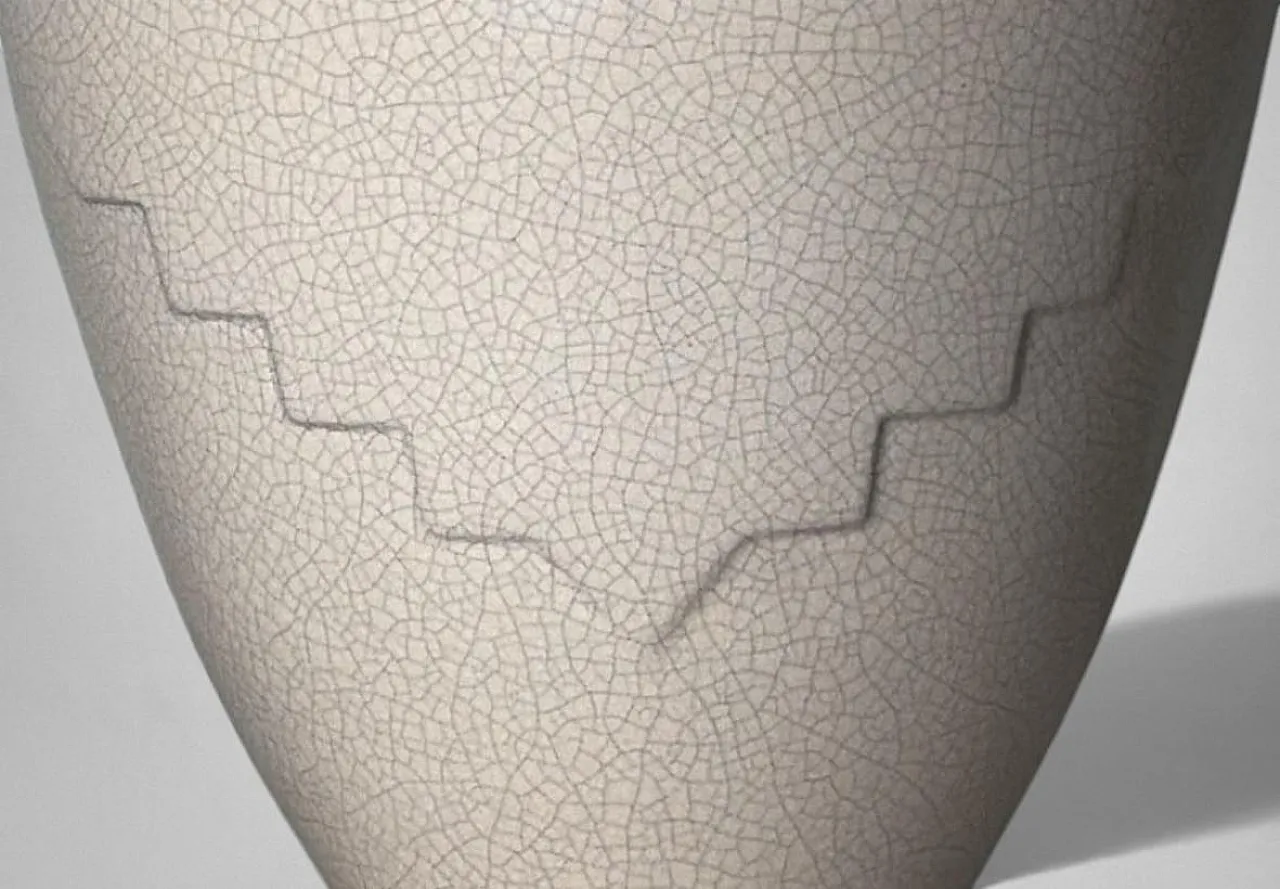
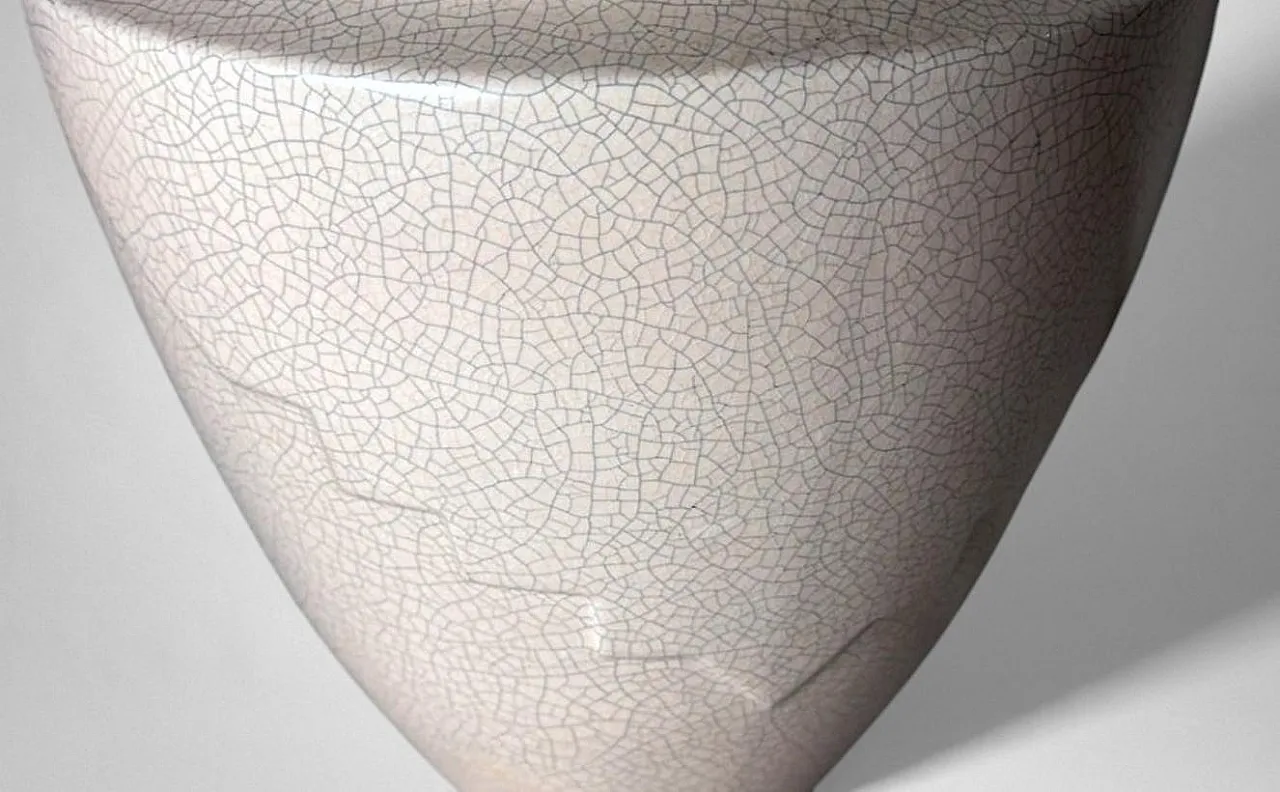
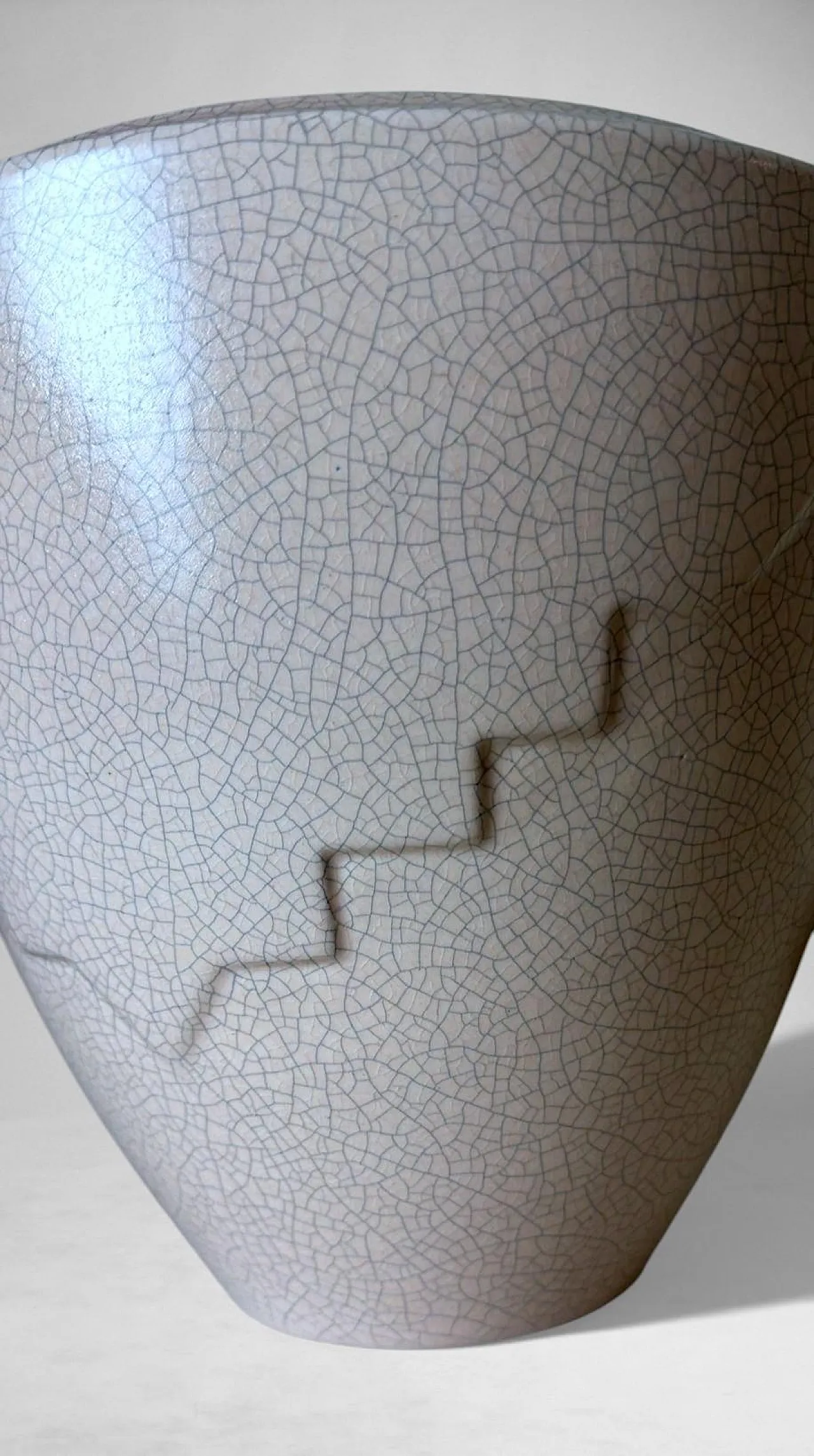
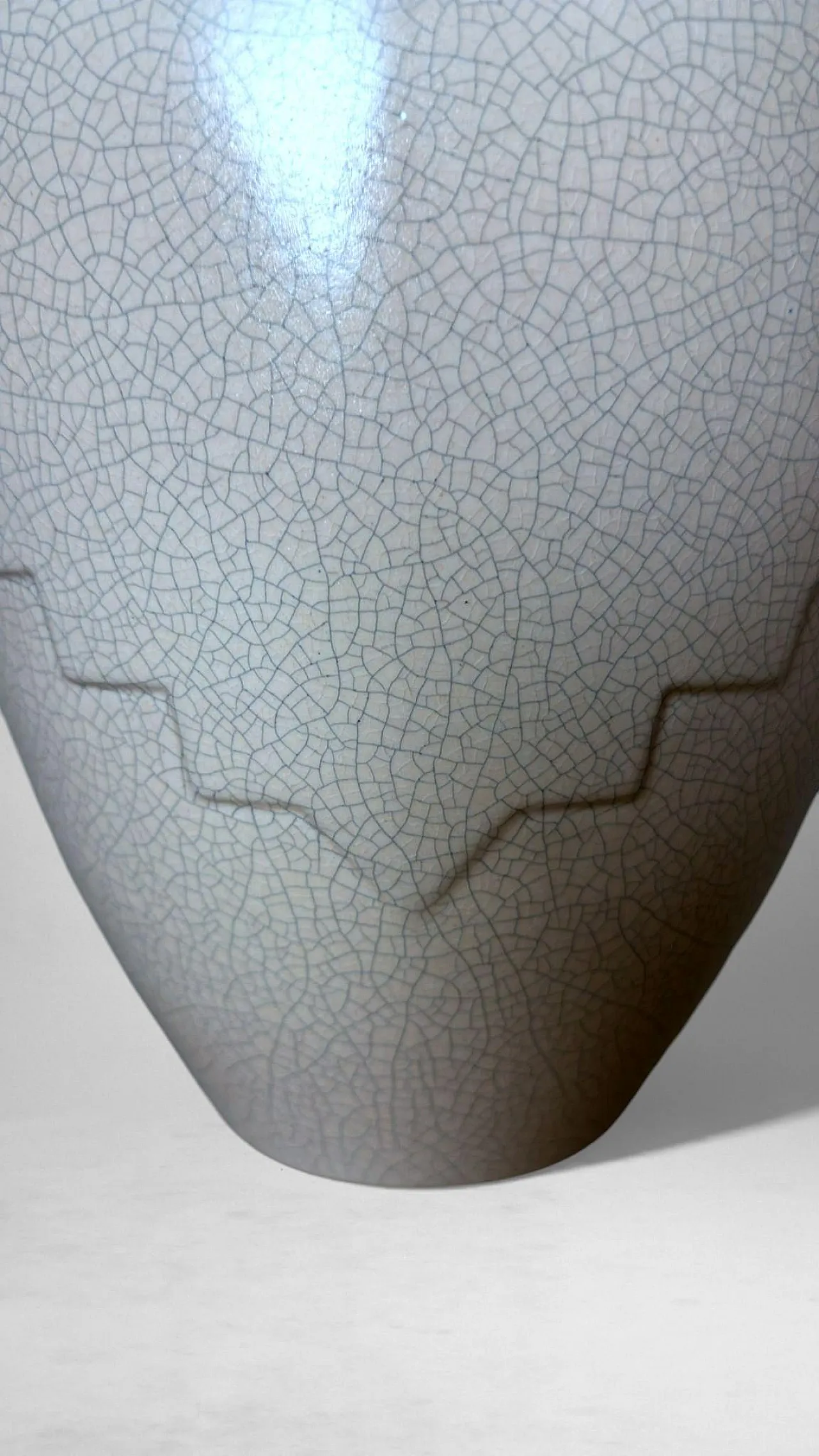
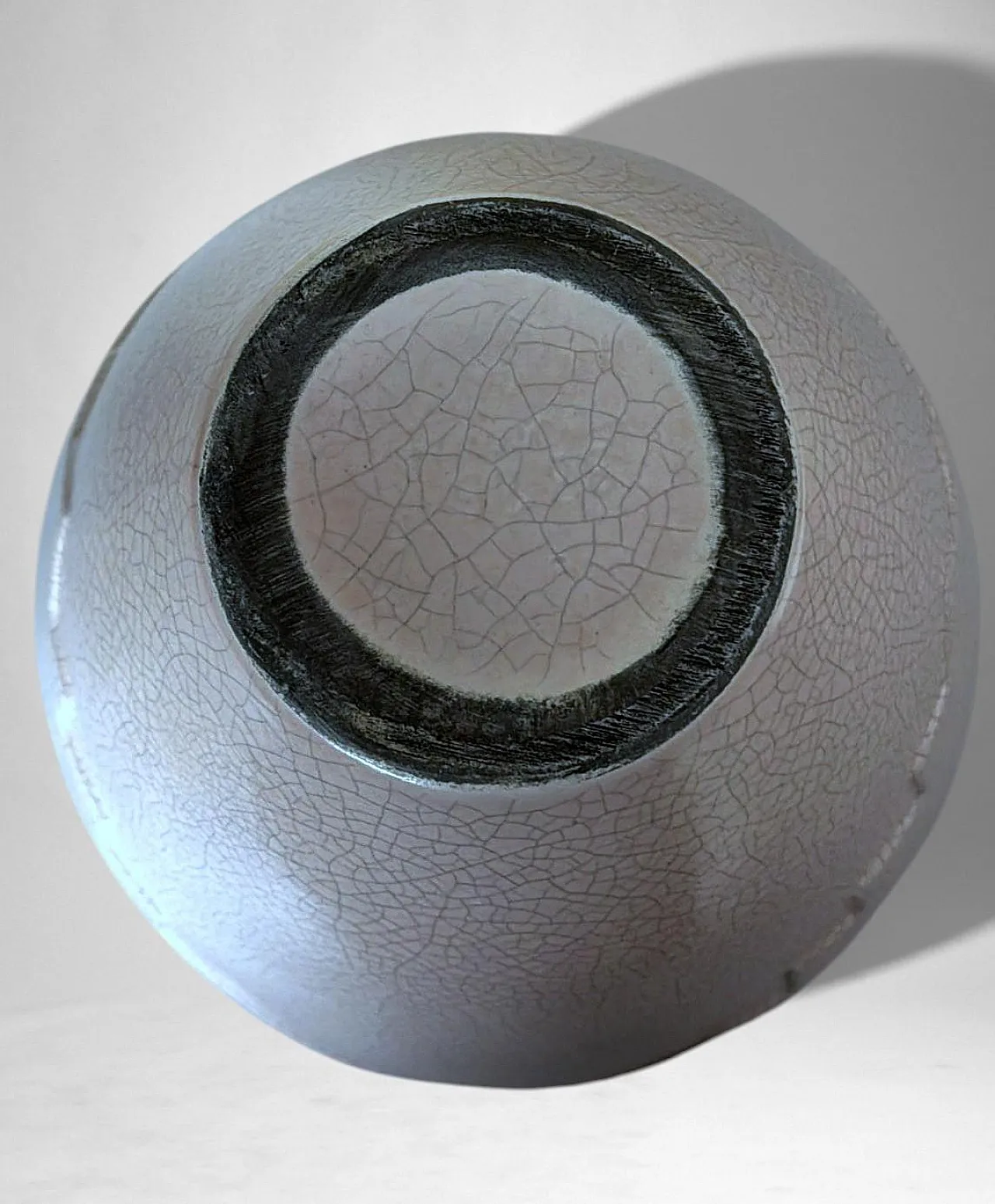
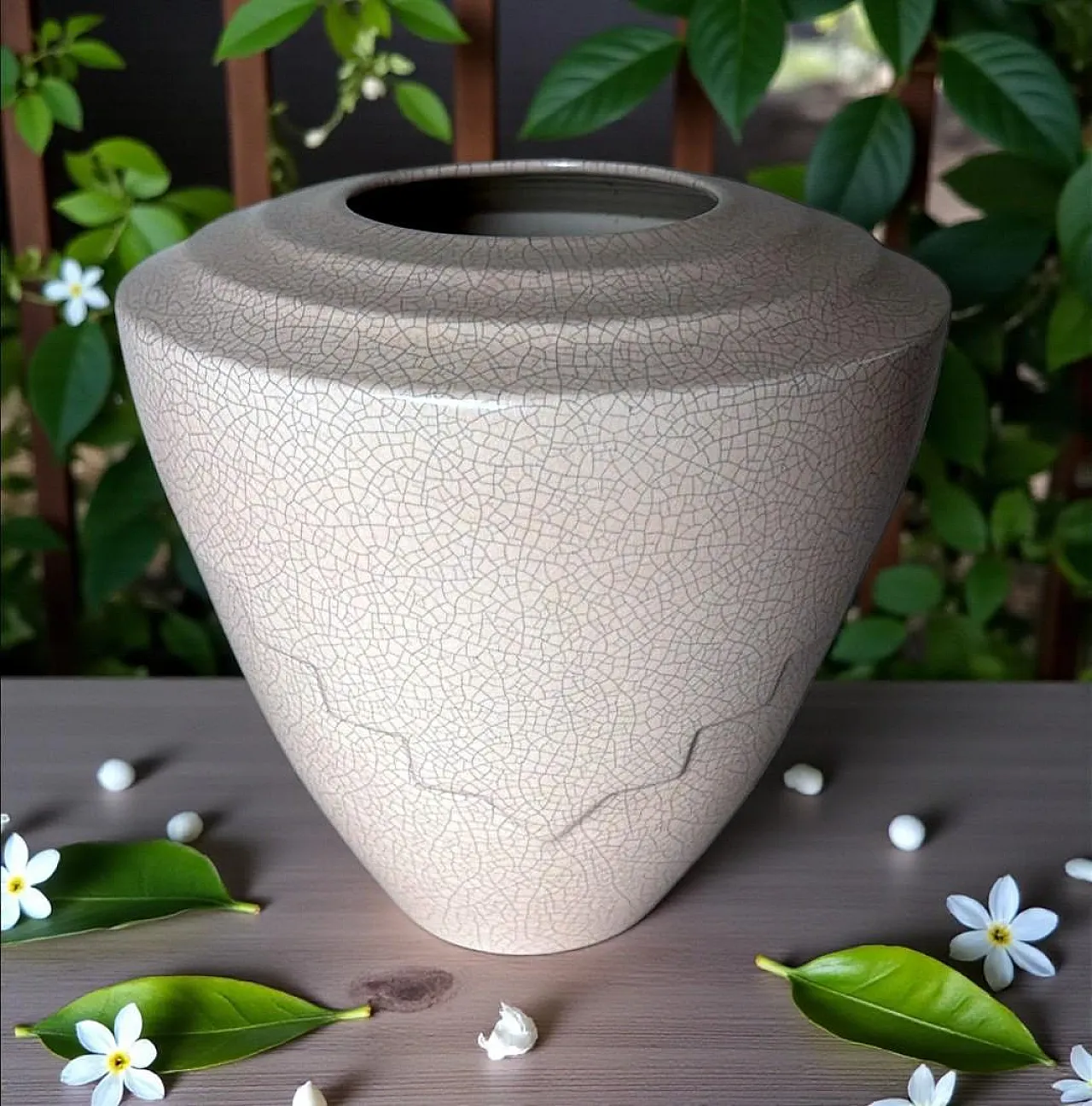
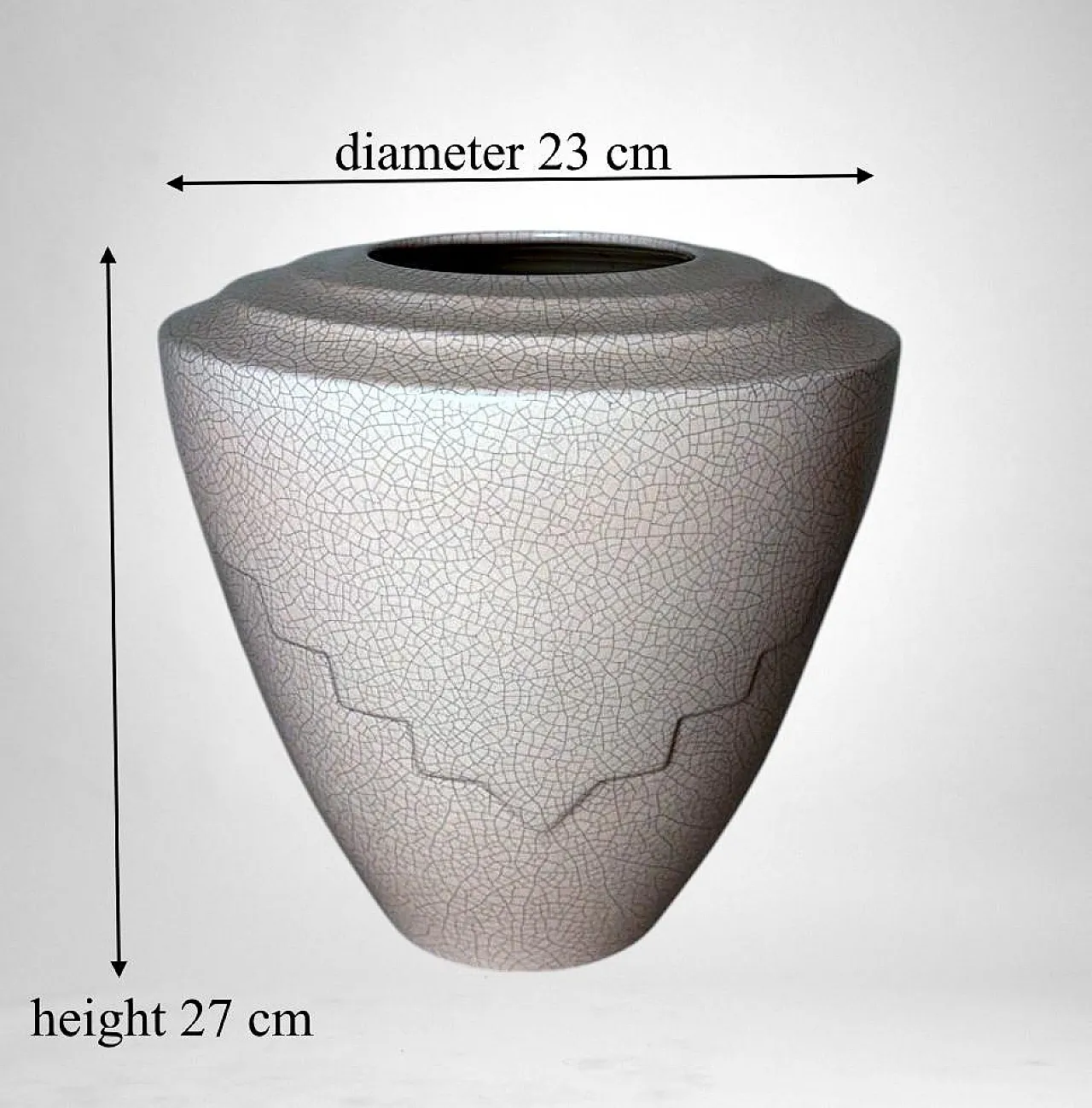
This elegant French vase was created in the Art Deco style and features a clean, understated design characterized by soft, harmonious lines. The form is enhanced by a refined and minimalist raised decoration on the body, adding visual interest while preserving the purity of the silhouette. The piece was produced in France between 1930 and 1935 in a small artisanal workshop located in the Marais district, one of Paris’s most historic and culturally rich neighborhoods. Long renowned for its community of artists and craftsmen, the Marais has traditionally been—and remains today—a vibrant center of creative production. The vase displays a striking craquelé finish. In painting, craquelure refers to the fine network of surface cracks that develops over time and is often used to help determine the age and authenticity of artworks. Toward the end of the 18th century, as decorative arts increasingly favored objects inspired by antiquity, craftsmen developed the craquelé technique as an intentional aging process, applying it to a wide range of materials, including ceramic and glass. Craquelé effects can be achieved through chemical methods that act on the glaze using specific substances to create a uniform, reticulated pattern. However, the most highly regarded approach is the Japanese Raku technique. This process involves firing the glazed object at high temperatures and then rapidly cooling it by removing it from the kiln. Careful control of timing and temperature is essential, as this dramatic thermal shock naturally produces the characteristic crackled surface. Raku firing results in objects that are inherently unique and unrepeatable, which is why the technique has been widely embraced by artists and designers seeking to create distinctive, expressive works. Such pieces are also especially appreciated by those drawn to natural textures, as the surface evokes the appearance of parched, water-deprived earth found in desert landscapes. This vase, executed using the Raku technique, represents a small but meaningful fragment of decorative arts history. It is a highly decorative object that draws the eye and integrates effortlessly into both classic and contemporary interiors. The vase is in good condition. Dimensions: Diameter: 23 cm (9.05 in) Height: 27 cm (10.63 in)


.png)



 SILVER Seller in Prato, Italy