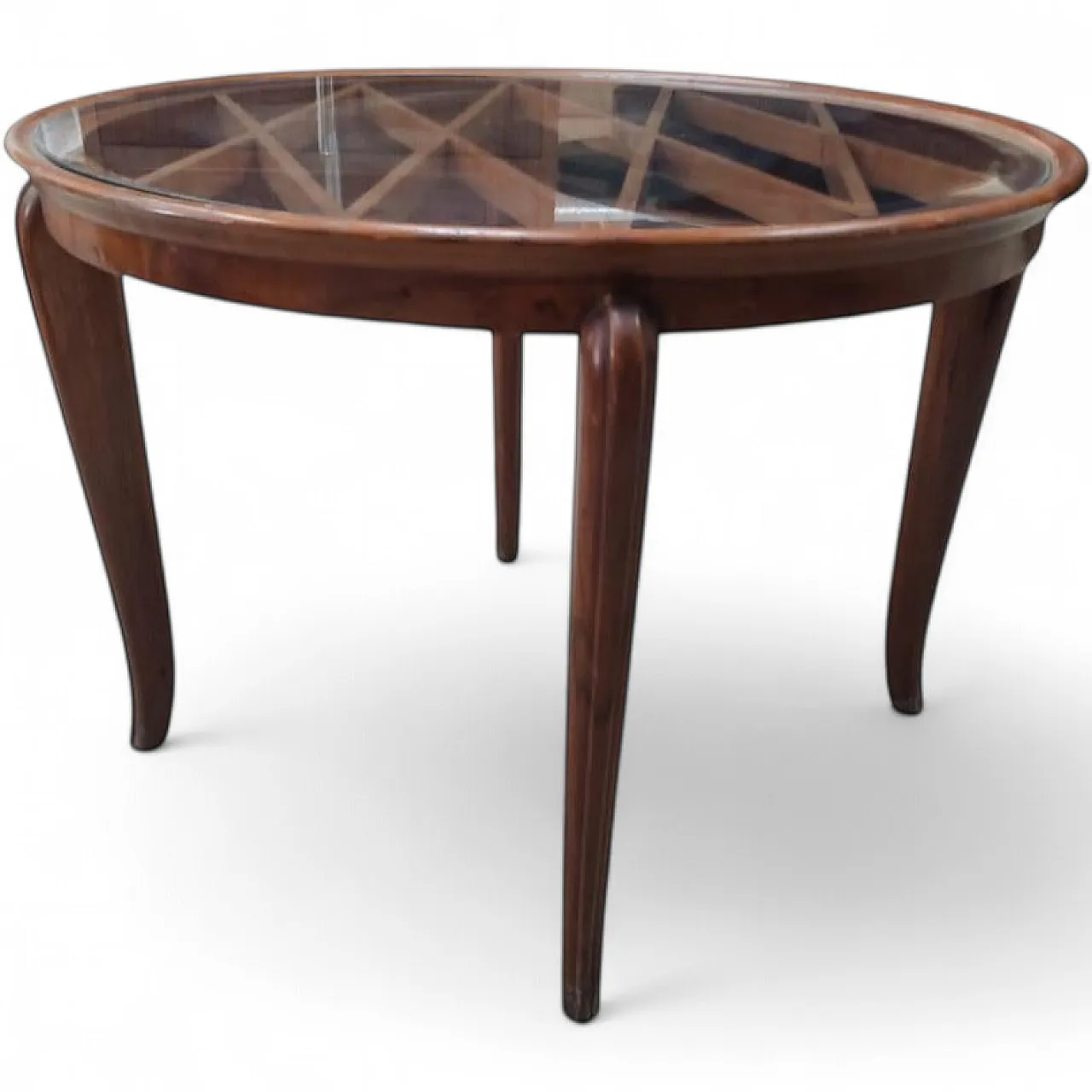
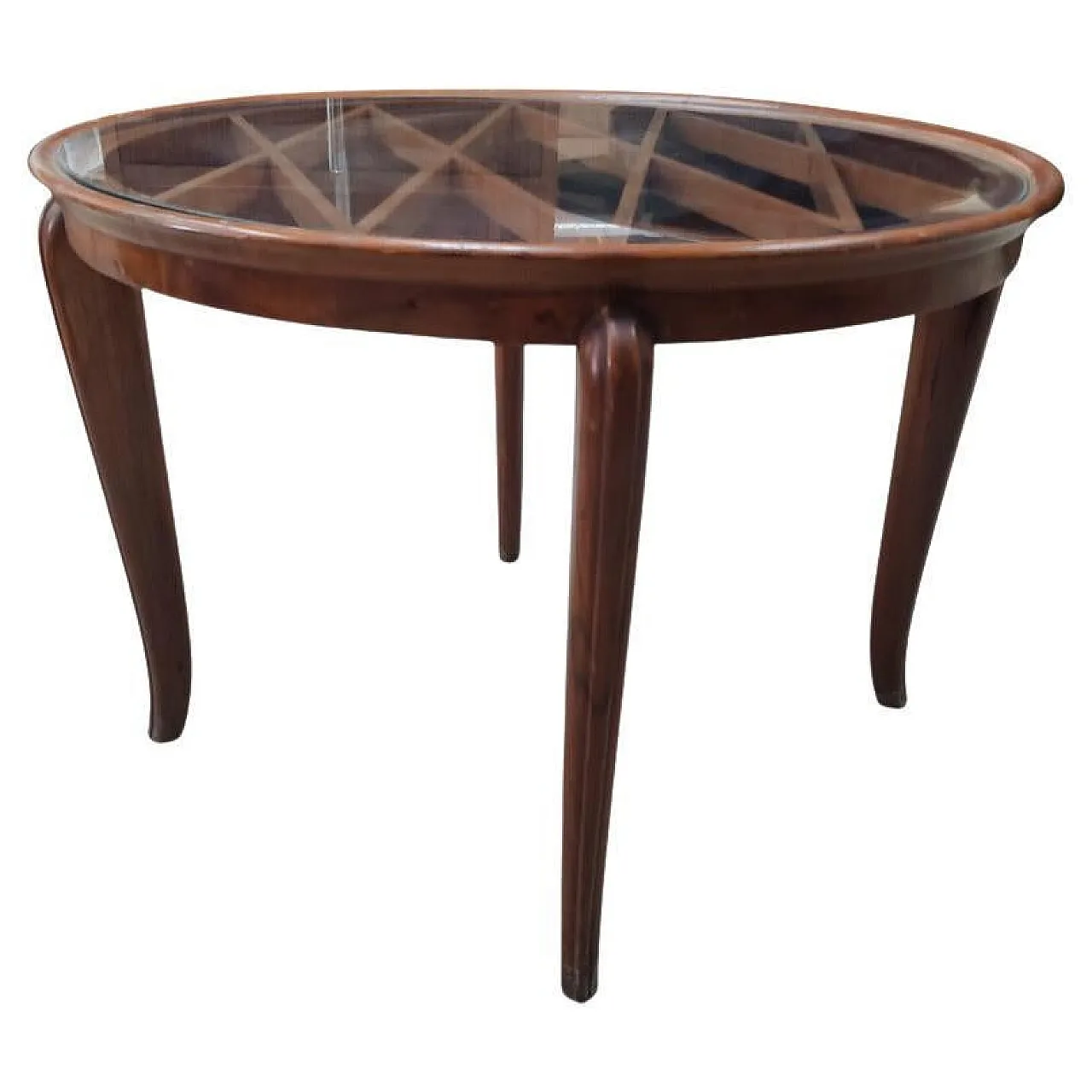
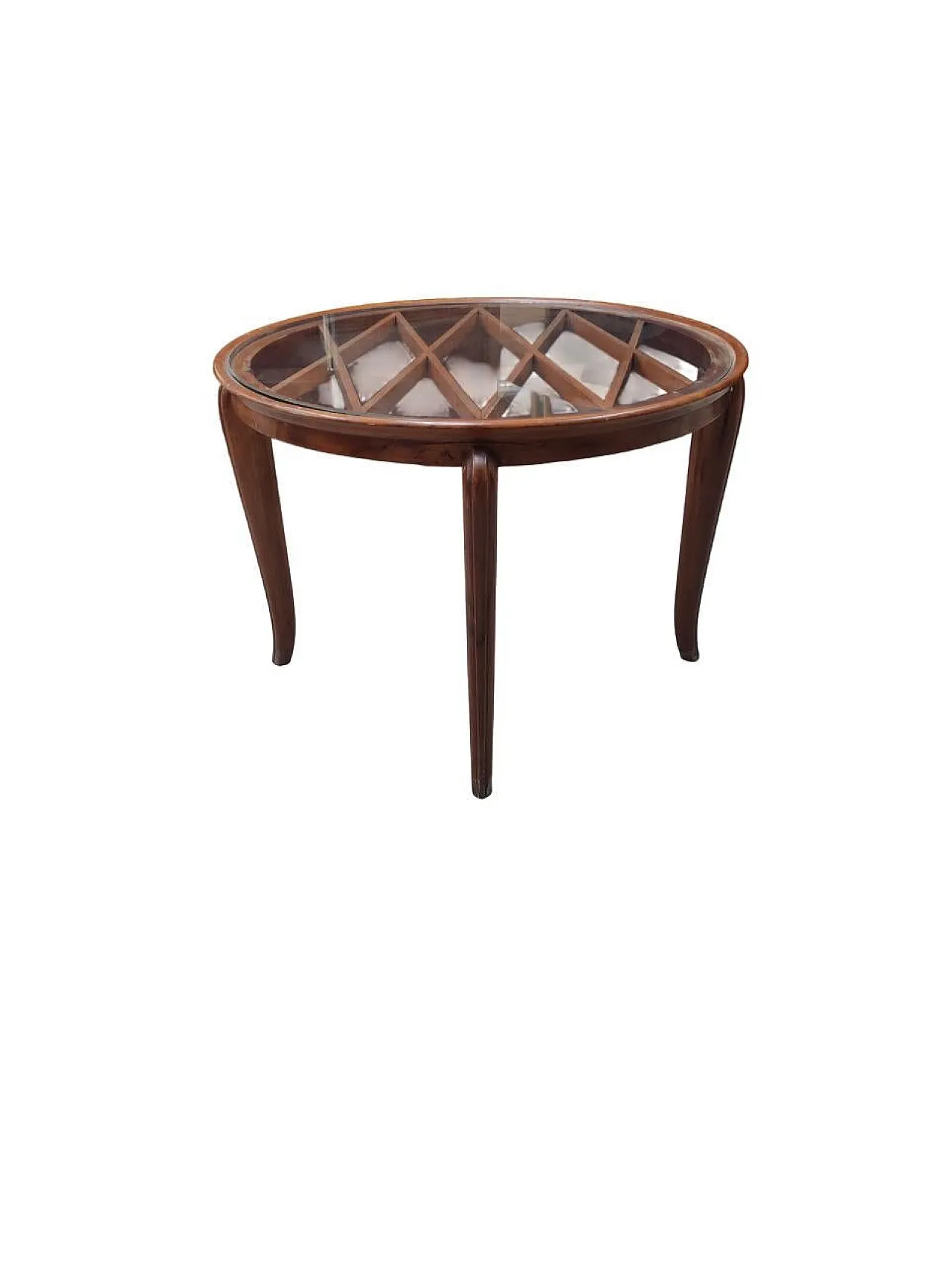
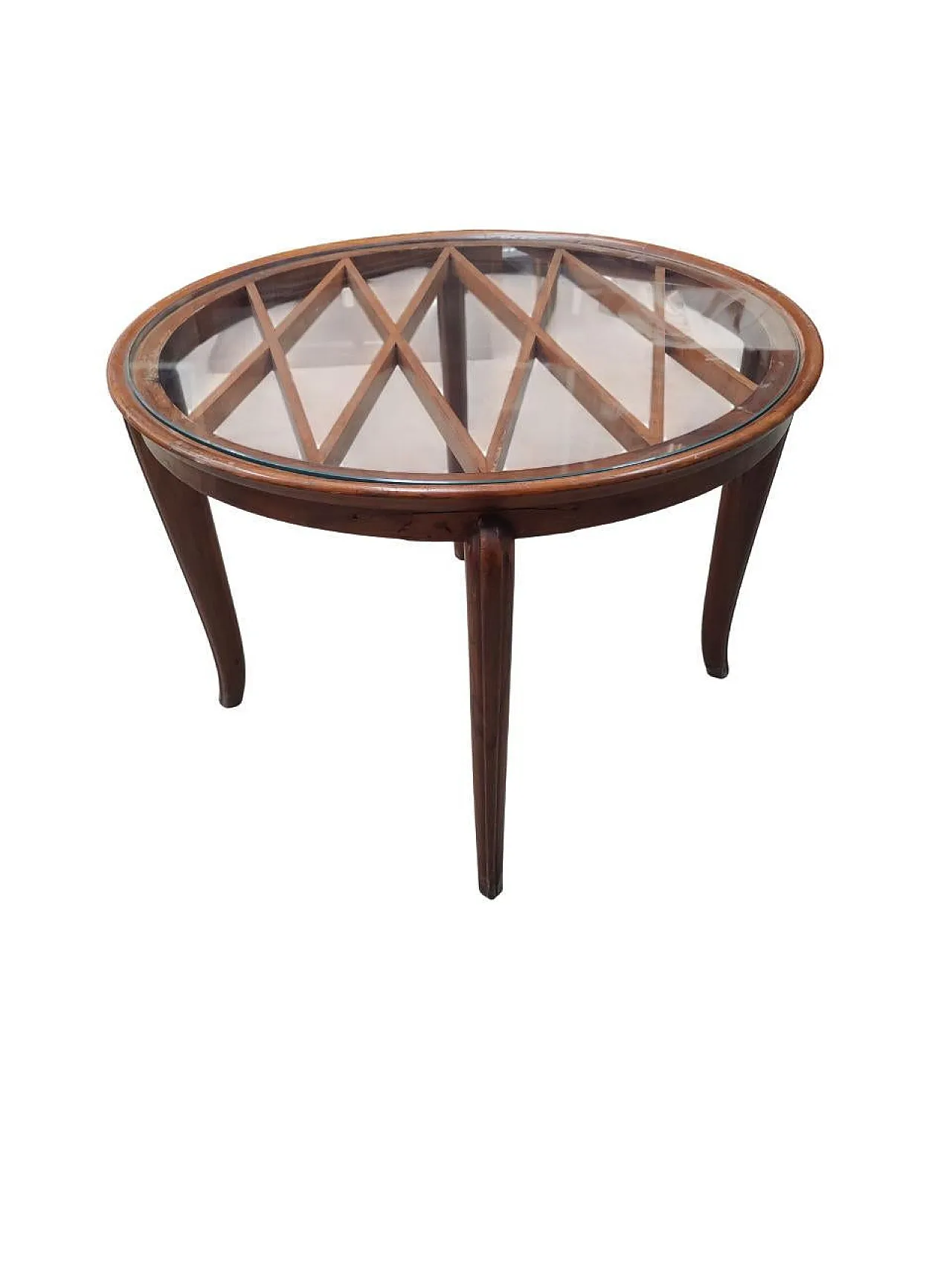
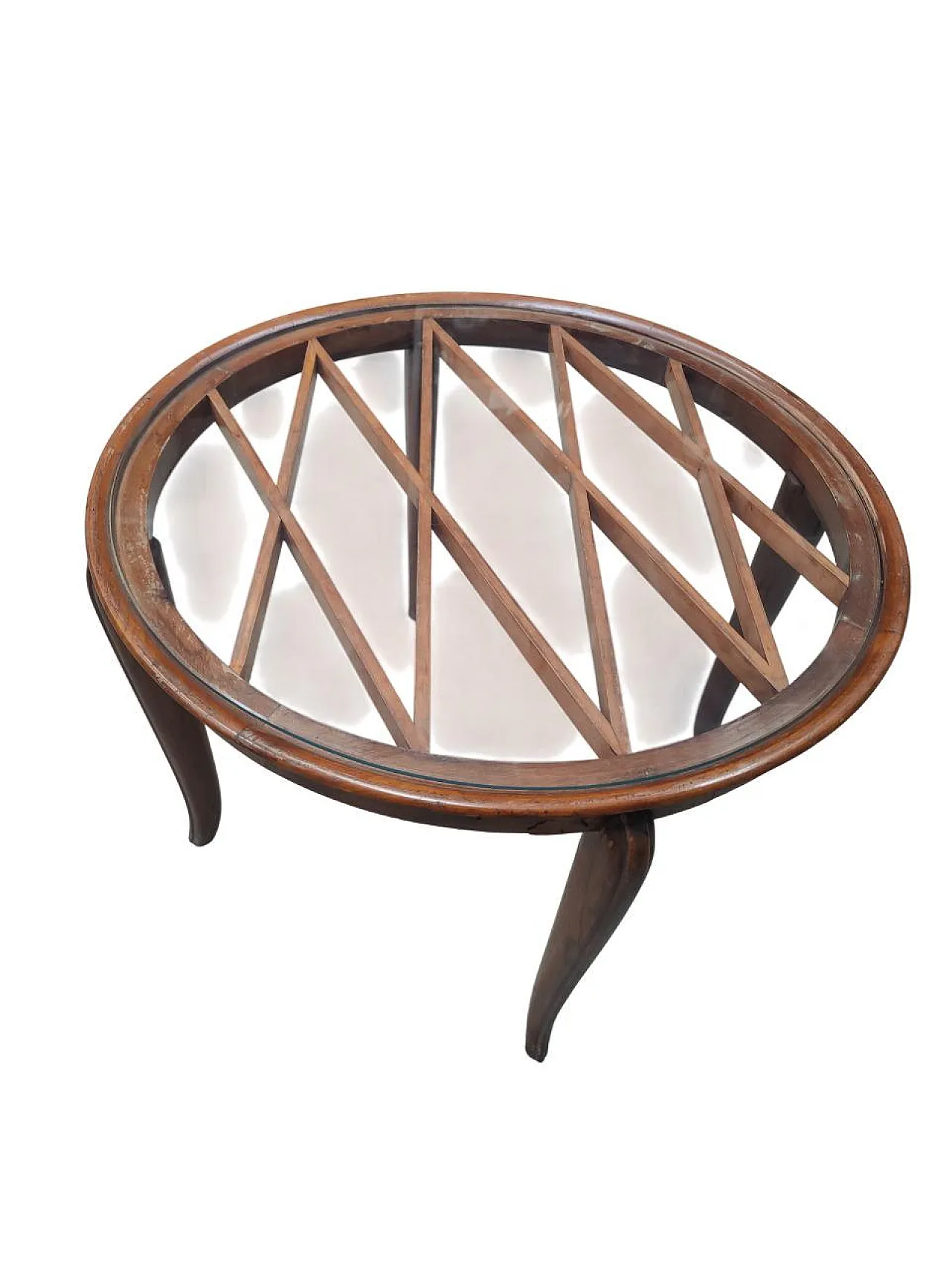
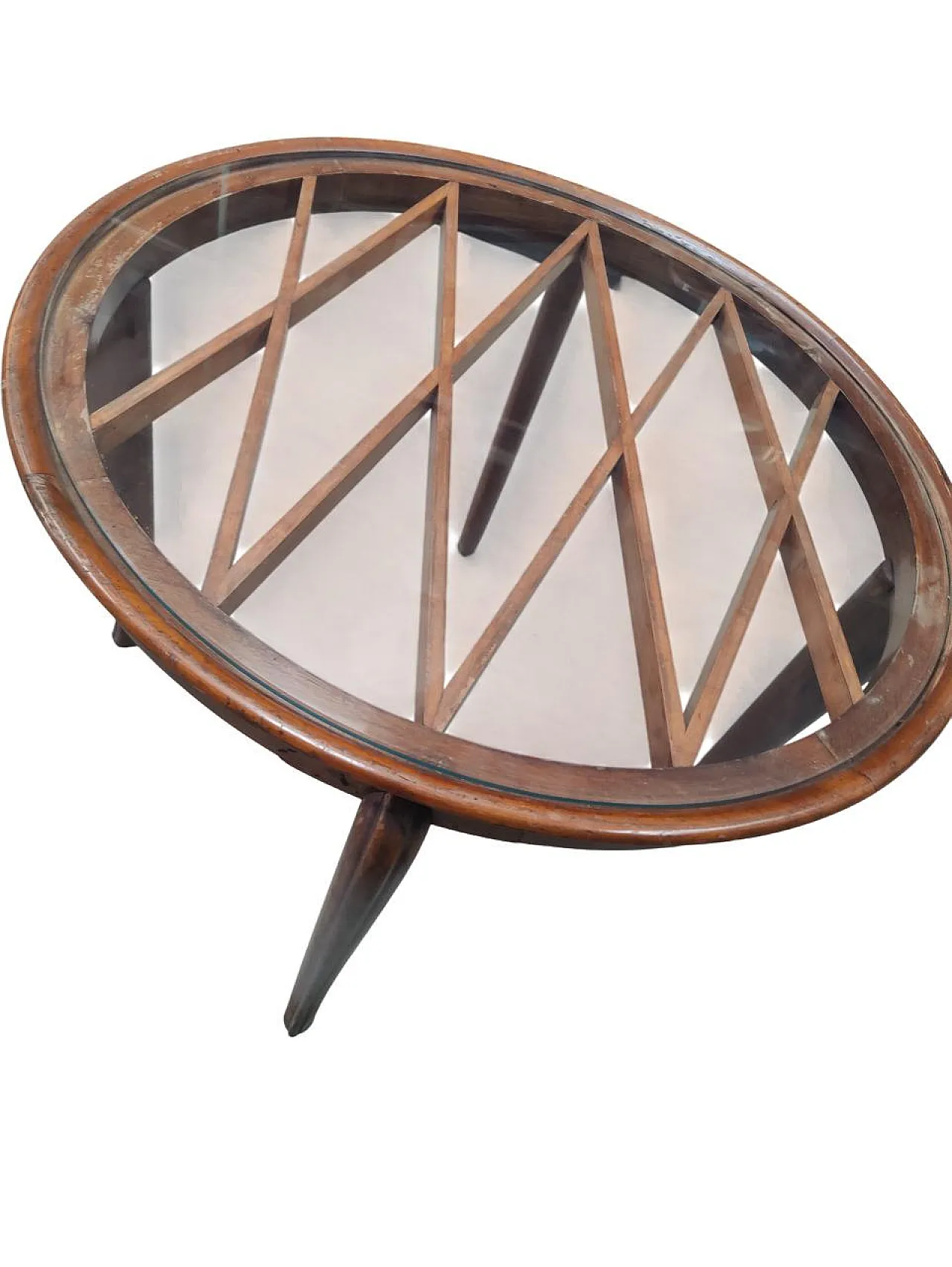
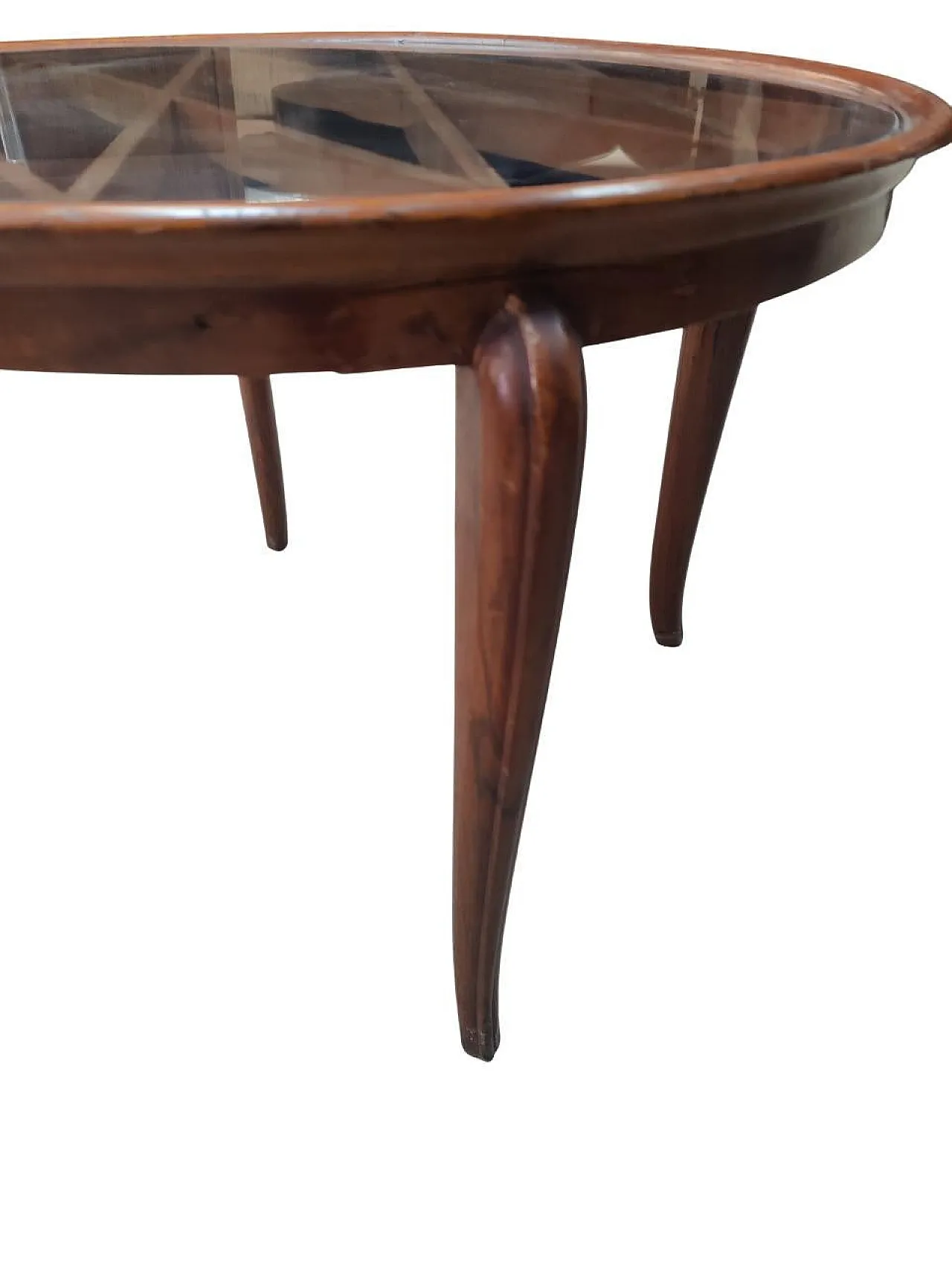
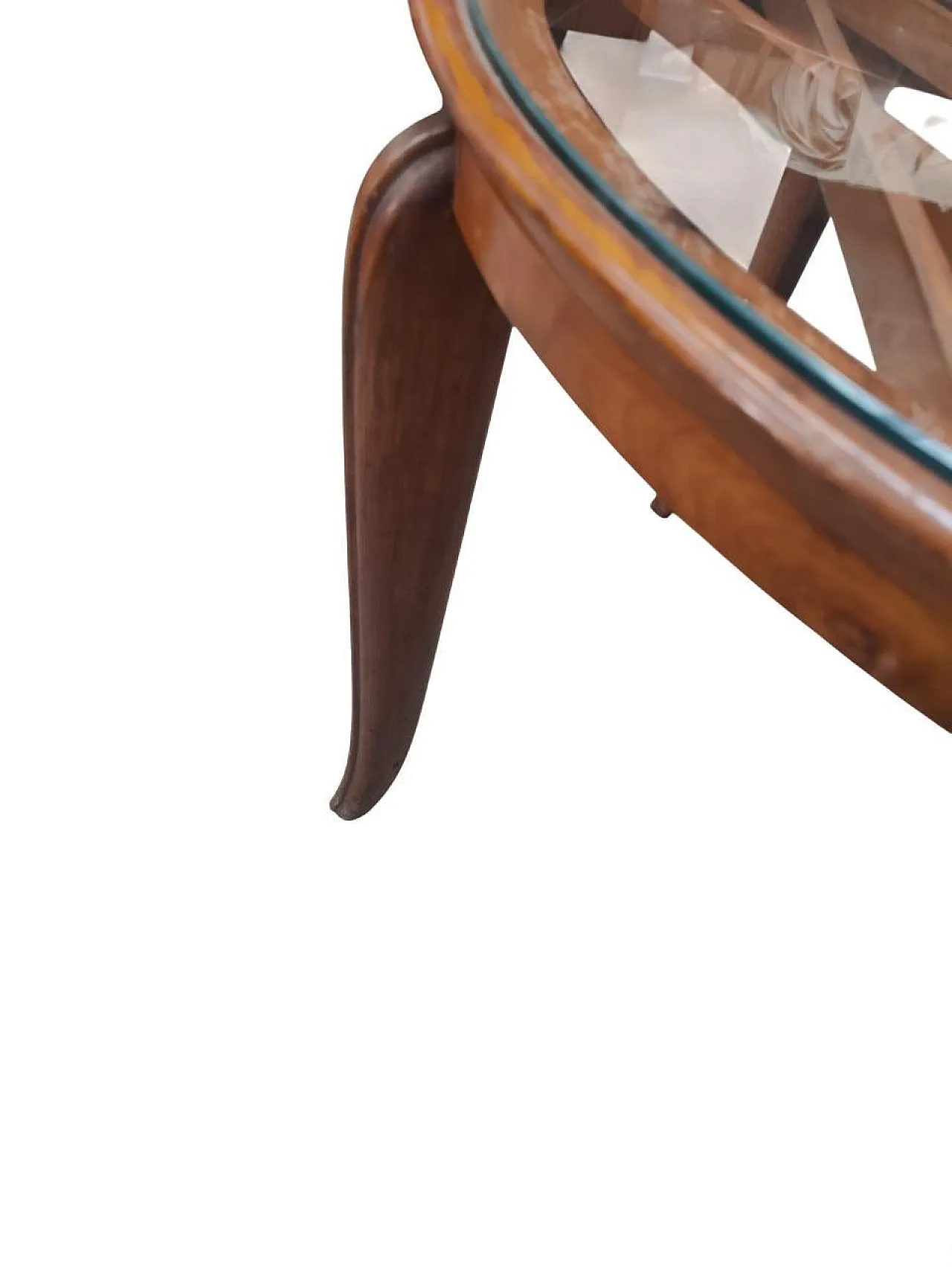
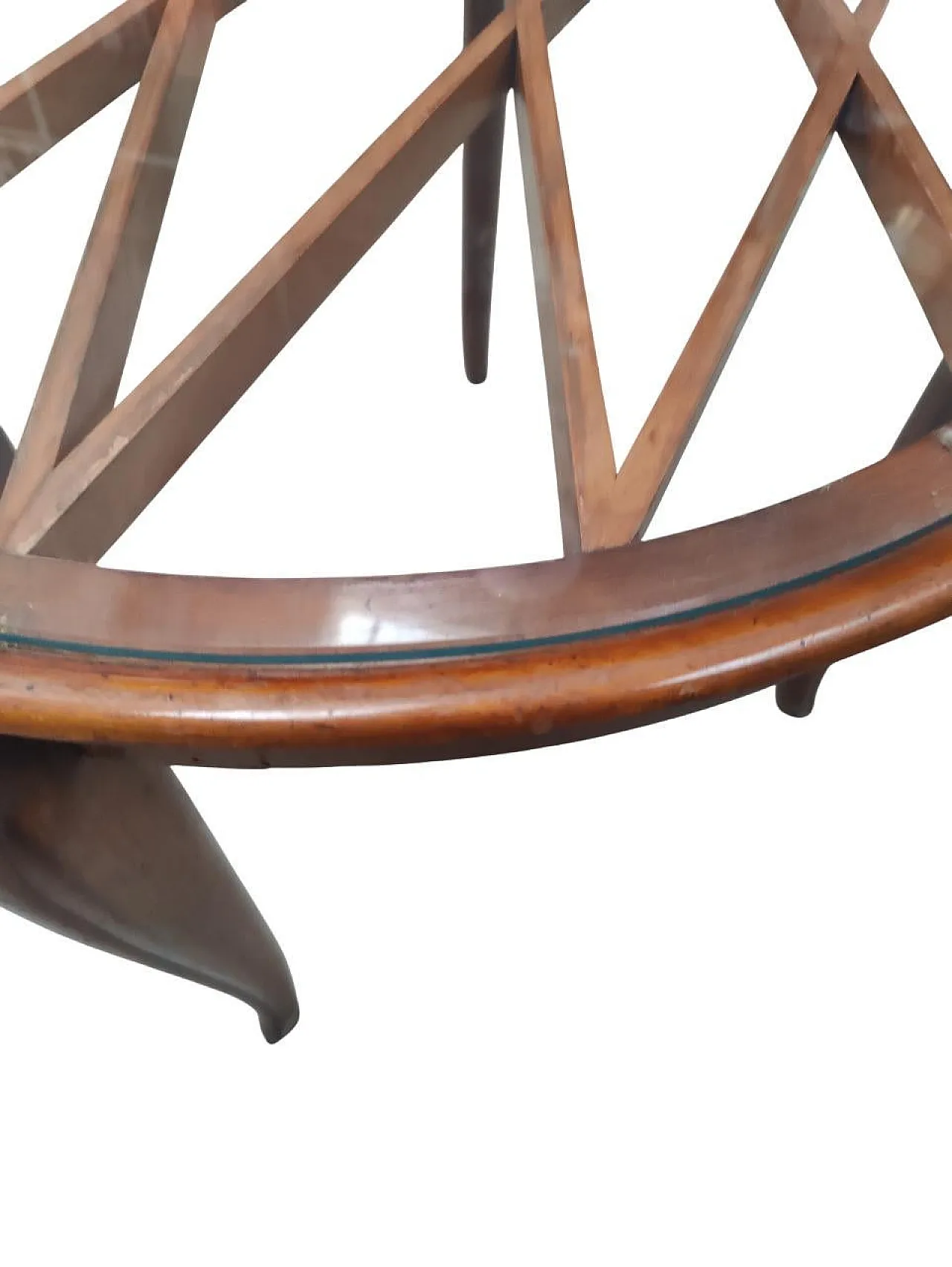
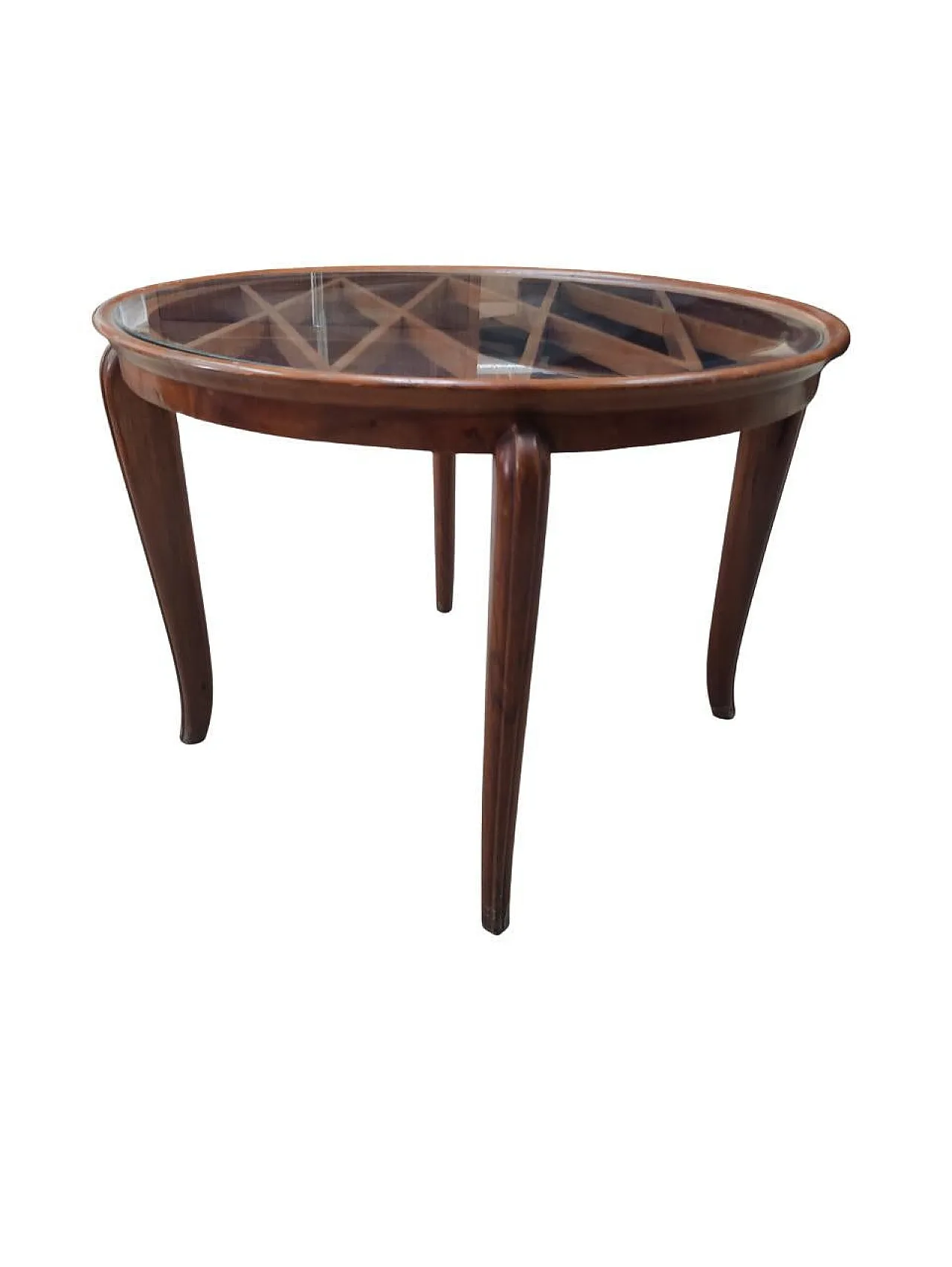
Coffee table with walnut wood structure, characterized by a refined internal geometric grid decoration visible under the transparent glass top, embedded in the wooden frame, a solution that enhances the underlying structural design and gives visual lightness to the whole. The balance between functionality and formal refinement is typical of the production attributed to Paolo Buffa, one of the protagonists of 20th century Italian furniture. The circular wooden frame accommodates the glass top, enhancing the underlying structural motif. The four legs are slender and tapered towards the bottom, giving visual lightness and stability. The whole expresses a refined balance between functionality and formal research, typical of Italian furniture from the 1940s. Attribution: Paolo Buffa Period: Italy, 1940s Materials: walnut wood, glass Dimensions: – Height 50 cm – Diameter 69 cm Paolo Buffa (Milan, 1903 – 1970) was an Italian architect and designer, among the protagonists of high-end design and furniture of the twentieth century. Trained at the Polytechnic of Milan, he started his business in the 1930s, quickly establishing himself for an elegant, cultured and measured style, capable of combining the Italian artisan tradition with neoclassical and modern suggestions. He collaborated with important cabinetmakers and manufacturers, including Serafino Arrighi, creating furnishings of great formal and construction quality. His production, particularly appreciated between the 1940s and 1950s, stands out for the refined use of fine woods, balanced proportions, careful details and geometric decorative motifs. Buffa designed furnishings for private residences, hotels, ocean liners and institutional headquarters, significantly contributing to the definition of the taste of Italian furnishings of the 20th century. Today his works are sought after on the collecting market and present in public and private collections, recognized as emblematic examples of the elegance of post-war Italian design.


.png)
 SILVER Seller in Firenze, Italy