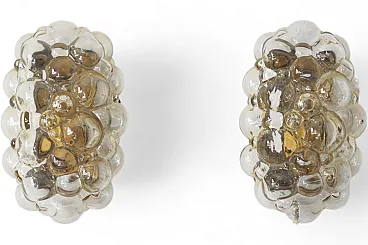
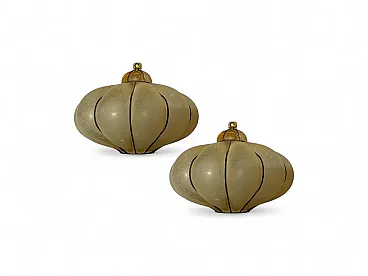
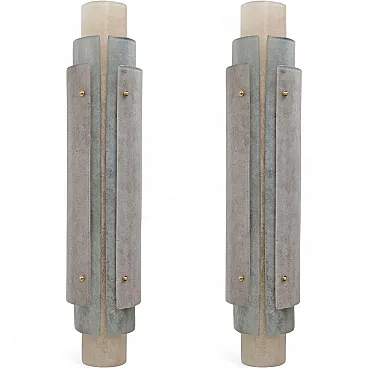
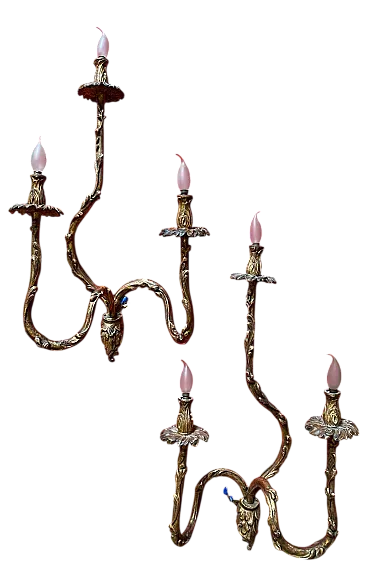
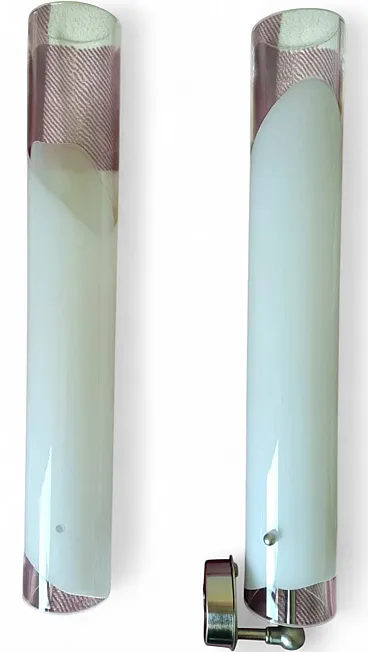
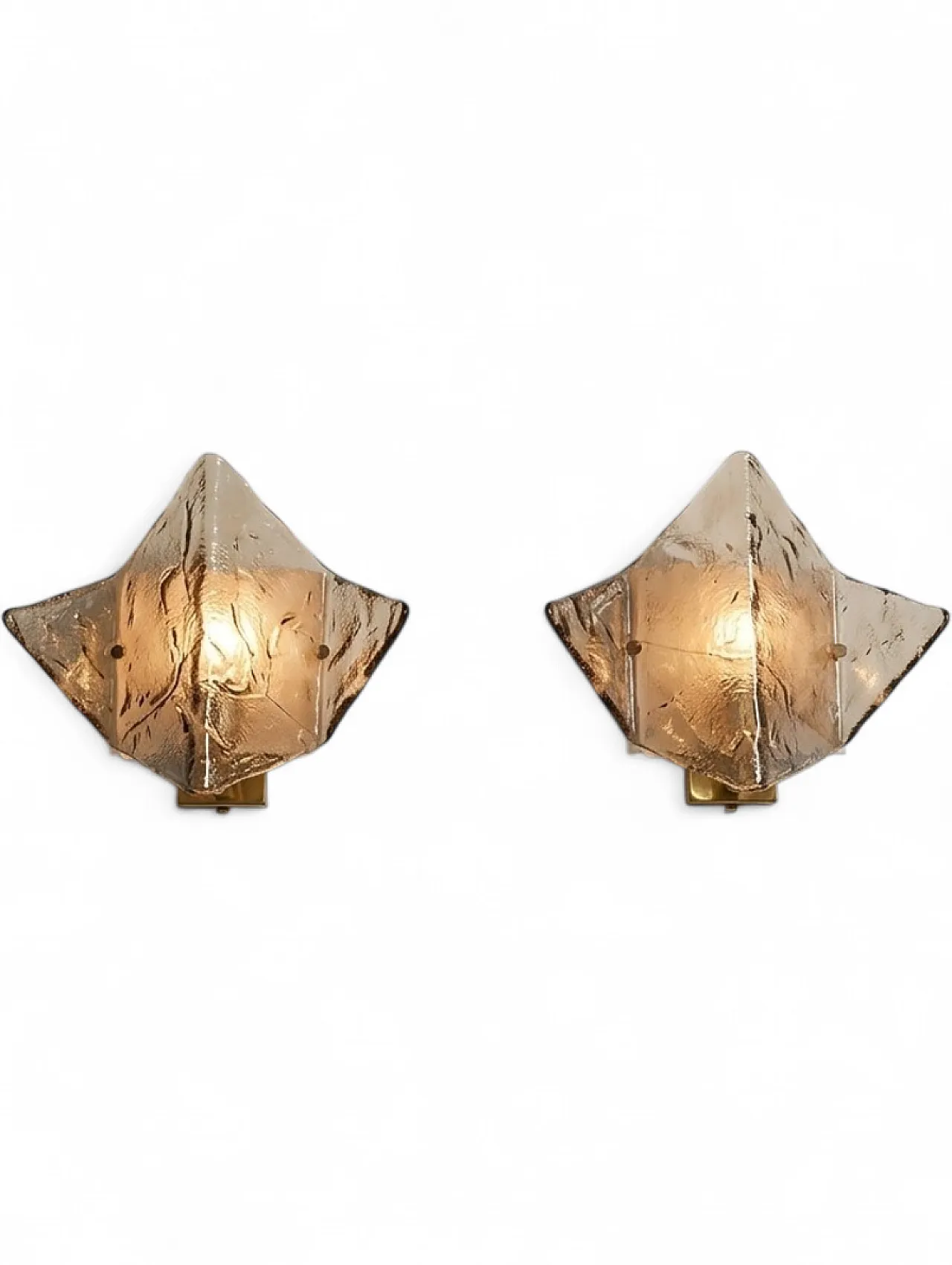
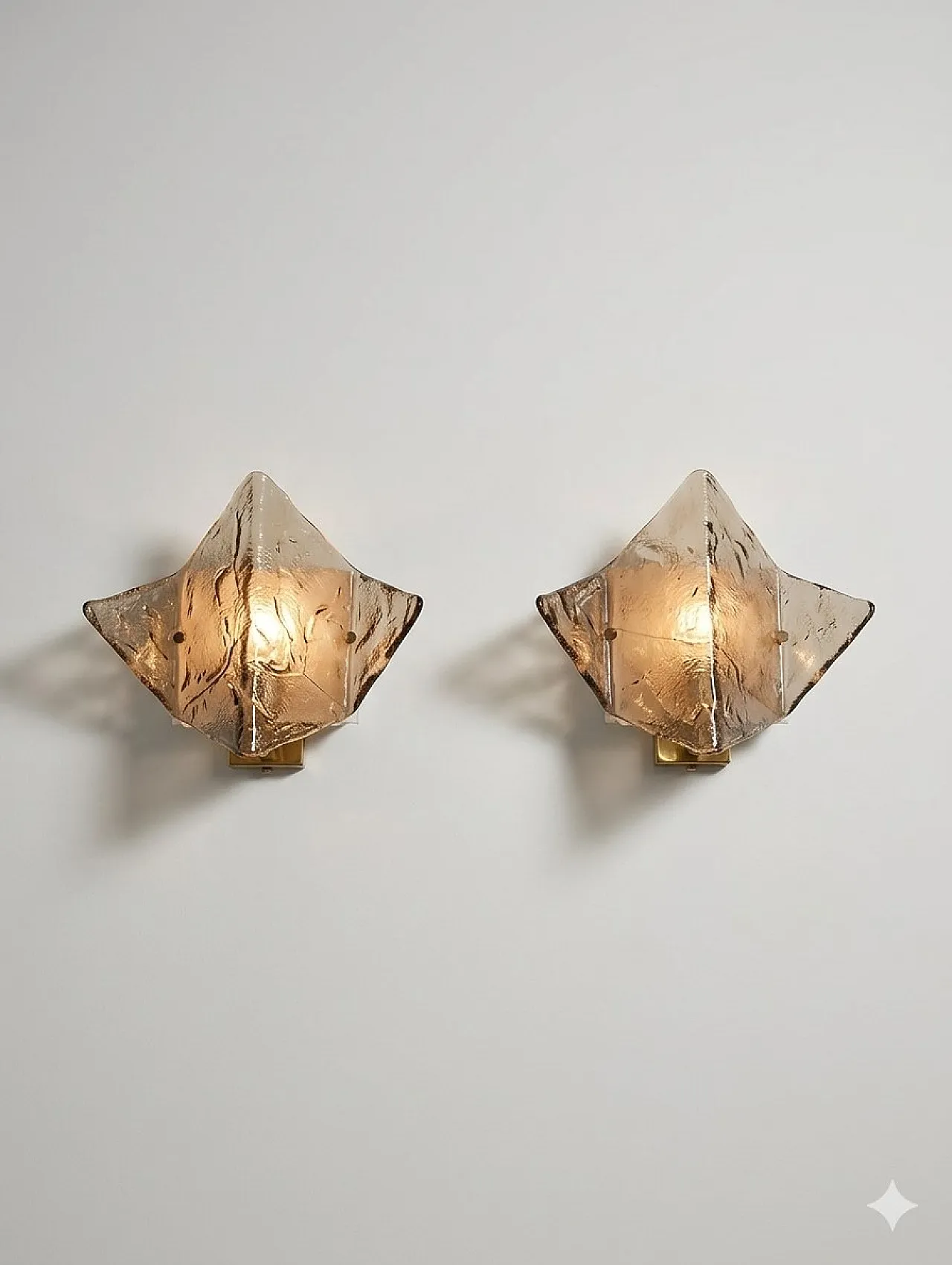
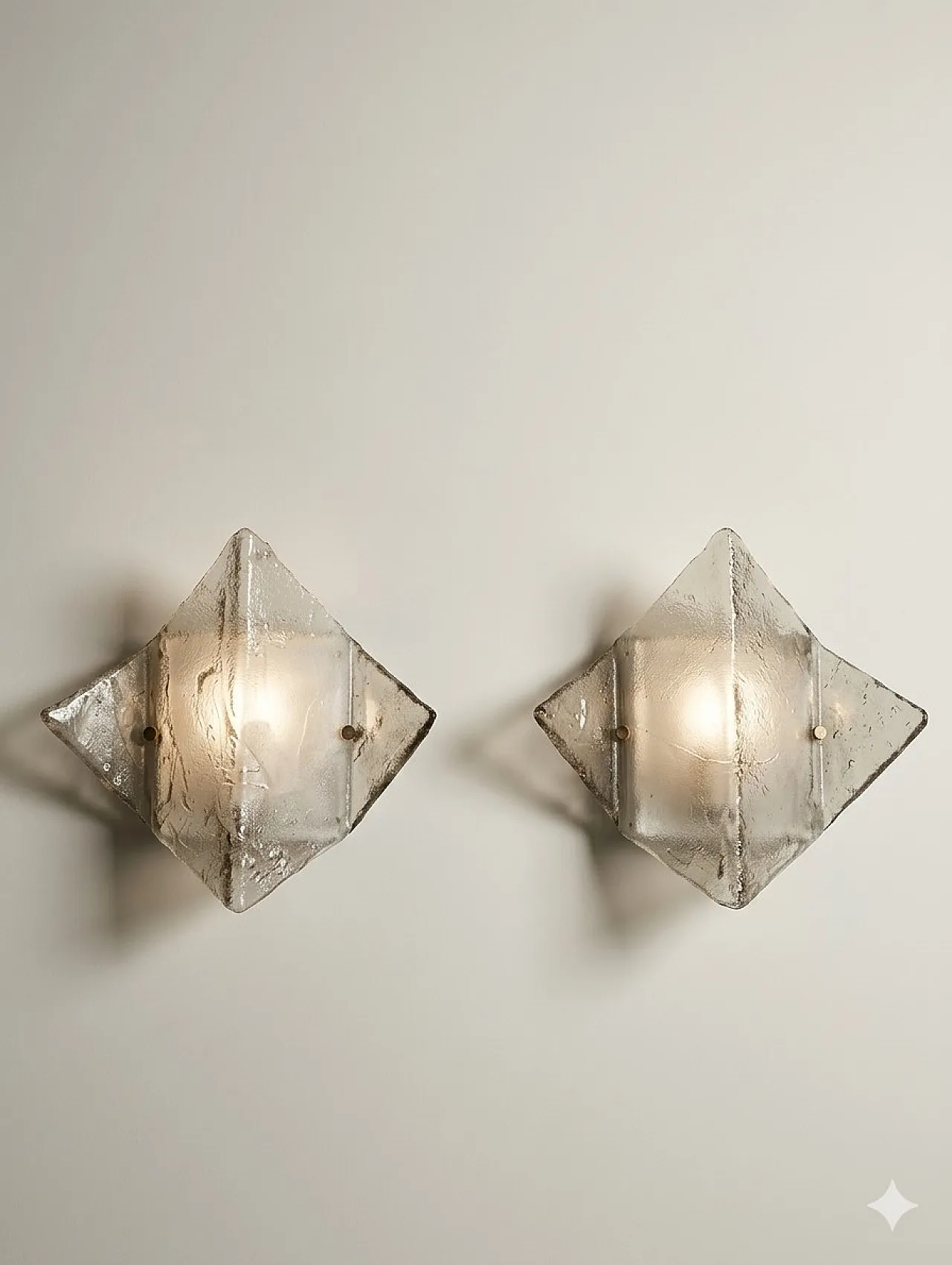
The LP253 wall sconces (appliques) by Carlo Nason for Mazzega are a really good example of how Murano lighting evolved in the 1970s—from decorative craft into something much more architectural and modern.
Carlo Nason comes from a Murano glassmaking family (linked to NasonMoretti), but unlike earlier generations, he deliberately moved away from ornate, classical Venetian styles toward clean geometry and industrial collaboration.
By the late 60s–70s, working with Mazzega, he was designing lighting that sits between:
Murano craftsmanship (hand-blown glass)
modernist / Space Age design language
That's exactly where LP253 lives.
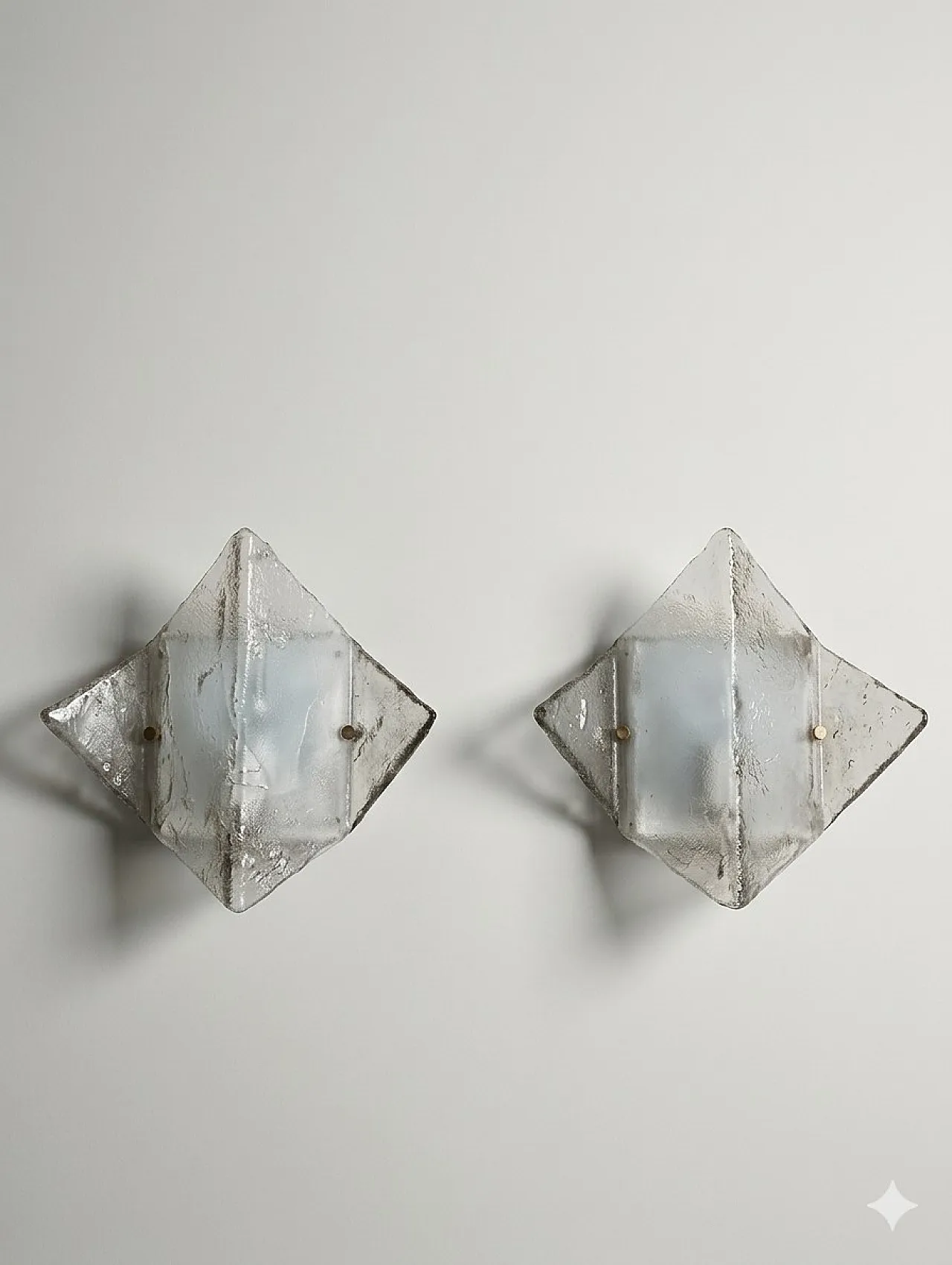
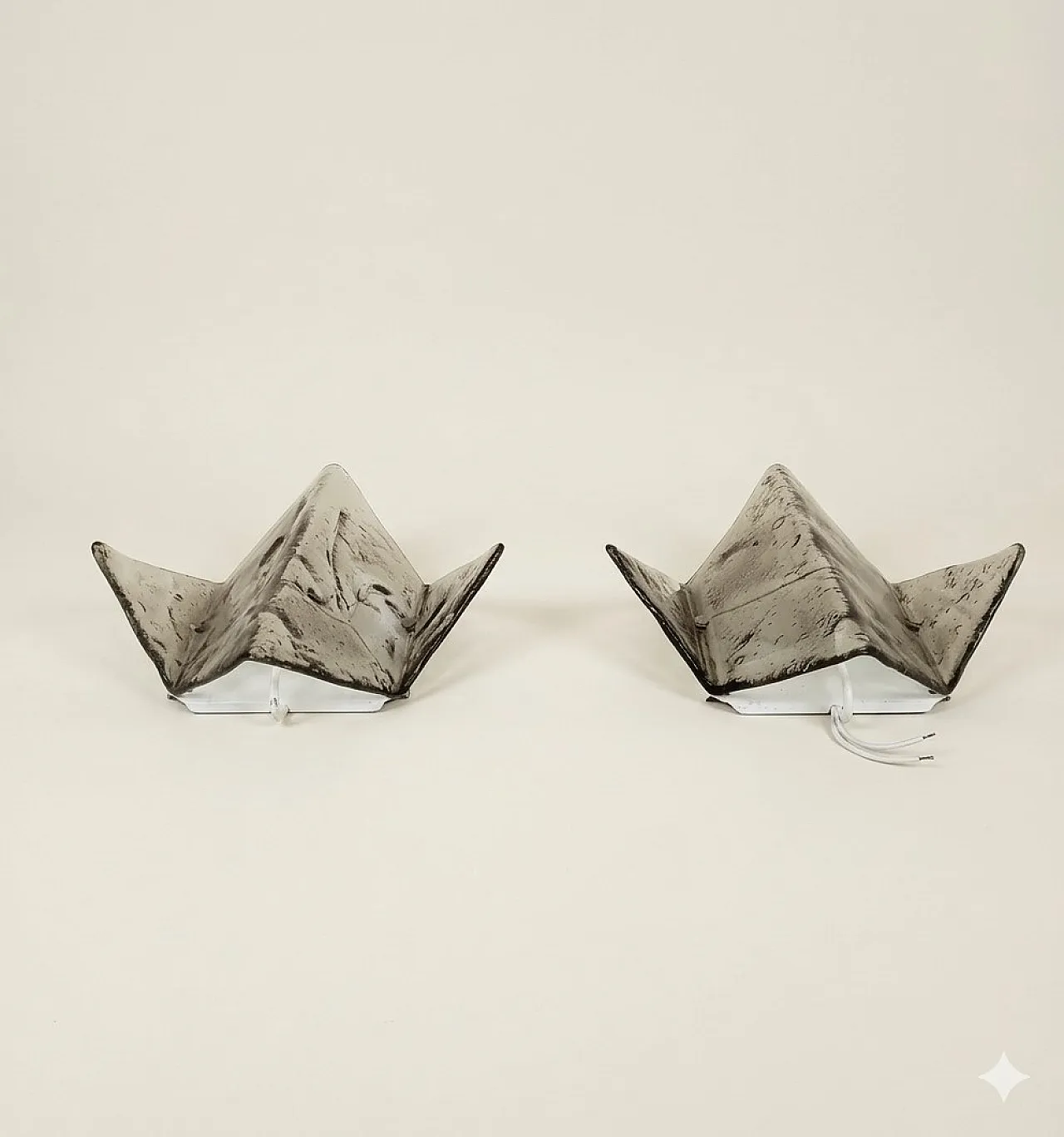
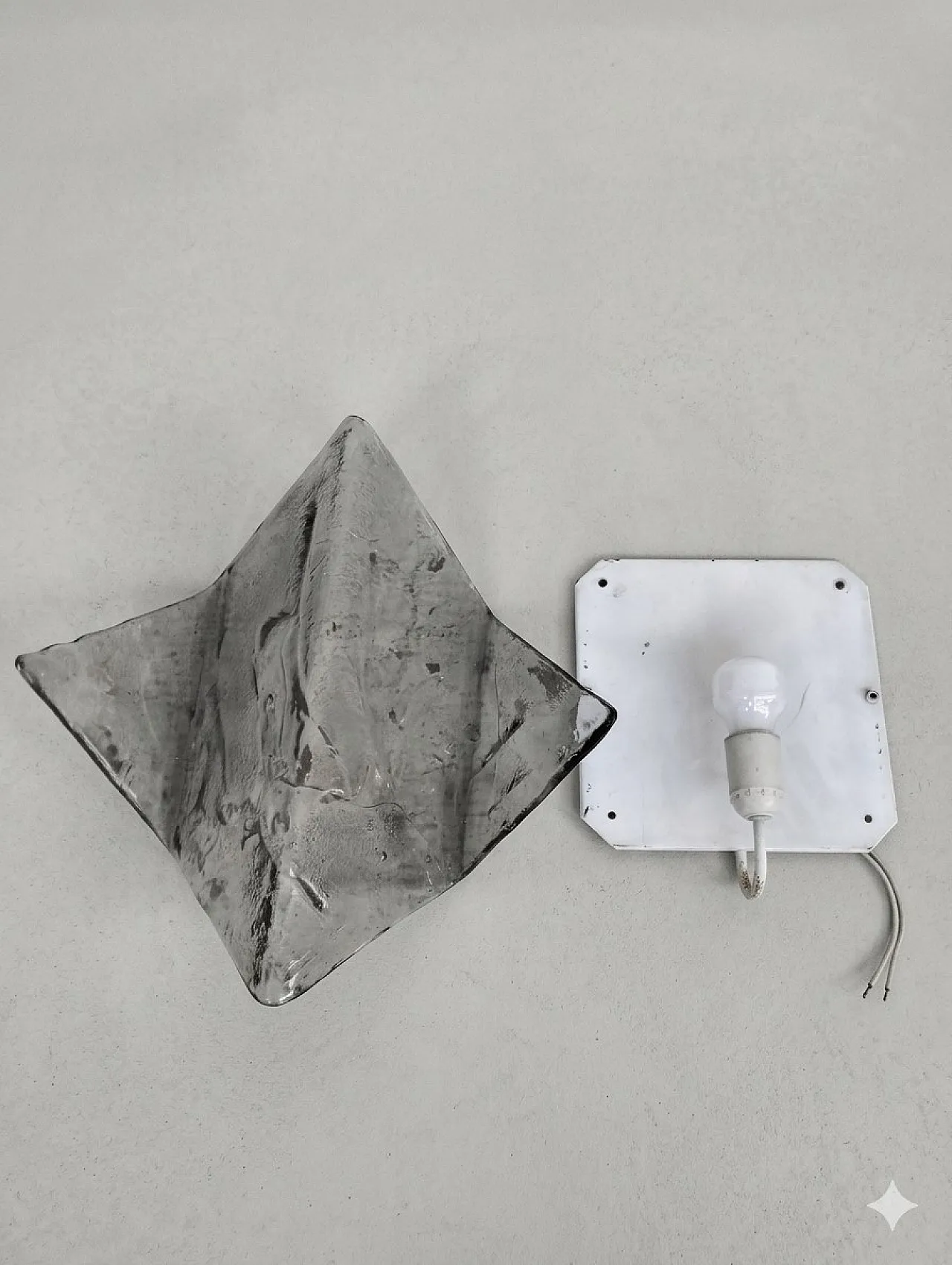
The LP253 is a wall-mounted sconce typically composed of:
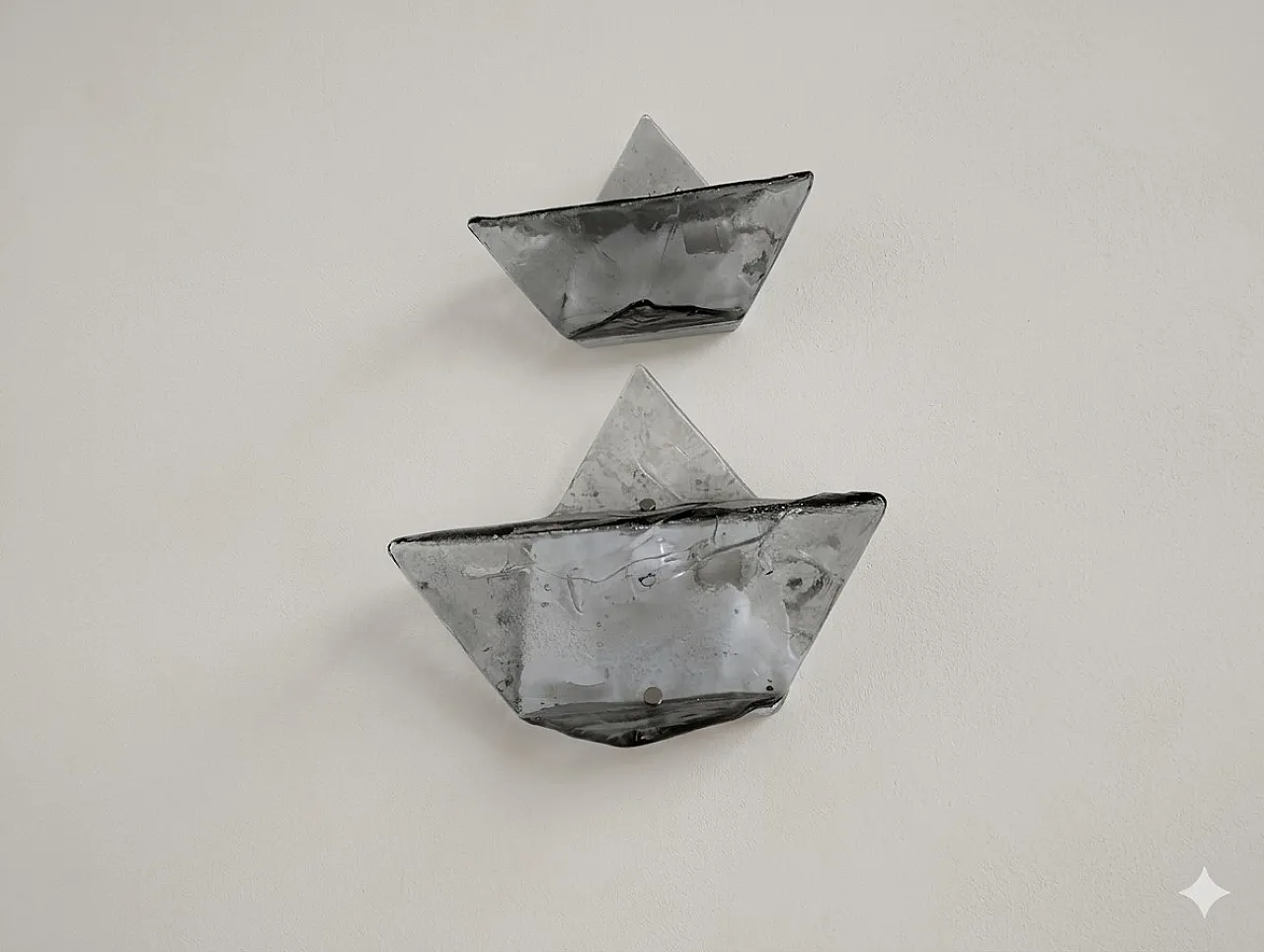
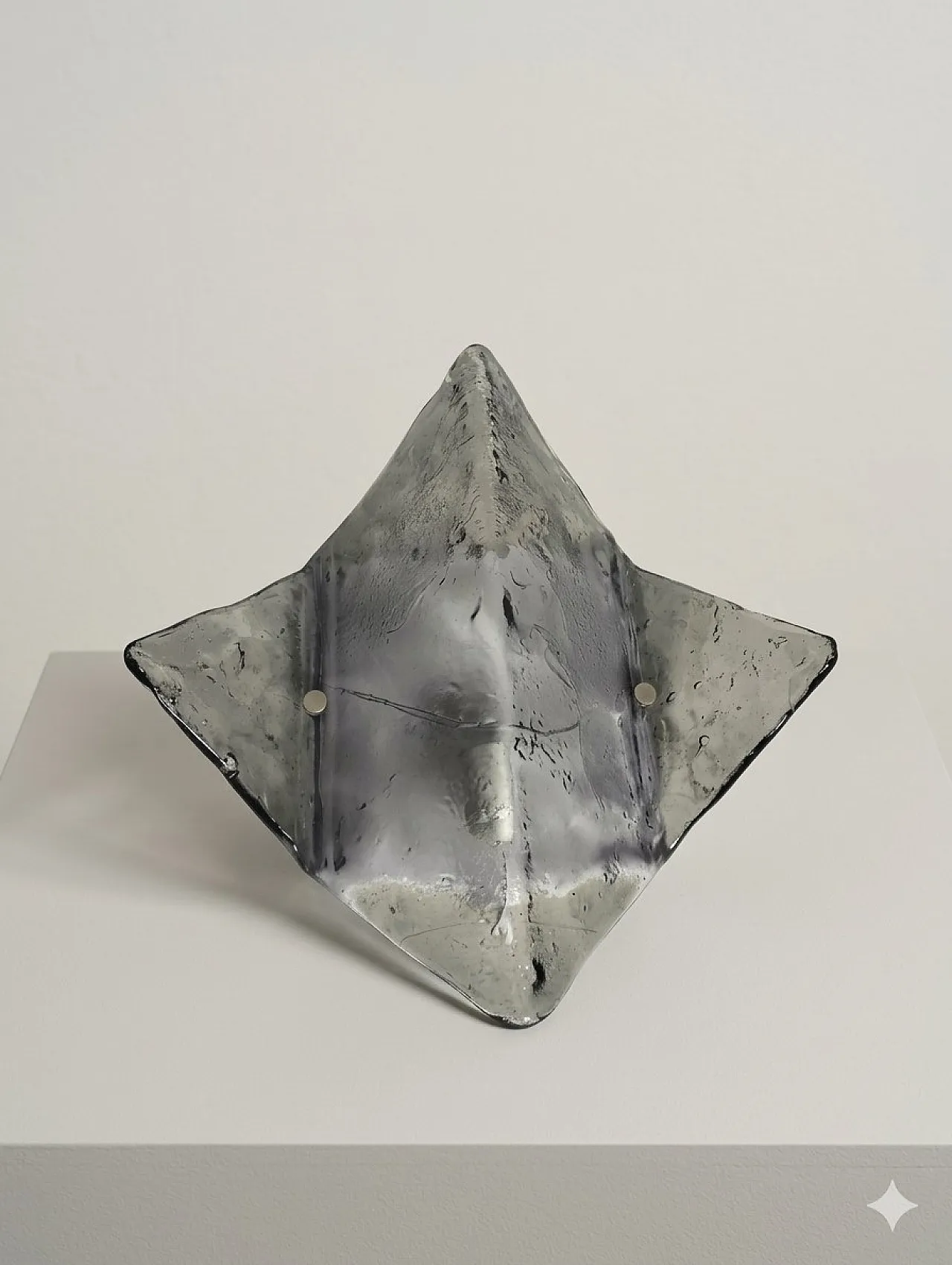
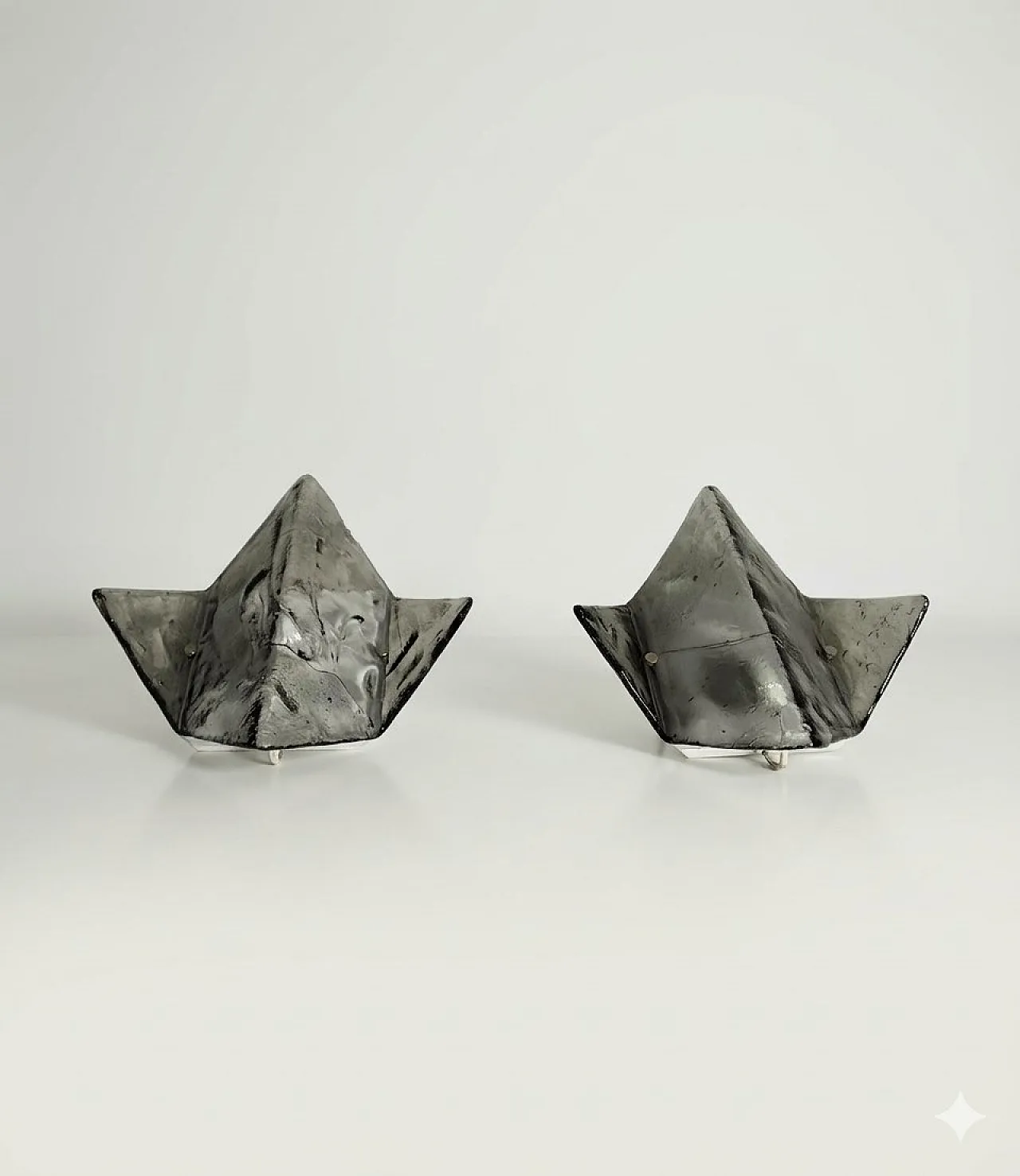
A thick molded Murano glass panel, often:
clear, smoked, or opalescent
with a textured / hammered / bubbled surface
A white lacquered metal backplate
Typical size: around 44 × 4 4 cm, fairly large for a sconce
It's usually mounted flush to the wall, acting almost like a glowing sculptural tile.
This is where it gets interesting.
Unlike earlier Murano chandeliers (floral, ornate), LP253 is:
The irregular texture diffuses light softly
Creates a “frozen water” / “ice slab” effect
Very typical of 1970s Italian lighting experimentation
You'll often see it described as:
Mid-Century Modern
Space Age
sometimes even Brutalist-adjacent because of the heavy texture
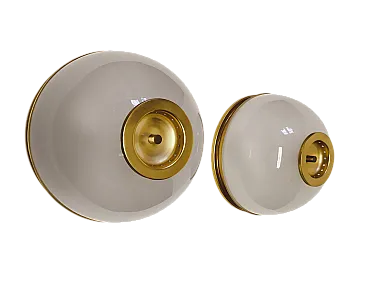
Because they're hand-formed glass, no two pieces are perfectly identical.Set of 2 glass sconces appliques by Carlo Nason for Mazzega 1960s


.png)
 SILVER Seller in Padova, Italy