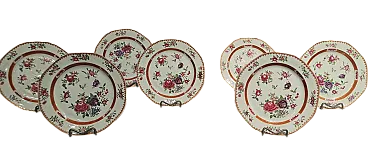
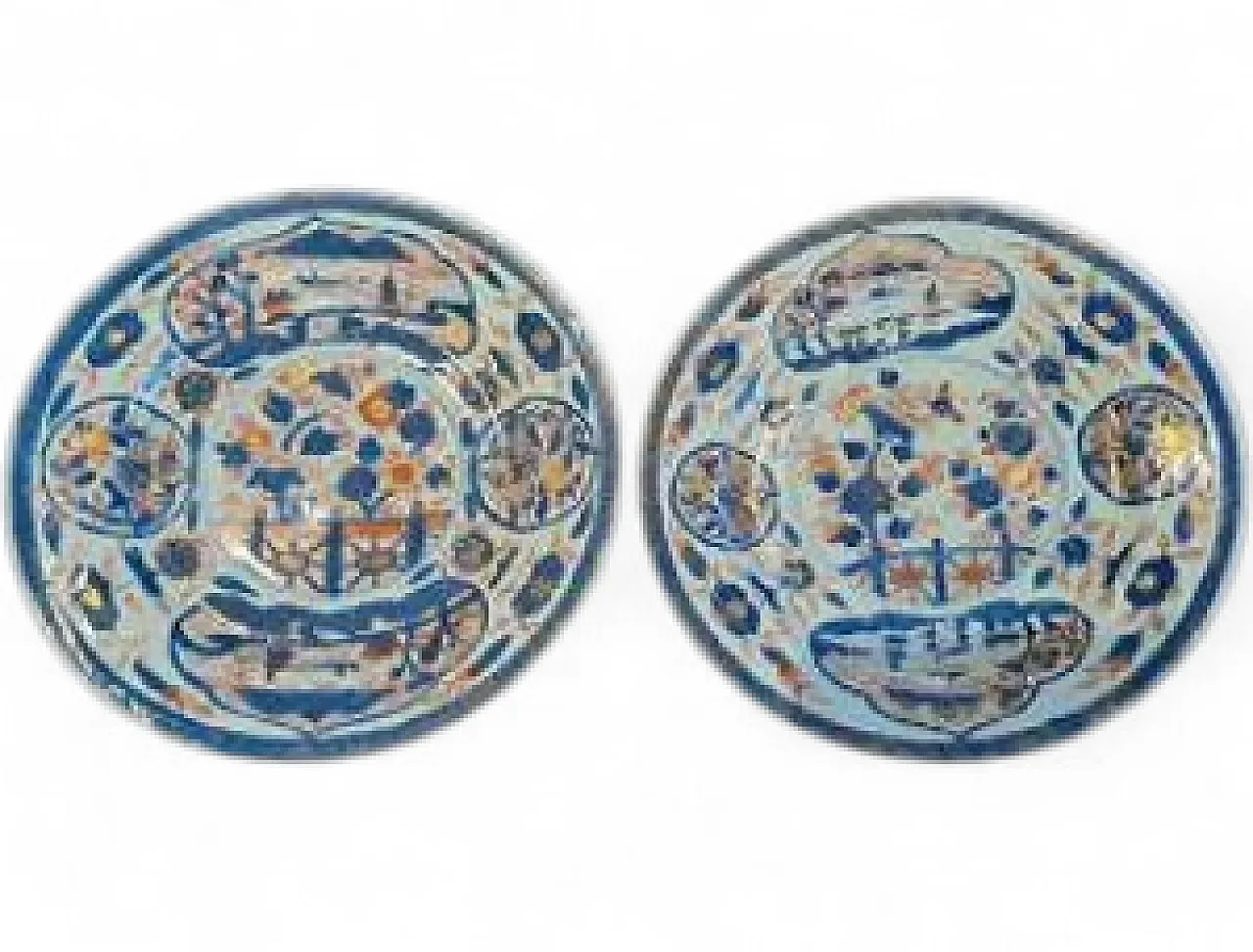
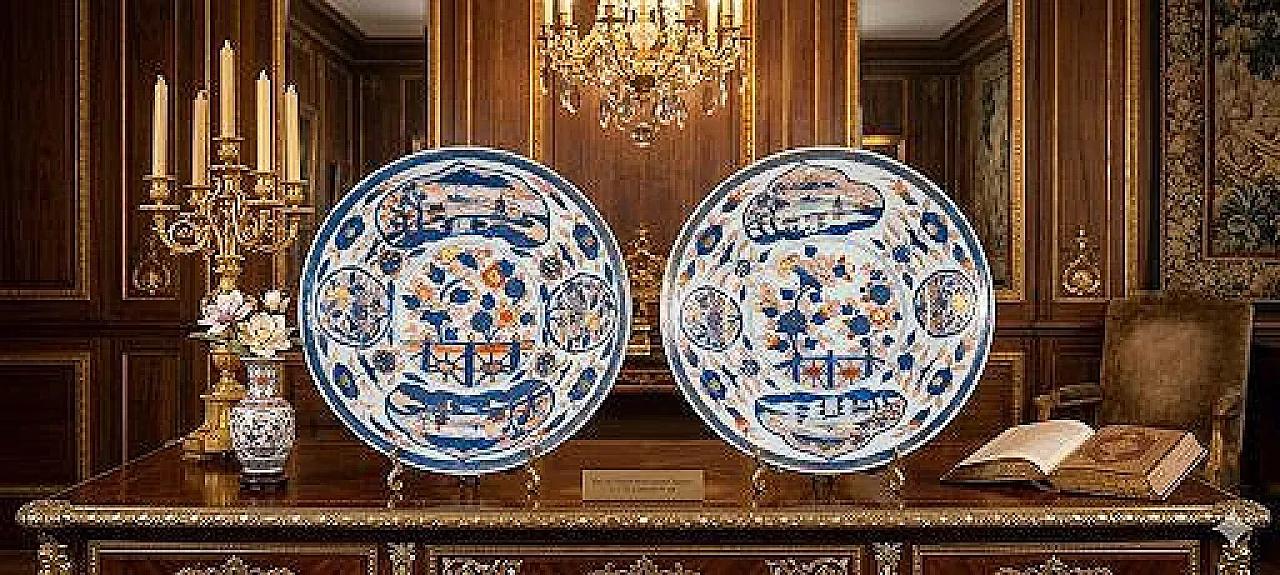
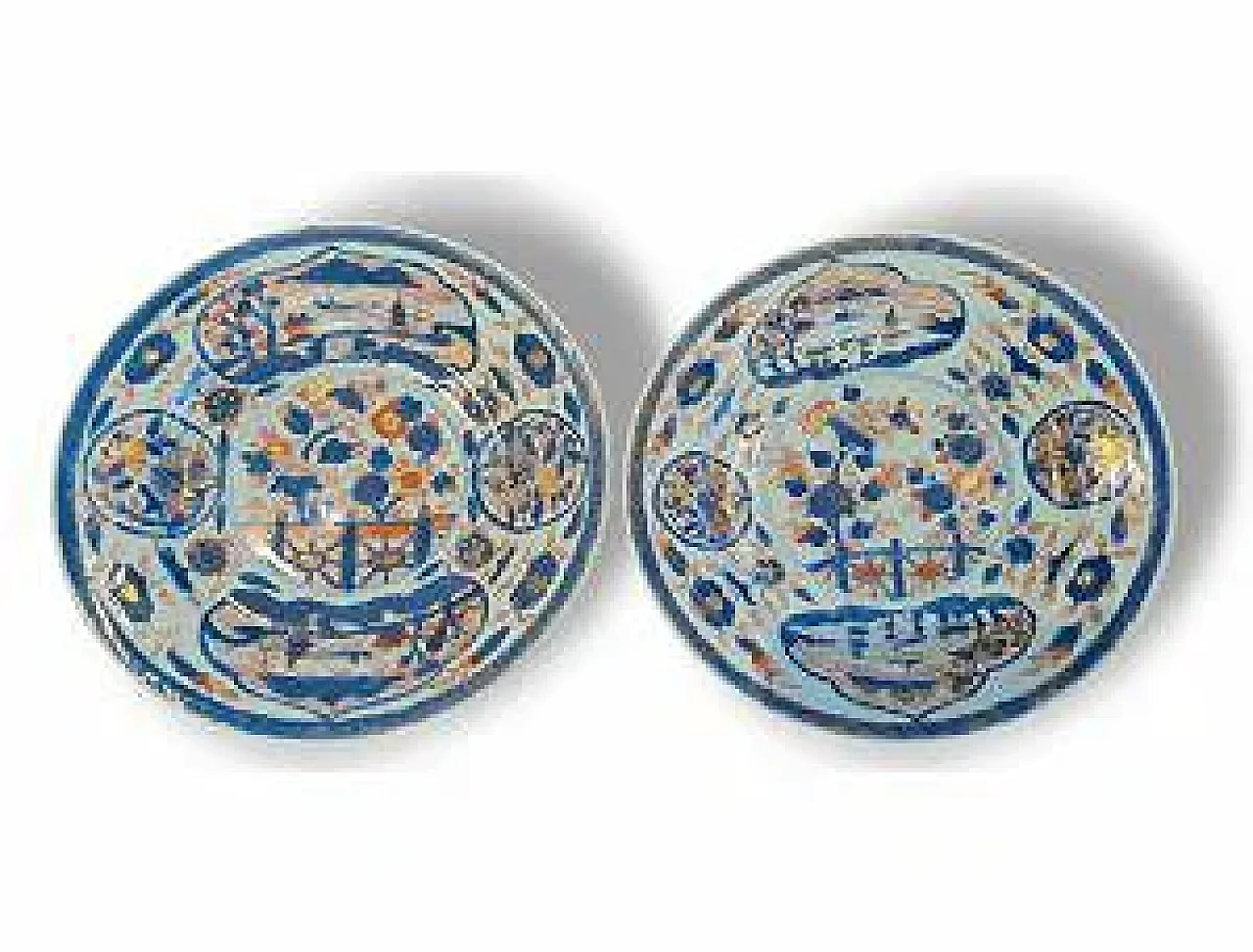
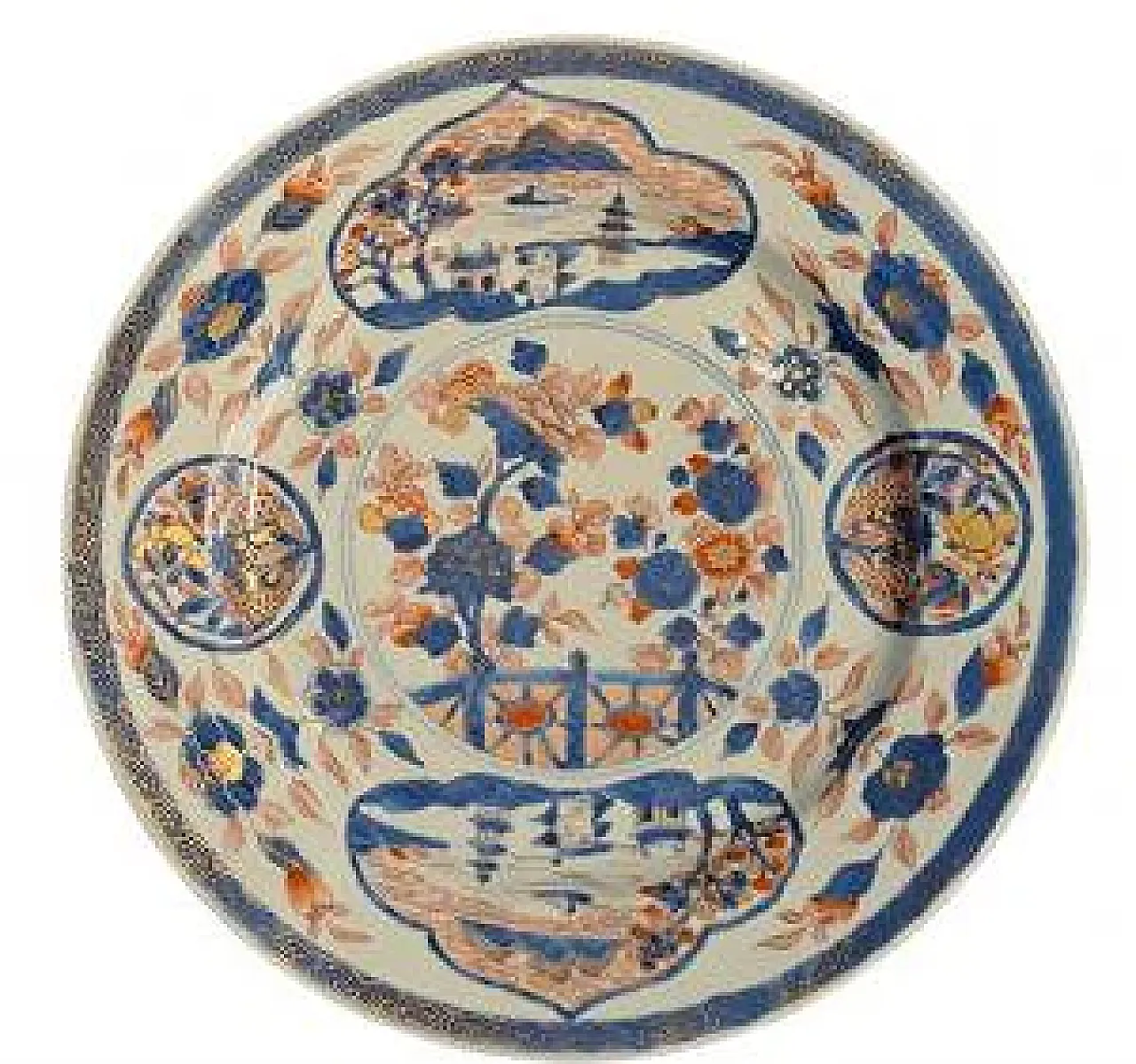
This is a pair of dishes of exceptional visual impact and historical importance. This is a highly sought-after type of Chinese export porcelain, produced during the reign of the Kangxi Emperor (1662-1722), of the Qing Dynasty.
Technical and Descriptive Sheet
Type: Pair of large circular porcelain plates "Chinese Imari".
Era: Qing Dynasty, Kangxi Period (circa 1700-1720).
Diameter: 36 cm (measure considered "parade" or display).
Technique: Underglaze decoration in cobalt blue and overglaze in iron red and pure gold.
Stylistic and Decorative Analysis
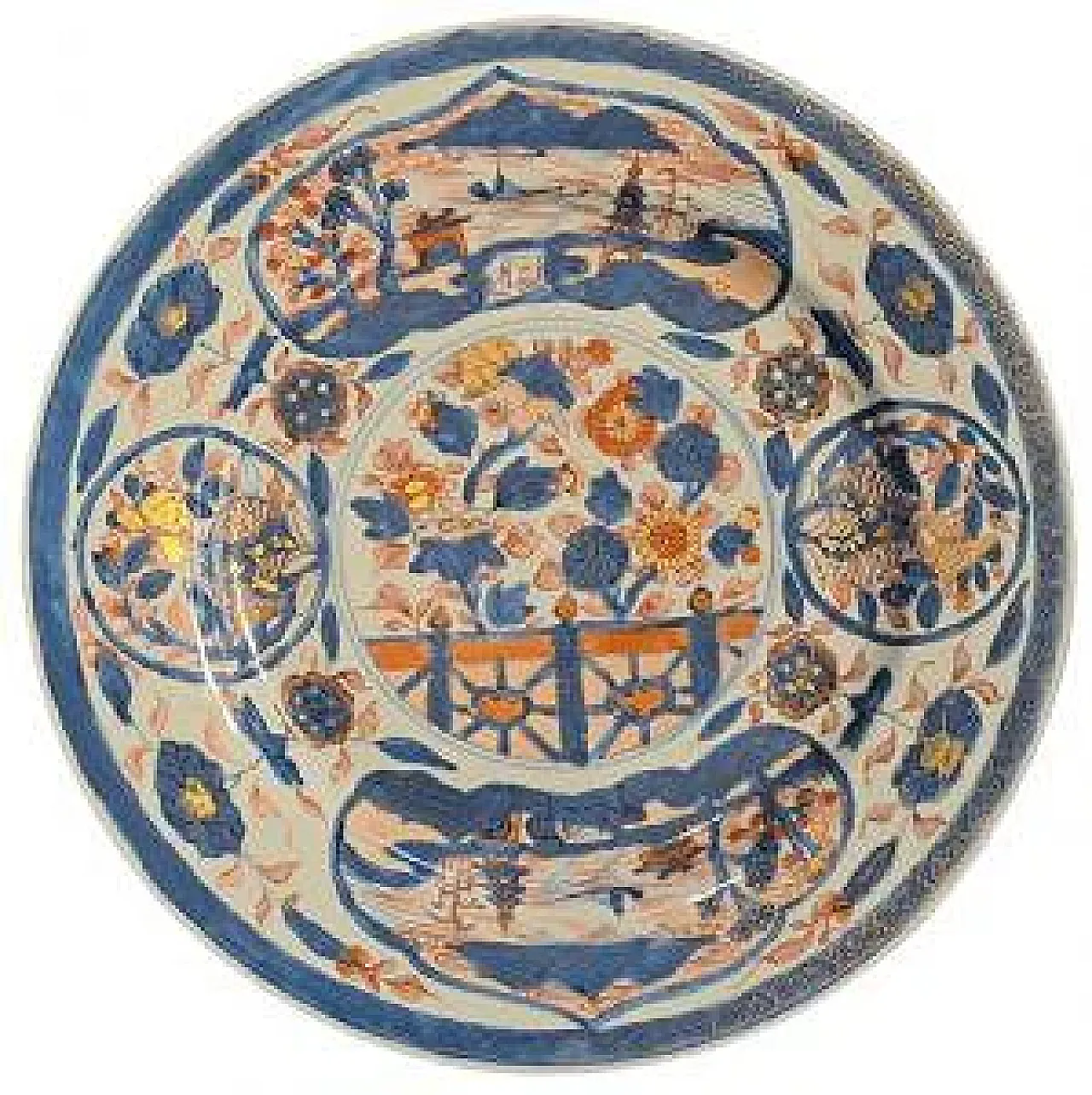
The decoration is executed in the Imari style, an originally Japanese color palette that the Chinese potters of Jingdezhen masterfully adopted to meet the demand of the 18th-century European market.
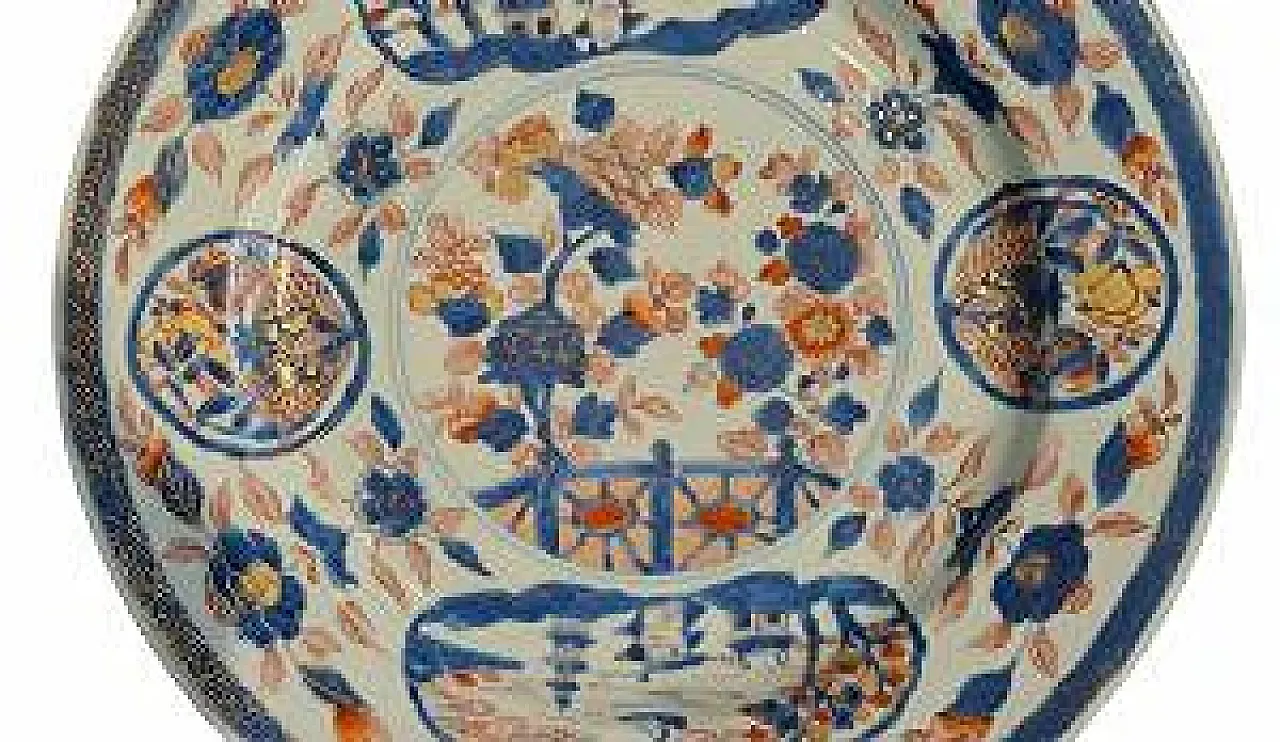
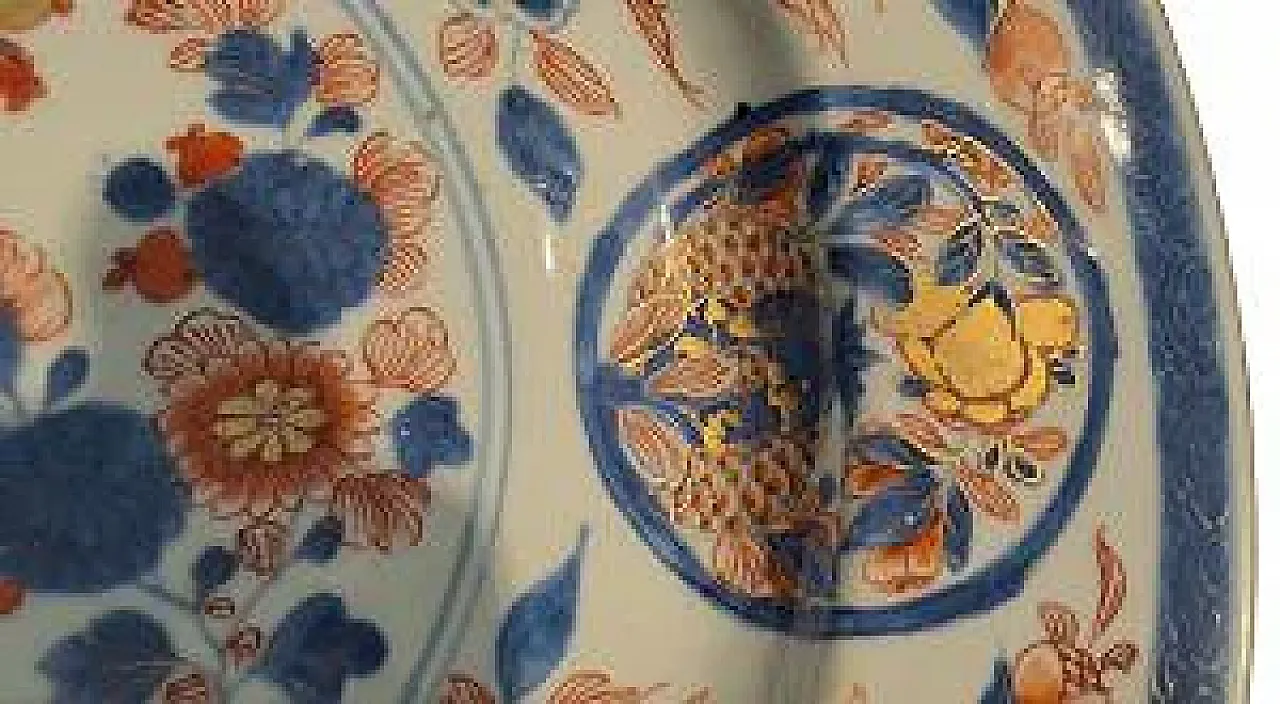
The Cable (Center): It features a rich floral pattern with peonies and chrysanthemums emerging from a complex lattice fence (fence), a typical element of the classical Chinese garden. The use of gold to finish the petals and architectural details gives an extraordinary luminosity.
The Tesa (Edge): The tesa is decorated with a rhythmic alternation of four shaped reserves. Two reserves contain finely illuminated river landscapes with pagodas, mountains, and small boats; the other two feature floral arrangements and pomegranates (symbols of fertility and abundance).
The Base: Cobalt blue is deep and vibrant, a sign of excellent pigment quality, while iron red is precisely applied in the shades of the leaves and flowers.
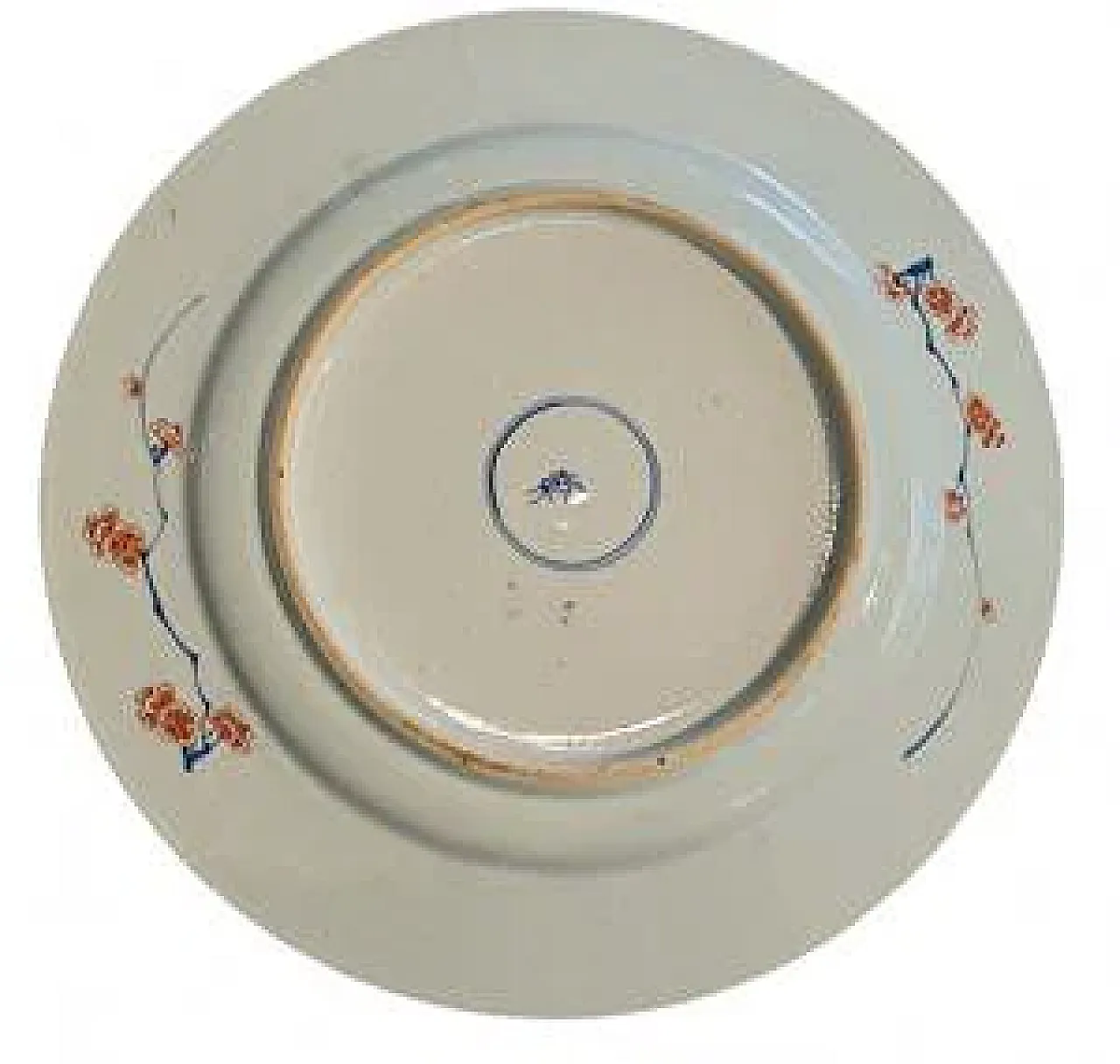
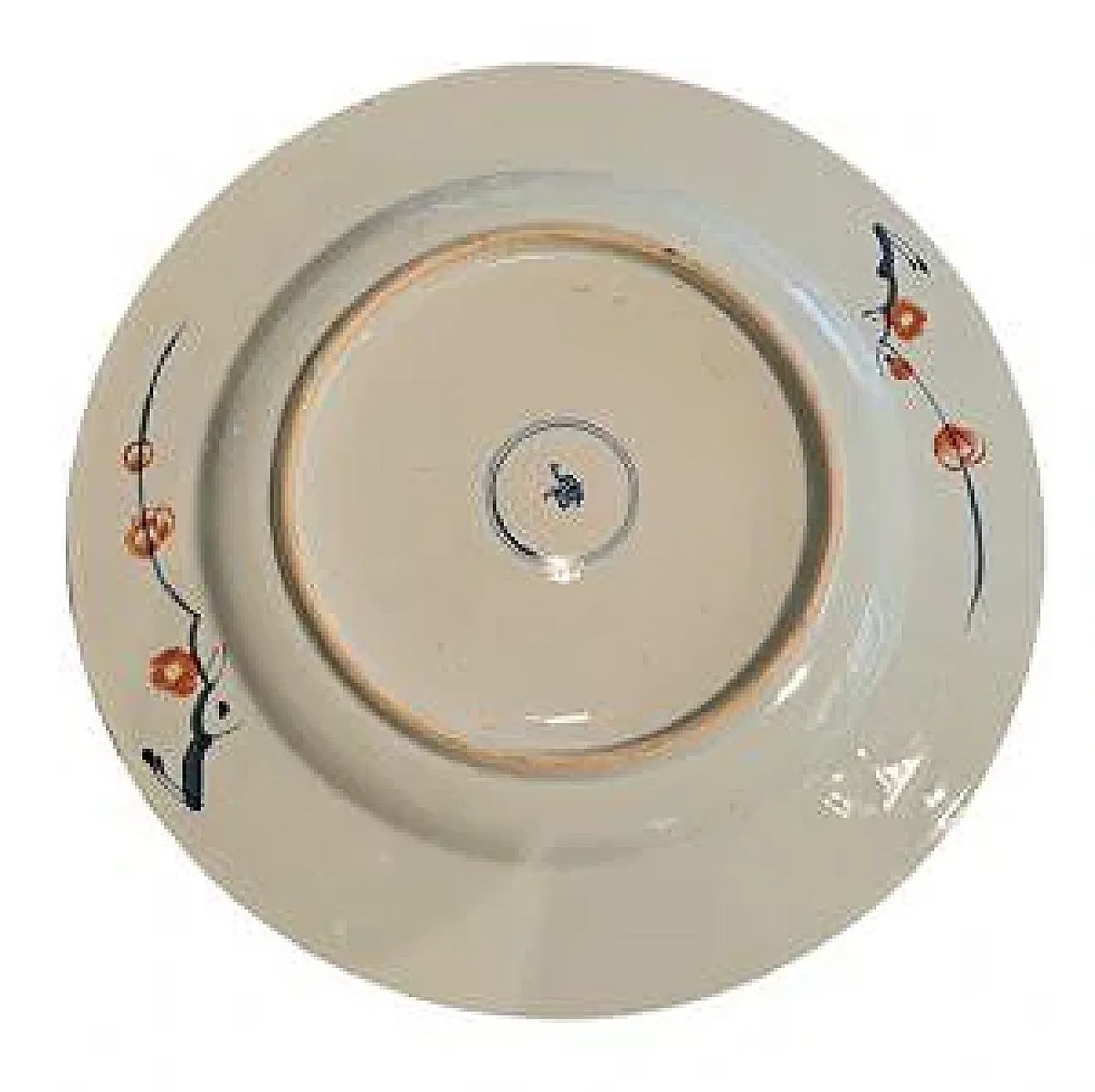
Reverse (Back): The back of the plates shows flowering branches painted rapidly in red and blue. In the center of the foot is a leaf mark of Artemisia enclosed in a double blue circle (a auspicious symbol typical of the Kangxi period, used as a replacement for imperial marks).


.png)

 SILVER Seller in La-Spezia, Italia