Description
This pair embodies the refined, material-driven taste of 1970s Italian design, when travertine — the noble Roman stone — was reinterpreted into bold decorative objects for the modern interior.
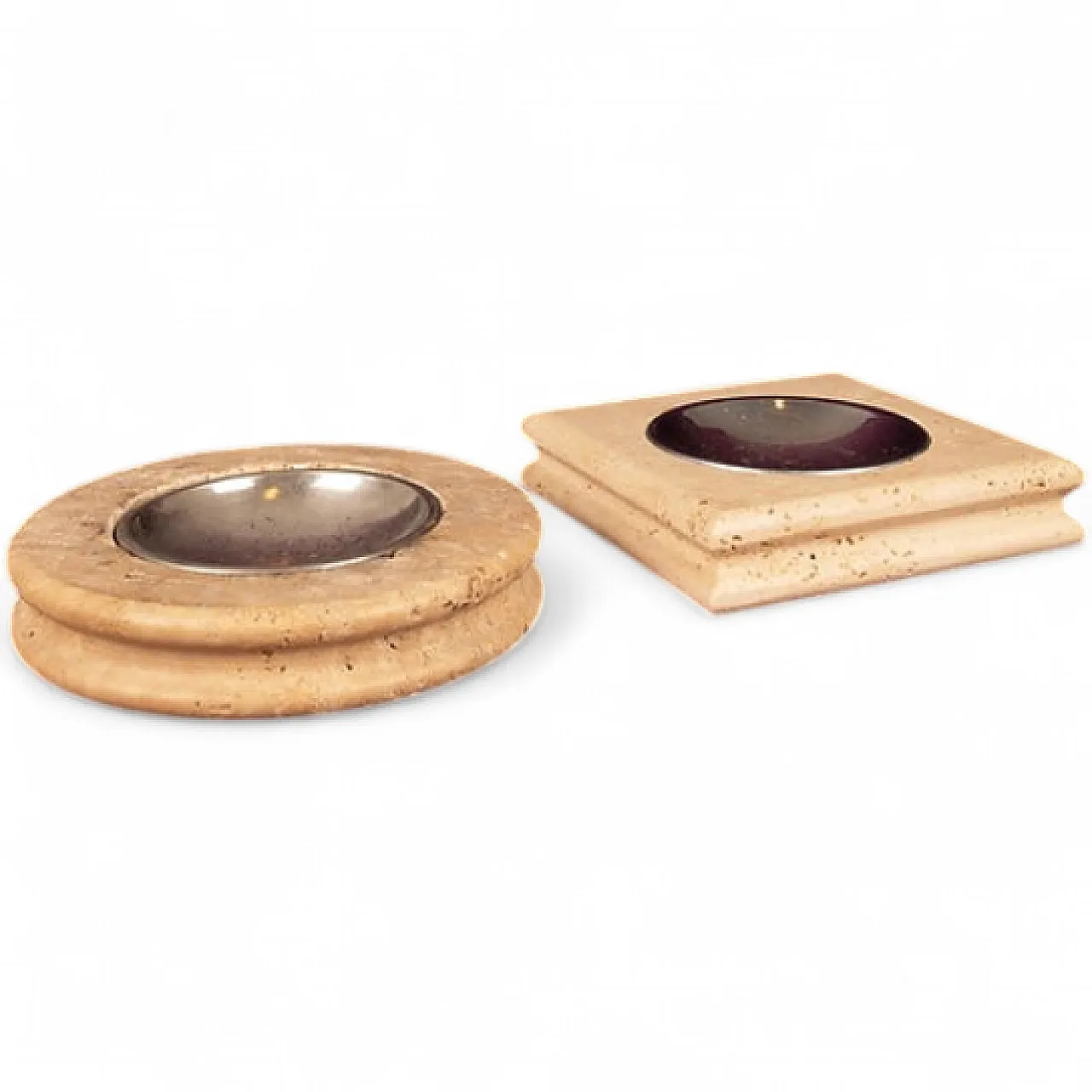
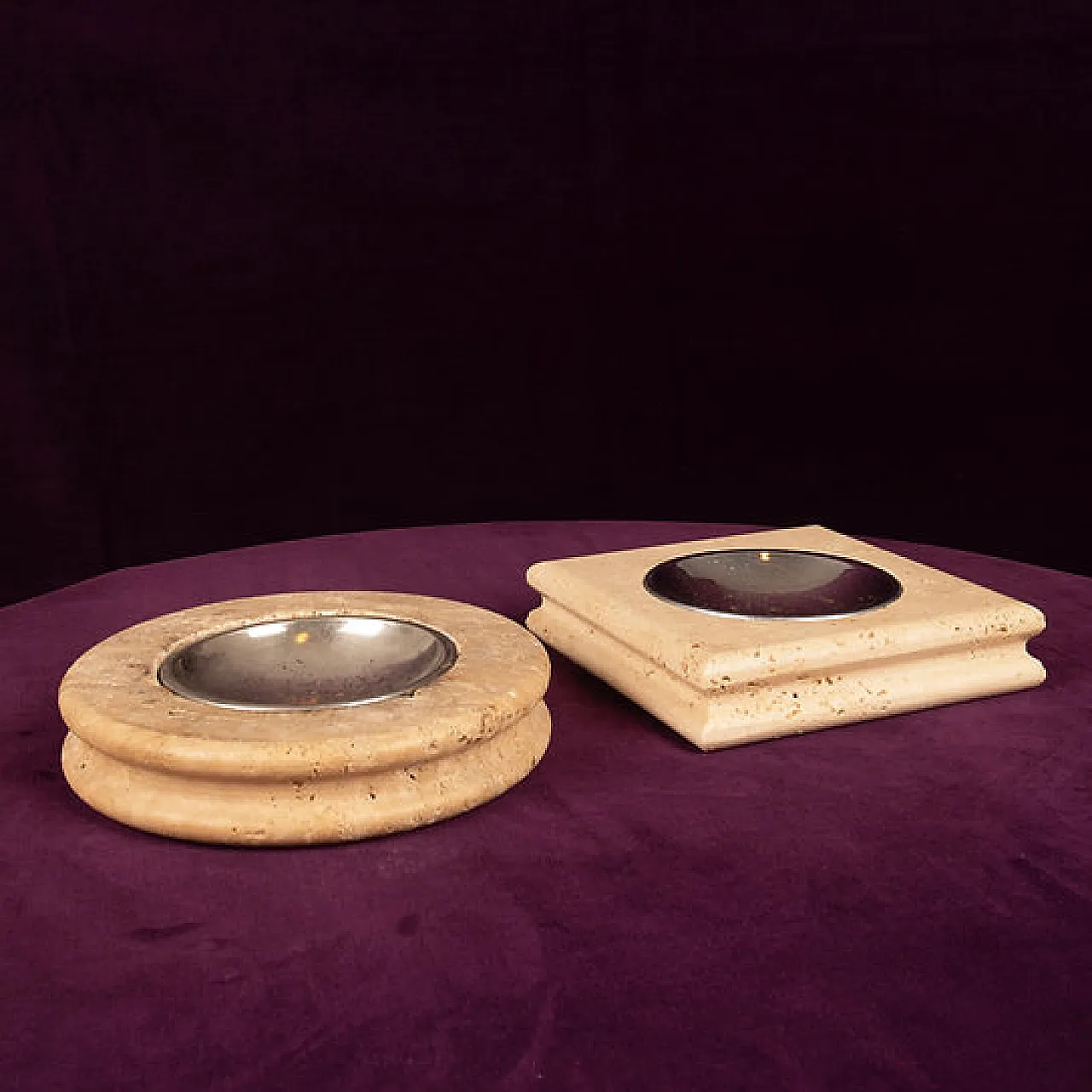
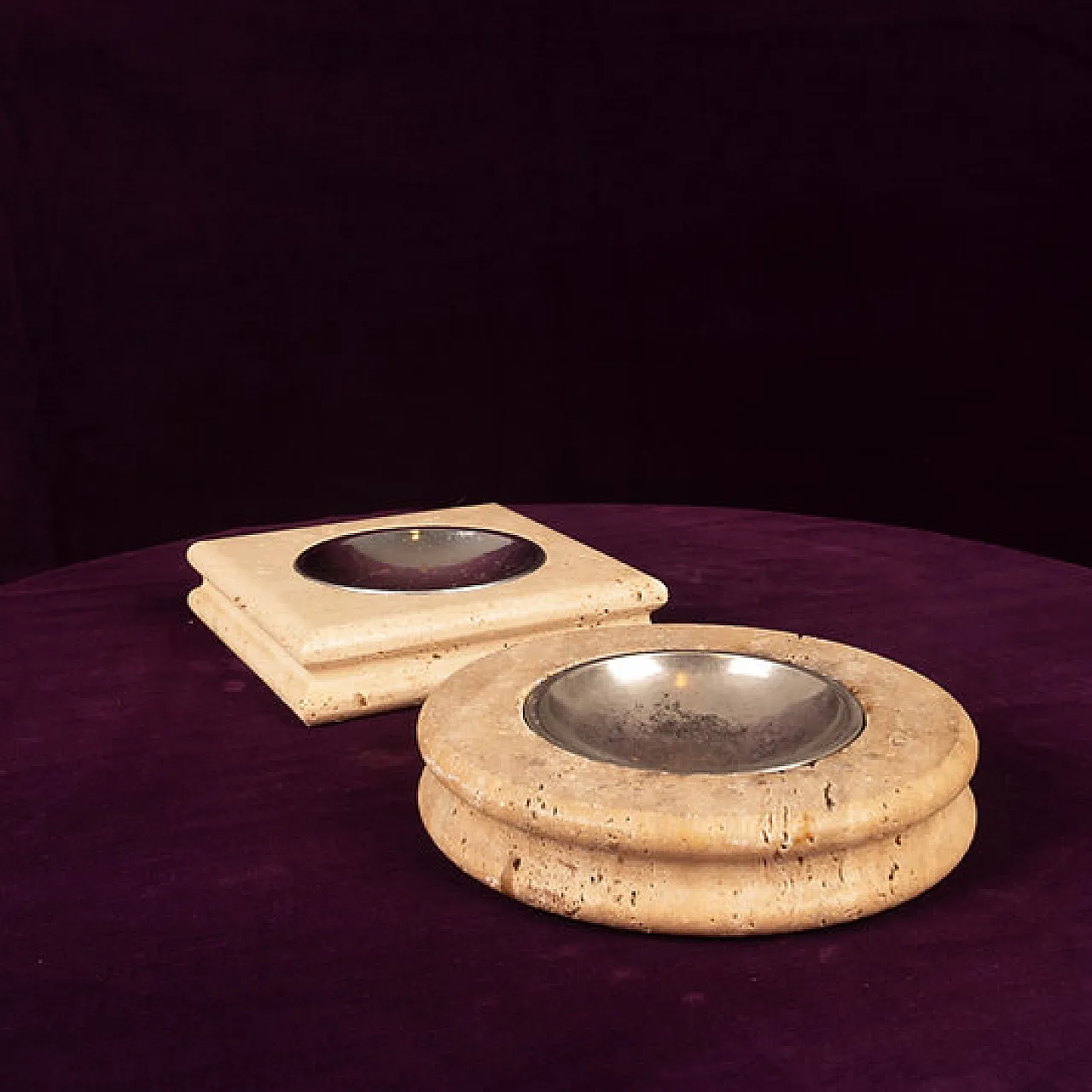
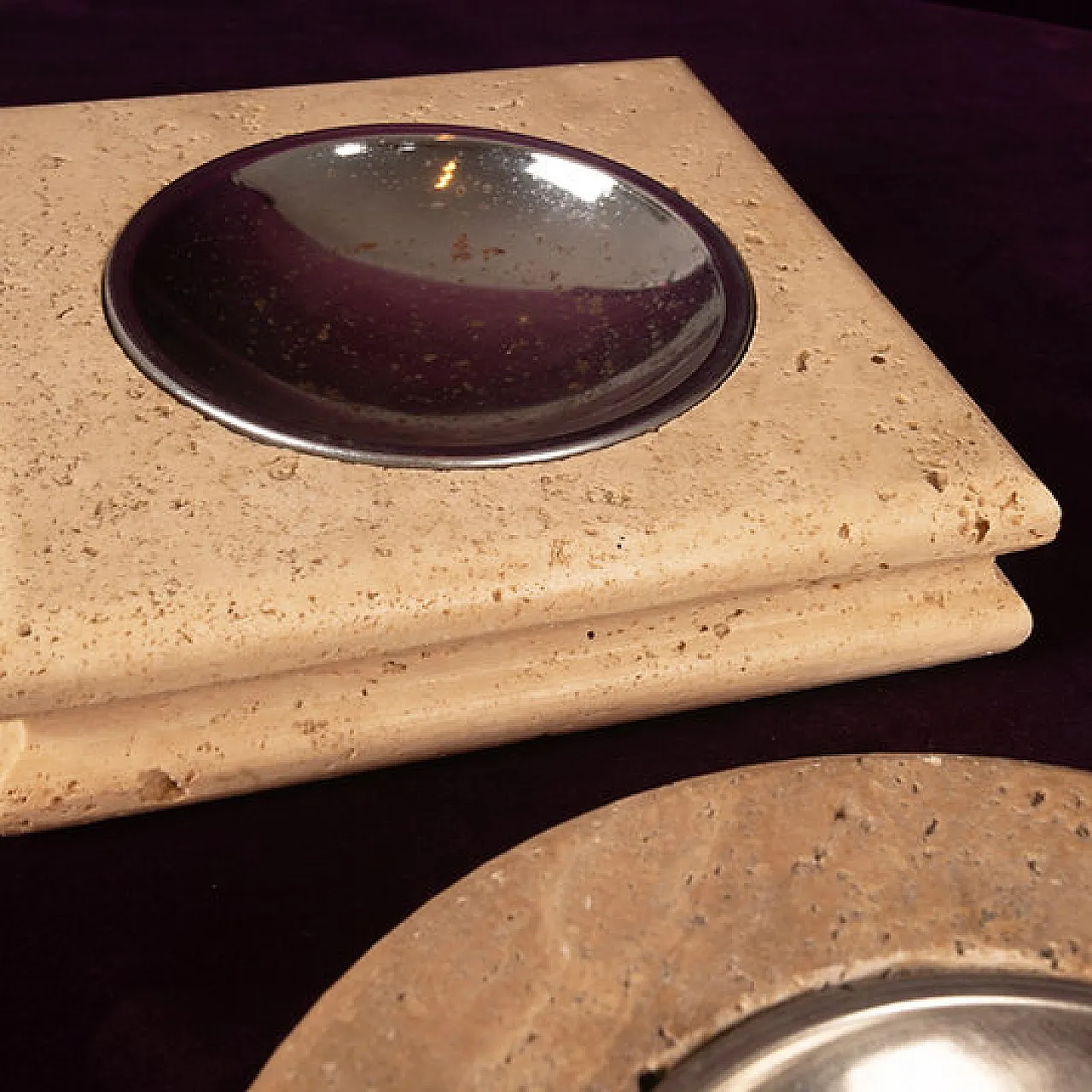
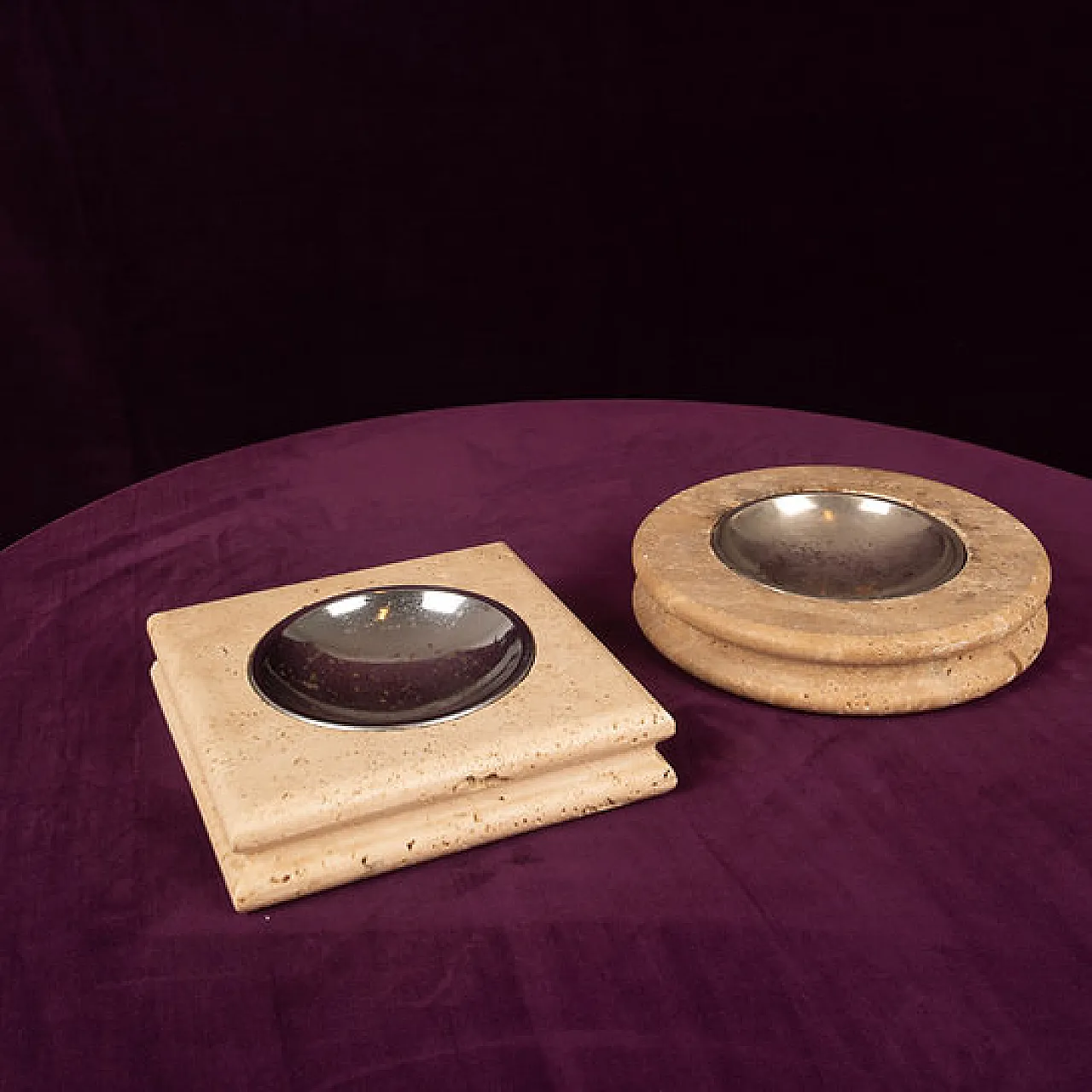
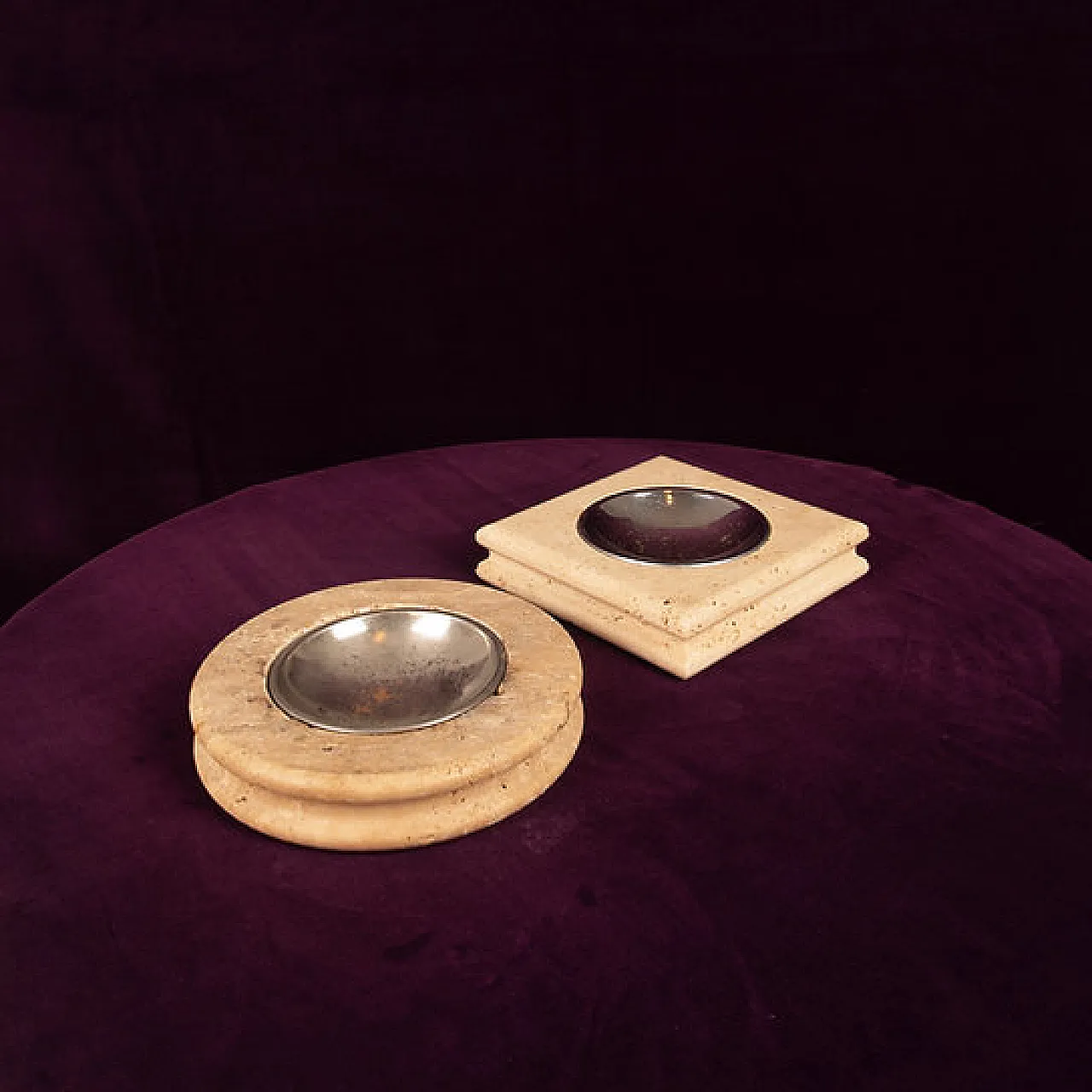
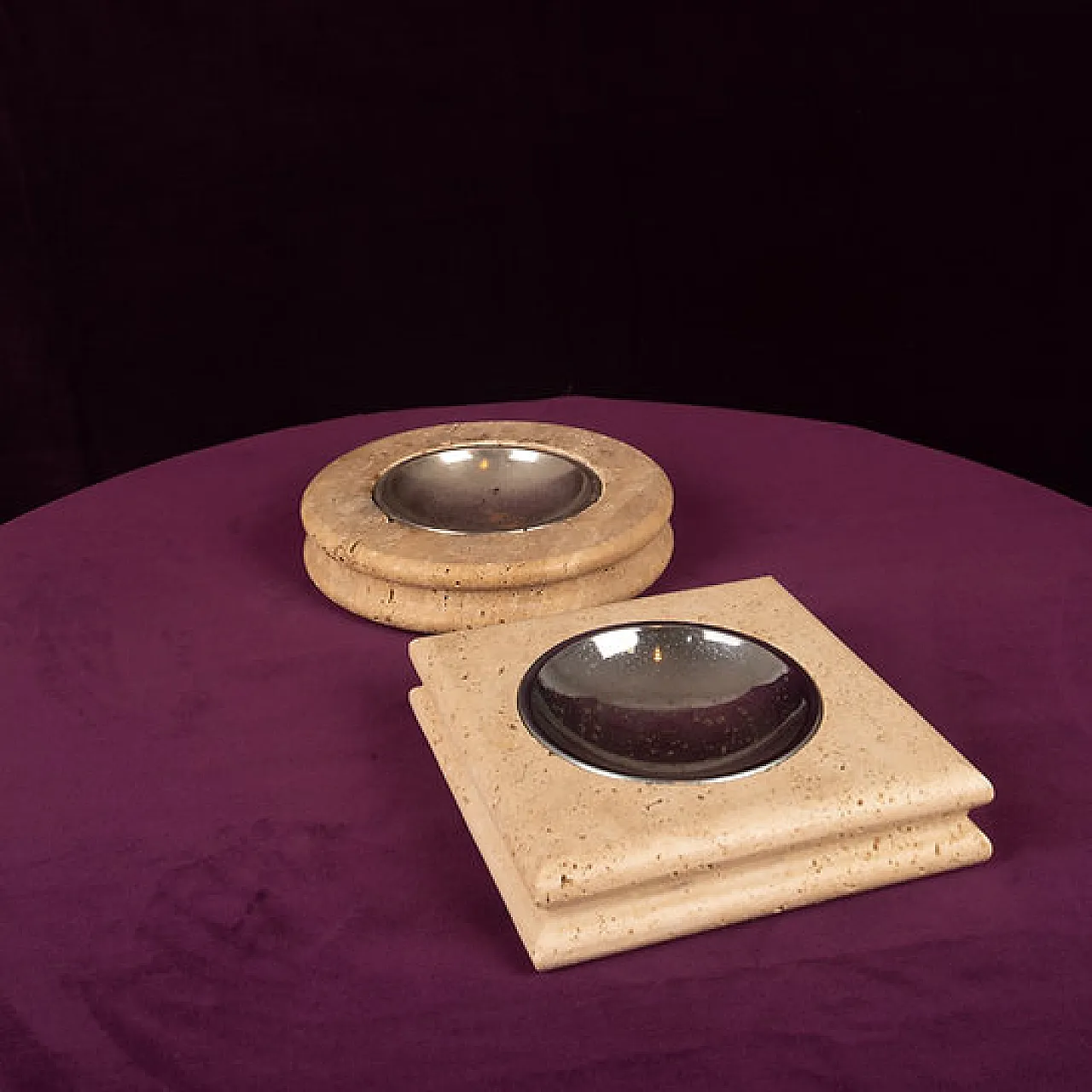
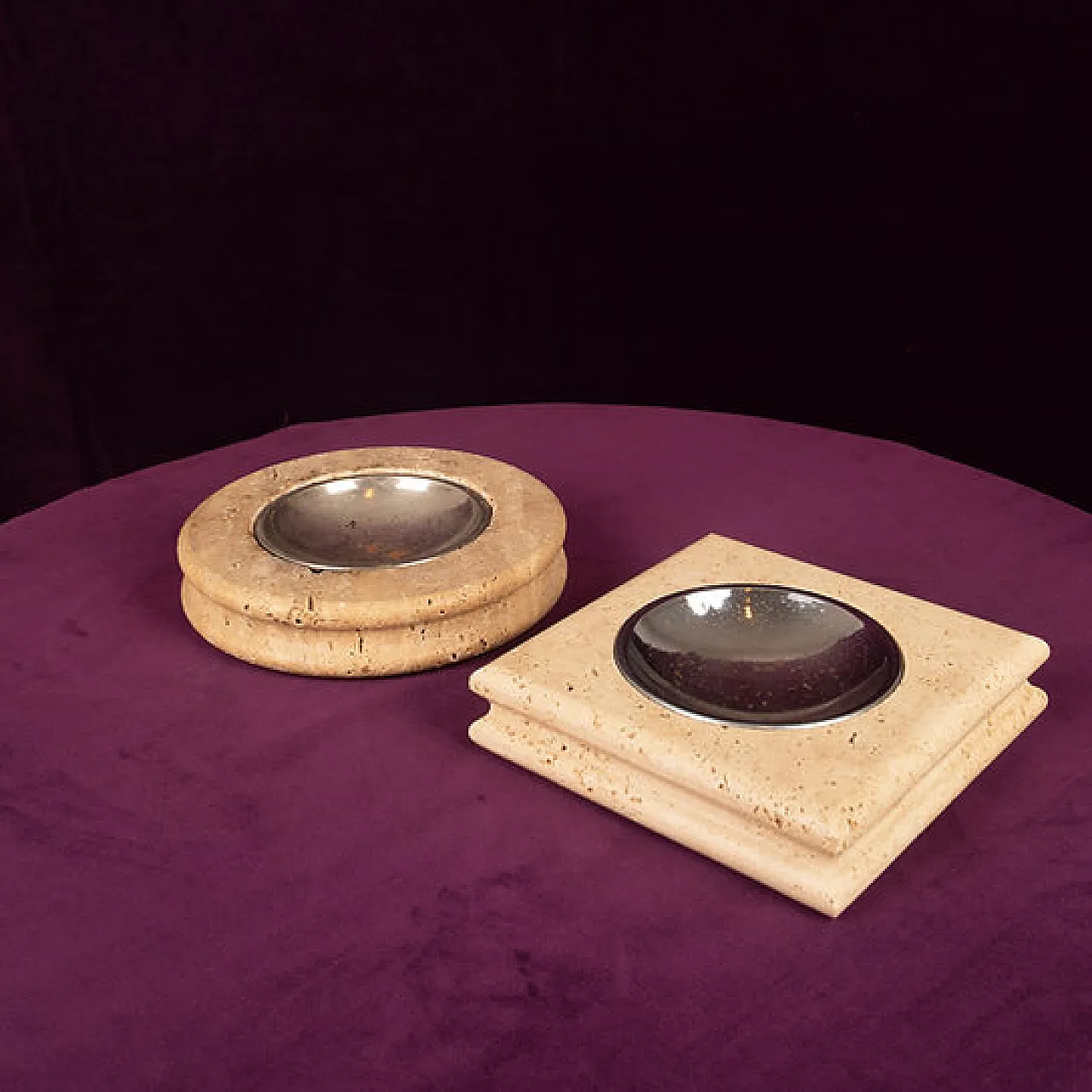
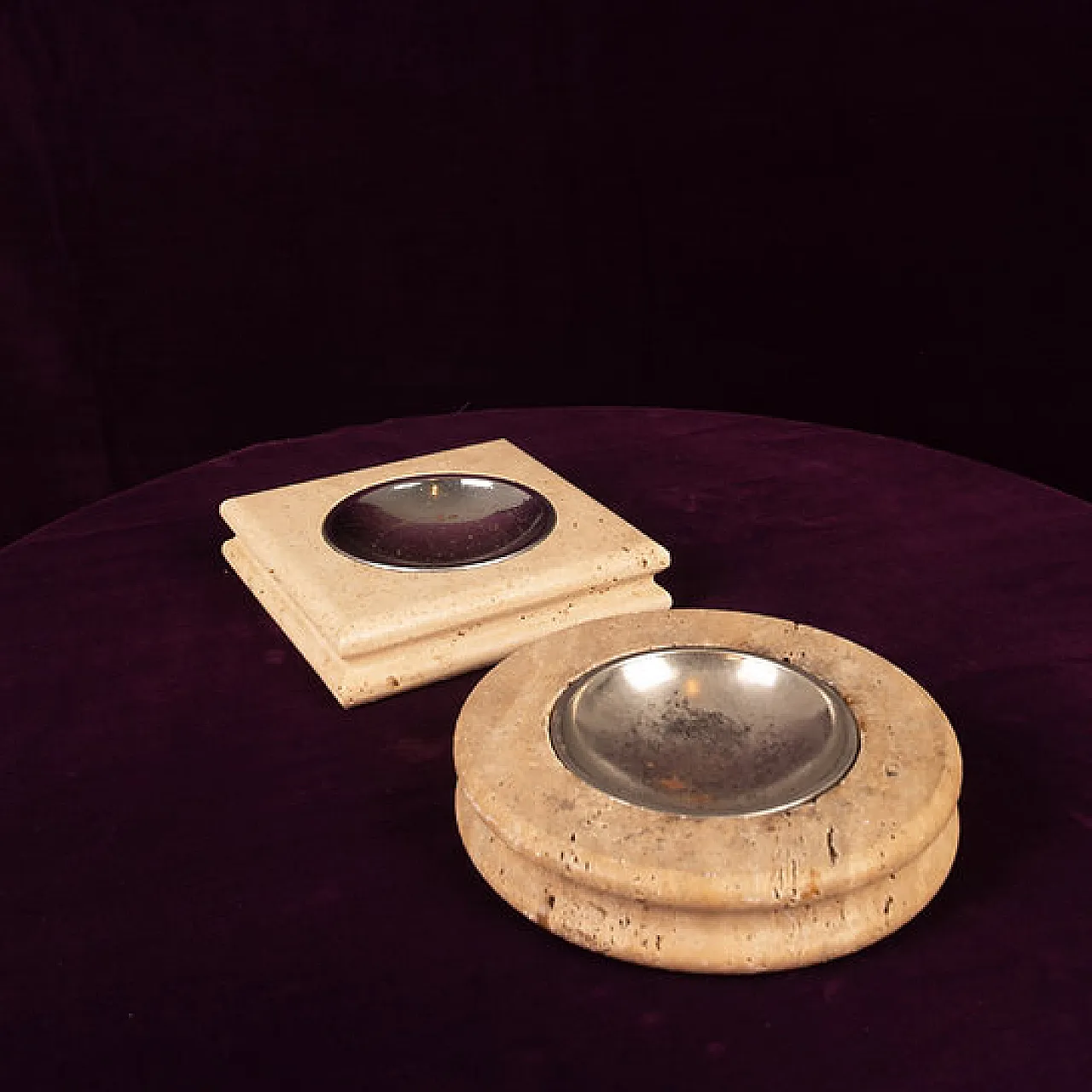
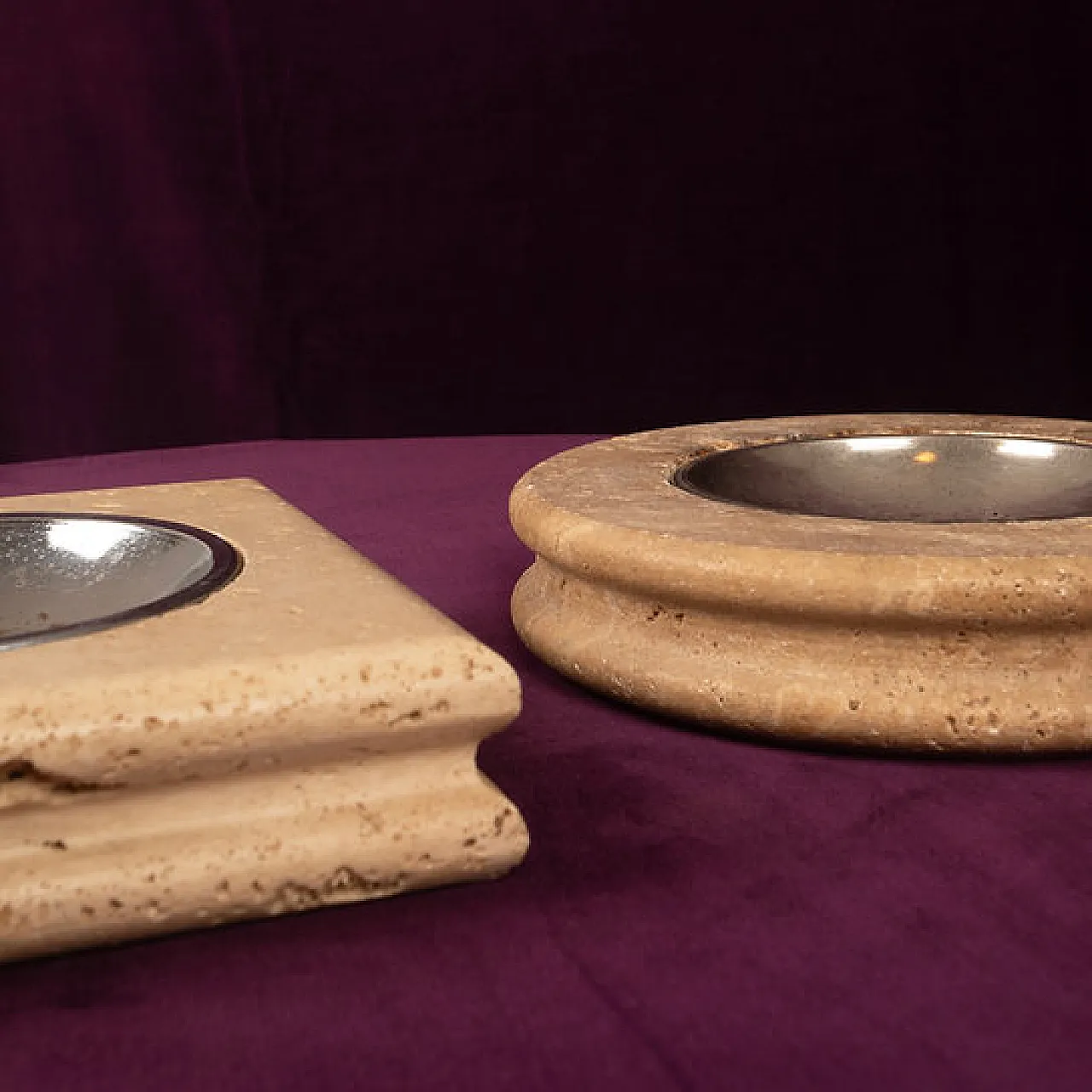
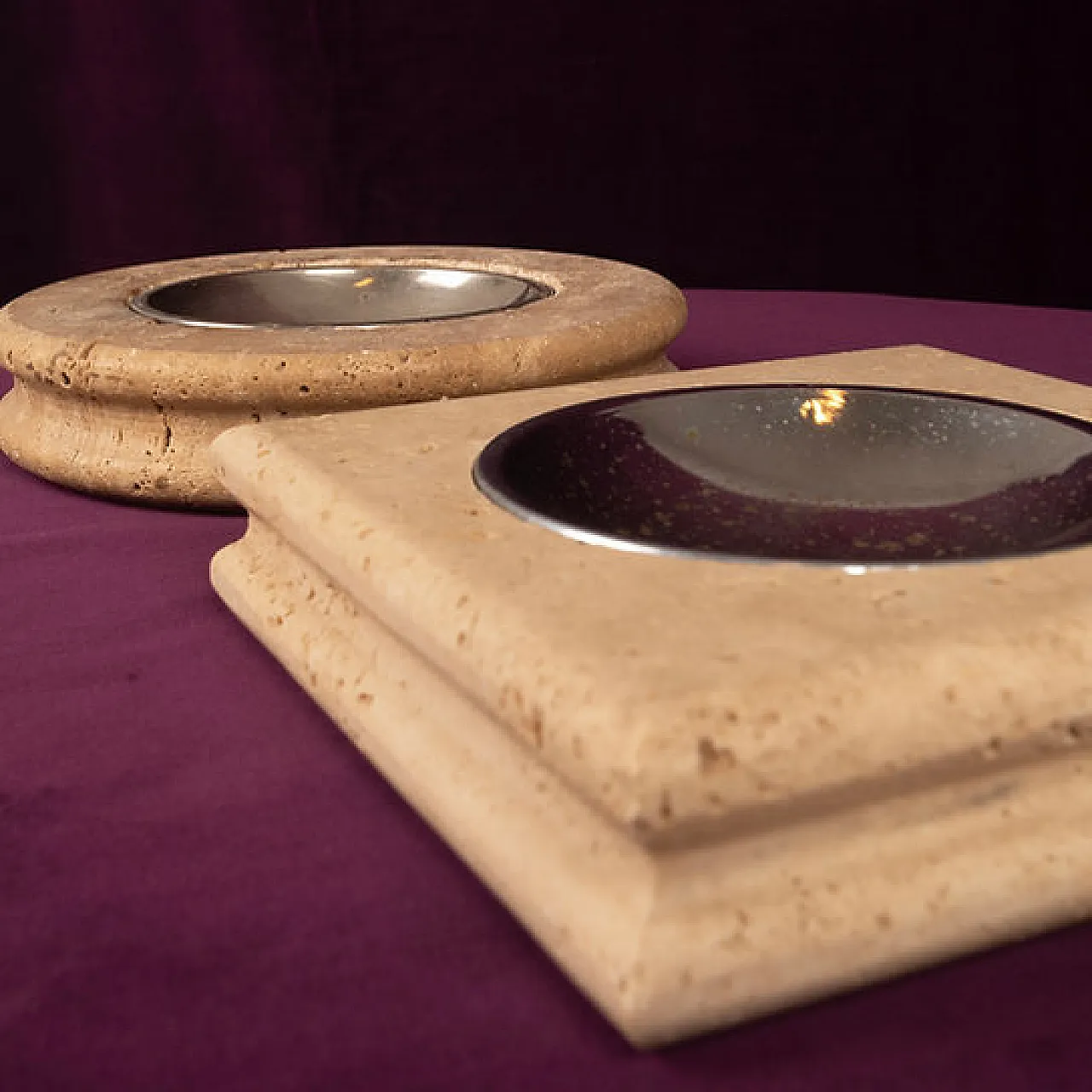
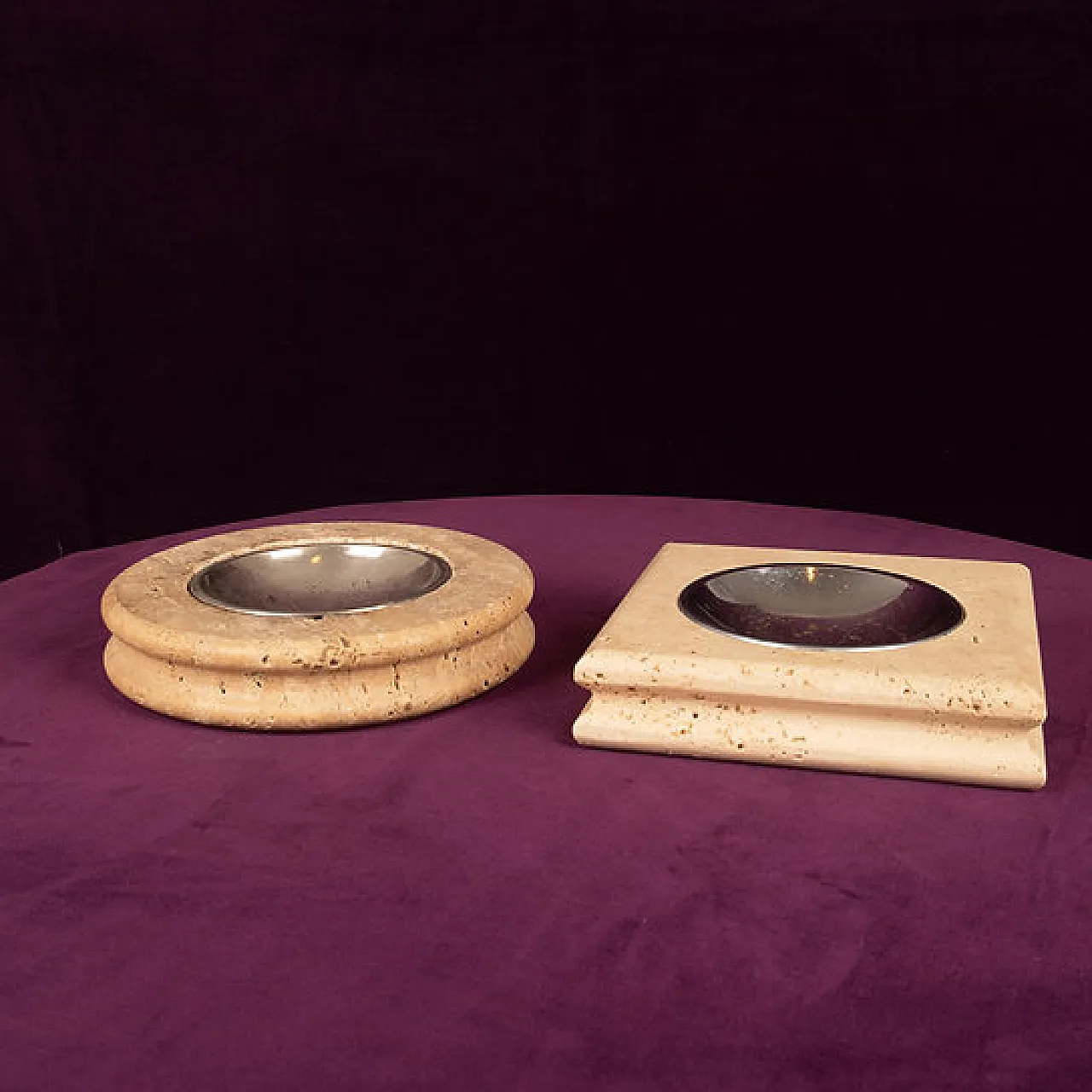
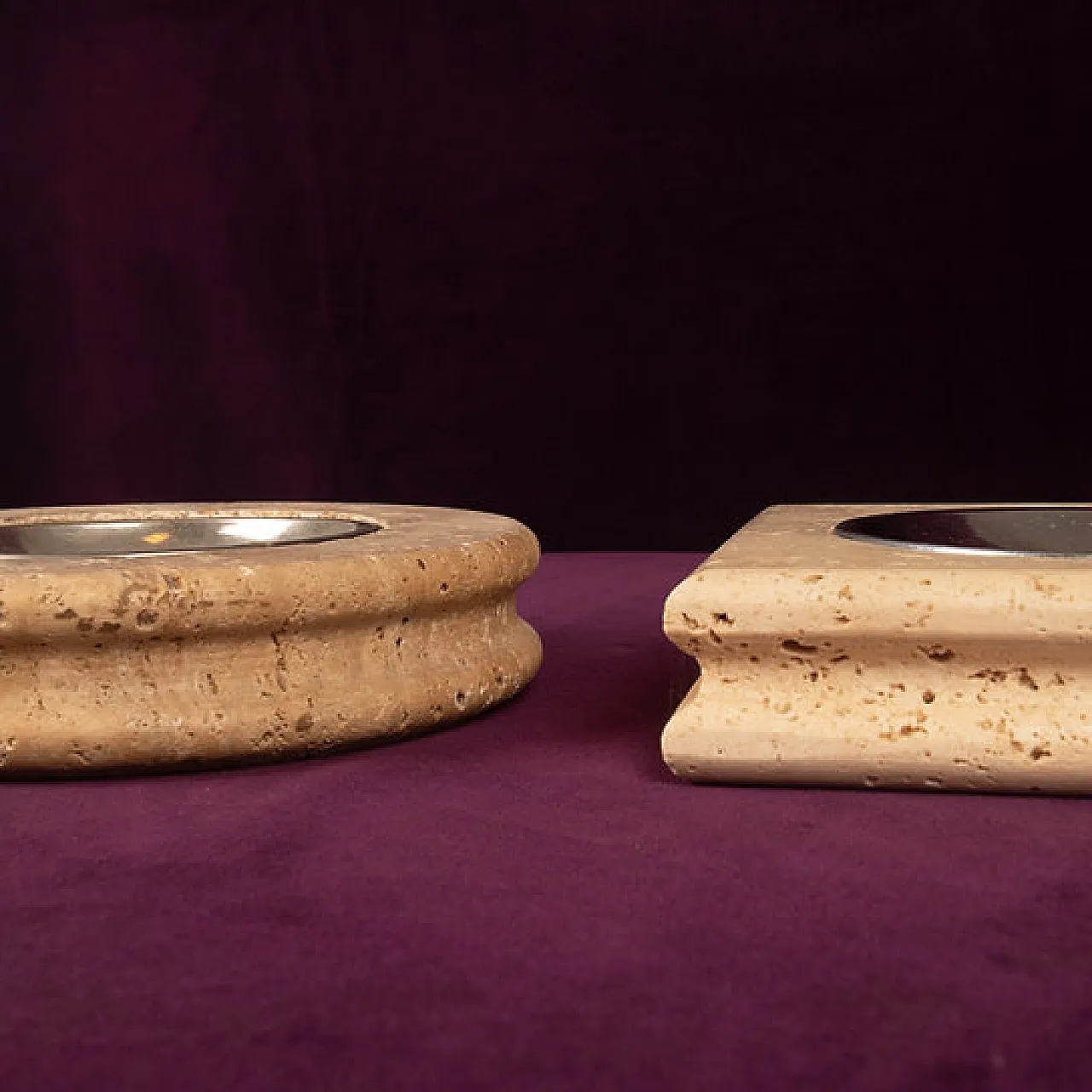
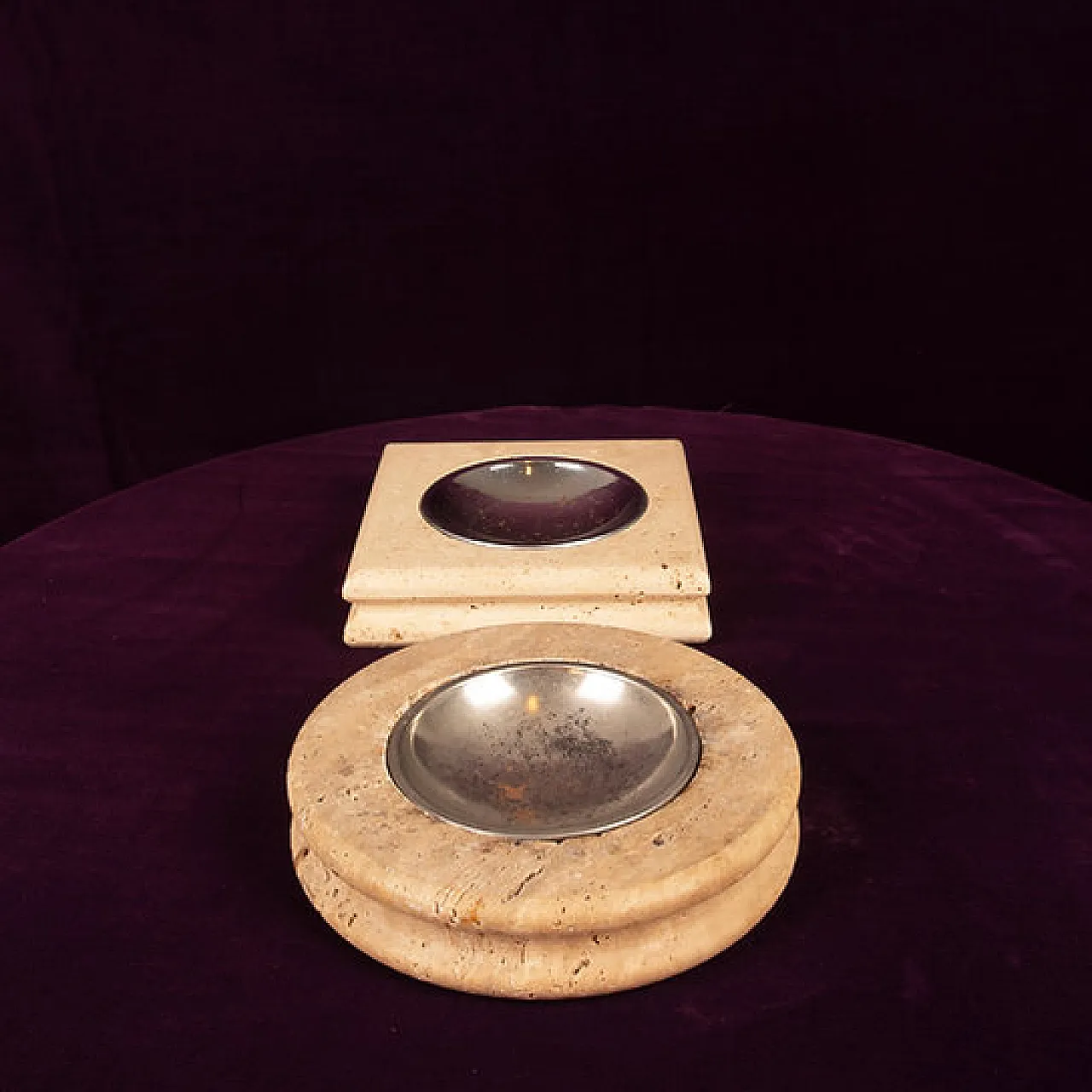
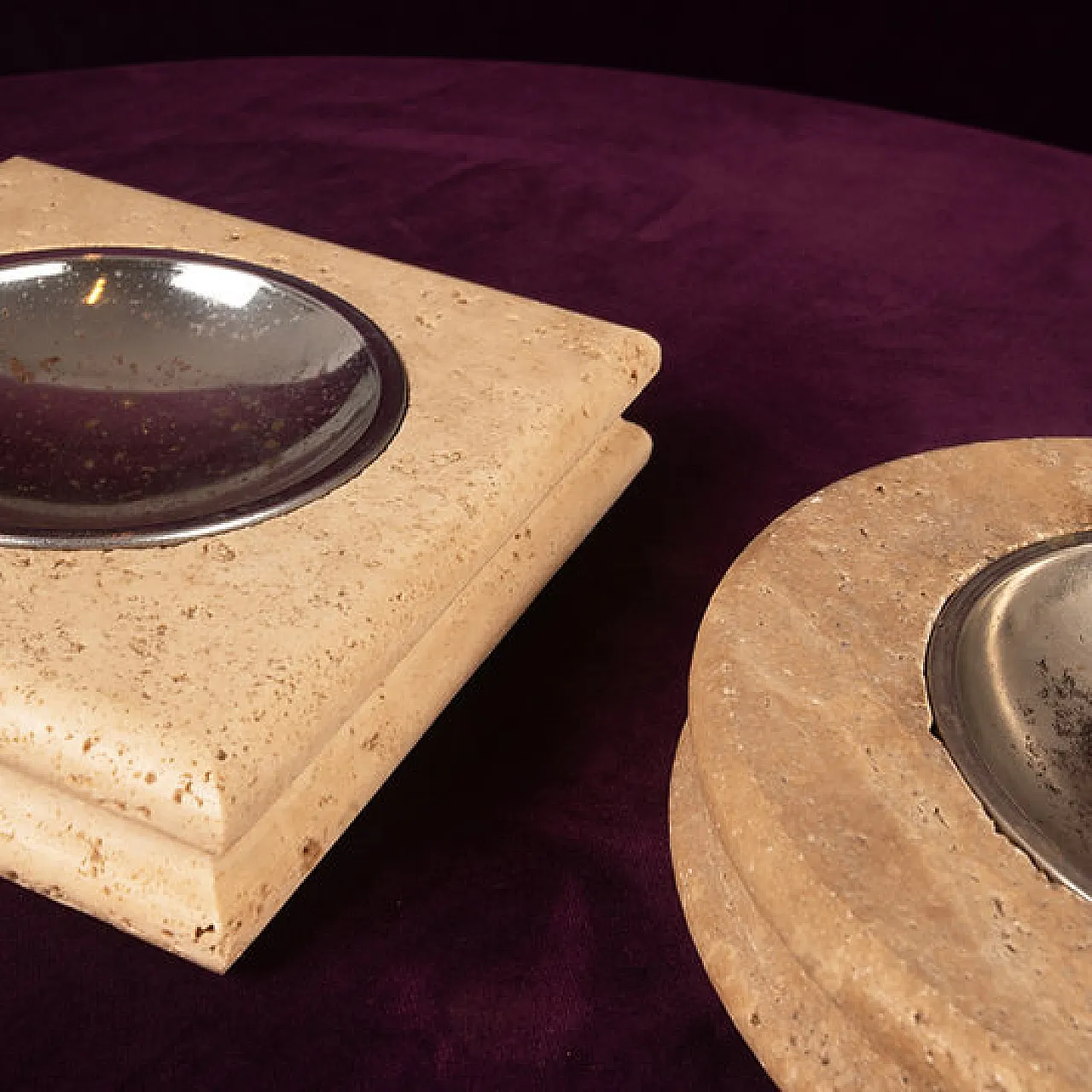
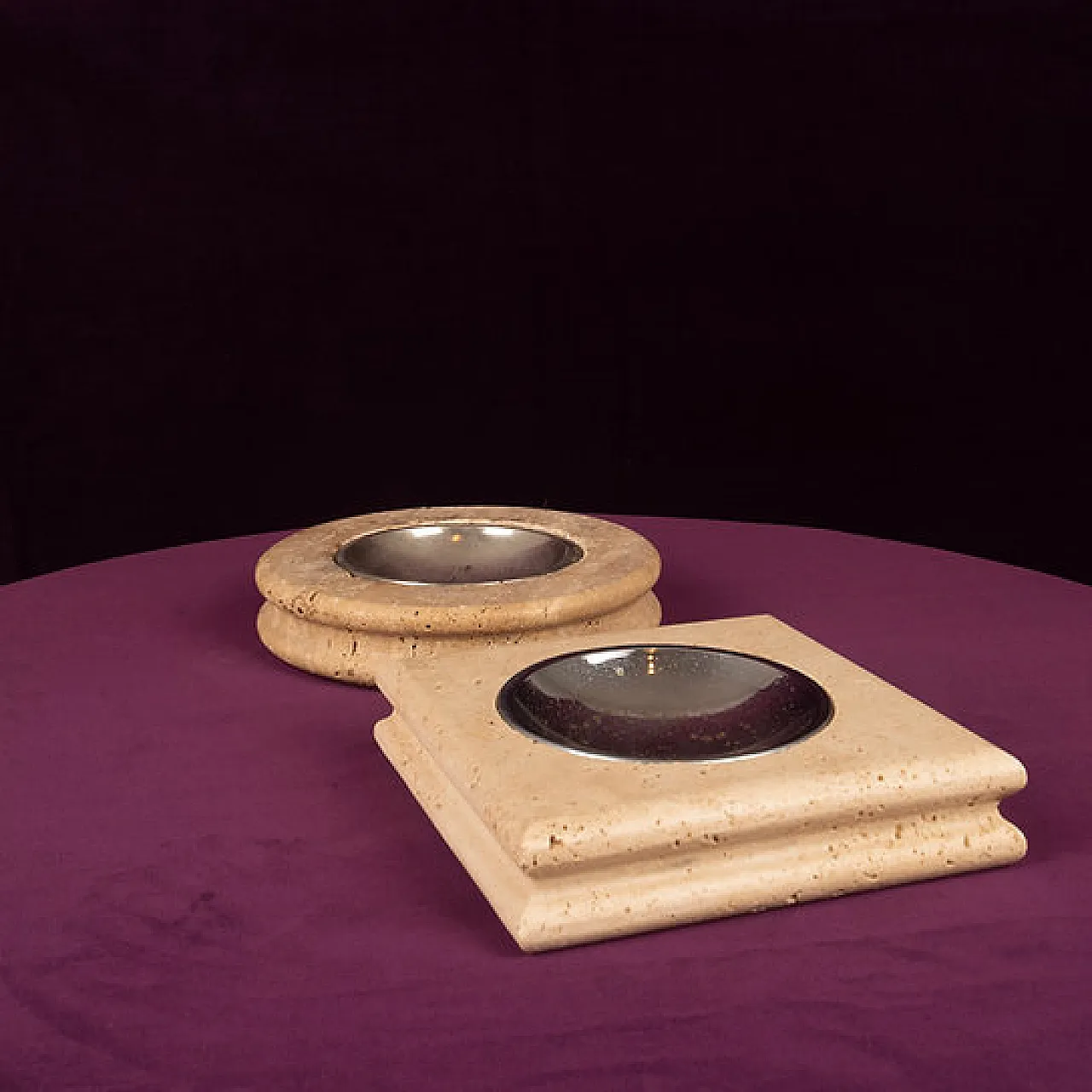
Each piece is carved from a solid block of natural travertine, left unfilled so that the stone's characteristic open pores and warm ivory-to-honey veining remain fully expressed. The two share the same architectural language but differ in geometry: one is round, with a softly bowed, column-base profile; the other is square, with a stepped, cornice-like moulded edge. At the centre of each sits a removable round metal dish, designed to be lifted out for cleaning.
Shown together, the round and the square form a balanced, sculptural dialogue.
Design & Function
Conceived as generously sized table objects, they work equally well as ashtrays or as vide-poches and catch-alls for keys, jewellery and small everyday items, with the metal insert protecting the porous stone. Their weight and solidity give them a reassuring, almost monumental presence on a desk, console, coffee table or bar.
Beyond function, they read as miniature architectural fragments — plinths and column bases translated to desktop scale.
Materials & Aesthetic
The appeal lies in the honest pairing of natural travertine and cool metal: the warm, tactile, open-grained stone set against the reflective dish. The unfilled surface, with its voids and fossil veining, gives each piece a unique, organic character.
This sensibility — raw stone elevated into refined, minimal forms — is typical of Italian production in the 1970s, in the spirit of makers such as Fratelli Mannelli and the broader Tuscan and Roman travertine workshops.


.png)
 SILVER Seller in Bari, Italy