


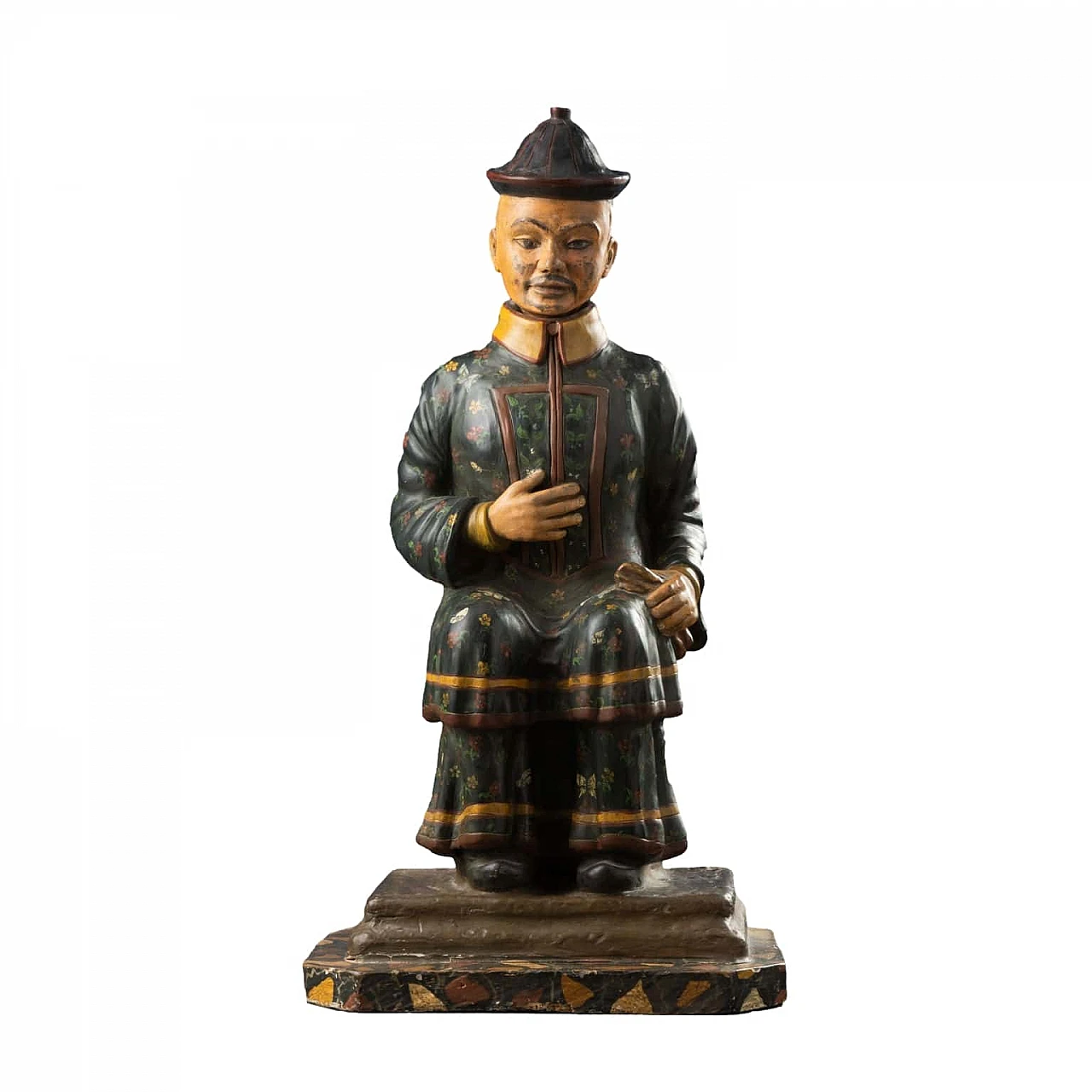
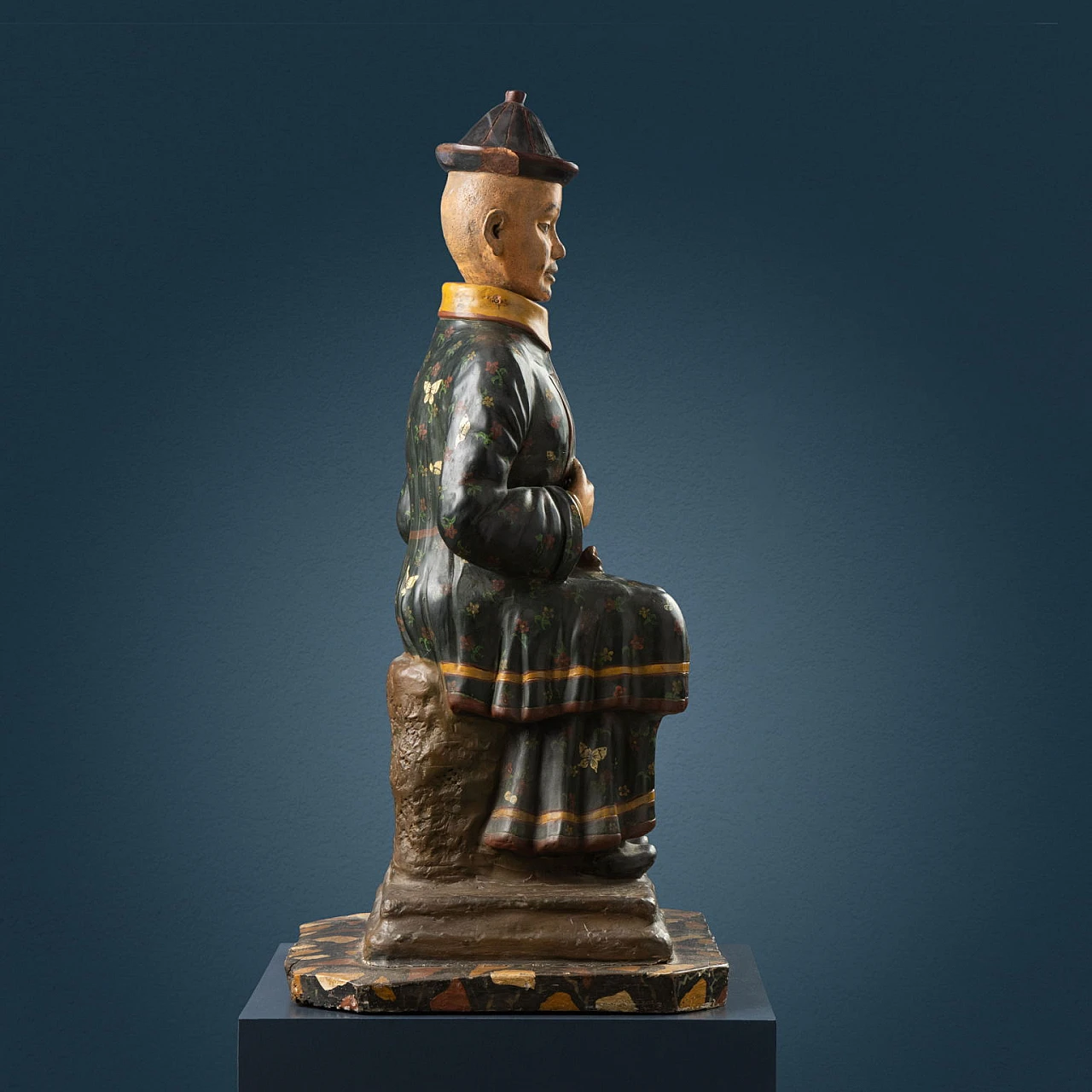
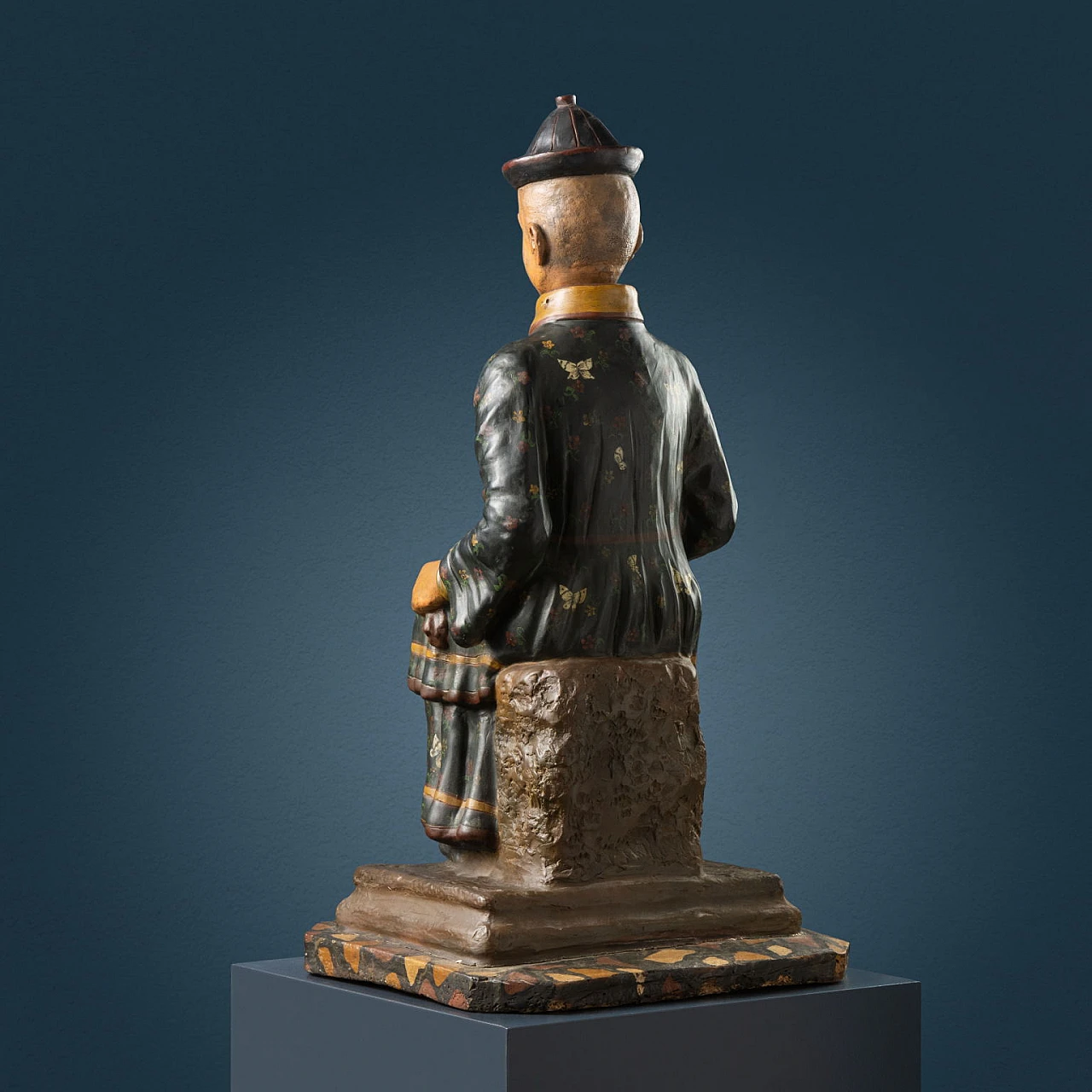
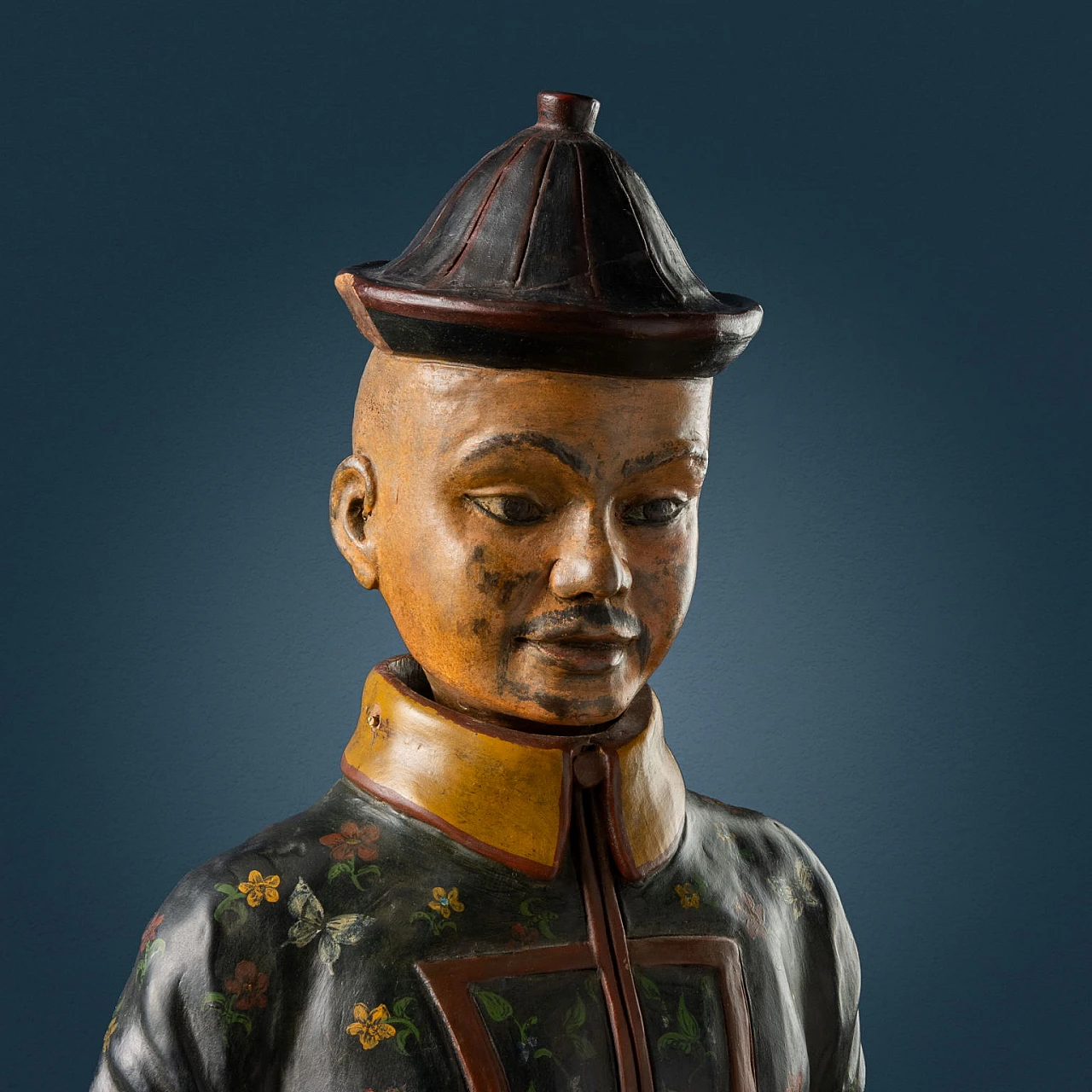
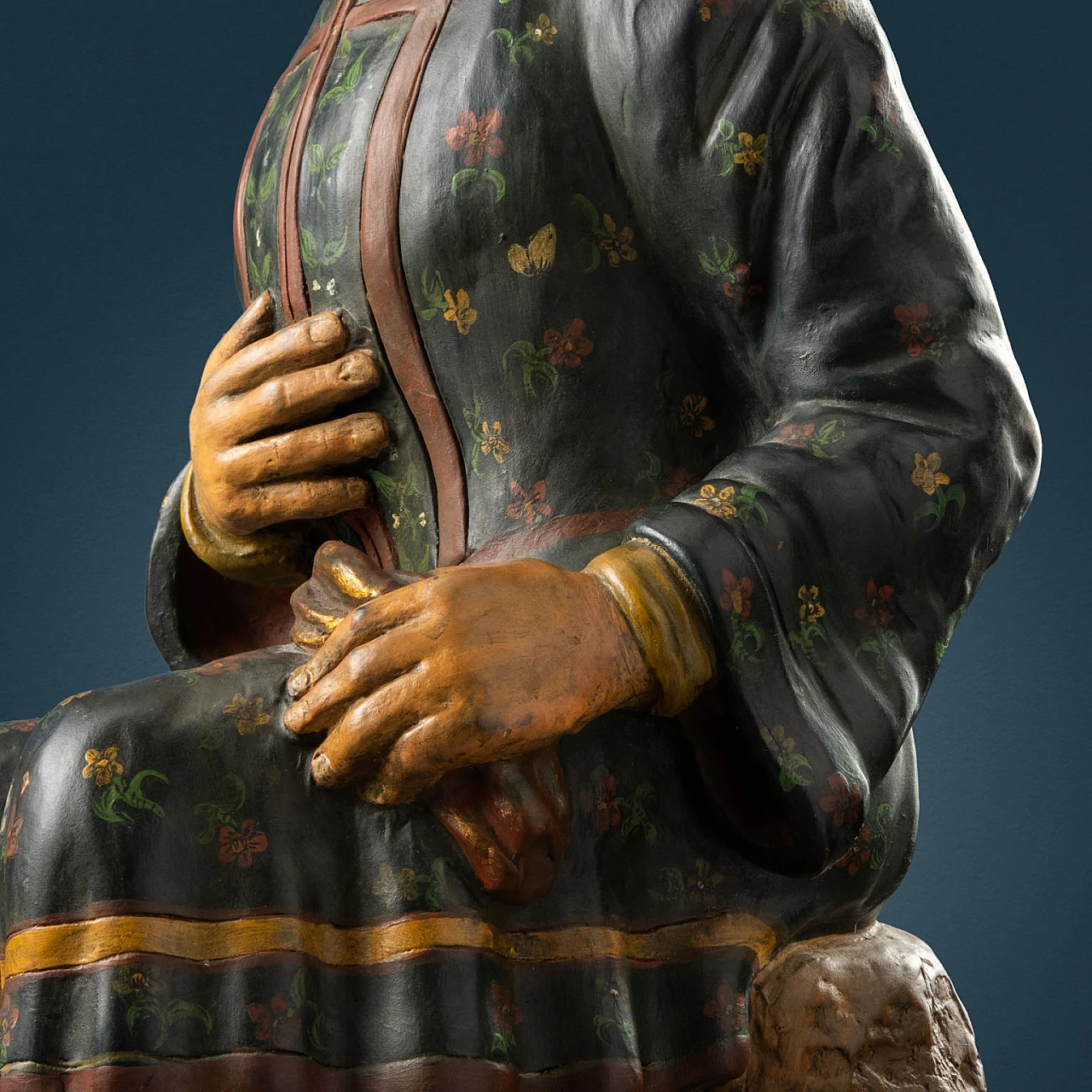
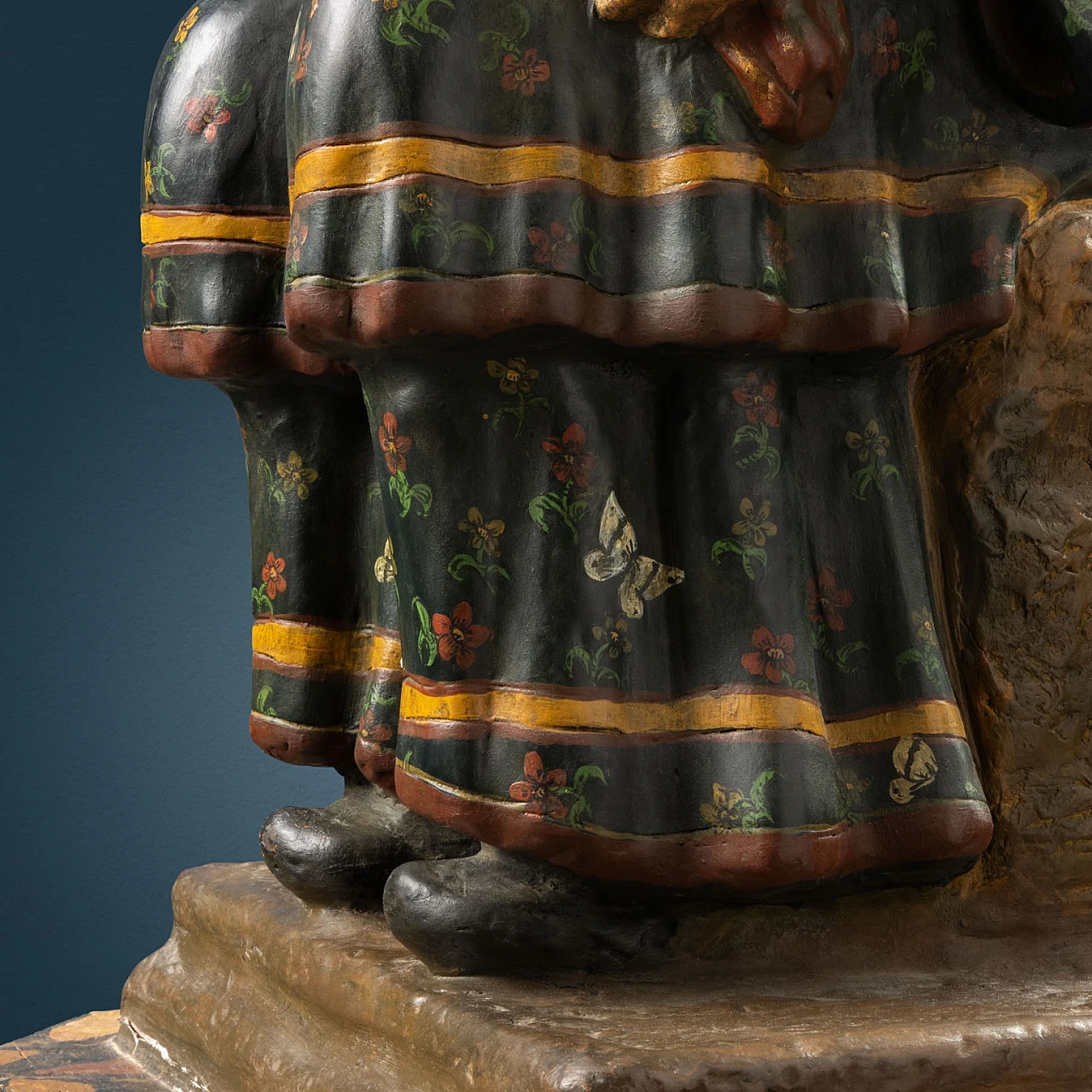
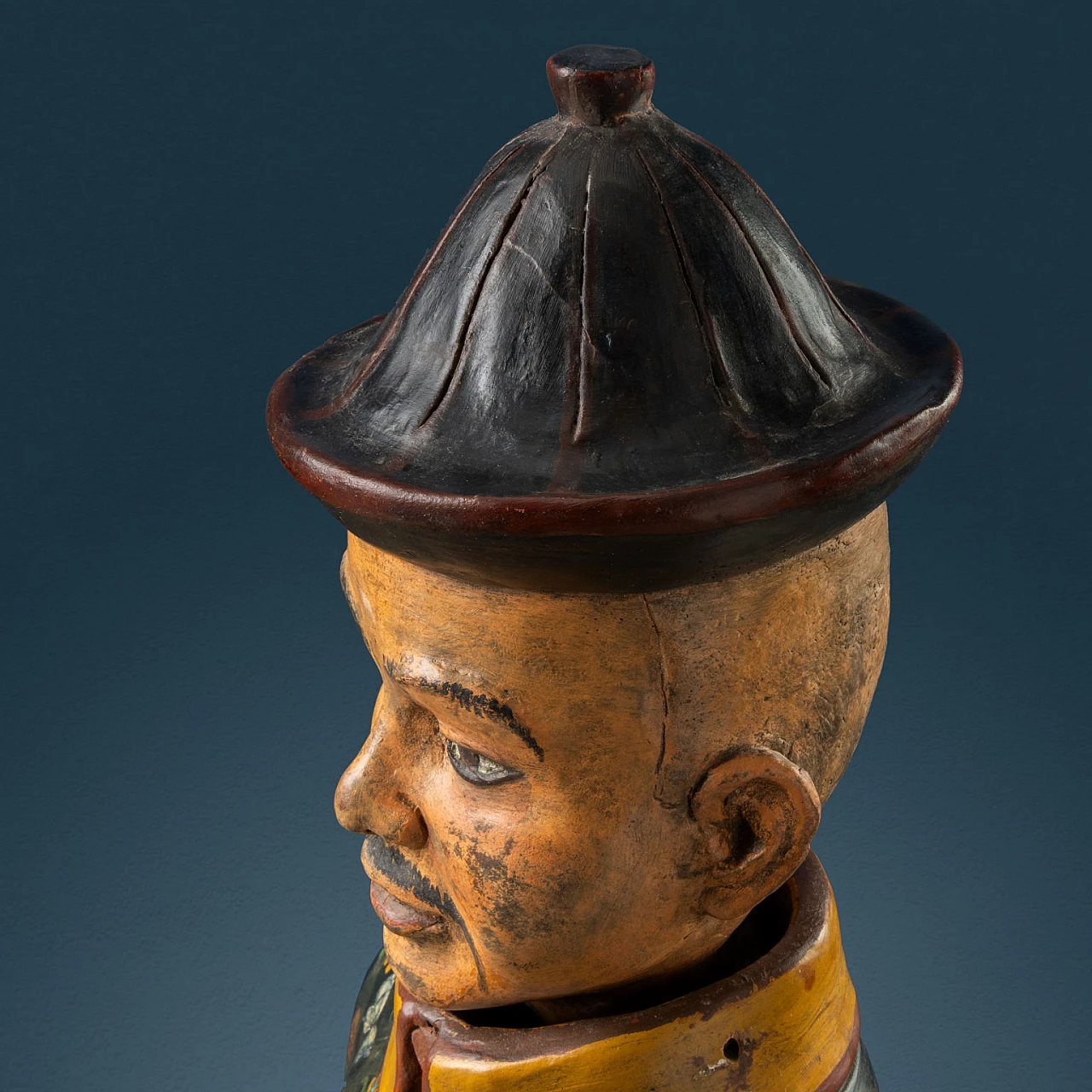
Magot, polychrome terracotta sculpture, 19th century

.png)
A polychrome-painted terracotta sculpture with a tilting head, depicting a figure of a Chinese dignitary in a seated position in the act of clutching a cloth with his left hand, while his right hand is brought to his stomach. The sculpture rests on a marbled base. Slight color loss and restoration on the headdress. Magots, little men originally portraying Pu-Tai, the Chinese god of happiness and abundance, originated in northern China and between the seventeenth and eighteenth centuries arrived in Europe, where like so many other chinoiserie they became the status symbol of aristocratic homes. Italian production, 19th century.
ID: 2096-1709579612-84940
Time period

 PLATINUM Seller in Milano, Italy