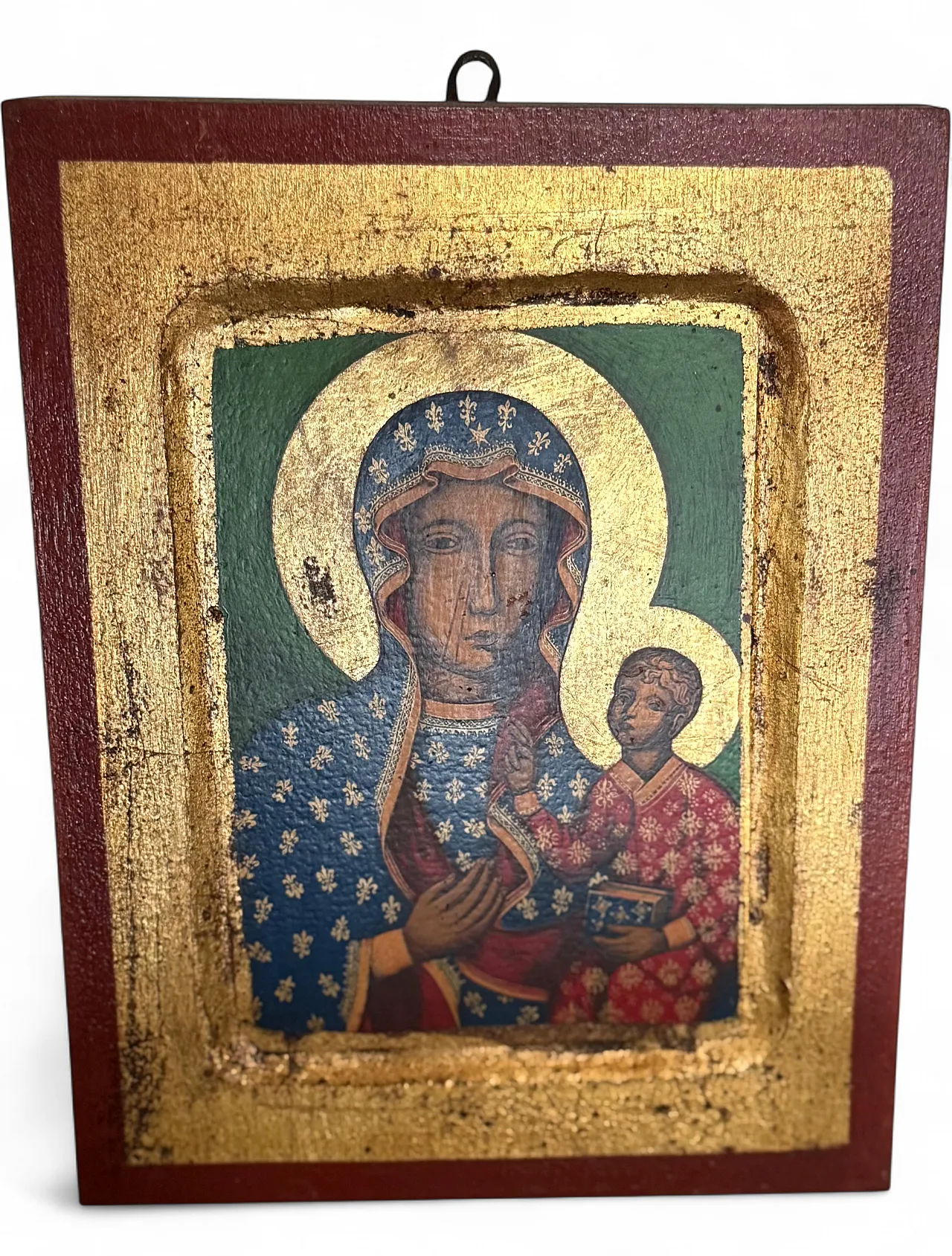
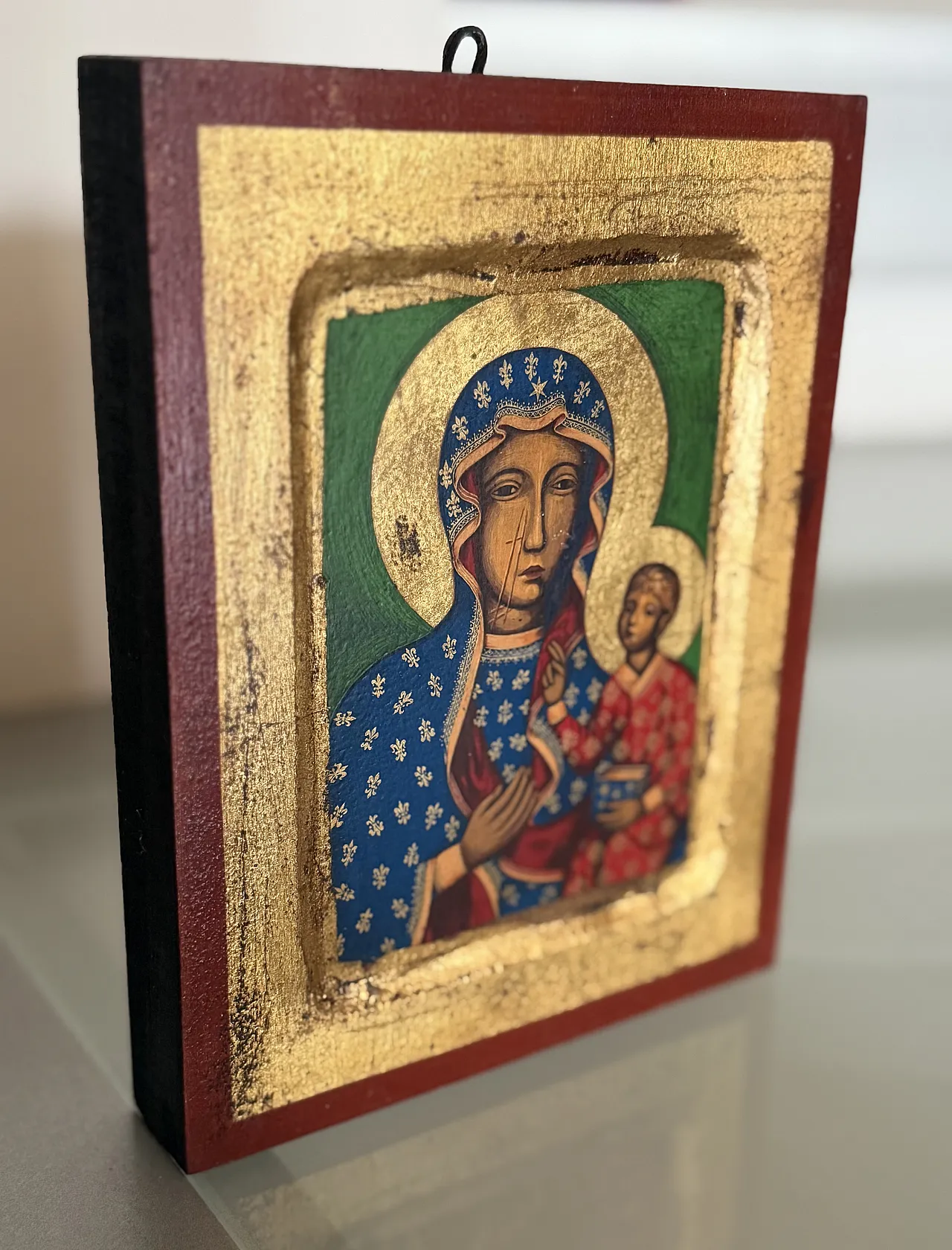
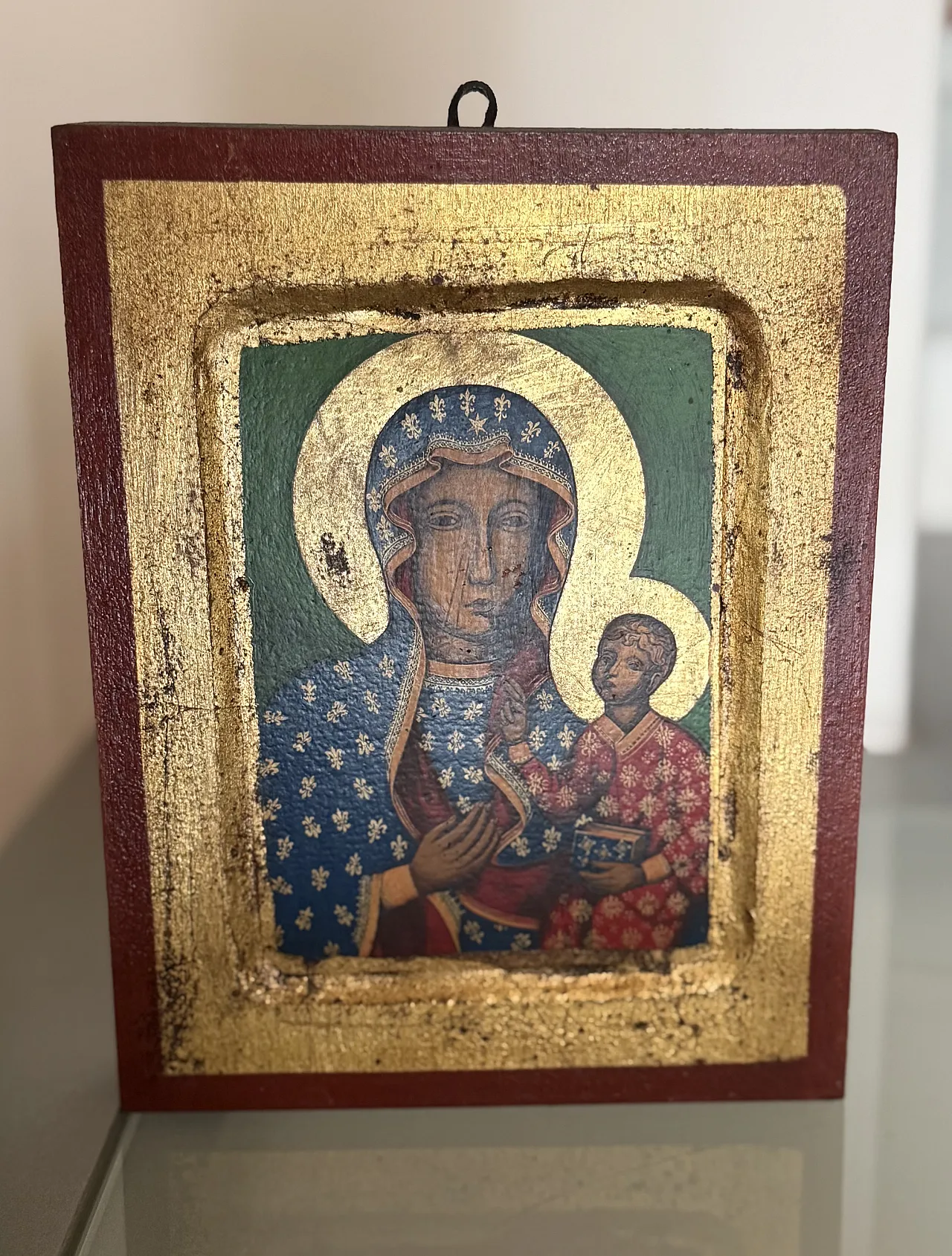
Polish icon of the Black Virgin of Częstochowa, a valuable artistic reproduction, made with traditional techniques on thick solid wood. 2.5cm. It is defined as a top-quality contemporary work of art which means that it is not a centuries-old piece, but a modern creation that strictly follows ancient canons. The work is hand painted using egg tempera and gold leaf on ancient antique wood according to the methods used in classical Byzantine iconography
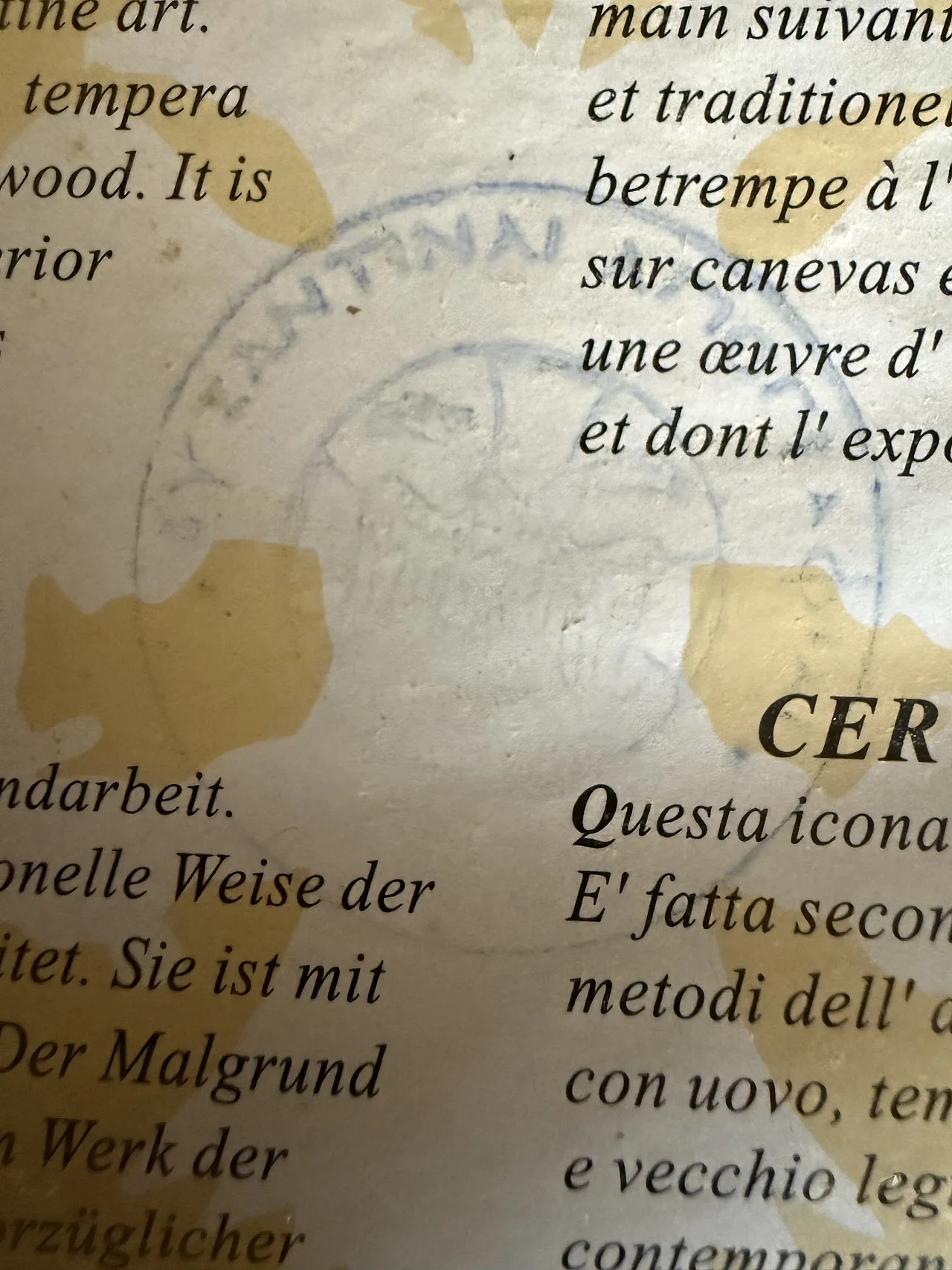
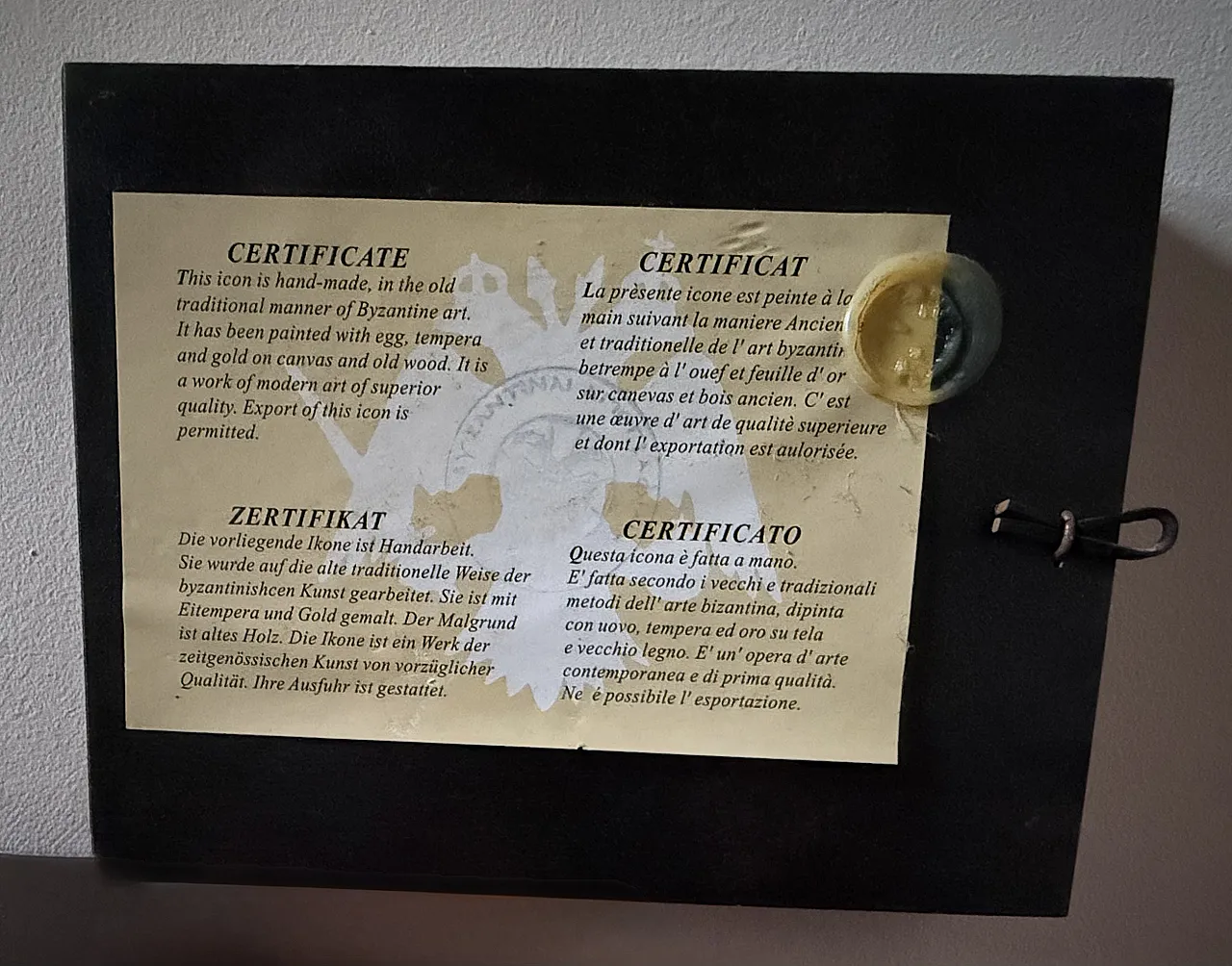
Provided with a multilingual certificate with wax seal, affixed on the right which acts as an official guarantee of the atelier or art workshop that produced it (probably Greek or Polish). It also has Export Authorization: the final wording confirms that the work has legal permission to be transported outside the country of origin.
Dimensions Height 18.3 cm x Width. 14 cm Thickness of cm. 2.5
The Cradle (Kovčeg): The part hollowed out in the center of the wood (called the "cradle" Kovčeg): it is a sign of high quality craftsmanship (in cheap reproductions the wood is flat)
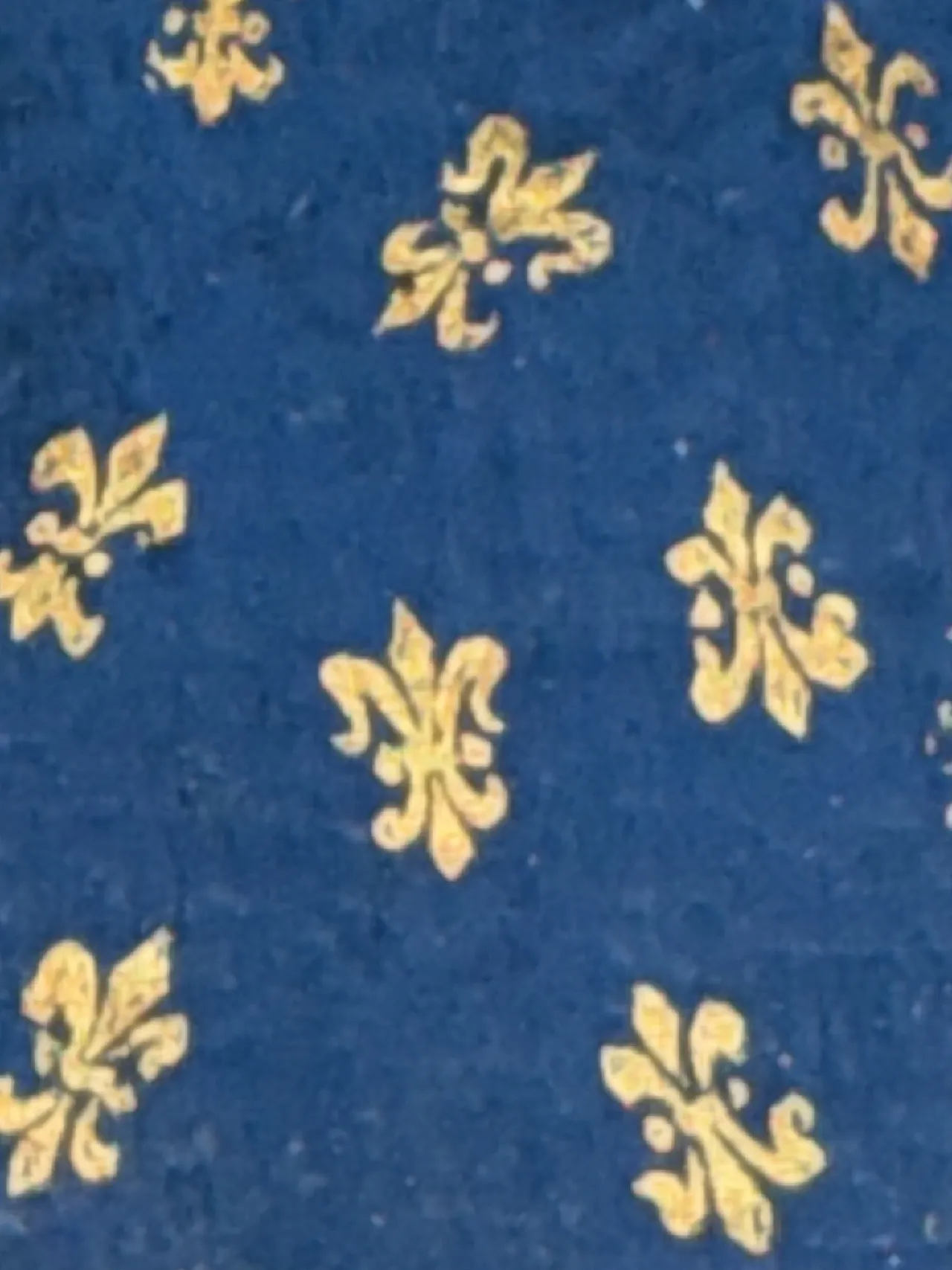
Pictorial Details: The application of the colors and the details of the robes (the lilies of Anjou on the blue robe of the Madonna) appear well defined and faithfully respect the iconography of Częstochowa. The creation of these lilies on such a small surface further confirms that it is a work of high craftsmanship
Theological Significance: In many iconographic schools, painted scars represent "pain transformed into art". The painter chooses to represent the sign of the wound without altering the integrity of the wooden support, underlining the resilience of the sacred image, confirming the contemporary and artistic nature of the work but qualifying it as a "cultured" and less dramatic version compared to those with deep grooves
State of Conservation: as visible from the photo, the gold leaf and the painting are in excellent condition, without excessive lifting or cracks, which keeps their value unchanged
Workshop Specialization: While the red sealing wax is universal and often used for general exports, the white or ivory seal was often used by niche sacred art workshops or workshops linked to specific religious institutions (especially in the Greek Orthodox context or in high-level Polish workshops)
Sign of Aging: The white, now "yellowed", is visual evidence of the age of the object. Confirm that the icon is at least 20-30 years old (late 80s - early 90s), as wax of that color tends to oxidize and take on a cream-colored or yellowed patina with exposure to air and light
Aesthetic and Craftsmanship Value: The white seal was often chosen for icons made on antique wood, as it matches the warm tones of wood and gold better chromatically than bright red, indicating greater care in the overall aesthetic presentation



.png)



 SILVER Seller in Cremona, Italia