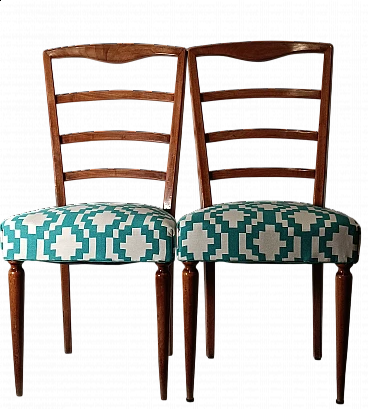
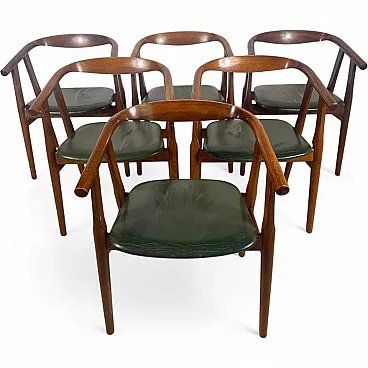
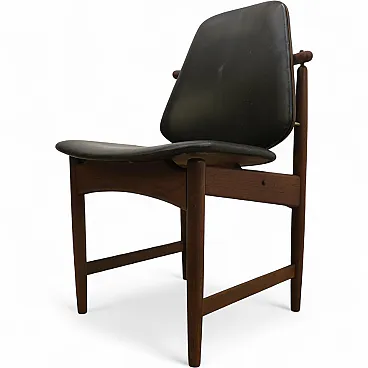
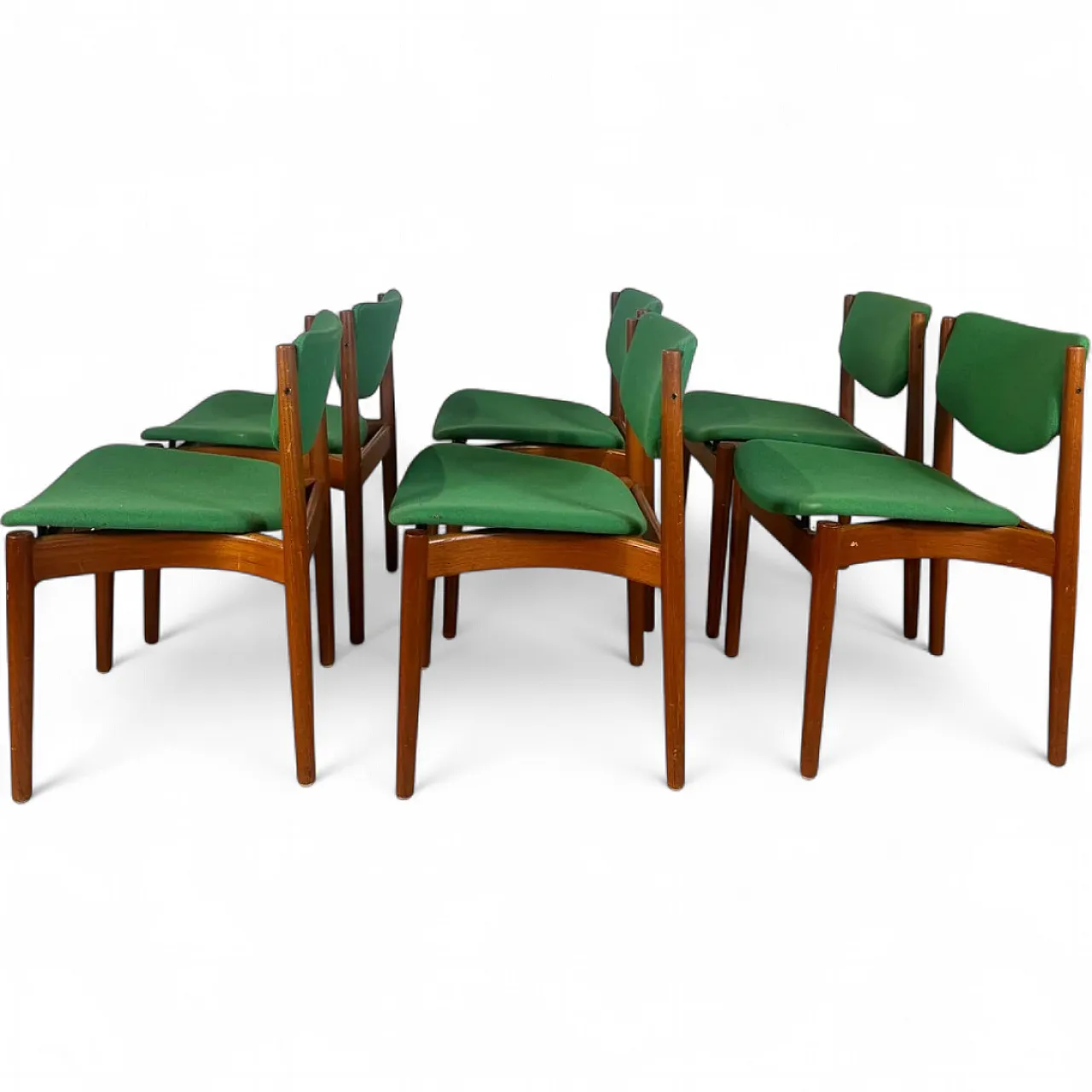
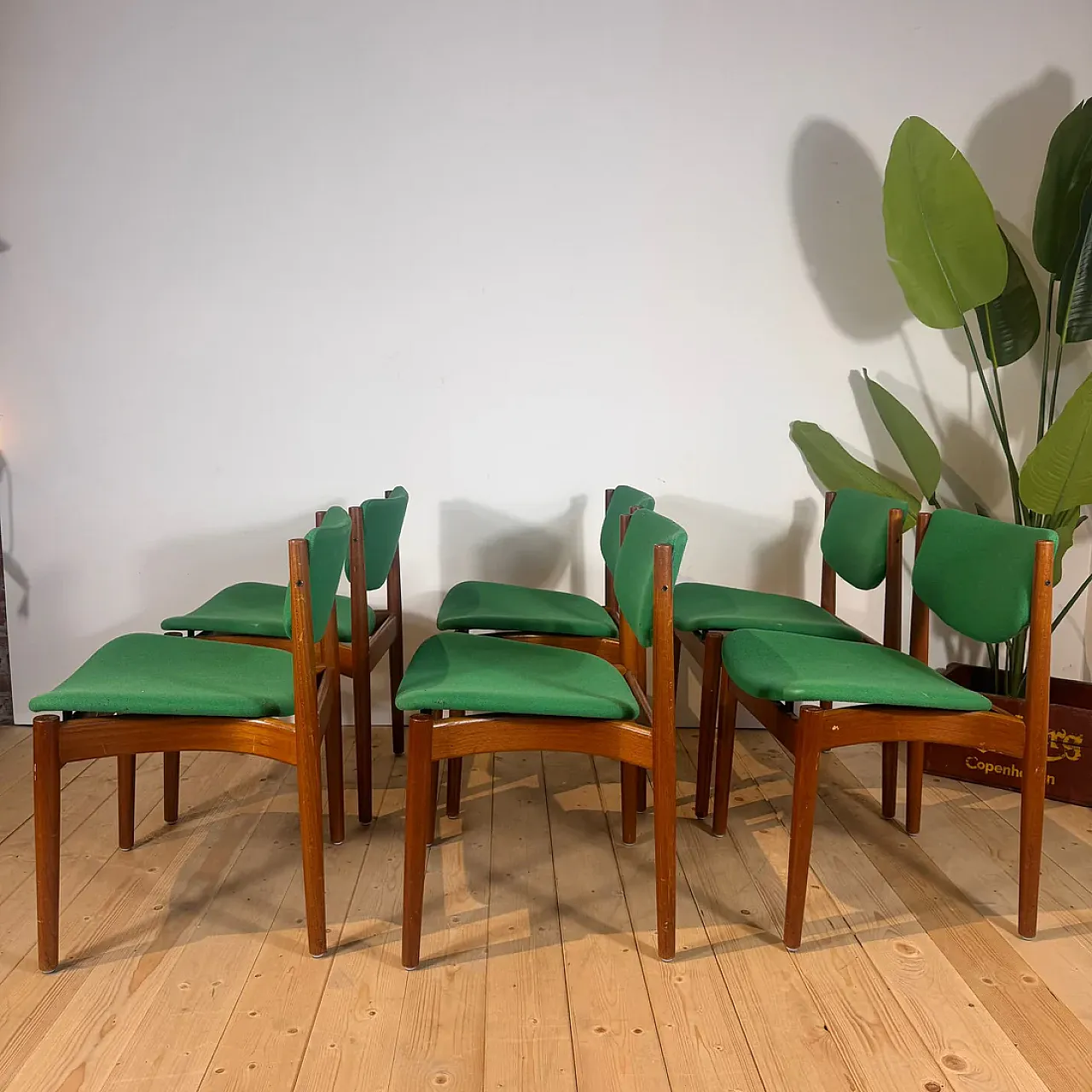
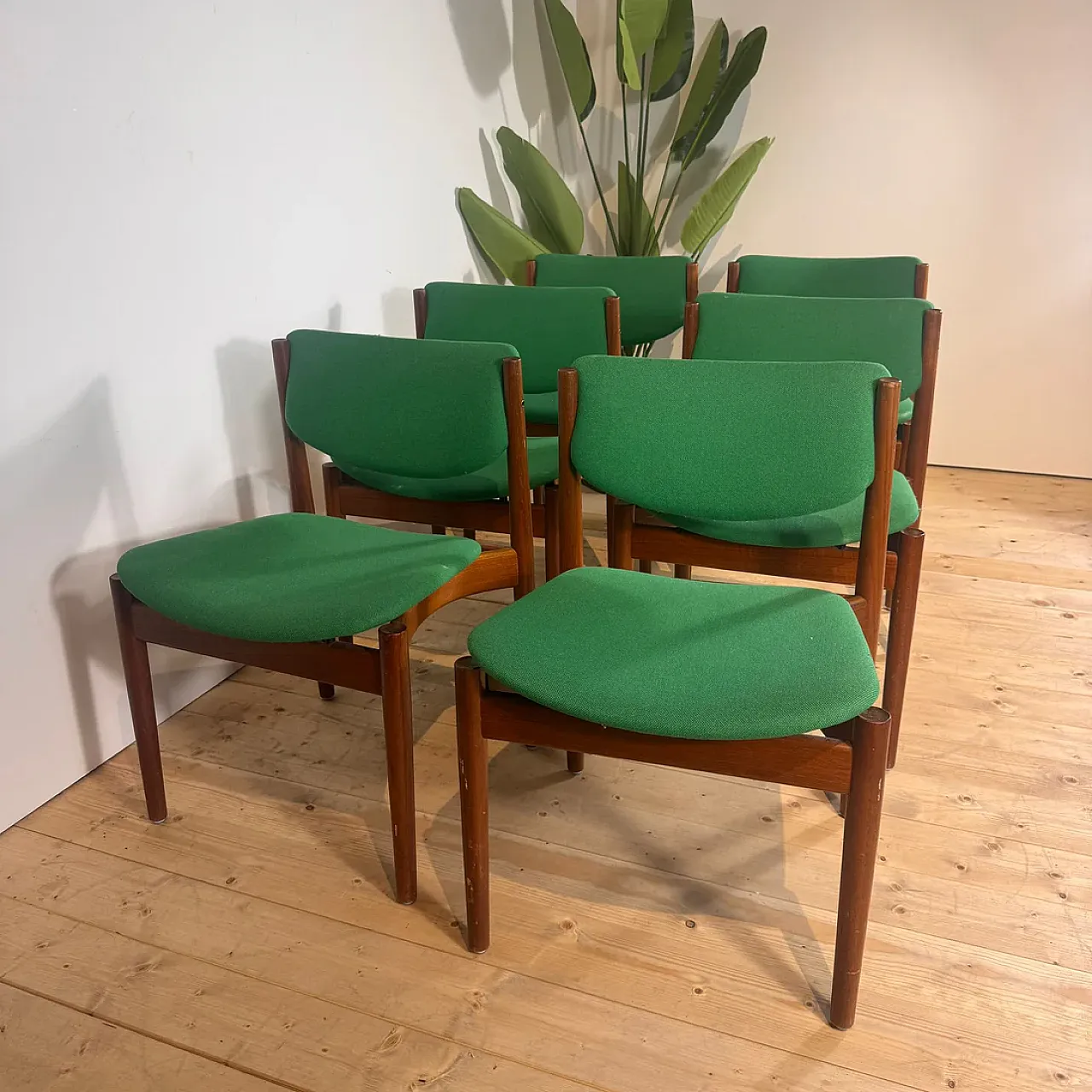
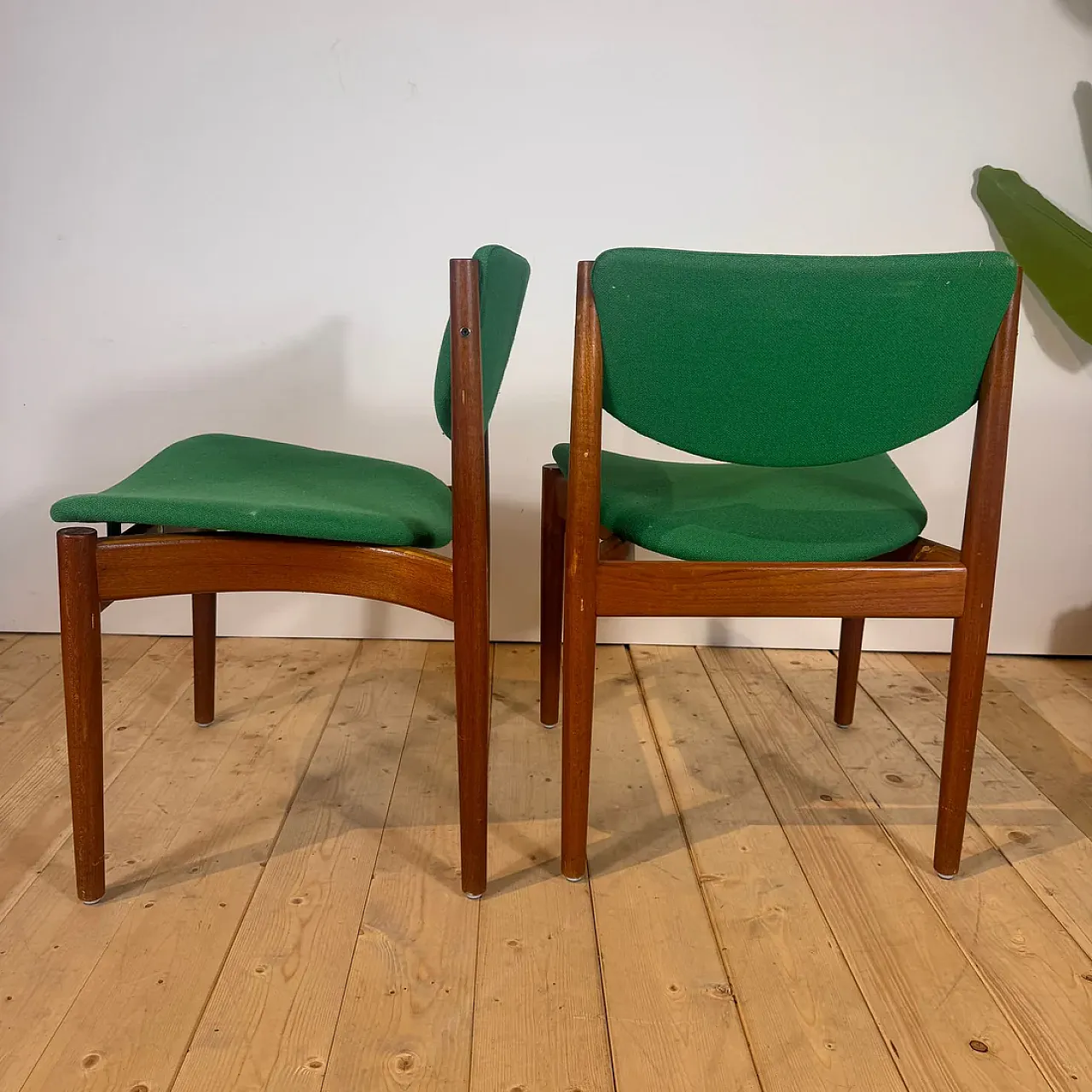
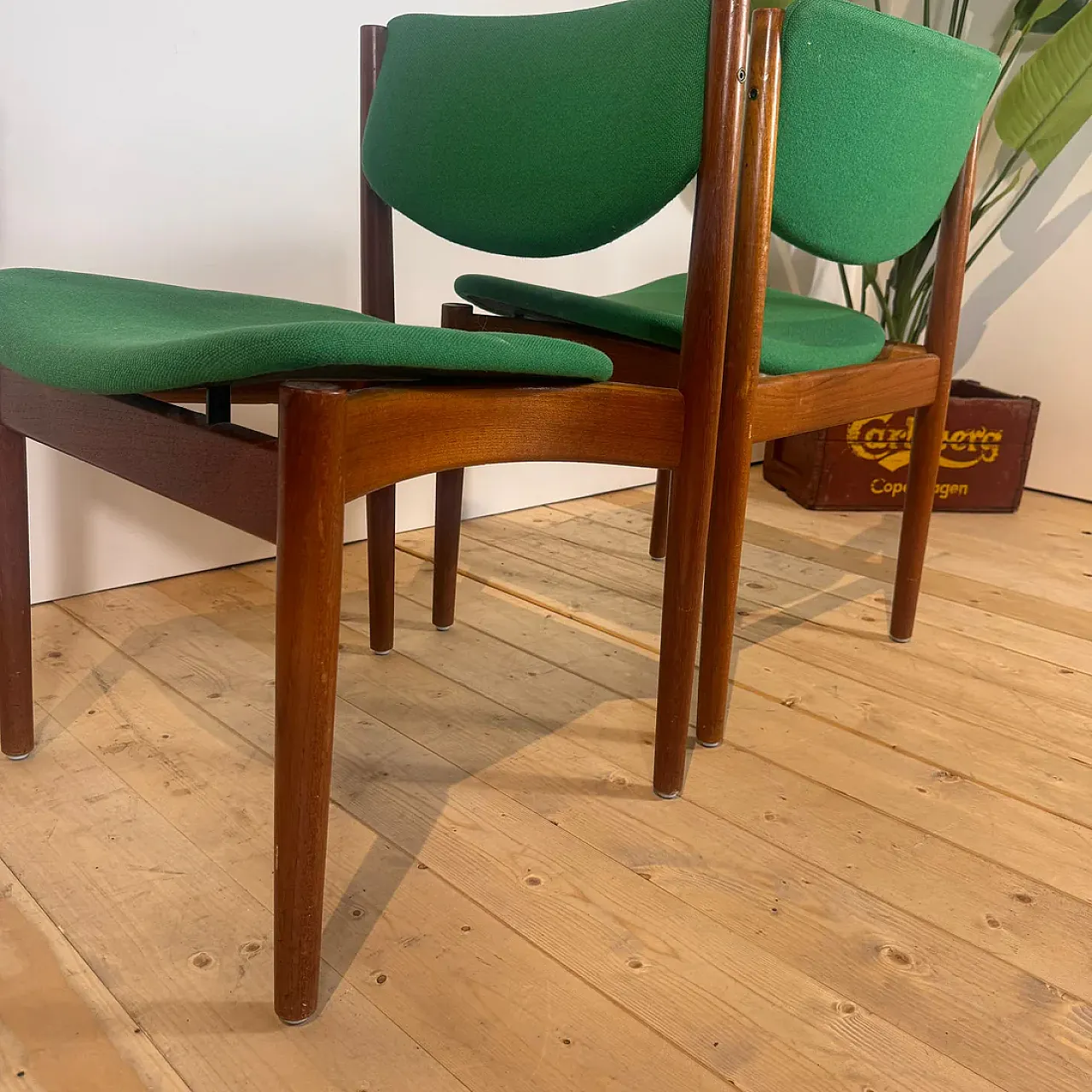
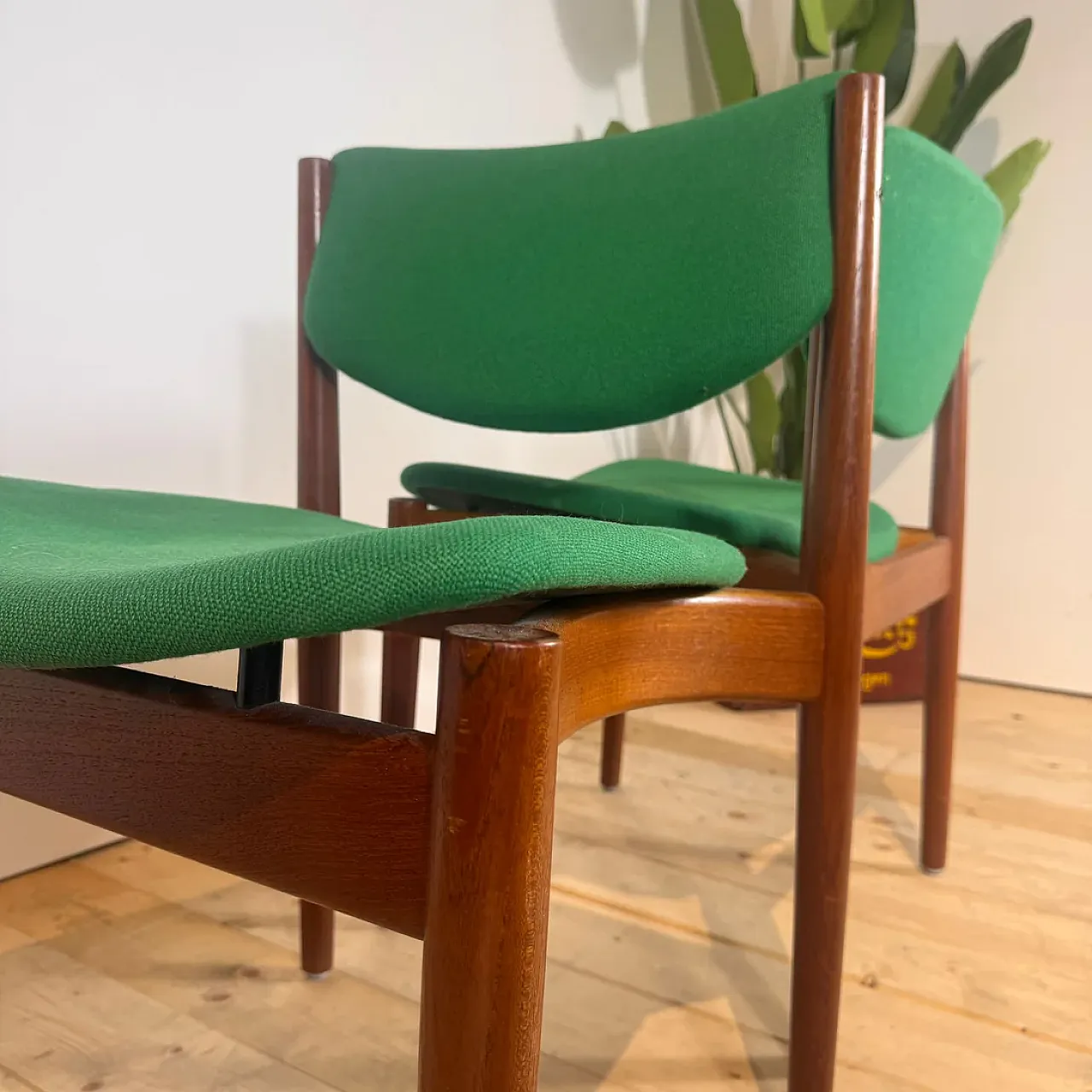
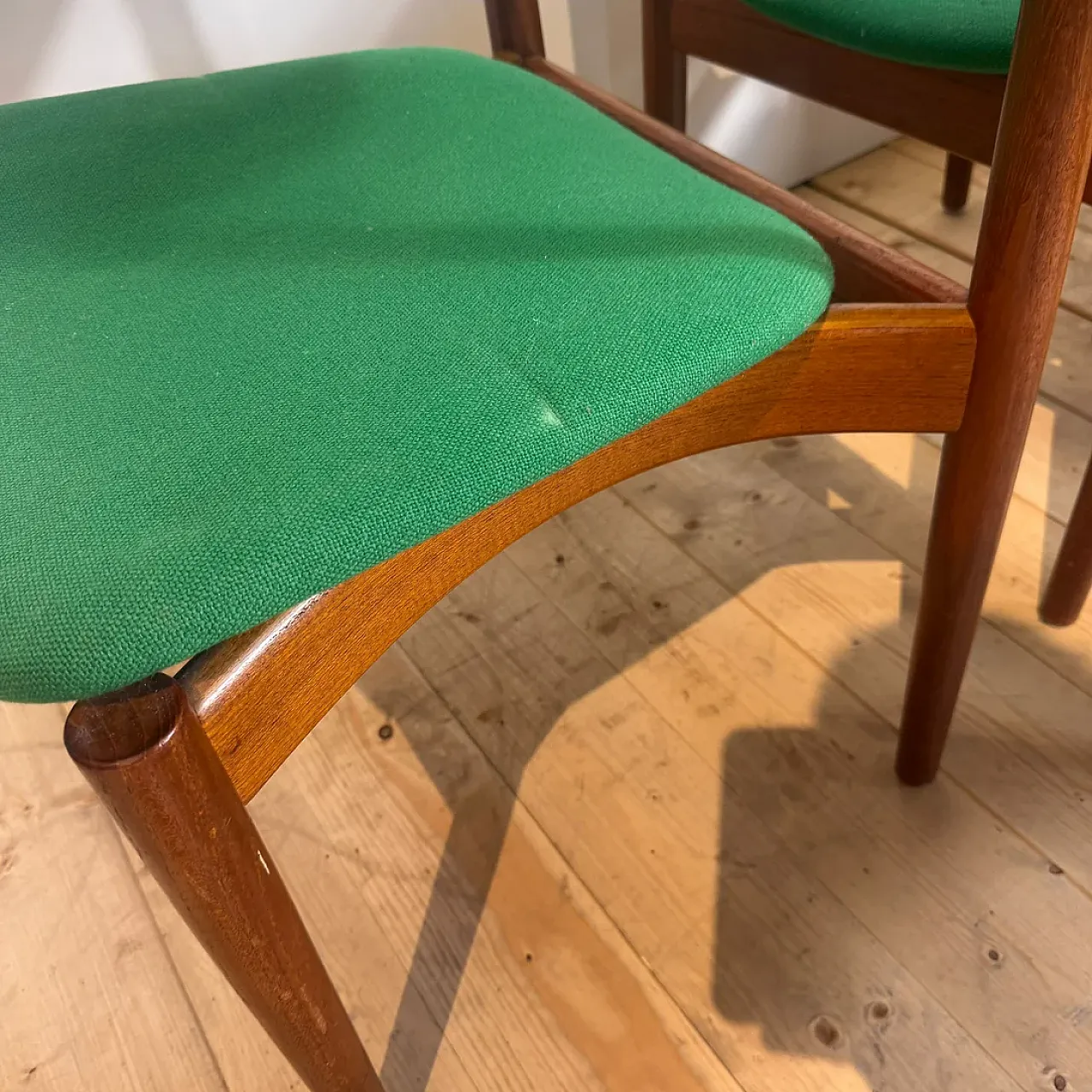
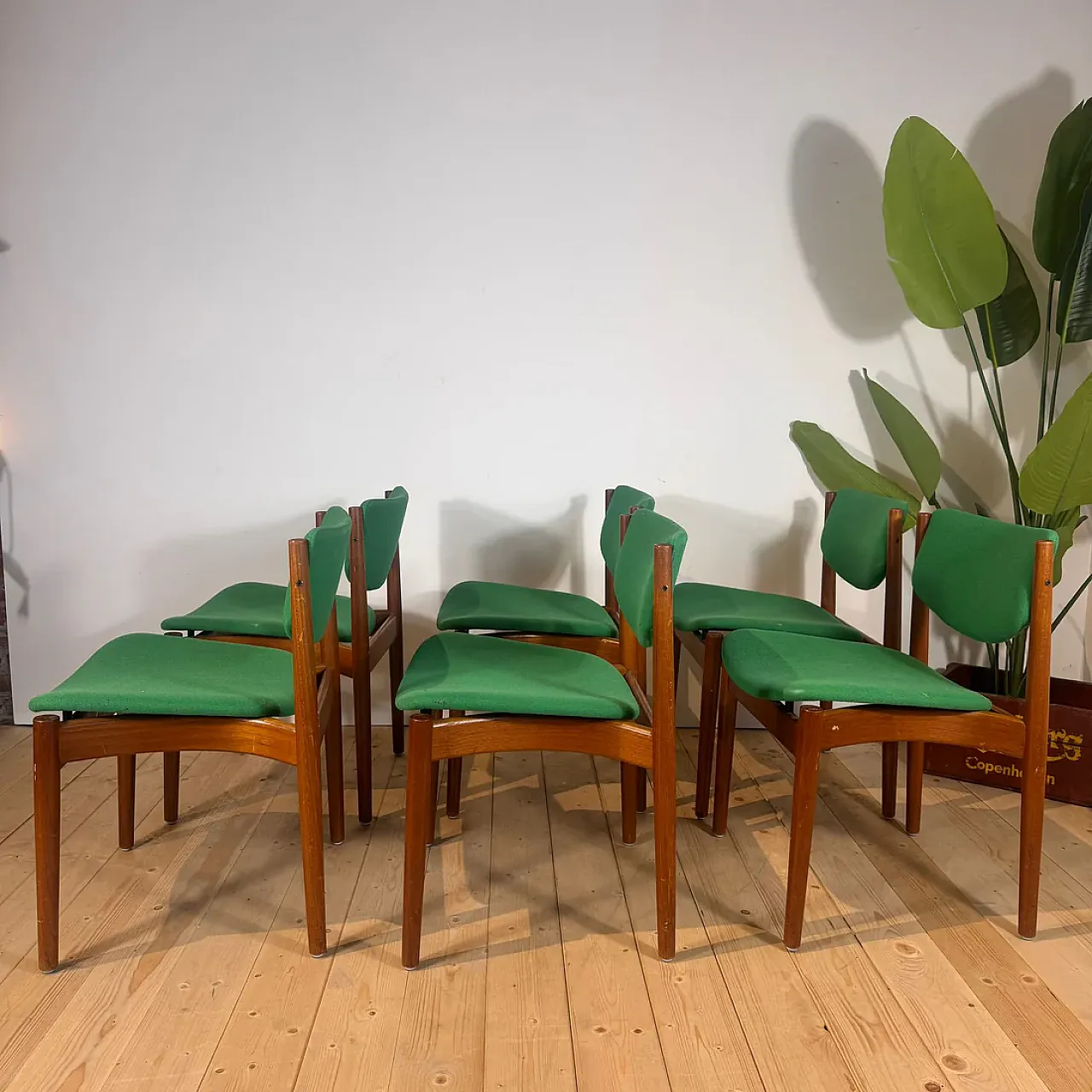
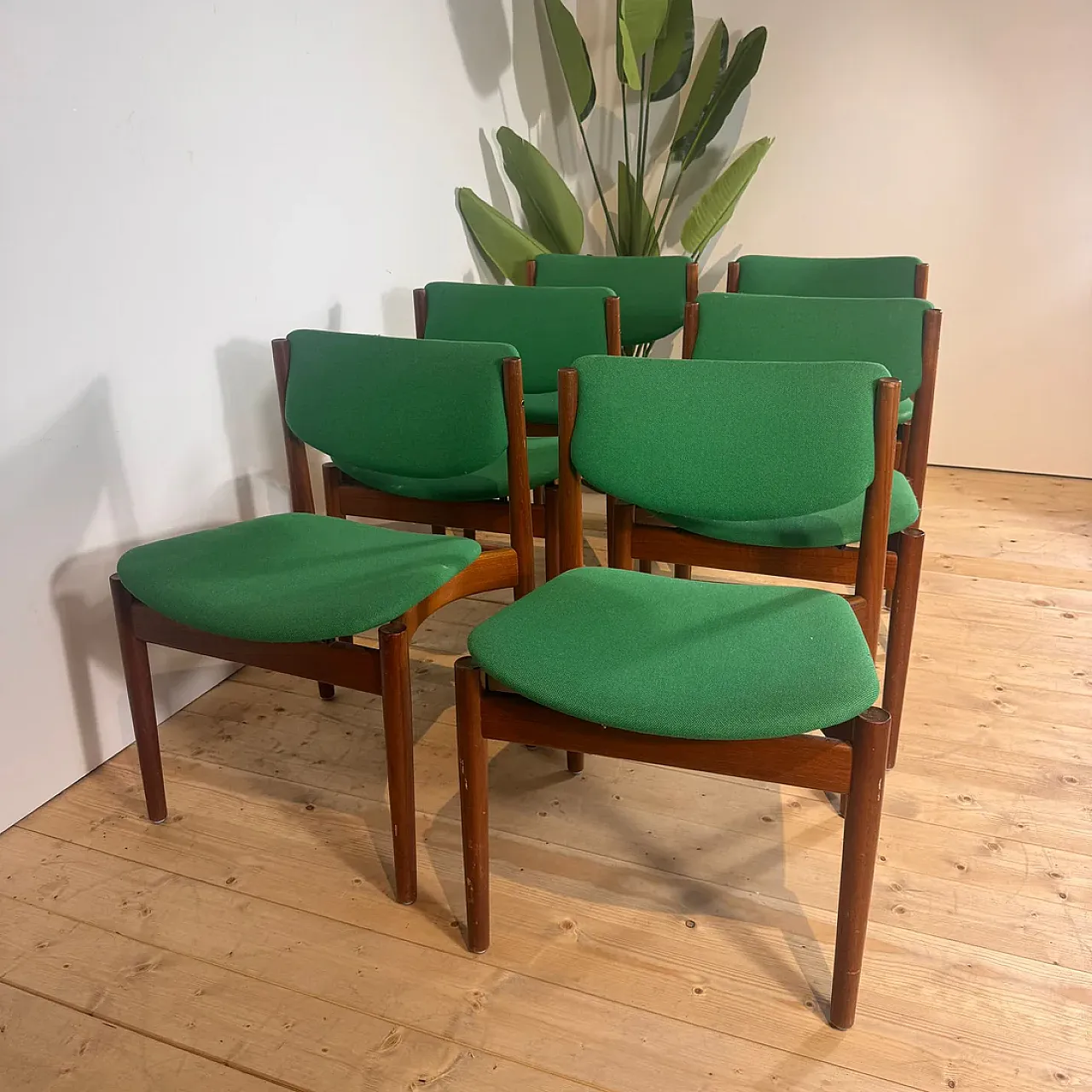
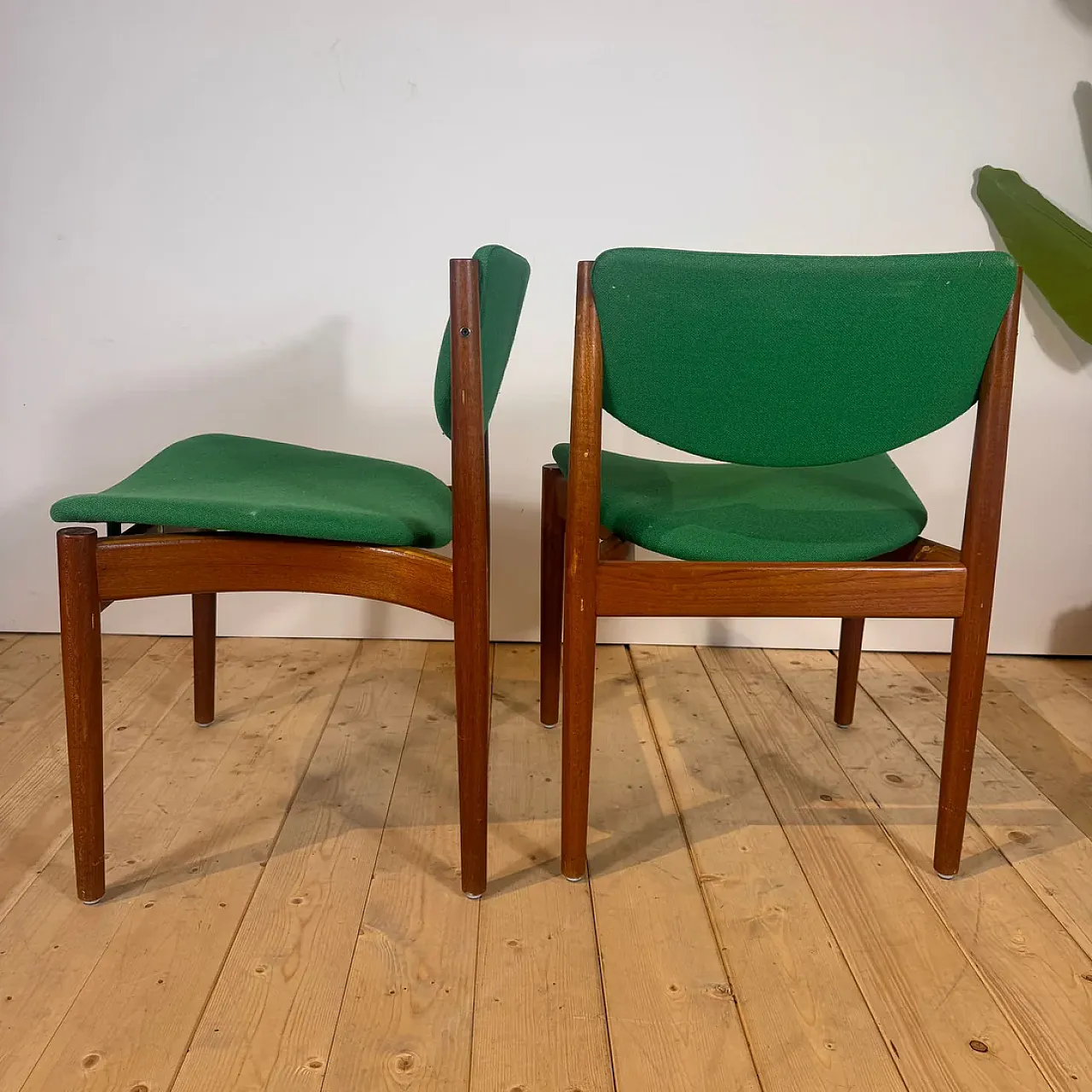
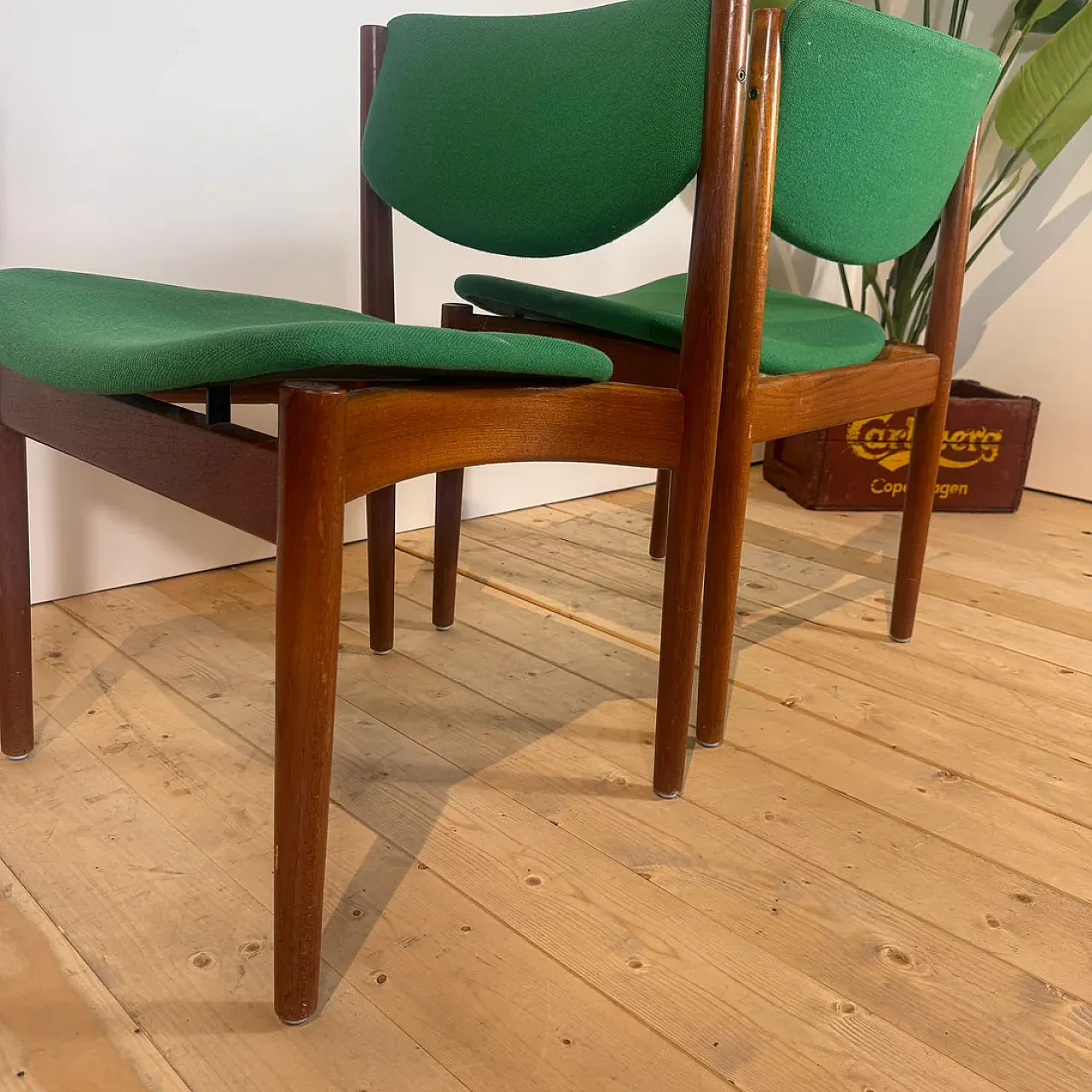
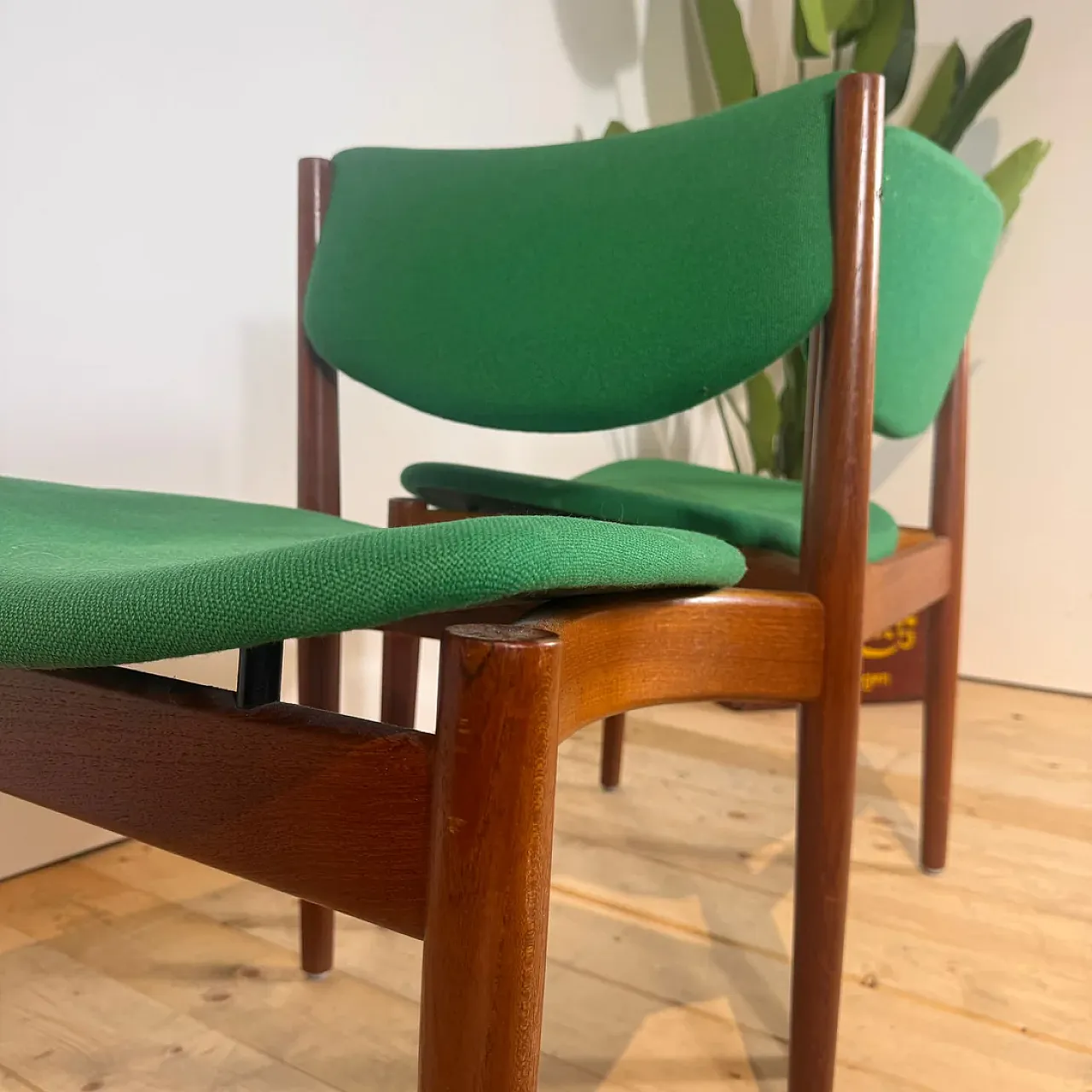
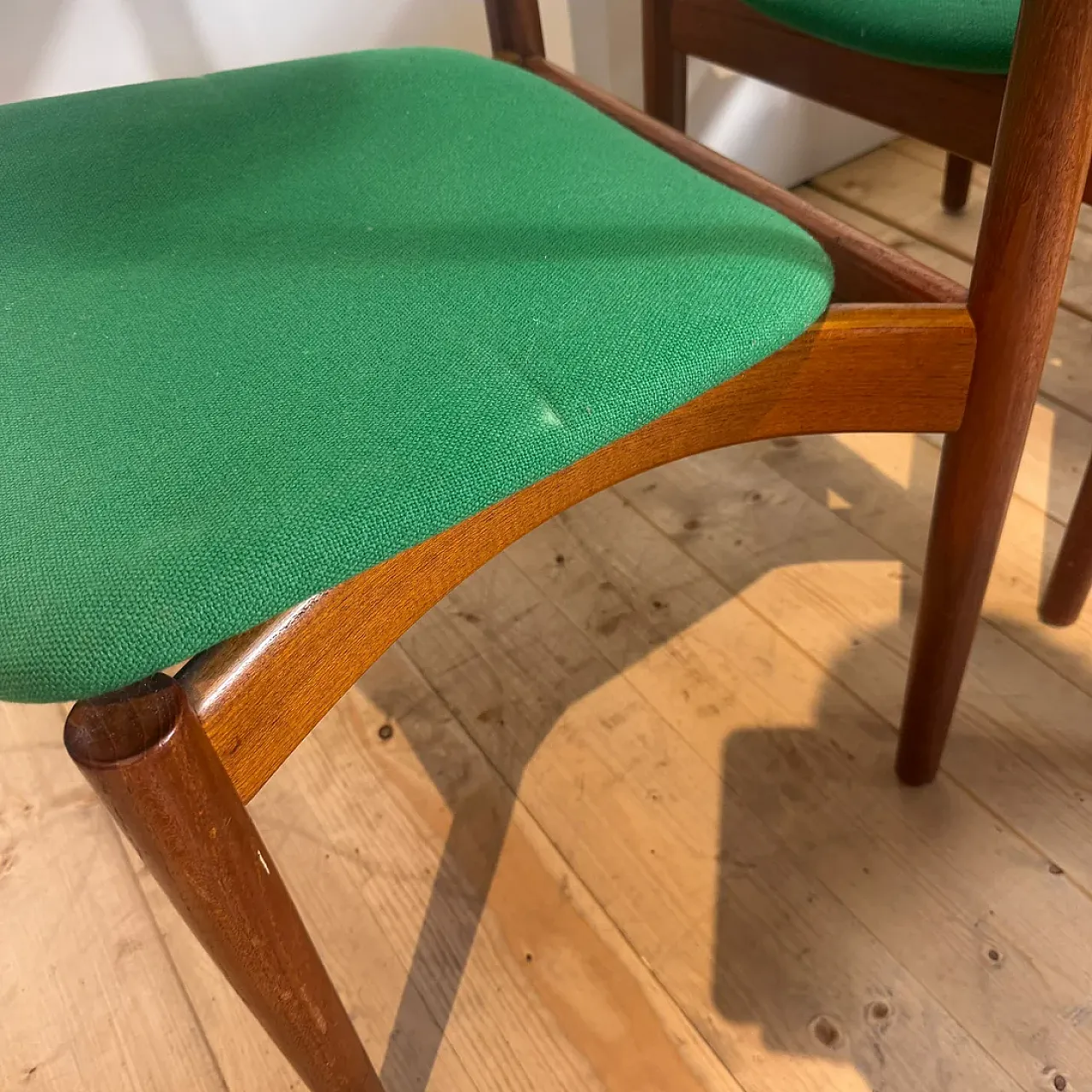
In Finn Juhl's work, wood is often treated almost like a material to be carved, and these chairs show this very well. The structure does not follow rigid or geometric lines, but is built through light curves and soft fittings that lighten the whole and make the design extremely fluid.
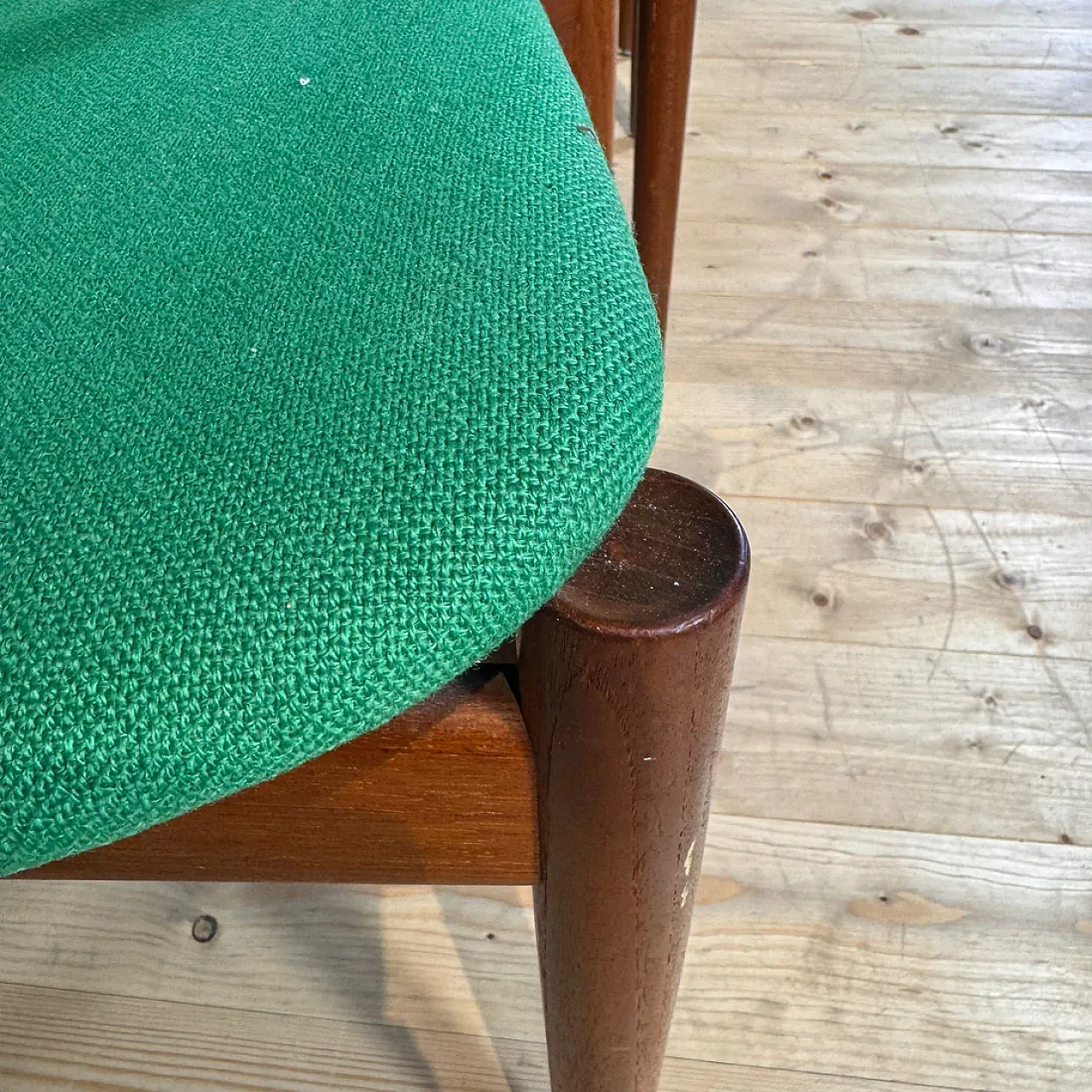
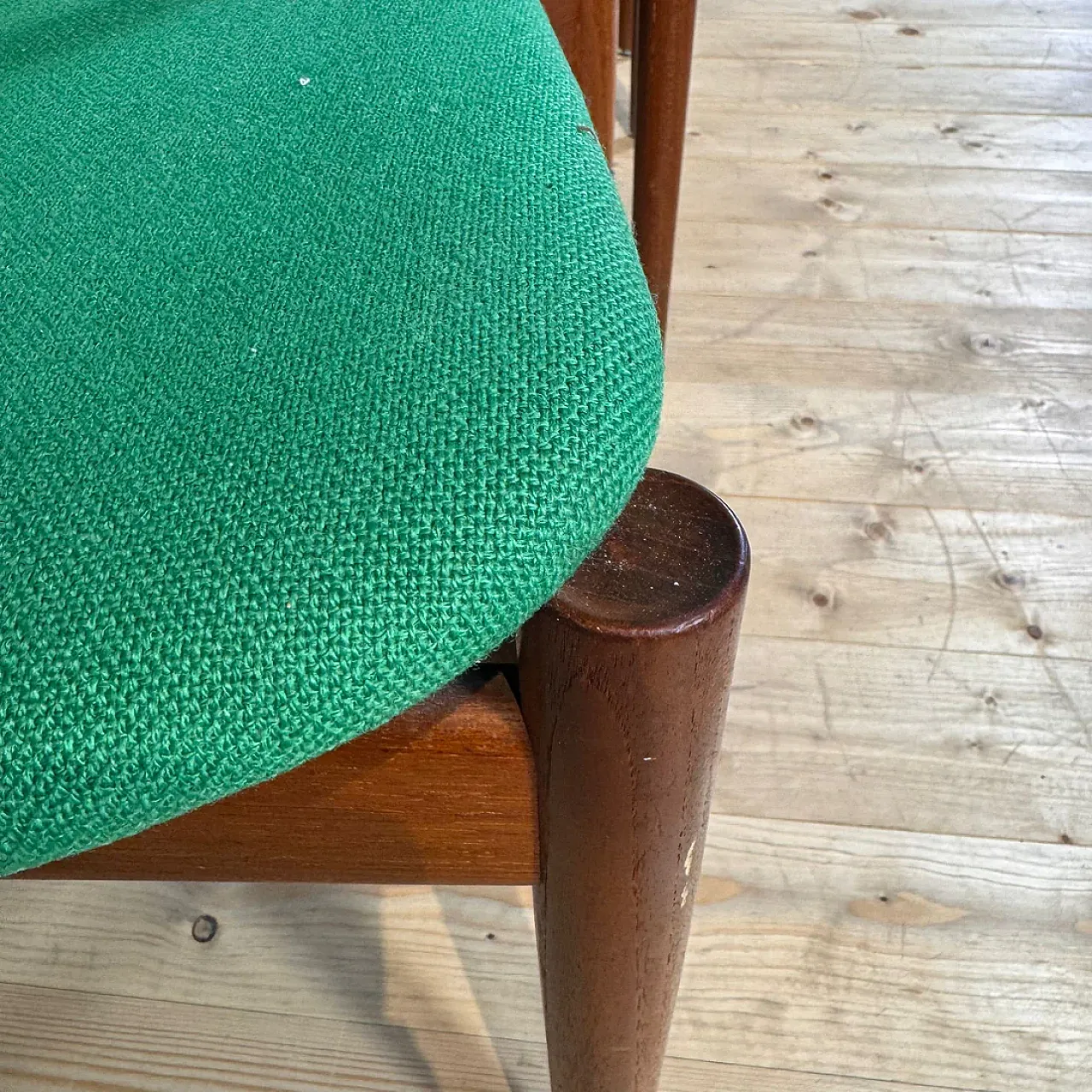
The backrest and the seat communicate with each other continuously, creating a feeling of immediate comfort already on a visual level. Teak accompanies each passage of the structure with warm hues and surfaces that change slightly depending on the light, emphasizing the organic character typical of much Danish production of the period. In contrast, the bright green padding introduces a more decisive and unexpected element.
Despite being chairs designed in the sixties, they maintain a very contemporary presence. Around an important table they manage to define the environment without weighing it down, while in more essential spaces they become almost architectural elements thanks to the balance between solids, voids and proportions.
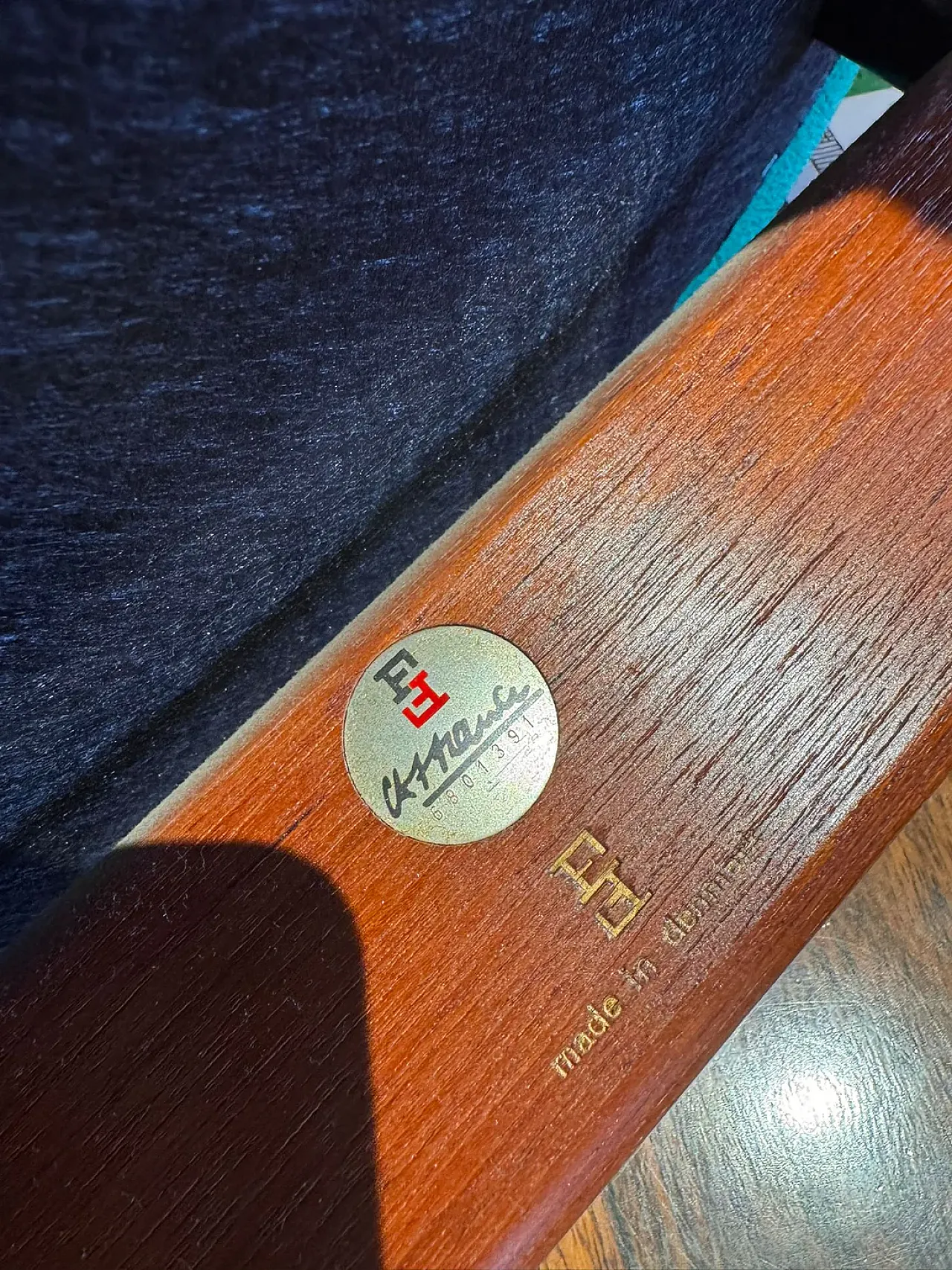
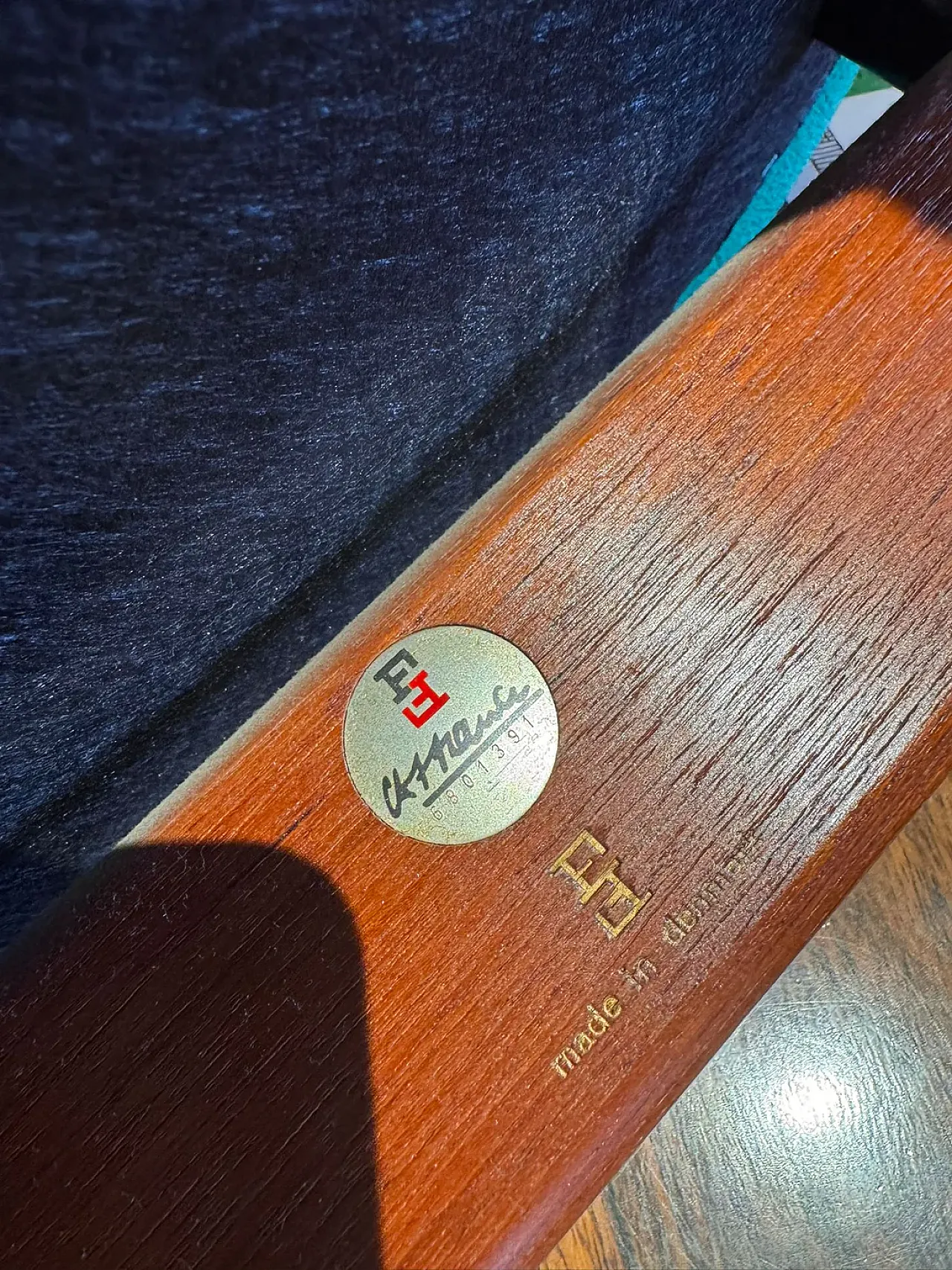
An original vintage set that retains all the design sensibility and formal freedom that made Finn Juhl one of the most recognizable figures in 20th-century Scandinavian design.


.png)
 SILVER Seller in Torino, Italia