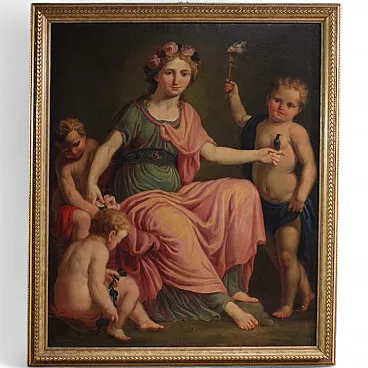
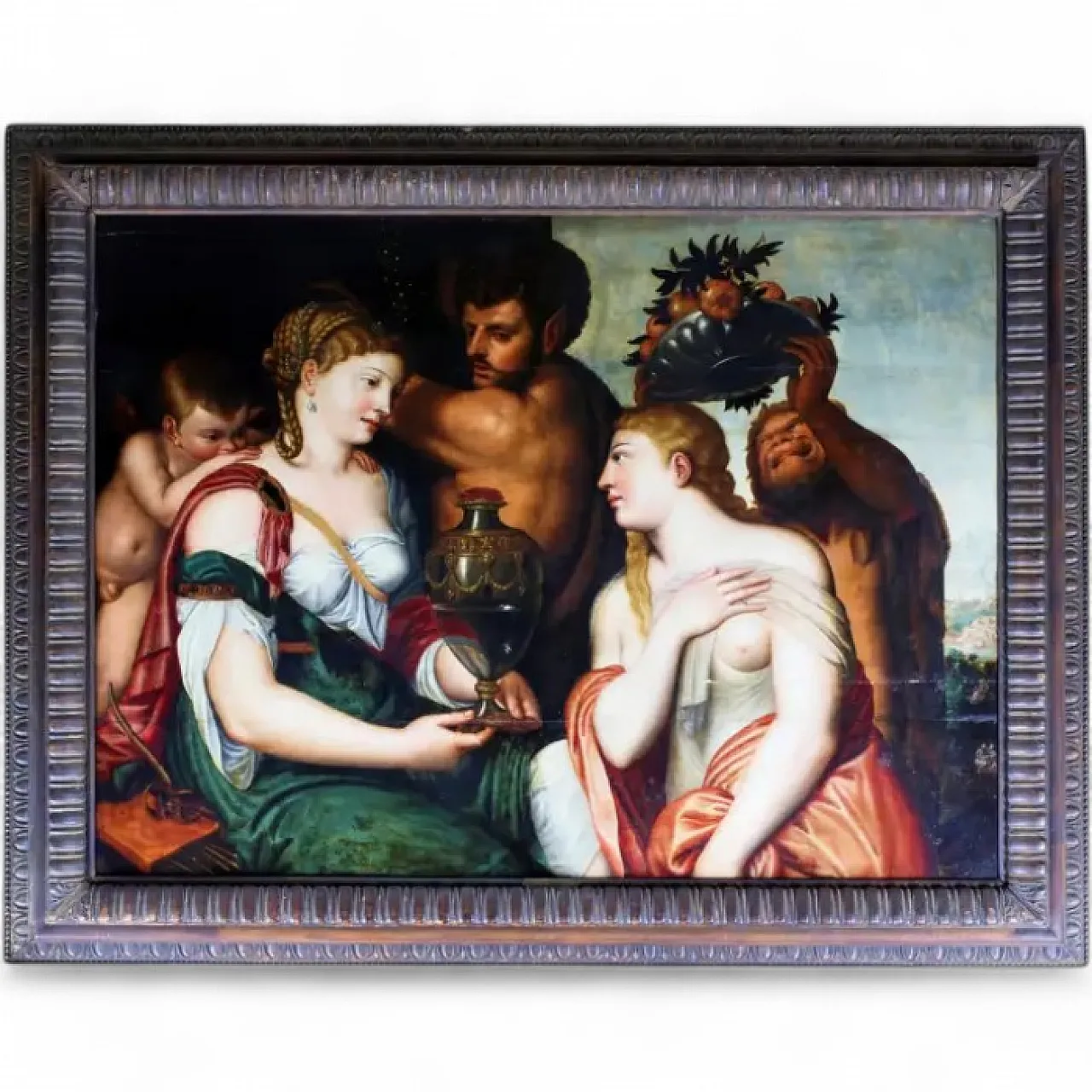
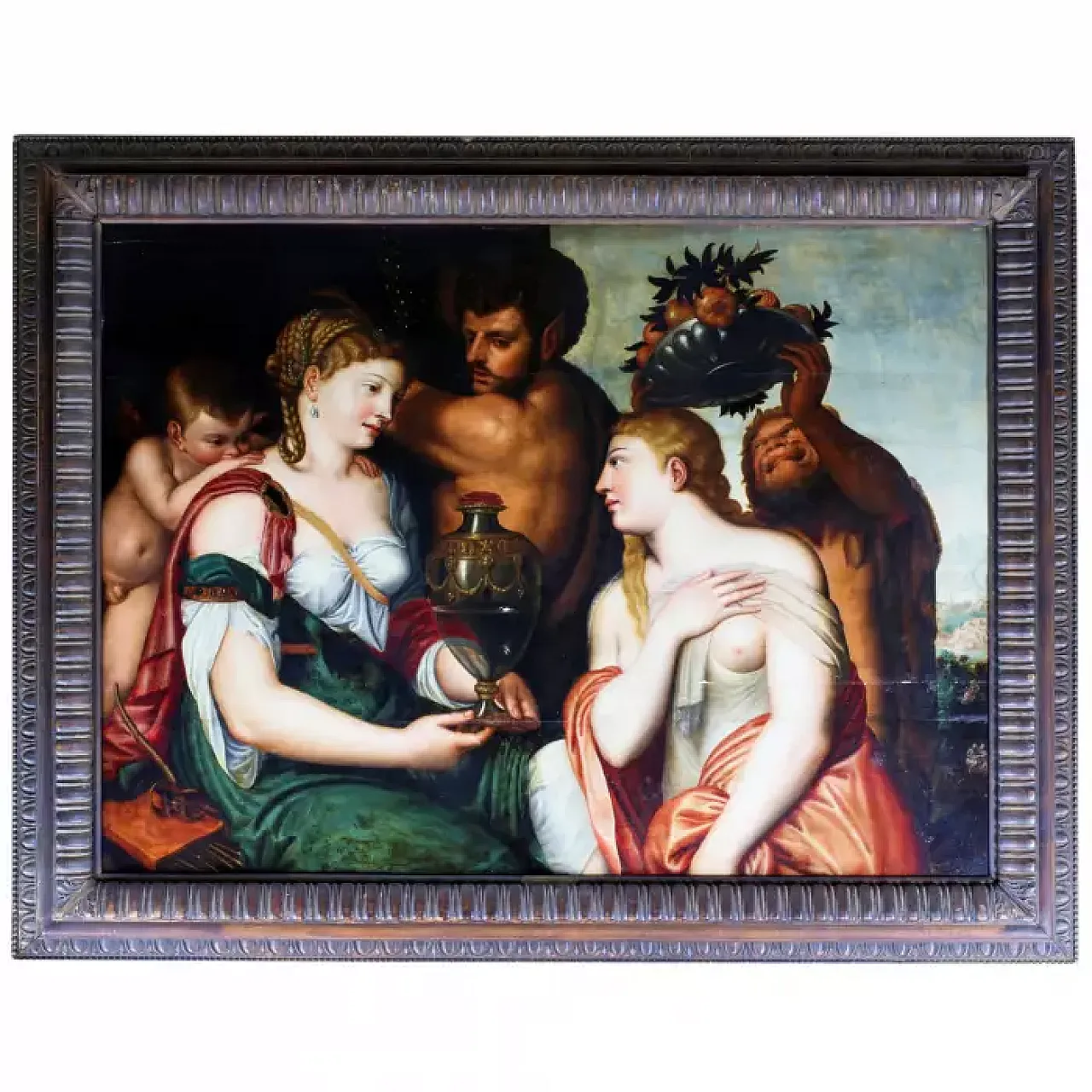
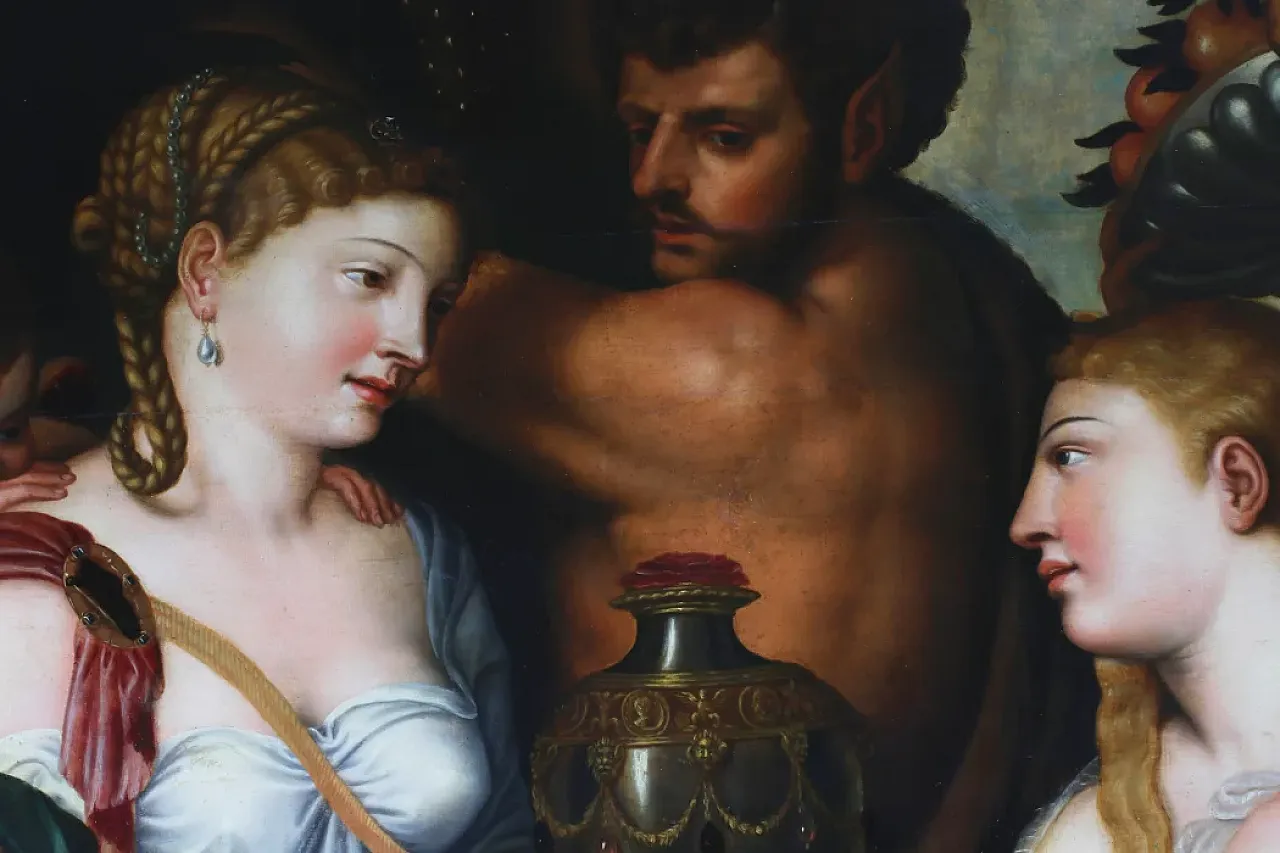
A large-scale Flemish painting executed in oil on wooden panel, “The Cup of Ceres” represents a compelling example of the synthesis between the Italian Renaissance and Northern Mannerism. The composition is based on the ancient phrase by Terence, Sine Cerere et Libero friget Venus, translated as “Without Ceres and Bacchus, Venus grows cold.” The conceptual structure of the scene is articulated through a harmonious triangular grouping of figures and a richly developed allegorical program.
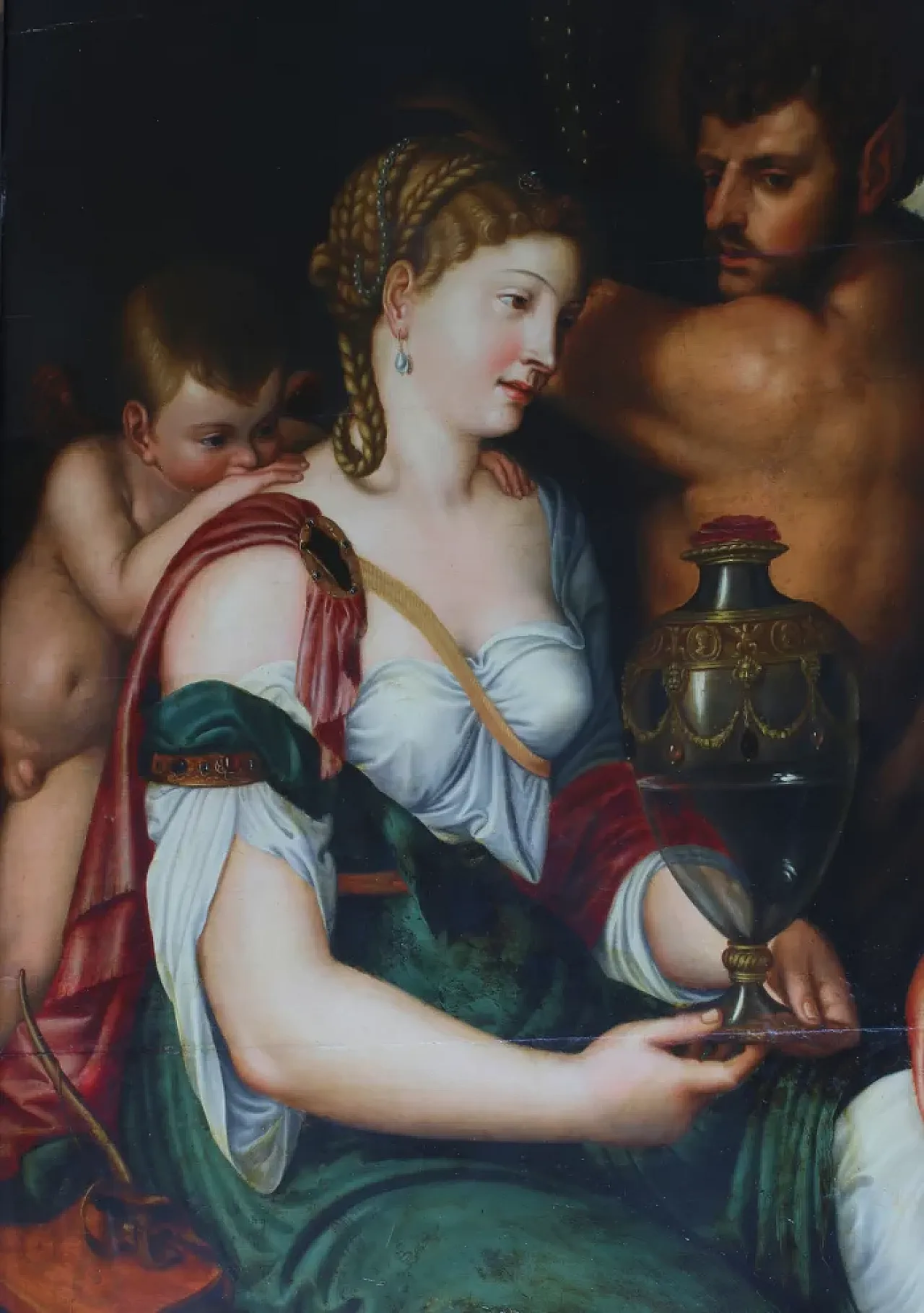
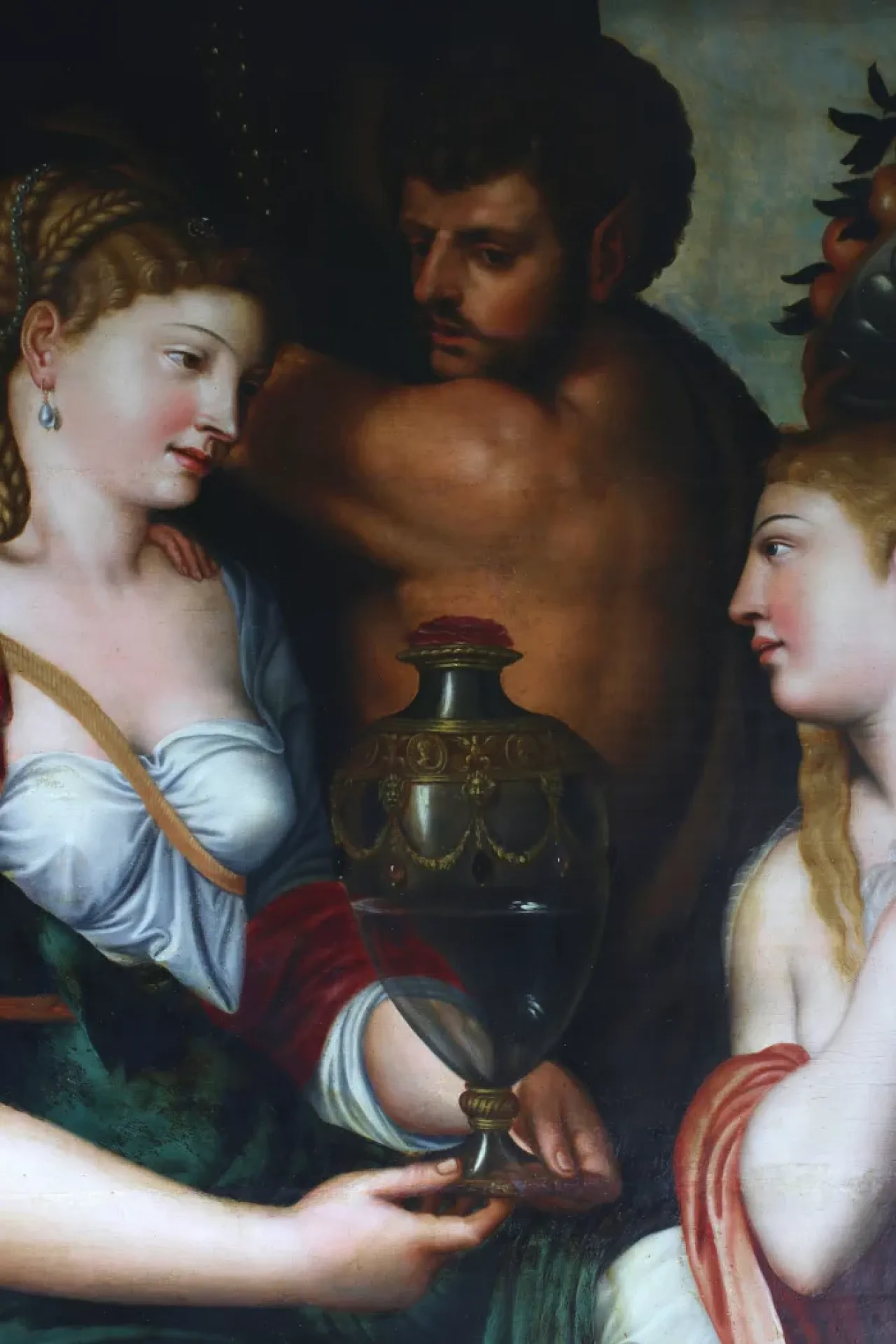
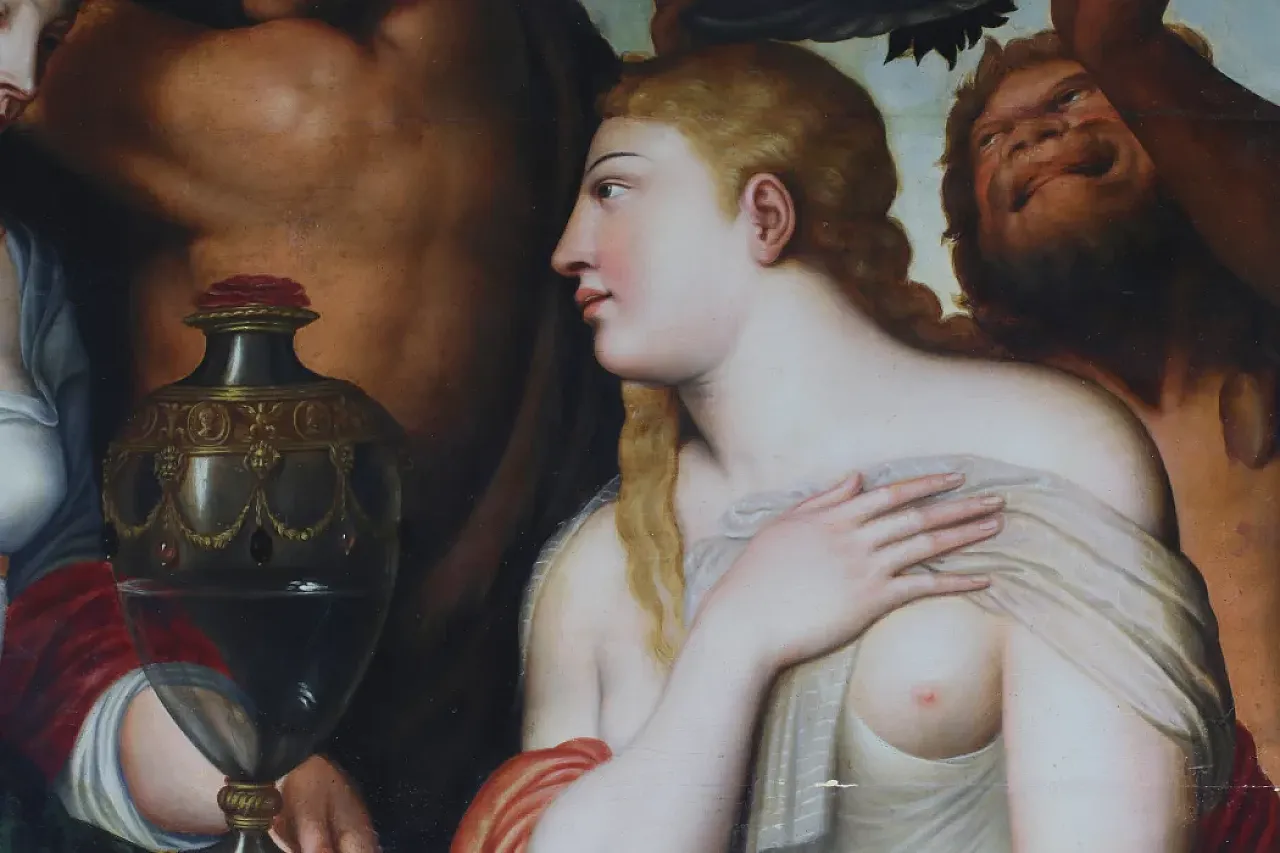
At the center of the composition rises a transparent urn crowned with a blooming rose, symbolizing vitality and love. To the left stands a female figure in antique drapery accompanied by Cupid at her shoulder. To the right appears a nude Venus, her hand gesture emphasizing intimacy and sensuality. Behind them towers a faun, while in the background a bearded servant carrying a basket of fruit reinforces the theme of abundance and fertility. The mountainous landscape with episodes related to the cult of Bacchus expands the iconographic program. The color palette is built upon the contrast between warm flesh tones and deep emerald and crimson fabrics, enhancing the sculptural modeling of the figures and demonstrating the influence of Italian plasticity adapted within the Northern tradition.
According to the expert opinion of Dr. Ernst Wengenmayer, Munich, December 7, 1962, the work constitutes an independent version of a composition analogous to the painting in the Alte Pinakothek, acquired in 1792 by Elector Karl Theodor and formerly attributed to the workshop of Titian. In the expert’s view, this version was created by Frans Floris shortly after his return from Italy, after 1540, and differs in its altered mountainous background as well as distinctive authorial iconographic details.


.png)
 SILVER Seller in Alpes-Maritimes, France