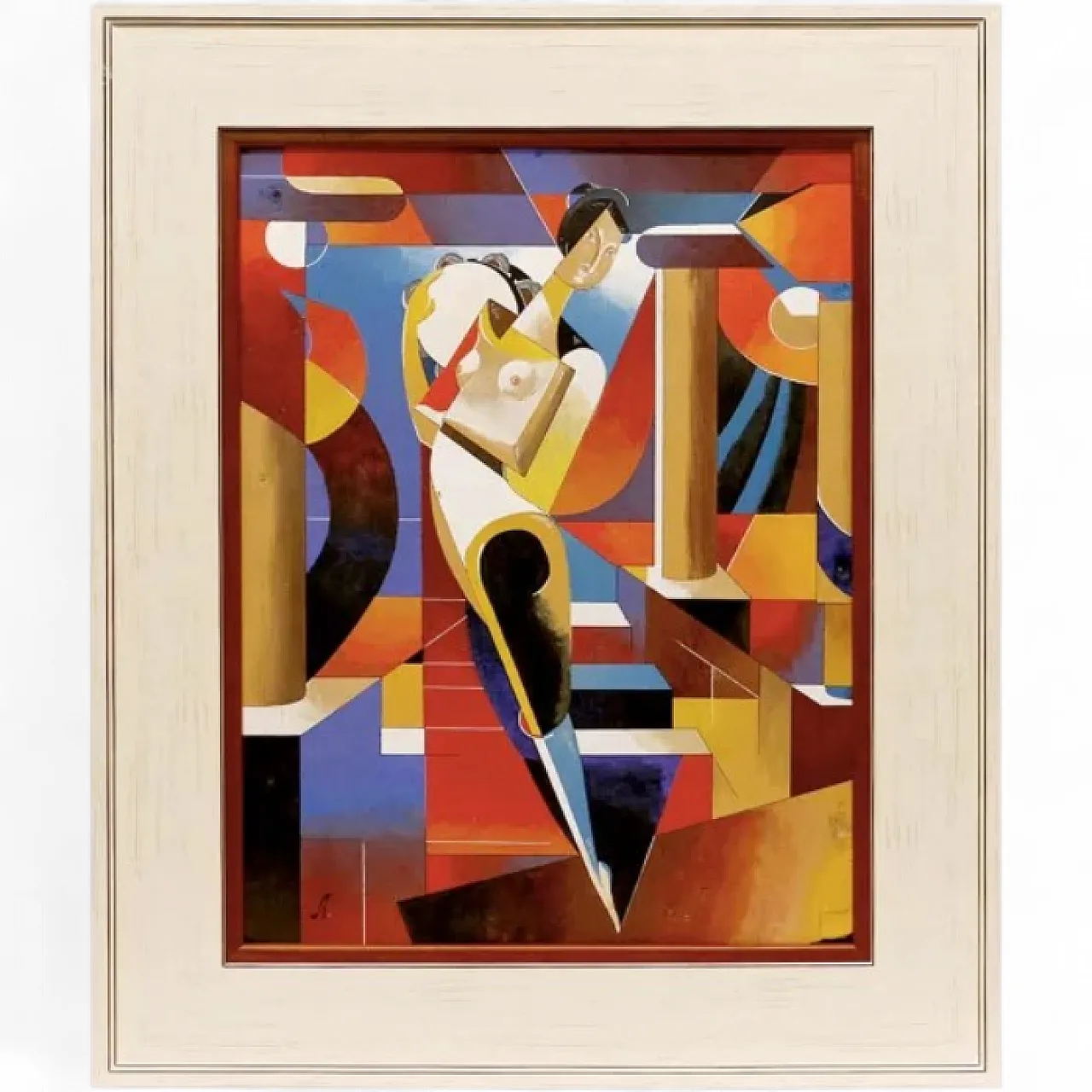
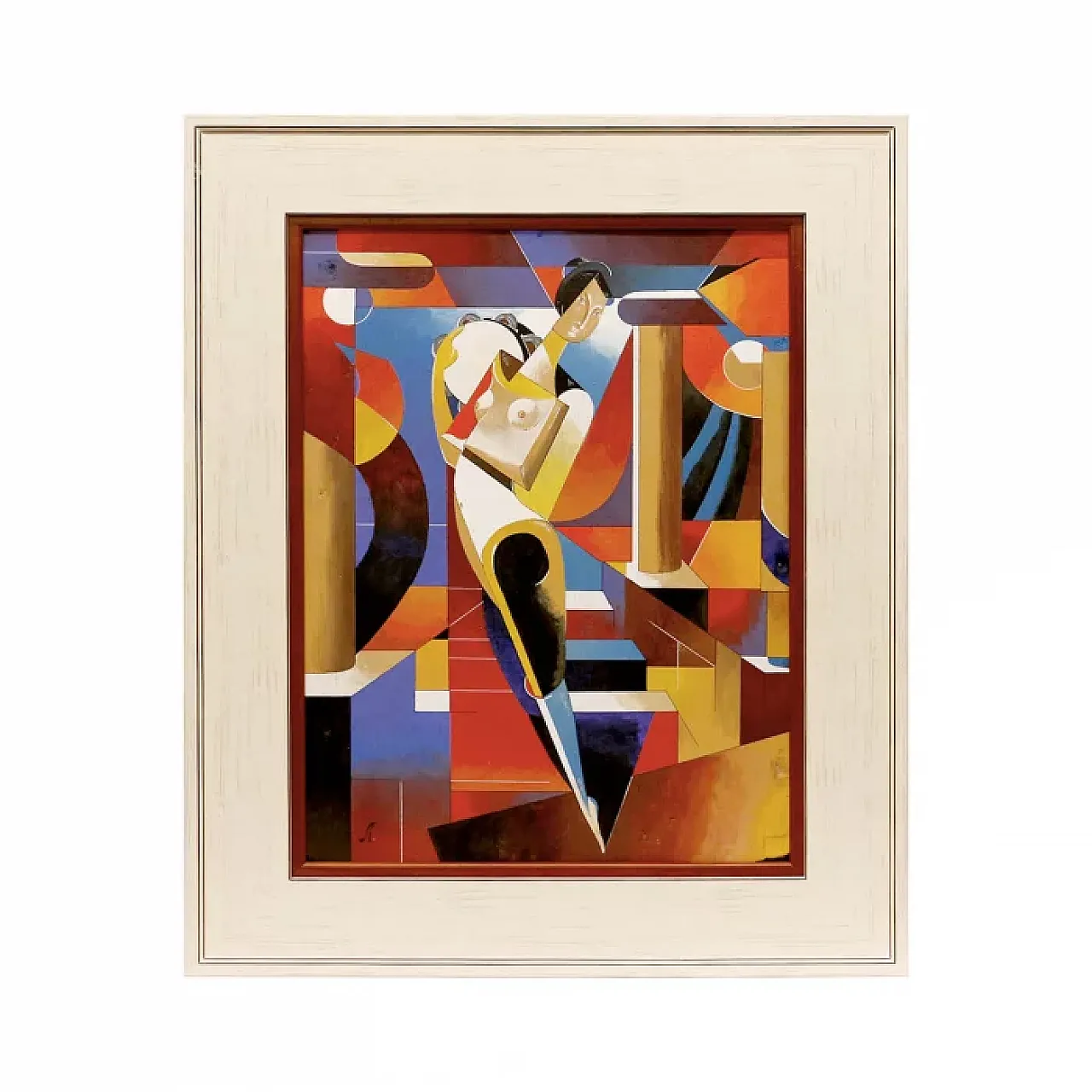
The painting Lady with a Tambourine is a decorative composition created in the spirit of the artistic language of Alexander Porfyrovych Archipenko (1887–1964) and the aesthetics of Synthetic Cubism.
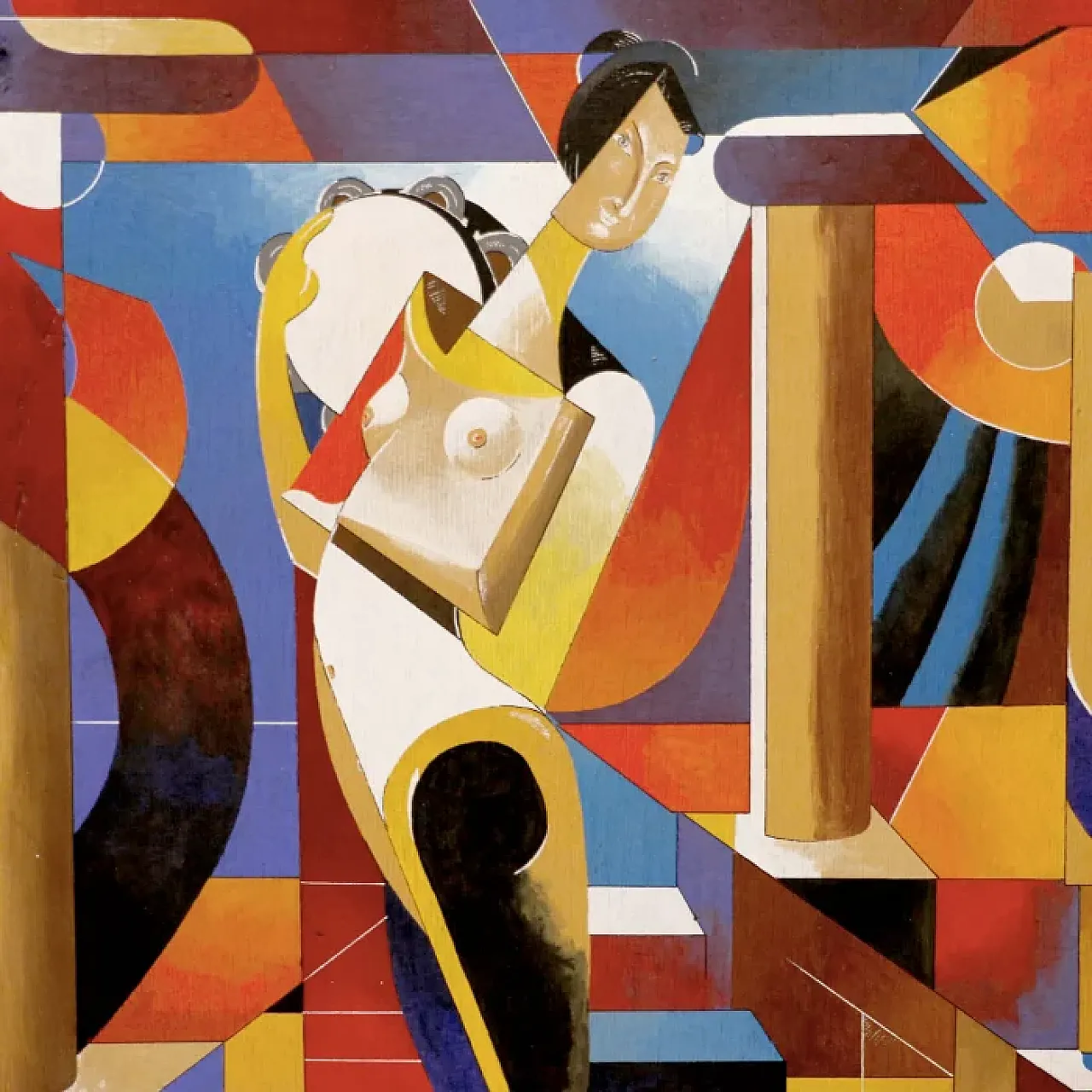
This later interpretation reveals the metaphysical image of a lady with a tambourine through the combination of a geometrised female figure and a stylised seaside cityscape. The composition is based on the interaction of colour planes, rhythmic lines and abstracted architectural forms, where the surrounding reality is transformed into a decorative system of form, colour and space.
The warm brilliance of the sun, the distant view of the sea and the generalised outlines of the urban landscape create a sense of reality while emphasising the symbolic nature of the image. The female figure is perceived as a plastic form combining a musical motif, movement and inner emotional expression.
The work reflects the influence of Archipenko’s artistic aesthetics and the traditions of the European avant-garde of the 20th century, where Cubist geometrisation of form, decorative expression and a new perception of space became fundamental elements in the development of the modernist artistic language.



.png)
 SILVER Seller in Alpes-Maritimes, France