






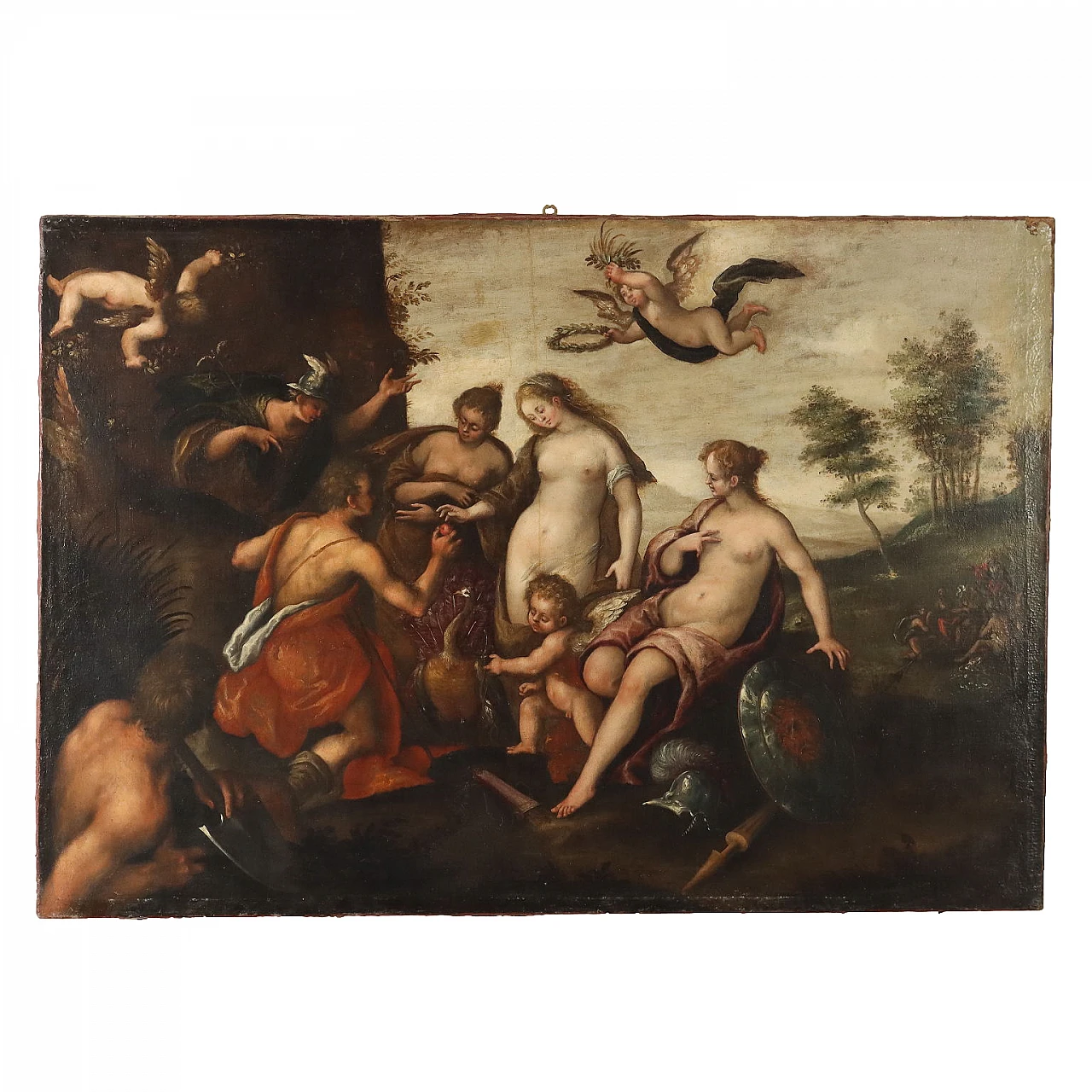
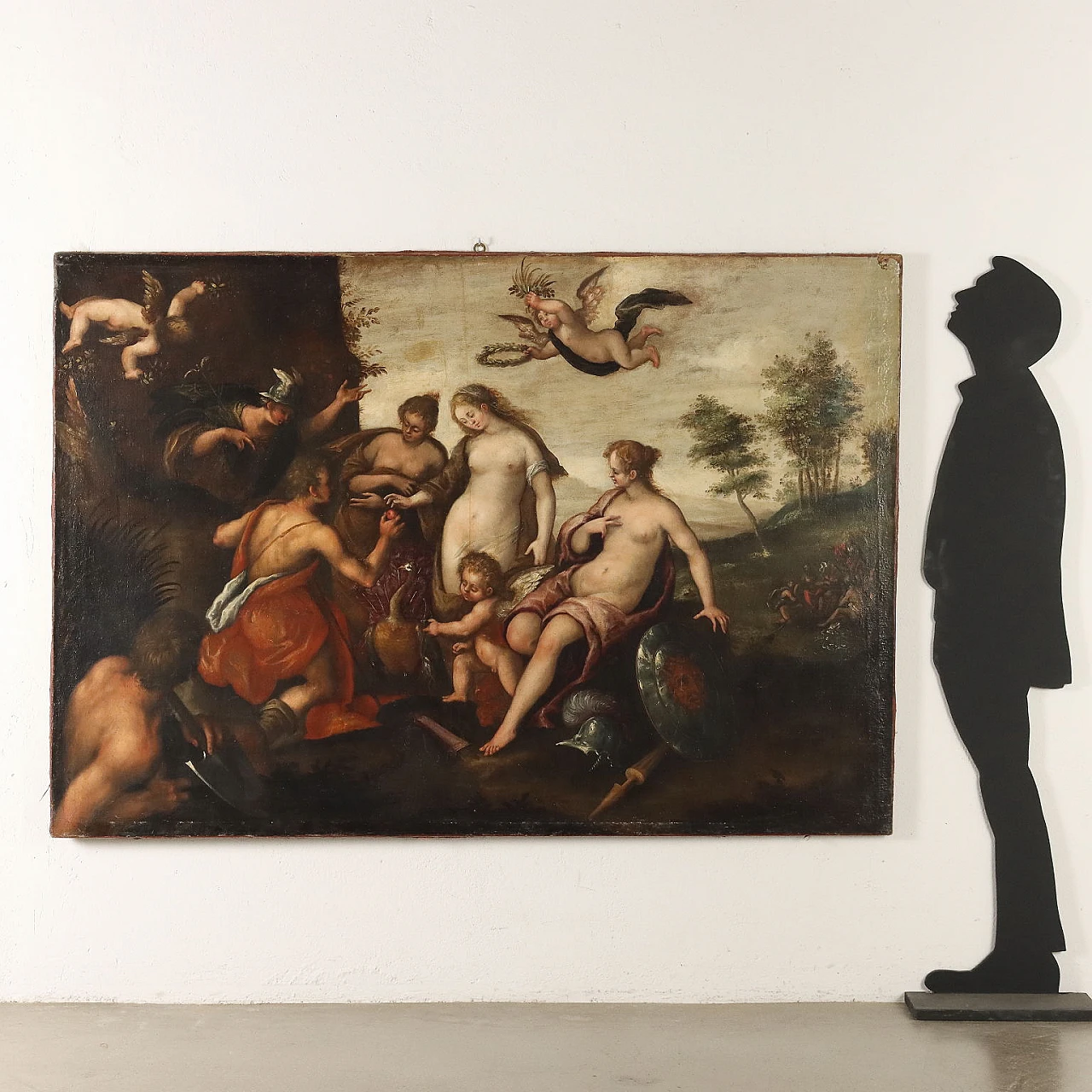
The judgement of Paris, oil on canvas attributed to Domenico Lupini, 17th century

.png)
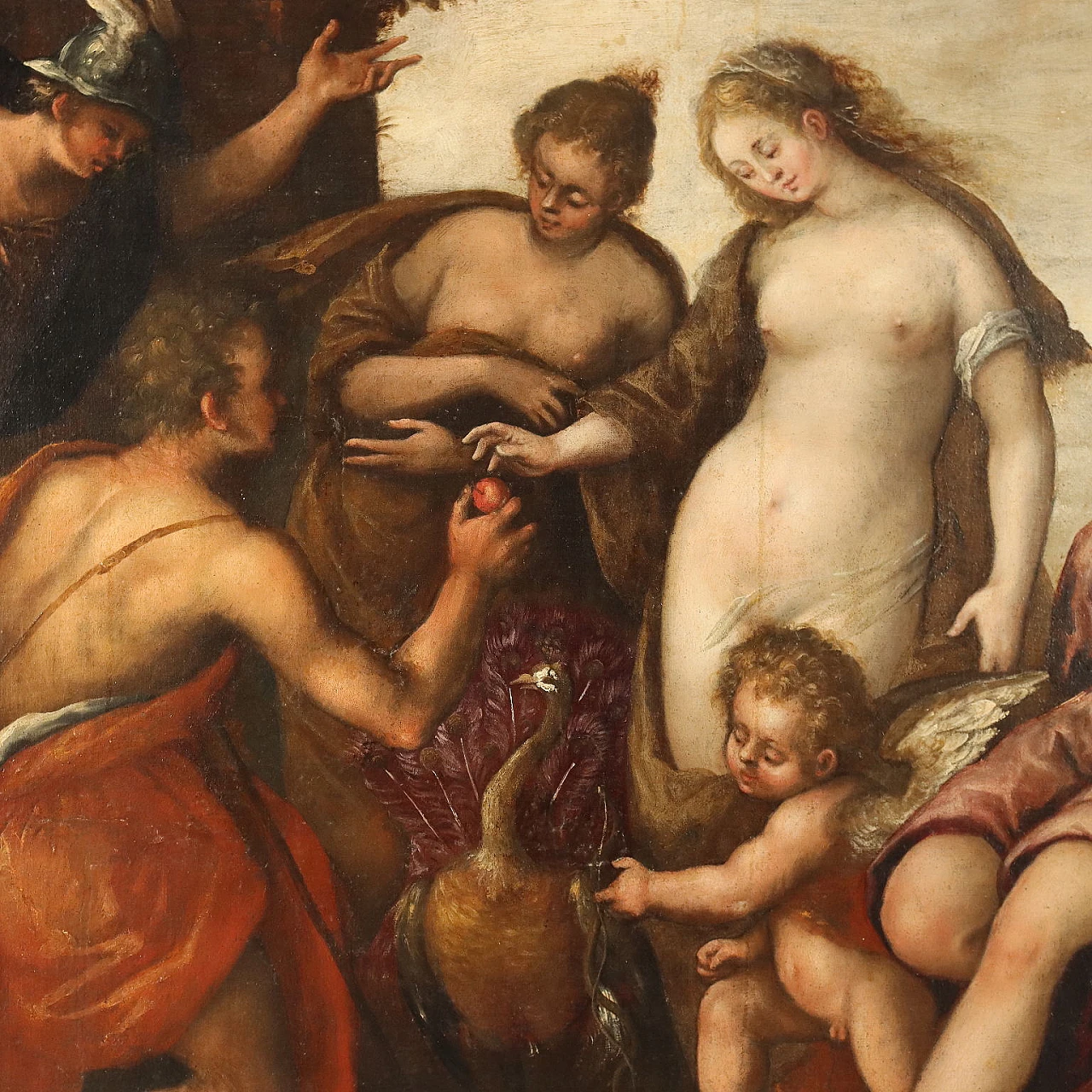
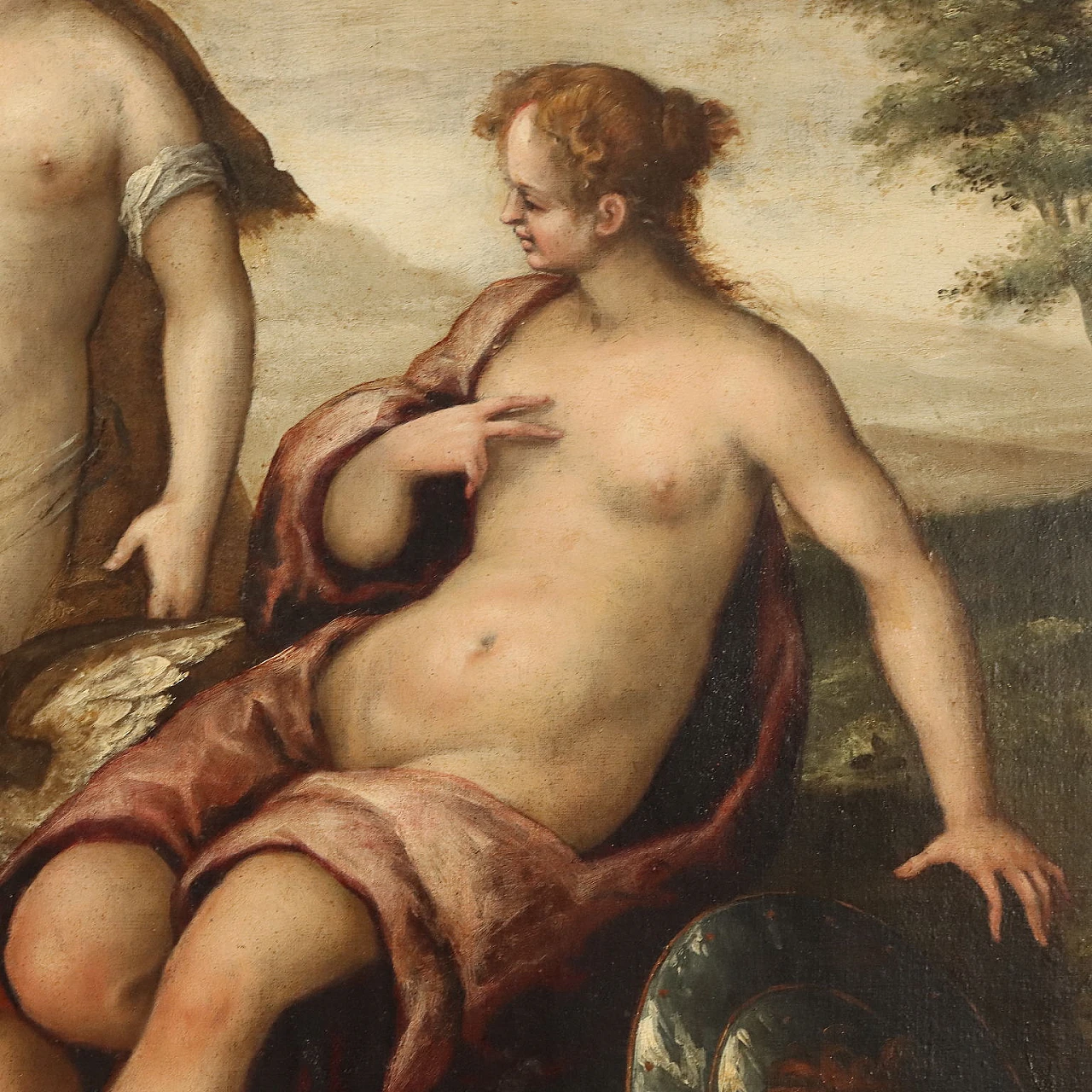
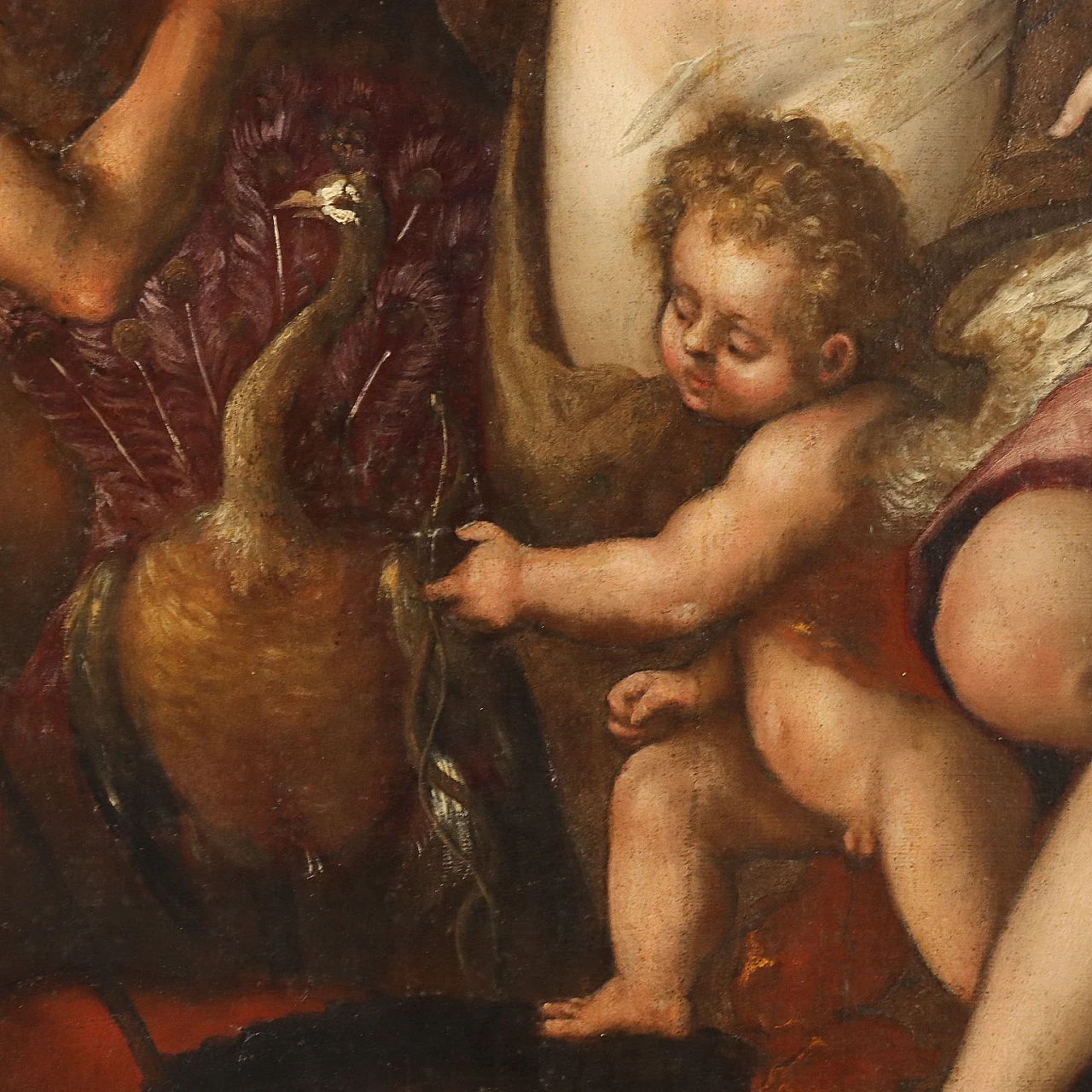
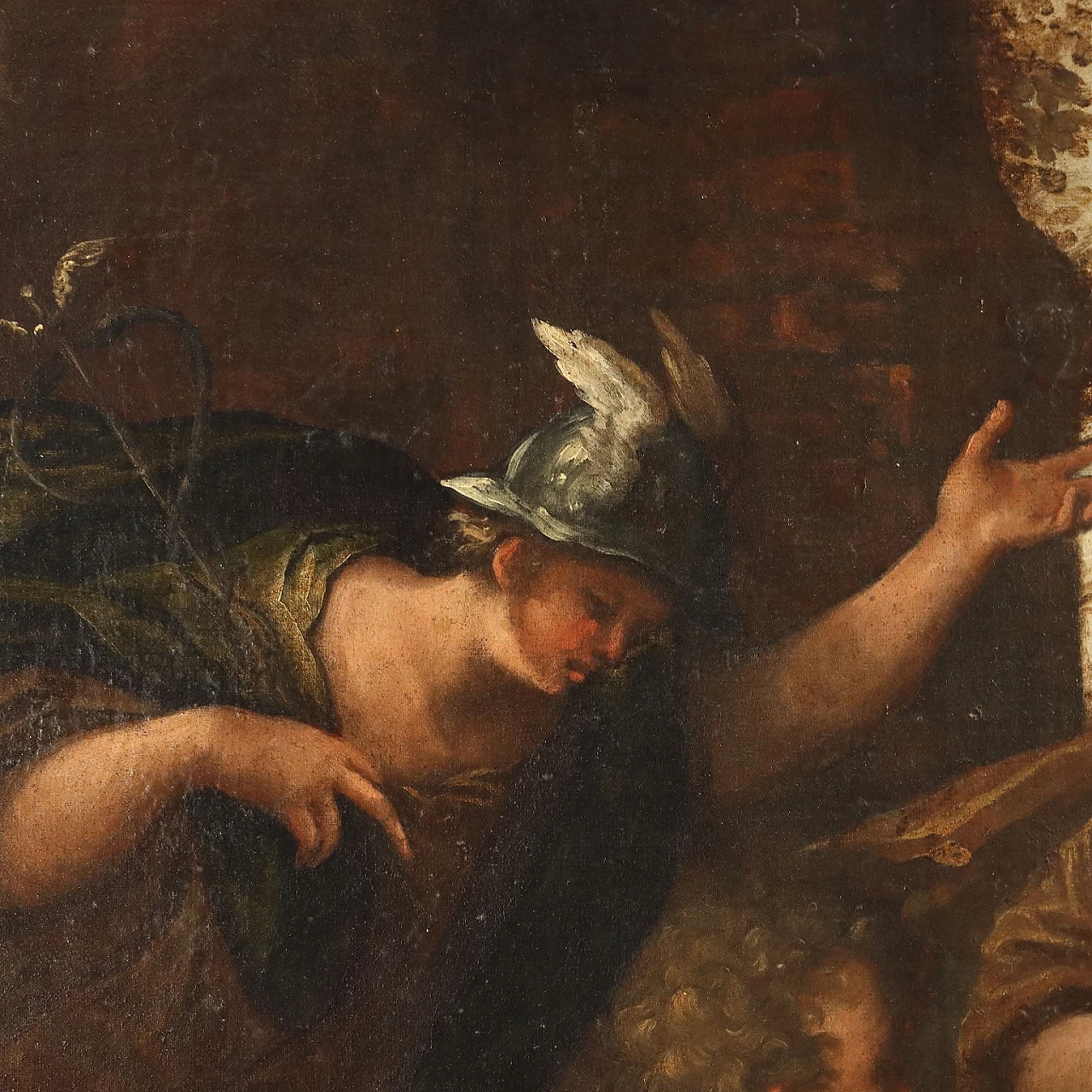
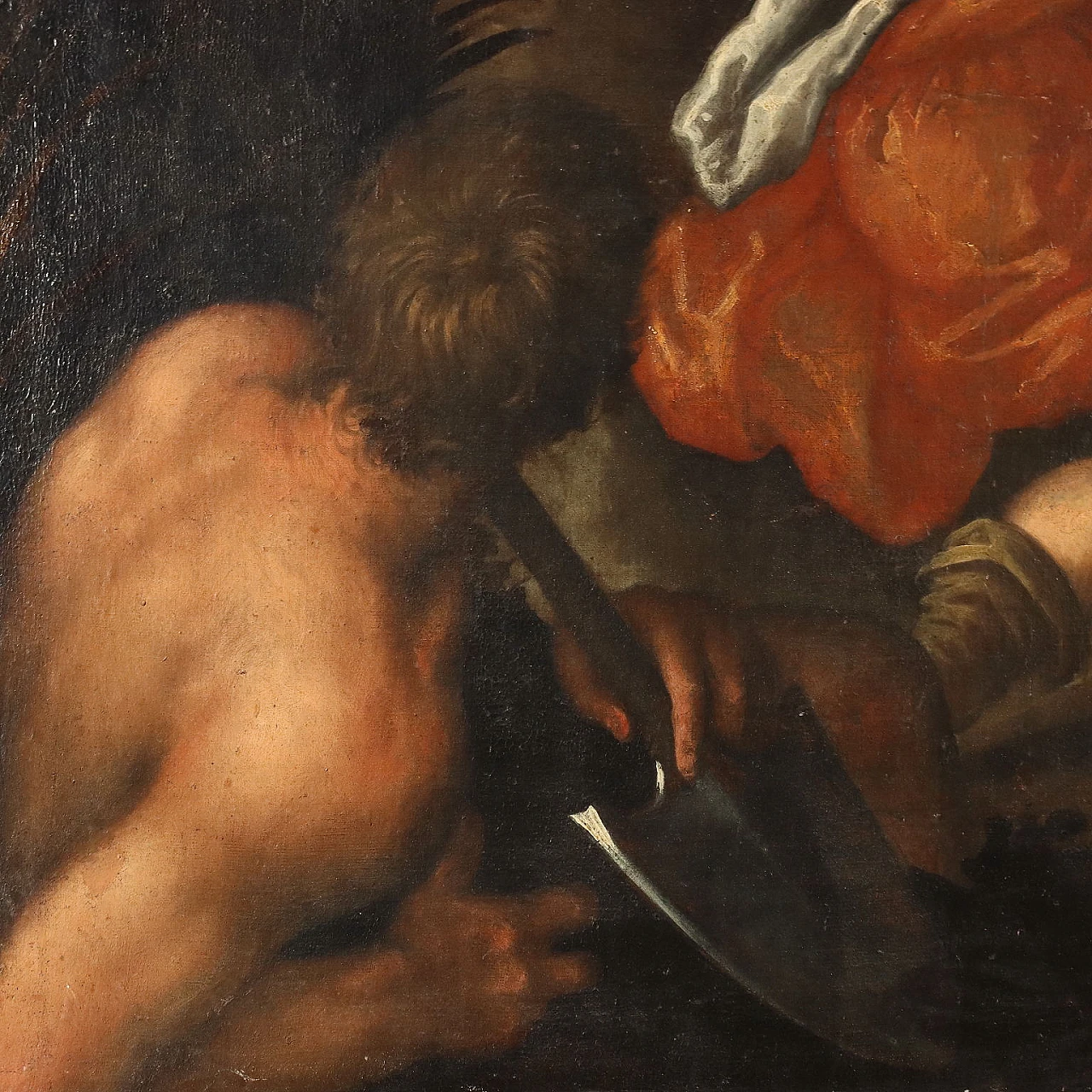
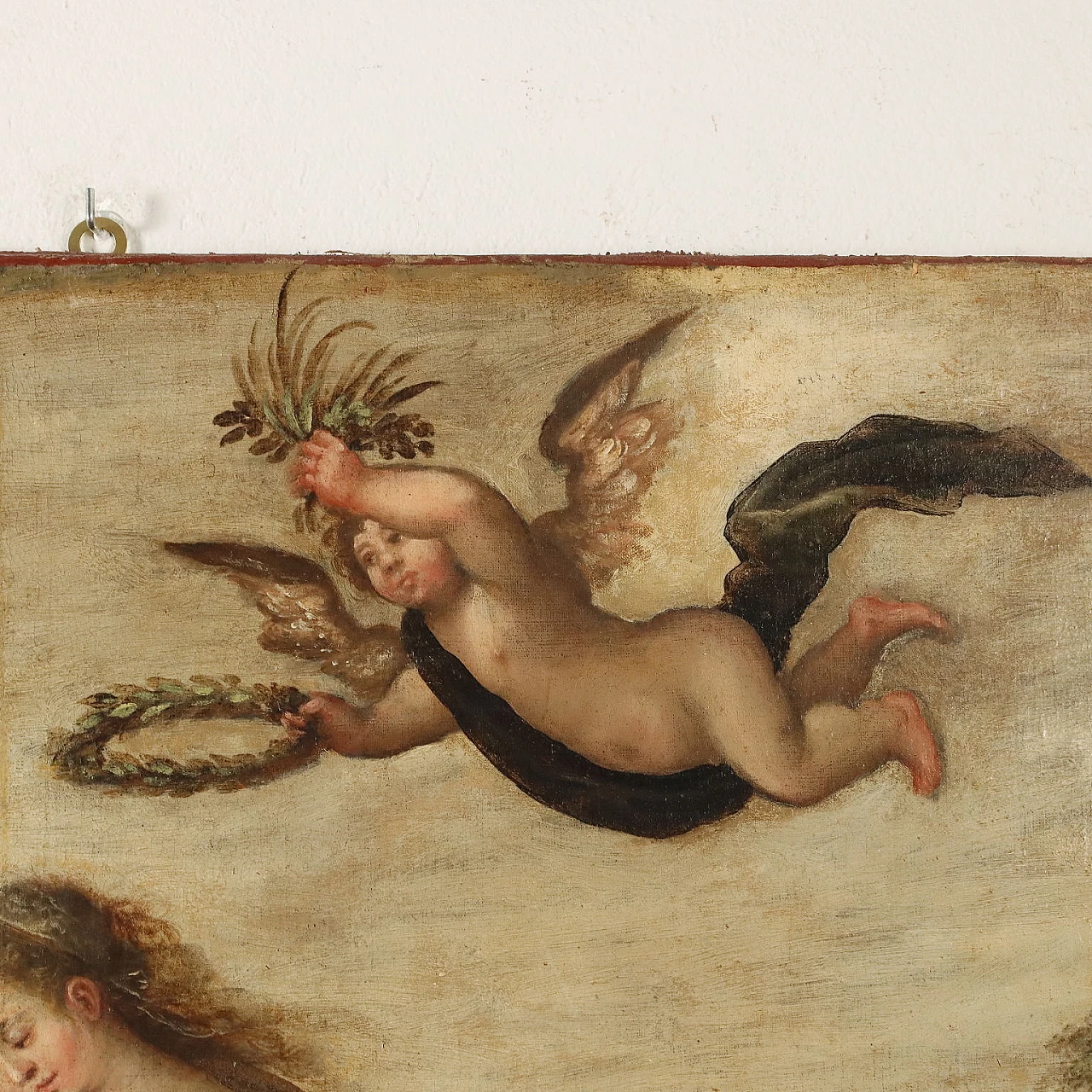
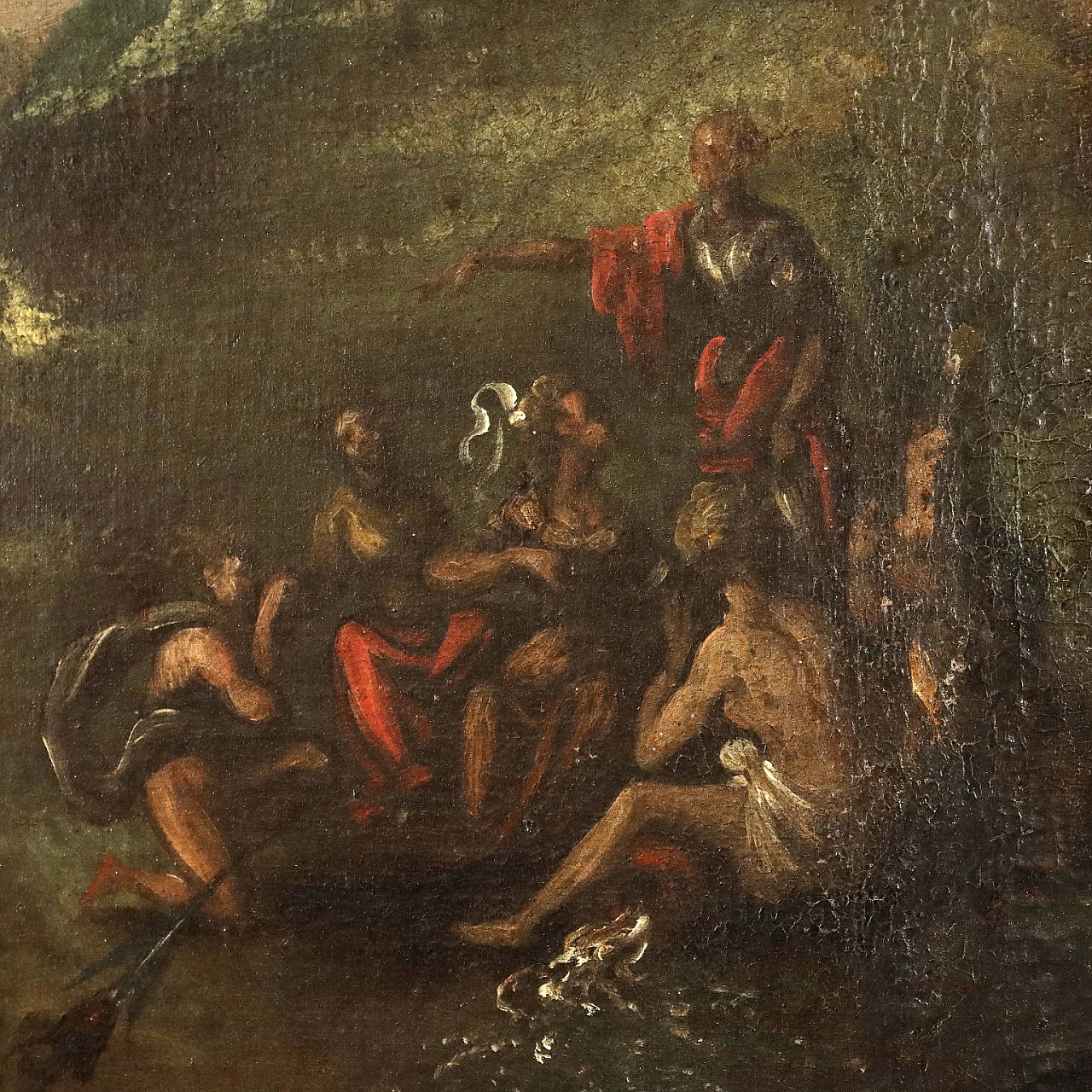
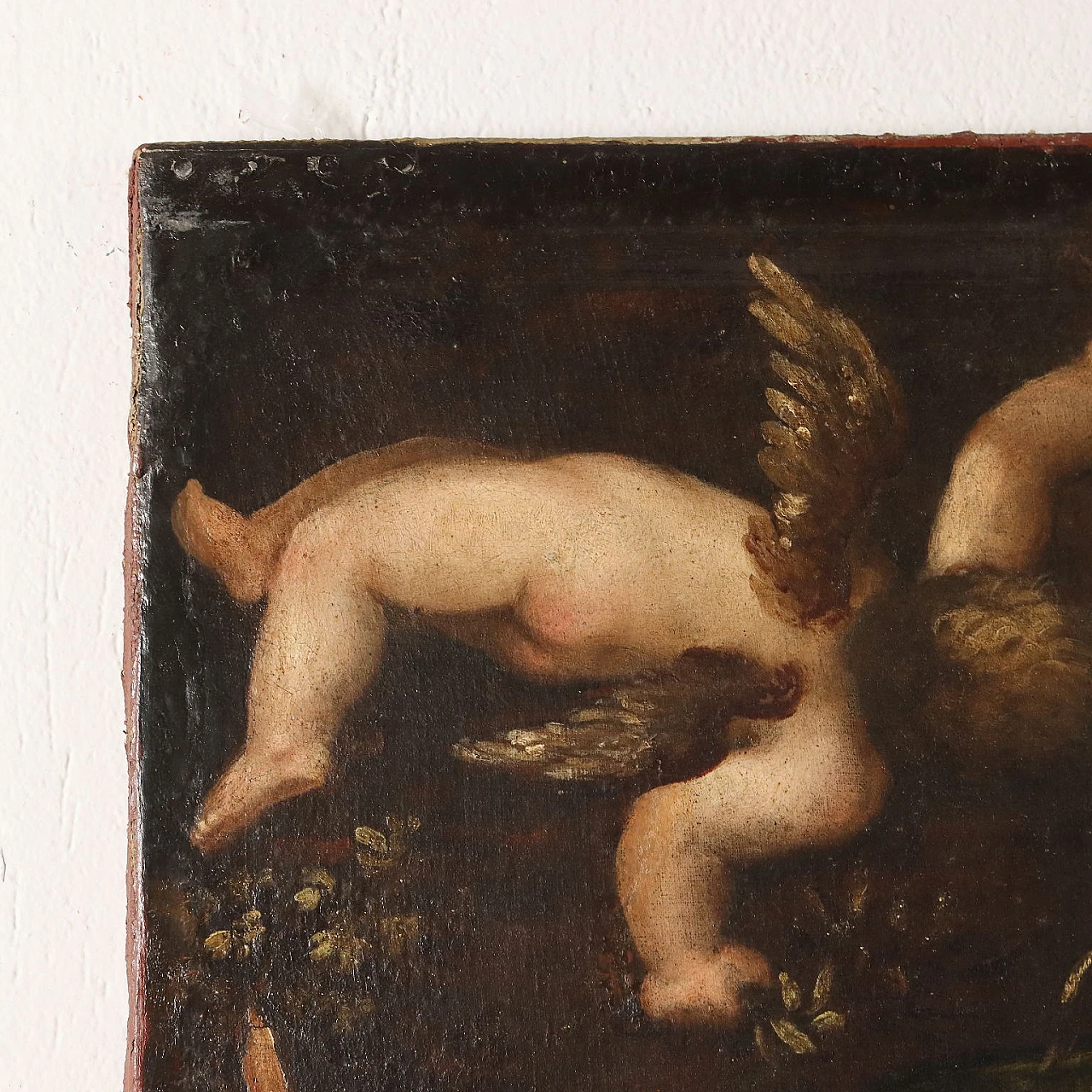
Oil on canvas. The model is derived from an engraving by Marcantonio Raimondi based on a drawing by Raphael, specially made for the graphic work, and derived from a painting in the Stanza della Segnatura (1513-1515) in the Vatican Museums. This model was later taken up and varied in painted works as well as in other engravings, in particular in Raphael Sadeler's 1589 engraving, now in the Cabinet of Drawings and Prints of the Accademia Carrara in Bergamo: the painting shown here in fact shows the same changes made to Raphael's original. At the centre of the mythological scene immersed in a natural landscape are the three goddesses competing for the title of most beautiful: Juno with the peacock, her symbolic animal, Venus accompanied by Cupid, and Minerva next to whom are the helmet, spear and shield. Paris, from behind, is giving the golden apple that decrees the winner to the goddess of love, under the gaze of the judge Mercury. Two putti flutter around the protagonists, while in the foreground, again from behind, is a male figure. On the meadow behind, a rural boarding school is taking place. The work, as a small cartouche attests, is attributed to Domenico Lupini, an artist about whom not much is known but whose sphere of activity can be assumed to have been between Bergamo and Venice. The only two signed works are a 'Converted Magdalene' and an 'Annunciation', but other works have been attributed to him by scholar Federica Nurchis and are located in the monastery of Santa Chiara in Bergamo. The painting presents a warm and refined chromatism that, together with the elegance of the characters and the compositional mode, suggest Lucini's Venetian sojourn, which seems to recall the atmospheres of Tintoretto, Veronese and Palma il Giovane. The painting shows signs of restoration and retouching.
ID: 2096-1704739157-79994
Time period


 PLATINUM Seller in Milano, Italy