


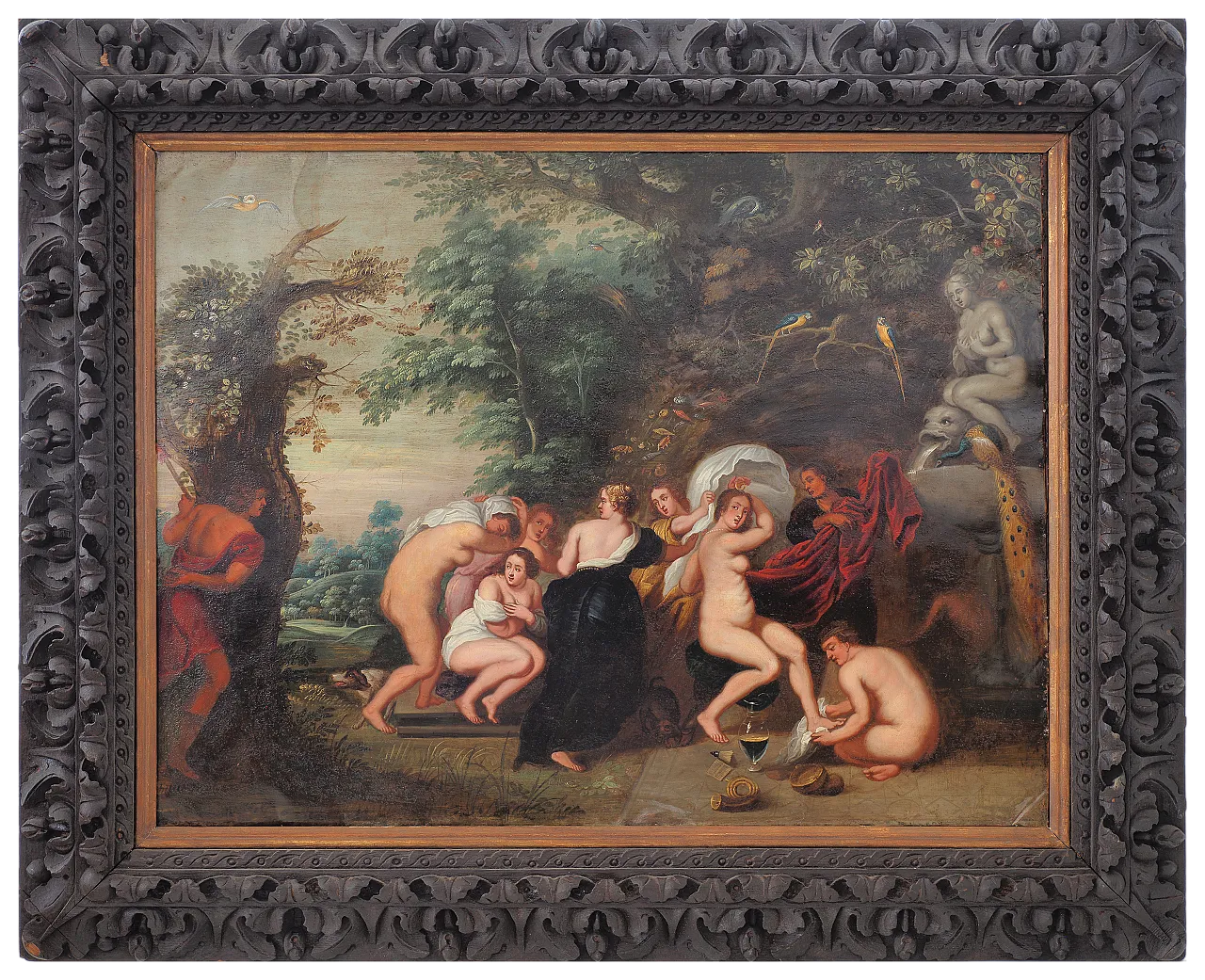
Diana and the Nymphs Surprised by Actaeon, 17th century
.png)
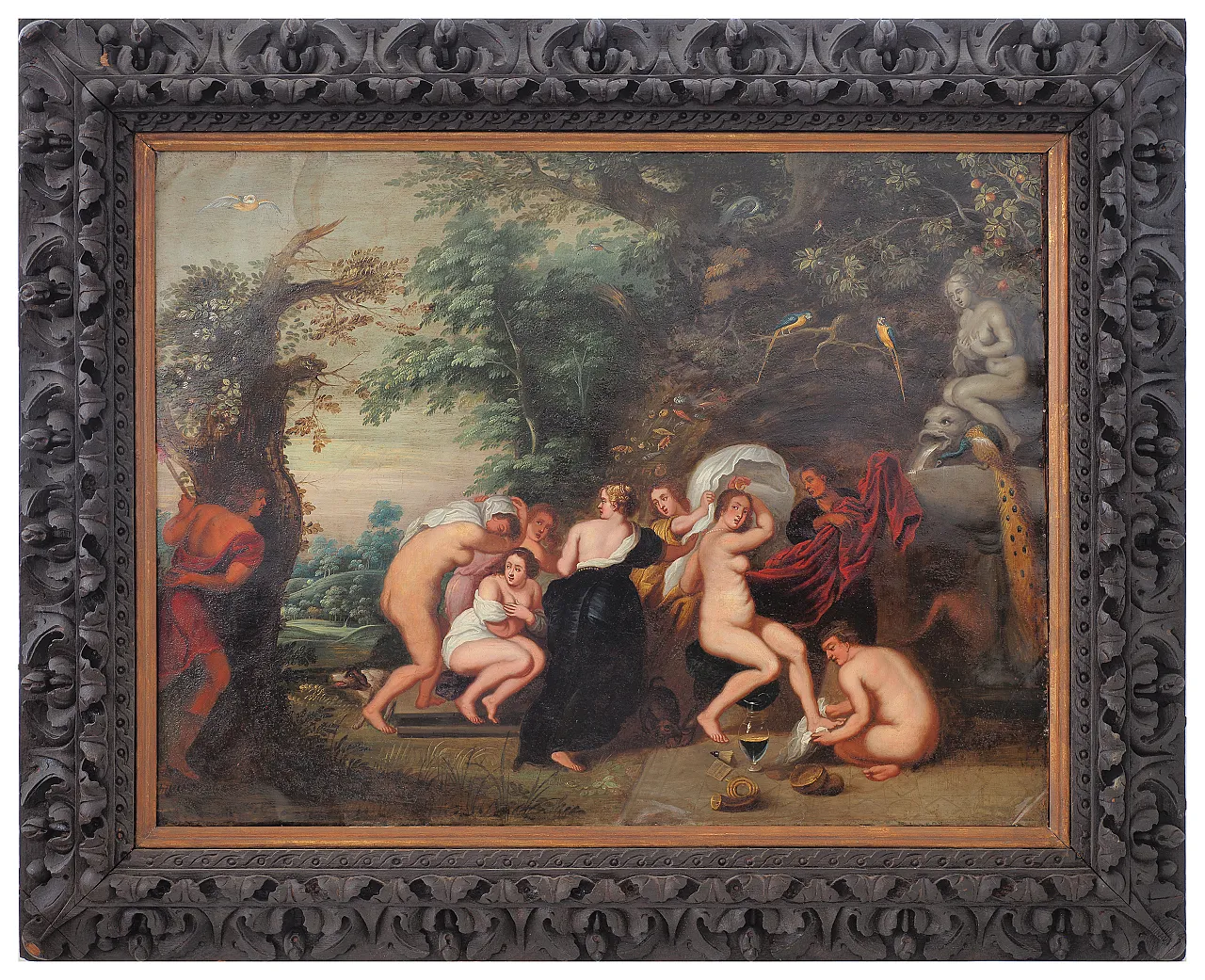
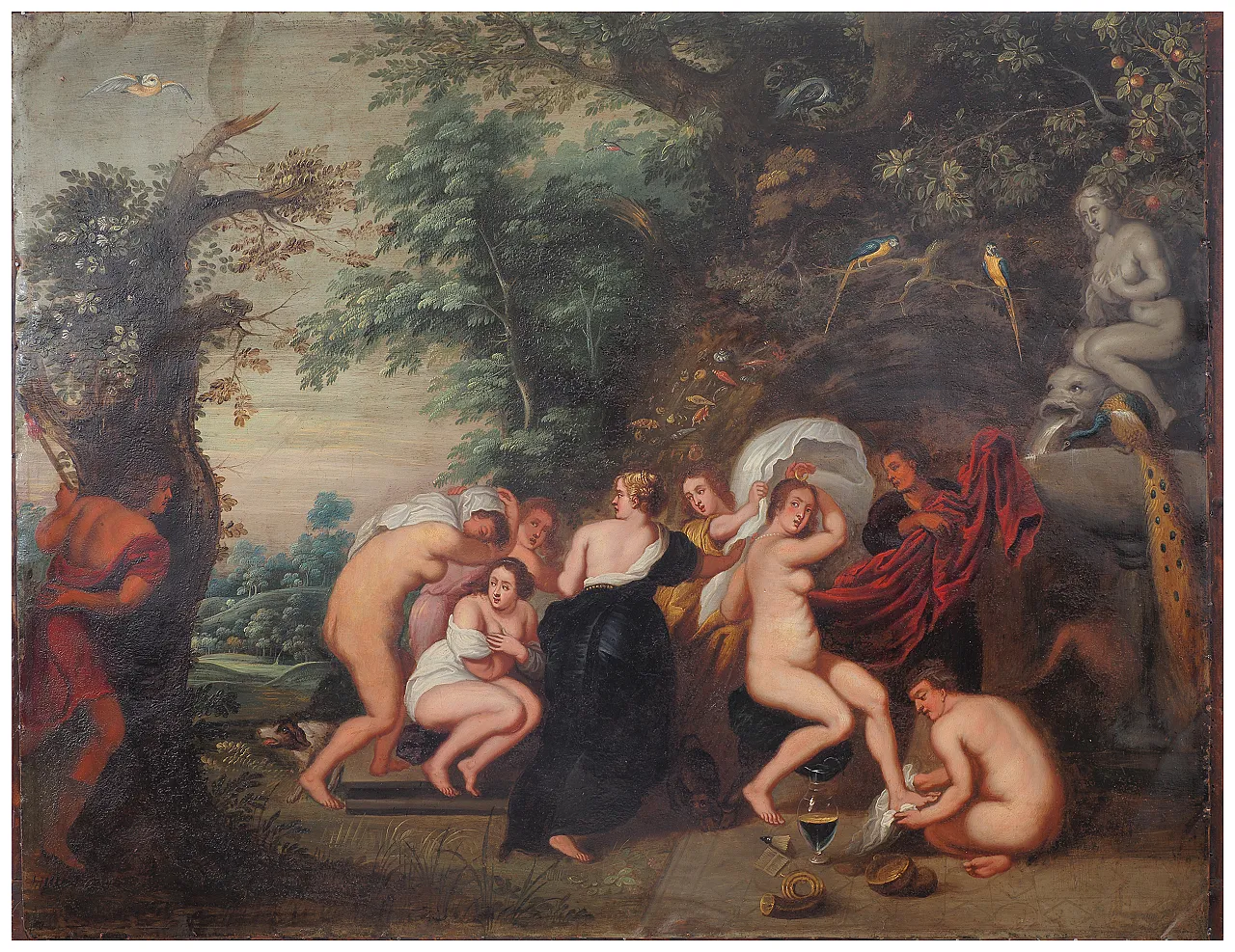
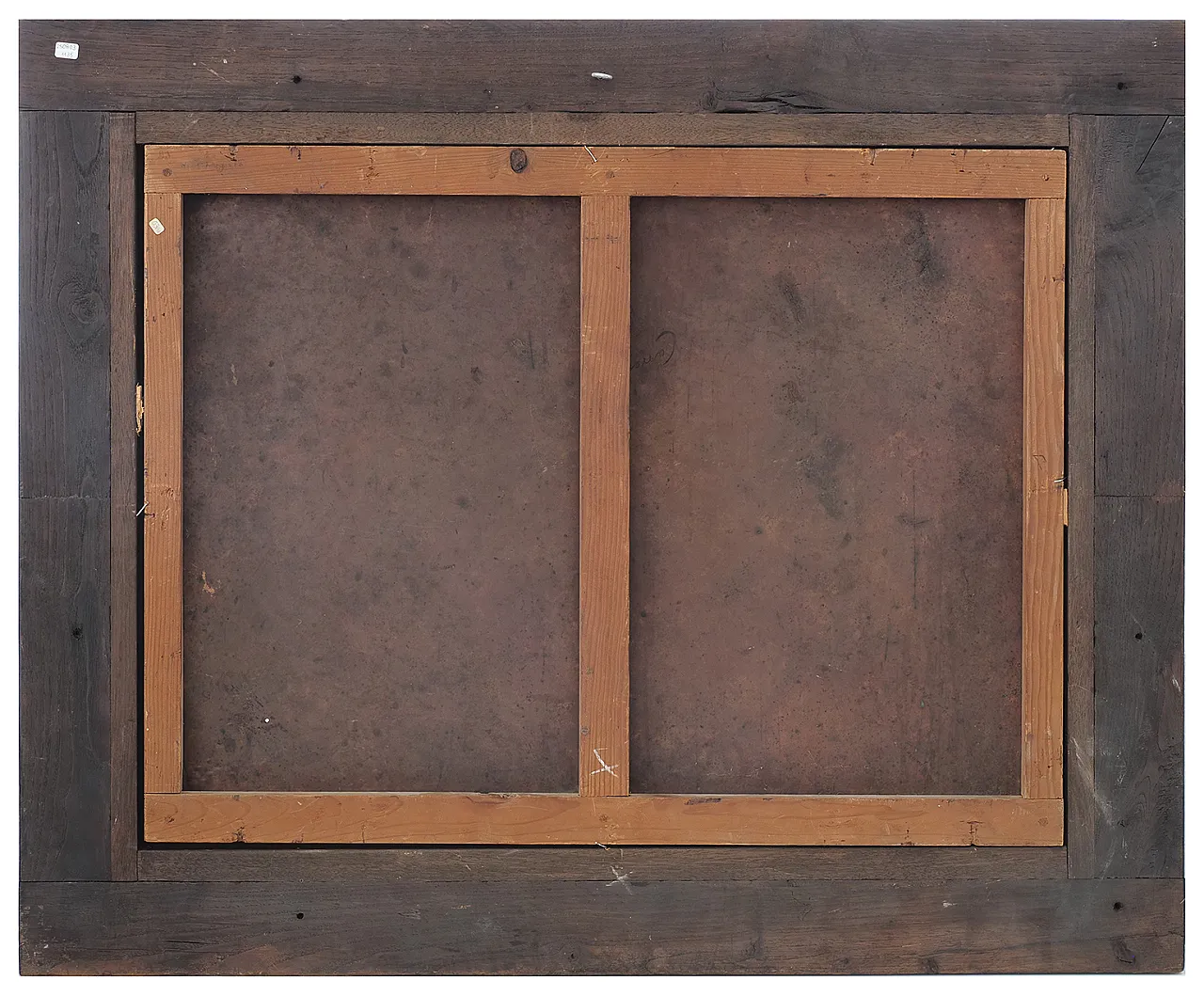
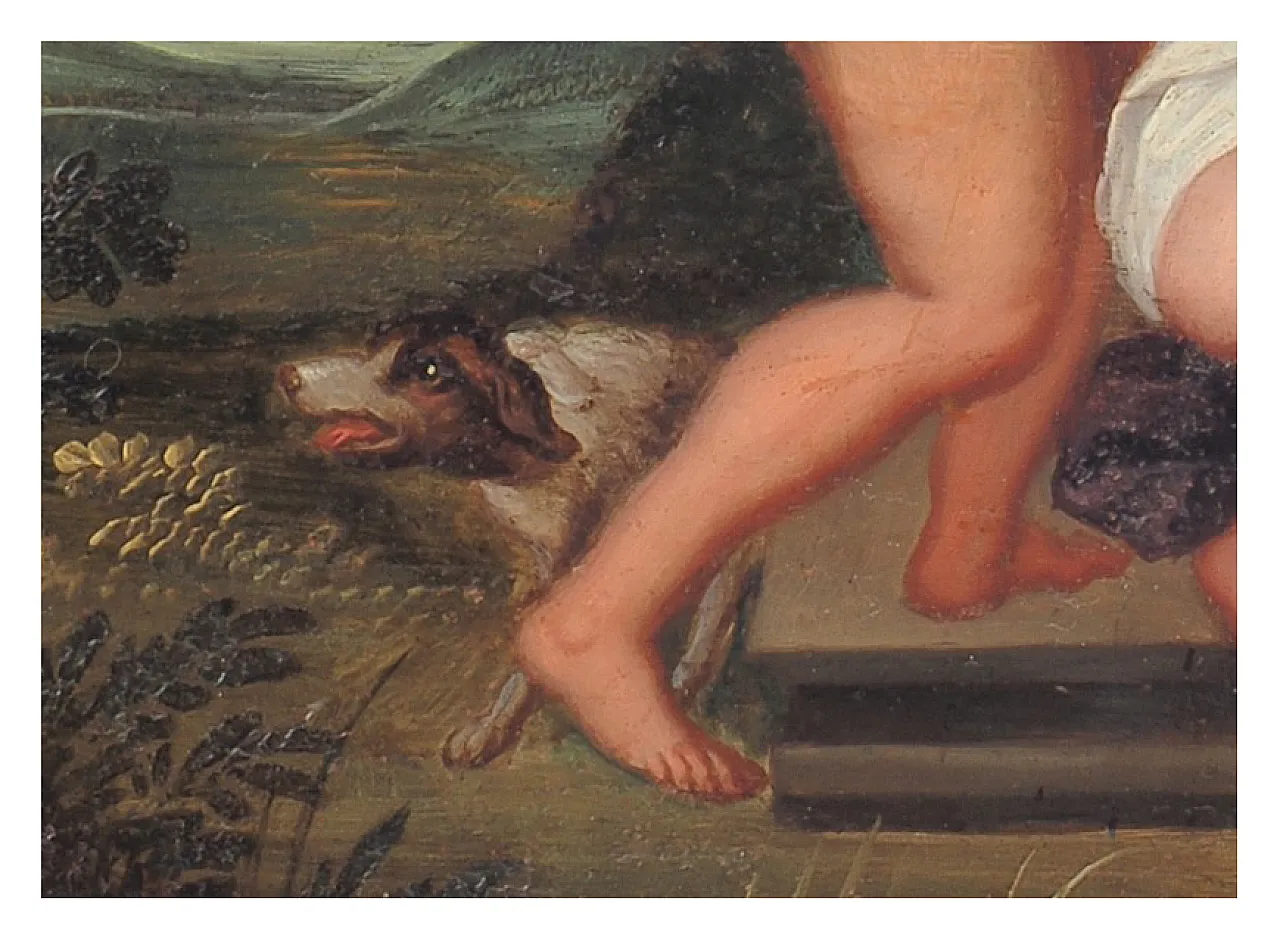
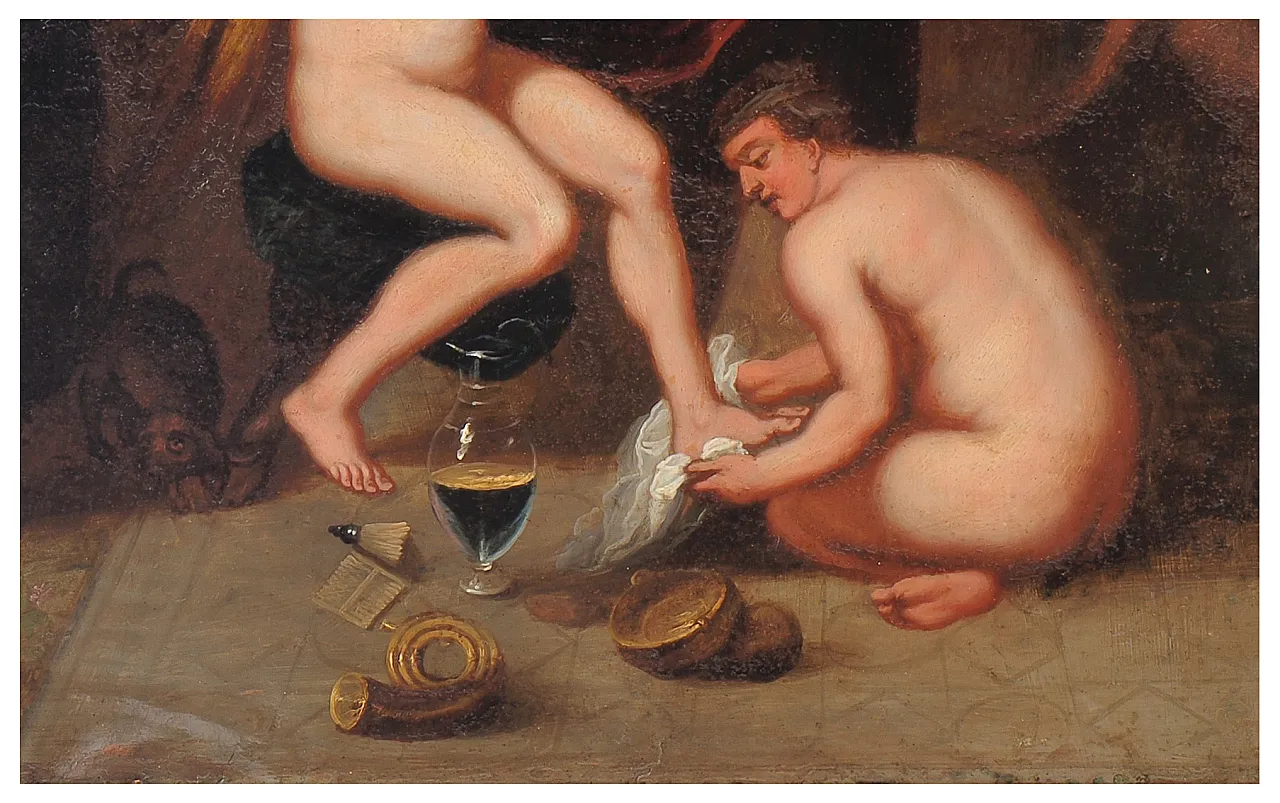
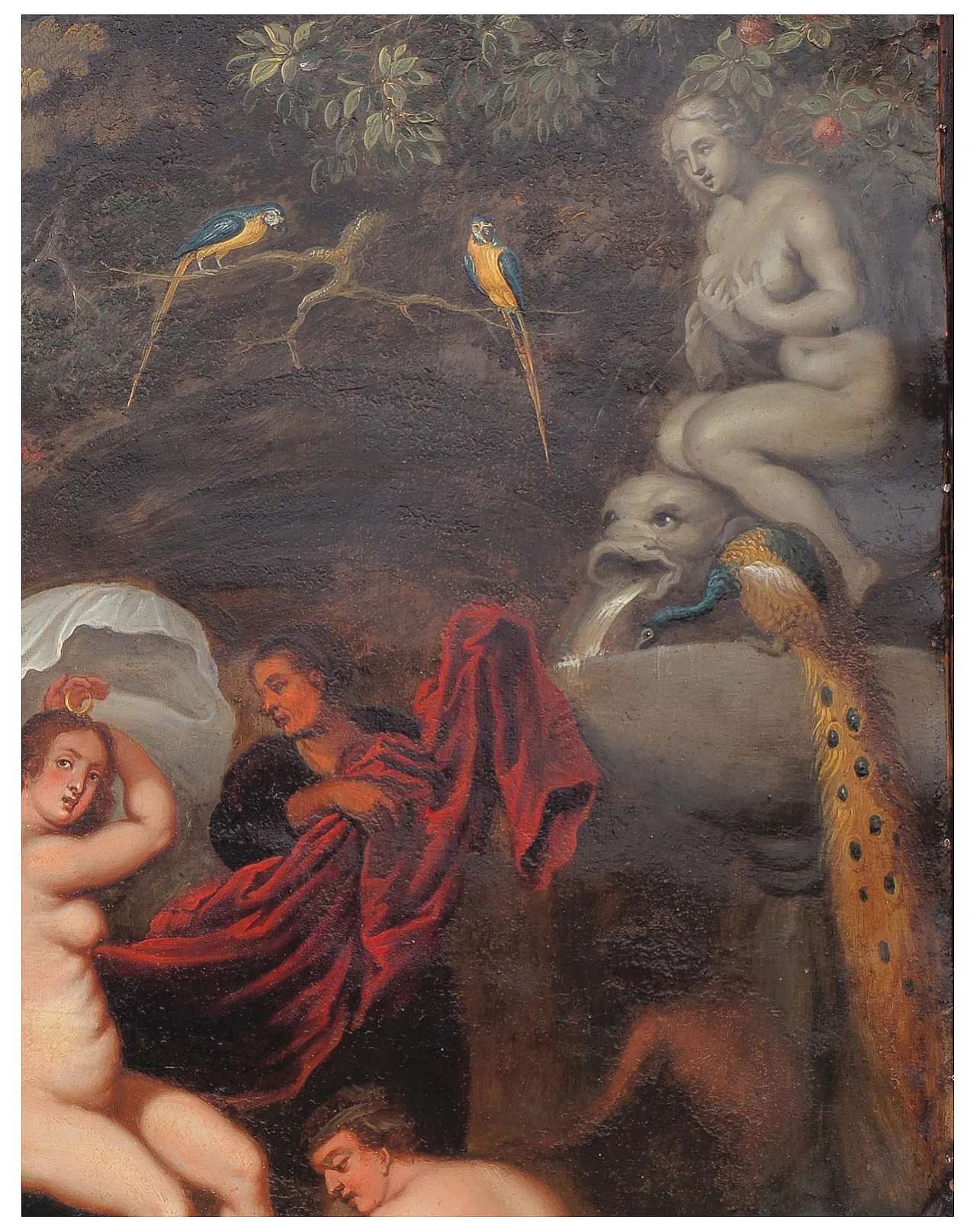
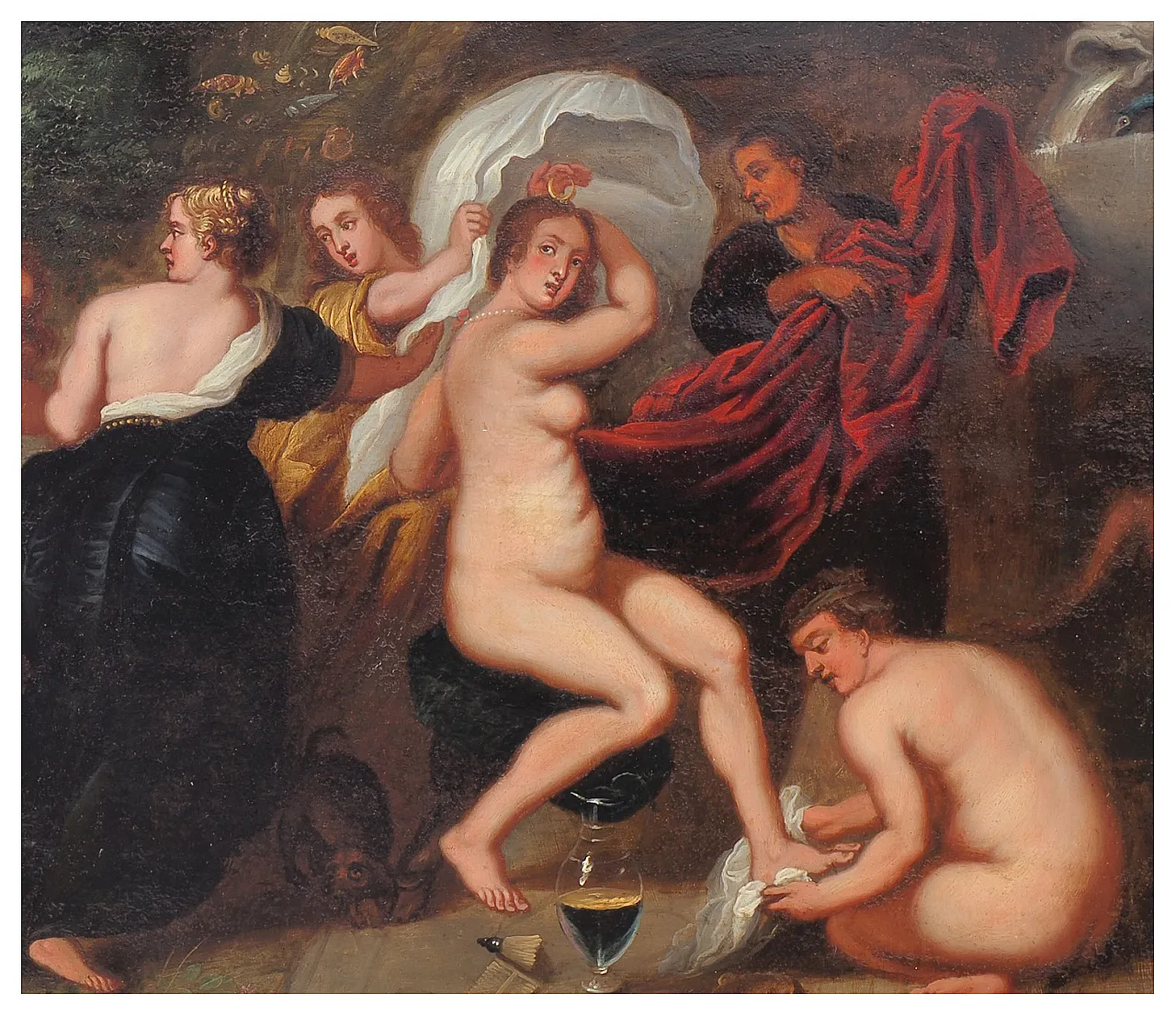
Hendrick van Balen (circle of) (Antwerp, 1575 – 1632) Diana and the nymphs surprised by Actaeon Oil on copper, cm. 55×71.5 Within wooden frame The painting presents a complex mythological episode taken from Ovid's Metamorphoses: Actaeon, a young hunter, surprises Diana and her entourage of nymphs while they bathe in a secluded forest. Hidden among the trees on the left, the hero observes the female group, who react with surprise and modesty. The center of the scene is occupied by a large group of naked or partially veiled female figures, rendered with light and soft skin tones, according to a typical Flemish style. Some nymphs try to cover themselves with drapes, others turn towards the intruder with excited gestures. At the back there is a wooded landscape rich in naturalistic details: leafy trees, fruits, colorful birds (parrots, doves, exotic birds) and decorative animals such as the peacock, a symbol of vanity and beauty. On the right he compares a cave adorned with statues and fantastic figures, including a sphinx, to underline the mythical and fairy-tale character of the scene. The first floor houses still life: baskets, vases and containers, details that refer to Flemish taste for descriptive precision. The whole, despite the narrative complexity, maintains a harmonious balance between figure and landscape, with a clear and brilliant chromatic range that enhances the fairy-tale tone of the composition. The work is carried out on a copper plate, a particularly valuable and expensive support, used above all between the 16th and 17th centuries. Copper made painters obtain a smooth surface, suitable for meticulous and brilliant layouts, with enamel effects and superior brightness compared to canvas or wood. This support was intended for cultured and refined clients, often from an aristocratic background. The medium-large format gives the work an important character, superior to the typical smaller copper tablets.
ID: 73557-1760107597-133318
Time period

 SILVER Seller in Venezia, Italy