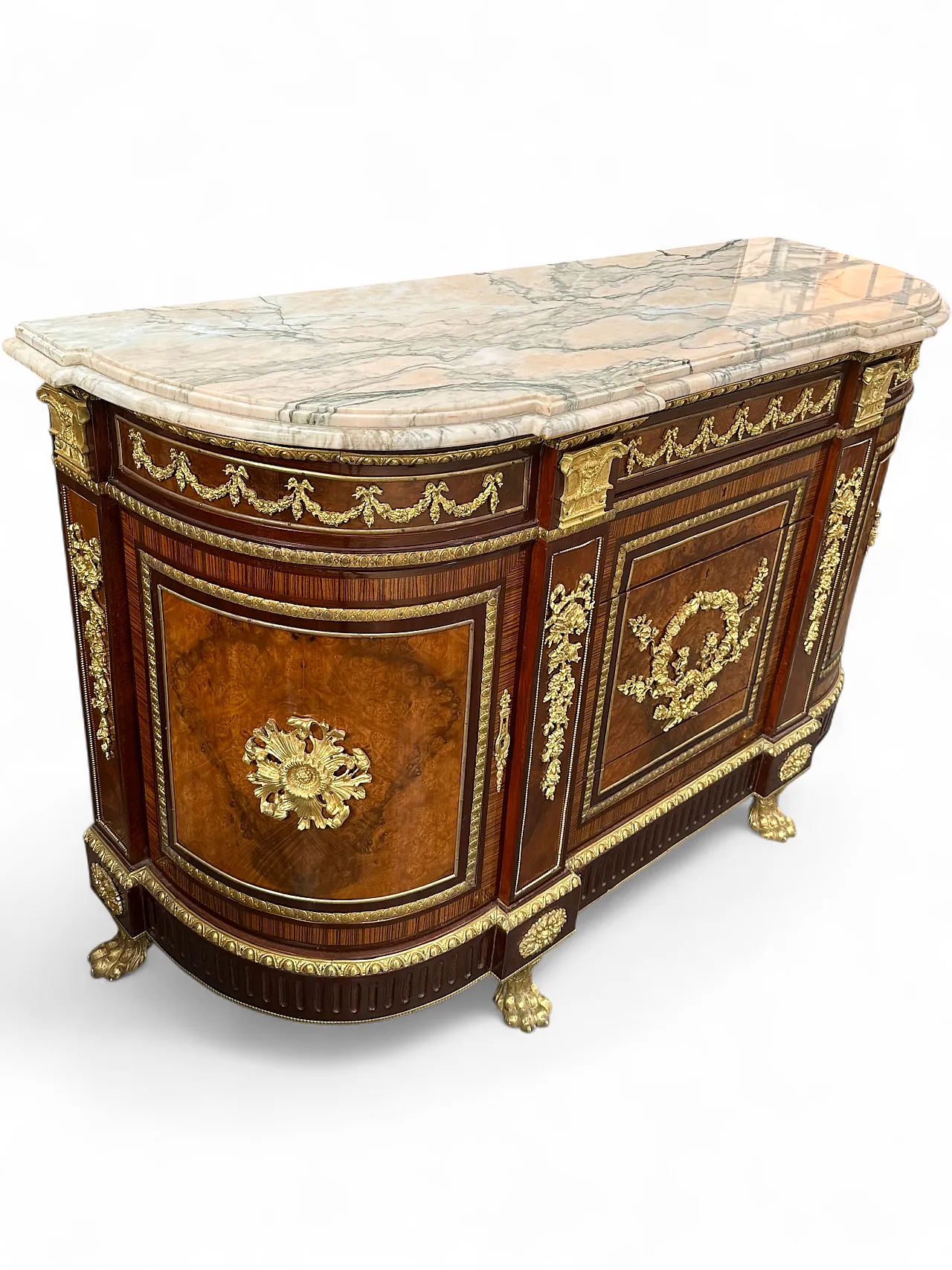
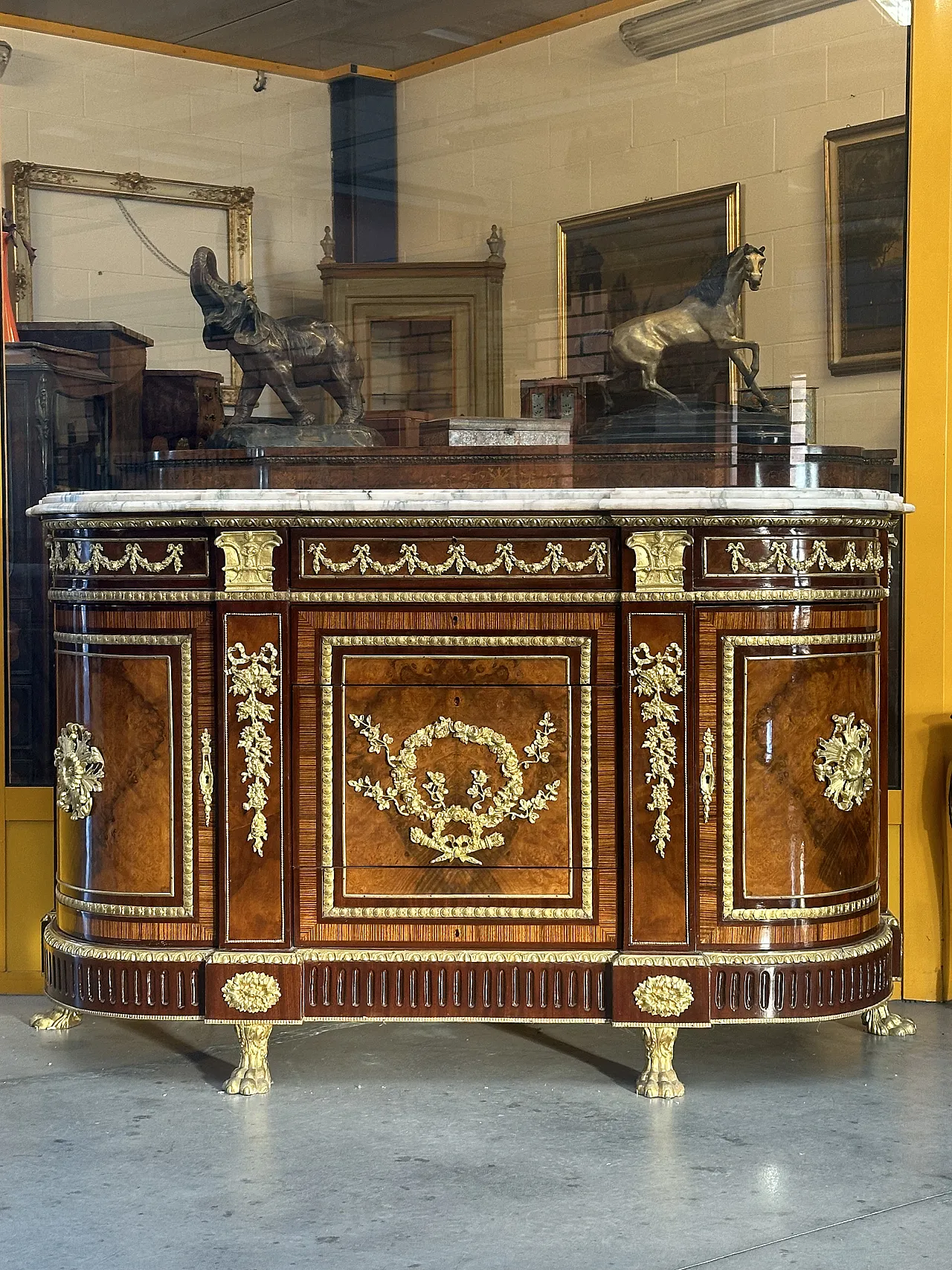
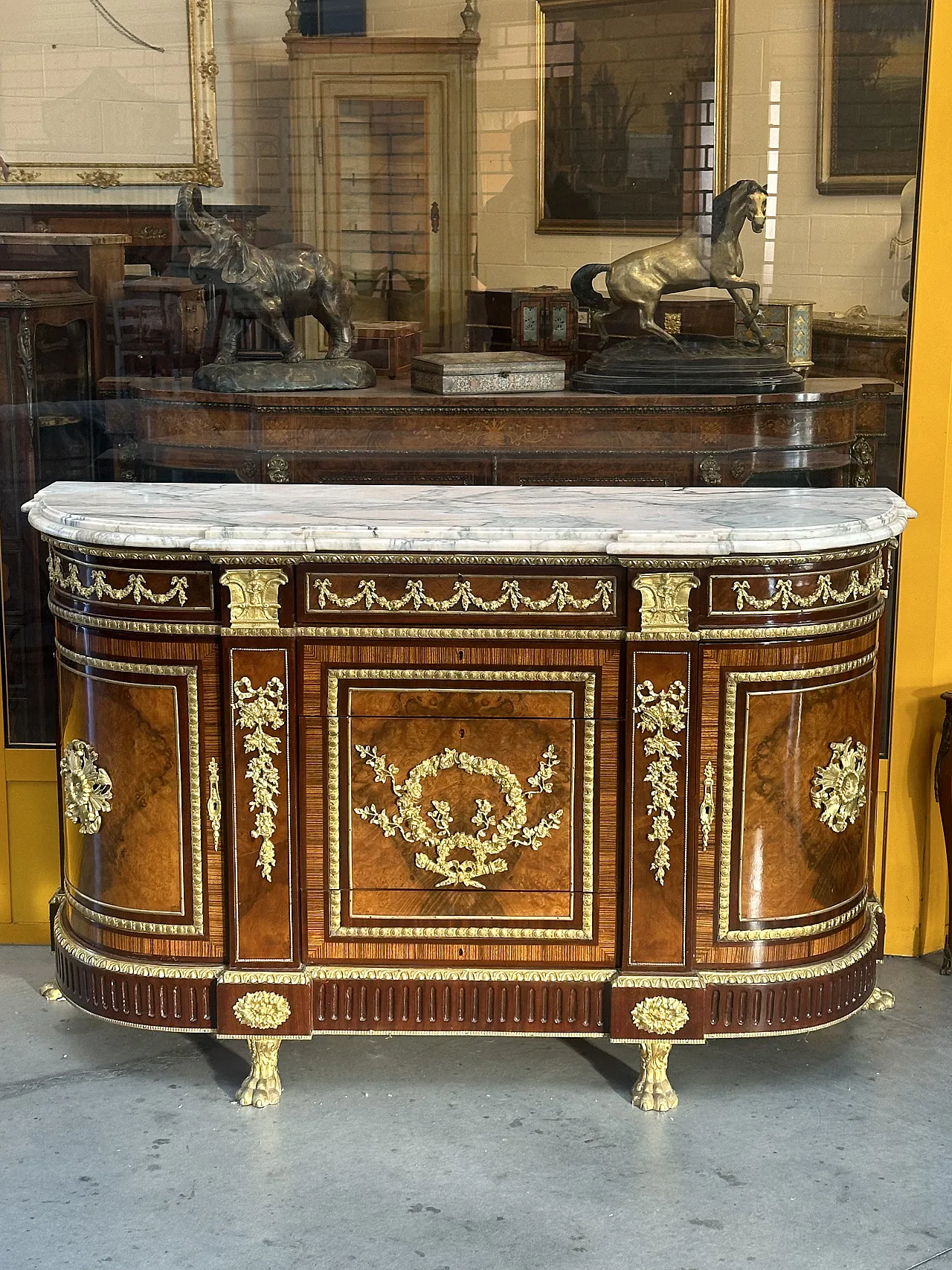
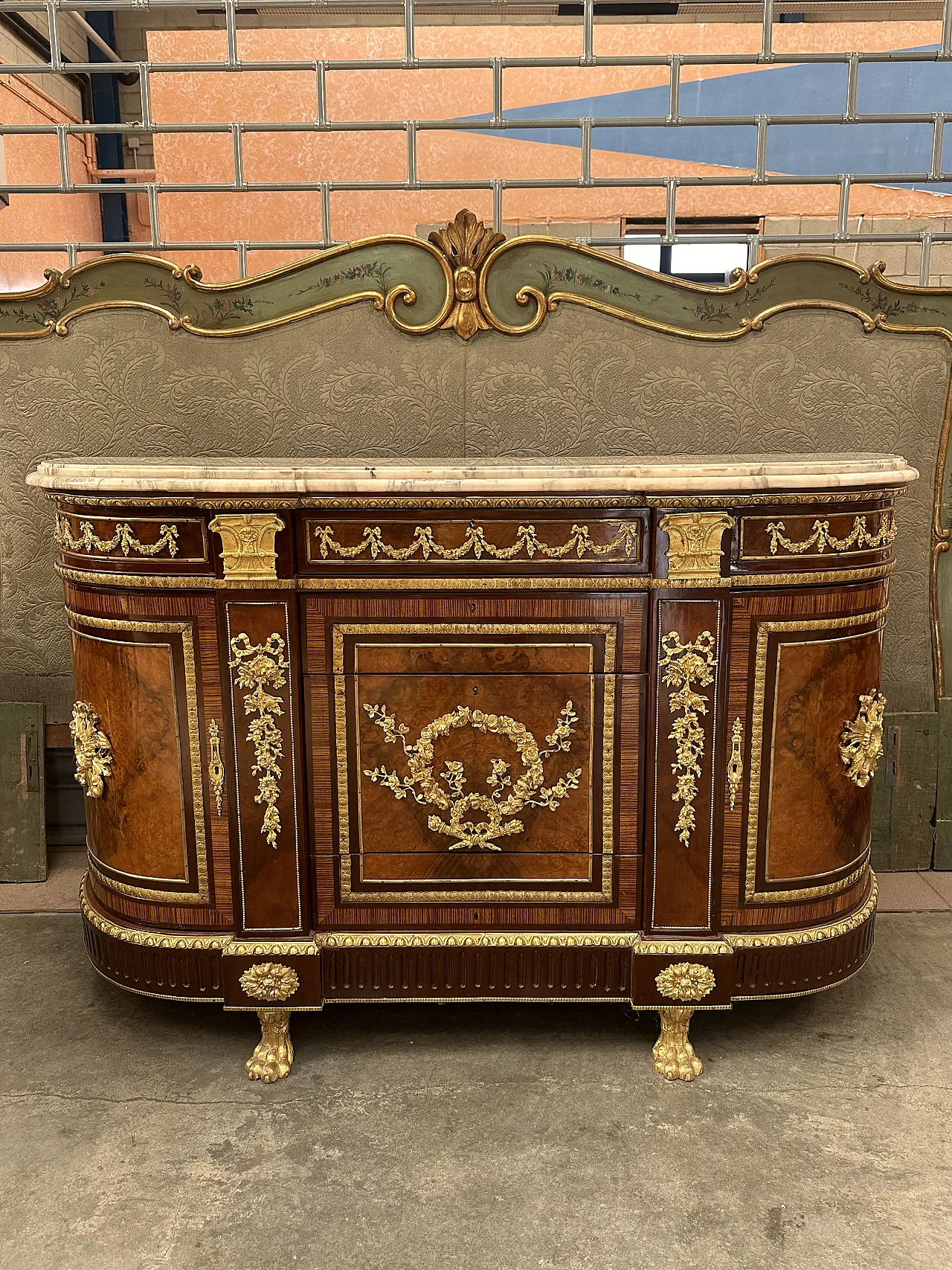
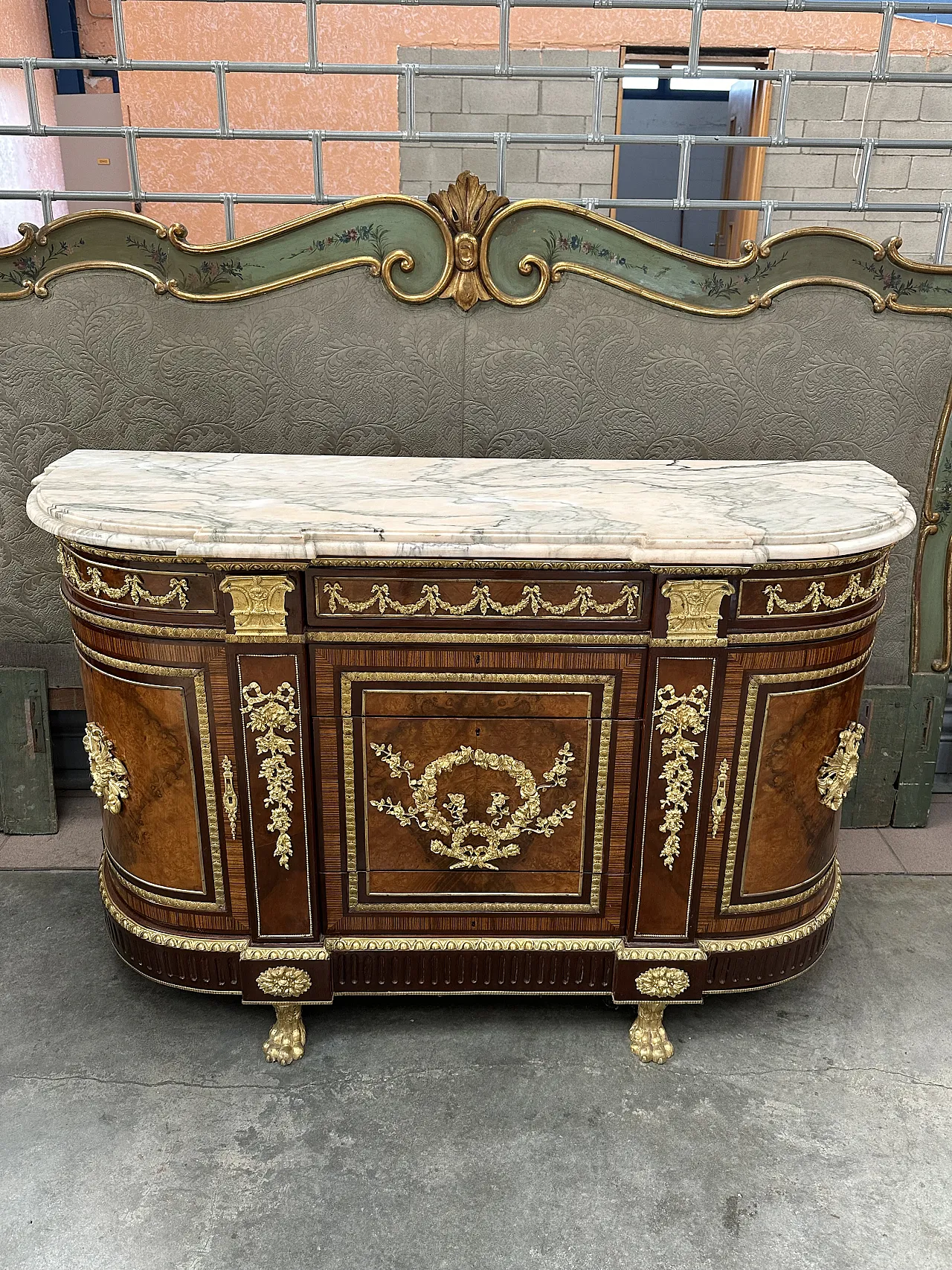
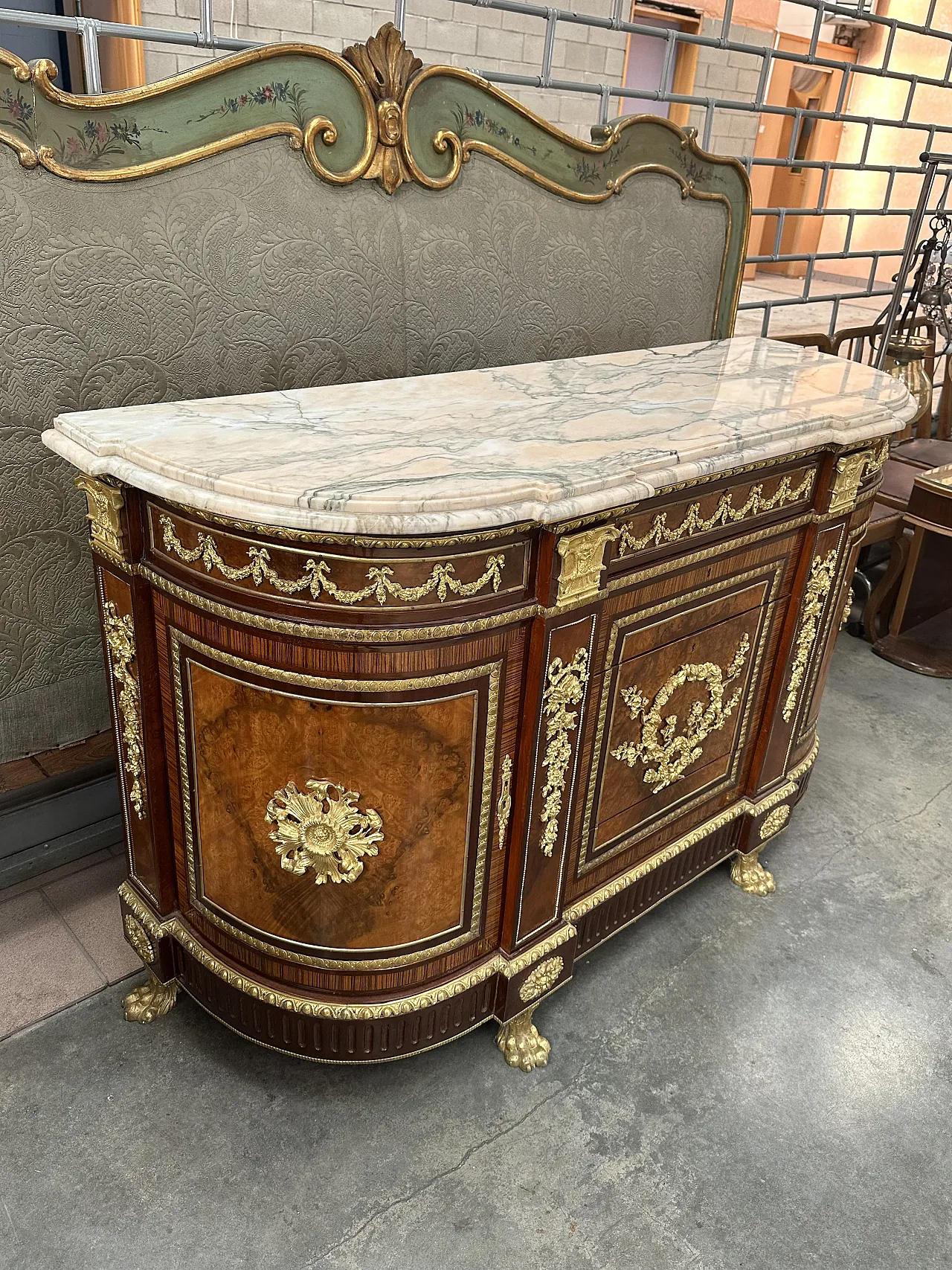
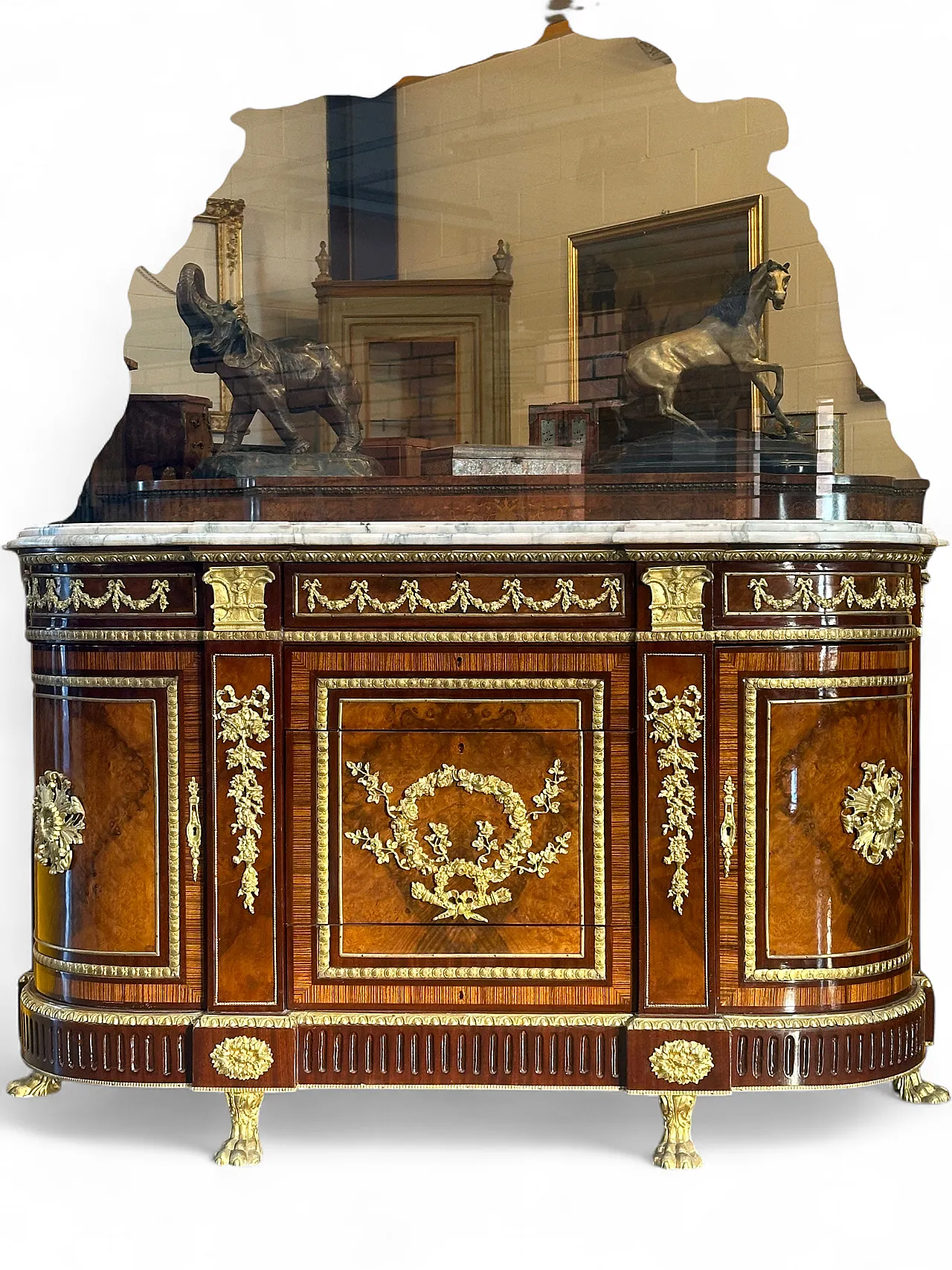
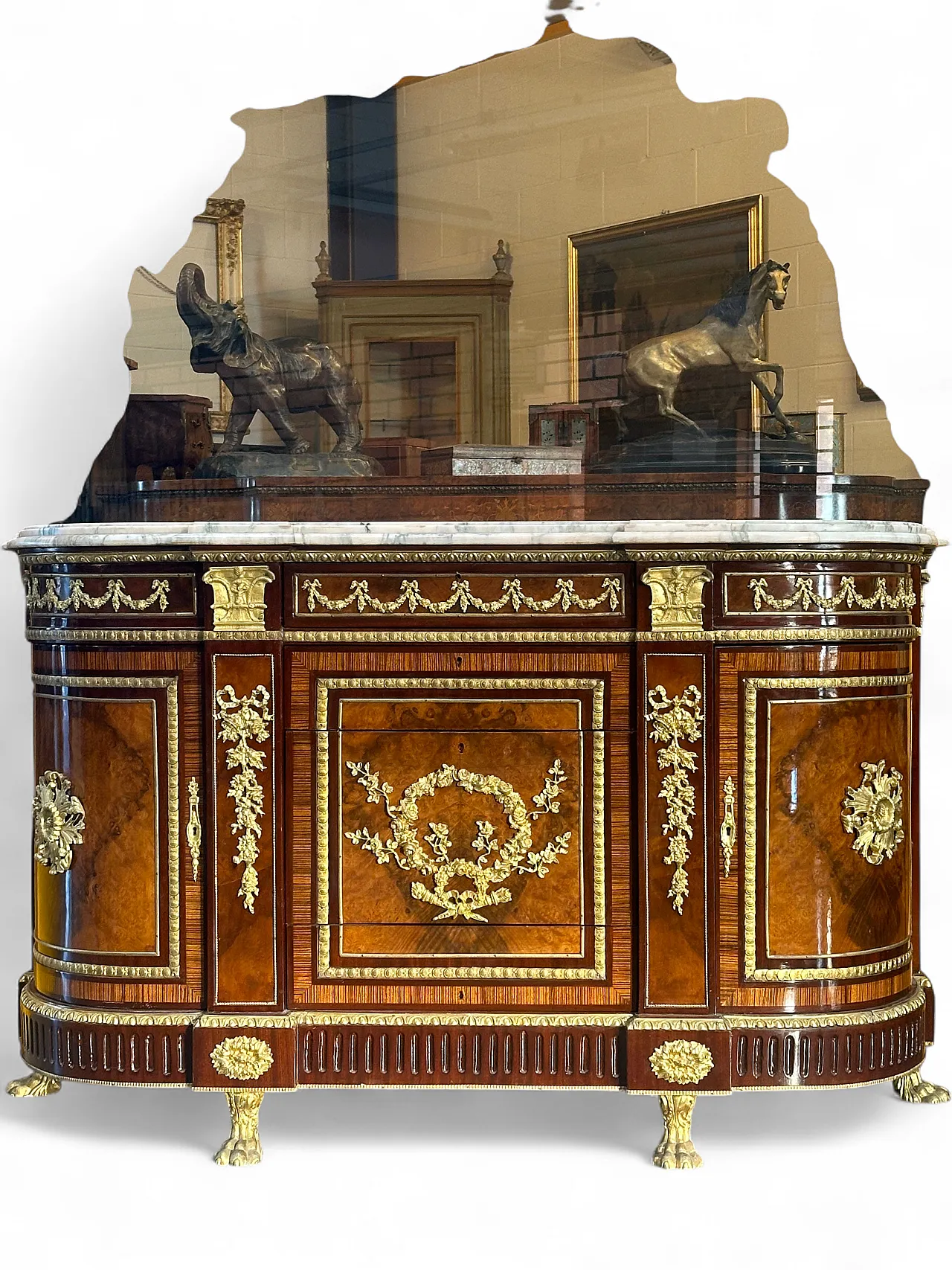
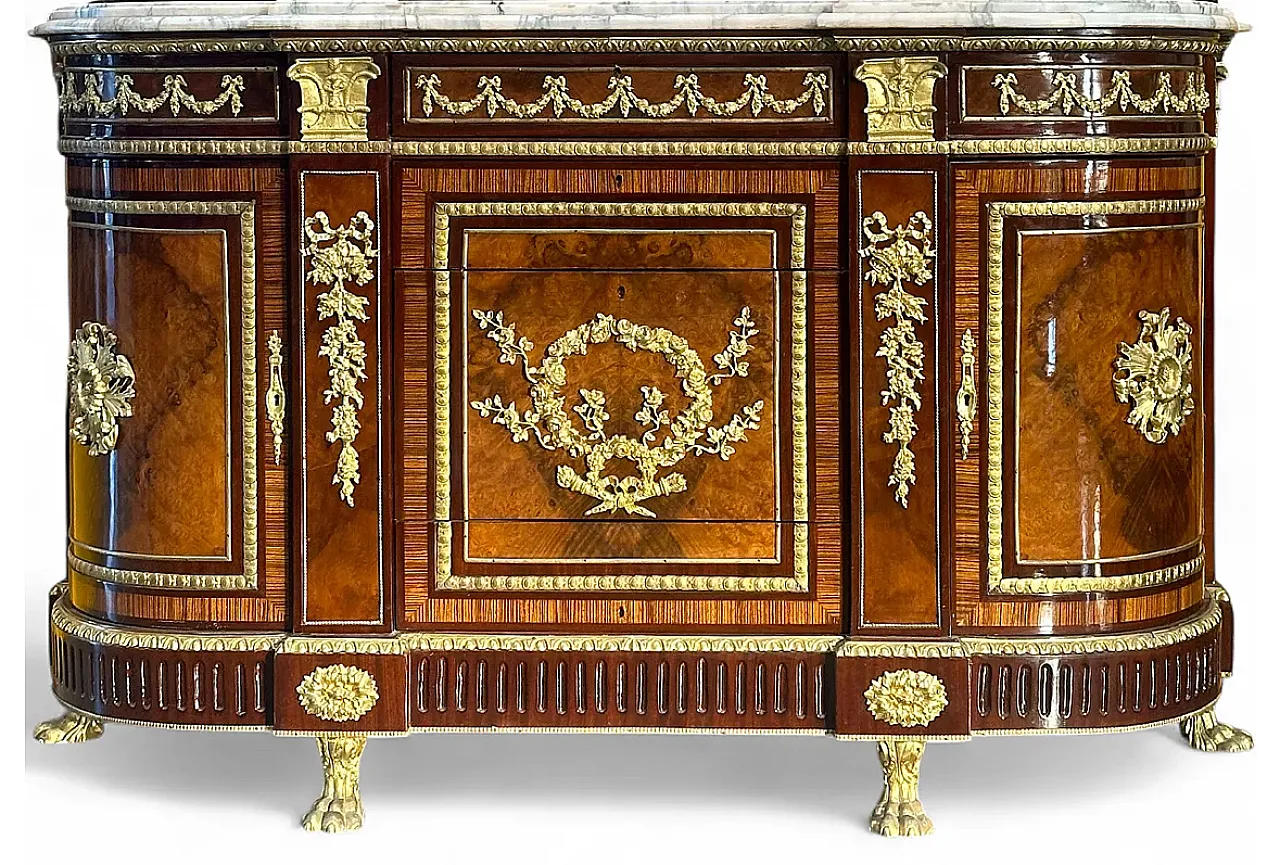
Imposing and elegant Commode de Chateau in Louis XVI style made in Paris in the early 1900s.
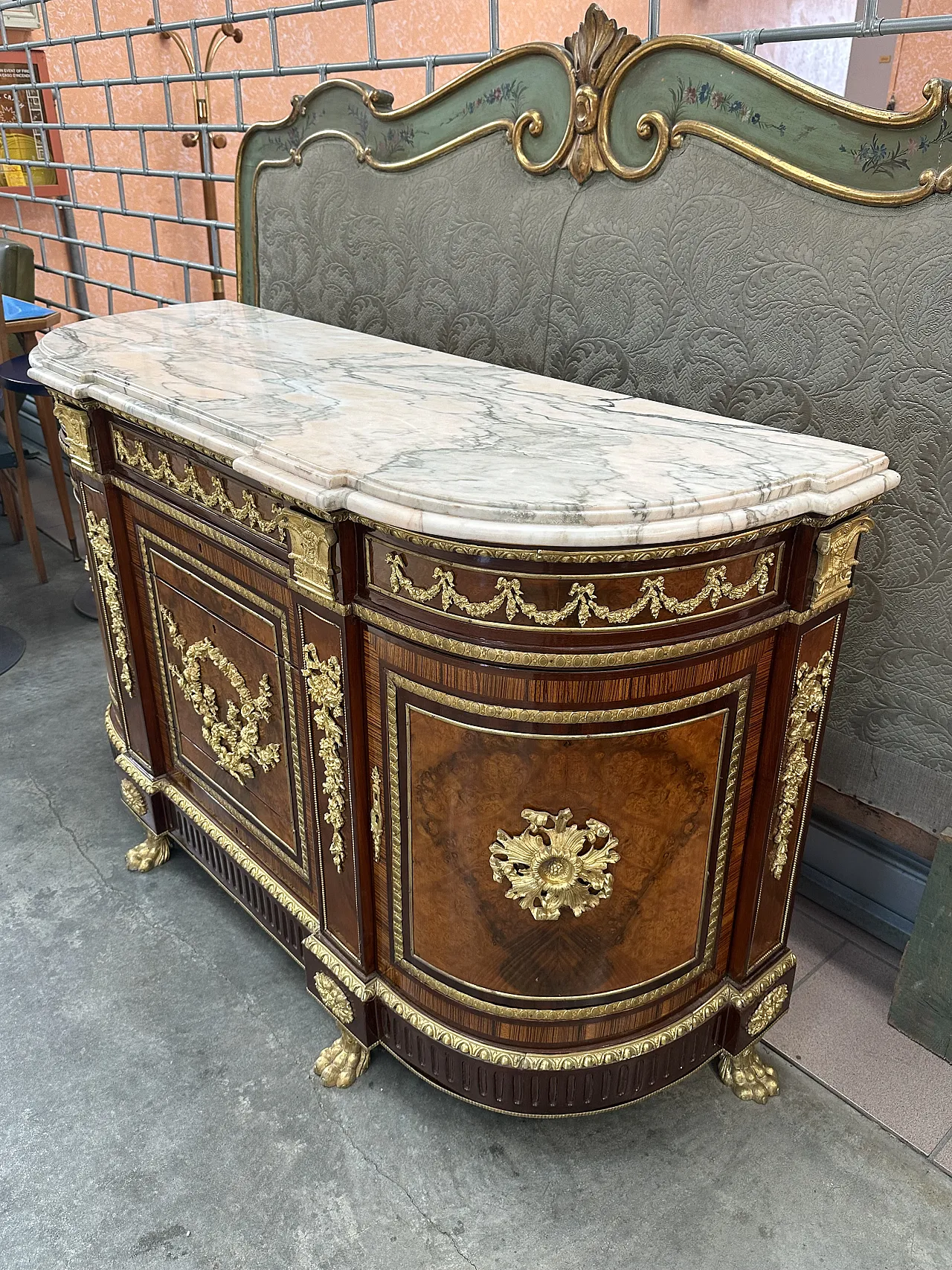
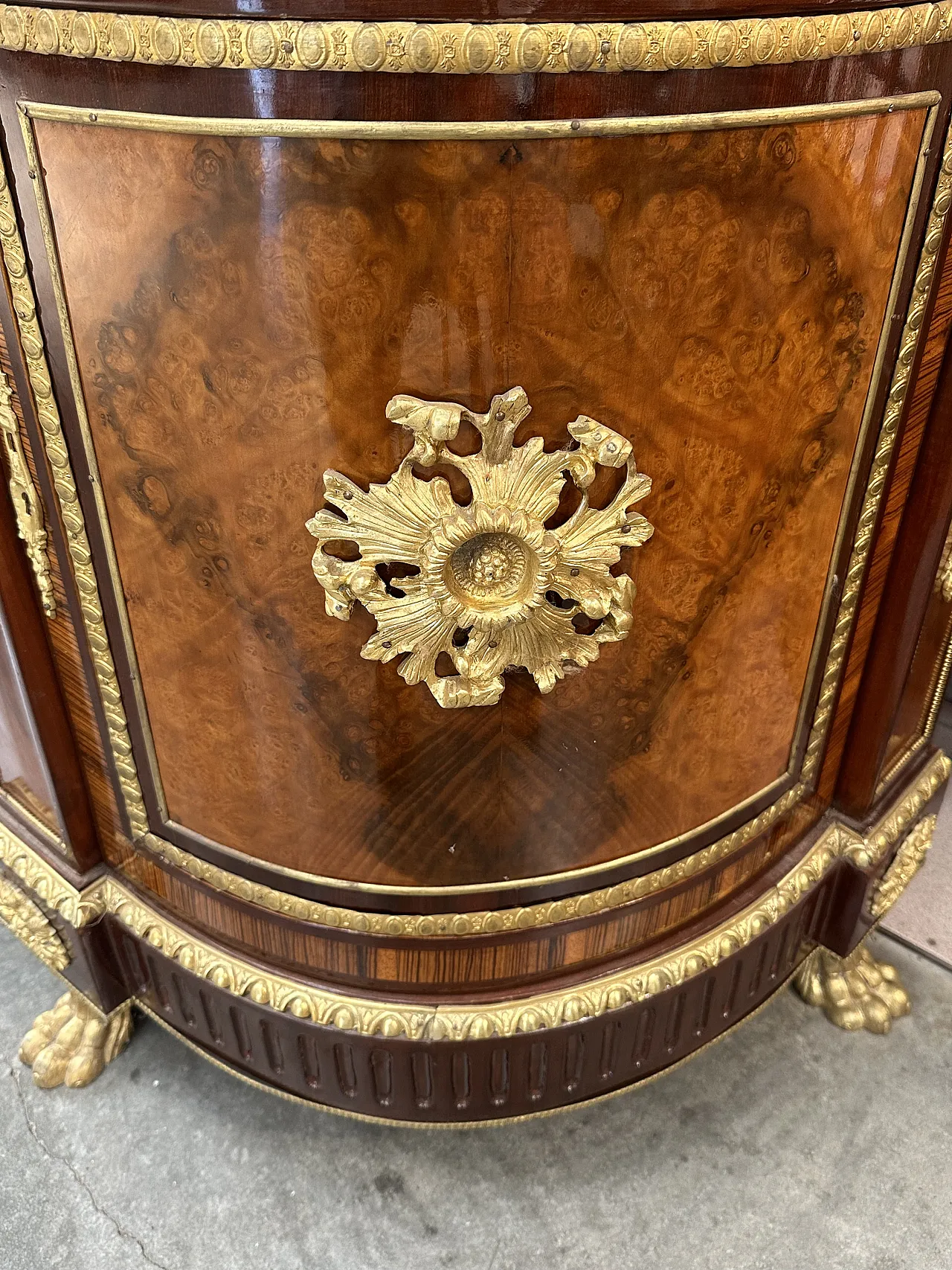
The "Demi Lune" constriction sees the three main panels in walnut briar surrounded by frames in fine zebrano wood, mahogany and refined profiles in gilded bronze (ormolu) with three important floral rosettes in the center of which the central one is particularly rich.
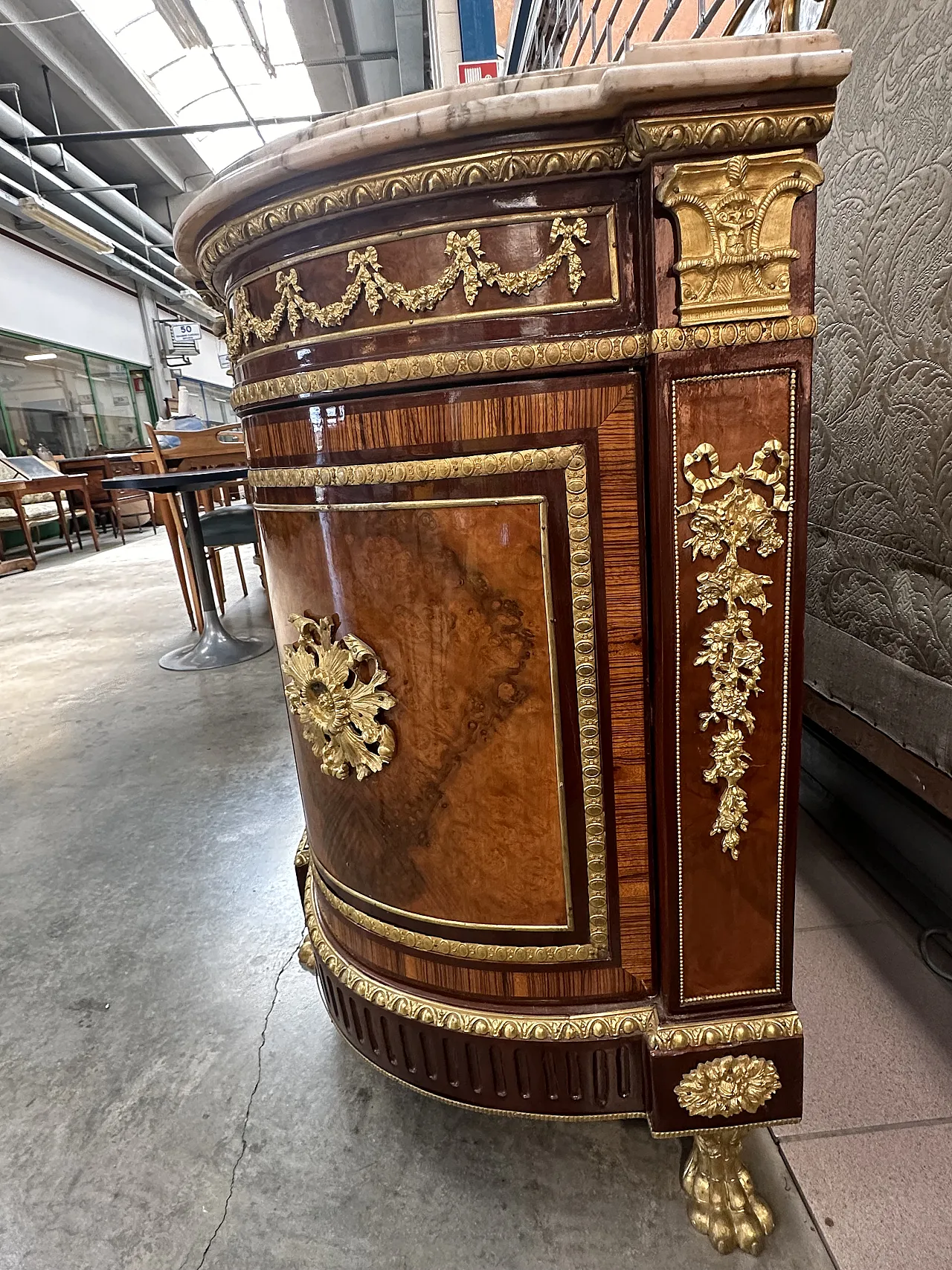
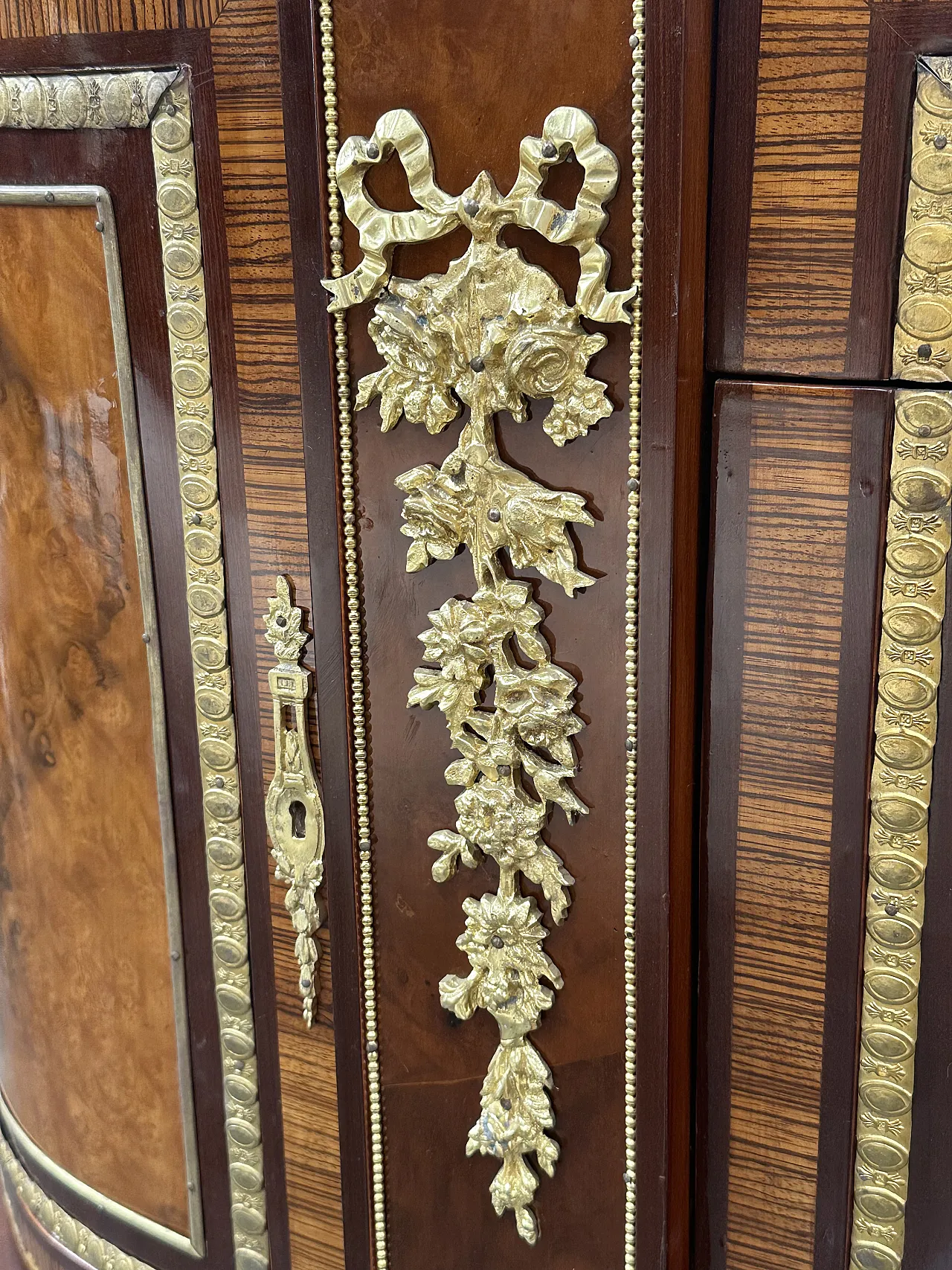
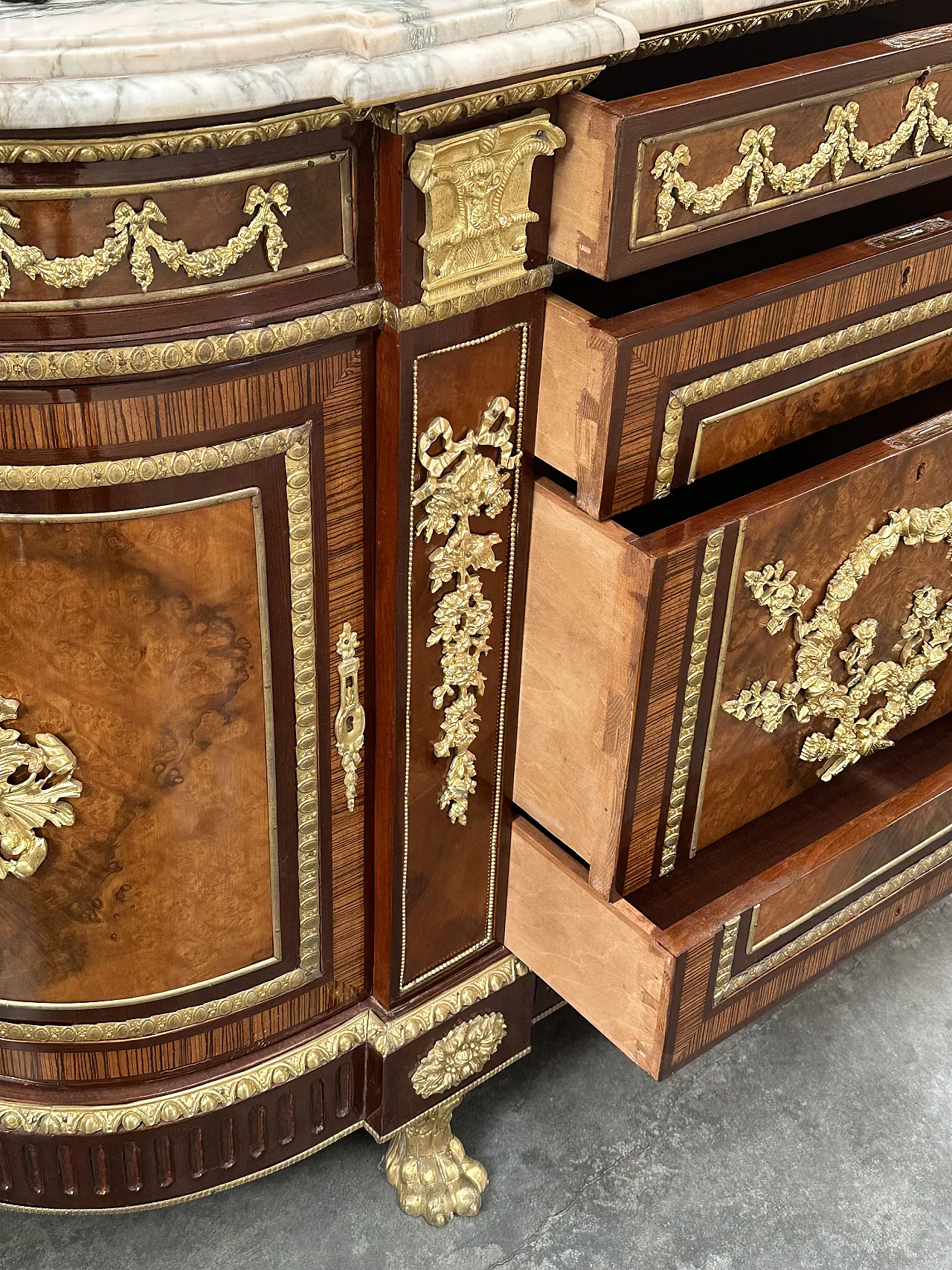
The four uprights, in mahogany, are paneled in walnut burl and surrounded by ormolu profiles with four tall floral triumphs inside.
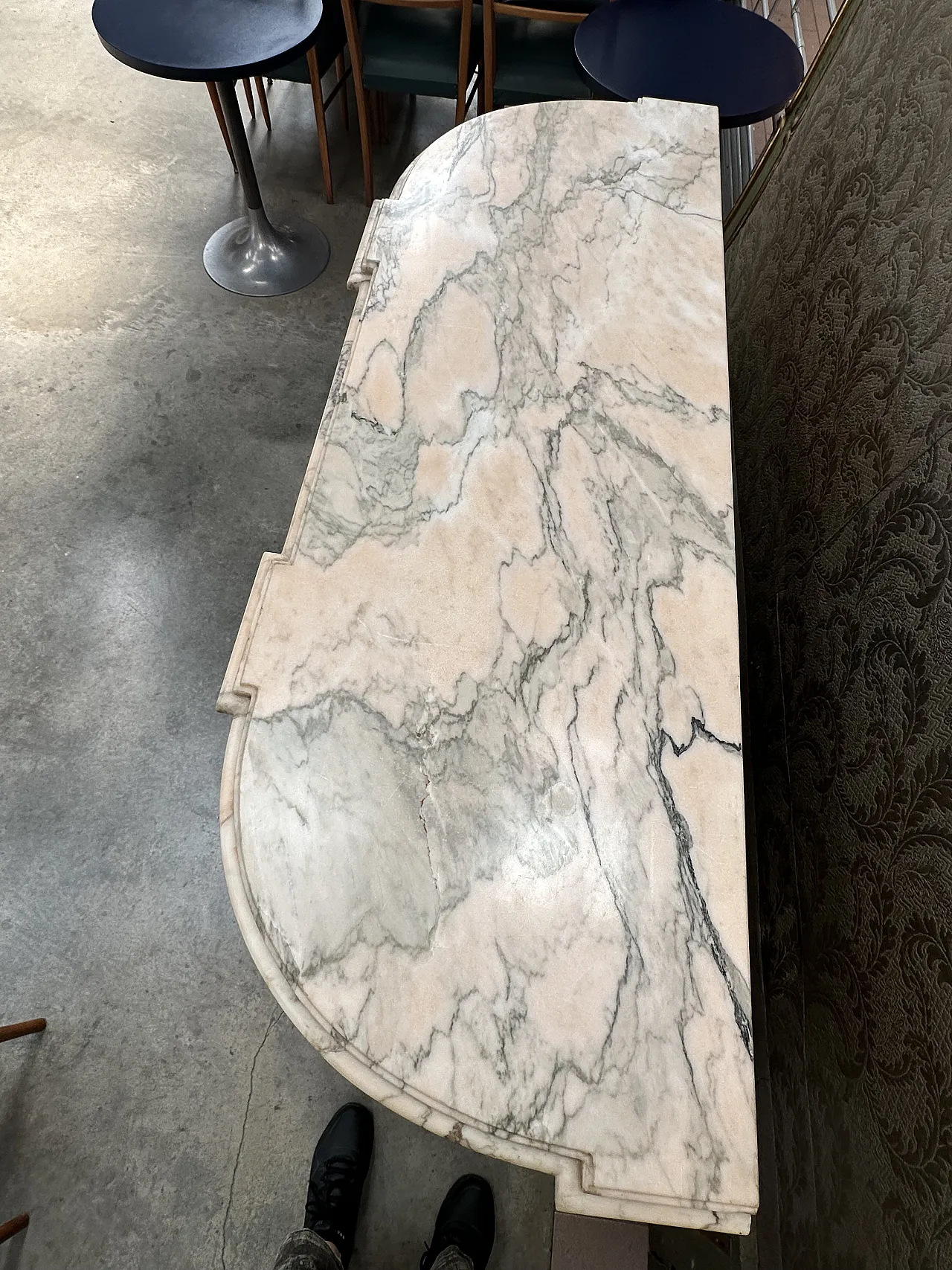
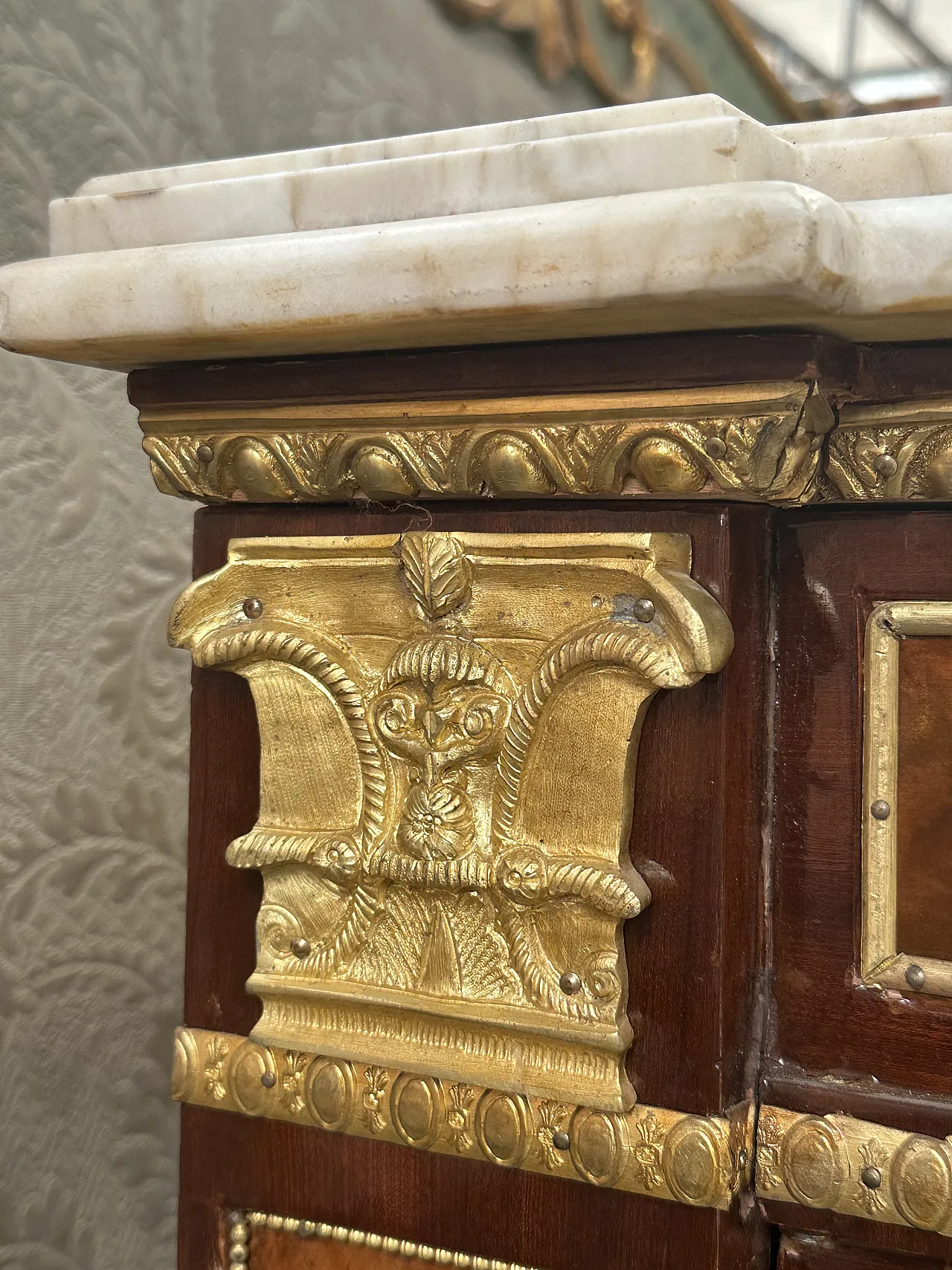
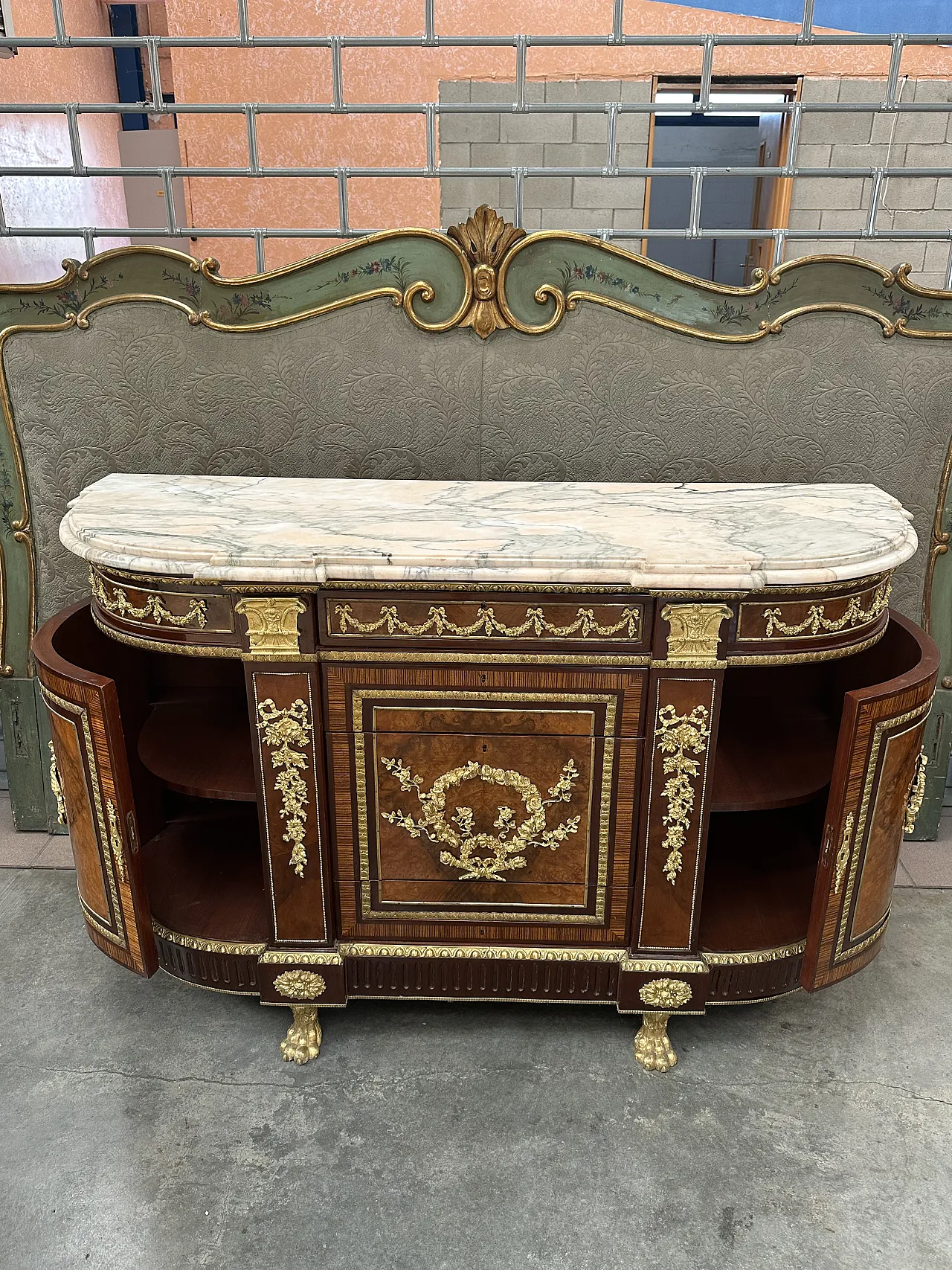
Its upper surface is well-molded and 3.5cm thick. it is in a marble characterized by a pearly background with rich green veins and peach-gold nuances which is identifiable as Arabescato marble. This type of stone belongs to the white Carrara marble family and is usually used in antiques for fine furniture.
Under the top, two profiles worked in gilded bronze surround a band with three panels with long ormolu floral garlands in the center and four uprights with four capitals with heraldic friezes also in ormolu in the center.
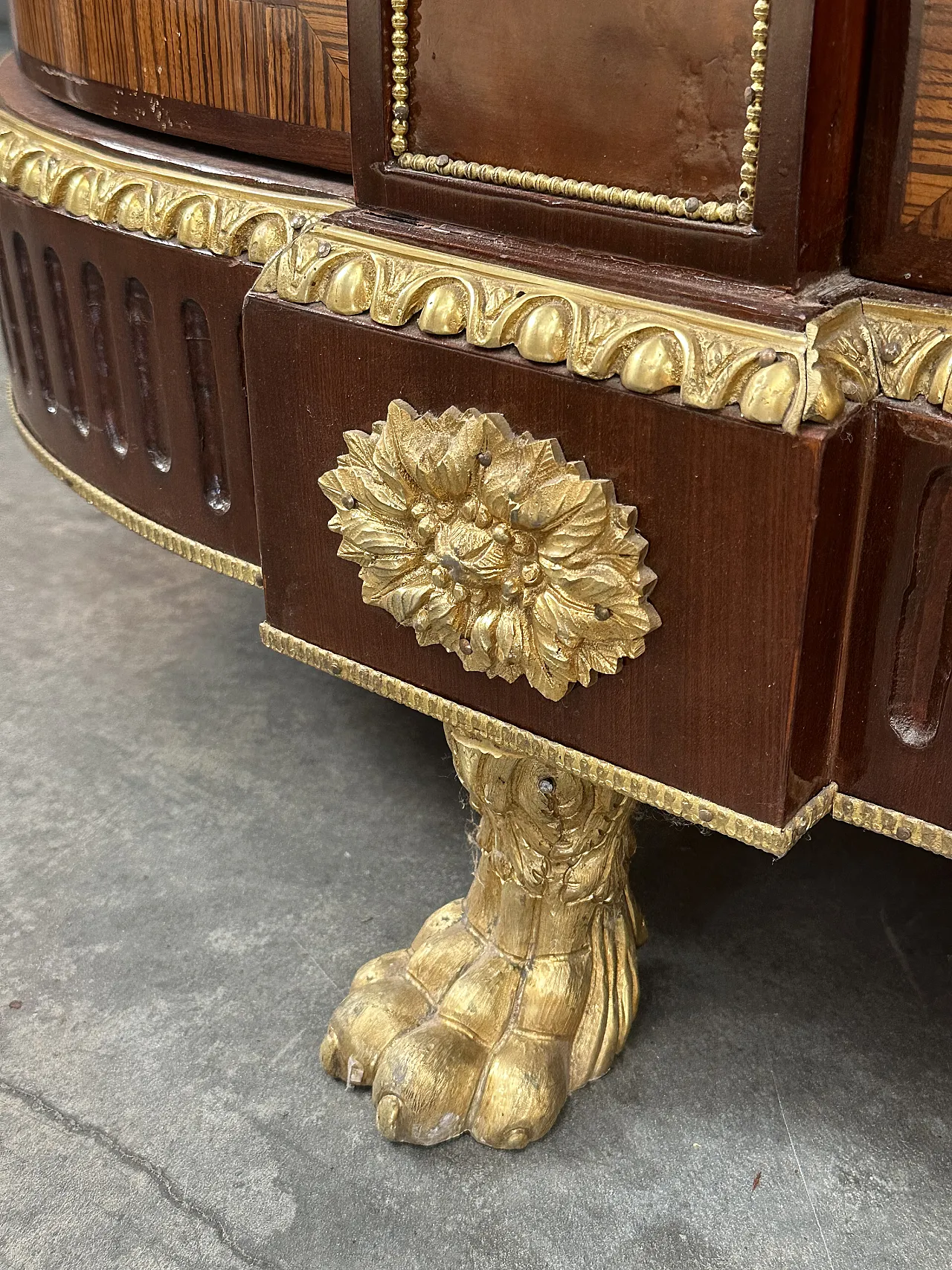
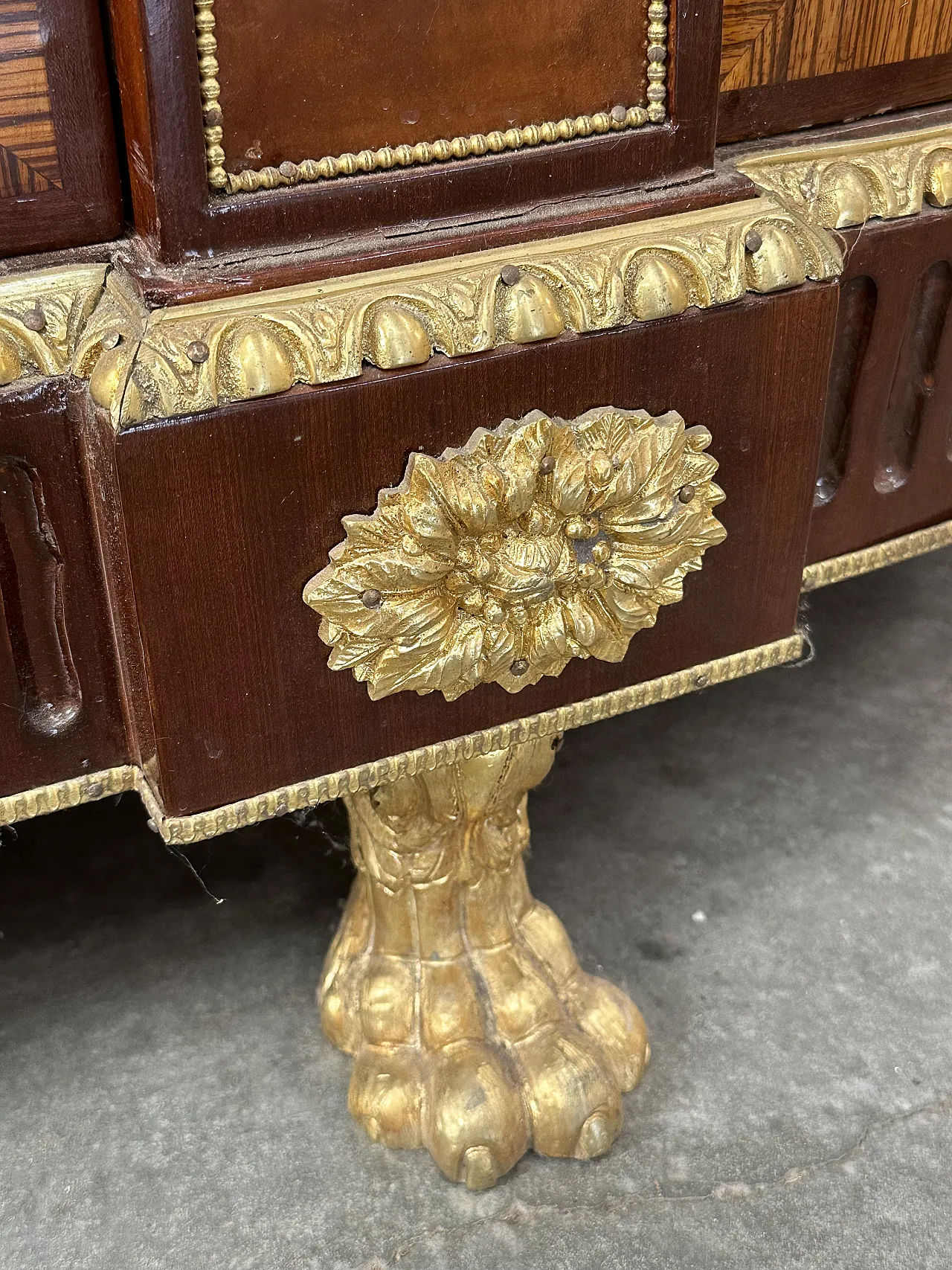
The low mahogany plinth features four gilded bronze floral rosettes on the four uprights connected by a band with classic vertical grooves of the Louis XVI style.
This magnificent piece of furniture rests on four lion-like feet also in ormolu of great quality and chiseling which characterize the piece of furniture making it even more important.
The two side compartments are closed by two curved doors that give shape to the "Demi Lune" cabinet.
The central paneling is divided into three drawers, the central one being the largest, which are added to that of the upper band, thus bringing the total number of drawers to four, all equipped with a lock, like the two side doors.
This important Commode is in an excellent, very healthy state of preservation, with no breaks or defects and still exceptional gilding. The interventions made over time are almost nil, as can be seen from the numerous attached photos. The marble is intact.
This model is often attributed to Maison Krieger, a famous Parisian cabinetmaking shop, and is inspired by an original design by Guillaume Beneman.


.png)
 SILVER Seller in Cuneo, Italy