







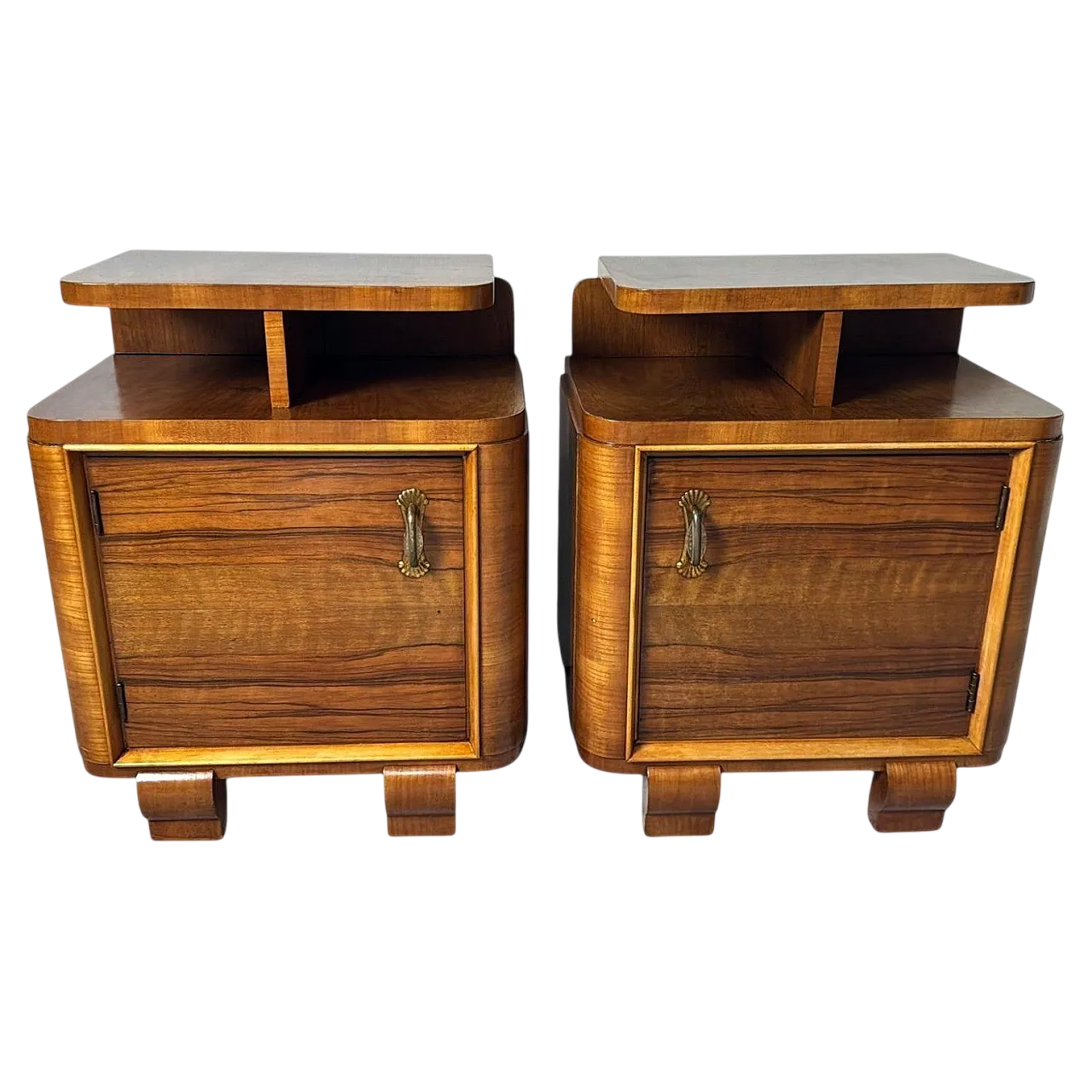
Pair of Art Deco style bedside tables, 1930s



.png)
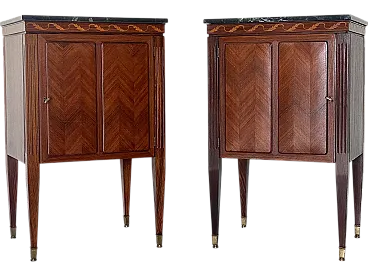
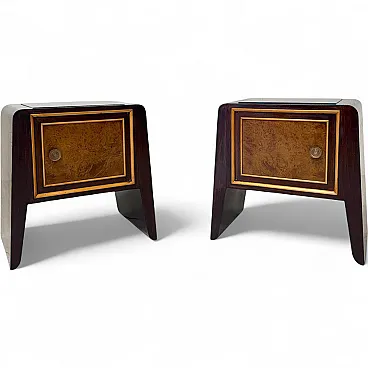
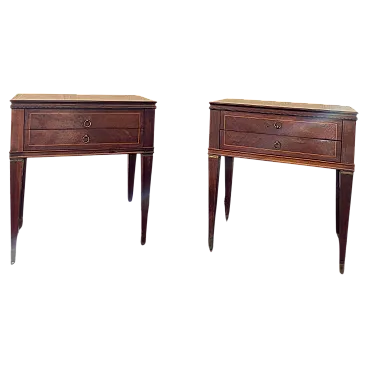
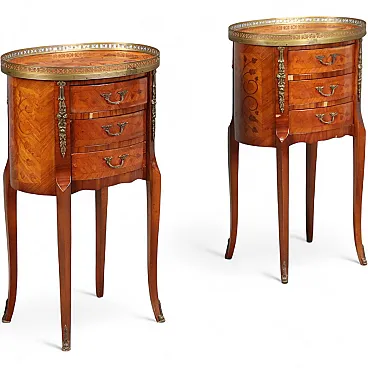
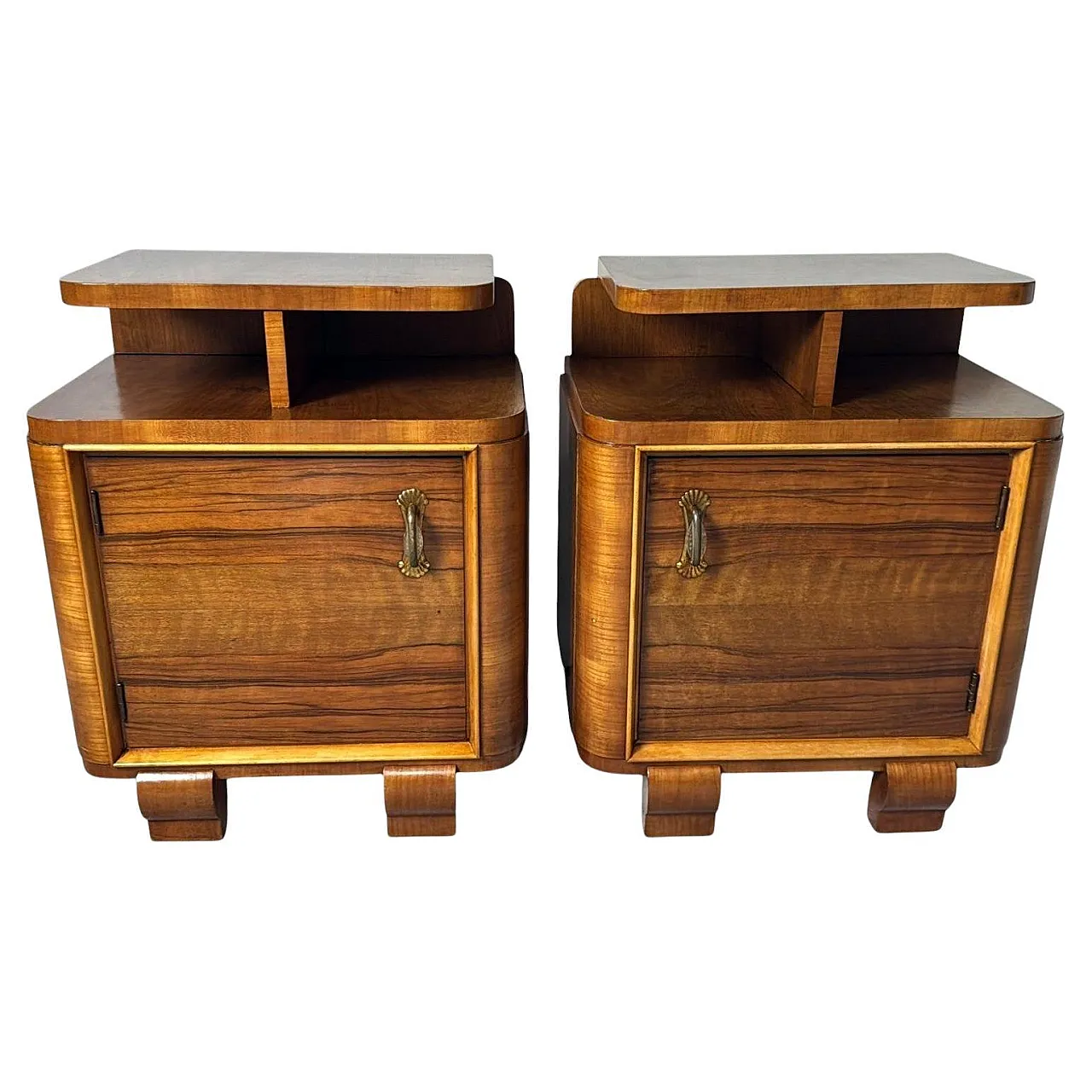
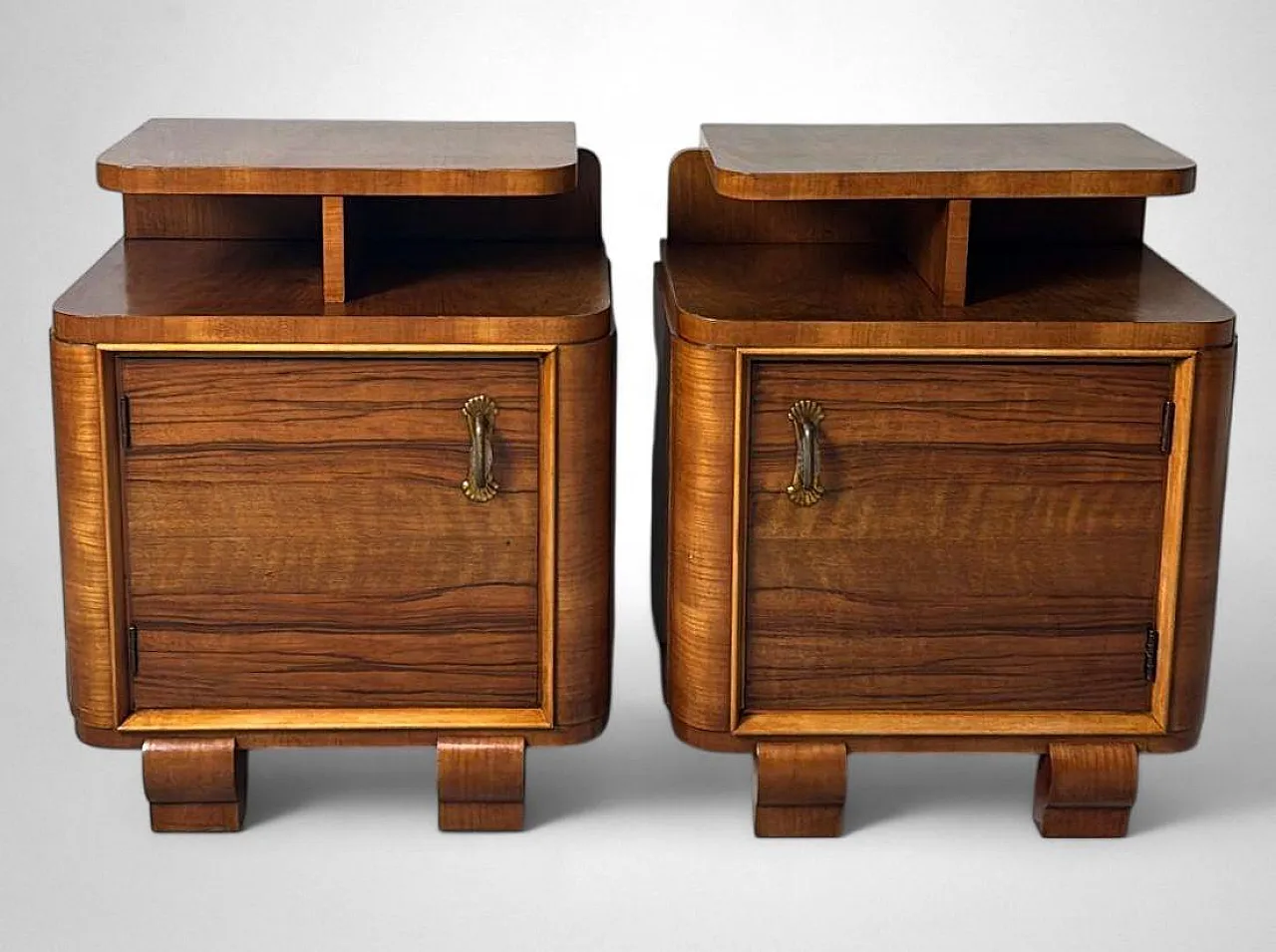
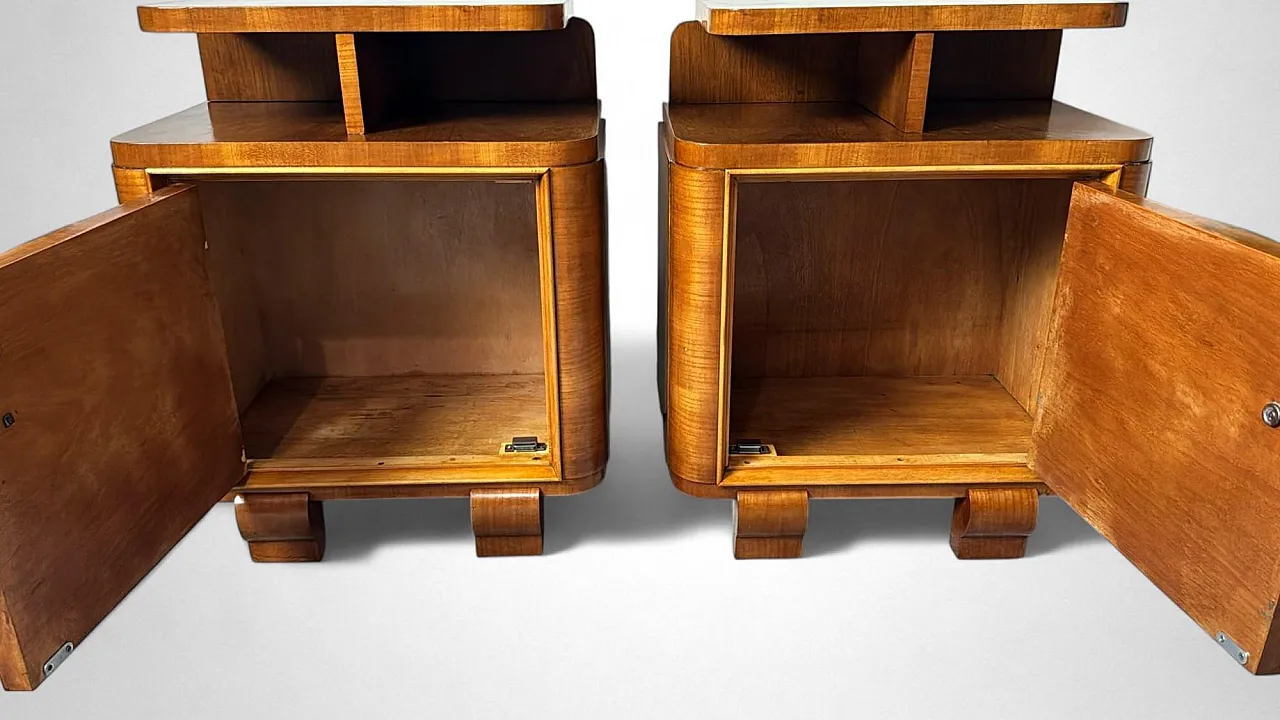
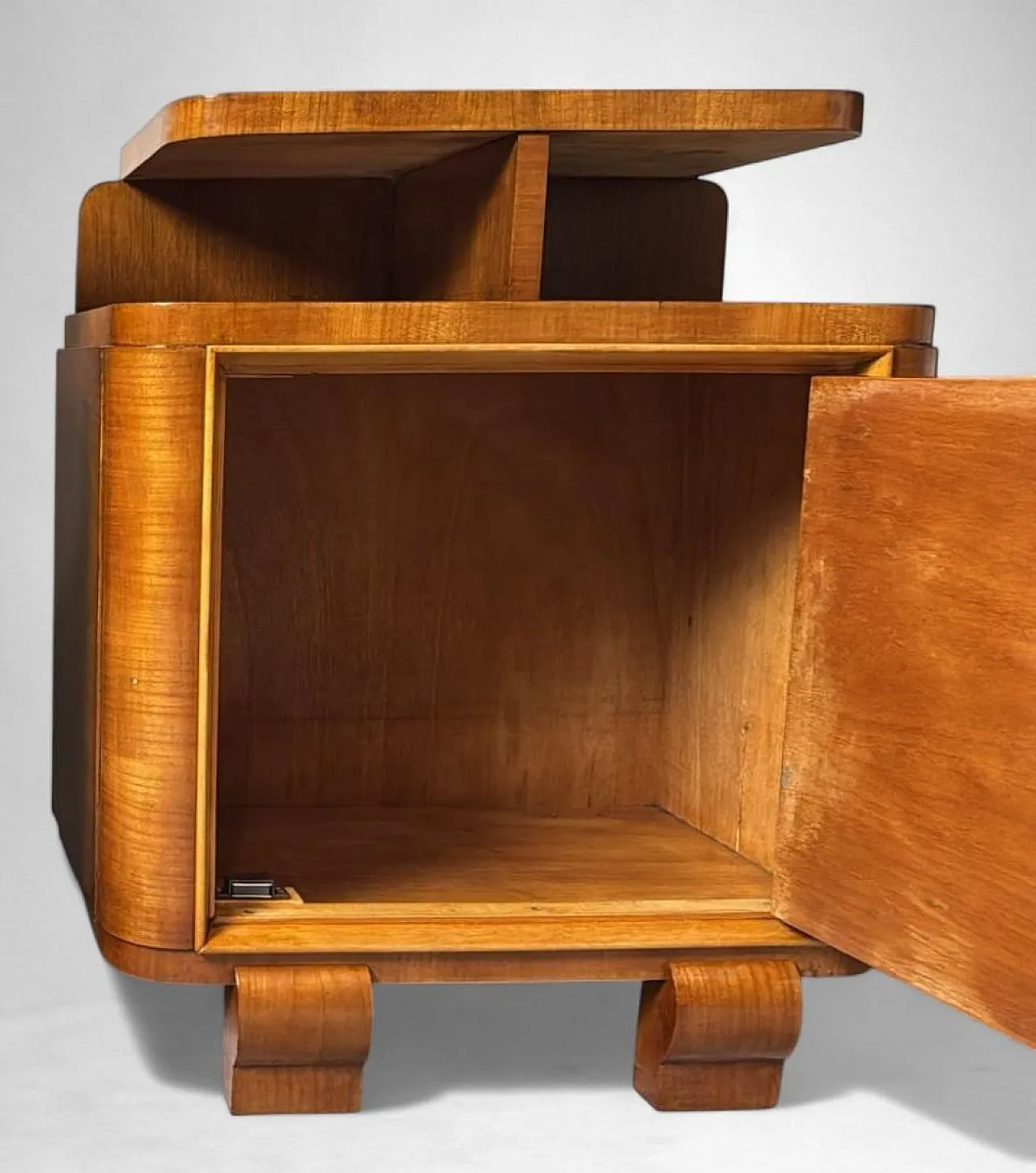
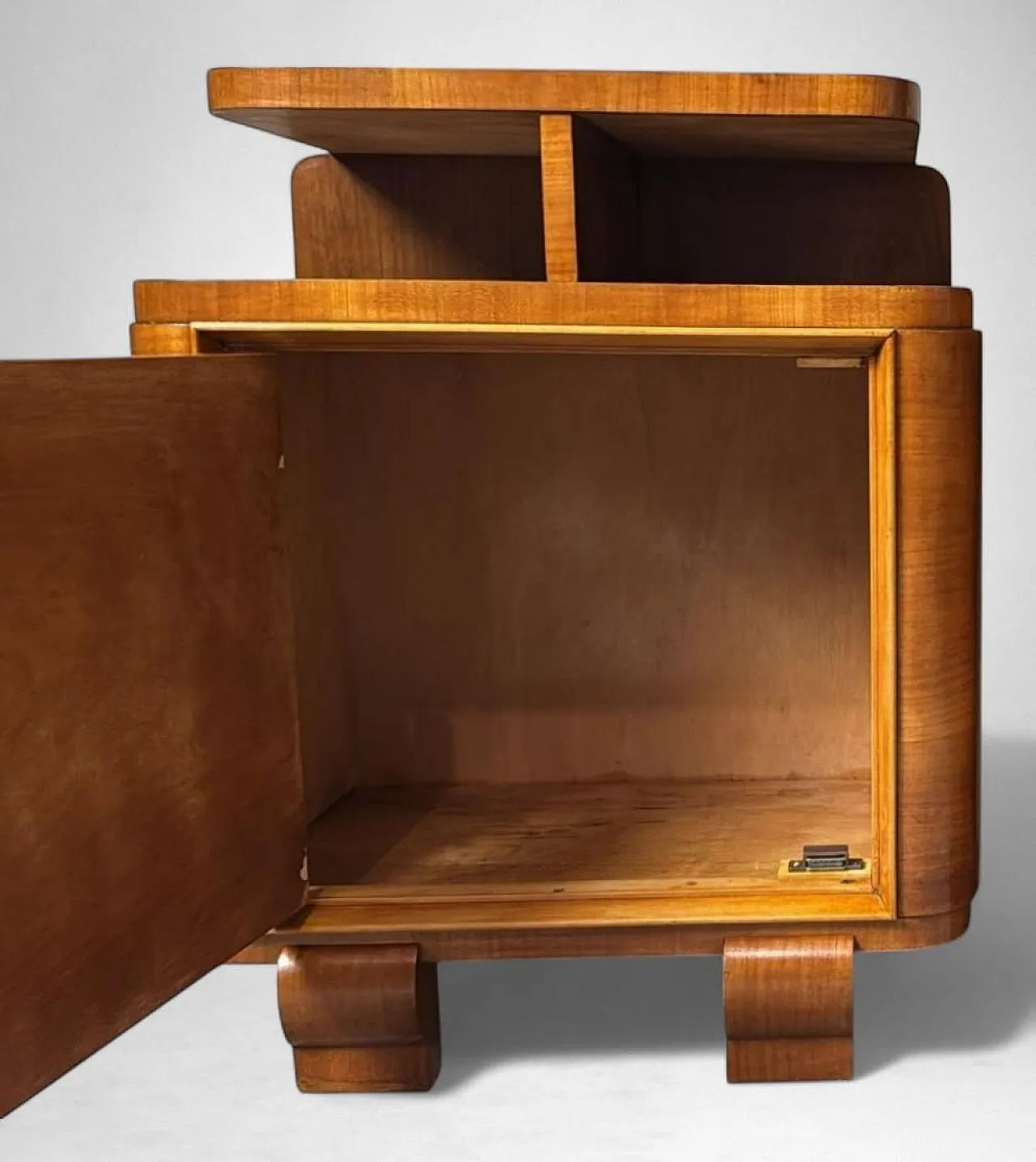
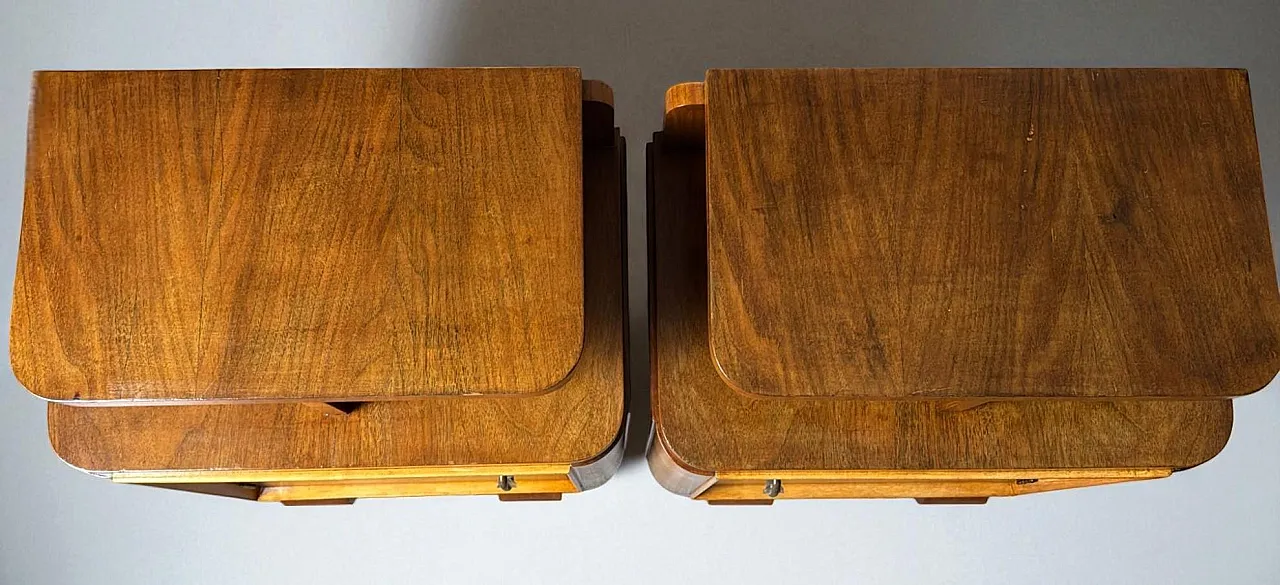
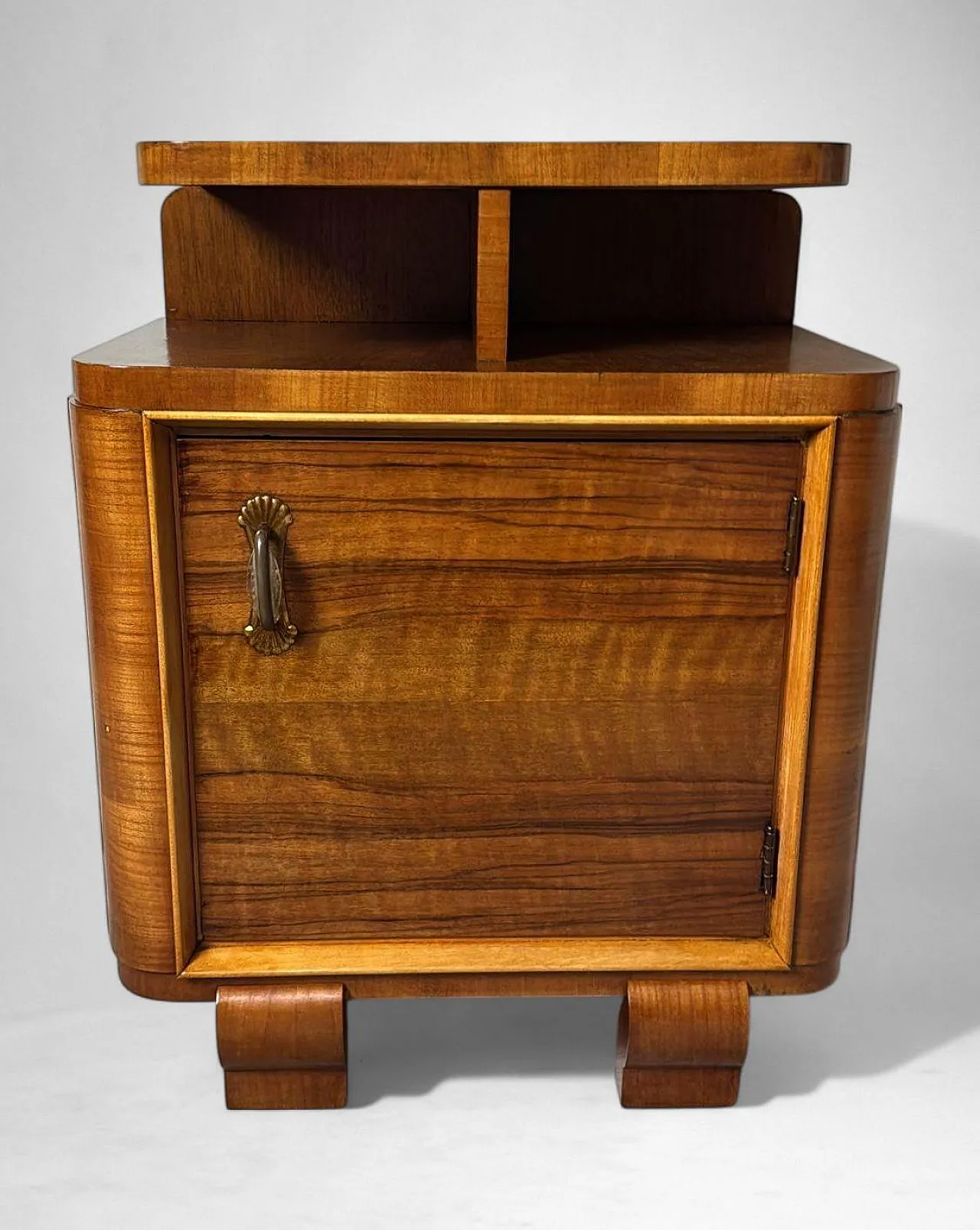
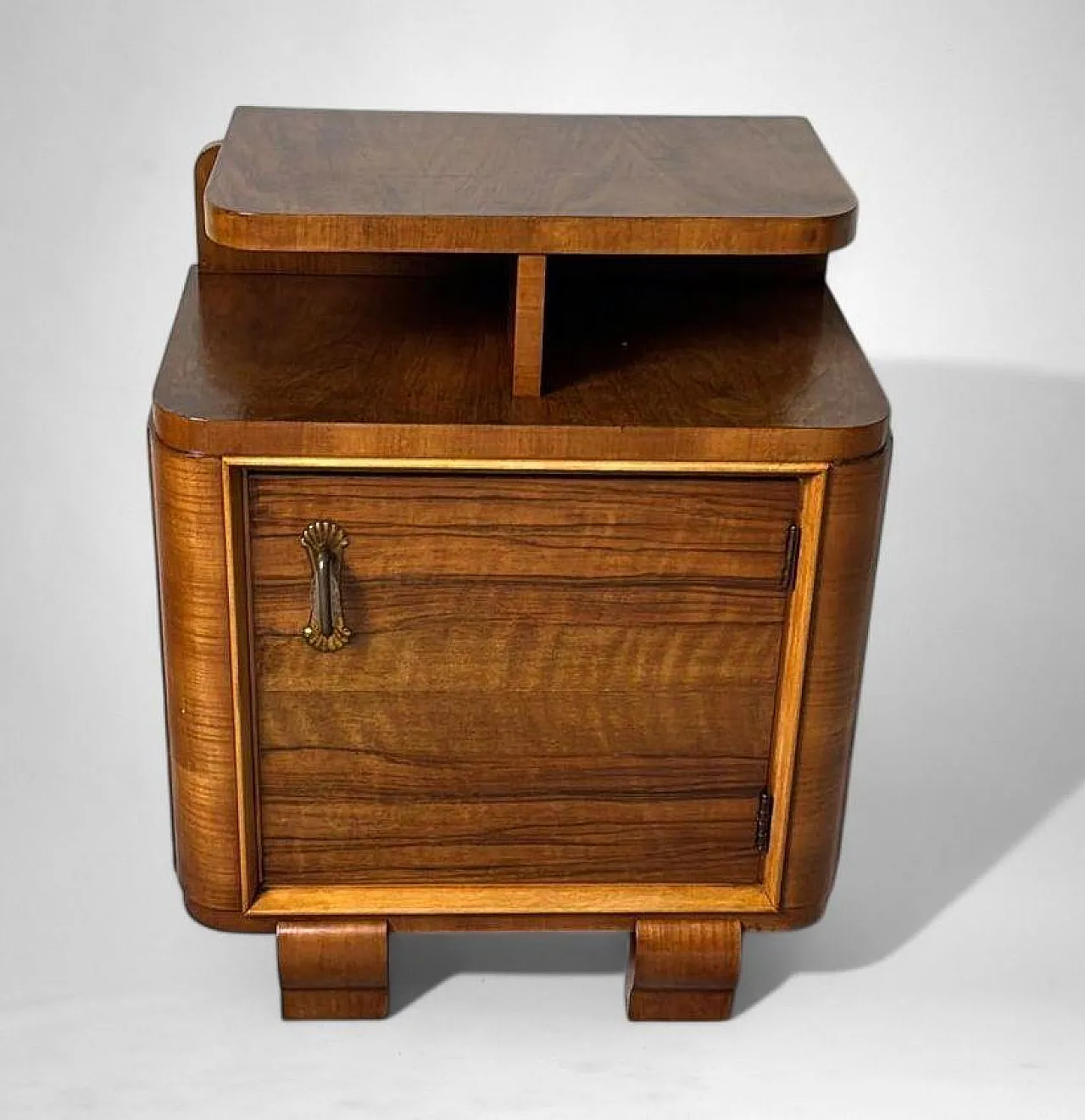
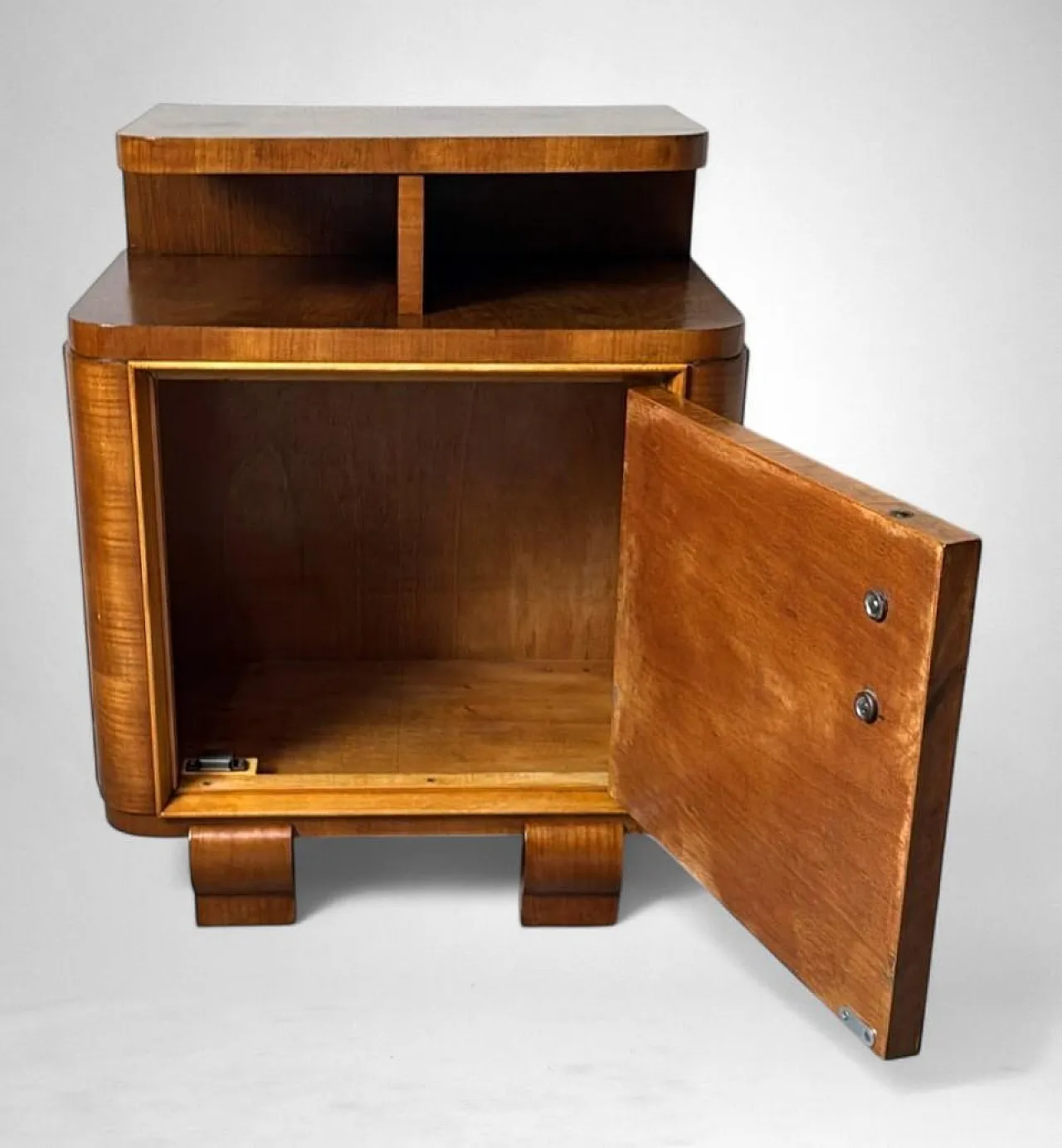
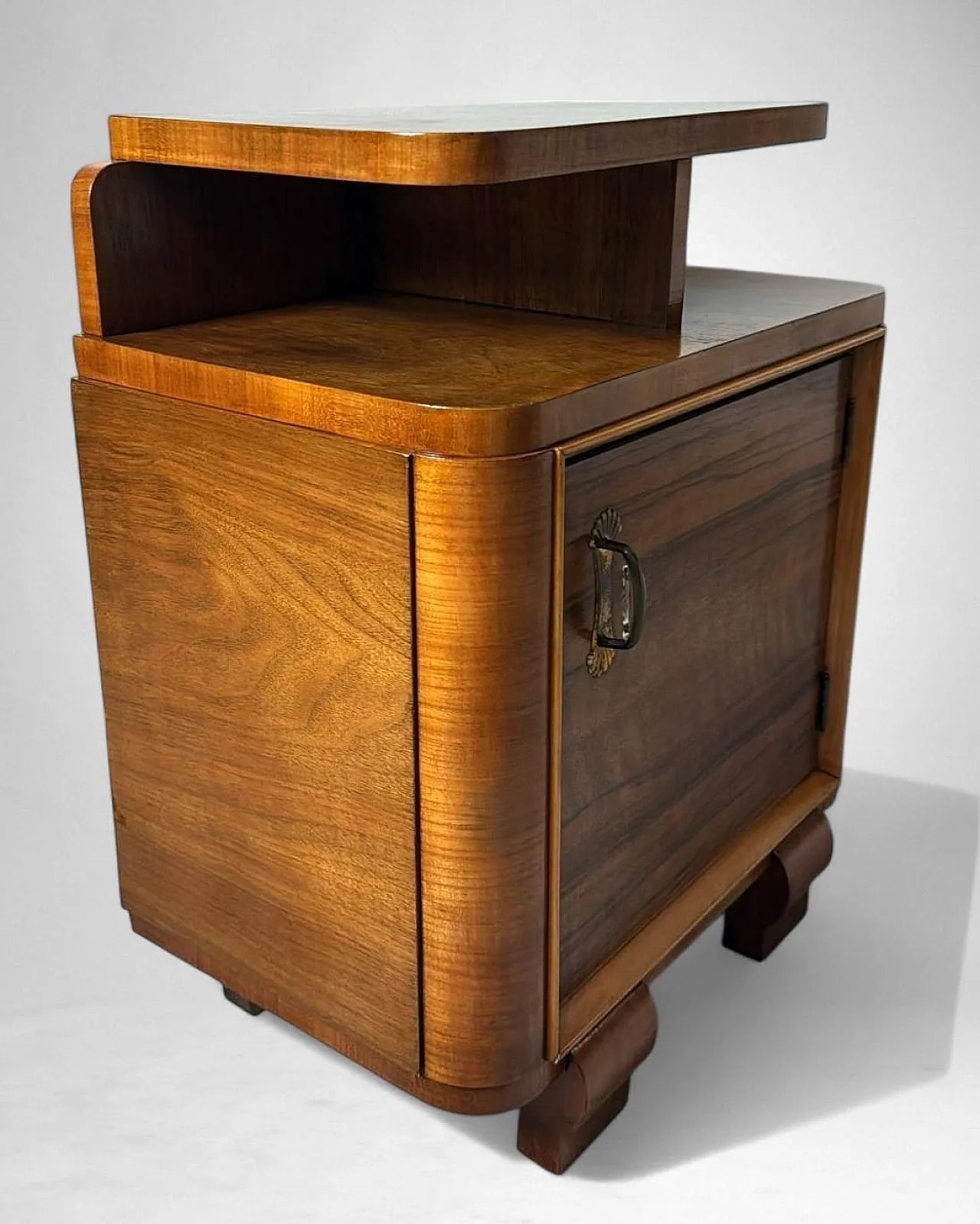
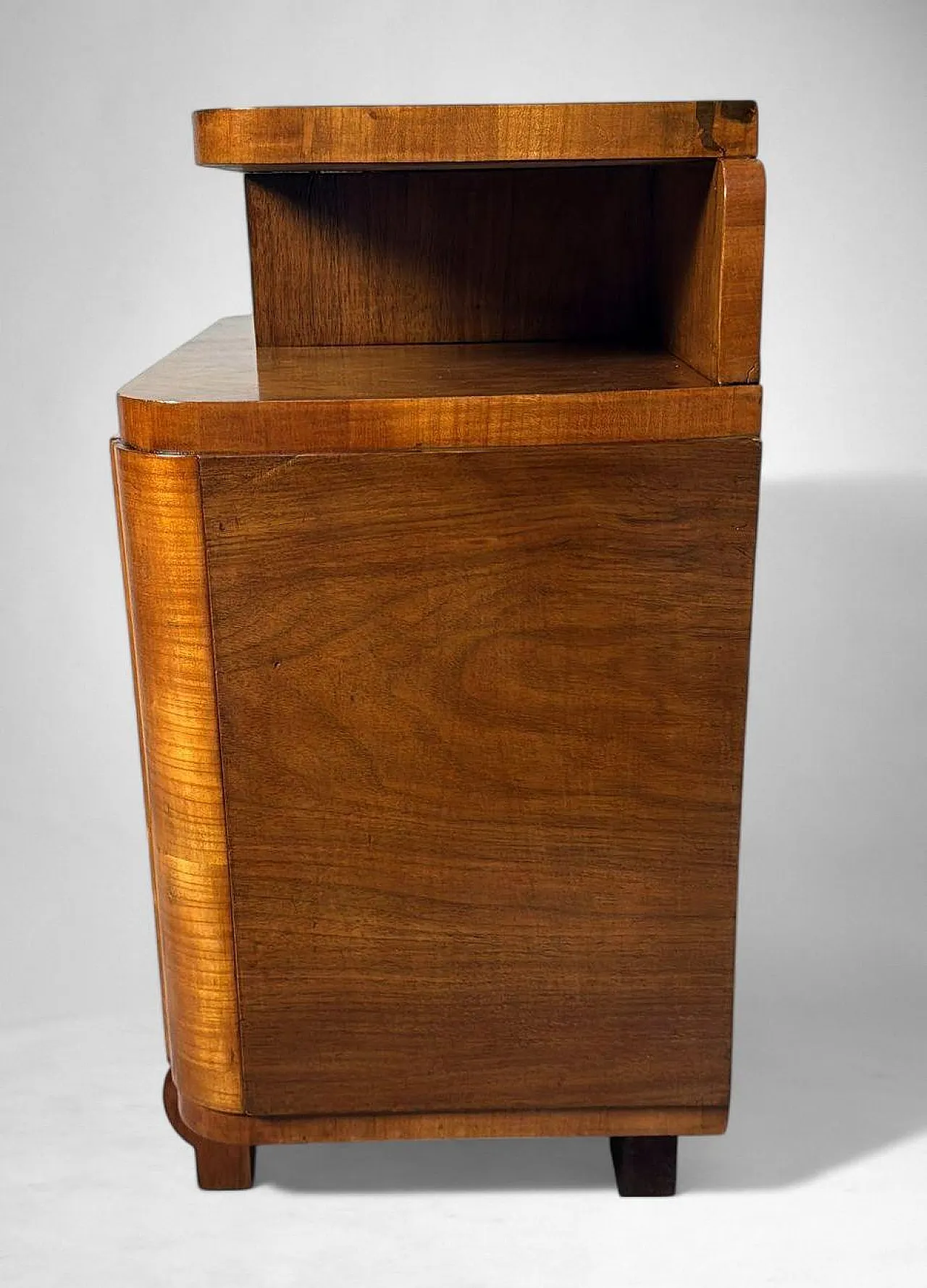
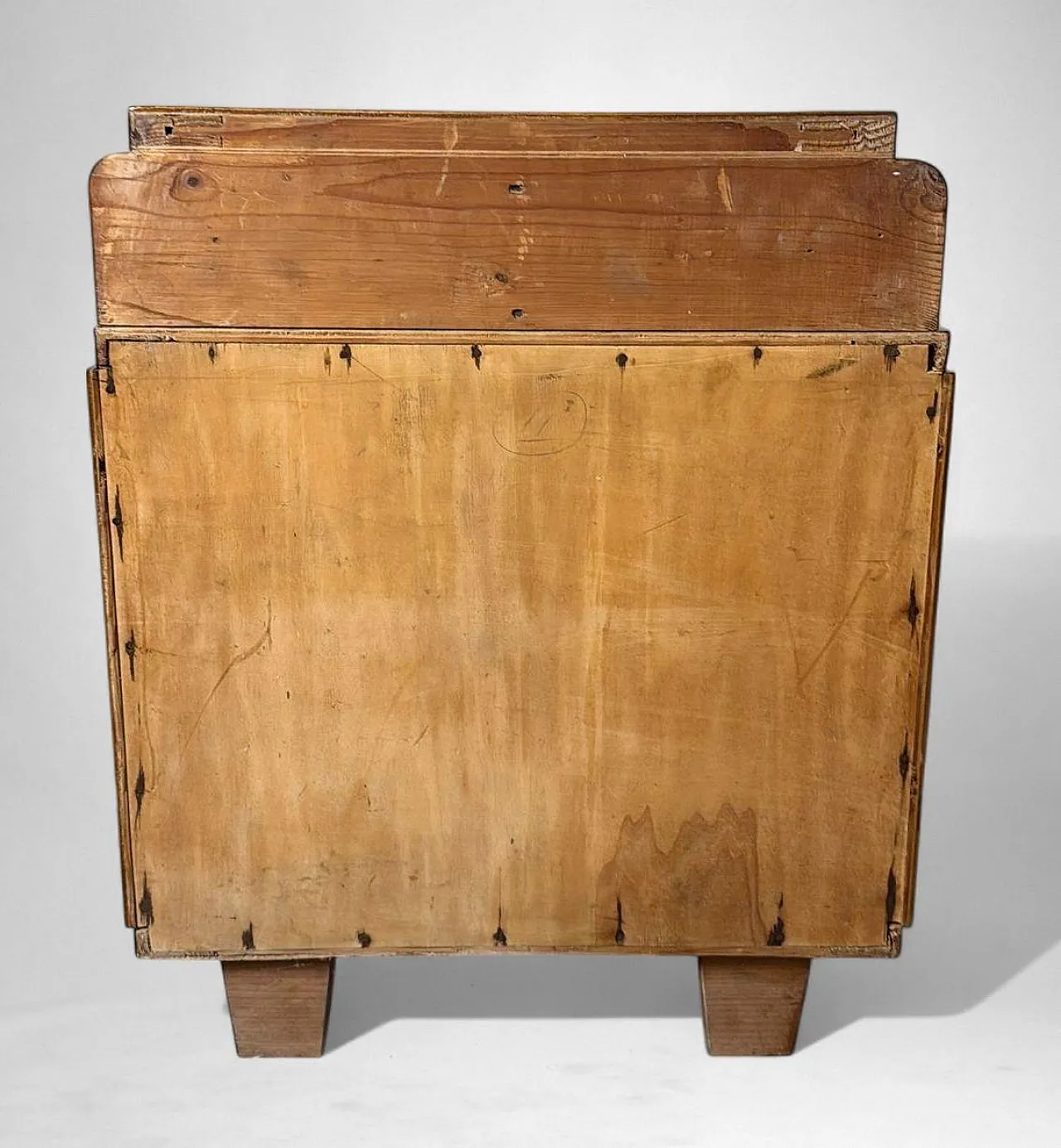
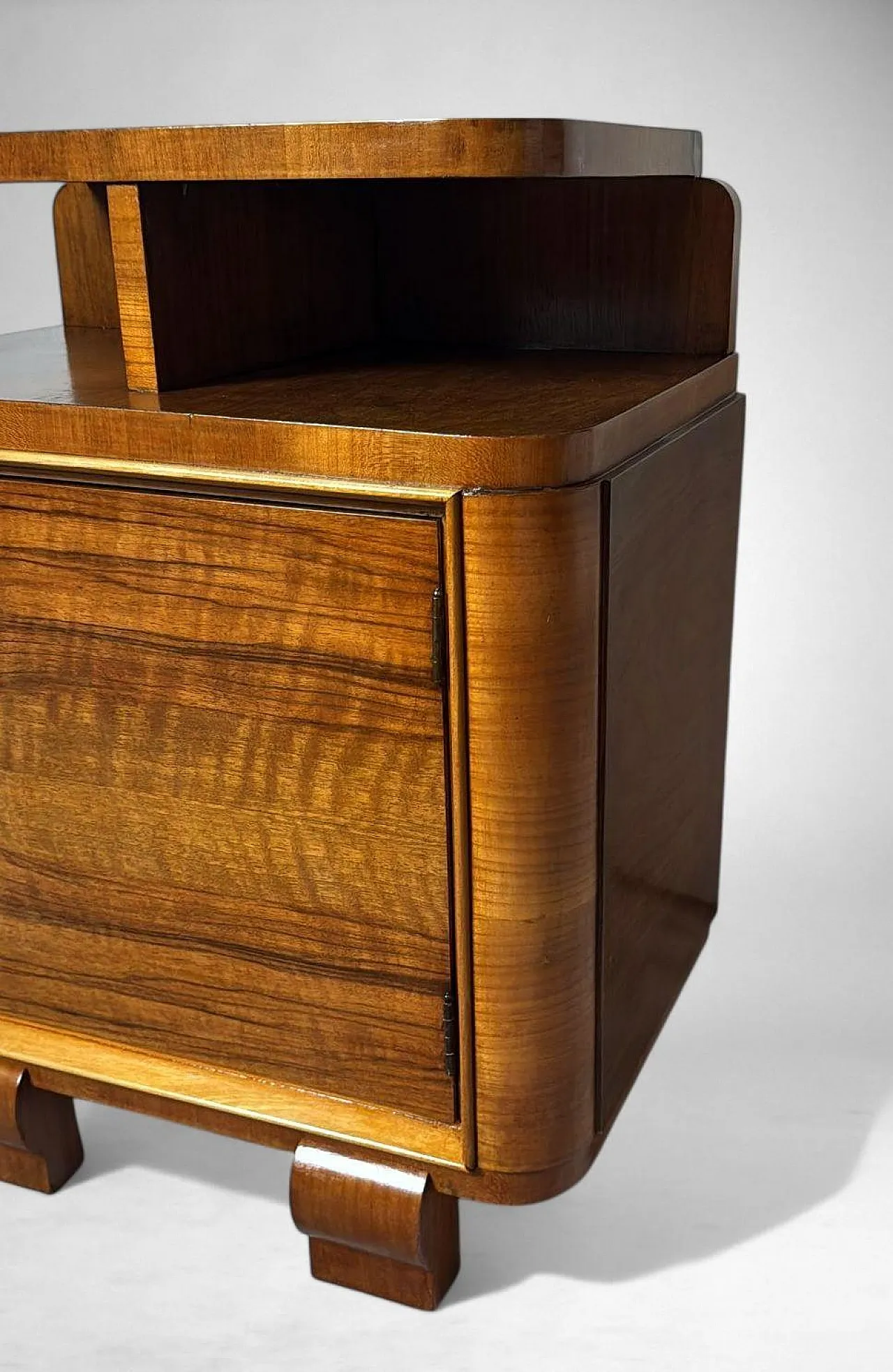
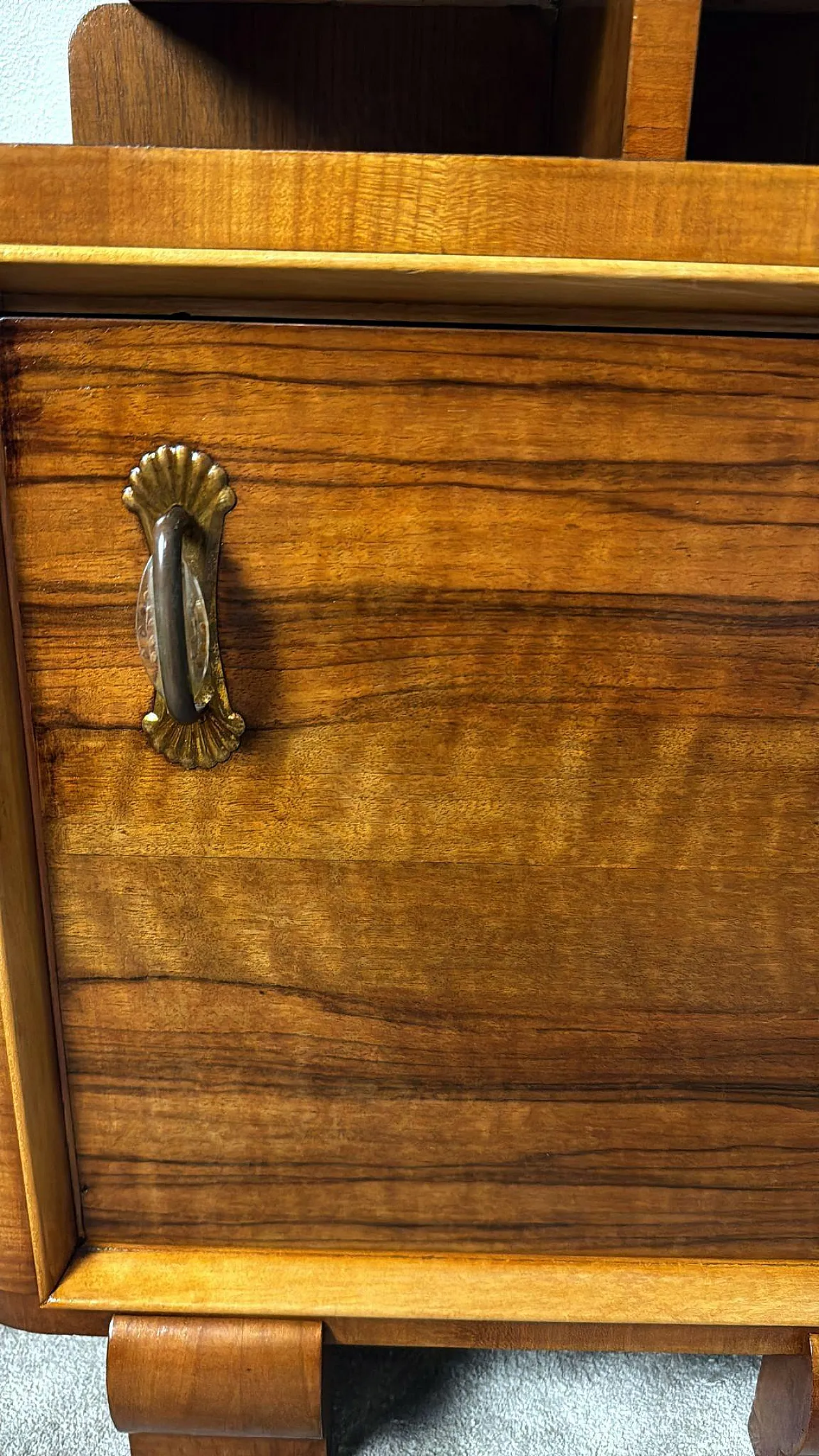
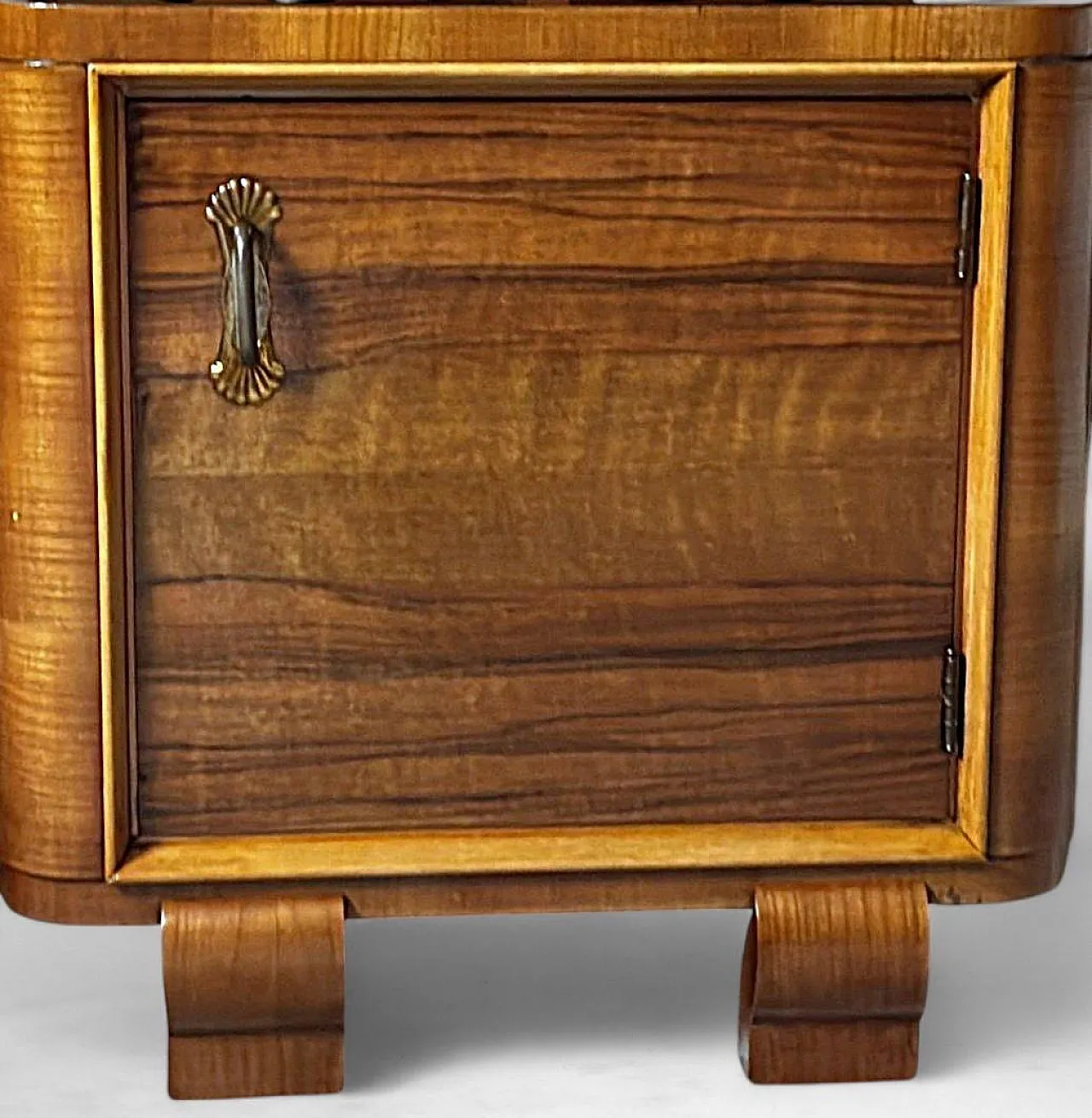
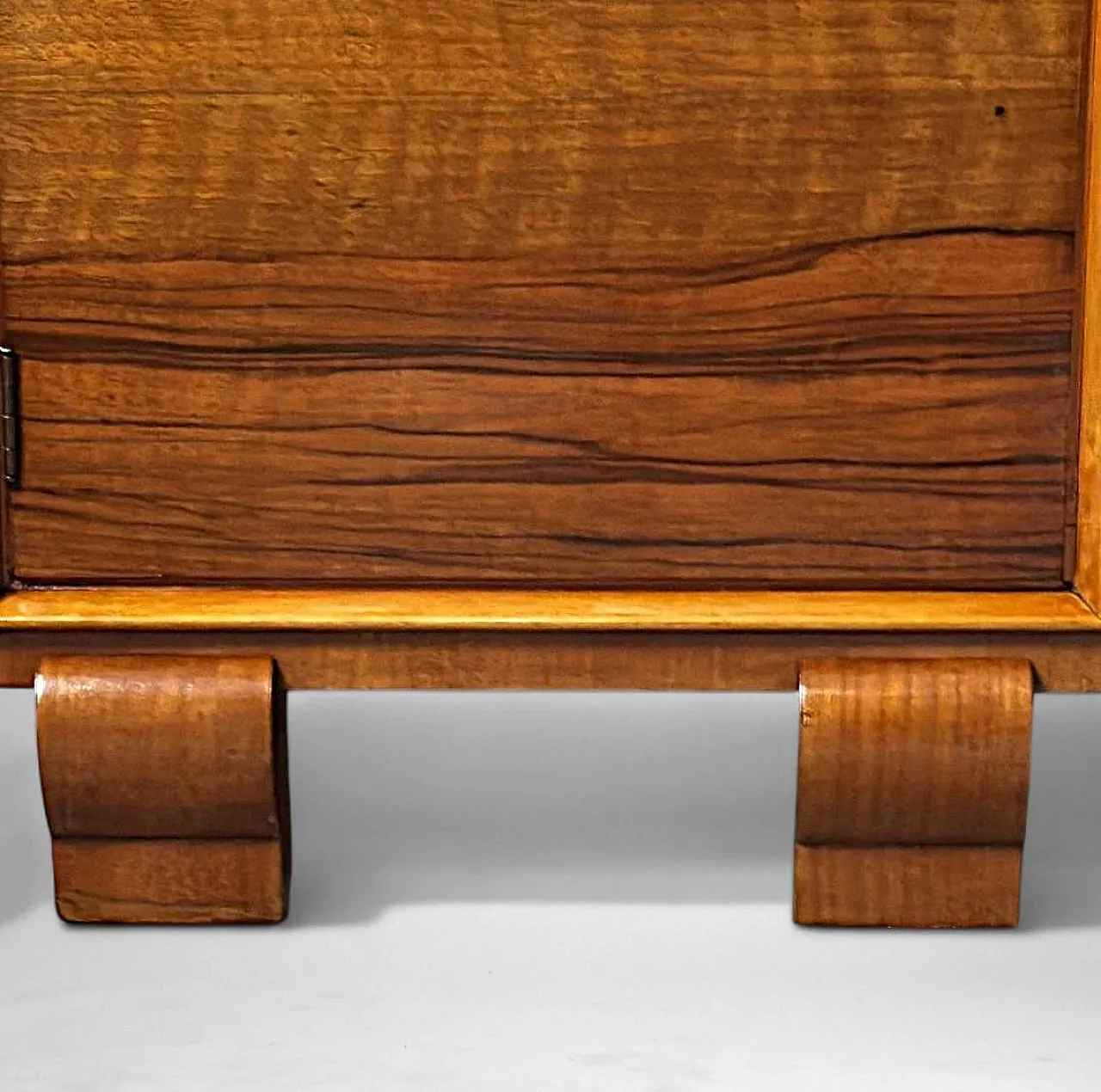
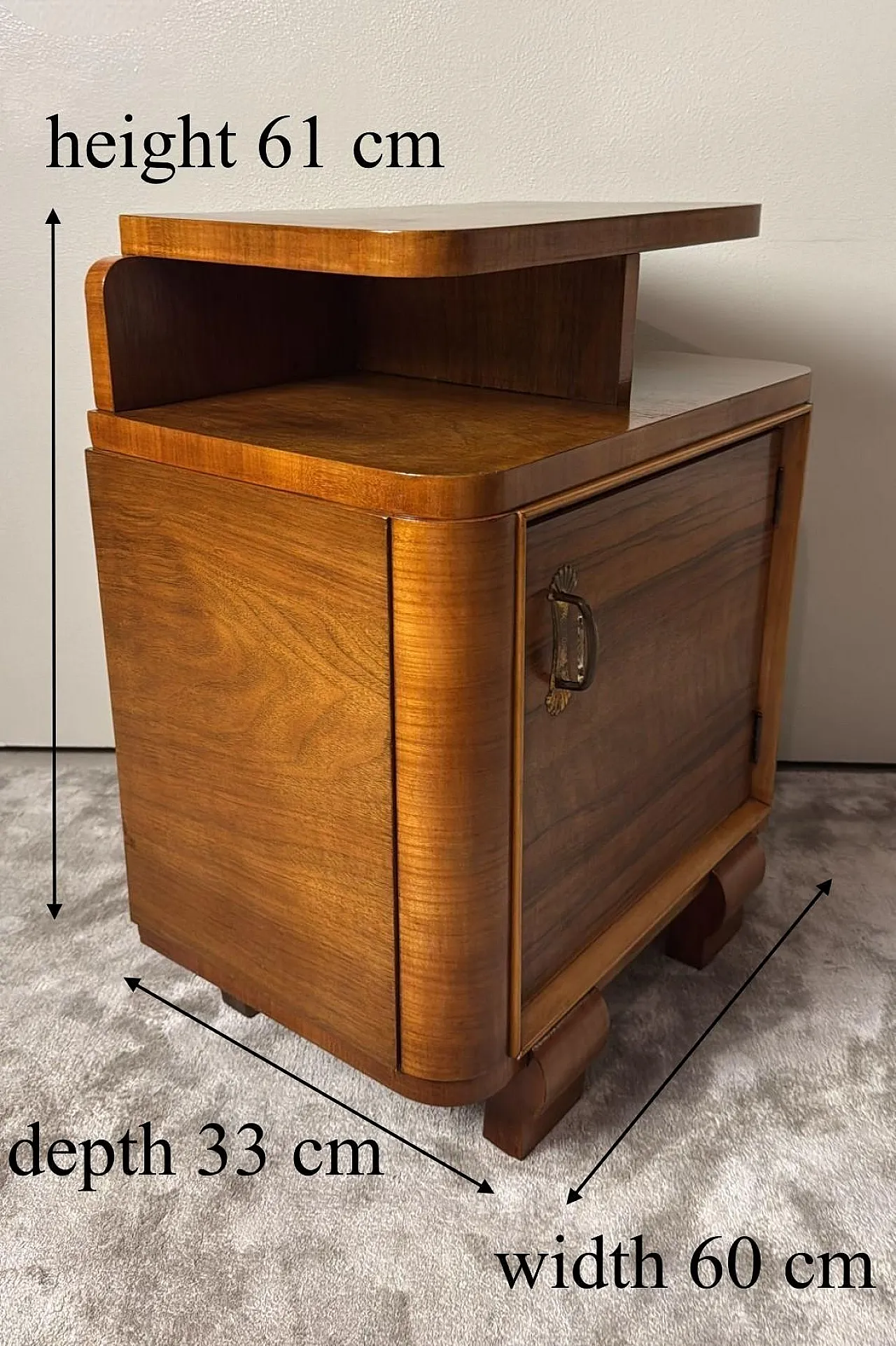
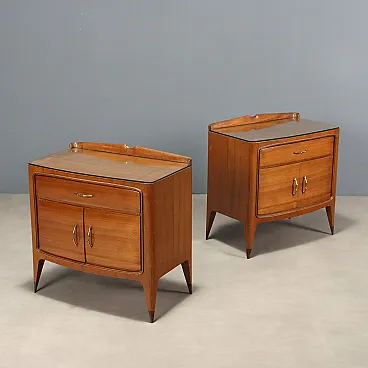
Elegant and distinctive pair of Italian walnut nightstands. Each features a convenient open compartment just below the top, divided by a central panel. The spacious lower section is framed with a refined blond walnut molding and enclosed by a door fitted with its original period handle, showcasing a refined and understated design. The front legs are solid and shaped in typical Deco style, while the rear legs—more discreetly positioned—have a simple rectangular form. These nightstands were crafted between 1930 and 1935 in a traditional artisan workshop in Cantù, a town in the province of Como, Lombardy (Italy). Renowned for its long-standing tradition in luxury furniture making, Cantù has long been considered one of the most important centers for Italian cabinetmaking, with a solid international reputation for high-quality craftsmanship. Local workshops and manufacturers have historically supplied custom furnishings to a discerning clientele, including private homes, luxury hotels, exclusive restaurants, and prestigious residences worldwide. The main structure is made of standard walnut wood, over which a high-quality and unusually thick veneer was applied. This fine veneer was crafted from Juglans regia, also known as “European walnut” or “Italian walnut.” This precious wood is highly valued for its hardness, cost, and exceptional aesthetic: its flame patterns, veining, and natural color variations have been admired for centuries. Walnut furniture is particularly sought-after and expensive, as only a small portion of the tree is usable for woodworking. Veneering is an ancient technique involving the application of thin layers of fine wood onto a more ordinary wood base. In this case, the veneer used is thicker than average (typically between 1 and 2 mm). The process begins by applying a special adhesive to the base wood, followed by the careful and even placement of the walnut sheets by hand. The entire piece is then pressed and left to dry, ensuring a strong bond between the fine wood and its support. Once dried, the surface is refined through sanding, polishing, and the application of protective finishes—such as varnishes or oils—to enhance its appearance and longevity. This technique dates back to ancient Egypt and China and has evolved over the centuries into a standard for producing luxury furniture and fine decorative objects. Applied to these nightstands, it allows the warm tones, flame patterns, and veining of the walnut to truly stand out. The entire wooden structure has been fully hand-restored by our team of skilled artisans and is in excellent condition. Dimensions: Width 50 cm (19.7 in), Depth 33 cm (13 in), Height 61 cm (24 in).
ID: 4672-1754128233-129410
Time period















 SILVER Seller in Prato, Italy