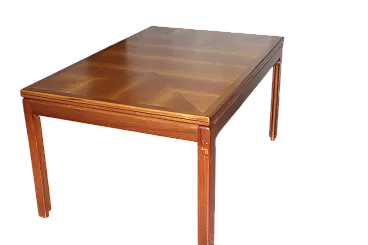
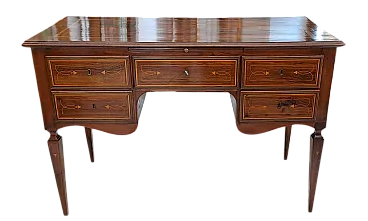
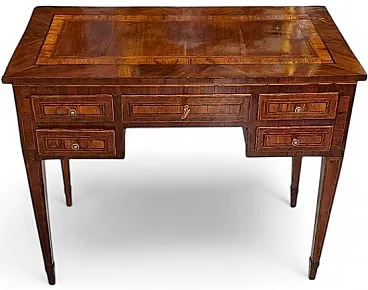
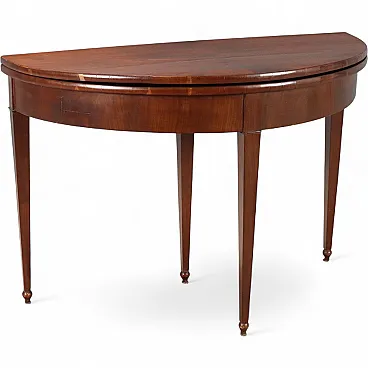
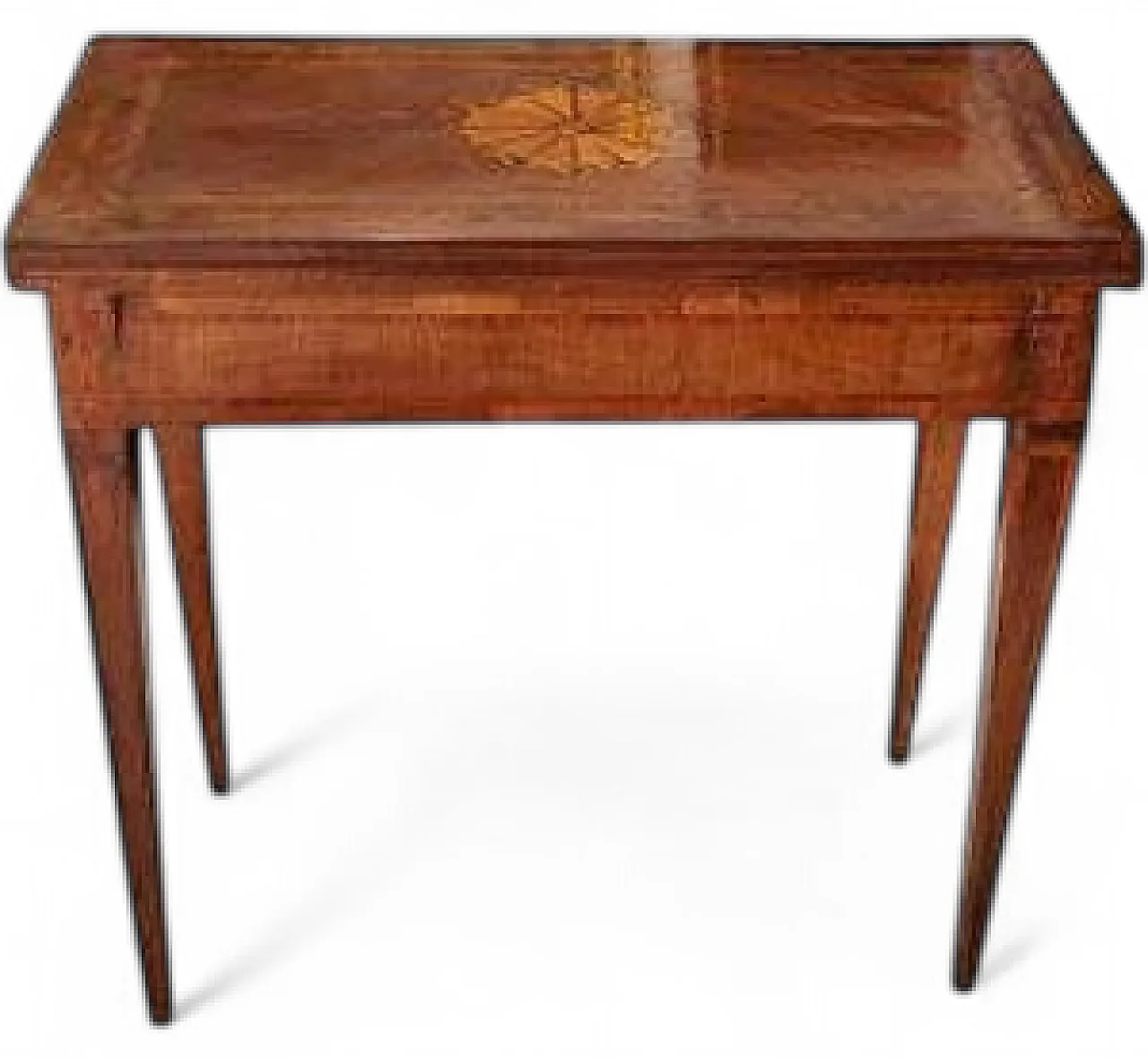
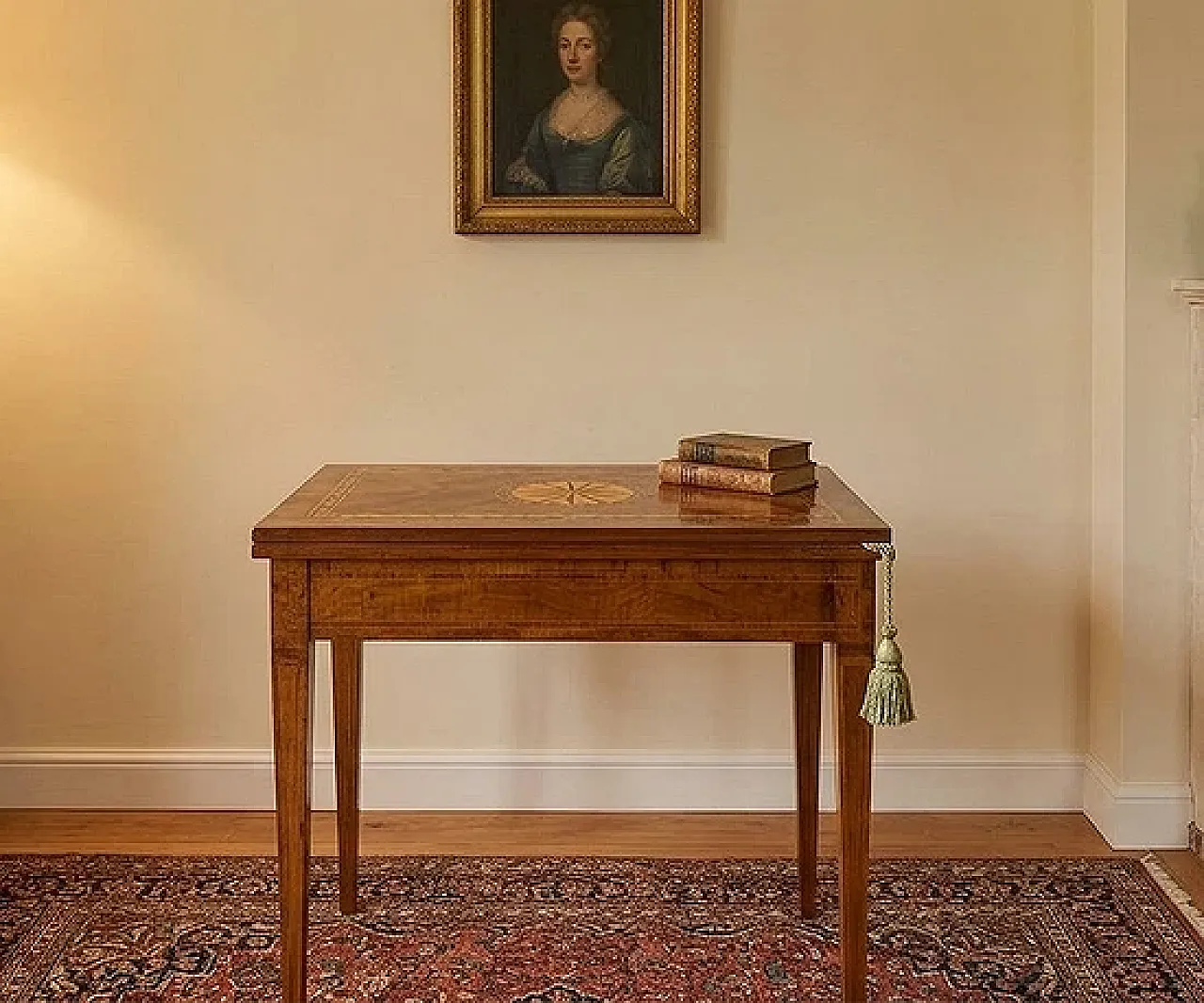
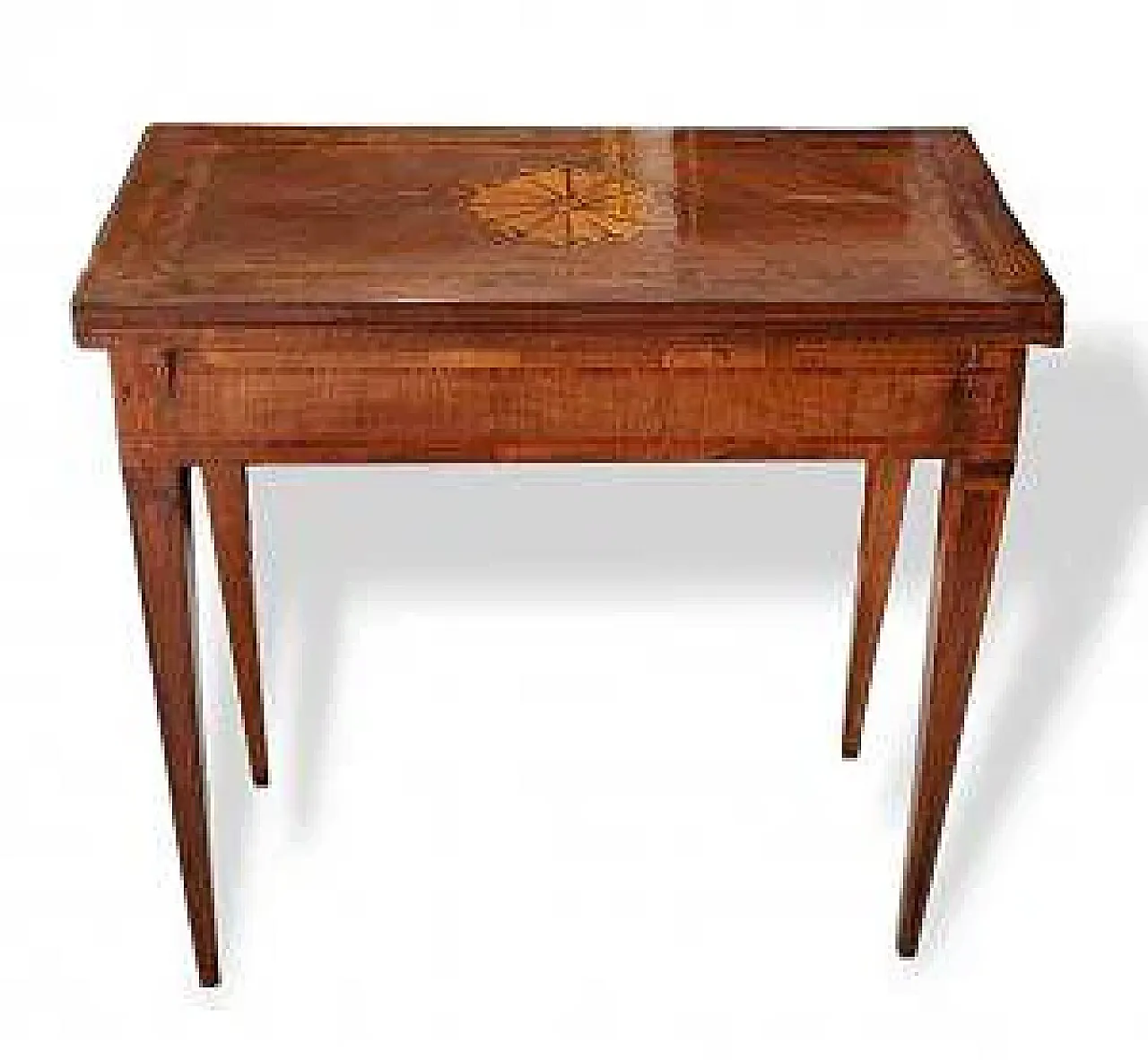
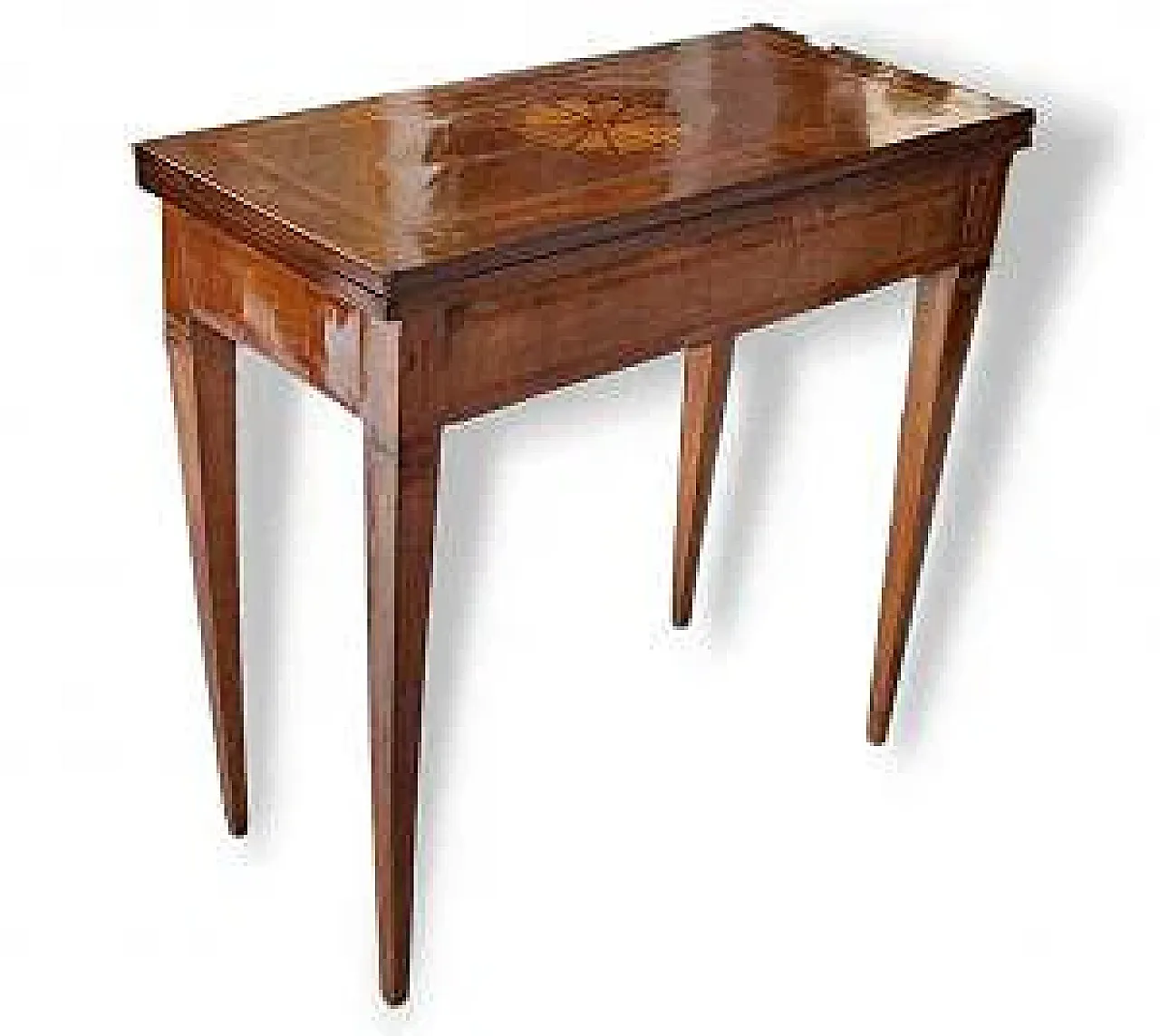
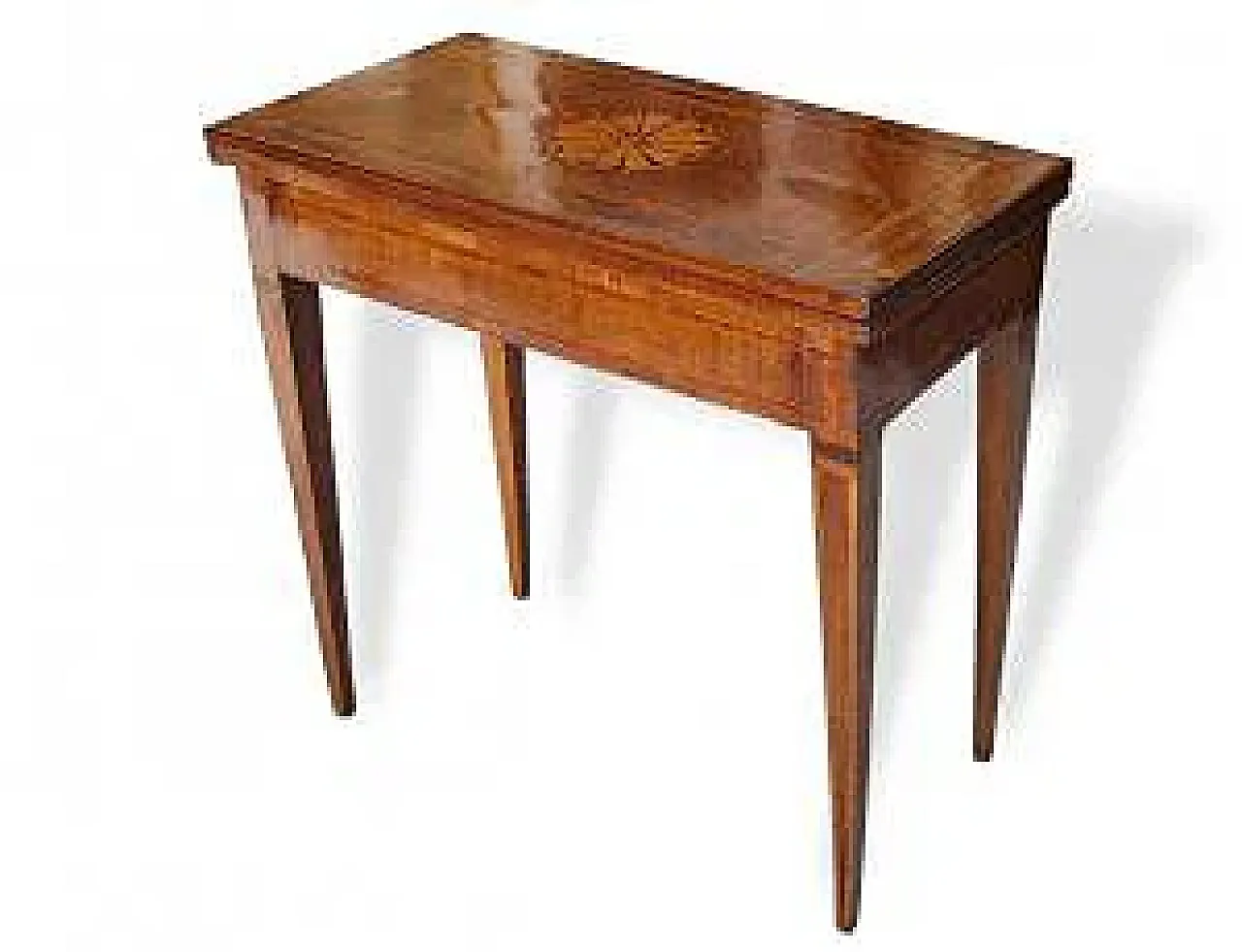
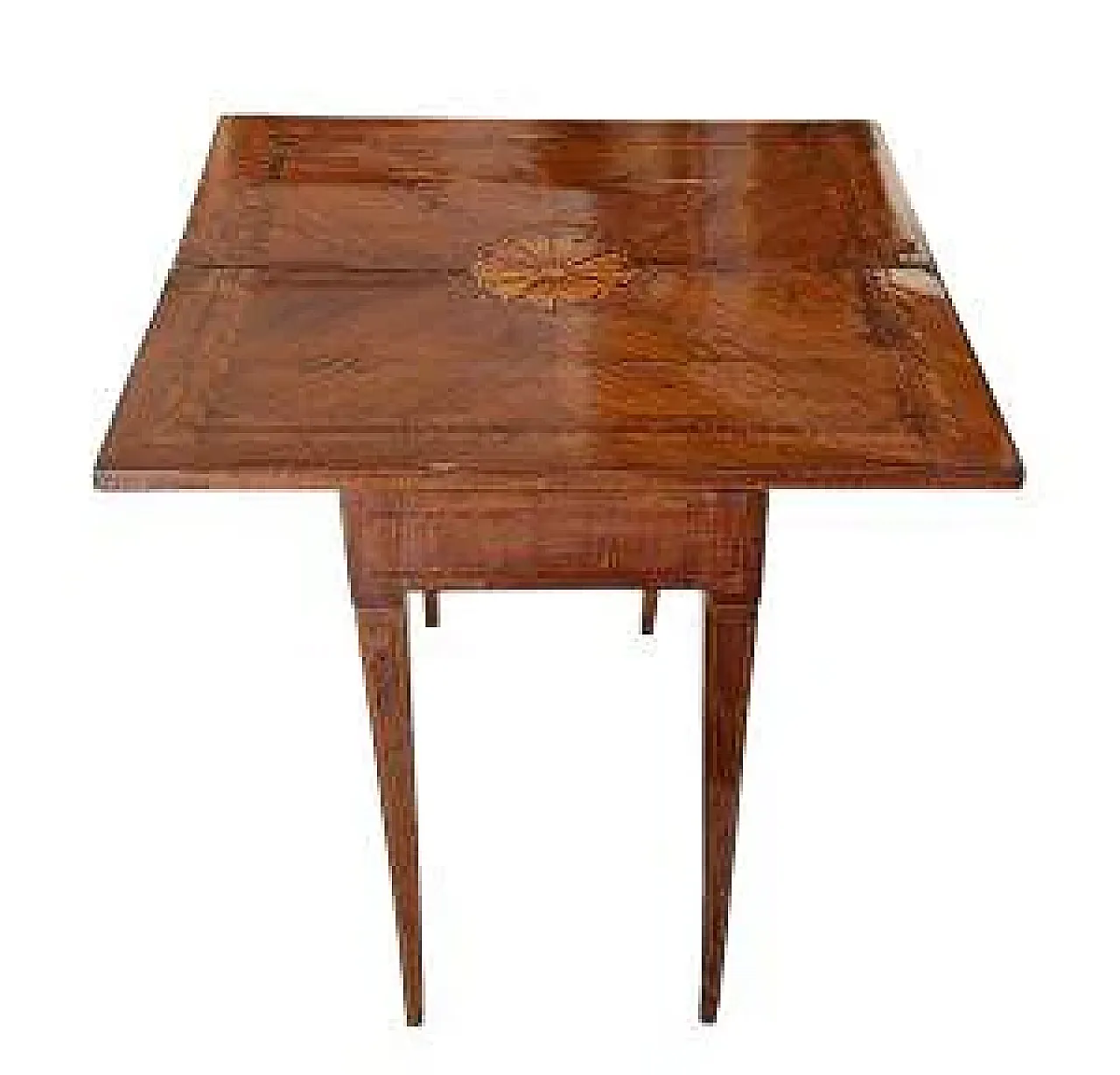
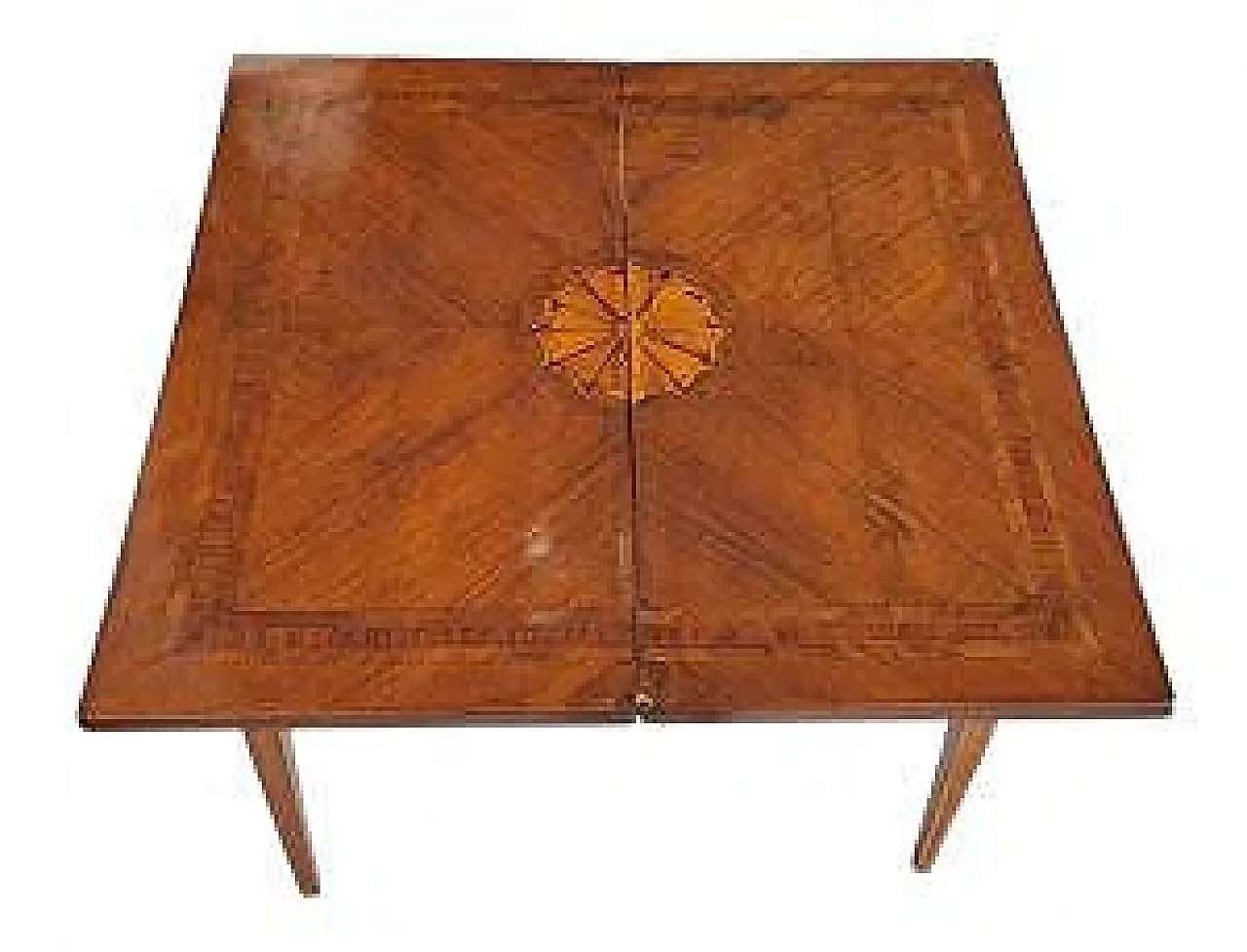
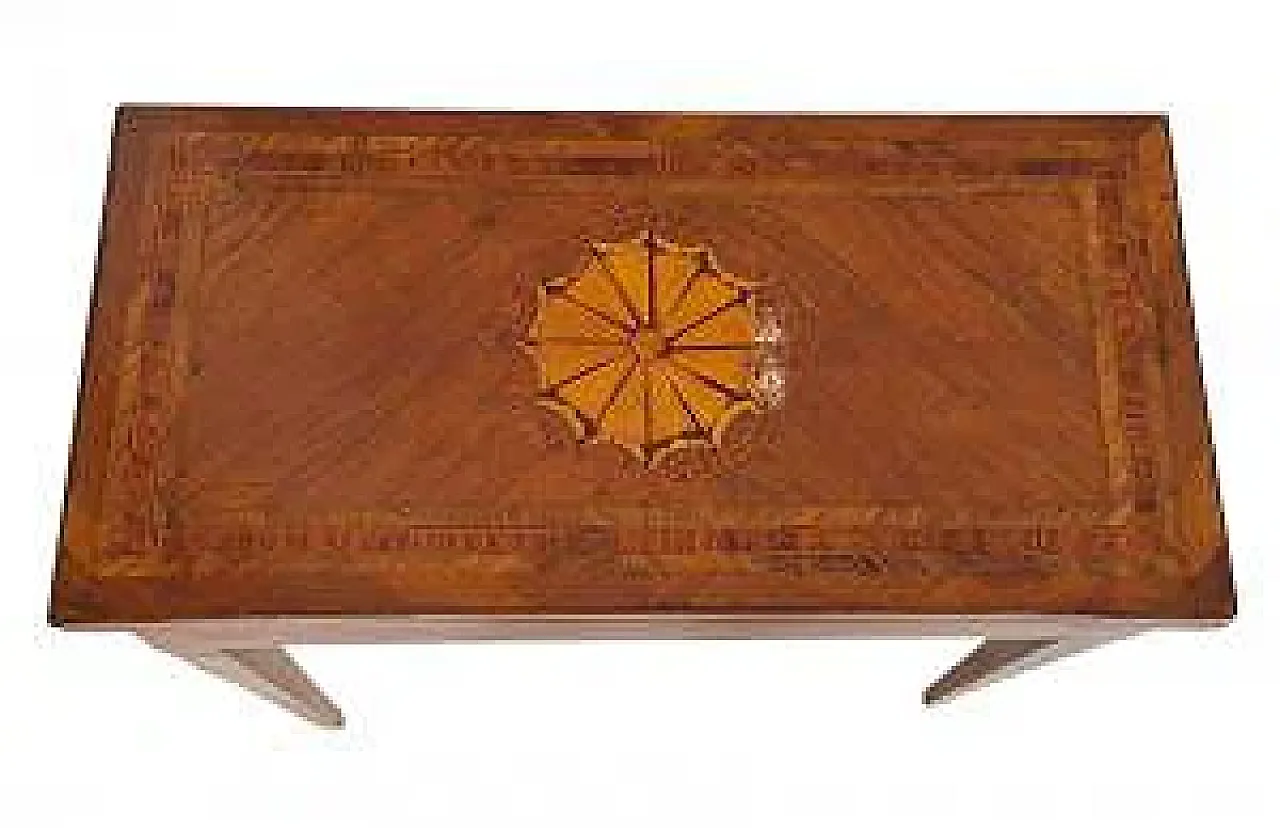
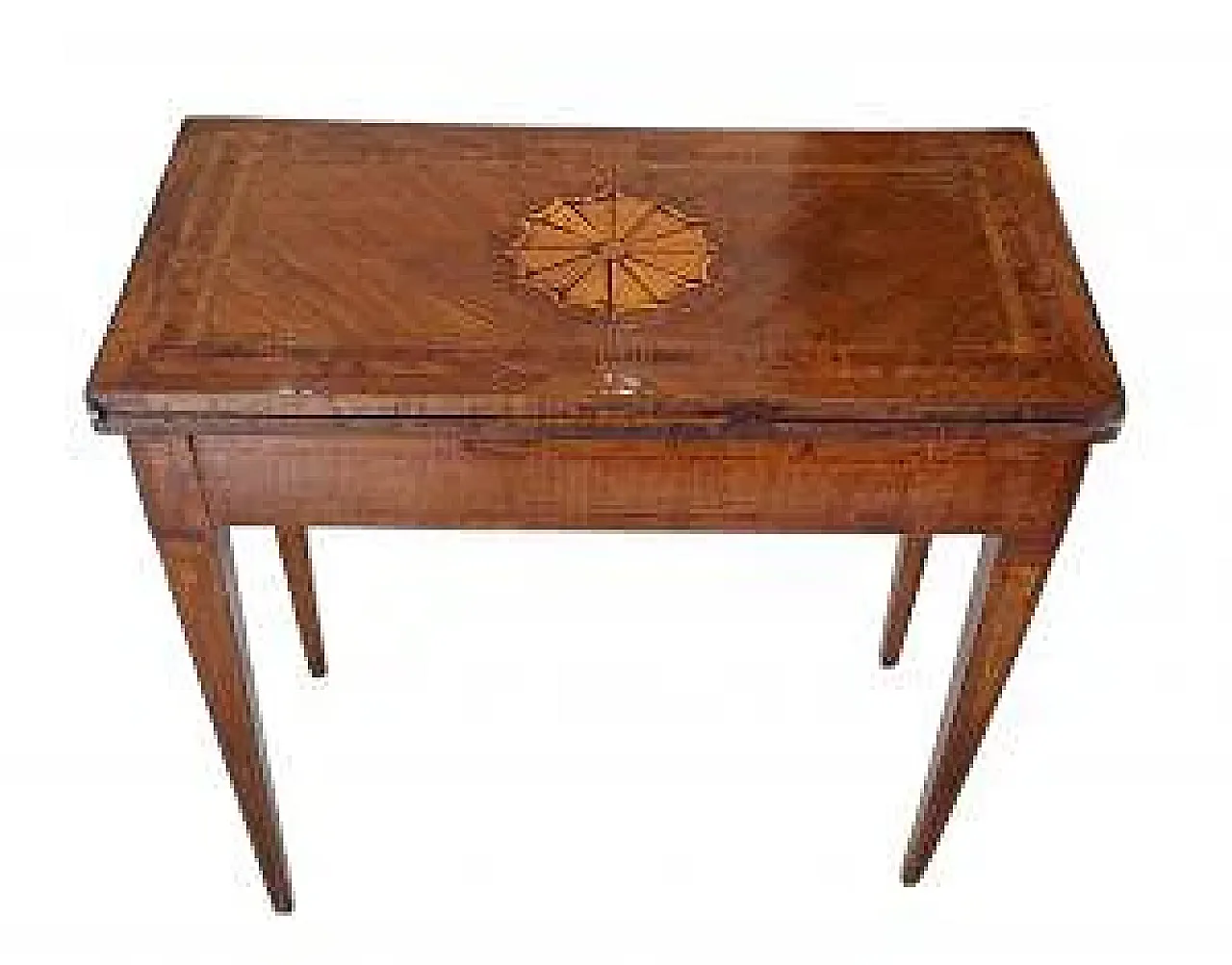
It is a "book" gaming table. The structure is designed to be versatile: positioned against a wall, it serves as an elegant countertop or console table; once opened, it doubles the usable surface area, transforming into the perfect square countertop for play or conversation.
Style and Chronology
The furniture entirely embraces the dictates of the Louis XVI style, placing itself chronologically in the last quarter of the 18th century (circa 1775-1790). The aesthetic definitively abandons the sinuous lines of the Baroque/Rococo in favor of a neoclassical geometric rigor, evident in the linearity of the fascia and the characteristic shape of the legs.
Structural Features and Decoration The Floor (Inlay and Cabinetmaking)
The support surface is the decorative fulcrum of the piece of furniture and displays a refined mastery in the art of wooden inlay:
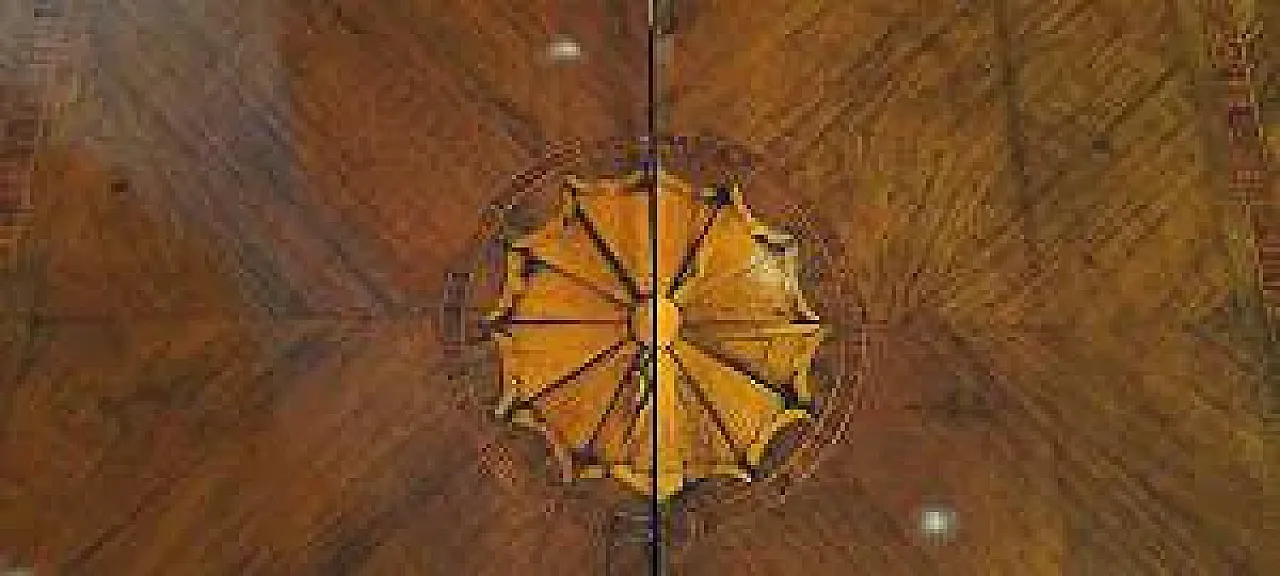
The central rose window: It features a circular medallion inlaid in the shape of an umbella or geometric parasol (or sunburst/pinwheel motif), made of boxwood with darkened edges using the red-hot sand technique to create a chiaroscuro and perspective effect of great depth. The rose window is ideally divided into two perfect parts to allow for book opening.
The arrangement of the grain: The base veneer (made of walnut wood) is arranged "herringbone" , creating a geometric dynamism that converges towards the centre.
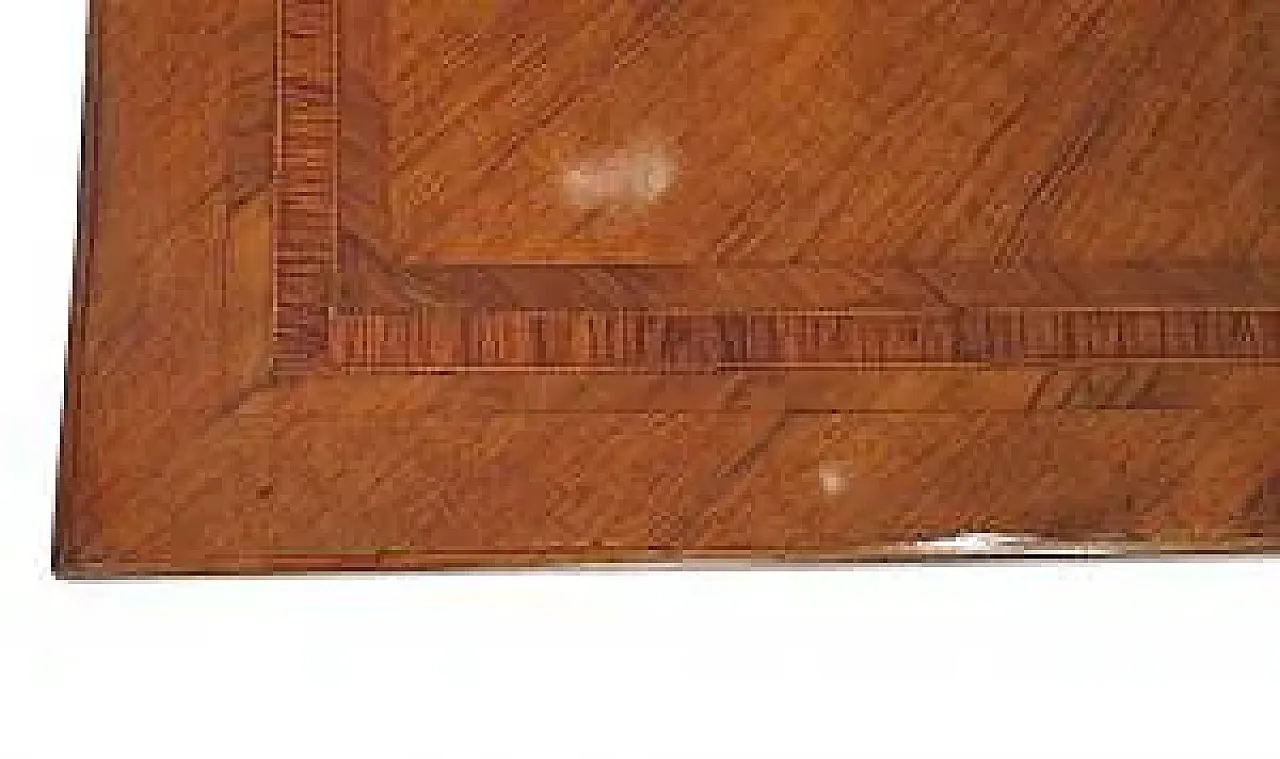
The borders: The perimeter of the plane and the fascia is delimited by geometric herringbone and ribbon threads, typical of the neoclassical repertoire, which elegantly frame the main reserves.
The Support
The Legs: The table is supported by four slender legs in the shape of an inverted truncated pyramid (the classic pin legs). They are enriched by a longitudinal thread that accentuates their momentum and verticality.
The Fascione: Under the top, the fascione features a laminated and threaded band in perfect stylistic continuity with the rest of the piece of furniture.
Dimensions: 75 x 37, height 74 cm.


.png)

 SILVER Seller in La-Spezia, Italia