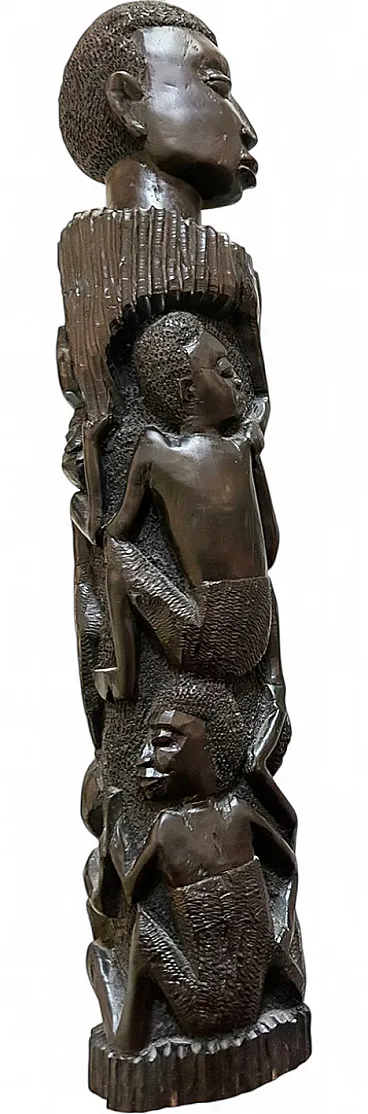
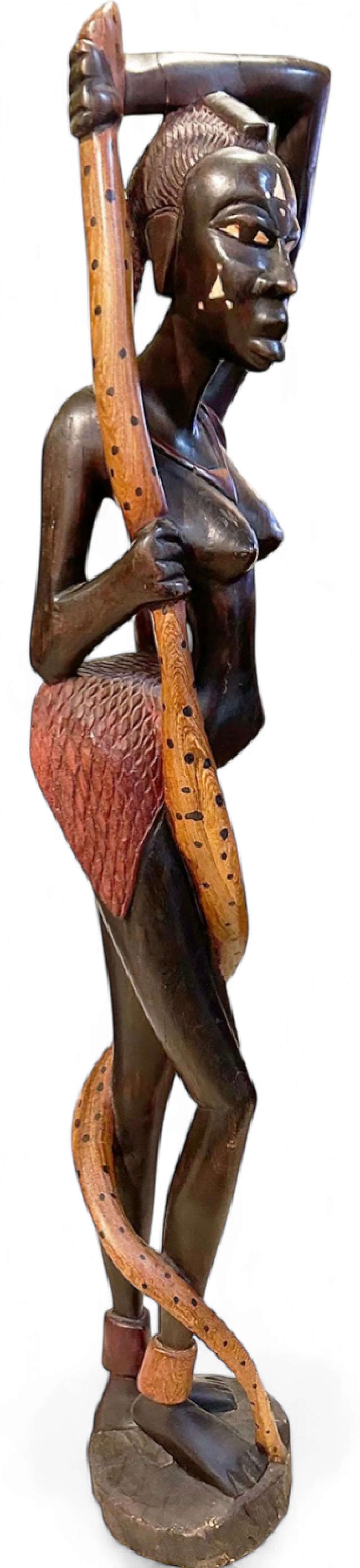
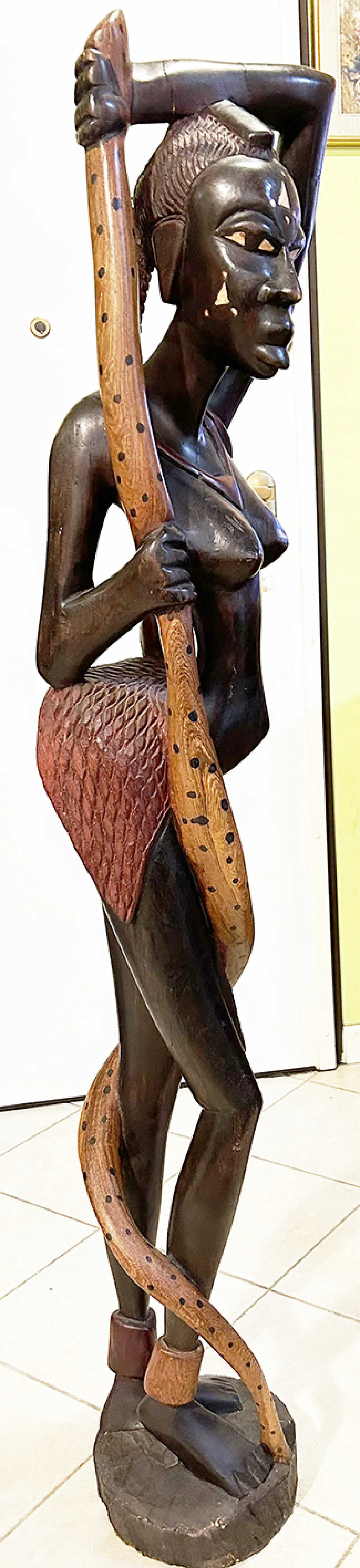
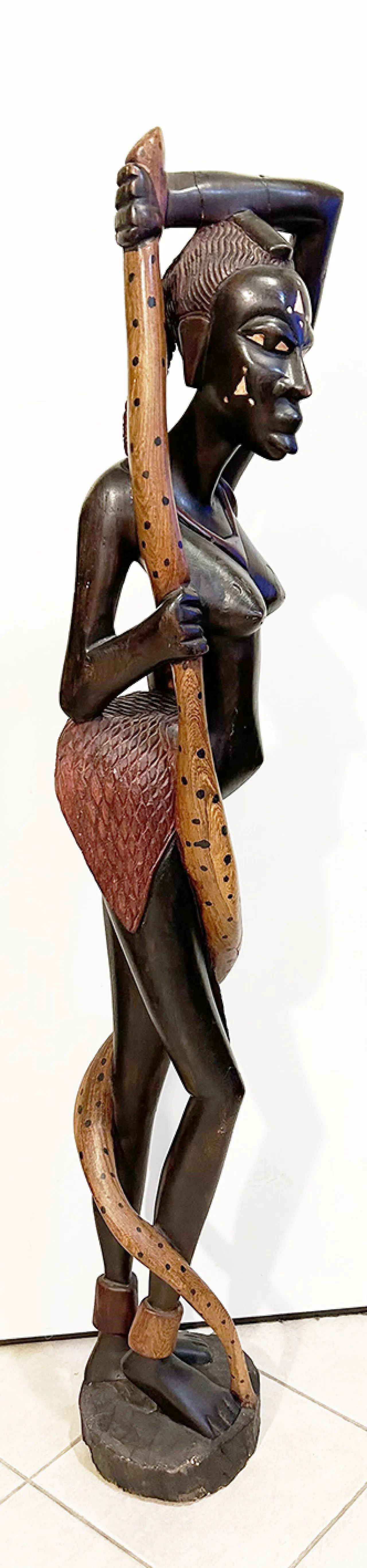
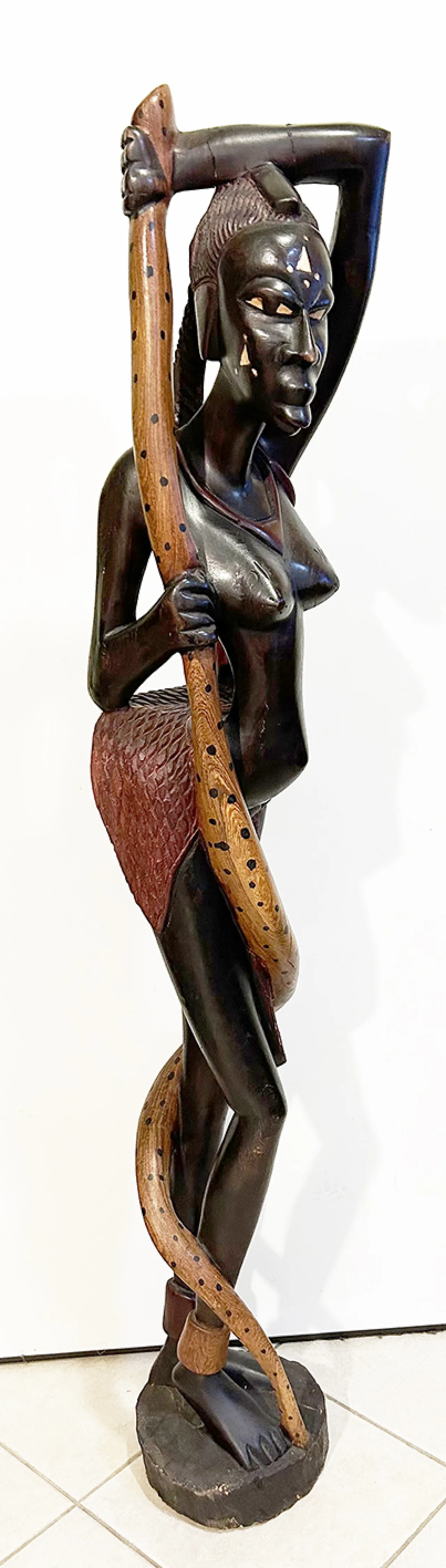
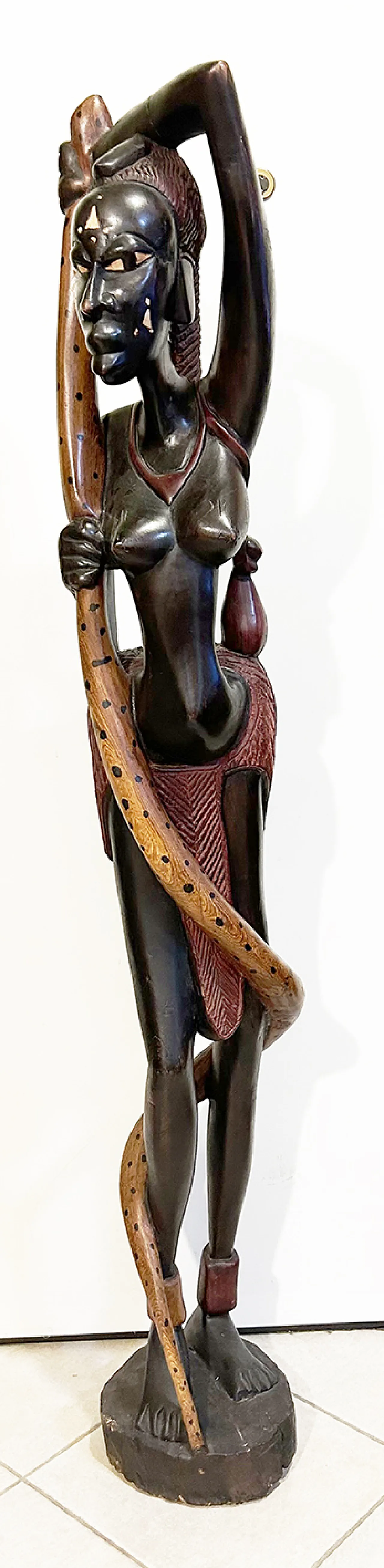
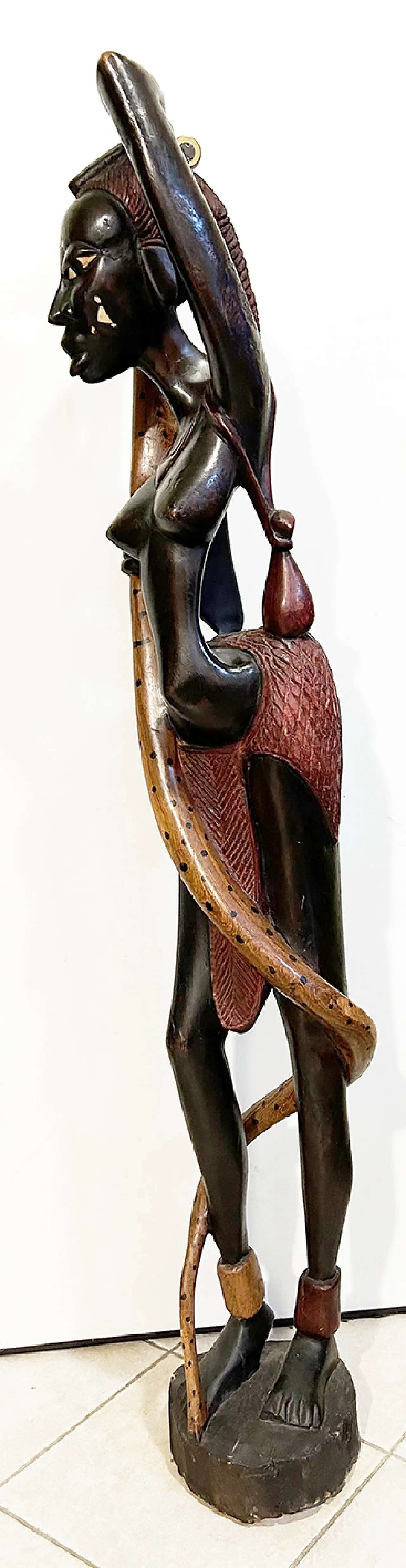
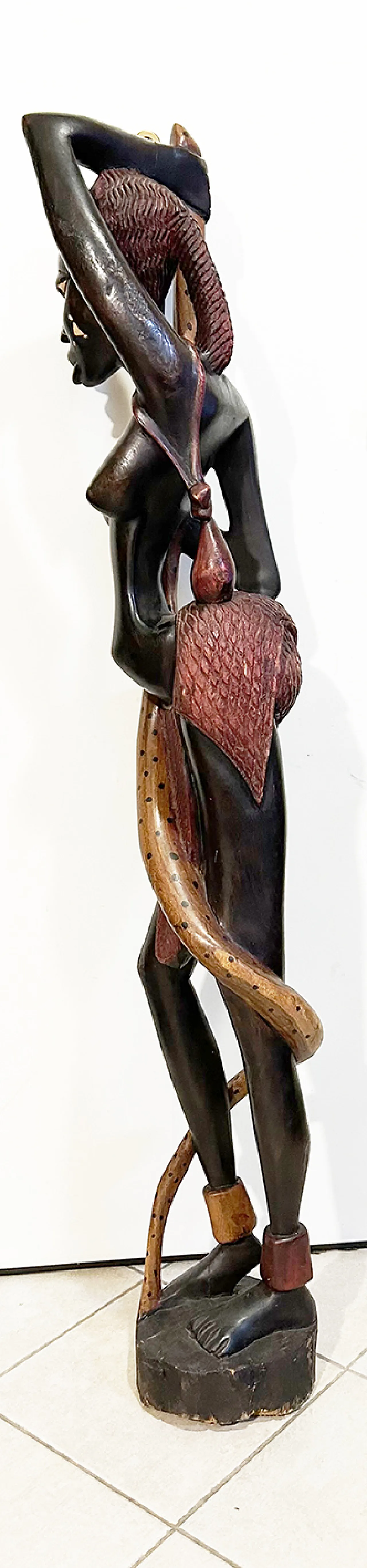
Colonial African art (19th-20th centuries) is a hybrid form of expression born during European domination, characterized by wood carvings—especially in Côte d'Ivoire and Ghana—that integrate traditional elements with symbols of colonial power such as uniforms, clocks, helmets, and bicycles. It represents a cultural response to the rapid social, economic and religious changes imposed.
Characteristics: Despite the external influence, the works often maintain stylized, balanced and calm forms typical of the local tradition.
Themes: Reflects the everyday life under domination, the prestigious associated with the new colonizers and the transformations introduced.
Context and Collecting: Many works were taken during the colonial period, giving rise to a complex contemporary debate on restitution. The first exhibitions in Europe, such as in Venice in 1922, often defined it in a Eurocentric way as "negro" or "primitive" art.
Impact: Greatly influenced the European avant-garde of the 20th century, including Pablo Picasso's "African period".
The artistic production of this period did not erase local identity, but adapted it, creating a visual historical testimony of the dynamics between colonizers and colonized.





.png)




 SILVER Seller in Torino, Italy