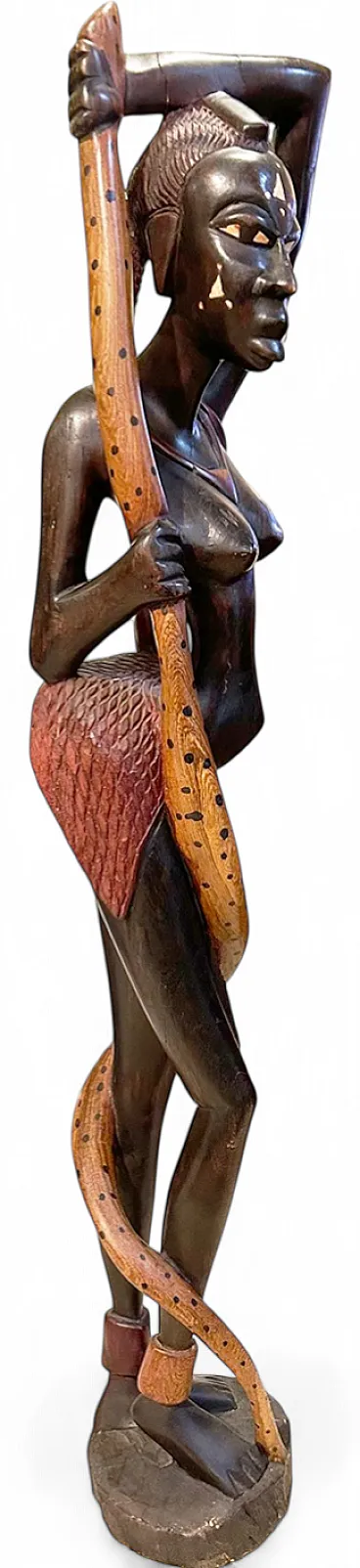
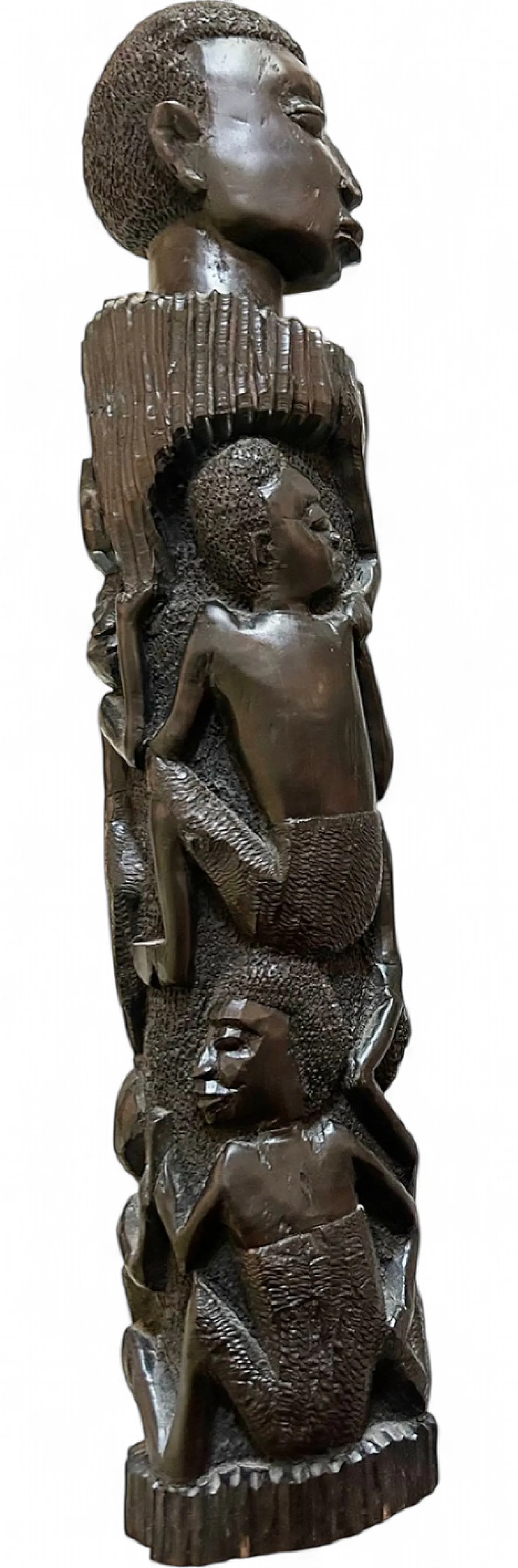
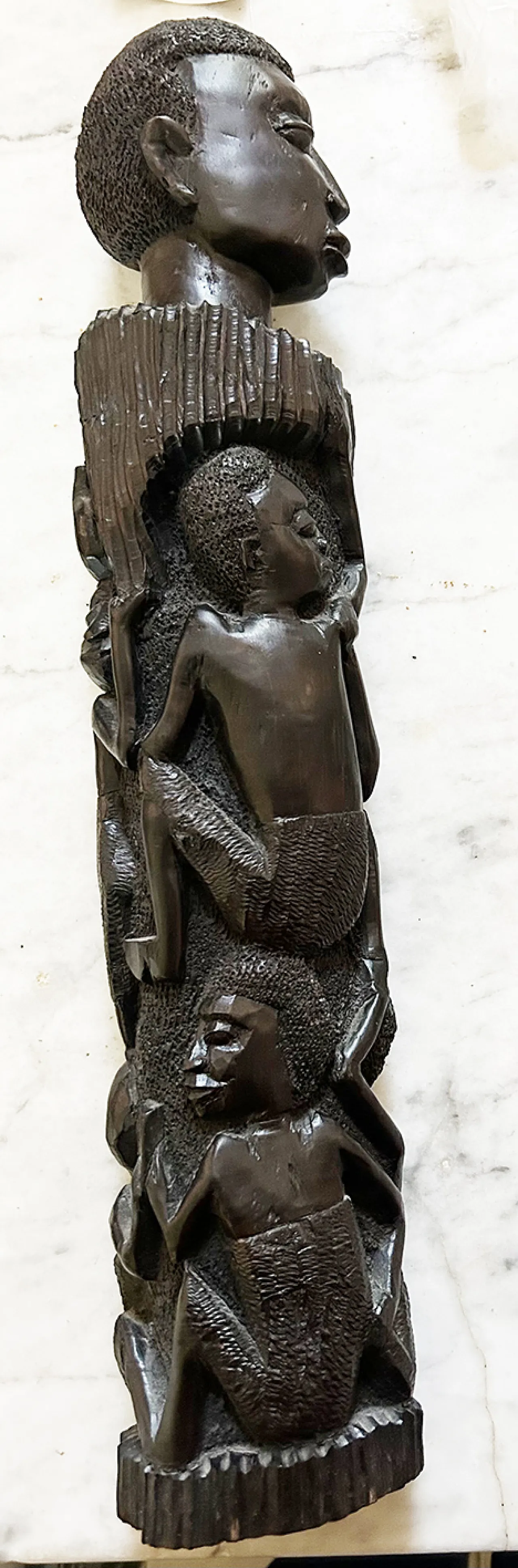
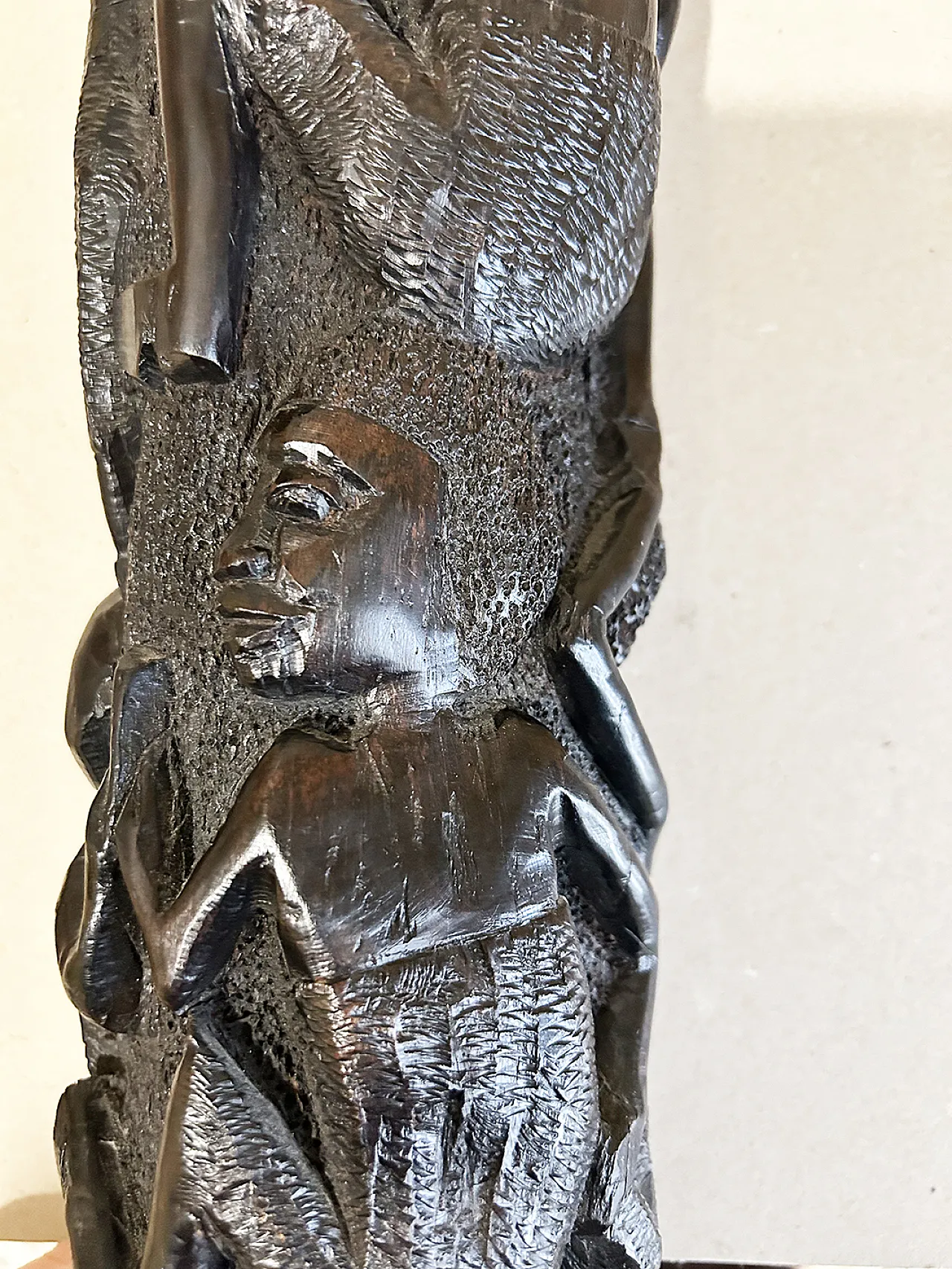
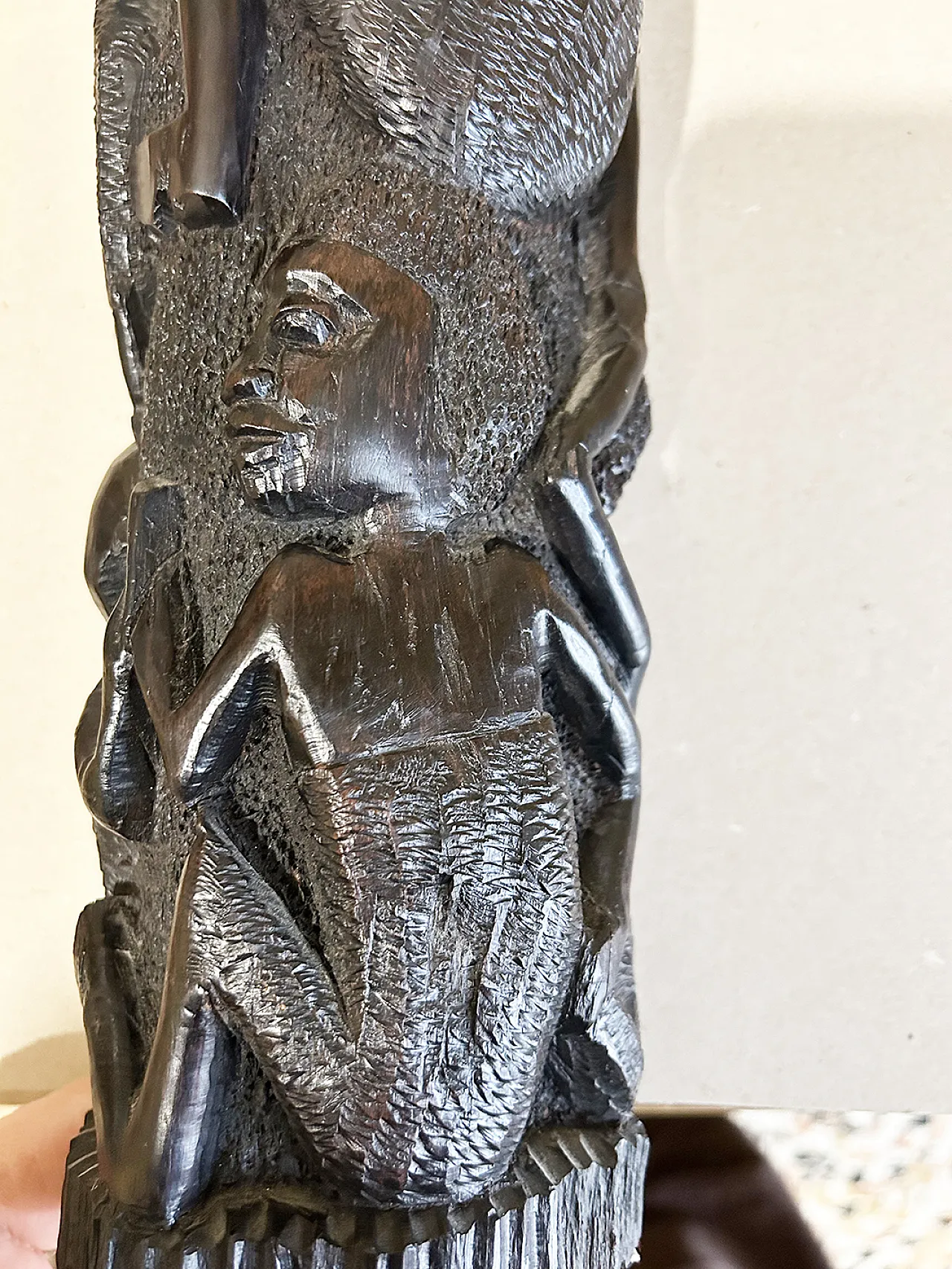
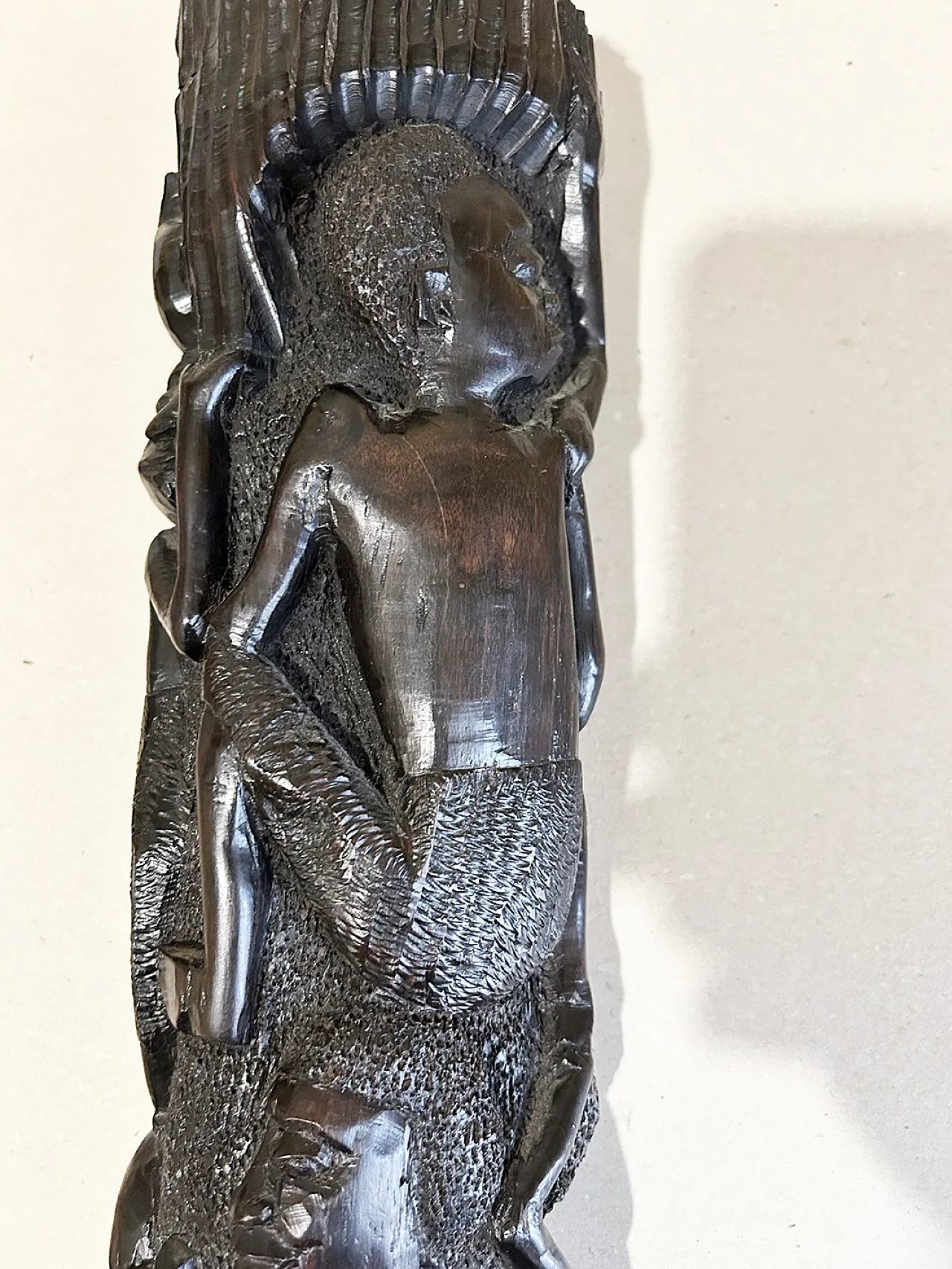
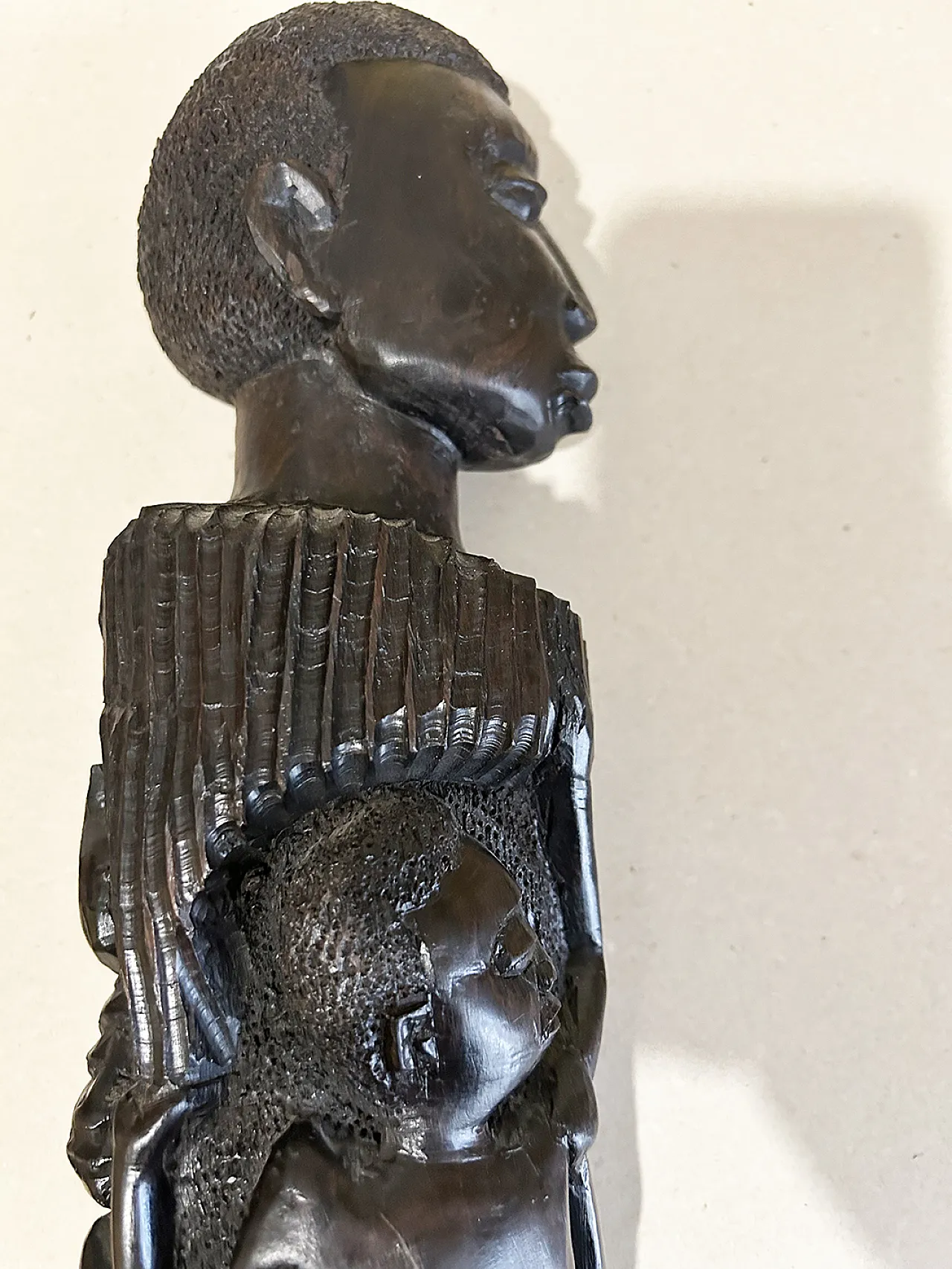
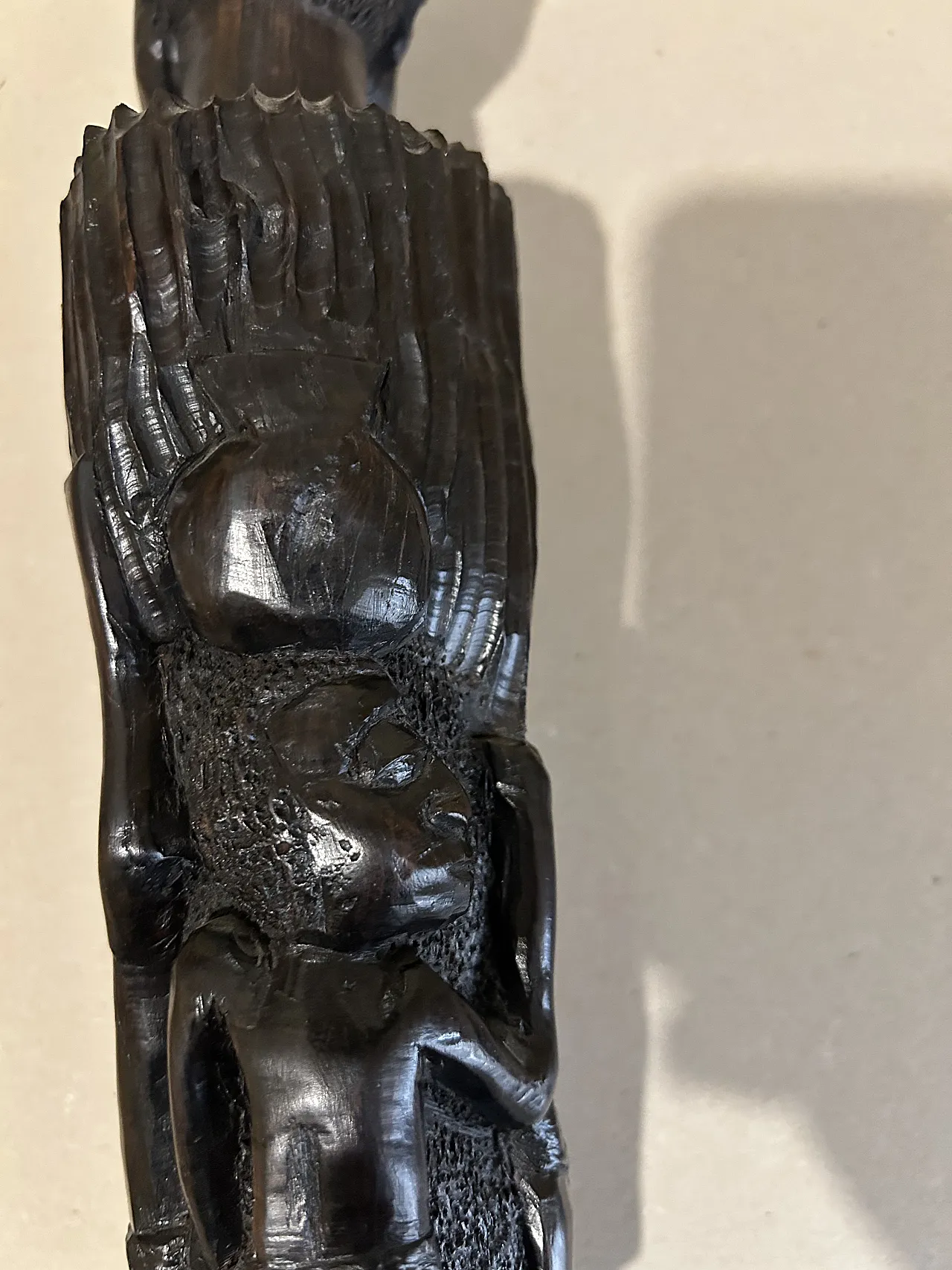
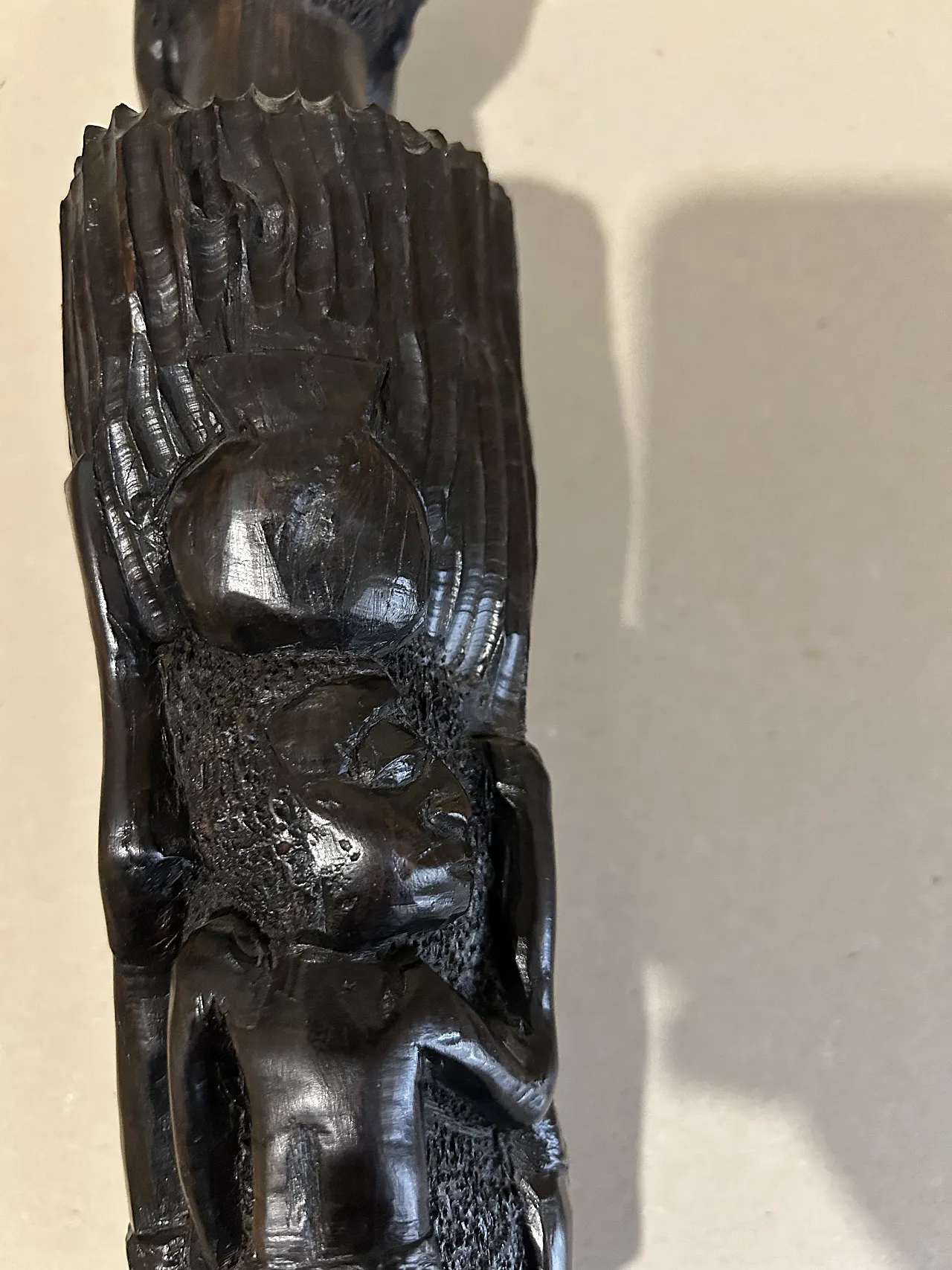
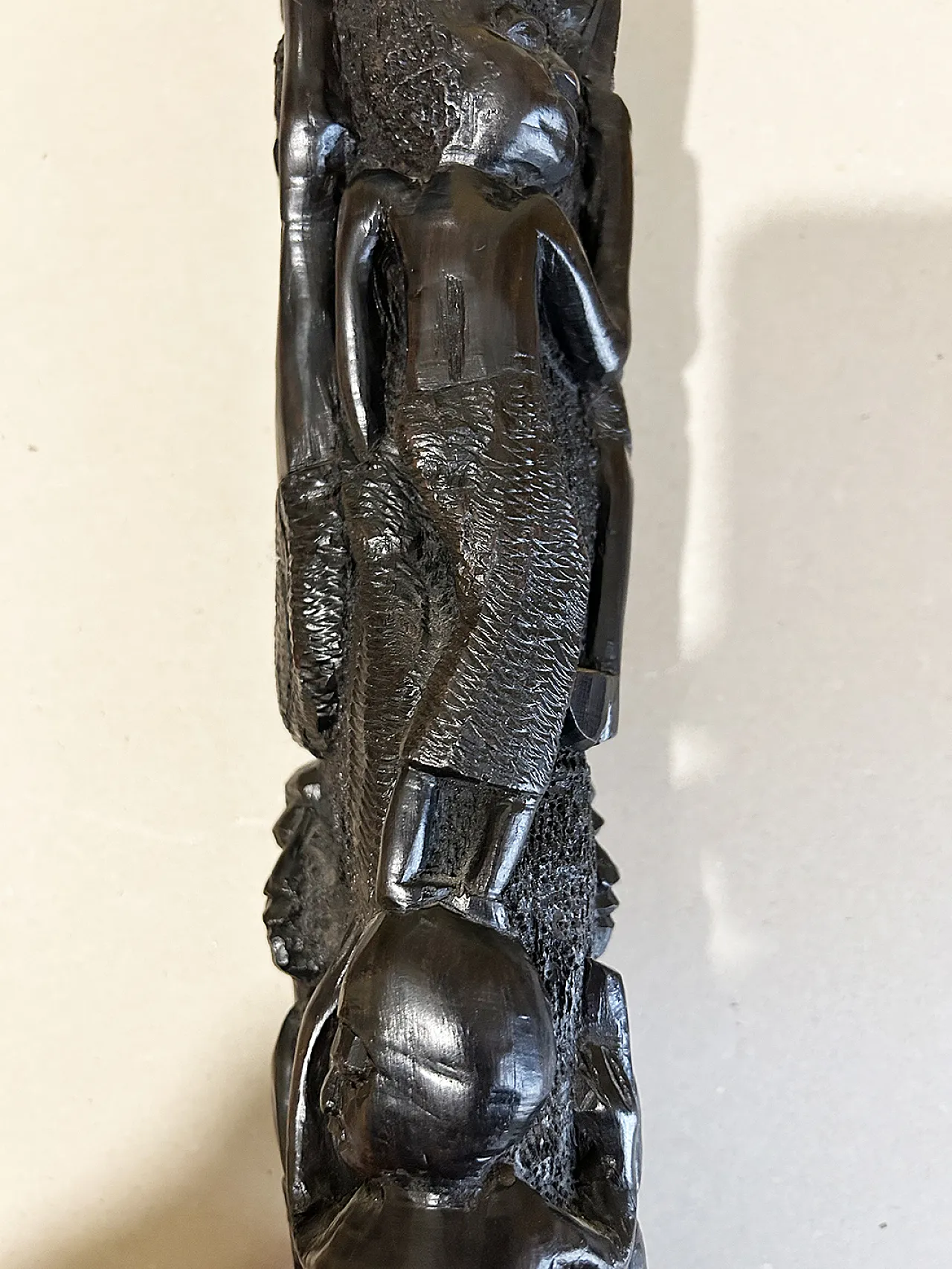
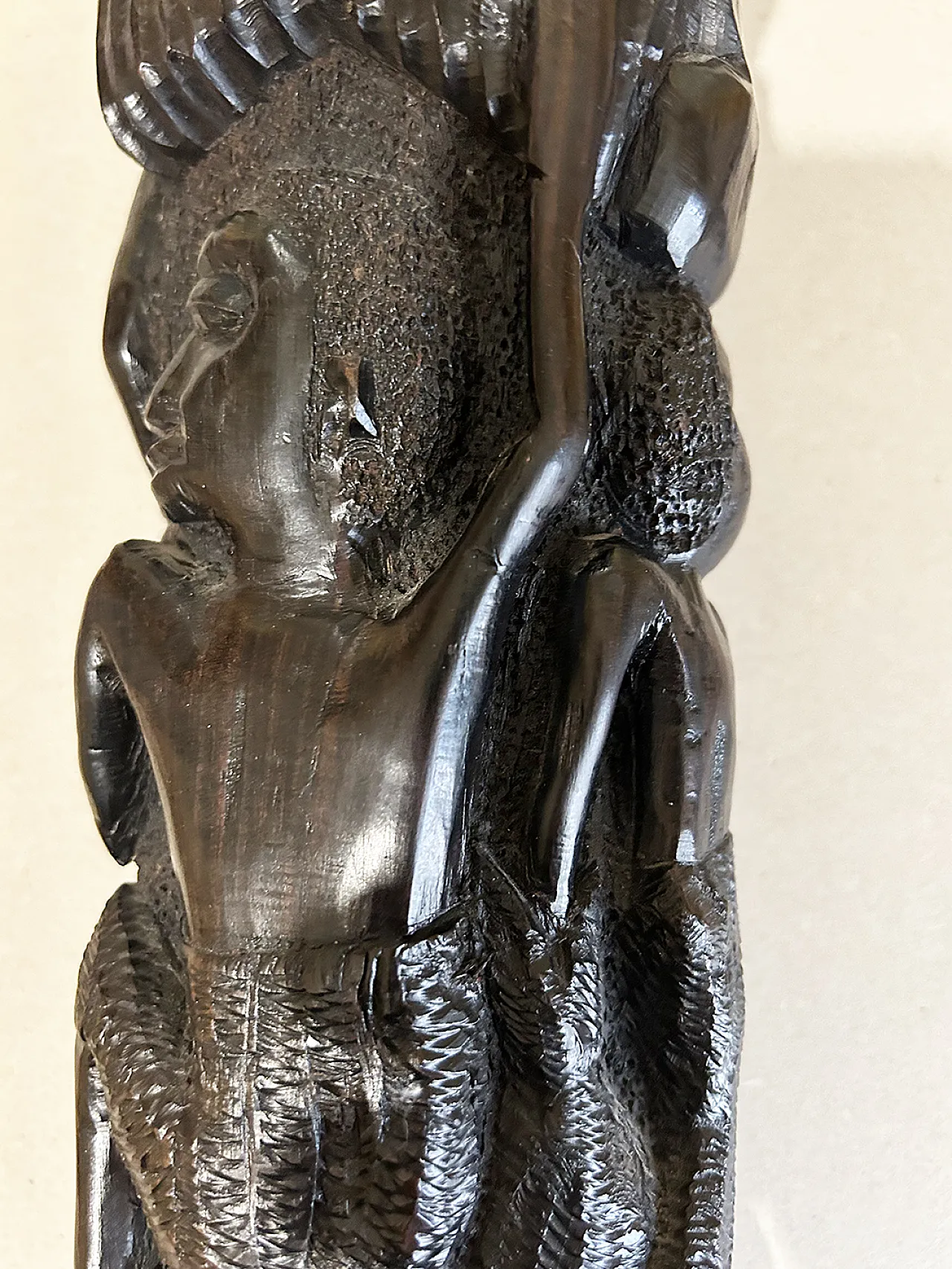
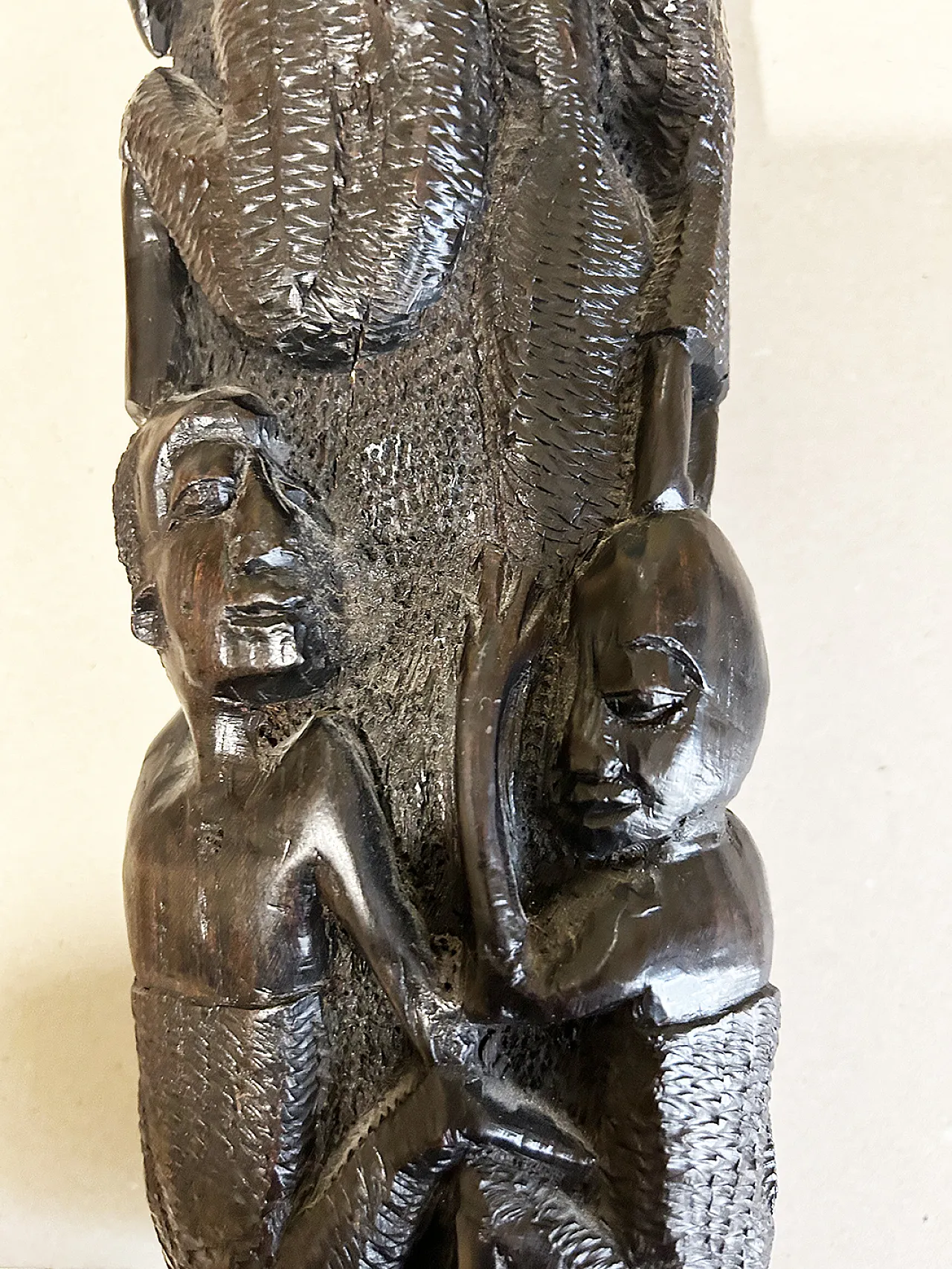
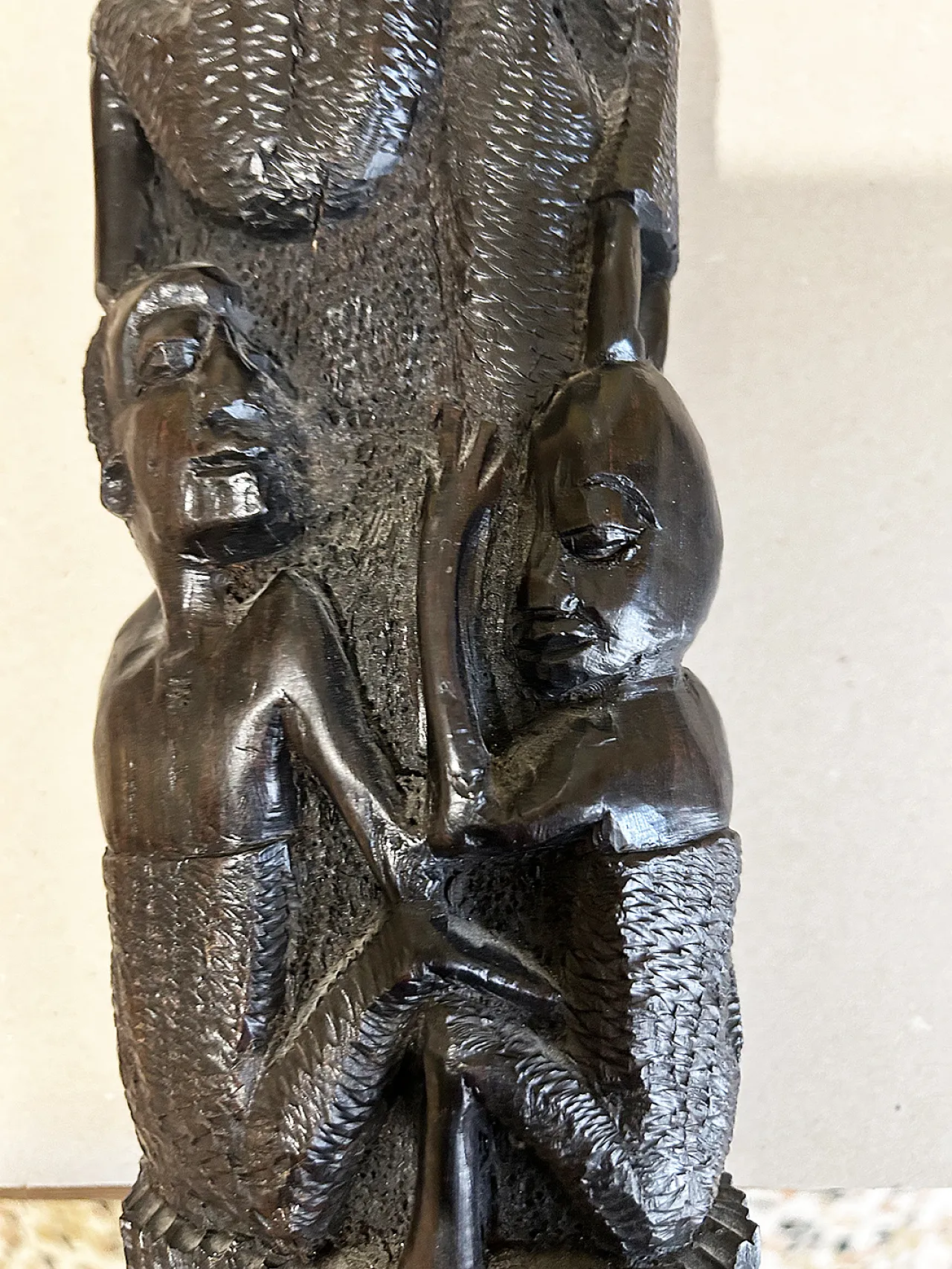
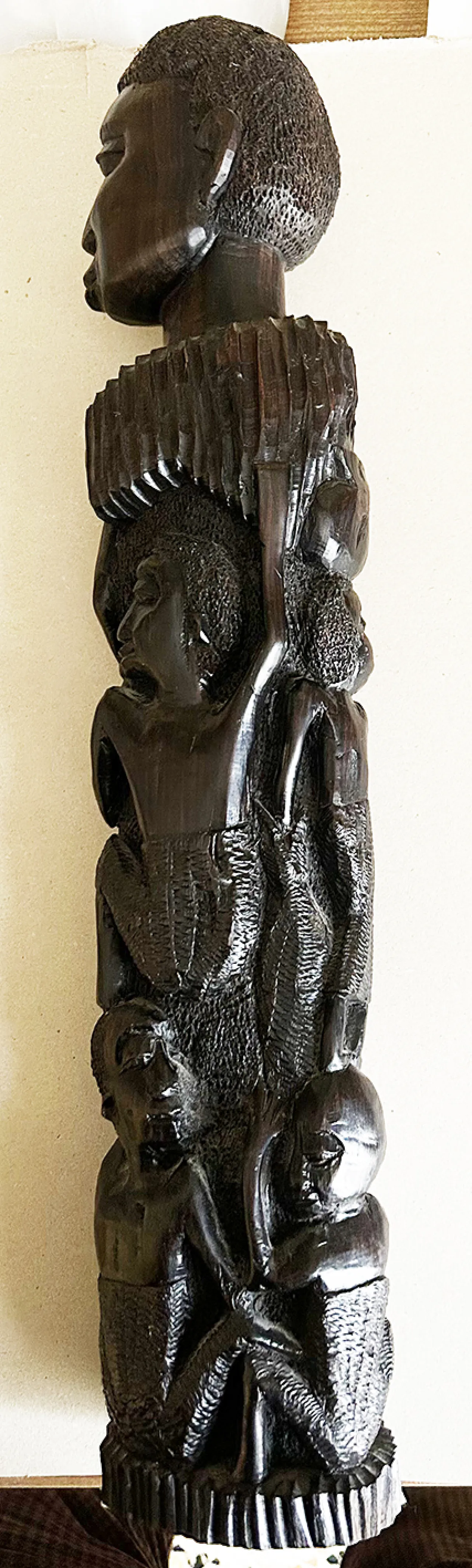
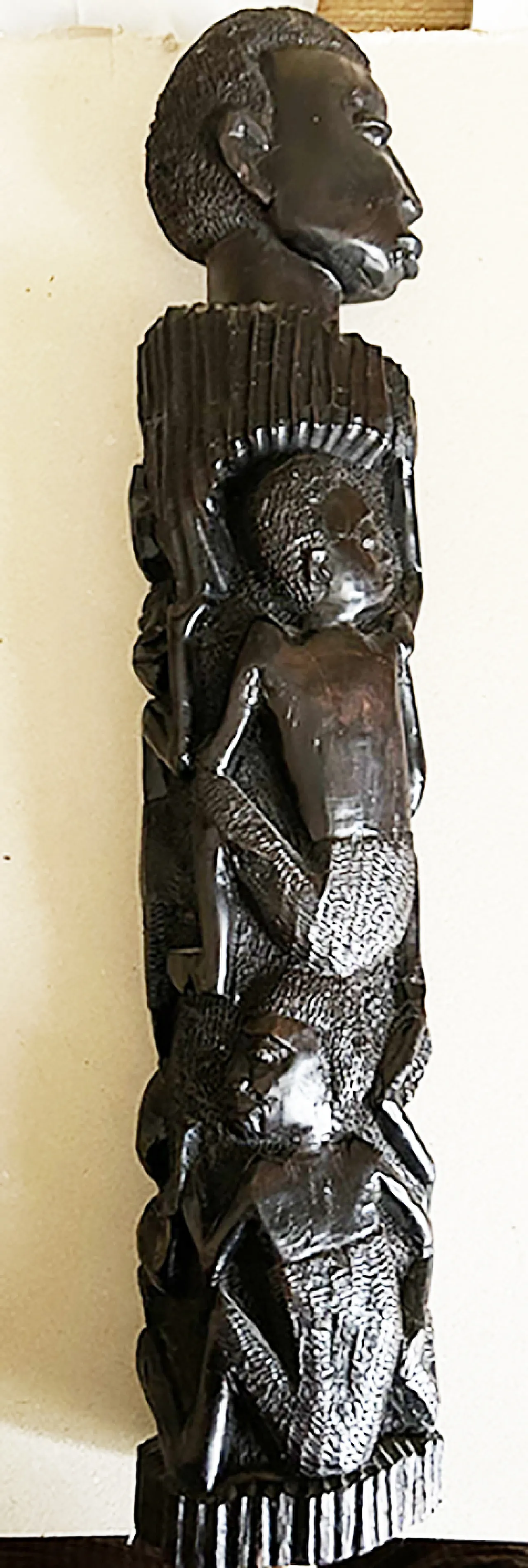
UjamThe sculptural form commonly known as the "Tree of Life" is called Ujamaa and is attributed to Roberto Yacobo Sangwani, an artist associated with Peera's workshop, whose first creation depicted a group of wrestlers carrying a champion on their shoulders. As other sculptors adopted the theme, it became a genre that expressed solidarity, mutual support and, above all, relationship. Ujamaa are generally tall sculptures in the round that tell stories about the interrelationships between family, tribal communities and larger social entities. Its intertwined figures symbolize connection and mutual assistance from generation to generation, each building on the previous one. It could be seen as an African representation of a family tree, often headed by a female figure, reflecting the matrilineal structure of Makonde society. Sculptors can take a year or more to carve such intricate figures, and statues can reach two meters in height, using the entire trunk of a mpingo tree. In the 1960s and 1970s, Tanzanian President Nyerere's Ujamaa Party adopted the art form as a national symbol of political unity.


.png)

 SILVER Seller in Torino, Italy